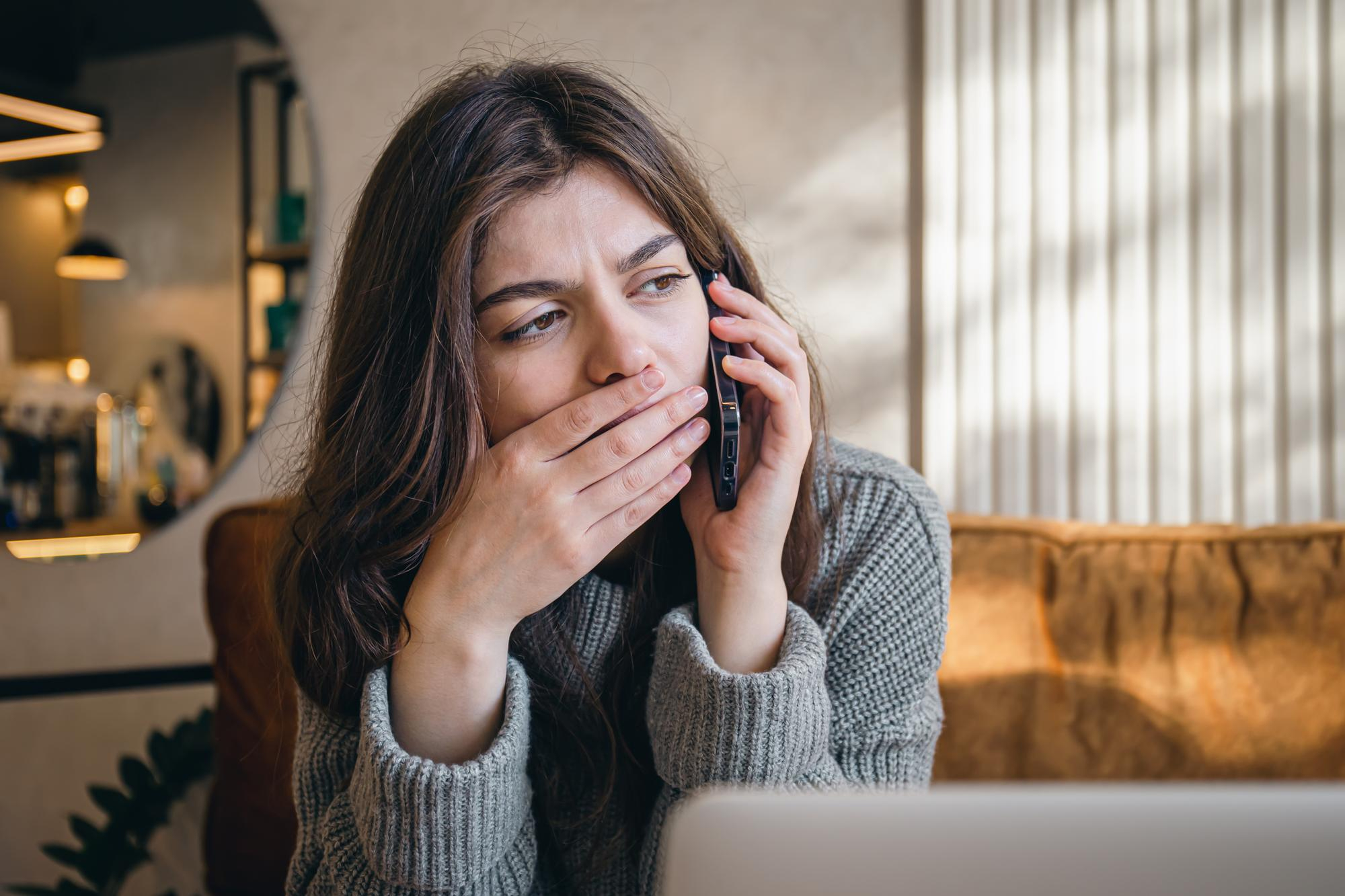
My parents suspended my schooling until I apologized to their golden boy.
Not because I failed a class.
Not because I broke a single rule in seven years at that school.
Because I refused to take the blame for something my brother did.
The meeting was in the headmaster’s office on a Thursday afternoon, and I want to describe that room, because I sat in it for forty minutes and I can still tell you what the light was doing.
Dark wood paneling. A tall window behind the desk with the November light coming through it gray and thin. A photograph of the 1994 rowing team on the wall by the door, which I had looked at a hundred times over the years while waiting for something good — a prize, a placement, a letter.
My father stood by the bookcase with his arms folded.
He never sits down in rooms where he intends to win.
My mother sat in one of the two chairs and dabbed at her eyes with a folded tissue like she was the person this had happened to.
And across from me, my older brother Blake leaned against the wall by the window with his hands in his blazer pockets, smiling faintly at the carpet.
“Your behavior has embarrassed this family,” my father said.
I looked at the headmaster instead of at him.
“My behavior.”
My mother’s voice sharpened immediately.
“Don’t start, Amelia. Blake has already explained everything.”
Of course he had.
Blake always explains first. That is the entire architecture of my brother. He gets to the adults before you do, and he does it with his voice slightly lowered, and he says things like I didn’t want to have to tell you this.
He explained why my allowance disappeared out of the drawer in my room when I was fourteen.
He explained why two speeding tickets arrived at the house under my name when I was fifteen and could not legally drive.
He explained why a teacher found copied coursework in my folder in Year 10, which cost me a merit and got me a conduct note that stayed on my file for eighteen months.
He explained why my grandmother’s brooch turned up in the outside pocket of my school backpack the summer I was sixteen.
Every single time, he looked wounded. Charming. Misunderstood. He has a way of getting slightly red around the eyes that I have watched him produce on demand since he was eleven.
And every single time, my parents believed him.
I stopped fighting it around fifteen. That’s the part I’m not proud of. I learned that arguing extended the punishment and that silence shortened it, and so I became a person who took things quietly, and that is a very dangerous thing to teach a family about you.
This time, he went too far.
Three weeks before that meeting, the scholarship interview panel at St. Aldate’s received an anonymous email.
Screenshots. Fourteen of them.
They appeared to show me discussing how I’d cheated on the entrance examination. Discussing how I’d falsified two extracurricular claims on my application. And a string of messages, sent from my account, harassing my brother — telling him he was a fraud, that everyone knew, that I’d make sure the school found out.
They looked completely real, because they were sent from my actual account.
I found out about them the way you find out about the worst things, which is secondhand and four days late. My form tutor pulled me out of a lesson.
And by the time I got home that evening, Blake had already been at the house for two hours, being heartbroken about it.
That’s the word he used. He told my parents he was heartbroken.
But — and this is the part that I understood immediately and that took my parents another three weeks to see — he was willing to forgive me.
He would forgive me if I apologized publicly.
And gave up the scholarship placement.
Which would then, by the board’s own reallocation rules, go to the next-ranked candidate from the same school.
Who is my brother.
My father called it accountability.
I called it theft, out loud, once, in the kitchen, and I was sent to my room at seventeen years old for saying it.
In that office, the headmaster shifted in his chair.
Dr. Merrow is not a brave man but he is not a stupid one either.
“Mr. Carter, a suspension at this stage will affect Amelia’s final placement. The board will see it. I’d urge you to consider—”
My father did not blink.
“Then she should apologize.”
And Blake finally looked up at me.
The smirk was small. Private. Practiced in a mirror, I’ve always assumed, because nobody’s face does that naturally.
Then my mother slid a piece of paper across the desk toward me.
I picked it up.
Two paragraphs, typed. And the first line was:
I falsely accused Blake Carter and accept full responsibility for my conduct.
My hands went cold. Actually cold, physically, all the way to the fingertips.
Because reading that sentence, I finally understood something that had taken me four years to see clearly.
They did not want the truth.
They had never wanted the truth. The truth was inconvenient and the truth was expensive and the truth would have required them to look at their son.
They wanted a sacrifice with my signature on it.
I set the paper back down on the desk.
“Alright,” I said.
My father exhaled. I heard it. The sound of a man who thinks a thing is finished.
My mother smiled through her tissue.
And Blake’s smirk went wide.
But I did not sign anything.
I stood up, picked up my bag off the floor, and walked out of that office before any of the four of them registered that my alright had not meant surrender.
It meant permission.
Permission to stop protecting them.
I need to explain what happened over the following nineteen days, because in the story my family tells, I did all of this in an afternoon out of spite.
I did it over nineteen days, mostly at night, mostly terrified.
The first thing I did was call my aunt Caroline.
Caroline is my mother’s older sister. She is fifty-six, she has run her own commercial insurance brokerage for twenty-two years, and my family describes her as difficult.
I understand now that difficult, in that house, means remembers things.
I called her from the bus stop on Cranmer Road at ten past four on the Thursday, and I got about nine words out before I started crying, which I had not done in front of anybody in three years.
She didn’t say oh sweetheart. She didn’t say I’m sure it’s a misunderstanding.
She said: “Start at the beginning. Don’t skip anything because it makes you look bad.”
I talked for fifty-one minutes.
When I finished she was quiet for a moment and then she said, “Amelia. Do you have anything at all? Anything written down, anything saved?”
And that’s when I remembered the voice memos.
Here’s the thing about growing up in a house where you are routinely told that events did not happen the way you experienced them.
You start keeping notes. Not deliberately, at first. You just write things down because otherwise you begin to doubt your own memory, which is what happens to you eventually anyway.
I’d started recording things when I was sixteen. Not conversations, mostly. Just me, in my room, afterward, saying into my phone what had happened that day so that I’d have it in my own voice.
But twice — twice in eighteen months — I had my phone recording in my pocket when Blake was talking.
Not because I was clever. Because I’d started the memo in my room, forgotten to stop it, and gone downstairs.
The first one was from the second week of October. Blake on the phone in the kitchen, to somebody, while I was making toast four feet away and he’d stopped seeing me years ago.
The second one was from the Saturday after the screenshots landed. Blake in the garden with his friend Toby, and me by the open utility room window, and forty minutes of recording of which about six minutes mattered.
I hadn’t listened to either. I’d never had a reason to.
I listened to both of them that Thursday night with my door locked and my headphones in and my heart going so hard I felt sick.
And then I sat on my floor and shook for about ten minutes.
Caroline drove down on the Saturday. She didn’t come to the house. She met me in a café on the high street and she brought a laptop and a lever arch file, and we worked for six hours.
She got a solicitor involved on the Monday. A woman named Priti Ahluwalia who specialises in education and safeguarding matters and who charged Caroline four thousand pounds that I did not find out about for eight months.
Priti’s first instruction to me was one sentence.
“Don’t argue with anybody in that house about anything, and don’t delete anything.”
The IT evidence took the longest.
The school’s system logs every login with a device fingerprint and an IP. My account had been accessed from Blake’s laptop on four separate occasions across September and October, including for eleven minutes on the evening of the eighteenth, which is when the messages to his own account were sent.
He’d copied my login the previous spring, while I was in the study helping our mother set up her new tablet and had my school portal open on the desktop behind me.
That’s in the second recording. He tells Toby the whole thing. He thinks it’s funny.
Priti submitted everything to the scholarship board on a Tuesday.
The board opened an inquiry the same week and requested the school’s cooperation, which Dr. Merrow gave immediately, because a headmaster faced with a scholarship board and a solicitor discovers his courage very fast.
And Caroline filed for emergency guardianship on the Wednesday, on the grounds that my parents were actively coercing me into a false written admission that would have destroyed my placement.
Nobody at home knew about any of it.
For nineteen days I ate dinner at that table. I said please pass the salt. My mother asked me twice whether I was ready to be sensible, and both times I said I was thinking about it, which was true in a way she did not understand.
Blake stopped bothering to smirk after the first week. He’d decided he’d won.
That is what I actually want people to take from this. Not the confrontation.
The nineteen days of sitting still.
On the twentieth day, I went to school for the last time.
Blake came in through the sixth form entrance at twenty past eight with Toby and another boy beside him, and he stopped by the senior lockers where I was standing.
“Ready to say sorry?” he said.
I closed my locker door.
It was empty.
No books. No photographs inside the door. No spare jacket, no PE kit, no revision cards taped up. Nothing.
I’d cleared it out over two afternoons the previous week, a bag at a time, and nobody had noticed, because nobody in that building had looked closely at me in three years.
Blake’s smile went off his face.
And then the registrar walked past us carrying a folder with a green sticker on the front.
TRANSFER APPROVED.
She wasn’t being dramatic. She had no idea. She was just carrying a folder down a corridor.
But my brother read it upside down and he went white, and he came at me across that hall so fast that two younger boys got out of the way.
“Please tell me you haven’t posted it.”
Behind him, my father had just come through the doors. He’d driven Blake in that morning.
He went completely still.
The smile he wears in that building — the governor’s smile, the one for other parents — came off his face.
“Posted what?”
Blake grabbed my wrist.
I pulled it free before a member of staff got to us.
“What did you post, Amelia?” my father said, louder now.
I took my phone out of my blazer pocket.
“Nothing yet.”
And Blake’s face did something I had never in my life seen it do.
That frightened my father more than any answer could have, because my father is not a stupid man either. He has simply spent nineteen years choosing not to look at one specific thing, and it was standing in front of him in a school corridor with all the blood gone out of its face.
Dr. Merrow opened his office door.
“Amelia. Your transfer paperwork has been accepted. Bramfield Academy has requested immediate release of your records, and I’ve signed them this morning.”
My mother came in through the doors behind my father, breathless, still in her coat.
“You transferred without asking us?”
“No,” I said. “My scholarship board did.”
Dr. Merrow cleared his throat and looked at a point somewhere above my mother’s shoulder.
“After receiving evidence from Amelia and her solicitor, the board has extended her placement to Bramfield and arranged emergency guardianship through her aunt until she completes her final year.”
My mother’s face went slack.
“Evidence?”
And Blake said, very quietly, “Amelia. Don’t.”
I unlocked my phone and played the first recording.
His voice came out of that speaker into a corridor with about thirty people in it.
If she apologises, I get the recommendation. Dad already said she’ll fold. She always does.
My mother put her hand over her mouth.
I played the second one.
Blake in the garden with Toby, laughing, explaining exactly how he’d copied my login off the study desktop in April. How he’d built the screenshots. How he’d sent them from a throwaway address at half eleven at night.
And then the line I have not been able to stop hearing since.
The best part is Dad won’t even ask her. He’ll just decide.
My father turned around very slowly.
“Blake.”
My brother shook his head. “It’s edited. She’s edited it, obviously—”
“It isn’t.”
Caroline had come in through the visitors’ entrance while the first recording was playing.
Black coat. Legal folder under her arm. Fifty-six years old and completely unhurried.
She looked at my parents.
“I received the full files on Sunday night. So did the scholarship board. So did the school’s designated safeguarding lead.”
My mother’s voice cracked in half.
“You went to Caroline?”
“I went to the only adult in this family who asked me what happened,” I said.
Blake backed away two steps.
“You promised you wouldn’t ruin me.”
I looked at my brother.
“No. I promised I wouldn’t lie for you. Those aren’t the same thing and they never were.”
Then my father’s phone buzzed in his jacket.
So did my mother’s.
So did Blake’s, on the floor, because he’d dropped it.
The school’s parent portal had just updated.
Not with gossip. With a formal notice.
Blake lunged for my phone and Caroline stepped between us without even appearing to hurry.
“Touch her again,” she said, “and this becomes a police matter before lunch. I have the number in my hand.”
He froze.
Dr. Merrow was reading his own screen.
“An internal review has been opened regarding falsified digital submissions, impersonation of a student account, and interference with a scholarship process.”
My mother whispered, “Amelia. Please. We can handle this privately.”
I turned and looked at her, and I said the truest sentence I have ever said to that woman.
“You already handled it privately. That was the problem.”
Caroline set her folder down on the reception counter and opened it.
Login records with device fingerprints. Timestamps. The metadata from the anonymous email. Copies of the fabricated screenshots beside the genuine message history they’d been built from.
And on top, in a plastic sleeve, the statement my parents had tried to make me sign.
My father stared down at that page.
“We were trying to protect this family.”
“No,” I said. “You were protecting Blake from consequences. You’ve been doing it since he was nine and you have never once stopped to ask what it cost the other one of us.”
Toby and the other boy had gone completely silent behind him.
That corridor, which had treated my brother like royalty for seven years, was watching him the way you watch a headline forming in real time.
The scholarship board withdrew Blake’s recommendation that afternoon.
My suspension came off my record within the week. The transfer became final on the Friday.
And Caroline drove me back to hers that same day, before my parents could convert an apology into another demand, which she told me in the car was the single most predictable thing they would attempt.
She was right. My mother rang eleven times that first evening.
The official report, when it came out three weeks later, was clean and completely devastating.
It named nothing publicly — students are never named — but the school community is not stupid, and by the end of the month everybody knew.
Blake lost his student leadership position on the Tuesday.
The university liaison withdrew his endorsement letter in December, and his firm offer went with it in January.
My father made the mistake of ringing a member of the school board directly to apply pressure, which found its way back to two of his business partners inside a fortnight. He has not been asked to chair the parents’ committee again.
My mother rang Caroline in the middle of the night, crying, saying the family was falling apart.
Caroline told me about it the next morning over toast, without any particular emotion.
“I told her the family isn’t falling apart. The cover-up is.”
They came to Caroline’s house on a Sunday in December with flowers.
I saw the car through the front window. Caroline asked me if I wanted her to send them away and I said no, I’d do it.
I talked to them through the screen door. I did not open it. Caroline stood in the hallway behind me and did not say one word the entire time, which is exactly what I needed.
My father said, “We made a mistake, Amelia.”
I looked at him.
“You made a pattern.”
My mother started crying. Properly, this time, which I could tell because she wasn’t doing anything with her face.
“Can we fix it?”
And I thought about my empty locker. About the paper on Dr. Merrow’s desk with my name typed on the signature line. About my brother’s smirk at the carpet before the fear finally found him.
“You can start,” I said, “by apologising to me without asking me to save anybody.”
Neither of them had anything ready for that.
They stood on that step for maybe fifteen seconds and then they went back to the car, and my mother left the flowers on the step, and Caroline put them in water because she said it wasn’t the flowers’ fault.
I lived with my aunt for fourteen months.
It was not a montage. I had a rough January where I couldn’t concentrate on anything and nearly lost the placement I’d fought for, and Caroline sat with me at her kitchen table three nights a week and did French vocabulary with me until it came back.
I saw a counsellor, which she arranged and never once mentioned again.
I learned things I had somehow reached seventeen without knowing, like that you’re allowed to say you’re tired in a house without it being used against you later.
Blake and I do not speak. He sent one message in March that said you got what you wanted and I didn’t reply to it.
My mother writes. Every few months. She never mentions the office, or the paper, or the nineteen days. She writes about the garden and about a cousin’s wedding and she signs them love always, mum.
I read them. I don’t answer them yet.
My father has said nothing since the doorstep.
I graduated from Bramfield in July with the highest mark in my year group for history.
Caroline was in the third row and she cheered so loudly that the woman next to her jumped, and afterward she took about forty photographs, badly, all of them slightly crooked.
When I opened the folder with my results in it, standing in the sun outside a building I had only been inside for fourteen months, I felt lighter than I had since I was about thirteen years old.
Some doors close because people push you out of them.
Others open because you finally stop standing there begging to be let back in.
Disclaimer: This story is a work of fiction created for entertainment purposes. Any resemblance to real persons, events, or places is coincidental.

Lila Hart is a dedicated Digital Archivist and Research Specialist with a keen eye for preserving and curating meaningful content. At TheArchivists, she specializes in organizing and managing digital archives, ensuring that valuable stories and historical moments are accessible for generations to come.
Lila earned her degree in History and Archival Studies from the University of Edinburgh, where she cultivated her passion for documenting the past and preserving cultural heritage. Her expertise lies in combining traditional archival techniques with modern digital tools, allowing her to create comprehensive and engaging collections that resonate with audiences worldwide.
At TheArchivists, Lila is known for her meticulous attention to detail and her ability to uncover hidden gems within extensive archives. Her work is praised for its depth, authenticity, and contribution to the preservation of knowledge in the digital age.
Driven by a commitment to preserving stories that matter, Lila is passionate about exploring the intersection of history and technology. Her goal is to ensure that every piece of content she handles reflects the richness of human experiences and remains a source of inspiration for years to come.