I was still wearing the hospital wristband when my mother decided I had been sick long enough.
That’s how it felt, anyway.
Not that I was better. Not that the doctor had cleared me. Not that I had suddenly stopped gasping when I sat up too fast, or stopped shaking when I tried to walk the eleven feet to the bathroom.
My mother had simply gotten tired of my illness interfering with her schedule.
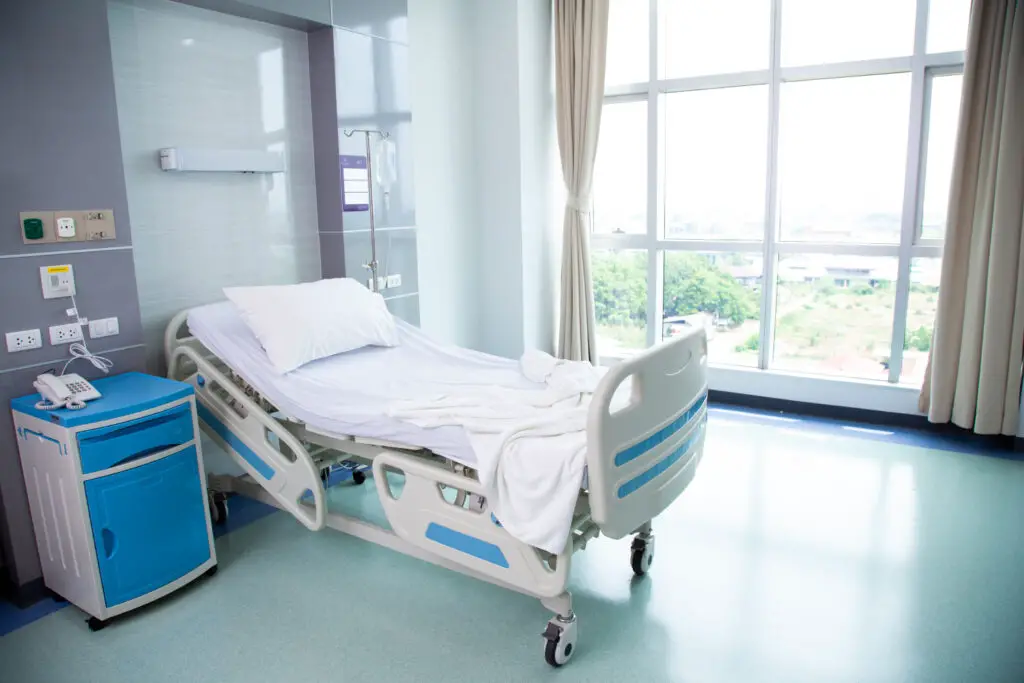
The room smelled like antiseptic and plastic tubing and the faint metallic heat that comes off a fever.
My hair was stuck to my neck. The oxygen mask had left pressure marks along both cheeks that were still sore two days later. Every breath I took had a thin scratch in it, low down in my chest, like something dragging.
The nurse came in three separate times that morning.
Each time with the same worried expression she was trying to keep behind her professional face.
She checked the monitor. She checked my chart. She asked me how dizzy I got when I stood up.
I wanted to answer her honestly.
My mother was standing three feet away with her arms crossed, close enough to hear every word.
So I said, “A little.”
The nurse looked at me for one long second.
Then she looked at my mother.
“Her oxygen levels are still unstable,” she said.
My mother folded her arms tighter.
“She can rest at home.”
The nurse did not move from the foot of the bed.
“The doctor is recommending another night of monitoring. Leaving now would be against medical advice.”
Against medical advice.
Those four words should be enough to stop any parent in the country.
They were not enough to stop mine.
I want to explain my mother a little, because otherwise none of this makes sense.
She has always made herself the manager of other people’s emergencies.
When I was twenty and had mononucleosis, she took my debit card to pick up my prescriptions and memorized my PIN while she was standing at the pharmacy counter. She told me afterward like it was a favor. Now I’ve got it saved, so you don’t have to keep telling me.
When I moved into my first apartment at twenty-three, she insisted on keeping a spare key. For safety.
When I filled out the emergency contact form at my job three years ago, I put my friend Denise, and my mother found out somehow and cried on the phone for forty minutes about what people would think.
I changed it back.
She called every bit of that care.
For most of my life, I almost believed her.
My father is quieter, which fools people into thinking he’s the kinder one.
He is not.
He is just the kind of man who lets his wife make the cruel decisions and then behaves as though staying silent through them makes him innocent of anything.
That morning, he stood at the hospital window checking flight confirmations on his phone.
He did not look at me once between nine and ten-fifteen. I counted.
My younger brother was texting from the hallway. Probably complaining that we were going to make them late, which turned out to be exactly right.
Their Florida trip had been booked since February.
Beachfront resort in Destin. Rental car. Two dinner reservations at places my mother had looked up and described at every single family dinner for four months, in a voice she has never once used to ask me how I was doing.
Two days before that hallway, I had collapsed at work.
I remember trying to finish an email while my fingers went numb and tingly. I remember standing up and thinking the office carpet had somehow tilted. I remember Marissa from two desks over saying my name from very far away.
Then a siren.
Then fluorescent lights going past overhead.
Then a mask forcing air into my lungs while somebody told me to stay awake, over and over, in a voice that was not asking.
The doctor said a severe respiratory infection had turned into complications. I was too feverish to follow every word of it.
I understood his last sentence perfectly.
“You are not safe to leave yet.”
He said it clearly. He said it to me. He said it in front of my mother, on Wednesday evening, while she stood by the door with her purse already on her shoulder.
And at 10:17 the next morning, she told me to get dressed.
I tried.
That’s the part people who didn’t grow up like this don’t understand.
You can be twenty-eight years old, employed, living on your own, paying your own rent — and you will still hear the old command in that voice before you hear your own fear.
My hands shook so badly I could barely get my shirt over my head. My mother stood there and watched me do it and did not help.
The nurse came back with papers.
The top sheet said AGAINST MEDICAL ADVICE in block capitals across the header.
My mother signed where the staff pointed.
I remember the nurse’s jaw going tight.
I remember my father clearing his throat once, and then saying absolutely nothing.
I remember my own fingers closing around the edge of the blanket until the fabric dug lines into my palm.
The nurse walked with us all the way to the elevator.
Then she stood between my mother and the doors.
“If she gets worse, she needs emergency care immediately. Not in the morning. Immediately.”
“We know,” my mother said.
She sounded bored.
And the nurse turned slightly, so her body blocked me from view, and pressed a folded yellow sticky note into my hand.
A phone number.
Underneath it, two words: patient rights.
She closed my fingers around it before my mother could turn back around.
That woman’s name was on her badge and I did not read it. I have thought about that more times than I can count.
That small thing probably saved my life.
At the time, I was too sick to understand what she had just done.
They didn’t drive me to my apartment.
That was the first real warning that the plan was not about my recovery.
My apartment was eleven minutes closer to the hospital.
My medication list was there. My phone charger was there. My inhaler refill paperwork, my bed, my groceries, my everything.
Instead my father took the exit toward their house out past Grove City.
I asked why.
My mother kept her eyes on the road and said, “Because someone needs to keep an eye on you.”
I almost laughed.
Someone.
Not them. Not for long.
Halfway there, I asked for my debit card back.
I wanted to order groceries delivered and figure out which of the prescriptions in the discharge packet I could afford first.
My mother did not turn her head.
“We used your account to cover the rental car and the hotel,” she said. “We’ll pay you back.”
She said it so calmly and so evenly that for a second I genuinely thought the fever had scrambled the words on their way into my head.
I asked her to say it again.
She sighed, the way she does when I’m being difficult.
“Don’t start, Renee. It was temporary.”
Temporary.
That is a very easy word for people spending money they did not earn.
I had a hundred and eighty-two dollars in that account after rent.
They knew that. They knew I had missed four days of work. They knew I do not have savings that can absorb a stolen vacation.
I opened my banking app with hands that would not hold still.
The charges were lined up neatly, one after another, like evidence sitting there waiting for somebody with enough nerve to look at it.
8:44 a.m. — airline, seat upgrade, $312.
9:03 a.m. — resort, deposit, $890.
9:19 a.m. — restaurant, prepaid reservation, $140.
And a pending hold for the rental car.
A fraud alert banner was pulsing at the top of the screen.
She had made the first charge at 8:44 in the morning.
The nurse handed her the AMA paperwork at 10:17.
Which means my mother booked the upgrade before she ever told the hospital she was taking me out.
She had not borrowed from me.
She had drained me, and then she had signed me out, and she had done it in that order.
When we got to the house, they helped me inside with the irritated care people use when they’re carrying something fragile they resent owning.
My father unlocked the door.
My brother carried my hospital bag with two fingers like it had something wet on it.
My mother pointed at the kitchen table.
There was a paper grocery bag sitting on it.
A sleeve of saltines. A box of store-brand cold medicine. Two cans of chicken soup.
And one glass of water, already poured, already room temperature.
“Just rest,” she said.
The house smelled like dust and lemon cleaner and coffee grounds that had been sitting in the machine too long.
The refrigerator hummed. The clock over the stove ticked. Somewhere in the sink, water dripped at the slow indifferent pace of a room that did not care whether I could breathe or not.
I asked when they were leaving.
My mother adjusted her purse strap on her shoulder.
“Tomorrow morning. Before sunrise, so we beat traffic to the airport.”
I stared at her.
“You can’t leave me here alone.”
My brother was already scrolling on his phone in the doorway.
My father looked down at the keys in his hand.
And my mother said, “You’re not a child, Renee.”
That was the trick. That was always the trick, my entire life.
When they wanted compliance, I was their child.
When I needed protection, I became an adult.
I told her I got dizzy every single time I stood up.
I told her my rescue inhaler was nearly empty and the refill was at a pharmacy near my apartment.
I told her the doctor had said in plain English that I could end up back in the emergency room.
And my brother shrugged.
“Call 911 if you’re that bad.”
Twenty-two years old, said with the total casual ease of somebody who has never once in his life had to wonder whether help would get to him before his body quit.
Nobody corrected him.
Nobody told him to apologize. Nobody even looked uncomfortable.
That was the moment I understood that an entire family can abandon you while standing in the same room with you, without a single person raising their voice.
The next morning I woke up to the sound of the front door closing.
Tires over gravel. A car door. Then another one. Then the engine.
Then that house went silent.
Not peaceful silence.
The kind that presses down on your chest because you know for a fact that nobody is coming down the hallway if you call out.
My phone was at nine percent.
The charger was in my apartment, forty minutes away, in a city I could not drive to.
My inhaler had maybe four doses left in it. I’d counted them at three in the morning by phone light.
The refrigerator had condiments in it. Half a case of beer. A bag of apples with soft brown places pushed into the skin.
I tried to stand up at about eight and nearly went straight down.
My vision narrowed at the edges the way it does. I got a hand on the back of a chair and stayed there, bent over, until the room stopped bending with me.
By noon I was on the kitchen tile.
Not because I fell. Because I sat down and then found that getting up again was not something I could currently arrange.
The floor was cold through my clothes and it actually felt good against my face.
And from down there I could see the family calendar hanging on the wall by the phone.
Across that entire week, in my mother’s cheerful blue marker, in her round handwriting:
VACATION.
I stared at that word until the letters came apart.
And that’s when I remembered the sticky note.
It was still folded in the pocket of the hoodie the nurse had helped me put on before we left.
I crawled to my bag, because standing was not on the table.
The paper was wrinkled and warm from having been in my hand.
At 12:38 in the afternoon, I called the number.
A woman answered on the second ring.
I tried to explain what had happened and my voice came out thin and torn and humiliating, and I had to stop twice to breathe.
I told her the hospital name.
I told her I’d been discharged against medical advice the previous morning.
I told her my mother had signed the form.
I told her my family had left for Florida before sunrise and that my debit card had paid for their trip.
There was a pause on the line.
Not the dismissive kind. Not the pause adults use while they decide whether you’re being dramatic. I know that pause. I’ve been hearing it since I was nine.
This was a different one. This was somebody putting pieces together fast.
“Okay,” she said. “Do not hang up.”
I cried then. Not loudly, because I did not have the air for loudly.
She kept me talking.
She asked whether the doors were locked. She asked whether I had any medication at all in the house. She asked whether I could send her screenshots.
My phone said four percent.
I told her that.
She said, “Then listen to me carefully. We’re going to document everything we can before that battery dies.”
That was the first time in three days that any human being had sounded like my survival was a task worth completing on a schedule.
I screenshotted the charges.
I photographed the empty refrigerator with the door open.
I photographed the discharge packet with the AMA header.
I photographed the paper bag with the crackers and the cold medicine and the two cans of soup.
And I photographed the family calendar, with VACATION written across the same week that my lungs could not do their job.
I sent all of it.
Then my phone died in my hand.
For the next hour I was certain I had lost the only chance I was going to get.
I lay on that tile and watched the light move across the cabinet doors and listened to my own breathing, which had a small whistle at the end of every exhale now.
I thought about my apartment. My bed. The plant on my windowsill that was probably fine and that I could not stop worrying about.
When the knock came, I thought I’d imagined it.
Then it came again, harder.
A woman’s voice called my name from the porch.
I said something. I don’t know what. It wasn’t loud enough.
They did not break the door down.
They did something considerably worse for my mother.
They used the spare key from under the ceramic planter, which my mother had told the neighbor about at a barbecue three summers ago, and which the neighbor mentioned to the officer standing on the walk.
The woman crouched down beside me on that kitchen floor.
She introduced herself as being from the county patient advocacy office. The officer behind her said they were doing a welfare check.
I remember apologizing for the mess.
I remember that clearly. Lying on a kitchen floor unable to stand, apologizing to two strangers about the state of somebody else’s kitchen.
And the woman put her hand on my shoulder and said:
“You do not need to apologize for needing help.”
Something came apart in me at that sentence and I have never fully put it back.
They called an ambulance.
Nobody asked my mother’s permission for anything.
At the hospital, my oxygen saturation was bad enough that the ER doctor’s face changed when he pulled up the discharge summary from the previous morning and read it.
I watched him read it twice.
They admitted me again. They started treatment again.
They charged my phone at the nurses’ station.
They brought me warm blankets and a cup of water with a straw in it because lifting a cup made my hands shake too much and somebody had noticed without me saying anything about it.
The advocate came back the next day with a folder.
She had the screenshots I’d sent before my battery died.
She had the AMA discharge packet.
She had the welfare check report from the officer.
She had my medication list showing four prescriptions that had never been filled, because I had no access to my own money.
And she had one thing I did not know existed.
The nurse from the elevator hallway had written an incident note.
Timestamped 10:21 a.m. Four minutes after the paperwork was signed.
It documented that staff had directly warned my mother the patient was medically unstable.
It documented my mother stating that travel plans and cost were her reasons for removing me.
It documented my visible difficulty standing at the elevator.
It documented my father’s presence in the room and his failure to intervene.
That woman had gone back to her station, four minutes after we left, and written it all down.
That note changed everything that came after.
The bank was next.
I had been afraid to call them, because my mother knew my PIN, and some part of me still believed that made it my fault.
I said that out loud to the officer.
He said, “Ma’am, knowing a PIN for one purpose is not permission for another. She didn’t have access. She took access.”
The bank opened a fraud claim that afternoon.
The resort deposit was flagged. The rental car hold was flagged. The airline upgrade had already posted, but the investigator said the records existed for every single transaction, down to the IP address the booking came from.
Which was the wifi in my parents’ house.
Forensic proof is cold comfort when you’re sick.
But it is comfort.
Because it means the story doesn’t have to live only inside your own shaking voice, where anybody can walk in and tell you it wasn’t like that.
There are timestamps. There are forms. There are signatures.
And there are people whose job it is to read them.
Three days later, my parents were due back.
I was not on the kitchen tile anymore.
I was in their living room, but not because anybody had rescued me and brought me home.
The advocate and the officer had arranged for me to be there long enough to collect my belongings and document the condition of the house, with a witness present.
I sat wrapped in a blanket in a chair near the entryway.
My hospital wristband from the first discharge was in a sealed plastic bag on the table beside the folder.
The family calendar still said VACATION.
At 6:11 in the evening, headlights swept across the living room wall.
I heard my mother laugh on the porch.
She sounded rested. She sounded sunburned and pleased with herself and mid-story about something.
Keys jingled.
The front door opened.
And she stopped dead when she saw a woman in a blazer standing inside her house.
My father was right behind her with a rolling suitcase.
My brother had a hoodie tied around his waist and a backpack over one shoulder and a lanyard from the resort still on his wrist.
For about three seconds, nobody said anything at all.
Then my mother said, “What is this?”
The advocate raised one hand.
“Ma’am, don’t step past the threshold, please.”
And my mother looked at me.
Really looked at me. Not the way she looks when she wants me to do something. Not the way she looks when she’s calculating how much trouble I’m causing her.
She looked because the room did not belong to her version of events anymore, and she could feel it before she understood it.
Her beach bag slid down off her arm.
The officer came in from the porch behind them.
The advocate opened the folder on the table.
She showed the bank screenshots first.
8:44. 9:03. 9:19.
My mother said it was temporary.
The advocate showed the discharge page with AMA across the top.
My mother said hospitals exaggerate everything for liability.
The advocate showed the incident note. Timestamped 10:21.
And my father finally spoke.
“You told them it was about the trip?”
His voice was very small.
My mother turned on him so fast her earring swung.
“Don’t stand there and act like you didn’t know.”
That was the first honest sentence out of her mouth in a week.
My brother stared at the carpet.
The officer asked, in a completely level voice, whether any of the three of them would like to explain why an adult patient recovering from respiratory complications had been left alone in that house for three days without medication, food, transportation, a working phone, or access to her own money.
Nobody answered him.
Nobody moved.
My mother tried once more.
“This is a family matter.”
And the advocate closed the folder.
“No,” she said. “It became a documented case of medical neglect and financial exploitation the moment you signed her out against medical advice, used her account, and left the state.”
Those words did not fix anything.
They did not put air back into my lungs. They did not put nine hundred dollars back into my account that evening.
But they did the one thing I had needed for about fifteen years.
They named it.
My mother has survived her entire adult life by renaming things.
Control becomes concern.
Theft becomes borrowing.
Abandonment becomes tough love.
And cruelty becomes family.
That evening, in her own front hall, a woman with a folder and a case number simply refused to use her dictionary.
The bank reversed most of the charges over the following six weeks.
The resort disputed the deposit reversal at first and then dropped it about four days after the documentation was sent over.
Nobody was dragged out in handcuffs that night. Real consequences almost never arrive with music playing.
They arrive as reports. Frozen accounts. Letters with case numbers on them. Interviews you have to sit through and repeat yourself in. And people who stop answering the phone when a manipulator says you know how she is.
My mother called me ungrateful. Twice, in voicemails, before I blocked the number.
My father sent one text.
This has gone too far.
My brother sent nothing.
For a while that silence hurt worse than either of the others.
Then it got useful. Silence tells you where not to go back to.
My recovery took about five months.
Two rounds of antibiotics, a steroid course, pulmonary follow-ups every three weeks, and a stretch in the spring where walking up the stairs to my apartment was the hardest thing I did all day.
There were missed shifts. There were forms for my employer and forms for the bank and a statement I had to give twice, and my hands shook every single time I had to say the words out loud again.
But I was alive, and I was in my own place, and both of those things were choices somebody else had almost made for me.
I changed my emergency contact to Denise, permanently, and I did not tell anybody in my family.
I changed my PIN. I changed my locks. I took my mother’s name and number off every account, every pharmacy record, every portal, everywhere it had ever appeared, and it took me four separate afternoons to find them all.
The first night back in my own apartment, I sat on the floor next to an outlet with my phone charging beside me and a grocery bag next to that.
Soup. Bread. A bag of apples. And a brand-new inhaler with a full counter on it.
Small things become holy after somebody has tried to make you survive without them.
I kept the yellow sticky note.
It’s folded in the drawer of my nightstand. The ink has faded, but I know all ten digits by heart.
I keep it because it reminds me that not everybody in that hallway looked away.
One person saw exactly what was happening at 10:17 in the morning, and could not stop it, and instead of shrugging, she left me a door.
My parents drove away and left me on a kitchen floor with four doses of medication and a bag of crackers while they went to the beach.
They came back three days later expecting gratitude, obedience, and silence, the way they always had.
Instead they found somebody else standing behind my front door.
And for the first time in twenty-eight years, the person standing there was not there to protect their version of this family.
She was there to protect me.

Lila Hart is a dedicated Digital Archivist and Research Specialist with a keen eye for preserving and curating meaningful content. At TheArchivists, she specializes in organizing and managing digital archives, ensuring that valuable stories and historical moments are accessible for generations to come.
Lila earned her degree in History and Archival Studies from the University of Edinburgh, where she cultivated her passion for documenting the past and preserving cultural heritage. Her expertise lies in combining traditional archival techniques with modern digital tools, allowing her to create comprehensive and engaging collections that resonate with audiences worldwide.
At TheArchivists, Lila is known for her meticulous attention to detail and her ability to uncover hidden gems within extensive archives. Her work is praised for its depth, authenticity, and contribution to the preservation of knowledge in the digital age.
Driven by a commitment to preserving stories that matter, Lila is passionate about exploring the intersection of history and technology. Her goal is to ensure that every piece of content she handles reflects the richness of human experiences and remains a source of inspiration for years to come.