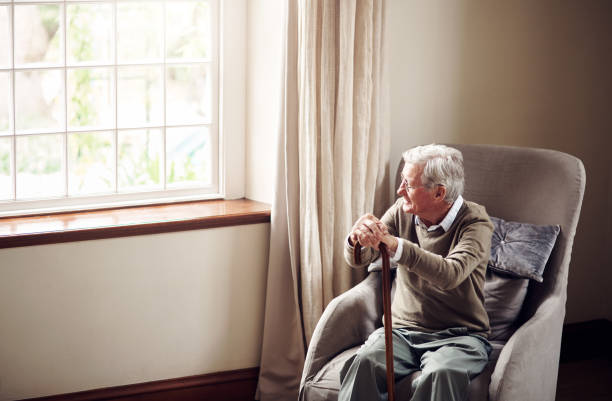
My son looked me in the eyes and told me my bedroom was no longer mine.
He did it while I was still wearing the hospital bracelet.
That plastic band was tight around my wrist, the kind that leaves a red mark when you twist it too much, and the discharge papers were folded inside the pocket of my overnight bag.
Every breath pulled against my ribs.
Every step from the driveway to the front door had been a small negotiation with pain.
Ryan had helped me out of my own SUV with one hand under my elbow and the other holding his phone, because Cassie had been texting him steadily since we left the hospital parking garage.
Three dots appeared.
Then disappeared.
Then appeared again.
I should have known right then that the house had changed before I ever crossed the threshold.
The little flag Patricia used to keep by the porch railing was still there, snapping in the wind like it was trying to get my attention.
The front door stuck in the humidity the way it always had, and I put my shoulder into it out of thirty-one years of habit and immediately regretted it, because of the staples.
The hallway smelled like floor cleaner and Cassie’s perfume.
Duke barked once from somewhere near the living room and then went quiet.
And Cassie was standing at the hallway entrance in a beige cardigan with her arms folded, wearing that careful expression people use when they’ve already made a decision and want you to call it kindness.
“We made a few changes,” she said.
I remember those exact words because they landed wrong.
Not welcome home.
Not how are you feeling.
Not do you need to sit down, Gerald, you look gray.
Just changes.
Ryan picked up my overnight bag and carried it down the hall.
I watched the direction his feet went.
He did not turn toward my bedroom.
He turned toward the narrow little room at the end of the hall — the one Patricia and I had used for storage back when we were still young enough to believe the house would always hold both of us.
I followed as far as my body would let me go.
The incision under my shirt pulled tight. The walls seemed closer than they had been on Thursday.
And then I looked into my bedroom and saw bedding I did not recognize on my mattress.
Cassie’s perfume bottles lined up across Patricia’s dresser.
Women’s shoes along the baseboard where my work boots go.
My reading lamp moved to the far side of the room.
And the framed photograph of Patricia on our wedding day was gone from the nightstand.
For a moment I honestly could not make my mind arrange what my eyes were showing it.
Then Ryan spoke from behind me.
“We figured you’d want to be closer to the bathroom anyway, Dad. Your new room’s down the hall.”
He said it like he was explaining a reasonable upgrade.
He said it like the bedroom where my wife and I had slept for twenty-three years was a spare resource that could be reassigned while I was unconscious on a table.
I turned and looked at him.
Then I looked at Cassie.
She lifted her chin.
“Gerald, you need to be practical.”
That was the word she always used when she wanted something that belonged to me.
Practical.
It had started with smaller things.
A chair. A shelf. A cabinet. A wall of the garage. A corner of the living room.
People do not take over a house all at once if they’re clever about it.
They take it inch by inch, and they call every single inch a favor.
My name is Gerald Whitaker.
I am sixty-four years old. I worked thirty-eight years as a project engineer for a mid-sized construction firm out of Marion, and I know how a structure fails. It is almost never the dramatic thing. It’s the small deflection nobody measures until the load finally finds it.
That house had been mine for thirty-one years.
I bought it when Ryan was two and Patricia still wore her hair in a short brown bob she cut herself at the bathroom mirror because money was tight and a salon was thirty dollars we did not have.
We refinished the kitchen cabinets ourselves over two summers. We planted the oak in the front yard the spring Ryan started kindergarten and it is now taller than the roofline.
I built every shelf in that garage.
Patricia picked the bedroom curtains after three weekends of gentle arguing over whether blue was too cold or cream was too boring.
She won. She usually did.
Patricia had a way of seeing through people that I envied my entire adult life.
She could read a room before I had found somewhere to set my coat down. She knew who was nervous and who was lying and who was showing off and who needed somebody to hand them a plate without making a production out of the charity.
I used to think some of that judgment had rubbed off on me over the years.
After she died, I found out exactly how much of it I had just been borrowing.
Patricia died of a stroke four years before the day of the bedroom.
She was fifty-nine.
She was making coffee in the kitchen wearing the blue robe I’d bought her one Christmas because she was always complaining the house was cold in the mornings.
By the time the ambulance got there she was already going.
The doctor told me it had been quick. People say that like quickness makes grief tidier.
It does not.
When I came home from that hospital without her, the house looked exactly the same and felt like something had been pulled out of the walls.
Her mug was still on the counter.
Her sweater was still over the back of the kitchen chair.
Her book was still on the arm of the couch, open, face down, on the page where she’d left it Tuesday night.
For four months I walked around all of it, because moving any of it felt like making her more gone.
Ryan started coming around more after that.
He called on Sundays. He came by to watch ball games he barely cared about. He fixed the loose hinge on the pantry door one afternoon and brought me a paper bag of groceries another.
And I mistook usefulness for devotion.
Maybe I needed to. Grief will make a grown man grateful for crumbs if the house has been quiet long enough.
Eight months after the funeral, he asked at my kitchen table whether he and Cassie could stay with me while he got a small freight brokerage off the ground.
He’d left his logistics job that spring. He said the industry was changing. He said independent brokers could do well with the right network and he had the contacts.
He said Cassie’s paycheck from the dental office wouldn’t cover their rent while he built it.
“Six months,” he said.
Then he paused and gave me the same nervous half-smile he’d worn at sixteen when he dented Patricia’s car in a church parking lot.
“Maybe eight.”
I said yes.
Of course I said yes.
He was my son. The house had four bedrooms. And I was lonely enough that I’d started leaving the television on all night just for the sound.
Those three facts did more damage together than any one of them could have managed alone.
They moved in on a Tuesday in October with two carloads of boxes, a rented truck, and a golden kind of energy that made that house feel alive again for about six weeks.
Cassie reorganized the kitchen. I did not like it. Everything I reached for was somewhere else for a month.
I let it go.
Ryan set up a folding table in the guest room and called it his office.
I let that go too.
They said they’d cover utilities and split groceries once things settled.
I told them not to worry about it right away.
That was my first real mistake, and I’ve thought about it more than any of the others.
Not because family should require paperwork. Because when money and shelter and grief are all living in the same house at the same time, assumptions turn into claims, and nobody notices the exact day it happens.
Six months went by. The business was still in early development.
Eight months went by. He had promising leads.
A year went by.
The utility bills were mine. The grocery receipts were mine. The mortgage statement came in my name. The county tax notice came in my name. The homeowners insurance came in my name.
But inside that house, my name had started to matter less every month.
Cassie bought Duke without asking me.
He is a good dog and that was never the point.
The point was the red collar on an animal I had not agreed to, sleeping on a couch I had paid for, in a living room where Patricia’s rocking chair had suddenly started to throw off the flow.
Cassie moved that chair to the front window.
I moved it back.
She moved it again.
I moved it back again.
The third time, it disappeared entirely.
Ryan told me she’d put it in the storage closet because Duke needed the floor space.
I found it under a box of Christmas lights with one runner scraped raw against the concrete.
I stood there with my hand on that closet door and felt something turn sour underneath my ribs.
It was not about a chair.
It was about whether my wife could still have a place in the house we built together.
It was about whether I could.
I should have said something that night. I should have told them the chair stayed where it belonged or they could find somewhere else to live.
Instead I carried it back out to the living room by myself and set it down and said nothing at all.
Silence is not always patience.
Sometimes it’s just permission wearing a nicer coat.
The brokerage never became what he’d described at my kitchen table.
He had one client, through a friend from college, and he spent most of his days talking about scaling and headwinds and market timing and cash flow.
Those words sounded professional enough to paper over the fact that I was paying for the house, the power, the water, the groceries, the dog food, and about half the household supplies for three adults.
Whenever I brought it up, Ryan got quiet.
He’d lean back and rub his jaw and say he didn’t want to add stress to the household.
By household, he meant me.
By stress, he meant accountability.
Cassie was smoother about it. She framed all of it as care.
“Gerald shouldn’t be climbing that step stool.”
Then my tools got moved out of the kitchen closet.
“Gerald doesn’t need all this clutter.”
Then Patricia’s recipe box, in her handwriting, went into a cabinet above the refrigerator that I could not reach without the step stool they’d taken away.
“Gerald needs a safer routine.”
Then Ryan started answering my front door like it was his.
After my first heart attack — fourteen months before the bedroom — their language changed completely.
Ryan filled out the hospital intake because my hands were shaking too badly to write cleanly.
Cassie read my discharge summary at the kitchen table and circled phrases in pen.
Restricted lifting.
Cardiac follow-up.
Home assistance recommended.
And at first I was genuinely grateful. Ryan drove me to a cardiology appointment. Cassie picked up a prescription and wouldn’t take the money for it.
They put a chair in the shower and installed a grab bar in the hallway bathroom, and Ryan did a good job on the anchors, and I told him so.
Some of that helped.
Some of it was control dressed up as help, and it took me a long time to learn how to tell the two apart from the inside.
By the second surgery, they had gotten comfortable making decisions before I was in the room.
That surgery was on a Thursday morning.
At 9:17 the hospital called Ryan, because I’d listed him as my emergency contact fourteen years ago and had never had a reason to change it.
At 3:40 that afternoon I woke up under white lights with a nurse checking the incision under a loose gown.
The instructions were clear. No strain. No unnecessary stairs. No lifting over ten pounds. Avoid stress.
I almost laughed at the last one and it hurt to laugh.
Ryan picked me up two days later.
He looked tired but he did not look worried, and I noticed that and put it away somewhere for later.
Cassie didn’t come.
She texted him for most of the ride home. I watched those message bubbles appear and disappear on the phone in the cupholder, and something in me started bracing before I understood what for.
Then we got to the house and Cassie said they’d made a few changes.
And Ryan carried my bag to the wrong room.
And I saw my bedroom.
Her shoes. Her bottles.
And her cardigan draped over Patricia’s chair in the corner.
That cardigan did something to me the perfume bottles had not.
It was soft and ordinary and completely careless.
She hadn’t just moved into that room.
She had settled into it.
“Ryan,” I said. “Why is Cassie’s things in my bedroom?”
He sighed.
That sigh almost ended the whole thing right there in the hallway. It was the sigh of a man being inconvenienced by the person he is currently hurting.
“Dad. Cassie needs this room. Your stuff’s down the hall.”
Cassie stepped forward.
“Don’t make it dramatic. You need to be closer to the bathroom anyway. This makes sense.”
I looked toward the storage room at the end of the hall.
My clothes had been pushed into a narrow closet, most of them still on hangers, some of them not.
My shaving kit was sitting on a cheap pressboard dresser we’d bought at a discount store in 1998.
Patricia’s wedding photograph was leaning against the wall next to a stack of folded socks.
And my father’s watch — the one he handed me on my thirtieth birthday nine months before he died — was lying on top of a pile of undershirts like it had no more significance than laundry.
For one second the rage came up so hot I could taste metal at the back of my mouth.
I pictured sweeping every perfume bottle off Patricia’s dresser onto the floor.
I pictured glass breaking.
I pictured my son finally hearing a sound loud enough to understand.
I did not do it.
I stood there in that hallway breathing carefully through the pain in my chest.
The hallway clock ticked. The air conditioner rattled the way it has since 2019. Duke’s tags jingled somewhere behind Cassie.
And Ryan looked away first.
That was when I knew he understood exactly what he had done.
He had simply calculated that I was too weak to answer it.
So I turned around and walked to the kitchen.
Every step hurt.
I sat down in Patricia’s chair at the kitchen table, opened the drawer where I keep the house papers, and pulled out a yellow legal pad.
Ryan came in after me.
“Dad. What are you doing?”
I wrote the date at the top of the page. My hand shook a little from the medication but the numbers came out readable.
Then I wrote the first line.
Mortgage statement.
Then the second.
County property tax notice.
Then the third.
Homeowners insurance.
Ryan stopped beside the table.
Cassie came in from the hall and stood near the counter.
And her face changed. Not much. Just enough.
Because people who are used to managing you are not afraid of anger.
Anger they know how to work with. Anger they can describe to other people later.
What they are afraid of is documentation.
I wrote utilities.
I wrote groceries.
I wrote garage tools.
I wrote master bedroom contents.
Ryan gave a short laugh with nothing behind it.
“Dad, come on. This isn’t necessary. You’re upset.”
“No,” I said. “I was upset when I saw your mother’s photograph sitting on the floor of a storage room. This is necessary.”
Cassie crossed her arms again but the movement was not as clean as it had been an hour earlier.
“You can’t just kick out family because you’re embarrassed about needing help.”
Embarrassed.
There it was. The word she’d probably been holding for a while.
I reached over and opened the side pocket of my overnight bag.
Ryan frowned, because he had never seen the second envelope. He’d been checking his phone at the discharge desk the whole time.
The hospital social worker had given it to me quietly, on my last morning, after she’d asked the nurse to step out.
She had asked me whether I felt safe and respected at home.
I almost lied to that woman. I had my mouth open to say everything was fine.
Then I thought about Patricia’s chair under a box of Christmas lights with the runner scraped raw.
So I told her the truth. Not all of it. Enough of it.
Inside that envelope were three phone numbers and a referral sheet.
A senior services advocate.
A housing attorney.
And a non-emergency documentation line for elderly homeowners who feel pressured inside their own homes.
When I set that envelope down on my kitchen table, Cassie’s hand came off the counter.
Ryan’s mouth opened and nothing came out of it.
That was the first time all day he stopped looking like my caretaker and started looking like a son who had just remembered whose name is on the deed.
I picked up my phone.
“Dad,” he said. Softer now.
The softness made me sadder than the disrespect had.
Because it proved he could still sound like my boy when fear reminded him how.
“You don’t have to do this.”
I looked at him for a long moment.
And I saw the kid who used to fall asleep in the back seat on the drive home from Little League with his glove still on his hand.
I saw the teenager who cried in the garage the night his mother caught him lying about where he’d been.
And I saw the man who had moved his father out of his own bedroom while that father was under hospital lights.
All three of them were standing in my kitchen at the same time.
That’s one of the cruelest parts of loving your child once he’s grown. You have to keep dealing with who he has chosen to become while you’re still holding onto who he was.
Cassie whispered, “Ryan. What did he already tell them?”
He didn’t answer her. He was watching the phone in my hand.
I dialed the first number on the sheet.
When the advocate picked up, I gave her my name. Then my address.
Then I said, clearly, because I had practiced it in my head twice:
“I am the homeowner. My adult son and his wife moved into my house temporarily two and a half years ago. While I was hospitalized for heart surgery this week, they moved me out of my master bedroom without permission. I need help documenting what happens next.”
Cassie sat down on the counter stool like her knees had stopped trusting her.
Ryan turned away and put both hands on the back of his neck.
The advocate did not sound shocked at any point.
That was somehow the worst part of the entire call. She had clearly heard it before. Many times.
She asked whether I was in immediate danger. I said no.
She asked whether my name was on the deed, the mortgage, the utilities, and the insurance. I said yes to all four.
She told me to start with photographs. Document every room. Document where my belongings had been moved to. Save any texts. Don’t argue alone if things escalated. Speak to a housing attorney before serving any kind of formal notice.
Then she asked, “Do you have somebody nearby that you trust?”
I looked at my son standing four feet away with his hands behind his head.
Then I looked away.
“Not inside the house,” I said.
That sentence broke something in that kitchen.
Ryan flinched like I’d hit him.
And Cassie started crying, but it was not the kind of crying that comes from remorse.
It was the kind that comes when a plan stops working.
I hung up and I took photographs.
The master bedroom. The dresser with her bottles on it. The shoes along the baseboard. The cardigan on Patricia’s chair.
The storage room. My clothes shoved into that closet. My father’s watch on the undershirts.
Patricia’s wedding photo on the floor against the wall.
The legal pad. The envelope.
Ryan followed me from room to room saying my name in about four different tones.
Dad.
Dad, stop.
Dad, please.
Dad, you’re making this ugly.
I turned around in the hallway with the phone in my hand.
“No,” I said. “You made it ugly. I’m making it clear.”
That night I did not sleep in the storage room.
I also did not sleep in my bedroom, which I could have done and which some part of me wanted to do just to make a point.
I sat in the recliner in the living room with my medication schedule on the side table and Patricia’s photograph on my lap.
Duke came over around midnight and put his head down near my feet.
I scratched behind his ear, because none of this was his fault.
At 1:13, Ryan came into the living room.
He looked smaller than he had in that hallway.
“I didn’t think you’d care about the room that much,” he said.
And that was when I understood the actual depth of the problem.
He still thought the bedroom was the issue.
“It was never just the room, Ryan.”
He sat down on the couch and put his face in his hands.
And for about four seconds, I thought he might apologize properly.
Then he said, “Cassie feels like you don’t appreciate everything she’s done.”
I closed my eyes.
There it was again.
Cassie. Her feelings. Her space. Her back. Her needs.
In my house. On my bills. At my table.
In my wife’s bedroom.
I did not shout. I spent thirty-eight years around construction sites and I learned early not to confuse volume with strength.
I said, “You and Cassie have thirty days to leave.”
He lifted his head.
That room went very quiet.
“You don’t mean that.”
“I do.”
“Where are we supposed to go?”
And that was the hardest part of the entire thing.
Because I did not want my son on the street. I did not want to punish a man for struggling. I have struggled. Patricia and I ate a great many meals out of a stockpot in 1994.
What I wanted was for him to wake up and become the man I had been pretending he already was.
But the pretending had cost me my bedroom.
“You had six months,” I said. “Then eight. Then two and a half years. You had more time than you ever respected.”
He started crying then. Quietly.
That almost got me.
It would have gotten the version of me who let the chair go.
It would have gotten the version of me who paid every bill and swallowed every sigh and told himself family is messy.
But I was sitting there with staples in my chest and my wife’s photograph on my lap.
I could not betray myself one more time just because my son had finally started to feel a consequence.
The next morning I called the housing attorney.
There was no drama in it. A receptionist, an appointment for Tuesday, and a list of documents to bring.
Mortgage statements. Property tax notice. Homeowners insurance. Utility accounts. Proof of residency. Photographs. Any texts.
I printed what I could and put it all in a folder.
Ryan watched from the kitchen doorway while I did it and said nothing.
Cassie didn’t come out of the bedroom until almost noon.
My bedroom.
At 12:22 she came down the hall holding her phone.
Her eyes were red but her voice had gotten sharp again.
“My mother says you can’t just evict us without cause.”
I didn’t look up from the folder.
“Your mother’s welcome to call my attorney, once I have one.”
That took the color right out of her face.
Ryan said her name like he wanted her to stop.
She didn’t.
“After everything we did for you?”
I looked at the grab bar in the hallway. I looked at the boxes where my belongings had been shoved.
And I looked at a woman standing in my kitchen after sleeping in my wife’s room.
“You helped me just enough to convince yourselves you had the right to take over,” I said.
She flinched.
Good. Some truths ought to sting on the way in.
The attorney told me essentially what the advocate had already implied.
Because they had been living there as family guests for more than two years, this had to be done properly.
Written notice. Documented communication. No changing locks without legal guidance. No threats. No shouting matches.
And no letting them bait me into appearing unstable, because that is a card people play in these situations and she had seen it played before.
I listened and I wrote everything down.
That was familiar ground for me. Plans. Paper. Sequence. Proof.
I spent thirty-eight years documenting other men’s mistakes so they couldn’t be renamed later.
By the following week the written notice was prepared and delivered in a way that created a record.
Ryan stood on the porch holding that envelope like it weighed fifty pounds.
The little flag was still snapping behind him in the afternoon wind.
Cassie read over his shoulder.
She said one word.
“Seriously?”
I said, “Yes.”
No speech. No lecture. Just yes.
The thirty days were ugly.
Not television ugly. Real-life ugly, which is worse, because it’s slow.
Cabinets slammed. Cassie cried loudly on phone calls with her bedroom door open. Ryan stopped meeting my eyes in the hallway.
Duke followed me more than he followed either of them, which somehow made Cassie angrier than anything else.
They tried guilt. They tried silence. They tried talking about how disappointed I’d be in myself later.
And then, on about day fourteen, they tried Patricia.
That was the only time I raised my voice in the whole thirty days.
“Do not use your mother to defend something she would have stopped on the first day,” I told him.
He looked at the floor.
He knew. That was the part that actually hurt.
He knew.
On day twenty-six he knocked on the doorframe of the living room while I was sorting medication into a weekly organizer.
He said they’d found an apartment. Small. Not ideal. Month to month, out by the county line.
Cassie’s mother was helping with the deposit.
I nodded.
He waited for me to soften.
I did not.
Then he said, “Are we done?”
I looked up at him. He was not asking about the house.
“I don’t know,” I said, and it was honest. “But we can’t start anything better while you’re still taking from me.”
He cried again.
This time there was no performance anywhere in it. I saw shame in my son’s face, and maybe grief.
But shame is only worth something if it changes what a person does next.
On the last day they loaded a rented truck.
Cassie did not say goodbye. She sat in the cab of the truck with the door shut for the last twenty minutes.
Ryan stood by the porch steps after the final box went in.
The flag was still there. The mailbox still leaned. The house looked tired.
So did my son.
“I’m sorry about Mom’s picture,” he said.
It was not enough.
It was also the first entirely true sentence he had given me in a very long time.
I nodded.
“I am too.”
After they drove away I went down the hall.
The bedroom smelled like perfume and cardboard dust. The dresser was empty. The mattress was stripped.
There were faint marks along the baseboard where her shoes had sat for three weeks.
I opened the window.
I brought Patricia’s photograph back in and put it on the nightstand where it goes.
I set my father’s watch on the dresser.
Then I sat down on the edge of that bed and let myself feel the whole thing.
Not victory. Not joy.
Something quieter than either.
A room going back to its owner.
A man going back to himself.
In the months after, Ryan called twice.
The first call was short and awkward and mostly about the weather.
The second one lasted almost twenty minutes.
He told me he’d taken a warehouse scheduling job and was keeping a small piece of the brokerage alive on weekends.
I told him I was glad he had steady work, and I meant it.
I did not offer him money.
That was new for both of us and we both noticed it.
Cassie has not called. I am not waiting on it.
The house is quiet now.
At first the quiet frightened me again, the way it had after Patricia.
Then one morning I made coffee in her old mug and stood at the kitchen window and realized the silence was a different silence entirely.
It was not the old kind that holds its breath.
It was clean. There was room in it.
I put Patricia’s rocking chair back by the front window.
The runner still has that scrape across it. I could sand it out and refinish it in an afternoon. I have the equipment in the garage on shelves I built myself.
I probably will, eventually.
But for right now I leave it there, because it reminds me exactly what happens when you let people drag the things that matter into a closet and call it convenience.
Love does not require you to disappear.
Family does not get to convert your grief into square footage.
And help that only functions when you surrender your dignity was never help in the first place.
It’s possession wearing a concerned face.
I came home from heart surgery and found my bedroom taken.
I got it back.
More importantly, I got back the part of me that finally remembered whose house this is.

Laura Bennett writes about complicated family dynamics, difficult conversations, and the quiet moments that change everything. Her stories focus on real-life tensions — inheritance disputes, strained marriages, loyalty tests — and the strength people find when they finally speak up. She believes the smallest decisions often carry the biggest consequences.