What He Left Behind
The accident happened on a Thursday.
A drunk driver ran a red light on Garrison Avenue at four-seventeen in the afternoon, and what I remember most clearly about the moment of impact is not the sound, though the sound was enormous, but the strange suspension just before it, when I could see what was coming and understood with perfect clarity that I could not stop it. Then the glass and the spinning and the quiet afterward that turned out not to be quiet at all but my own ears adjusting to a new volume of the world.
I woke up in the hospital with a broken left leg, three fractured ribs, a laceration above my right eyebrow that would eventually leave a thin scar I would touch sometimes without thinking, and a headache that lived behind my eyes for three weeks like an uninvited tenant. The ER doctor, a tired woman with kind hands, told me I was lucky in the way that people say lucky when they mean alive.
I was thirty-four years old. My daughter Sophie was four. My husband David was at a work dinner when it happened and arrived at the hospital two hours later still wearing his blazer, which he never took off the entire time he sat beside my bed, as though he might need to leave quickly and didn’t want to be encumbered.
He held my hand. He said he was sorry this happened. He said I had given everyone quite a scare. I noticed he said everyone rather than me, and I noticed this the way you notice a small wrongness in a familiar room, something slightly out of place that you can’t immediately name.
I told myself I was reading too much into a pronoun. I had just been in a car accident. My ribs made breathing an act of concentration. I was not in a condition to analyze language.
I should have trusted the wrongness.
I had believed, for seven years, that David Mercer was the stable kind of person. Not passionate, particularly. Not demonstrative in the ways I had once imagined a husband might be when I was younger and had ideas about grand gestures and effortless devotion. But stable. Present. The kind of man who showed up, who remembered important dates, who was there when you needed him there. I had come to value this. Stability, I had told myself, is underrated. Drama is for people who don’t have children and mortgages and real lives.
What I had not understood, and what the accident clarified with the brutal efficiency of a pressure test, was that David’s stability was situational. It held in pleasant weather. It was not structural. It was not the kind that holds when the conditions change.
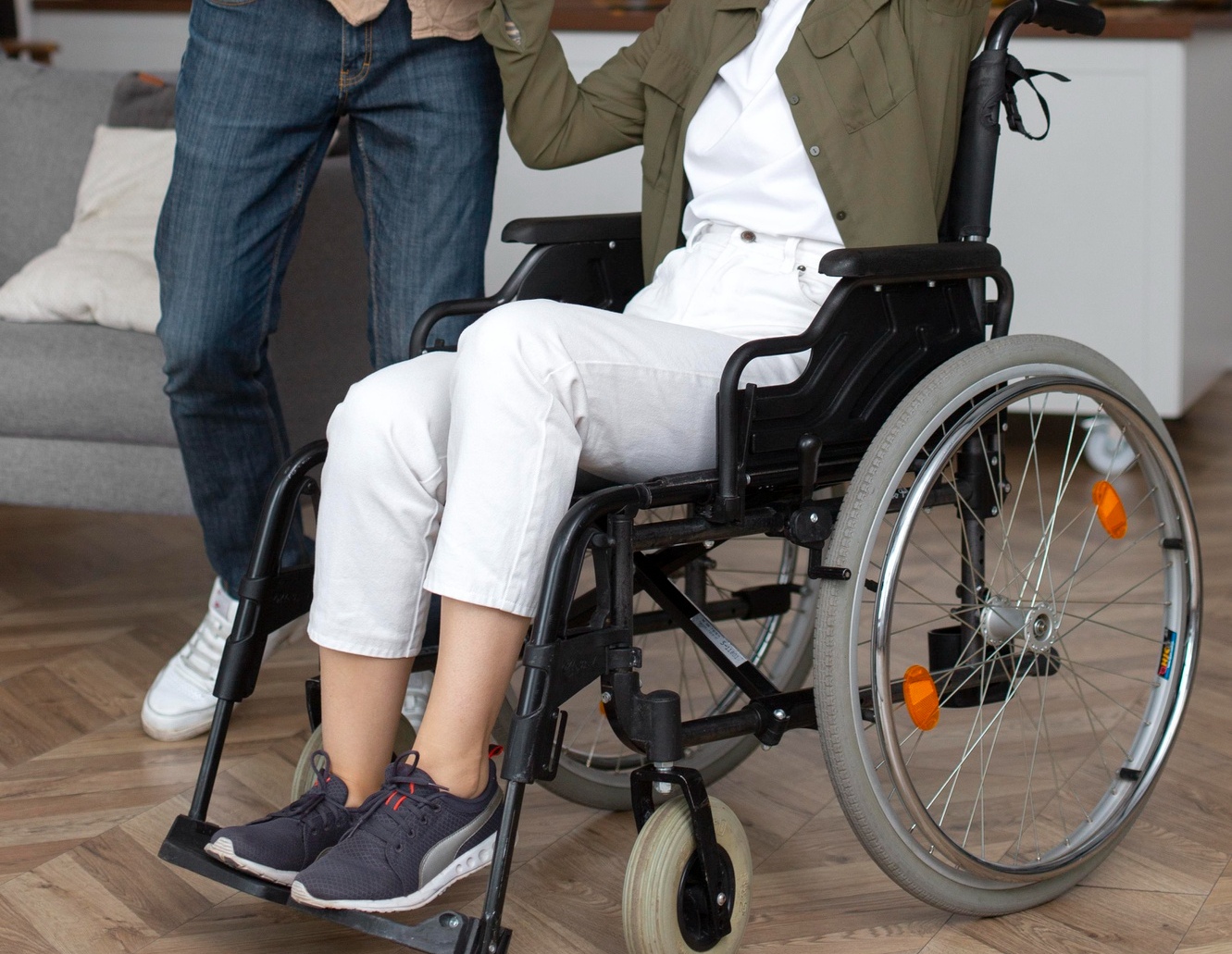
He drove me home from the hospital on Saturday morning. The doctor had specified strict bed rest, a timeline for the leg that would require at minimum six weeks of limited mobility, and a list of things I could not do for myself in the immediate term that was long enough to require a second page. I needed help bathing. I needed help moving through the house. I needed someone to care for Sophie, whose preschool was three days a week and who was four years old and bewildered and needed to be held more than usual, which I could not do easily with fractured ribs because every squeeze sent a current of pain through my midsection that made me go white.
David settled me into bed with the careful performance of attentiveness and then made a phone call I was not supposed to hear. He had stepped into the hallway but our bedroom door does not latch properly, a thing we had meant to fix for two years, and I heard his voice in the careful low register he used when he wanted to be private.
He called his mother.
Eleanor Mercer had never hidden her feelings about me. She had wanted for David a woman from a different background, with a different family, from a world more like her own, and I was not that woman in any respect and she had never reconciled herself to it. She was polite at Christmas and birthdays with the precise warmth of someone performing politeness for an audience, and she and I had long since arrived at a mutual understanding that was really a mutual agreement not to address what we both knew.
I had never expected her to like me. I had expected, in the event of a genuine emergency, that she might temporarily set aside whatever she felt about me for the sake of her son and her granddaughter.
I was wrong about this. I was wrong in a way that would change everything.
She arrived Sunday afternoon with two large suitcases. Not one overnight bag. Not a sensible duffel. Two proper travel suitcases in matching cream leather, the kind of luggage you bring when you are not planning to be brief.
I was in bed. I had taken my pain medication an hour earlier and was in the particular state it produces, not unconscious but softened, the edges of things slightly imprecise, which made what happened next feel at moments like something I might be misunderstanding. I was not misunderstanding it.
Eleanor came into the bedroom and assessed me the way you assess a room you are considering rearranging. Then she opened David’s closet and began removing his clothes from their hangers with the efficient movements of someone who has known what she came to do since before she arrived.
I watched this for a moment, trying to locate the logic of it, because surely she was organizing something, surely there was an explanation that would resolve into sense.
“Eleanor,” I said. “What are you doing?”
She did not look up. “David is going to stay with me for a while. Just until you’re back on your feet.”
David was in the doorway. He was not helping her pack. He was not stopping her either. He was looking at the floor with the expression of a man who has made a decision and is hoping that if he looks at the floor long enough, the decision will simply be implemented around him without requiring him to actively participate in it.
“David.” My voice came out smaller than I intended, which I hated. “What is this.”
It was not a question. There were no rising edges to it. I said it the way you say something you already know the answer to and are giving one last opportunity to be wrong about.
He looked up briefly and then back down.
“It’s just really stressful right now,” he said. “With everything. I can’t function like this. I’ll come back when things are more settled.”
“Our daughter is four years old,” I said. “I have a broken leg. Things being settled is not a timeline I can offer you.”
Eleanor closed the suitcase with the crisp finality of a period at the end of a sentence.
“My son did not sign up to be a nursemaid,” she said, and she said it with the particular composure of someone stating a fact they believe is too obvious to require justification. “He has a career. He has obligations. He’ll return when you’re recovered and things are back to normal.”
I lay in bed with my broken leg and my fractured ribs and I looked at my husband and I waited for him to say something. To say anything. To introduce a single word of contradiction into what his mother had just announced on his behalf.
He came to the bed and kissed my forehead. It was a brief kiss, dry, the kind you give to someone you are managing rather than someone you love.
“Sorry, babe,” he said. “It’s just too much right now.”
Then he picked up the handle of the larger suitcase and carried it into the hallway, and Eleanor took the smaller one, and I heard them in the entryway for a moment, the sounds of departure, shoes and keys and the particular silence of a decision fully made, and then the front door closed.
The house went quiet.
From down the hall I could hear Sophie playing in her room. She had been very quiet all afternoon, the way children go quiet when something is wrong in the atmosphere around them and they do not have language for it yet.
I lay in the bed that still held the shape of two people and I stared at the ceiling and I waited for the grief to arrive. The full weight of it, the collapse that seemed appropriate, that would have been appropriate.
What came instead was something I did not expect.
It arrived from somewhere below the grief, below the pain and the shock and the medicated blur, somewhere older and simpler and very clear. It was anger, but not the kind that makes you cry or shout or say things you take back later. It was the quiet kind. The useful kind. The kind that comes when someone has shown you exactly what they are and exactly what you are worth to them and you understand that the time for uncertainty is finished.
I looked at the ceiling for a while longer.
Then I reached for my phone.
My best friend Carla arrived within forty minutes of my call. She was still wearing her grocery store clothes and she had brought dinner from the Thai place three blocks from her apartment and she set it on the bedside table and sat on the edge of the bed and looked at me for a long moment and then said, with great precision, what she thought of David Mercer.
I let her. She had earned the right to that opinion and she expressed it comprehensively.
Then she said, “Okay. What do you need.”
“Sophie needs dinner and a bath. I need my laptop and my phone charger and my address book.”
Carla looked at the address book. “You’re working.”
“I have some things to do tonight.”
She looked at me for another moment, and I saw her decide not to ask, which is one of the many things I love about Carla. She got up and went to find Sophie and I heard Sophie’s voice lift with the particular happiness children have for familiar people who arrive unexpectedly, and then Carla’s answering warmth carrying down the hall, and then the sounds of their dinner together while I opened my laptop.
The first call I made was to our family attorney, Robert Park, who had done our wills and handled the closing on our house. I got his voicemail and left a message that was calm and factual and asked him to call me first thing Monday morning. Then I called a locksmith, who arrived within the hour. I had the door locks changed and the garage code reset and I sent Carla to retrieve the spare key from the fake rock in the garden by the side gate.
Then I called my mother, who is seventy-one and sharp and who had flown in once to help after Sophie was born and spent two weeks demonstrating, without ever saying so directly, that she considered David Mercer to be a man who was making himself comfortable inside a life my daughter had largely built. She had never said this. She had also never stopped thinking it. I could hear the confirmation settling into her silence when I told her what had happened.
“I’m coming Tuesday,” she said.
“You don’t have to.”
“I’m coming Tuesday,” she said again, and the repetition meant the conversation about whether she was coming was over.
After I hung up I sat for a moment in the quiet of the house and I thought about David kissing my forehead. That brief, dry, managerial kiss. I thought about it with some care because I wanted to understand what it had been and I thought I did understand. It was the kiss of someone who has already left and is performing a final courtesy on the way out, the emotional equivalent of an out-of-office reply. Letting you know things are handled. Not to worry. He’ll be in touch.
I reached for my address book and I started making a list.
The security app notification came at seven fifty-three Monday morning.
I had the camera system installed two years ago, after a break-in on our block, and I had kept the app and the notifications in a way that David found excessive and teased me about occasionally, his tone the particular slightly-too-warm register of someone making the thing you care about sound slightly foolish. I was glad now for my excessive caution.
The notification said: Motion detected at front door.
I opened the app and looked at the feed.
David was on the porch trying his key in the lock. He tried it three times with the increasing pressure of someone who believes the problem is force rather than the nature of the key itself. Beside him Eleanor stood with the posture of someone who has already decided that whatever is happening is a personal insult directed at her.
She leaned toward the camera, which she had apparently identified as the relevant authority, and she knocked on the door with the flat of her hand, sharp and declarative.
“Open this door.” Her voice came through the camera speaker with the same composure she had brought to packing her son’s suitcase. “How dare you do this to us. Open the door right now.”
I lay in bed with my coffee, which Carla had made before leaving for work, and I watched them for a moment.
David knocked. “Babe. Come on. This isn’t funny.”
I picked up my phone and opened the two-way audio on the app. When I spoke my voice came through the small speaker on the camera housing, clear and unhurried.
“Good morning,” I said.
They both looked at the camera.
“I’ve changed the locks,” I said. “The garage code has also been updated. I should let you know that my attorney Robert Park will be reaching out to your attorney today to discuss the separation and to address matters of custody and asset division.”
Eleanor said, “This is ridiculous. David lives here. You cannot lock out your own husband.”
“Robert will address the legal specifics,” I said. “I’m not going to have that conversation through a security camera.”
“I want my things,” David said. His voice had changed from the Sunday evening register, from the quiet managed-decision tone. He sounded younger somehow, slightly undone, like someone who has pressed a button expecting a familiar result and gotten something else entirely.
“Robert will arrange a time for you to collect your belongings with appropriate notice,” I said. “That’s the process from here.”
“The process,” Eleanor repeated. She said it the way people repeat something they want the air to understand is absurd.
“Eleanor,” I said, and I said her name carefully, not unkindly, because I had thought about what I wanted to say and I wanted to say it correctly. “You came to my house and packed my husband’s clothes while I was lying in bed with a broken leg. You told me your son hadn’t signed up to be my nursemaid. I want you to understand that the process I’m describing now is a direct result of that conversation.”
Silence from the porch.
“You had a plan,” I said. “You were counting on me to be too broken to have one of my own. I wasn’t.”
David put his hand on the door. Not knocking. Just resting it there, flat, the way you touch a door when you’re not sure whether you’re arriving or leaving.
“Natalie.” His voice was quiet. “We need to talk about this.”
“Robert Park will be in touch today,” I said. “I genuinely hope you’re both well.”
I closed the audio.
I set the phone down.
Outside the window the Monday morning was clear and pale blue and Sophie was still asleep down the hall because it was early and she was four and Carla had kept her up slightly late with a movie the night before, and the house was quiet with the particular peace of a place that contains exactly the right number of people.
My mother arrived Tuesday as promised, with a rolling suitcase and a bag of groceries from the Korean market near the airport that she had apparently insisted the driver stop at, and she moved into the guest room and took over the running of the household with the competence of someone who has never been under the impression that anyone else would do it as well as she would.
She did not discuss David except once. She was helping me change positions in bed to ease the rib pain, which required two people and a specific sequence, and when we had finished and I was settled she looked at me for a moment.
“He left,” she said.
“He left,” I confirmed.
She nodded once. Then she said, “Good,” and went to start dinner, and that was the complete extent of her commentary on the subject.
Sophie adapted with the flexibility of four-year-olds, who are more resilient than we give them credit for and more observant than we hope. She knew something had shifted in the composition of our household and she watched the adults around her for cues about how to feel about it and seemed, on the evidence of her grandmother’s brisk competence and Carla’s weekend visits and my own insistence on normalcy, to conclude that things were being handled.
She asked about Daddy twice in the first week. I told her that Daddy was staying somewhere else for a while and that she would see him soon. Both times she received this information and then moved on to something else with the speed of a child who is storing it rather than dismissing it, who will return to it later, which I knew she would.
David did see her. Robert and his counterpart arranged it. Whatever David was in our marriage, he was not indifferent to Sophie, and I was not going to use her as an instrument of anything. She went to him on weekends at the apartment he rented in the suburb where Eleanor lived, and she came home with drawings she had made and small observations about his life there, and I listened to all of it with the careful neutrality of a mother who understands that her child needs both parents to be, at minimum, acceptable.
The divorce took eleven months. I will not pretend this was simple or painless because it was neither. There were weeks that were very hard, when the ribs healed and the leg healed and the physical recovery moved forward but the other things moved in their slower, less linear way, doubling back sometimes, arriving at feelings I thought I had finished with.
Eleanor called twice in the first month. Not to apologize. To explain, which is a different thing entirely. She explained that David had been overwhelmed. That I had to understand how difficult it was for him. That surely I could see he had been under enormous pressure.
I let her explain.
Then I said, calmly and without particular heat: “He left his daughter, Eleanor. I might eventually understand something about what he was feeling. I will not argue that his difficulty didn’t exist. But he left his daughter with a broken leg in the next room and drove away with a suitcase. That’s what happened. There isn’t an explanation for that. There’s only what he does with the rest of his life.”
She did not call again.
What David did with the rest of his life, in the immediate term, was try. I will give him that. He showed up for Sophie consistently. He attended school things. He paid what Robert’s agreement specified and paid it on time. He sent me one email, four months in, that was six paragraphs long and said in various ways that he had been a coward and that he knew it and that he was sorry, and I read it twice and then filed it away because I wasn’t sure yet what I wanted to do with it.
I decided eventually to write back. Not to forgive, which is a word I distrust in these contexts because it is used too often to describe something that benefits the person asking for it rather than the person granting it. I wrote back to say that I had read it and that I appreciated the honesty and that I hoped he was working on the things he needed to work on, for Sophie’s sake as much as his own. I pressed send before I could revise it and then I closed the laptop and went to see what Sophie was doing in the next room.
She was building something elaborate with her blocks. A house, she said, when I asked. It had several rooms and a tall part in the middle she called the lookout tower.
I sat on the floor beside her and she handed me blocks and directed where they should go with the authority of a four-year-old architect who has a clear vision and is tolerant of assistants who follow instructions properly.
We built for a long time while the afternoon light moved across the floor.
One year after the accident, I was standing in the kitchen making Sophie’s birthday cake when the thought arrived, not dramatically but quietly, the way realizations come when they’ve been growing for a while and have finally finished.
I was alright.
Not in the managed, effortful way of someone trying to convince themselves. Not in the future tense, will be alright, working toward it, getting there. Present tense, simply and without qualification.
The leg had healed. The ribs had healed. The scar above my eyebrow was thin and pale and I had stopped noticing it most days. I had returned to work in the spring at the architectural firm where I had been a project manager for six years and I had been, in the months since returning, better at the work than I had been before, which I attributed partly to the clarity that arrives when you have spent time distinguishing what is important from what merely presents itself as important.
My mother had stayed four months and then gone home and then come back for two weeks in the spring just because she wanted to, which was new for us and good. Carla came every Sunday for dinner and had become, in the way that crises sometimes accomplish, closer to me than she had been before. I had made one or two other friendships in the neighborhood, the slow, reliable kind that build from proximity and shared years rather than from dramatic circumstance.
Sophie was turning five. She had opinions about her birthday cake that she had been communicating for three weeks, precise and consistent: chocolate with the pink frosting that had the sparkles, and a horse on top, because she had become interested in horses with the total consuming interest that five-year-olds bring to new passions.
I was making the cake. Sophie was at the table behind me drawing a horse as reference material in case I had questions about what a horse looked like, which she felt was a reasonable precaution.
The kitchen smelled of chocolate and the afternoon was warm and David would bring her home at six and stay for a piece of cake because that was the arrangement we had arrived at for her birthday, and my mother was coming next weekend because she had wanted to bring Sophie her present in person, and Carla was coming at four to help with the frosting because I am not skilled at frosting and Carla has gifts I do not.
It was a small life, smaller than the one I had imagined at various earlier points, and it was entirely mine in a way that the other one, the larger imagined one, had not been.
I looked at Sophie at the table, bent over her drawing with the focused concentration she brings to things she cares about, the tip of her tongue at the corner of her mouth.
She looked up and caught me looking.
“The horse needs to be brown,” she said. “Not white. Brown horses are more serious.”
“Understood,” I said. “Brown horse. Serious.”
She returned to her drawing, satisfied.
I turned back to the cake. Outside the window the afternoon was golden and ordinary and I was, I understood, standing in exactly the right place, with exactly the right person, inside a life I had built from the wreckage of one that hadn’t been strong enough to hold.
It was, I thought, a good foundation.
Better, in the end, than the one I had thought I was standing on before.

Specialty: Quiet Comebacks & Personal Justice
David Reynolds focuses on stories where underestimated individuals regain control of their lives. His writing centers on measured decisions rather than dramatic outbursts — emphasizing preparation, patience, and the long game. His characters don’t shout; they act.