I came home on a Tuesday with a bag of groceries in one hand and the kind of tired brain that only wants dinner and quiet.
The sun was still high over our little Central Ohio subdivision, turning every driveway pale and every lawn mower louder than it needed to be. Somebody two streets over had a leaf blower going even though it was June.
I remember thinking about burgers.
That’s how ordinary the day was supposed to be. I had ground chuck and buns in the bag and a plan for the evening that involved a chair and a game on in the background.
Then I opened the back door and saw too much sky.
For a second, my brain would not accept what my eyes were sending it.
My backyard looked bigger. Brighter. Almost naked.
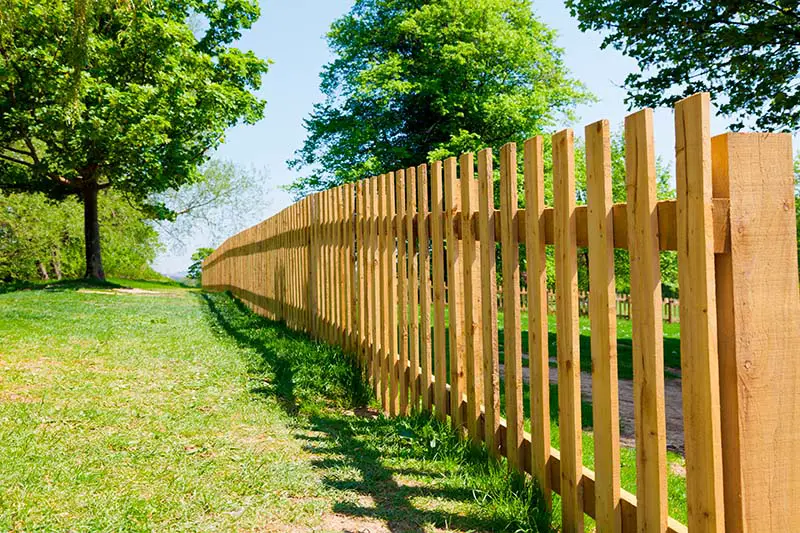
The six-foot cedar fence that had separated my property from the house next door for going on fifteen years was gone.
Not damaged. Not partly down.
Gone.
The posts had been pulled straight out of the ground. The panels were stacked in a leaning pile about twenty feet onto the neighboring lot. And the entire private side of my house — the patio, the back windows, the spot where I keep the grill — stood wide open to Vanessa Reed’s construction site.
I set the groceries on the counter and went out through the sliding door without closing it.
Vanessa had moved in eight months earlier.
Successful real estate agent. Divorced. Polished in the way people are when their job requires them to look like their own advertisement. Permanently busy.
We had never been friends. We had been perfectly civil.
I waved when she drove past. She waved when she saw me hauling trash to the curb on Sunday nights. Once she brought over a card at Christmas with her business logo on the back, which I found funny and did not hold against her.
That was the whole relationship, and it had been enough for both of us.
Her yard that afternoon looked like a renovation that had gotten away from somebody.
Half the old deck was stripped down to joists. Patio stones sat in stacked squares on plastic sheeting. Four contractors were moving lumber back and forth while a paint-spattered radio played classic rock from somewhere near a toolbox.
And my fence panels were piled behind all of it like salvage off a job site, instead of something that had stood on my land since before she owned that house.
I walked across the grass.
One of the contractors saw me coming and immediately found something interesting on the other side of the yard.
That one small movement told me more than he probably intended it to.
People who believe everything’s clean don’t usually break eye contact with the owner.
Vanessa spotted me and smiled.
“Perfect timing,” she called out. “I was going to come talk to you.”
I stopped about ten feet away and looked at the cedar panels.
“You were?”
“We’re replacing that old fence.” Cheerful as a listing brochure. “It was falling apart anyway.”
I stood there and waited for the sentence to correct itself.
It did not.
“You mean my fence,” I said.
Her smile tightened. Not with confusion. With irritation.
“It was shared.”
“No,” I said. “It wasn’t.”
She crossed her arms.
“It was right on the property line.”
“Do you have a survey?”
That question changed her face.
Not much. Just enough.
“Not with me,” she said.
“Have you ever seen one?”
She glanced back toward the deck. Then at me again.
“The previous owner told me it was shared.”
There are sentences that tell you a person made a mistake.
And then there are sentences that tell you a person built an entire plan on top of one and never once looked down at the foundation.
That was the second kind.
The previous owner was a man named Doug Hanley who moved to Arizona in October and who, in eleven years as my neighbor, never had a single conversation with me about that fence, because there was nothing to discuss.
I put it up in 2011. I paid four thousand two hundred dollars for it. I have the invoice.
Vanessa waved a hand at the crew like the finished product was supposed to make the permission question evaporate.
“We’re putting in a modern horizontal fence. Black posts, cedar slats.” She said it the way you’d describe a vacation. “It’s going to look amazing.”
Amazing.
That word landed badly with me and it took me a minute to understand why.
People reach for amazing when they want the result to matter more than how they got it.
“You removed a structure that wasn’t yours,” I said.
She sighed openly now, like I had become a scheduling conflict.
“Ethan. It’s just a fence.”
I almost answered too fast.
I almost gave her exactly the fight she was braced for — a raised voice in a backyard in front of four contractors, which she could then describe to anybody who asked as the neighbor who lost it over some wood.
Instead I heard my grandfather.
He built houses in Zanesville for thirty-one years and he used to say that when somebody creates a problem for you, the very first thing to do is find out whether they are standing on solid ground.
And then, if they aren’t, let the ground teach them.
So I said, “Okay,” and I went inside.
The groceries stayed on the counter. The ground chuck sat out for three hours and I ended up throwing it away.
I opened the file cabinet in the back bedroom I use as an office. The one full of closing documents and insurance declarations and repair receipts and all the other dull paperwork nobody appreciates until a neighbor makes it priceless.
It took me about twenty minutes.
The survey from my 2010 closing. Folded into thirds. Slightly yellow at the creases.
I spread it out across the desk and put the lamp on and followed the boundary line with my finger, and then I got the tape measure out of the kitchen drawer and went back out to the yard and checked it against the old post holes.
Then I came back in and sat down.
The fence had not been on the property line.
It had been five inches inside my property.
Five inches sounds like absolutely nothing when two people are talking casually over a lawn mower.
Five inches becomes enormous the moment posts, permits, contractors, inspectors, and liability all show up in the same conversation.
Every post hole was mine.
Every panel was mine.
The fence was not shared, not straddling anything, and not hers to improve, to remove, or to have an opinion about.
I sat in that office for a while with the survey in front of me and thought about my options.
I could go back out there and start a shouting match, which would feel good for ninety seconds and accomplish nothing.
I could file something and be in court for eight months over four thousand dollars of cedar.
Or I could do the thing my grandfather would have done, which is to find out exactly where the ground is and then step back and let somebody stand on it.
The next morning at seven I called a licensed surveyor out of Delaware County named Roy Petrakis and paid him six hundred and fifty dollars for a same-week boundary survey, which he was able to do Thursday because of a cancellation.
By Thursday afternoon, bright orange stakes with orange flagging ran from the front sidewalk all the way to the back corner of both lots.
The old post holes sat clearly, unmistakably, on my side of them.
Vanessa came out of her house with an iced coffee and stopped dead when she saw the line.
“That can’t be right.”
“Licensed surveyor says it is.”
“There has to be some kind of mistake.”
“Maybe,” I said. “But you’d need another licensed surveyor to establish that, and he’d be measuring from the same monuments Roy did.”
She stood there looking at those post holes for a long moment.
And then she said something that I still think about.
“Well. It needed replacing anyway.”
That was the moment I understood this was never really about a fence.
It was about a person who genuinely believed her judgment could substitute for my permission. Who had looked at a boundary and seen an inconvenience rather than a limit.
“I’d like you to stop construction along that side,” I said, “until this gets sorted.”
She actually laughed at me.
“You can’t tell me how to run my renovation.”
“Maybe not,” I said. “We’ll see.”
That evening I called the city building department.
I want to be clear about how I did this, because people assume I called up screaming about my neighbor.
I did not say Vanessa was a bad person. I did not ask for anybody to be punished. I did not use the word revenge, even in my own head, and I’ve examined that pretty carefully since.
I explained that there was an active deck expansion under permit at the address next to mine. That a boundary structure had been removed during the work. That a licensed survey completed that day showed the removed structure had been located inside my property. And that I wanted to know whether the site needed to be reviewed for setback compliance, given that the boundary the drawings referenced might not be where anyone had assumed.
The woman on the phone got very interested very quickly.
She asked me three questions. Then she asked me to spell the surveyor’s name. Then she asked whether I could email the survey, which I did that night at 8:40.
She said an inspector might need to verify site conditions.
Two mornings later, a white city vehicle pulled up out front.
I happened to be working from home that day.
I also happened to decide, at that exact moment, that my front flower bed needed watering.
The inspector was next door for close to two hours.
He measured from the orange stakes to the deck framing. Twice. He compared the permit drawings against what was actually built. He photographed the empty post holes, which were still open because nobody had backfilled them.
And at one point I heard him ask the project manager whether the boundary had been confirmed before the fence came down.
Whatever answer he got, it did not comfort him, because by noon the mood over there had completely collapsed.
The nail guns stopped.
The saws stopped.
Contractors stood around with their hands on their hips checking phones, doing the arithmetic people do when time has abruptly become expensive.
Vanessa moved from one to another of them with her voice low and sharp.
And then the inspector walked to the permit board by the driveway and put a red notice on it.
Temporary stop work order.
I want to be accurate about why, because people always assume the city shut her down over my fence, and that’s not what happened.
The fence itself was a civil matter between the two of us. The city did not care about my cedar.
What the city cared about was that the deck expansion’s rear setback had been measured from a boundary that a licensed survey now contradicted. The plans said one thing. The stakes said another. Until somebody reconciled those two facts on paper, the work could not proceed.
In other words, the fence she pulled out to speed her project up became the specific thing that stopped it.
That evening she knocked on my front door.
The woman standing on my porch was not the woman who had smiled at me over a stack of my own cedar panels three days earlier.
Her confidence had thinned out. The polished calm was gone entirely. She was still in work clothes and her hair was up in a way I don’t think she’d have chosen if she’d been thinking about it.
“You did this,” she said.
“No,” I said. “I documented it.”
She hated that answer, and I could see exactly why. It gave her nowhere useful to put the anger.
“This delay is costing me thousands of dollars.”
“I believe that.”
“The contractors are charging me rescheduling fees. Per day.”
“I’m sure they are.”
“There is eleven thousand dollars of composite decking sitting in my driveway under a tarp.”
“That’s unfortunate.”
Her eyes narrowed.
“You’re enjoying this.”
I actually stopped and thought about the question, because it deserved an honest answer and I wanted to give her one.
I was not enjoying her losing money. I have had a project go sideways. I know what that particular kind of dread feels like at two in the morning.
I was not enjoying a neighborhood dispute. I have lived on that street for fifteen years and I like it here.
But there was something close to relief in it. Because consequences had finally arrived in a language she respected, and until they did, nothing I said in a backyard was ever going to register.
“I’m not enjoying it,” I said. “I’m just not surprised by it.”
She looked past me toward the side yard where the orange flagging was still visible in the last of the light.
And then she asked the first genuinely useful question of the entire week.
“What do you want?”
I told her to sit down and I brought two glasses of water out to the porch.
We sat there for probably forty minutes while cars went by and kids rode bikes and somebody down the block mowed a lawn like nothing in the world could possibly be wrong.
I asked whether she had verified ownership before removing the fence.
She said no.
I asked whether she had asked me.
She said no.
I asked whether her contractor had required any documentation before touching it, which I already suspected he had not.
She said no again, and then added, “He asked if I’d talked to you. I told him it was handled.”
That answer sat between us for a second.
“Then here we are,” I said.
She looked out at the street for a long time.
“I honestly thought it wasn’t a big deal.”
That was probably the truest sentence she said the whole time.
And I believe it. That’s the part people get wrong when I tell this story — they want her to have been scheming.
She wasn’t scheming. Most preventable disasters don’t start with a villain speech.
They start with convenience.
They start with somebody telling herself that asking permission will slow things down. That the neighbor will probably be fine with it. That the paperwork will probably match the assumption.
Probably is a very expensive word to use around a property line.
I laid out my terms right there on the porch, and I’d written them down beforehand so I wouldn’t lose track of anything.
The fence would be rebuilt on my property, in the same location, on the same line the survey established.
Six feet. Cedar. Comparable in style and quality to what had been removed.
The posts upgraded and set properly in concrete, since the originals had been in there fifteen years and half of them came out with the panels.
She would pay the full cost.
And going forward, any structure affecting the boundary between the two properties would require a written agreement before anybody touched a nail, a board, a post, or a panel.
I expected a fight over that last one especially.
Instead she got very quiet.
Because the math had changed on her.
Every day of delay was costing money. Every reschedule was costing money. Eleven thousand dollars of decking was sitting in her driveway getting rained on and doing nothing.
And suddenly rebuilding my fence was no longer the expensive option.
It was the fastest available route back to work.
“That’s a lot,” she said, looking at the estimate I’d gotten that afternoon.
“So was removing somebody else’s property,” I said.
She didn’t have a better answer than that, and to her credit she didn’t try to invent one.
She accepted four days later, in writing, which I had asked for and which she did not argue about.
There was no dramatic apology. There was no speech about how wrong she’d been.
In a strange way I respected that more than a performance would have earned.
She had simply stopped arguing with reality, which is more than most people manage.
Two weeks after that, a fencing company out of Marysville showed up early on a Monday.
They measured everything before they unloaded a single thing.
Then they measured it again.
Roy’s orange stakes stayed exactly where they were while the crew marked every post location off them.
Nobody guessed at anything. Nobody worked off memory. Nobody repeated what a previous owner had supposedly said to somebody at a closing table.
The new fence went up over three days.
Fresh cedar. Heavier posts than the originals. Concrete footings that the foreman told me would outlast the house.
Wednesday evening I stood in my backyard and ran my hand along one of the boards, still rough, still smelling like a lumber yard.
I expected to feel victorious.
What I actually felt was relief, and that surprised me enough that I stood out there a while thinking about it.
I did not want a war with my neighbor. Most people don’t.
What people want is to sit outside without being exposed to somebody else’s assumptions. They want their property respected. They want the ordinary quiet that comes from knowing the line between yours and mine still means something to everybody involved.
The stop work order came off about two weeks later, after the city finished its review and her architect submitted a corrected site plan measured off the actual boundary.
The trucks came back. The contractors came back. The nail guns started up again at seven in the morning like nothing had happened.
Life moved on the way it does.
But the final detail is the one that made the whole thing unforgettable, and it’s the part everybody asks about.
Vanessa still built the modern fence she’d wanted from the beginning.
Black posts. Horizontal cedar slats. Clean, contemporary, exactly the kind of thing that photographs beautifully in a real estate listing.
Only this time she built it entirely on her own property.
Three inches from mine.
So now there are two fences running side by side between our backyards.
Hers and mine. Separate. Distinct. Absolutely impossible to confuse.
There’s a three-inch gap between them that runs the entire length of both lots, which collects leaves in October and which neither of us can reach into.
When people come over and see it, they usually laugh.
They ask why on earth two neighbors would need two fences three inches apart.
I usually say it’s a long story.
Sometimes they want it. Sometimes they just look at that narrow strip and nod, and I can tell they’ve understood enough.
From a distance it looks ridiculous.
Up close it looks like clarity.
Nobody has to guess anymore. Nobody has to rely on memory or convenience or a casual comment from a man who now lives in Arizona.
Nobody gets to decide that my property becomes theirs because it would make their weekend go faster.
Vanessa and I are civil now.
We wave. We exchange short greetings if we’re both outside taking cans to the curb.
Nothing warm. Nothing hostile.
Just two adults who learned each other’s limits the expensive way.
She finished the deck in August. It’s very nice. I can see the top of the pergola over both fences and I have no opinion about it whatsoever, which is exactly how neighbors should feel about each other’s decks.
I have wondered more than once how differently the whole thing would have gone if she had knocked on my door before the demolition.
Maybe I’d have agreed to talk about a replacement. That fence was fifteen years old and two panels near the back had gone soft.
Maybe I’d have liked her newer design. I’ve since seen it and I do like it.
Maybe I’d have split the cost of an upgrade if we’d put the line in writing and respected where it actually was.
We’ll never know.
That whole set of possibilities disappeared the moment permission became optional.
People still disagree with me when I tell this story.
Some say I was completely justified. Some say I should have let it go, because it was only a fence, and because I could have absorbed it and kept things friendly.
I understand why they say that. Wood can be replaced. Posts can be reset. Money gets argued over and eventually paid.
But it was never just wood to me.
It was the visible version of a very basic rule.
You do not take what is not yours.
You do not improve your own life by making decisions about someone else’s property without involving them in it.
And when you cross a boundary, you should not act shocked when the boundary turns out to be enforceable.
My grandfather would have liked how it ended.
Not because she lost money. Not because I won anything.
Because the smallest measurement in the entire dispute turned out to be the only measurement that mattered.
Five inches of dirt stopped a deck, rebuilt a fence, and turned two polite neighbors into two people who now understand each other with total precision.
The cheapest solution is almost always the conversation somebody was too proud to have.
That’s what I think about whenever I look out my kitchen window and see those two fences standing there side by side.
They look strange. They look stubborn.
They also tell the truth.
There’s my side. There’s her side.
And between them, three inches wide and about a hundred and forty feet long, is the lesson neither one of us gets to pretend we can’t see.

Specialty: Quiet Comebacks & Personal Justice
David Reynolds focuses on stories where underestimated individuals regain control of their lives. His writing centers on measured decisions rather than dramatic outbursts — emphasizing preparation, patience, and the long game. His characters don’t shout; they act.