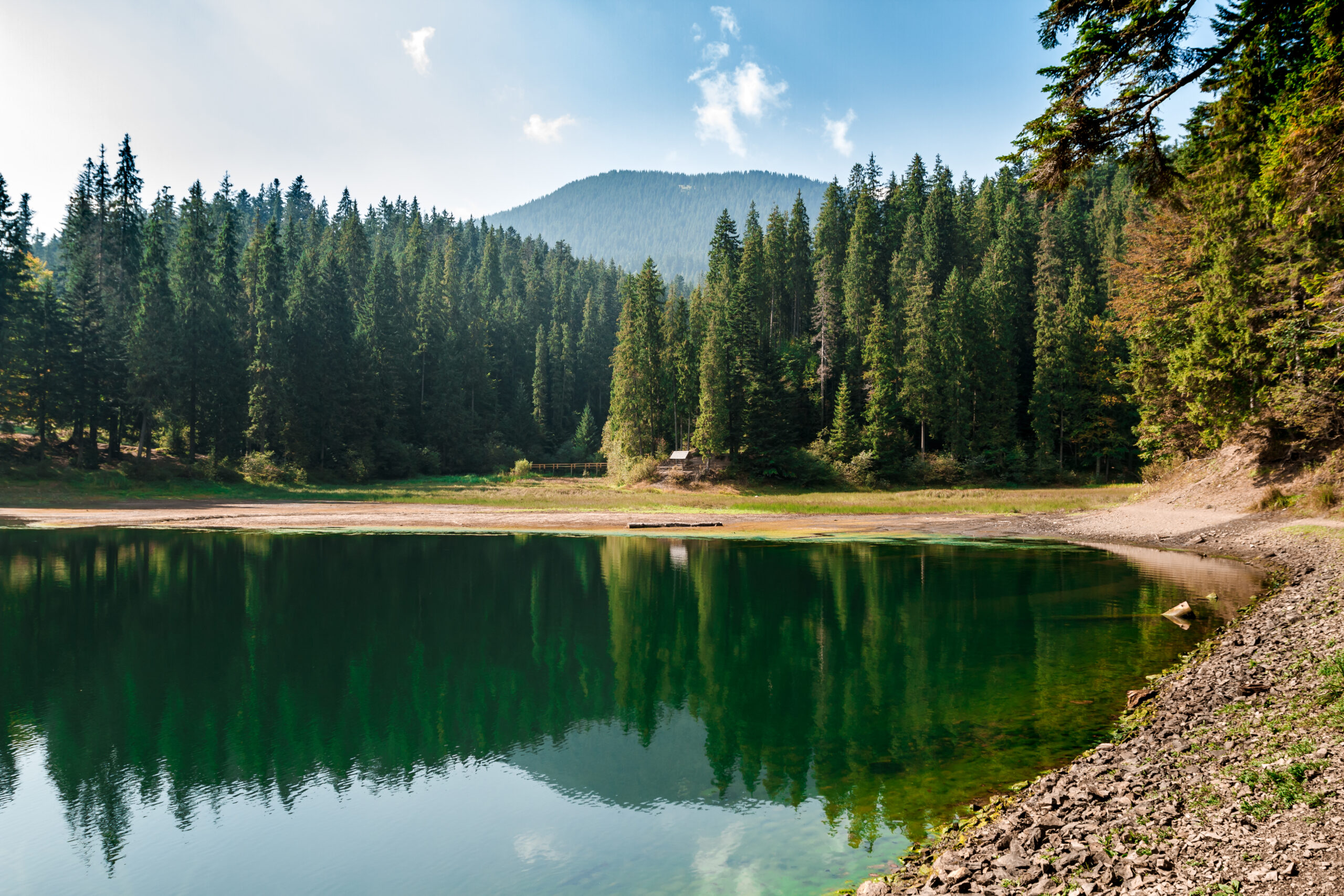
The moment I saw my late mother’s lake house, I did not call the police.
I turned around, got back in my car, drove two hours home, and waited to hear one sentence that ended my marriage.
The lake house sits at the end of a gravel road my mother used to sweep by hand every summer, as though a driveway deserved dignity. She did it with a push broom in July with sweat coming down her temples, and when I told her once that nobody sweeps gravel, she said, “Somebody does, Claire. I’m somebody.”
Two years after cancer took her, I still drove out most weekends to water her garden and dust the cups she’d lined up along the open shelf in the kitchen.
Six cups. All different. Every one of them from a place she’d been.
It’s a small house. Two bedrooms, a screened porch, a deck that needs restaining every four years. But every stitch in every embroidered pillow on that couch was hers, and she sewed four of the six of them sitting in a chemo chair at Wexner Medical with a hoop in her lap and a bag going into her arm.
My name is Claire. I’m thirty-seven years old, and that house is the last real piece of my mother left in this world.
My husband Daniel had been quieter than usual that spring.
Not cold. Quieter. He kept mentioning things in an offhand way that never quite landed as lightly as he intended.
“You know, babe, we’ve got a lot of assets just sitting empty,” he said one night at dinner, chewing slowly, not looking up.
“The lake house isn’t sitting empty. I’m out there almost every weekend.”
“I just mean financially. With the mortgage on this place, and this new business idea I’ve been telling you about.”
“Daniel. Please. Not tonight.”
He smiled and let it drop.
But his eyes stayed on me a beat longer than they used to, and I noticed it, and I filed it somewhere and did nothing about it, which is the thing I have gone over most in the year since.
Our two kids came thundering down the hallway right then, still in pajamas, arguing about who got the last waffle. Noah is seven. Emma is four.
I scooped Emma onto my hip and kissed the top of her head and for a second that kitchen felt completely normal.
Then the front door opened without a knock.
“God, it smells like syrup in here,” Rose said, breezing in and dropping her purse on my clean counter.
Daniel’s younger sister. Thirty-one. She has treated our house like a hotel lobby since the day we bought it.
“Good morning to you too, Rose.”
She reached across the table, took a strawberry off my four-year-old’s plate without asking, and left the stem on the counter.
Emma watched her do it and didn’t say anything, because Emma has learned already, at four, that you do not say anything to Aunt Rose.
“Listen. I need a favor.” Rose leaned back against my counter. “My birthday’s coming up and I want to do something special. The lake house would be perfect. Just one night.”
“No.”
She actually blinked at me.
“Excuse me?”
“I said no, Rose. That house isn’t a party venue. It’s my mom’s.”
Noah put his hands over his ears, because Rose’s voice had climbed the way it always does when somebody tells her no.
“Can you keep them quiet, Claire? They’re literally squealing in my ear.”
“They’re eating breakfast in their own kitchen.”
And Daniel did not say one word.
He stirred his coffee and studied the rim of his mug like there was something written on it.
That is the detail I keep coming back to. Not the strawberry. Not her voice. My husband studying a coffee mug in his own kitchen while his sister told our children to be quieter in their own home.
Rose stood up and slung her purse back over her shoulder and gave me a small smile that did not reach her eyes.
Then she looked at Daniel.
Just for a second. Half a second.
And then she turned back to me.
“Fine. We’ll see.”
The door clicked shut behind her.
I stood in my kitchen holding a strawberry stem in my hand with the strange cold feeling of a sentence that should not have sounded like a threat and absolutely was one.
I walked to the small shelf by the front door and set the lake house keys down on the wood, right next to the little clay bowl Emma made at preschool.
I remember doing it. I remember exactly where I put them.
Four days later I reached for those keys and found nothing but a clean ring in the dust where they had been.
I checked my purse. My coat pockets. The kitchen counter. The bowl of loose change by the microwave. The drawer with the batteries and the takeout menus.
“Daniel, have you seen the lake house keys?” I called toward the living room.
He didn’t look up from his laptop.
“No idea. You probably moved them and forgot.”
Something in the flatness of that landed wrong with me.
He didn’t ask where I’d looked. He didn’t get up. He didn’t say the thing a person normally says, which is when did you have them last.
But I let it go, because I was already running late, and because I assumed I’d left them out at the house on the kitchen counter the way I’d done twice before.
I grabbed my bag and told him I’d be back before dinner.
“What time are you leaving again?” he asked.
I stopped in the doorway.
“Now. Why?”
“Just asking.”
I drove the two hours out of Columbus with the radio low, thinking about the flowerbeds along the south side and whether the tulips had come in yet.
I thought about whether the deck needed restaining this year or whether it could go one more.
I thought about ordinary things for two hours.
Then I turned onto that gravel road and heard the bass before I saw the house.
Music, pounding through the trees. Cars I didn’t recognize parked crookedly across the grass — six of them, seven, one halfway into the flowerbed on the north side.
My hands went cold on the wheel.
I parked back behind the tree line where the road curves, and I walked up the last hundred feet very quietly.
The front door was standing wide open.
Inside, it looked like somebody had emptied a bar into my mother’s living room.
Champagne was dripping off the ceiling beam. There was a wet dark trail down the wall where somebody had sprayed a bottle.
A man I had never seen in my life was stretched out across the couch with his bare feet up on my mother’s embroidered pillows. The ones she made in the chemo chair. He had a plastic cup balanced on his chest.
Rose was standing in the middle of the kitchen laughing, pouring out a bottle for a girl in a sequined dress, using one of my mother’s six cups because they were the only glassware within reach.
Every counter was crowded with bottles and open takeout containers. There were cigarettes going in a saucer.
And the white curtains — the ones my mother hemmed herself in 2011 and was so proud of that she photographed them — had a long brown stain running down the left panel.
I did not step inside.
I turned around and walked back to my car and sat down behind the wheel with my hands shaking on my knees.
My first instinct was to call the police.
My second was to call Daniel.
I actually had my phone out. I had my thumb on his name.
And then I stopped.
What time are you leaving again?
He had never asked me that. Not one time in seven years of marriage. Not ever, in all the hundreds of weekends I had driven out to that house.
I sat there in the driver’s seat with the bass coming through the trees and listened to myself breathe for a long time.
Then I started the car and drove home.
Daniel was on the porch when I pulled in. Phone against his ear.
He straightened up when he saw my headlights and said something fast into it and hung up before I was out of the car.
“You’re back early,” he said. “Traffic bad?”
“A little.” I got my bag out of the back seat. “I turned around. Didn’t feel like being out there alone.”
He studied my face.
“You didn’t go inside?”
And that was the second one.
Because there is only one reason a man asks that question in that order.
I made myself shrug.
“No. I wasn’t in the mood.”
His shoulders came down. Almost nothing. But I saw it.
“Probably for the best,” he said.
I made myself smile at my husband.
“Just tired. I think I’ll start dinner.”
I went past him into the kitchen and pulled a pan off the rack like nothing in the world was wrong.
And my hands had stopped shaking.
I found that genuinely interesting at the time and I still do. Something in me had already made a decision before I’d finished thinking about it.
He watched me from the doorway.
“Maybe the lake house is more than you can handle right now,” he said, carefully. “You’ve been running yourself thin, Claire.”
“Maybe,” I said, with my back to him. “I’ll think about it.”
That night, after the kids were down, I heard the side door click.
I stood in the dark hallway in bare feet with my hand flat against the wall and listened.
Daniel was in the garage with the door pulled almost shut, voice low, laughing at something.
And then, clearly:
“Relax. She has no idea.”
I stood in my own hallway in the dark and pressed my palm against the wall to stay upright.
The keys to my mother’s house had not been lost.
They were being used against me by a man sleeping in my bed.
I went back to bed.
I lay down. And when he came in eleven minutes later, I let him put his arm across me the way he does, and I lay there in the dark with my eyes open.
And I started to plan.
I drove back to the lake house before sunrise the next morning.
My hands were completely steady on the wheel, which surprised me again.
The cars were gone. The door was closed but not locked.
I walked through that house with my phone out and photographed every single thing.
Champagne stains on the ceiling and down the wall. A cigarette burn on the armrest of my mother’s chair, about the size of a dime, burned all the way through the fabric into the batting.
Water rings on the coffee table my grandfather built. Eleven of them.
Two broken balusters on the deck railing where somebody had clearly sat on it.
A chip out of the kitchen counter. Vomit in the flowerbed on the north side, which I photographed too, because Marcus told me later that you photograph everything.
And the curtains.
I took forty-one photographs in about twenty minutes and I did not cry once while I was doing it, and then I sat down on the porch step and cried for eleven minutes.
Then I called Marcus.
Marcus Deel has worked on that house since I was nine years old. He built the porch railing with my father in 1997. He is sixty-four and he does not talk much.
He picked up on the second ring.
“Claire, honey, what happened?”
“A party happened. I need the whole place restored. Quietly. And I need the locks changed by tonight.”
There was a pause on the line.
“Who,” he said.
Not what. Who.
“Family,” I said.
Another pause.
“Give me two days on the locks. A week on the rest. And Claire — I’ll itemize every line of it and I’ll photograph every repair before and after.”
I hadn’t asked him to.
“Thank you, Marcus.”
“Your mother swept that driveway by hand,” he said. “I’ll get out there this afternoon.”
I paid him from my inheritance account.
The one Daniel had never once bothered to learn the login for in two years, because he had a theory about that money that made it easier not to look at directly.
I hired a cleaning crew out of Marion the same afternoon. Four women, six hours. By sundown every wrapper, bottle, cigarette, and takeout container was gone, and one of them texted me a photograph of the kitchen with the counters bare.
That night at home I kissed my husband on the cheek and asked about his day.
“Long one,” he said, watching me a little too closely over the counter. “You seem tired. Everything okay at the lake?”
“Just dusty. Might need some real work one of these days.”
“Yeah? Might not be worth it.”
I smiled and stirred the pasta.
Over the next two weeks, I started disappearing out to the lake on weekends.
I took a duffel bag every time.
Inside it: Emma’s stuffed rabbit. Noah’s dinosaur books, all nine of them. My mother’s photo albums, four at a time, wrapped in a towel.
My grandmother’s serving platter. My own tax documents. The kids’ birth certificates and immunization records, out of the file box in our closet, which I replaced with an empty folder in case anybody looked.
Daniel noticed the bags going out heavy and coming back light.
“You’re bringing stuff over there?”
“Just needed some space out there. You’ve been so stressed lately. I thought it might be good for both of us.”
“Right. Space.” He nodded slowly. “You know, that place is a money pit, Claire. If we sold it we could clear this mortgage and I’d have the capital to actually start something.”
“I’ll think about it.”
And his shoulders came all the way down.
He actually believed me. That’s the part I still can’t fully explain. Seven years and he heard I’ll think about it and took it at face value, because it had never once occurred to that man that I might be doing something he didn’t know about.
Then Rose came pounding on my front door on a Tuesday afternoon.
I opened it about eight inches.
“What the hell, Claire? I drove all the way out there and my key didn’t work.”
I kept my hand on the door.
“Your key?”
“You know what I mean.” Her face was red. “The spare Daniel keeps. Why did you change the locks?”
I kept my voice completely light.
“Termites in the door frame. Marcus had to replace the whole thing, jamb and all.”
“Well, put me on the new set. Daniel promised me I could use it whenever I wanted once you agreed to sell.”
And there it was.
Once you agreed to sell.
The words came down on me like slow snowfall. Quiet. Cold. Covering absolutely everything, all at once, in one sentence out of a woman too angry to hear herself.
I did not blink.
Her eyes flicked.
“You know what I mean. Just — Daniel said. Never mind. Just get me a key.”
“I’ll talk to Daniel about it,” I said.
And I closed the door gently.
Then I sat down at my kitchen table and stared at the wood grain until the pattern stopped moving.
Because that party was not a birthday.
It was a demolition.
My husband had handed his sister a set of keys and a date, and pointed her at the only thing my mother had left me, because a woman who watches her mother’s house get destroyed is a woman who might finally agree to sell it.
I opened my laptop.
The first document I drafted was a divorce petition.
I found an attorney that afternoon — a woman named Priya Shah out of a small firm downtown — and she took my call at 4:40 on a Tuesday and listened to the whole thing without interrupting once.
At the end she said, “The house is separate property. Inherited, in your name, never commingled. Do not put one dollar of marital money into those repairs. Not one.”
“I already paid from my inheritance account.”
There was a pause.
“Claire,” she said. “That was exactly right. Did you do that on purpose?”
I thought about it.
“Yes,” I said. “I think I did.”
She filed it eleven days later.
The second document was an itemized list.
Embroidered pillows, forty dollars each, six of them.
Deck railing, two balusters and refinishing, four hundred and twenty.
Kitchen counter repair, eight hundred.
Ceiling and wall repainting, twelve hundred sixty.
Curtain replacement, custom hem to match original, three hundred ten.
Upholstery repair, one chair, cigarette burn, two hundred.
Coffee table refinishing, four hundred eighty.
Deep cleaning service, six hundred.
Lock replacement and door jamb, five hundred forty.
Four thousand, nine hundred and seventy dollars.
Every single line documented with a photograph and a receipt, exactly the way Marcus had said he would do it, because that man knew what I was going to need before I did.
At the bottom I typed: Payment due within thirty days. Non-payment will result in small claims proceedings.
Then I called Daniel’s mother and asked if she could take the kids Friday night.
“Of course, sweetheart. Everything okay?”
I looked out my kitchen window at the yard.
“It will be,” I said. “I’m making dinner Friday.”
I called a family dinner for that Friday.
Daniel poured himself a glass of wine, relaxed and easy, in a good mood, telling me about a meeting he’d had.
Rose showed up tight-jawed and watchful, still trying to work out whether her slip on my doorstep had registered.
I set two envelopes on the table between the salt and the bread basket.
“Open them,” I said.
Rose tore hers first.
I watched her face go from irritation to confusion to complete drainage as she read down that list. Every broken thing. Every stain. The champagne on the ceiling. Marcus’s invoices stapled behind it with the before-and-after photographs.
“What the hell is this?”
“A demand letter,” I said. “Pay by the thirtieth or I file in small claims. Every item is documented with photographs, timestamped, and Marcus will testify to the condition of the property on both dates.”
Daniel opened his more slowly.
His hand shook. I watched it happen.
“Claire. Wait. Just wait a second.”
“Divorce papers,” I said. “Filed Tuesday morning. You’ll be served formally next week but I wanted you to hear it from me at a table. The kids are at your parents’ tonight because I didn’t want them in this house for this.”
And Rose turned on him instantly.
“You said she wouldn’t find out! You said she’d never—”
“Shut up, Rose.”
“No,” I said quietly. “Let her talk. I already know all of it. The keys off my own shelf. The timing. What time are you leaving again. And the promise that she could use the house whenever she wanted, once I gave up on it.”
Rose put her hand over her mouth.
Daniel leaned forward with his hands open, the way he does with clients.
“Claire. The mortgage on this house is killing us. Your inheritance was never ours, and you were never going to risk your mother’s money on my business, and I understood that, I did. Selling the lake house was the only path I could see to the cash we needed.”
He actually looked at me like he expected this to help.
“I was trying to protect our family.”
“By destroying the last thing I had of my mother.”
“That house was holding you back, Claire. You go out there every weekend and you come back sad. Ask anybody.”
I stood up from my own table.
“The locks are changed. My inheritance restored every inch of it. And Marcus finished the kids’ rooms last weekend — beds, sheets, a night-light in the hall between the two doors so Emma can find Noah’s room in the dark.”
Daniel’s face changed.
“You can’t just take the kids from me.”
I looked at him for a long moment.
“This morning Emma asked me if her rabbit was already at the lake. Noah asked whether his new room has the good reading lamp.”
I picked up my purse off the chair.
“Neither one of them asked where you’d be sleeping tonight, Daniel. Not one of them thought to ask.”
He didn’t say anything.
“You stopped choosing this family a long time before you stole those keys. You chose money. I’ll pay my legal share of this house until the divorce closes and not one dollar past it.”
He shook his head slowly.
“Claire. It wasn’t supposed to end like this.”
I picked up my keys — the only set that matters now, four of them on a ring, all cut nine days ago — and I stopped at the door.
“You wanted my mother’s house turned into cash,” I said. “Instead I made sure it’s the one thing in my life neither of you will ever touch again.”
Rose paid the four thousand nine hundred and seventy dollars on the twenty-eighth day.
Her mother lent her most of it, which I found out later, and which cost her something in that family that I did not arrange and do not feel responsible for.
The divorce took nine months. It was not dramatic. Priya was correct about the separate property from the first phone call and the house was never in serious question.
We have the kids fifty-fifty on paper and about seventy-thirty in practice, because Daniel travels for the business he did eventually start with money from somewhere else.
He is not a monster. That’s the part that took me longest to hold in my head at the same time as everything else. He reads to Emma on video call three nights a week and he has never once missed a payment.
He also handed his sister my mother’s keys and told her to go ahead.
Both of those things are true and I have stopped trying to make them fit together.
I live at the lake house full time now.
The kids are enrolled at the elementary in town. Noah has a friend two properties over named Wyatt and they are building something in the woods that they will not let me see.
Emma’s room has the rabbit on the bed and the night-light in the hall, and she has never once had to find her brother’s door in the dark.
Marcus comes by about every six weeks to look at something. He never charges me for the looking.
The six cups are back on the open shelf in the kitchen. One of them has a chip in the rim now that it did not have before, and I have decided to leave it that way.
And this July, in the heat, I went out and swept the gravel driveway by hand with a push broom, sweat coming down my temples, while my son stood on the porch and asked me why anybody would sweep a driveway.
I said, “Because somebody does. And today it’s me.”
I finally understand why my mother fought so hard for that little house.
It was never about the walls or the land or the water.
It was the one place where our family always felt safe.
Now it’s that place for my children too, and there is nobody left in the world with a key.

Adrian Hawthorne is a celebrated author and dedicated archivist who finds inspiration in the hidden stories of the past. Educated at Oxford, he now works at the National Archives, where preserving history fuels his evocative writing. Balancing archival precision with creative storytelling, Adrian founded the Hawthorne Institute of Literary Arts to mentor emerging writers and honor the timeless art of narrative.