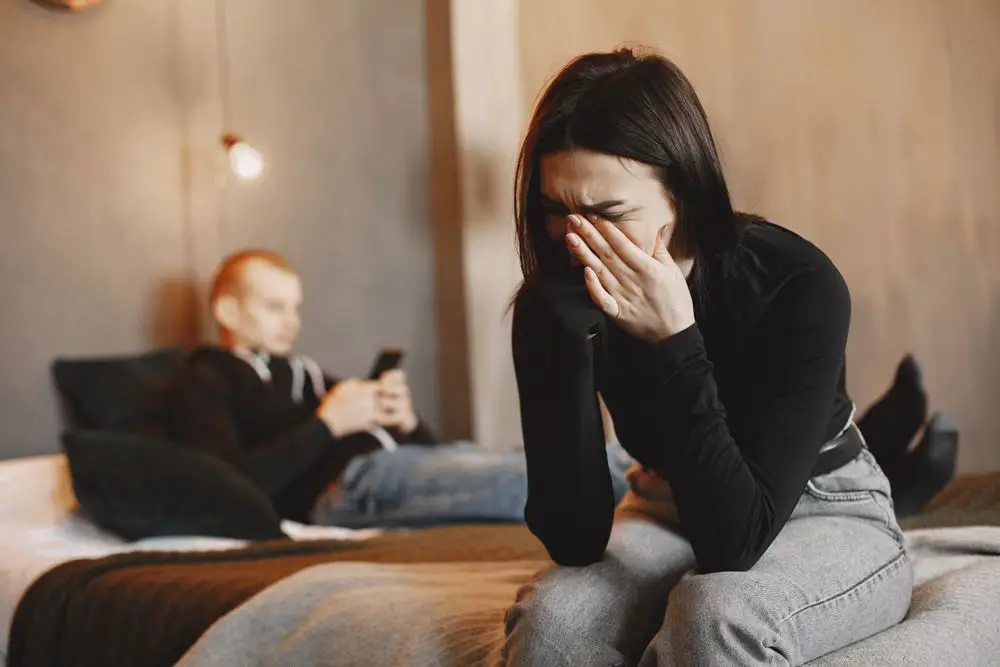
The morning I found the notebook, I had been cleaning out my mother’s house for three days and had developed the particular emotional numbness that comes from sustained exposure to someone else’s accumulated life.
Grief does strange things to attention. You can spend forty minutes deciding what to do with a collection of rubber bands and feel nothing, and then find a grocery list in your mother’s handwriting and have to sit down on the kitchen floor. The rubber bands were easy. The grocery list was not. It was the specificity of the handwriting, the particular way she made her sevens, the fact that she had written milk twice in different places as if she did not trust herself to remember.
I put the grocery list in the keep pile and kept going.
The notebook was in the back of the closet in what had been my parents’ bedroom, in a shoebox behind a collection of winter boots that had not been worn in years. It was a composition notebook, the black and white marbled kind, with a rubber band around it that had degraded to the point of falling apart when I touched it. Inside the front cover, in my mother’s handwriting, was a date from twenty-three years ago and two words:
For Claire.
My name is Claire Whitmore. I am forty-four years old. My mother, Diane Whitmore, died six weeks ago after a brief illness that was brief in the sense that we did not have time to prepare for it, though in retrospect there had been signals we had not known to read. She was seventy-one. She had been healthy, as far as anyone knew, which turned out to be a meaningful qualification.
I sat on the edge of my parents’ bed with the notebook in my hands and looked at my name on the inside cover.
For Claire. Written twenty-three years ago.
I opened it.
The notebook was not a diary, not in the narrative sense. It was closer to what I might call a record, or perhaps a letter that had been written in installments across years, not continuously but in bursts, sometimes months apart, sometimes longer. The entries were dated. They were addressed to me.
The first entry was from twenty-three years ago, which would have made me twenty-one and my mother forty-eight. I had been in my third year of university, living in a student house with four other people, calling home on Sundays and assuming that home was stable and uncomplicated in the way that children assume about their parents’ lives.
The first entry said:
Claire, you don’t know this, but your father and I nearly separated this year. I am writing it down because I think you should know someday, when the time is right. I don’t know when the time will be right. Maybe when you’re older and married and understand what long marriages actually are. Maybe never. I’m writing it in case it’s someday, because I want you to understand some things about your father and about me and about the choices people make when they love each other and also find each other impossible.
I put the notebook down on the bed and looked at the wall.
My parents had been married for forty-seven years. They had been, from everything I could observe, the particular kind of couple that becomes a unit, two people who have been together so long that the separateness is hard to locate. They argued about small things and agreed about large ones and had a rhythm together that I had always taken for granted as simply the nature of a long marriage.
I picked the notebook back up.
I read for two hours, sitting on the edge of their bed, while the sounds of the house settled around me and the afternoon light moved through the window.
My mother’s handwriting changed across the years of the notebook. The early entries were written in the quick, slightly pressured hand of someone with things to say and limited time. The later entries were more measured, the handwriting of a woman who had come to her subject with more deliberation. The last entry was dated four months before she died, which meant she had known she was going to give me this, had been thinking about the timing, had been waiting for a right moment that the illness had not allowed.
What the notebook contained was a marriage. Not the version of their marriage I had always known, the surface version with its established rhythms and comfortable patterns, but the inner version, the one that had been built through specific difficulties that I had not witnessed and had not known to look for.
The nearly-separation of twenty-three years ago had been real.
My father had made a business decision that nearly destroyed them financially. Not through dishonesty but through a particular kind of proud foolishness, the kind that refuses to acknowledge risk because acknowledging risk means acknowledging fallibility, and my father had a complicated relationship with fallibility. He had invested heavily in a venture that failed. He had not told my mother until the failure was already accomplished and the damage was already done. She had discovered it not from him but from a letter that arrived while he was traveling, from a creditor he had not mentioned.
She wrote about the morning she opened that letter in language that was measured and exact and more devastating for both qualities. She wrote about the particular betrayal of discovering a truth through official documentation rather than through your husband’s voice. She wrote about sitting at the kitchen table with the letter in front of her and understanding that the marriage she believed she was in was not quite the marriage she had actually been in, that there had been a room in it she had not been permitted to enter.
She had considered leaving.
She had made a list, which she reproduced in the notebook, of the reasons for and against. The list was organized with the same systematic care she brought to everything, headed Staying and Going, and reading it was like watching someone think through the most serious decision of their life in real time. The reasons for staying included the children, which was me and my brother James, and included the length of the investment she had already made in the marriage, and included, near the bottom in different-colored ink as if added later, the specific way my father looked at her when he was embarrassed, which she described as the face of a man who knows he has failed you and has not yet stopped being surprised by his own capacity for failure.
That detail stopped me.
I had to put the notebook down again.
My father was seventy-three years old and still alive and living two hours away in the house where he had moved after my mother died, back to the city where they had lived before my parents retired. He had handled her death with the specific quiet devastation of a man for whom the person he had loved the longest was now gone, and I had interpreted his silence on the subject of her as the necessary privacy of grief.
I had not known he was capable of what the notebook described.
Which was also, I understood as I read, a version of the same thing my mother had discovered twenty-three years ago. The room I had not been permitted to enter.
The notebook continued through the years.
There were entries about my father’s recovery from the financial failure, the years of rebuilding that had been accomplished through a combination of his professional competence and her financial management, which she described with a precision that made clear she had been the one holding the structure together while he rebuilt his confidence. There were entries about their children, me and James, and about the specific difficulties of loving children who were becoming adults and beginning to make choices that a parent can observe but cannot reach. There were entries about her own interior life, the things she wanted that she had not always found ways to pursue, the work she had done at a level below her actual capability because the family’s logistics had consistently required her presence and availability.
She did not write about this with bitterness.
That was the thing that kept stopping me. I kept expecting bitterness and kept not finding it. What I found instead was the careful observation of a person who had chosen to be honest with herself about what she was experiencing without requiring that honesty to become resentment. She named the costs of her choices. She did not pretend the costs were not real. But she also named the reasons she had made the choices, and the naming was accurate and complete rather than defensive.
In one entry from about fifteen years ago, she wrote:
I want you to know that I chose this, Claire. Every version of it. When I stayed after the letter, I chose to stay. When I organized the finances during those years, I chose to do it because someone needed to and I was better at it than he was. When I was the one who came to your school events while your father traveled, I chose that too. I’m not saying the choices were equal or that they should have been mine alone to make. I’m saying they were mine in the sense that I made them with my eyes open, and I don’t want you to look back at my life and see only what I didn’t do. The choices I made were real choices, made by a person who understood what she was trading.
I sat with that paragraph for a long time.
There was a later entry about the conversation she had eventually had with my father, years after the letter, when she finally told him what she had found and what she had considered and what she had chosen and why. She described the conversation as the hardest one of their marriage and the most necessary. He had cried. She had not expected him to cry and the unexpectedness of it had changed something. She wrote:
He said he had known for years that I had been protecting him from the full weight of what I knew. He said he understood, in some part of him he had tried not to look at, that I had been managing things that should have been shared. He said he didn’t know why I had stayed. I told him I had stayed because of the face he made when he was ashamed of himself, because it was the face of someone who was not lying to me about who he was, just failing to live up to who he was. He asked if that was enough. I told him it had been enough for me. He asked if it should have been. I said I didn’t know, but that it was what I had decided with, so it was what I had.
I did not know what time it was. The light through the window had changed twice while I was reading. I had not eaten lunch or drunk any water and I was aware of both of these things in a distant way, the body noting what it needs while the mind is elsewhere.
I had one more section to read.
The last cluster of entries were from the past two years. They were different from the earlier ones in quality and pace, more urgent in some way, as if she had understood that the time for the right moment was running out and was writing toward completion rather than continuation.
She wrote about James.
My brother James was three years younger than me, forty-one, and had been having difficulties in his marriage that the family was aware of in general terms and not aware of in specifics. My mother’s entries made clear that she had been aware of considerably more specifics than I had known about, that James had been talking to her in a way he had not been talking to the rest of us, and that she had been quietly present to him in ways she had not announced.
She wrote:
I want you to be there for James in the way I have been. Not because I’m asking you to replace me, but because he needs someone who knows him from the beginning, who carries the long version of him. You have that. You’ve always known who he is underneath the versions of himself he shows other people. He’s going to need that when the marriage ends, which I believe it will. I don’t want him to be alone in it.
I had not known the marriage was as close to ending as that.
She also wrote about my father.
The last substantive entry, written six weeks before she died, when she must have already been experiencing the symptoms she had not yet told us about, was addressed to me but was really about him:
Your father is going to be terrible at being alone. You know this. He has never in his adult life managed a household or kept his own schedule or cooked more than eggs and toast. This was my choice, in the same way everything was my choice, but the consequence is a man who at seventy-three does not know how to be without someone. I am not asking you to be his caretaker. I am asking you to make sure he has real help and that he allows himself to receive it. He will resist. He will say he is fine. He is not going to be fine. The version of fine he will perform is not the version he will actually be living. You know how to tell the difference. You have always known how to tell the difference with him.
I had always known how to tell the difference.
I had not known that I had always known.
I put the notebook on the bed and went downstairs to the kitchen and drank a full glass of water standing at the sink, looking out at the backyard where my mother’s garden was still arranged in the shapes she had created, beginning to show the early signs of the season’s end.
I thought about the face my father made when he was ashamed of himself.
I had seen that face. Not in the context my mother described, because I had not known the context, but I had seen the face and had stored it without understanding what it was a record of. The face of a man who was not lying about who he was, just failing to live up to who he was. My mother’s phrase, which was exactly the phrase I would not have found myself but which was, now that I had found it, precisely accurate.
I called my brother.
He answered on the second ring with the particular care he took with my calls since our mother died, a heightened attentiveness that I had noticed and found both touching and difficult to receive.
“Are you okay?” he said, before I had said anything.
“I found something,” I said.
I told him about the notebook. Not the full contents, not yet, because some of what my mother had written about James was his to receive privately, but enough to explain what I was holding and what it had told me.
He was quiet for a longer time than I expected.
“She told you about the marriage almost ending,” he said.
“You knew?” I said.
“She told me about two years ago,” he said. “When things were bad with Lena. She told me so I would understand that marriages can survive serious things if both people are willing to do the work. She was trying to give me something to hold onto.”
“Did it help?” I said.
“Yes,” he said. “And no. We didn’t survive it. But understanding that she and Dad had survived something helped me not feel like I was a failure. Like the marriage ending was proof of something wrong with me.”
“The marriage ending is not proof of something wrong with you,” I said.
“I know,” he said. “I know it now.”
I looked at the garden.
“She wrote about you,” I said. “About needing me to be there for you the way she had been.”
He was quiet.
“She didn’t tell me she was doing that,” he said.
“No,” I said.
“She just did it,” he said.
“Yes,” I said.
There was a long pause.
“She wrote about Dad too,” I said. “About him not being okay. About knowing how to tell the difference between his fine and his actual fine.”
“He’s not okay,” James said.
“I know,” I said.
“He calls me twice a day,” he said. “Which he’s never done in his life. He calls and then can’t really say what he called for. He just stays on the line.”
“He doesn’t know how to be without her,” I said.
“No,” James said. “He really doesn’t.”
“She said he would resist help,” I said.
“He’s already resisting,” James said. “I suggested he get a cleaner for the apartment and he acted like I had suggested something deeply insulting.”
“She knew he would do that,” I said.
“She knew everything,” James said, and there was something in his voice that was not quite humor but was adjacent to it, the thing that happens when love and grief and recognition all arrive at the same moment.
We talked for a long time.
About our mother and the notebook and the version of her marriage we had not known. About our father and what the next months were going to require. About James’s divorce, which was now in process and about which he was slowly reaching a place of steadier ground. About what it meant that she had been carrying all of this, the presence and the management and the long-game care, without making any of it visible until this notebook.
“Why didn’t she show it to me herself?” I said. “She had time. She could have sat down with me.”
James thought about it.
“Because she knew you’d try to respond,” he said. “To reassure her, or to thank her, or to have a conversation about it. And she didn’t want a conversation. She wanted you to know.”
He was right.
I would have had a conversation. I would have wanted to tell her that I saw what she had done and that I was grateful and that I understood what it had cost. I would have wanted to give her something in return for what she was giving me. And she, who had spent a lifetime understanding what people needed rather than what they were asking for, had known that what I actually needed was to know without the opportunity to manage the knowing.
She had given me that.
She had given it to me through a shoebox in the back of a closet, behind winter boots that had not been worn in years.
I drove to my father’s apartment the following week.
He had moved there two months after my mother died, back to the city where they had lived earlier in their marriage, and the apartment had the particular quality of a space assembled without full attention, furniture positioned in ways that were functional but not considered, books in boxes that had not been unpacked, the kitchen bare in the way of a kitchen that is being used for survival rather than for living.
He made me tea because he had always made tea when I came, and we sat at a table that was too small for the kitchen and too large for the apartment, and he asked about the house and whether the clearing was going well and whether James had been down to help.
“I need to tell you something,” I said.
He looked at me.
I told him about the notebook.
Not everything, not in detail, but the shape of it. That she had written to me. That the writing had begun twenty-three years ago. That it had told me things about their marriage I had not known.
He was very still.
“The letter from the creditor,” I said.
He closed his eyes briefly.
“She knew,” I said. “She had always known. She chose to stay.”
“I know she chose to stay,” he said. “I’ve known that for years. We talked about it. Later. Much later than we should have.”
“She wrote about the conversation,” I said.
He looked at his tea.
“She said you cried,” I said.
He did not respond immediately.
“I did,” he said. “I had been walking around for years knowing that she had protected me from the full weight of what she knew, and when she finally named it, I didn’t have anywhere to put the weight except down.”
“She wrote that she had stayed because of the face you made when you were ashamed of yourself,” I said. “She said it was the face of someone who wasn’t lying about who he was.”
He looked up at me.
His eyes were wet, which I had seen only a handful of times in my life, my father being a man who processed most things somewhere private and presented the aftermath.
“I didn’t know she thought that,” he said.
“She thought it for forty-seven years,” I said.
He covered his face with one hand for a moment. Then he put it down and looked at the table.
“I failed her in a significant way,” he said. “Earlier in our marriage. And she stayed and she managed and she never made me feel it as fully as I deserved to.”
“She chose that,” I said.
“I know she chose it,” he said. “But it was her choice to absorb something that I should have shared.”
“Yes,” I said. “It was both of those things.”
He looked at me.
“She knew you would need help,” I said. “After. She asked me to make sure you had real help and that you allowed yourself to receive it.”
He made a sound that was not quite a laugh.
“She knew me,” he said.
“She knew you completely,” I said. “Including the parts you didn’t show.”
He was quiet.
“I don’t know how to do this,” he said. “Being here alone. I have never in my adult life cooked a meal or paid a utility or made a doctor’s appointment. She did all of it. I let her do all of it. And now I’m standing in an apartment that doesn’t feel like anywhere and I don’t know how to make it anywhere.”
“That’s what I’m here for,” I said.
“You don’t need to take care of me,” he said.
“Dad,” I said. “She spent forty-seven years taking care of you and loving you and making a life that held the two of you together. I am not taking care of you. I am helping you learn to take care of yourself, which is what she would have done if she had more time.”
He looked at the tea.
“She also said you’d resist,” I said.
He made the not-quite-a-laugh sound again.
“She was right about everything,” he said.
“Most things,” I said.
“Most things,” he agreed.
We sat in the apartment that didn’t feel like anywhere and I started, slowly and practically, to help it become somewhere. Not that afternoon, not in a single visit. But I helped him unpack the books and arrange the kitchen in a way that made sense and gave him a list of things he needed to learn to manage and offered to walk him through each one, and when he pushed back I said, gently and without drama, that this was not negotiable, which was a thing I had learned from the notebook was sometimes what love looked like when it knew itself clearly.
He accepted it, which surprised me.
I drove home that evening and sat in the parking garage for a few minutes the way I sometimes did when I needed a transitional moment between the world and my apartment.
I thought about my mother at forty-eight, sitting at the kitchen table with a letter from a creditor, making her list. Staying and Going. And choosing staying, not from passive acceptance but from a specific and considered understanding of what she was choosing and why.
I thought about her writing, in the last entry, that she had done it all with her eyes open. That the choices were hers. That she didn’t want me to look back at her life and see only what she didn’t do.
I did not see only what she didn’t do.
I saw a woman who had managed an enormous amount with extraordinary skill and had done it in a way that kept the household and the marriage and the children and later the grandchildren all functioning without requiring any of them to know the full cost. I saw a woman who had been, in the truest sense, the load-bearing structure of a family that had not known it was being held up.
I also saw the limits of that.
The things she had not pursued because the logistics always required her presence. The level below her capability at which she had worked. The choice to absorb rather than share, which had protected my father but had also meant carrying things alone that could have been shared.
She had been right that the choices were hers.
She had also been right that the choices were not equal.
Both of those things were true simultaneously and I was going to have to learn to hold them both, because that was what her notebook had given me, not a simple accounting of a good life or a complicated accounting of a constrained one, but the full picture, with all its genuine contradictions intact.
The notebook was in my bag.
I had taken it from the house without entirely deciding to. I was going to read it again, more slowly, the way you read something important when you are no longer in shock about its existence and can begin to actually receive what it contains.
I was going to share certain parts of it with James, the parts that were his to know.
I was going to think carefully about what it meant for how I lived my own life, what I absorbed and what I shared, what I chose with open eyes and what I chose without fully examining the choice.
She had written For Claire on the inside cover twenty-three years ago, which meant she had been thinking about me having this for twenty-three years. She had been carrying this gift for twenty-three years, adding to it, dating it, keeping the rubber band around it while it degraded and replacing it when she remembered and not replacing it when she forgot.
She had known me well enough to know I needed to know.
She had known me well enough to know I could hold it.
I got out of the car and went inside.
The apartment was the apartment it had always been, familiar in the uncomplicated way of a space that was entirely mine, organized by my preferences, holding no one’s accumulated life but my own. I had been grateful for that singleness tonight in a way I sometimes was and sometimes was not, grateful for the clean air of a space where only one person’s things needed to be navigated.
I made tea.
I sat at my kitchen table and opened the notebook to the beginning.
For Claire.
I started again at the first entry, reading more slowly this time, the way you read something you intend to understand rather than something you are absorbing in shock.
Outside, the evening was doing its ordinary thing. Traffic and neighbors and the city’s ambient presence, indifferent and continuous. Inside, my mother’s handwriting was telling me things I had not known about a marriage and a woman and a life that had been standing beside me for forty-four years and that I had believed I understood.
I had understood some of it.
She had wanted me to understand the rest.
I was going to do what she had asked.
Not because she had asked, though that mattered.
Because she had spent a lifetime doing things without requiring to be asked, and the least I could do was try to learn something from that.
The tea cooled. I read.
Outside, the evening continued. Inside, my mother told me everything.

Lila Hart is a dedicated Digital Archivist and Research Specialist with a keen eye for preserving and curating meaningful content. At TheArchivists, she specializes in organizing and managing digital archives, ensuring that valuable stories and historical moments are accessible for generations to come.
Lila earned her degree in History and Archival Studies from the University of Edinburgh, where she cultivated her passion for documenting the past and preserving cultural heritage. Her expertise lies in combining traditional archival techniques with modern digital tools, allowing her to create comprehensive and engaging collections that resonate with audiences worldwide.
At TheArchivists, Lila is known for her meticulous attention to detail and her ability to uncover hidden gems within extensive archives. Her work is praised for its depth, authenticity, and contribution to the preservation of knowledge in the digital age.
Driven by a commitment to preserving stories that matter, Lila is passionate about exploring the intersection of history and technology. Her goal is to ensure that every piece of content she handles reflects the richness of human experiences and remains a source of inspiration for years to come.