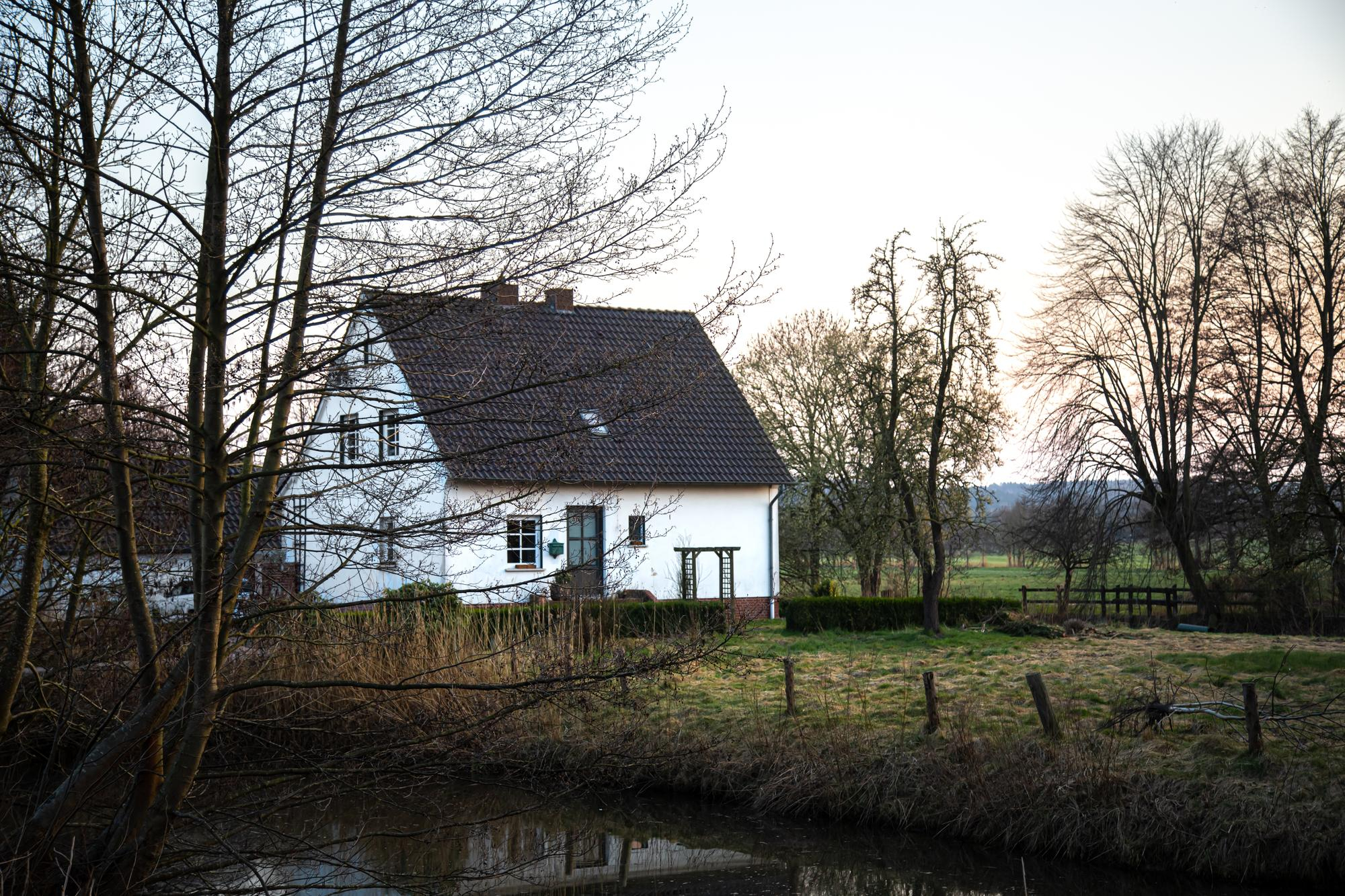
The Envelope
I had been smiling for forty minutes.
This was unusual for me. I am not someone who smiles continuously, who moves through the world with visible contentment as my default expression. I am practical by nature, measured, the kind of person who has been described as composed so often that it has become less a compliment than a category. But I had walked out of Gerald Hutchins’s law office forty minutes ago with the specific understanding that my grandmother Eleanor had spent the last years of her life making sure I would be alright, and the smile had arrived somewhere in the parking lot and had not yet left.
Seven million dollars.
The Aspen estate.
Her jewelry, her books, her garden tools, which she had specified in the will with the same precision she brought to everything, the good trowel and the Japanese pruning shears and the kneeling pad she had used for thirty years, to Claire, who is the only one who understands what a garden requires.
I had cried in Gerald’s office. He had expected this and had a box of tissues positioned for exactly this purpose, and I had used several and apologized and he had said there was nothing to apologize for, which is what people say and which in this case I actually believed.
Eleanor had died eleven days ago. She was ninety-one and had been, in her final weeks, very clear about what was happening and entirely at peace with it in the particular way of people who have lived long enough and well enough that death arrives as a completion rather than an interruption. She had held my hand in the hospice room and said several things I will not put here because they belong to me and to her, and she had also said, with the dry precision that had characterized her humor her entire life, that she had some things arranged that I would find useful.
I had not known about the money.
I had not known about the estate.
I had only known that my grandmother was the person who had always seen me most clearly, and I had driven home from Gerald’s office feeling, for the first time in a long time, seen and held and protected by someone who loved me.
I was still smiling when I turned onto my street.
I was pulling into the driveway when I saw them on the porch.
Daniel was standing slightly behind his mother, which told me something about the dynamic of what I was arriving at, which I read in approximately two seconds with the pattern-recognition of a woman who has been paying attention to her husband’s relationship with his mother for twenty-seven years and has developed a comprehensive literacy in it.
Patricia Hale was sixty-eight years old and had been beautiful in a particular way that had curdled slightly over the decades into something that was still striking but had lost whatever warmth had once accompanied it, if there had been warmth. I had sometimes wondered about that. Whether there had been an earlier Patricia, before the disappointments and the entitlements had calcified into the woman I knew, or whether she had always been this way and I had simply not been present for the period when it was still becoming.
She was holding papers.
A thick stack of them, the kind of thickness that represents preparation, time spent, a plan that has been in development longer than a few days.
“The house is sold,” she said, before I had reached the bottom of the porch steps. She said it the way you announce a weather forecast, factual, settled, not something you are telling someone so much as informing them of a reality they have not yet caught up to. “You have nowhere to live now.”
I stood at the base of the steps and looked at my husband.
Daniel was looking at the driveway. He had his hands in his jacket pockets and his jaw set in the way it gets when he has committed to something and knows it was wrong and has passed the point where changing course feels available to him. I had seen this expression before, on smaller things. The time he had agreed with his mother that we should cancel the vacation I had planned without consulting me. The time he had given her a key to our house without telling me until she used it.
But those were small things.
This was the house.
This was twenty-seven years.
“The movers packed your things while you were at the reading,” Patricia continued. She extended the papers toward me. “Everything is in storage. Sign these and we can make this simple. Daniel finalized the sale while you were with your grandmother. The buyers are arriving shortly.”
I looked at the papers in her hand.
I looked at Daniel.
He did not look up.
I thought about Eleanor in the hospice room. I thought about what she had said, and what she had not said, and what Gerald had told me this afternoon about the specific conditions under which certain elements of the estate would be activated. He had been careful about this, Gerald, in the way of an attorney who has been given detailed and thoughtful instructions and intends to carry them out exactly.
He had said: there are provisions that activate under specific circumstances.
He had said: your grandmother was a careful woman.
He had said: if the circumstances arise, you will not be alone in them.
I heard the tires before I turned.
A black SUV, polished and unhurried, pulling to the curb with the quiet efficiency of a vehicle driven by someone who is never in a visible hurry because they have never needed to be.
“That’s them,” Patricia said, and her voice lifted into the register she used for people she wanted something from, warm and social and as real as stage dressing.
Daniel came down the steps and straightened his collar. He had always straightened his collar when he was nervous, when he needed to present a version of himself that was more settled than he felt, and I had found this endearing for the first twenty years of our marriage and had been watching it with increasing sadness for the last seven.
Two men got out of the SUV.
The younger one was carrying a legal folder.
The older one had silver hair and the particular quality of stillness that belongs to people who have spent a long time being the most significant person in every room they enter and no longer need to announce it. He was perhaps seventy-five, impeccably dressed, and he walked past Daniel’s extended hand and past Patricia’s assembled smile as though neither was a thing he had been asked to address.
He walked to me.
“You must be Claire,” he said. “Your grandmother spoke of you very often. I’m Robert Marsh. Eleanor and I worked together for nearly thirty years.”
“She mentioned you,” I said, which was true. She had mentioned Robert Marsh. She had described him as the most meticulous man she had ever hired and the most loyal, in that order, and coming from Eleanor those were the highest possible categories of praise.
He reached into his coat and produced an envelope.
I knew the handwriting before he had extended it fully. Seventy years of letters and birthday cards and notes tucked into books she was lending me. Eleanor’s handwriting, which had never been pretty but had always been precise.
“She asked me to deliver this personally,” Robert said. “Under specific circumstances.”
He looked at Daniel.
“She was, as I said, a careful woman. She had concerns about this property. She asked me to be present if those concerns were ever realized.”
Daniel’s collar, which he had just straightened, appeared to require straightening again.
“I don’t understand,” he said. “The sale is complete. The paperwork is done. We don’t need.”
The younger attorney had opened his folder.
“Before any transfer of this property is completed,” he said, with the pleasant precision of someone delivering information that has been very carefully prepared, “we need to discuss the restrictive trust attached to it.”
Patricia looked at the younger attorney.
Then she looked at Robert.
Then she looked at me.
I watched fear arrive in her eyes.
It was the first time in twenty-seven years I had seen it there, and I found that it was not as satisfying as I might have imagined and was more clarifying.
And then I opened my grandmother’s letter.
My dear Claire,
If Robert has given you this envelope, then something has happened that I suspected might happen and which I spent considerable time preparing for. I am sorry you are standing in what is likely a difficult moment. I am not sorry for what I arranged, because I arranged it for you, and everything I have done for you has been from love.
Twenty-seven years ago I watched you marry a man who was not unkind but who was not strong, and I held my opinion because it was your life and you were happy, and I believed that love could carry people through the gaps in their character. I watched carefully for twenty-seven years. I watched the gaps grow.
I watched his mother.
I am ninety-one years old and I have watched many women like Patricia Hale and I know exactly what they do with sons like Daniel and daughters-in-law like you, and I decided several years ago that whatever happened, you would not be left without ground beneath your feet.
The house on Weston Lane, which you are currently standing outside of, was purchased in 2019 through a trust in your name. Daniel did not buy it. Daniel’s name has never appeared on the deed. He did not know this because you handled the mortgage payments and the paperwork and he allowed you to handle it because he has always allowed you to manage the difficult parts of your shared life while reserving his opinion about the outcomes.
Any sale he has attempted to finalize is void.
The buyers may not know this. Robert will explain it to them. They will be reimbursed for any costs incurred and I expect they will be understanding, as Robert has already been in contact with their attorney.
The divorce papers Patricia is holding were prepared by an attorney Daniel hired six weeks ago. I know this because I have friends in this city who have been friends for sixty years and there are very few things that happen in a small legal community that do not eventually reach the right ears.
Robert has everything you need. He will stay as long as you need him.
I love you, my Claire. I have loved watching you become who you are. I am sorry I will not be there for the next part, but I arranged the best I could to make the next part possible.
Yours always,
Eleanor
I folded the letter carefully.
I looked at Robert Marsh.
He was watching me with the patient attention of someone who has been waiting for a specific cue and is now ready.
“The deed,” I said.
He produced it from his own folder. My name. The trust in my name, established 2019, exactly as Eleanor had written.
I walked up the porch steps.
Daniel had not moved. He was standing at the bottom of the steps and I walked past him without stopping, past Patricia and her papers, and I unlocked my front door with the key that was still in my bag from the morning and I went inside.
The house was strange.
The movers had been thorough. Most of my things were gone, the personal things, the photographs and the books and the objects that had accumulated over twenty-seven years of a shared life and had apparently been identified by someone as hers rather than ours and removed accordingly. The furniture remained. The bones of the house remained.
I stood in the living room for a moment.
Then I went back to the door.
Robert had positioned himself on the porch. He was speaking to the buyers, the two men from the SUV, in the calm and exact way of someone delivering information that is unpleasant but not personal. The younger attorney showed them documents.
One of the buyers looked at Daniel.
Daniel looked at the driveway.
Patricia was very still beside the door.
“Patricia,” I said.
She turned.
“The paperwork you brought,” I said. “I won’t be signing it.”
“You don’t understand what you’re doing,” she said. “Daniel has an attorney. This can get very complicated for you.”
“I have Robert Marsh,” I said. “And Gerald Hutchins. And the deed to this house. And seven million dollars and an estate in Aspen that my grandmother left me this afternoon.” I said this not to perform it but because it was relevant information and I believed in relevant information. “Complicated is not the word I would choose for my position.”
Patricia’s face did something I did not have a word for exactly. Not collapse. Not surrender. A kind of recalculation, a rapid reassessment of a situation that had looked entirely different thirty minutes ago.
She looked at Daniel.
Daniel was still looking at the driveway.
“Daniel,” I said.
He looked up.
I had loved this man. I want to say that plainly because what followed is easier to understand in that context. Twenty-seven years is not a sentence you serve. It is a life you build and live in and it contains real things regardless of how it ends, and I had loved Daniel Hale with the genuine and extended love of someone who shares their daily life with a person and knows their habits and their fears and their particular way of holding their coffee cup in the morning. This was all real.
And he had let his mother pack my things and sell my house while I was sitting with my dying grandmother.
Both things were true simultaneously.
“You could have told me,” I said. “Whatever you wanted. Whatever you felt. You could have told me.”
He opened his mouth.
He closed it.
“Instead you let her plan this,” I said. “While I was at the hospice. While Eleanor was dying.”
“Claire,” he said.
“I’m going to go inside now,” I said. “Robert will manage the legal situation. I suggest you find somewhere to stay tonight that isn’t this house.”
I went back inside and closed the door.
Robert Marsh stayed for three hours.
He was meticulous in exactly the way Eleanor had described, and he managed the buyers with the smooth competence of someone who has navigated awkward situations for decades and has developed an efficient approach to them. They were not unreasonable men. They had acted in good faith and they were unhappy about the situation, which was understandable, and Robert had prepared a comprehensive remediation that included reimbursement of all their costs and a letter from the trust that would be useful if they needed documentation of what had happened. They left without drama.
Patricia and Daniel left twenty minutes later.
I did not watch them go. I was in the kitchen making tea, which is what I do when I need something to do with my hands while my mind manages what it is managing. I heard a car door and then another and then an engine and then quiet.
Robert knocked on the kitchen door before coming in.
I made him tea as well and we sat at the kitchen table and he went through the documents methodically, the deed, the trust structure, the relevant provisions, the divorce paperwork Patricia had brought which he assessed with the quick efficiency of a man who has read many divorce documents and can identify the notable provisions in under two minutes.
“It’s aggressive,” he said. “His attorney structured it to minimize your settlement. They were counting on you not having independent counsel when you signed.”
“And if I’d signed it today?”
“You would have signed away most of your marital assets and agreed to a settlement that undervalued the house considerably.” He paused. “Though the house question is now moot given the trust. His attorney doesn’t appear to have known about the trust.”
“Did anyone know? Besides you and Eleanor?”
“Gerald Hutchins,” he said. “And the attorney who structured the trust. Three people, for five years.” He looked at me over his tea. “Eleanor was thorough.”
I thought about my grandmother and thoroughness.
She had been thorough about everything. Her garden, her correspondence, her finances, her relationships, the particular attention she brought to the people she loved, which was not broad but was very deep and had included me from the beginning, from the days when I was a child who followed her through her garden asking questions that she answered completely and without condescension, treating my curiosity as something serious and worth engaging with.
She had been doing this for me for five years.
While I was going about my life, while I was managing the mortgage and the household and the difficult parts of a marriage that had been growing more difficult in ways I had been trying not to see, she had been in her garden or at her desk or on the phone with Robert Marsh, building something that would hold me if I fell.
“Robert,” I said. “Did she know? That it would come to this?”
He was quiet for a moment.
“She hoped she was wrong,” he said. “She said that explicitly. She told me she hoped I would never need to come to your house. But she also told me that love without preparation is just wishing, and she preferred to love you with preparation.”
I sat with this for a long time.
The weeks that followed were not simple.
Simple is not what happens when a twenty-seven-year marriage ends, regardless of the circumstances of the ending. What happens is that the practical and the emotional run parallel to each other on different tracks at different speeds and you spend a great deal of time managing both simultaneously, which is exhausting in a specific way that I had no previous experience of and had to learn as I went.
Gerald and Robert handled the legal elements together with an efficiency that would have been remarkable if I had not understood by then that Eleanor had specifically selected both of them for their capability. The divorce was not clean but it was contained. Daniel’s attorney, confronted with the trust documentation and with Gerald’s letter outlining the assets Eleanor had left me, became significantly less aggressive in his approach. This is what resources do: they change the practical landscape of a negotiation.
Daniel called twice in the first month.
I answered the second call.
He said he was sorry. He said this several times in several ways, working through the available formulations, and I listened to all of them and thought about which of them were true and concluded that most of them were true and that being true did not resolve anything but was still better than the alternative.
“She made it very easy,” he said. “She came to me first. She said you would never know.”
“That she came to you first,” I said.
“She said you were planning to leave anyway. That you’d been unhappy for years.”
I thought about this.
“Was that part true?” he asked. “Were you unhappy?”
I looked out the kitchen window at the garden, which I had been tending in the weeks since the porch incident with a thoroughness that I recognized as displacement activity and engaged in anyway because the garden needed it.
“I was trying,” I said. “I kept trying.”
“I know,” he said. “I’m sorry I made it so easy for her.”
I did not tell him it was alright because it was not alright. I also did not tell him it was unforgivable because I was not yet sure that was true and I did not want to say things I was not sure of.
“Take care of yourself,” I said.
And I meant it.
I went to Aspen in October.
The estate was not what I expected, which is to say it was more personal than the word estate suggests, smaller and more carefully arranged, the house of someone who had lived in it with intention and had furnished it over decades with the specific accumulated character of a life rather than the deliberate presentation of wealth. Eleanor’s books were on the shelves. Her garden tools were in the shed, the good trowel and the Japanese pruning shears and the kneeling pad, exactly as specified.
I arrived on a Thursday afternoon when the aspens were at the peak of their color, the particular gold that that altitude produces, gold with a trembling quality in the wind that makes you understand why people make pilgrimages to see it.
I stood in the garden for a long time.
The garden had been maintained by the caretakers Eleanor had employed for thirty years, and it was in excellent condition, which would have pleased her. The roses along the south wall were past their bloom but had been properly prepared for winter. The kitchen garden had been put to bed. The flagstone path was clear.
I walked to the bench at the far end, which faced the mountains, which Eleanor had written about in one of her letters as the place she went in the evenings when she wanted to think clearly.
I sat on it and looked at the mountains.
I was fifty-four years old. I had seven million dollars and an estate in Aspen and a house on Weston Lane that was mine and a grandmother who had loved me with preparation, which I was beginning to understand was the best kind.
I did not know yet what the next part looked like. I had some thoughts about it, early and tentative, the way thoughts are when they are still more question than answer. Gerald had mentioned, at our last meeting, that the foundation Eleanor had established for arts education in her city was looking for new leadership, that she had mentioned my name as someone who understood both the financial and the human dimensions of such work. I had been thinking about this with increasing frequency.
I had also been thinking about gardens.
About what it would take to really learn them, the science and the practice and the long patient attention they require, which Eleanor had offered to teach me many times and which I had always been too busy for and was no longer too busy for.
I took Eleanor’s letter from my jacket pocket.
I had been carrying it since Gerald gave it to me, folded into quarters in my inside pocket, close to my chest in the way of things you need to be able to reach.
I read it again in the mountain light, though I had it nearly memorized by now, and when I reached the last line I sat for a while with the particular quality of grief that is also gratitude, the feeling that comes when you understand that someone who loved you has done everything they could for you and the love did not end with them but left something durable behind.
I folded the letter and put it back.
The aspens were trembling in the afternoon wind and the mountains were the specific blue of October at altitude and the bench was solid and the garden was around me and I was on the ground that Eleanor had left me, the literal and the figurative ground, and it held.
I would stay through the weekend.
I would learn the garden.
I would figure out the rest.

Lila Hart is a dedicated Digital Archivist and Research Specialist with a keen eye for preserving and curating meaningful content. At TheArchivists, she specializes in organizing and managing digital archives, ensuring that valuable stories and historical moments are accessible for generations to come.
Lila earned her degree in History and Archival Studies from the University of Edinburgh, where she cultivated her passion for documenting the past and preserving cultural heritage. Her expertise lies in combining traditional archival techniques with modern digital tools, allowing her to create comprehensive and engaging collections that resonate with audiences worldwide.
At TheArchivists, Lila is known for her meticulous attention to detail and her ability to uncover hidden gems within extensive archives. Her work is praised for its depth, authenticity, and contribution to the preservation of knowledge in the digital age.
Driven by a commitment to preserving stories that matter, Lila is passionate about exploring the intersection of history and technology. Her goal is to ensure that every piece of content she handles reflects the richness of human experiences and remains a source of inspiration for years to come.