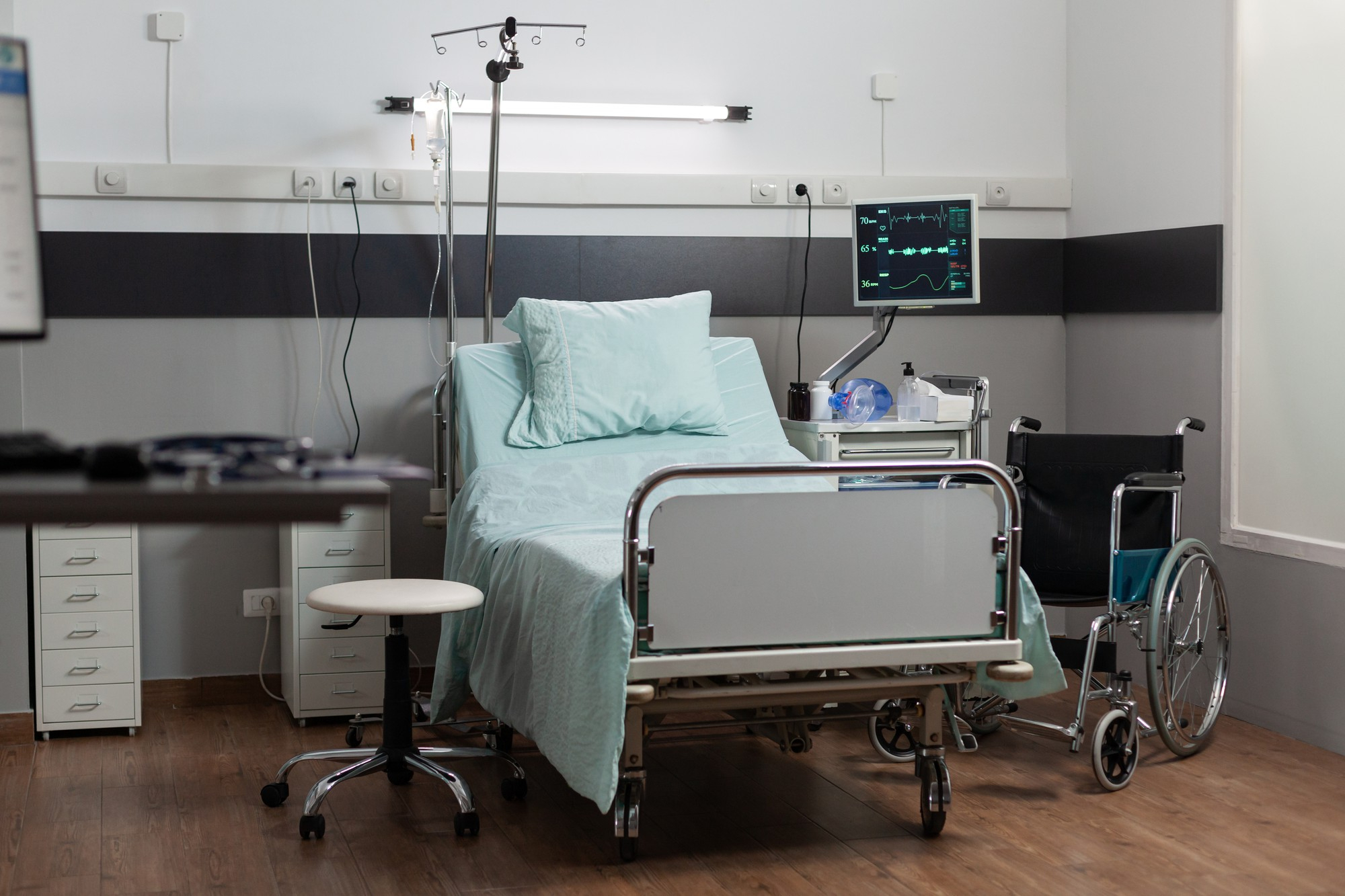
What the Monitors Recorded
The flight home took nineteen hours and Nora Whitaker spent most of it in the particular suspended state of military travel, not quite sleep and not quite wakefulness, her body in one place and her attention already moving ahead to the next thing. She had been doing this for eleven years, the mental advance work of a woman who had learned that transition is easier if you have already begun arriving before the transport lands.
She had been thinking about Lily.
Specifically about the lavender quilt, which she had found at a market near the base and mailed home in October with a note that said for cold nights when I’m not there to add an extra blanket. She had been thinking about whether Lily had been using it, whether it had helped with the cold nights, whether seven-year-olds still wanted their mothers at that age or whether the months away had shifted something in the attachment that would require patient rebuilding.
She had been thinking about all of this, and she was still thinking about it when her phone connected to the domestic network and the call came through before she had cleared the terminal.
“Mrs. Whitaker? Your daughter has been admitted to the pediatric intensive care unit at St. Catherine’s.”
Nora did not ask how serious. She asked the address, confirmed she was the correct person, and was back in her car before the intake nurse had finished speaking.
She drove in her deployment uniform with her military ID still clipped to her jacket and both hands on the wheel and the particular quality of focus that training produces in emergencies, where the fear is real but it goes somewhere useful rather than somewhere that impairs function. She had learned this in her first year of service and had spent a decade refining it and had never once needed it for something like this, for something that was her own child, and she found that the training held but the fear was larger than anything she had previously routed through it.
St. Catherine’s Pediatric ICU was on the fourth floor.
She found Lily’s room by following the sound, which was not crying but something quieter and more difficult, the small sounds of a child who has been in pain long enough that the acute expression of it has settled into something lower and more sustained.
Lily was small under the monitors. This was the first thing, the smallness, because children are always smaller in hospital beds than you hold them in your memory, and Lily had been away from Nora’s direct sight for four months and had existed during that time in photographs and video calls and the specific preserved image of a mother who needs to carry her child somewhere accurate inside her through long absences.
The child in the bed was Lily and she was smaller than the image.
One arm was elevated and wrapped. There were monitors. There was an IV. There was a medical team moving through the room with the calibrated efficiency of people managing something serious.
Lily saw her mother first.
Her face did what faces do when the person you have most needed finally arrives, and she reached toward Nora with her uninjured arm, and Nora was at the bedside before she had made the conscious decision to move.
“Mommy,” Lily said.
“I’m here,” Nora said. “I’m here now, sweetheart. I’m right here.”
She leaned carefully over the equipment and held her daughter’s reaching hand and stayed there for a moment with her eyes closed, breathing, letting Lily feel the specific reality of her presence, which is different from a voice on a screen or a voice on a phone.
Then she straightened and looked at the doctor.
Dr. Samuel Reyes was a pediatric specialist in his mid-forties with the kind of face that had learned to communicate concern without alarm, which is a skill that emergency medicine teaches over time and which Nora, in her line of work, recognized and respected.
He walked her through the findings carefully.
The arm, which had a fracture inconsistent in its presentation with a simple fall on stairs. Additional findings on imaging that required specialist review. Bruising that had been documented and photographed upon admission. The pattern of injuries, which was the phrase he used, which was the phrase that opened the space for everything else.
“The explanation we received may not account for everything we found,” he said. His voice was professional and quiet and exact. “We’ve contacted the appropriate people.”
Nora stood beside her daughter’s bed and listened to the doctor describe her child’s injuries and understood, in the way that certain information lands before you are ready to hold it and you hold it anyway because there is no alternative, what he was telling her beneath the careful clinical language.
She kept her hand over Lily’s.
Lily had fallen asleep, the sudden collapse of a child who has been managing an enormous amount and has finally released it.
“Who was with her?” Nora asked.
“Her father reported she fell down the stairs at home,” Dr. Reyes said. “Three days ago.”
“Three days.”
“She was brought in yesterday evening.”
Nora processed this.
Three days between whatever had happened and the hospital.
“Is she going to be alright?”
“The arm will heal,” Dr. Reyes said. “We’re monitoring some other findings. She’s stable. She’s been asking for you.”
“Since when?”
“Since she arrived,” he said.
Detective Marcus Hale was broad-shouldered and gray at the temples and had the look of a man who had been doing this specific and difficult work for long enough that he had stopped being surprised by anything and had not, despite this, become indifferent to it. Nora recognized the type. She had worked alongside people like this, in different contexts, in different countries, and she understood that the exhaustion behind his eyes was not the exhaustion of someone who had stopped caring but the exhaustion of someone who cared continuously and had learned to function inside it.
He came to the hospital within twenty minutes of the specialists making their calls.
He told her that Calvin had said Lily fell down the stairs.
“Do you believe him?” Nora asked.
Hale paused in the way of a careful man.
“I believe the medical evidence,” he said. “Your husband’s family has significant connections in this county. His mother serves on the hospital board. His father’s law firm has been involved in the campaigns of several local officials.”
Nora looked through the glass at Lily.
“So they know people,” she said.
“They know people,” he confirmed. “That doesn’t change what the evidence shows. It changes the practical landscape of what happens next.”
“What does happen next?”
“I complete my investigation,” he said. “I gather every piece of documentation available. Medical records. Photographs. Timeline. Any communications that are relevant.” He paused. “It would help considerably if your husband says something in the presence of witnesses.”
Nora looked at him.
“Where is my husband?”
“Waiting room,” Hale said. “With his mother.”
She heard Margaret before she saw her.
Not words, just the register, that specific carrying quality of a woman accustomed to rooms arranging themselves around her voice. Margaret Whitaker was sixty-one years old and had been on the hospital board for eight years and wore pearls the way some women wear armor, decoratively and as a statement of position. She had never liked Nora, not from the beginning, not from the first dinner where Nora had answered a question about her career plans with the honest answer rather than the socially managed one, and had treated her son’s marriage to a military officer as a persistent inconvenience that she remained too well-bred to address directly.
Calvin sat beside her.
They were drinking coffee.
This was the detail that Nora’s mind returned to later, in the days and weeks that followed, more than anything else. Not the pearls. Not the posture. The coffee. Her daughter was forty feet away in the pediatric ICU and her husband was sitting in a waiting room with a paper cup of coffee and a composed expression and his mother’s hand on his arm as though he were the one who needed comfort.
He looked up when Nora walked in.
Something moved through his face. Not guilt, or not only guilt. Something calculating, the look of a person assessing a situation.
Margaret rose first.
“Nora, thank goodness you’re home,” she said, with the warm relief of a woman who has been rehearsing a greeting. “Lily has always been a bit accident-prone, and Calvin has been under such enormous pressure with you away, the stress of managing everything alone is really.”
Nora did not look at her.
She had not looked away from Calvin since she walked through the door.
“The medical team has serious questions,” Nora said, “about what happened to Lily.”
Calvin’s jaw tightened.
“You’ve been gone for months,” he said. “You have no idea what things have been like here.”
Nora took one step closer.
“You’re right,” she said. “I was gone.”
He watched her.
“That was my mistake,” she said.
She reached into her jacket pocket and placed her phone on the table between them. She had pressed record before she entered the room, because she was a woman who had spent eleven years in environments where documentation was the difference between what happened and what could be proven to have happened, and she had not forgotten this in the four minutes between leaving Detective Hale and walking into the waiting room.
“This conversation is being documented,” she said. “Any further questions will go through the investigators.”
Calvin looked at the phone.
Margaret looked at Calvin.
The composure in the room shifted by a degree that was not visible to anyone who was not paying close attention, and Nora was paying very close attention.
“You need to be careful,” Calvin said. His voice had dropped into a register she recognized, the one he used when he wanted her to understand that consequences were available. “You don’t know what you’re doing.”
“I know exactly what I’m doing,” Nora said.
She picked up the phone and walked back to her daughter’s room.
The next seventy-two hours were the longest of her life, and she had spent time in situations that had previously held that record.
She did not leave the hospital. A nurse brought her a change of scrubs on the second morning because her deployment uniform was beginning to draw the kind of attention that complicated things, and she accepted this practical kindness with gratitude and stayed at Lily’s bedside.
Lily slept a great deal. When she was awake she wanted to be held and Nora held her as much as the equipment allowed, her arm around her daughter’s small body, listening to her breathe. The breathing was the thing. As long as Nora could hear Lily breathing steadily she could manage everything else.
On the second day Lily asked if Daddy was coming.
Nora had been preparing for this question.
“Daddy is talking to some people right now,” she said. “About what happened.”
Lily looked at the ceiling. She had her father’s eyes, green with a dark rim, and they were too old in that moment for a seven-year-old’s face.
“I didn’t fall down the stairs,” she said.
Nora kept her breathing steady.
“Can you tell me what happened, sweetheart?”
Lily was quiet for a long moment.
“He was very angry,” she said. “Because I spilled juice on his papers. He said I was always ruining things.”
She said it with the flat factual affect of a child who has already processed the event many times and has arrived at a place beyond acute distress, which is in some ways more alarming than the acute distress would have been.
Nora took her daughter’s hand.
“I’m so sorry I wasn’t here,” she said.
“You had to go,” Lily said. “I know you had to go.”
“I’m here now.”
“I know.” Lily turned her head and looked at her mother. “Are you going to leave again?”
Nora looked at her daughter.
She had been scheduled for another deployment assessment in four months. She had been building a career for eleven years with the specific incremental intention of someone who has a clear destination in mind. She thought about all of this in the space of a few seconds, the way you think about things when you are holding your child’s hand in a pediatric ICU and she is asking you a direct question.
“No,” she said. “I’m not going to leave again.”
“Promise?”
“I promise you,” Nora said.
Lily settled against her pillow and closed her eyes, and Nora sat beside her in the quiet of the monitors and understood that she had just made the most significant strategic decision of her professional life and that it had taken approximately four seconds and she did not regret it at all.
Detective Hale was thorough.
Nora learned this over the following days as she watched him work, as she provided everything he asked for and answered every question with the precision of someone trained to document and report. She gave him the recording from the waiting room, which contained nothing overtly incriminating but demonstrated Calvin’s demeanor in the immediate aftermath of his daughter’s hospitalization. She provided access to her own communications, the months of messages during her deployment, which showed Lily’s voice in increasing irregularity over the final weeks, shorter messages, longer gaps, one text that had arrived two months ago that said only i miss you mommy with no context and which Nora had interpreted as ordinary longing and now reread as something that required different interpretation.
She gave him everything.
She also called her attorney, a woman named Diana Chau who had handled military family legal matters for twenty years and who had, when Nora reached her on the second evening, listened to the summary and said two things: I’m so sorry and then immediately, Don’t sign anything, don’t agree to anything, and don’t let Calvin or his mother speak to Lily without a child welfare professional present.
Diana arrived the following morning.
Margaret Whitaker arrived the same morning with a man in an expensive suit who was introduced as the family’s attorney, whose name Nora did not retain because she was looking at Margaret’s face, which had rearranged itself from the pearls-and-concern of the waiting room into something more calculated.
“We’d like to speak with Lily,” Margaret said.
“No,” Diana said.
“She’s my granddaughter.”
“She is a minor in the care of a pediatric medical team and a subject in an active investigation,” Diana said. “You will not be speaking with her without a child welfare professional present, and any request for access will go through me.”
Margaret looked at Nora.
“You’re making a terrible mistake,” she said. “This family has resources you don’t have. This can go very badly for you.”
Nora looked at Margaret Whitaker in her cream suit and her pearls and thought about the waiting room and the coffee and her daughter’s voice saying he was very angry.
“I appreciate you letting me know,” Nora said.
Margaret and the family attorney left.
Diana looked at Nora.
“She’s not wrong that they have resources,” she said.
“Neither are we,” Nora said.
The investigation took four months.
Nora would not describe those months as easy because they were not easy in any dimension, legal, financial, personal, or practical. She was staying in a hotel near the hospital for the first two weeks, then in a temporary apartment Diana helped her locate when it became clear that returning to the house on Carver Street was not appropriate while the investigation was active. She was managing Lily’s medical care and her therapy appointments, which Dr. Reyes had arranged with a child psychologist named Dr. Webb who was gentle and specific and whose sessions with Lily Nora was not present for but whose weekly summaries she read with the careful attention she gave to every document that mattered.
Lily was doing the work.
Children are more resilient than the situations they endure, and they are also more permanently shaped by them than we want to believe, and both things were true of Lily simultaneously, which Dr. Webb helped Nora understand. The goal was not to return Lily to who she had been before. The goal was to help her become who she was going to be, fully and safely, with accurate information about what had happened and what it meant and what it did not mean about her.
The investigation produced what it produced.
Nora will not go into the specific details because they belong to Lily and to the legal process and not to the telling of this story. What she will say is that Detective Hale was as thorough as she had assessed him to be, and that the medical evidence was as unambiguous as Dr. Reyes had indicated it was, and that the Whitaker family’s connections, which were real, turned out to be insufficient to alter the weight of what had been documented, which is sometimes how it goes when the documentation is careful and complete.
Calvin Whitaker was charged.
He was not immediately incarcerated pending the legal proceedings. This was the part that was hardest, the period between charges and resolution, when Nora had to exist in the same city as the person who had hurt her daughter and navigate the legal landscape around him while also taking Lily to school and to therapy and to the library on Saturday mornings and to the park when the weather allowed, building the ordinary structure of daily life that children need regardless of what else is happening.
She had a temporary custody order that gave her sole physical custody while the case moved through the system. Diana had obtained this efficiently and had told Nora to let the legal process do what it was designed to do, which was sound advice that Nora repeated to herself on the days when what she wanted was not the legal process but something more immediate and less procedural.
Margaret Whitaker called twice in the first month.
Nora did not answer.
Diana handled the communications.
On a Saturday in March, five months after Nora had driven to St. Catherine’s in her deployment uniform, she took Lily to a garden center because Lily had asked if they could have plants.
This had come from therapy, specifically from a session in which Dr. Webb had asked Lily what she would like in her room in the new apartment, and Lily had said she wanted something alive. Not a pet, because pets were a lot of responsibility and she had enough responsibility right now, but something alive that she could take care of.
They walked through the greenhouse together, Lily holding Nora’s hand with the casual ease of someone who no longer had to think about whether her mother was going to be there.
Lily had been sleeping better for two months. She had stopped waking at two in the morning. She had started talking more at dinner, the running observational commentary of a child who is feeling safe enough to narrate her experience, and Nora listened to all of it with the specific quality of attention that she had previously directed at intelligence reports and mission briefings and was now directing at her daughter, which seemed to her a considerable improvement in the application of her skills.
Lily stopped in front of a display of small lavender plants.
“These smell like my quilt,” she said.
“They do,” Nora said. “That’s where the quilt smell comes from. Lavender.”
Lily picked up a pot and held it carefully with both hands, the arm that had been fractured now healed and fully functional, which Nora had been told would be the outcome and which she had nevertheless greeted with private, enormous relief when the cast came off and Lily flexed her fingers and said it felt fine.
“Can we get this one?” Lily asked.
“We can get as many as you want,” Nora said.
“Just this one,” Lily said. “It needs space to grow. Dr. Webb says everything needs space to grow.”
Nora looked at her daughter.
“Dr. Webb is right,” she said.
They bought the lavender and a bag of potting soil and a small terracotta pot with a blue rim that Lily selected from the display with the decisive confidence of someone who knows exactly what she is looking for. On the way home Lily held the plant on her lap in the car and talked about where she wanted to put it, the windowsill in her room where the afternoon light came in, which she said was the right kind of light for it.
“How do you know what the right kind of light is?” Nora asked.
“The lady at the store told me,” Lily said. “I asked her.”
Nora kept her eyes on the road.
Her daughter, who had been afraid to ask for things, who had learned in the house on Carver Street to make herself small and quiet and non-disruptive, had walked into a garden center and asked a stranger a question about the plant she wanted.
“Good thinking,” Nora said.
“I’m going to ask Dr. Webb things too,” Lily said. “I have a list.”
“What kind of things?”
Lily thought about it, looking at the lavender in her lap.
“How to know when something is your fault and when it isn’t,” she said. “And how to tell the difference between someone being angry because of you and someone being angry because of them.”
Nora was quiet for a moment.
“Those are important questions,” she said.
“I know,” Lily said. “That’s why I wrote them down.”
They drove the rest of the way in comfortable silence, the lavender plant between them, the afternoon light coming through the windows at the angle that early spring produces, low and golden and full of promise about what was still ahead.
The new apartment had a good windowsill.
Nora had made sure of that when she chose it.
She had chosen it the way she had learned, in the past five months, to choose things, not for the life she had planned or for the life she had been living but for the life that was actually here, the one that contained her daughter and a lavender plant and a Saturday afternoon and the particular quality of ordinary peace that she understood, now, was not an absence of difficulty but what you build when you have moved through difficulty and come out the other side still standing, still present, still there.
Lily put the plant on the windowsill when they got home.
She stood back and looked at it in the light.
“It’s perfect,” she said.
Nora stood beside her.
Outside the window the March afternoon was doing what March afternoons do when they are done being winter, showing the first specific evidence of what is coming, the particular green beginning at the edges of things, the light staying a few minutes longer each day.
“Yes,” Nora said.
She put her arm around her daughter.
“It is.”

Adrian Hawthorne is a celebrated author and dedicated archivist who finds inspiration in the hidden stories of the past. Educated at Oxford, he now works at the National Archives, where preserving history fuels his evocative writing. Balancing archival precision with creative storytelling, Adrian founded the Hawthorne Institute of Literary Arts to mentor emerging writers and honor the timeless art of narrative.