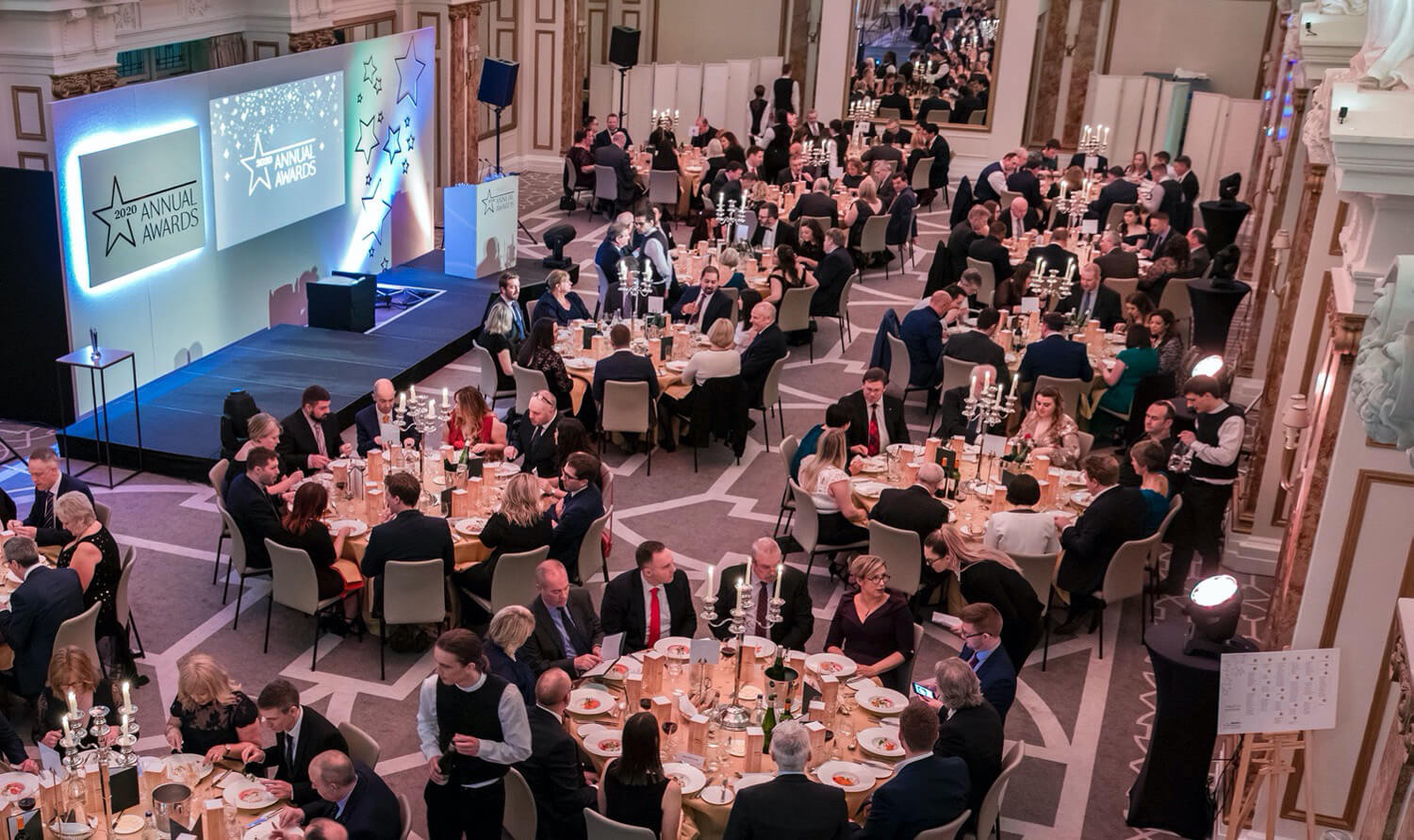
My name is Amanda Dorsey. I’m thirty-six years old. Two weeks ago, my brother introduced me to his fiancée and her family.
He put his arm around my shoulder and smiled for the room.
“This is my sister,” he said. “Uneducated, a failure, no future.”
Sixty people laughed.
My mother laughed the loudest.
I didn’t defend myself. I didn’t cry. I didn’t leave. I stood there and held my glass, because three tables away, an old man was setting down his fork. He was standing up. And I had seen his face before, under very different lights.
He took the microphone from the band. He looked at me. Not at my brother. At me.
“Forgive me,” he said. “I’m surprised to see you here. A shame I didn’t recognize you sooner.”
My brother went pale. He had no idea who that man was to me. Neither did anyone else in that room.
This is the story of the night the lie my family built for eighteen years finally ran out of room. Let me take you back to where it started.
These days, my life fits in a few quiet rooms. A locker with my name on a piece of tape. A pager that goes off at hours that don’t belong to normal people. A one-bedroom apartment in Brooklyn with a coffee maker I bought used and a window that looks at another window. I’m not married. I don’t have children. I have a job most people will never understand, and I made my peace with that a long time ago.
I’m a cardiothoracic surgeon. I operate on hearts. I have done it as the attending, the one whose name goes on the chart, for three years now. Before that there were thirteen years of training. College. Medical school. Five years of general surgery. Two more learning to hold a beating heart still enough to fix it. I counted those years the way some people count rosary beads. One at a time. On purpose.
Nobody in my family knows any of this.
That sentence sounds impossible when I say it out loud. We live in a world of search bars. You’d think they’d have stumbled across me. They never looked. That’s the part people don’t believe. They didn’t look because they didn’t want to. The story they had was easier.
In their version, I dropped out of nursing school at nineteen, embarrassed everyone, and ran off to who knows where. In their version, I was the cautionary tale, the one you mention at dinner to make the well-behaved children sit up straighter. My mother repeated it so many times it became furniture in her house. You don’t question furniture. So I let them keep it. I told myself that was strength. Some days I still think it was.
Then, in September, my phone rang. The number wasn’t saved, but I knew the area code. Nathaniel. My brother. Three years older, and the brightest thing in my mother’s sky since the day he was born.
“Mandy,” he said, like no time had passed. “It’s Nate.”
He only ever called me Mandy when he wanted something. He told me he was engaged. Her name was Priscilla. Good family, he said. The kind of family that mattered. There was an engagement party, two weeks out, on the North Shore. And then he said the thing that made me sit down on the edge of my bed.
“Mom really wants you there.”
There’s a trick I learned in operating rooms. When something doesn’t make sense, you don’t move. You wait until it does. So I waited.
“She wants the whole family in one place,” he went on. “For once, you don’t have to say anything. Just come. Show your face. It would mean a lot to her.”
I should have heard it then. You don’t invite someone to mean a lot to a mother who calls you a failure for sport. You invite them to be a prop. A before picture. Proof of how far the favored child has climbed.
But I’m going to be honest, because there’s no point telling this story if I lie in it. A part of me, the small stubborn eight-year-old part that never fully died, wanted to go. Wanted my mother to see me in a good dress, standing up straight, alive and fine and more than fine. Wanted, after eighteen years, to be looked at and not flinched away from.
So I said yes. I wrote the date on the calendar on my fridge. I didn’t write down what I did for a living next to my own name. I didn’t think I’d need to.
To understand why a grown woman would walk back into a room like that, you have to understand the room she grew up in.
I was the second child and the first disappointment. That’s not me being dramatic. That’s the family’s own framing, repeated until I half believed it. Nathaniel came first, and Nathaniel came golden. He smiled early. He charmed teachers. He could walk into a parent-teacher conference that should have ended his life and walk out with everyone laughing. My mother looked at him the way some people look at a sunrise. She looked at me the way you look at weather you didn’t plan for.
I want to be fair to her, even now. Coraline Dorsey wasn’t a monster in a movie. She made school lunches. She came to my one piano recital and clapped. But there was a thumb on the scale of our house, and the thumb was always pressing down on my side. If Nathaniel broke something, it was an accident. If I broke something, it was a sign of who I was.
When I was nine, I won a regional science fair. A small thing. A ribbon. A model of the solar system I’d built out of foam and patience. I brought it home certain, for once, that this would land. My mother looked at the ribbon, then at Nathaniel, who’d gotten a B-minus on something that week.
“Don’t make a big deal of it,” she said. “Your brother’s sensitive about school.”
The ribbon went in a drawer. I learned that my wins were inconvenient, that they made the wrong child feel bad. So I stopped bringing things home. That’s the thing nobody tells you about being the unfavored child. You don’t just stop getting praise. You start hiding the things that might earn it, because you’ve learned they cost more than they’re worth.
The worst of it had a date. I was fourteen. A Saturday in spring. My father had a coin collection, silver dollars mostly, the only thing of value he’d inherited from his own father. He kept it in a wooden case in the den, and we were both forbidden to touch it. That spring, three of the rarest coins went missing.
I didn’t take them. I didn’t know who did. But Nathaniel, seventeen and already in trouble at school, walked into the kitchen that night with a face I will never forget. Calm. Helpful. Sad.
“I saw Mandy in the den,” he said. “By the case. She told me not to tell.”
I remember the silence. I remember my mother turning to me, and the thing in her eyes was not surprise. It was confirmation, as if she’d been waiting years for proof that I was who she suspected.
“I didn’t,” I said. “Nathaniel, you know I didn’t.”
“Why would your brother lie?” my mother said.
That was the whole trial. That was the verdict and the sentence. Why would your brother lie? The question wasn’t a question. It was a wall. My father said very little. He sold the rest of the collection within the year and never looked at the empty space on the shelf. He never looked quite the same at me, either. He died when I was twenty-two, and we hadn’t spoken in two years. I found out at his funeral that the coins had turned up in a pawn shop under a name I recognized. By then it didn’t matter. The story was set in concrete.
I went to that funeral. I drove all night to get there. I stood at the back of the church in a borrowed black coat, and not one person in my family spoke to me. My mother saw me across the grave and turned her shoulder. Nathaniel gave a eulogy about what a close family we’d always been. I left before the reception. I’d driven nine hours to be a ghost at my own father’s burial. On the drive back, I made myself a promise. Never again would I show up somewhere to be treated like I didn’t exist.
I broke that promise eighteen years later for a party on the North Shore.
After that spring with the coins, I became the thing they’d decided I was. Not because I did anything, but because there’s no point defending yourself in a house where your defense is itself the crime. Talk back and you’re difficult. Stay quiet and you’re hiding something. Cry and you’re manipulative. There is no move on that board that wins. So I stopped playing. I went silent. I learned to fold myself small. People who study these things have a name for it now, the fawn response, the way a child learns to disappear to stay safe. I didn’t have the word then. I just had the instinct. Don’t take up space. Don’t need anything. Don’t give them a target.
I worked two jobs through high school, hid the money in a shoebox, and on the morning after my graduation, which only my aunt attended, I packed one bag and got on a bus. My mother’s last words to me at the door were not goodbye.
“You’ll be back,” she said. “People like you always come back.”
I never went back. And I let them keep the story, every version of it. That was the mistake that took me eighteen years to understand. By staying gone and staying silent, I didn’t just protect myself. I left them a blank page, and they filled it however they liked.
The bus took me to a city where no one knew the Dorsey family verdict. The first years were hard in a way I won’t dress up. I slept on a friend’s floor, then in a rented room with a shared bathroom. I worked the closing shift at a diner and the opening shift at a coffee place, and went to community college in the gap between. I was tired in a way that lives in your bones. But I was tired on my own terms, and that turned out to be a completely different kind of tired.
Somewhere in that exhaustion, I found the thing that saved me. I’d taken a biology class to fill a requirement, and the professor put a diagram of the human heart up on the screen. The four chambers. The valves. The way the whole thing is just a muscle that decides sixty times a minute to keep you alive. I sat in the back of that room and felt something I hadn’t felt in years. Not hope, exactly. Direction. I wanted to know how it worked. Then I wanted to know how it broke. Then I wanted to know how to fix it.
Premed while working full-time is a thing people warn you against. I did it anyway, because the alternative was going back to being nobody’s, and I would rather have died than go back. I didn’t call home. Not once. The first year, I waited for the phone to ring. It didn’t. The second year, I stopped waiting. By the third, I’d taught myself not to do the math on holidays, not to think, they’re sitting down to dinner right now, and no one has set a place for me, and no one has noticed there’s no place to set.
There were nights I almost called. The worst was a December when I had the flu and a fever and no one to bring me soup. I sat on the floor of that shared bathroom with my phone in my hand and my mother’s number on the screen, my thumb hovering for a long time. Then I remembered the door and people like you always come back, and I put the phone down. Getting sick alone is bad. Getting sick alone and then being told you deserved it is worse. I’d had enough of the second kind.
Medical school came on a scholarship and a mountain of loans. Then residency, where they break you down to see what you’re made of, and where I discovered I was made of something harder than anyone back home would have guessed. I was good with my hands. I was calm when other people panicked. The first time I held pressure on a bleeding artery while the room sped up around me, I felt my own pulse slow down.
There’s a strange gift hidden in a childhood like mine, and I only found it in that hospital. When you grow up never knowing which version of your mother is going to walk through the door, you become an expert at staying calm in chaos. You learn to read a room in half a second. You learn that the worst thing isn’t the emergency. It’s freezing during it. The thing they’d called my coldness, my distance, my failure to react, it turned out to be exactly the temperament you want in the person holding the scalpel.
A senior surgeon pulled me aside one night after a long case. A gruff man, not given to compliments. “You don’t flinch,” he said. “Most people flinch. Where’d you learn that?”
I almost laughed. I learned it at a kitchen table in spring. I learned it the day I figured out that flinching just tells them where to aim. “I don’t know,” I told him. “I just don’t.”
I chose the heart. Of all the things to choose, I chose the organ everyone uses as a metaphor for love. There’s a joke in there I’ve never been able to land. By the time I finished my fellowship I was thirty-three and attending. The one who decides. The first time a nurse said Dr. Dorsey to my face, I had to step into a supply closet for a minute. Not to cry. Just to stand in the dark and let the name settle onto me like it belonged there.
I thought the building I’d made of myself was finished. Then, on a fall night two years ago, they wheeled in a man whose chart said Easton.
He came in through the emergency department a little after midnight. Seventy-six years old. Crushing chest pain that had started at dinner and gotten worse on the drive in. By the time I saw him, cardiology had run their tests, and the picture was bad. Multiple coronary arteries blocked. The kind of disease that doesn’t get fixed with a stent or a pill. The kind that needs an open chest and a bypass, and needs it soon.
His name was Walter Easton. And I need to be clear about something, because it matters to everything that came after. The name meant nothing to me. Easton is not a rare name. I had never heard of my future sister-in-law. My brother was not engaged. There was no party on any calendar. He was a patient. One of hundreds. A heart I needed to fix before it stopped on its own.
I went to see him before the surgery, the way I always do. Some surgeons skip it. I never do. You’re about to open a person’s chest. The least you can do is learn their face while it’s still talking to you.
He was sitting up despite everything, with the bright, stubborn eyes of a man who had spent his life being listened to. There was a paperback on his tray table, dog-eared at the middle, like he fully intended to finish it. I liked him immediately.
“They tell me you’re the one who’s going to fix me,” he said.
“That’s the plan.”
“You look young for it.”
“I get that a lot.”
“My late wife was a nurse. Forty years. She used to say the good ones are calm, and the great ones are calm and a little stubborn.” He looked at me. “Which are you?”
“Stubborn,” I said. “Ask anyone.”
He laughed, then winced, because laughing hurt. Then the humor went out of his face, and what was left was something plainer. He pressed his hand flat against the center of his own chest, over the trouble, and said something I have thought about more times than I can count.
“Whatever’s in there that’s broken, I trust you with it. I don’t know you, but I trust you.”
I have had patients beg me. I have had patients deny they were sick at all. I had never had one hand me his fear so plainly and ask for nothing back but the work.
“I’ll take care of it,” I said.
The surgery was a triple bypass, and it took most of the night. I won’t walk you through the technical parts. I’ll tell you there was a moment, about four hours in, when his heart didn’t want to start again after we’d done the repair. There’s a stretch of seconds in that situation that feels like a year. The room goes very quiet and very loud at the same time. Then his heart caught. It found its rhythm. It kept going. The nurse with me, Bridget Callahan, who has scrubbed in on more of my cases than I can count, said under her mask, just to me, “Welcome back, Mr. Easton.”
He recovered well. Old men like Walter Easton are tougher than they look. I saw him every day on rounds for a week. He asked me questions sharper than some I get from medical students. He told me about his late wife, about the shipping business he’d built and sold, about a granddaughter he adored.
“She’s getting to the age where everyone asks when she’s settling down,” he told me on the fourth day, working through a cup of gelatin he clearly resented. “I tell them to leave her be. The right one shows up or he doesn’t. You can’t rush a thing like that.”
“Sounds like good advice,” I said, half listening, already thinking about the patient in the next bed.
“It’s terrible advice,” he said cheerfully. “But it’s mine.”
I didn’t write down a word he said about his granddaughter. Why would I? I didn’t know her name was Priscilla. I didn’t know that in two years she would stand up in a room and announce she was marrying a man named Dorsey. The information that would have changed everything walked right past me, and I let it, because to me he was simply a good outcome on a hard case.
On the day I discharged him, he reached up from the wheelchair and took my hand in both of his. “You gave me back time,” he said. “I don’t know what I did to earn it, but I won’t waste it.”
I signed the discharge papers. Easton, Walter. I closed the chart. I moved on to the next heart. I never connected the name to anything. My family and I hadn’t spoken in sixteen years. The man rolling out of my hospital was a stranger I had saved, and I expected, the way you expect a sunset, that I’d never see him again.
I was wrong about that. I was wrong about almost everything I thought was settled.
After Nathaniel’s call, I started remembering. Old wounds I’d taped over reopened, the way they do when you’re about to see the people who made them. And because I’m a person who needs to understand things, I did something I’d never let myself do. I went looking. I reached out to one person from the old life, a cousin, Janelle, who’d always been kind to me in the small ways kids are kind when they can’t change anything.
“Amanda,” she said, and I could hear her sit down. “I can’t believe you’re going to this thing.”
“Why not?”
“Because of how he talks about you.” She got quiet. The kind of quiet that means a person is deciding whether to hand you something heavy. “Amanda, do you actually know what happened with Nate back then?”
“He stole Dad’s coins and blamed me. I figured that out a long time ago.”
“Not the coins,” she said. “The school.”
I switched the phone to my other ear and sat down at my kitchen table. “What school?”
“You don’t know.” It wasn’t a question. I could hear her doing the math. Eighteen years. No contact. A whole family conversation I’d never been in the room for. “Oh, Amanda. You’ve been gone so long you don’t even know the shape of the lie.”
“Then tell me the shape of it.”
Here’s the version I’d lived inside for eighteen years. I dropped out of nursing school in disgrace, ran away, and disappeared. I had never been to nursing school. I knew that. But I’d assumed the lie was just a vague smear, that they’d swapped whatever the real story was for an uglier one. A child runs off, the family invents an unflattering reason. Standard cruelty. I’d made my peace with the standard kind.
What Janelle told me was not the standard kind. It was specific. And it was his.
Nathaniel had enrolled in a nursing program the same year I left home. He’d lasted three semesters. In the third, he was caught, not once but in a pattern, paying another student to take his exams and forging a clinical evaluation with an instructor’s signature. He wasn’t quietly asked to leave. He was expelled, formally, for academic dishonesty. There was a hearing. There was a letter. People knew.
And in the same season that letter went out, a new story arrived in my family’s mouth. A story about a Dorsey child who’d flamed out of nursing school in disgrace and run off. Same school. Same disgrace. Same year. He’d taken his own failure, peeled his name off it, and stuck mine on instead.
I sat very still on my used couch with my used coffee maker ticking in the next room, and I felt the floor of my own history tilt.
“Everyone believed it,” Janelle said. “Your mom backed him. She told the whole family it was you. It was easier. You were already gone. You weren’t there to argue.”
I wasn’t there to argue. That was the genius of it, if you can call it that. He didn’t even need a good lie. He needed an absent target and a mother who preferred him. He had both.
“Didn’t anyone ever check?” I asked. “I’ve been a surgeon for years. My name is on a hospital website. It would take ten seconds.”
“Nobody checked because nobody wanted to,” she said. “The story was working for them. It made your mom feel like she’d raised one good kid and one bad one, instead of whatever the truth is. It made Nate the hero.” She told me there was a Thanksgiving, maybe four years ago, when somebody mentioned they’d heard I was doing something medical up in Boston. Nate just laughed and said, “She’s probably scrubbing floors and telling people it’s surgery. You know how she is.” Everyone laughed and passed the potatoes. Four words to bury a decade of work. “He had to keep you a failure,” Janelle said quietly. “Because the second you weren’t, people might start asking what really happened at that school.”
Here is the thing I want you to understand, because it’s the hinge of everything. I did not feel triumphant. I felt the cold, clean grief of a person who finally sees the exact shape of the thing that crushed her. For eighteen years I had quietly accepted a verdict, that I was the one who failed, who fell short, who turned out wrong. And the whole time, the failure they were describing wasn’t mine. It was his. I had been carrying his.
I didn’t decide to expose him. I’m not a vengeful person; the job beats that out of you, because you spend your life on the losing side of things you can’t control. I decided something quieter. I would go to that party as exactly who I was. No costume. No shrinking. If they asked what I did, I would tell them. If they didn’t ask, I would not perform smallness to make Nathaniel comfortable. That was the whole plan. Show up as myself. I had no idea the universe had already loaded the rest.
In the days before the party, Bridget caught me in a hallway with a paper cup of bad coffee. “You remember the Easton bypass? Couple years back. The tough old guy?”
“Hand on his chest. Trusted me before he knew me.”
“That’s the one. He still sends the unit a card. Every year, around the date of the surgery.” She smiled. “Says the same thing every time. Still spending the time you gave me. Signs it, Walter.”
I went and found that year’s card on the corkboard in the staff lounge where the nurses keep the nice ones. Blue ink, steady hand. Still spending the time you gave me. Walter. I stood in front of it longer than I should have.
You have to understand what that meant against the backdrop of my life. I had spent eighteen years being told, in a hundred ways, that I was worthless, that whatever I touched I ruined. And here, on a corkboard in a break room, was a man I’d met for one week telling me every single year that I had given him time. That I had not ruined something. That I had saved it.
The people who were supposed to love me had decided I was a failure without evidence. A stranger had decided I was worth a yearly letter, with the best evidence there is. He was still alive to write it.
It took me a long time to learn this, so I’ll just say it plainly. The people who refuse to see you are not a measure of your worth. They are a measure of their own limits. My mother’s inability to see what I’d become was not a verdict on me. It was a verdict on her. A man whose chest I opened in the dark could see it in a week. The woman who raised me couldn’t see it in thirty-six years. One of them was paying attention. One of them never was.
I brought a copy of that card, folded in my breast pocket like a talisman, when I drove north that Saturday. I did not, for one second, imagine that the hand that wrote it belonged to the grandfather of the woman my brother was about to marry.
Sit with the size of that coincidence, because I’ve had two years to sit with it and it still stops my breath. Boston is a big city with a famous hospital. The North Shore has a hundred families with money and good names. There was no reason on earth for those two lines, the patient who blessed me and the family who’d helped my brother bury me, to be the same line. But the heart I’d restarted that night belonged to Walter Easton. And Walter Easton’s granddaughter was going to stand up in front of sixty people and announce she was marrying Nathaniel Dorsey. The whole family would be there. The patriarch at the head table, because that’s where you put the patriarch. The man whose chest I had opened was going to be in the same room as the brother who called me uneducated.
The Easton place was the kind of house that doesn’t have an address so much as a reputation. Stone gateposts at the end of a long private drive, the harbor flat and silver behind it. My headlights caught the bronze letters set into the left post. Easton. I slowed the car to a crawl. Something turned over in the back of my mind, the way a name does when it’s filed somewhere you can’t reach. But I did what tired, anxious people do. I talked myself out of it. There are Eastons all over the North Shore, I told myself. You’re nervous, and your brain is grabbing at anything. Park the car. Go inside. Survive the evening.
I stood on that gravel in the cold and felt the old gravity of family pull at me. Eighteen years of distance, and one driveway was enough to make my body remember how to be the girl who folded herself small. My shoulders started to curl. I caught them. I straightened. I made myself a deal. Whatever happens in there, you don’t disappear. You can leave. You can stay quiet. But you don’t disappear. Then I walked in.
The party was already loud and bright. A band in the corner. Sixty people in clothes that cost more than my first car. A long head table at the far end, arranged like a wedding, the most important people facing the rest.
I found my brother first, because you always find the threat first. Nathaniel looked wonderful. I’ll give him that. He looked like the story he’d told about himself. Successful. Easy. Beloved. He had his arm around a woman I assumed was Priscilla, pretty and watchful, with kind eyes that kept checking the room the way a host’s do. And beside him, glowing, was my mother.
Coraline Dorsey saw me. For half a second her face did something complicated. Then it smoothed into the public version. “Amanda,” she said, like a woman naming a chore. “You came.”
“You wanted the whole family here.”
She looked me over. The dress. The posture. The lack of apology in my face. I watched her decide she didn’t like it. “You look… different.”
“I am different.”
“Well. Try not to make anything awkward tonight. These are important people. Just smile and be pleasant and let your brother have his night.”
Let your brother have his night. Even here. The whole architecture of my childhood in one sentence.
I shook Priscilla’s hand. She had a good handshake and tired, watchful eyes. “I’ve heard so much about you,” she said, and I could tell by the careful way she said it that what she’d heard wasn’t kind.
“All of it bad, I’d guess,” I said lightly.
She had the grace to look uncomfortable. “I’m sure that’s not—”
“It’s fine,” I said, and took a glass off a passing tray to give my hands a job. “It usually is.”
Then, scanning the room the way you do when you’re looking for exits, my eyes went to the head table. An old man sat at the center of it. White hair. Bright, stubborn eyes. A hand resting flat on the table in front of him, in a gesture I had seen before, over the center of his own chest, in a hospital bed.
Walter Easton.
The whole room tilted and went very quiet inside my head, even as it stayed loud all around me. I knew then exactly what I’d been driving toward. And I made a decision in that half second that I’d second-guess for the rest of my life. I decided to say nothing. To let them have their night. To not be the woman who makes a scene at someone else’s party. I would protect everyone the way I always had, by disappearing.
That was the plan, right up until my brother picked up the microphone.
Nathaniel tapped a glass with a fork, and the room turned to him. He had the easy confidence of a man who’d never once been doubted in public. “Thank you all for being here,” he began, “especially Priscilla’s family, the Eastons. You’ve welcomed me like one of your own.” He let the warmth settle, working the crowd the way he’d worked teachers and bosses his whole charmed life. “Some of you know my story. I built what I have from scratch. No handouts. Nobody opening doors for me.” A modest, practiced smile. “In my family, that kind of drive wasn’t always common. I’m the one who took school seriously. I’m the one who made something of himself.”
A small, knowing laugh from a few tables. My mother’s chin lifted. She was watching him the way she’d watched him his whole life, like a sunrise she’d personally arranged.
Every word of it was a brick in a wall built on my back. I took school seriously. He was the one expelled. I made something of myself. He’d made something of me. A scapegoat. A place to set down his own failure so his hands would be clean. And he was doing it again, right now, in real time, and the room was nodding along.
“Which brings me to a special guest,” Nathaniel said. His eyes found me. His smile didn’t change, but something underneath it sharpened. “My sister made it tonight, all the way from the city.” Sixty faces turned toward me. I stood very still and held my glass, and I could feel the card folded against my heart. You don’t disappear.
“Now, I love my sister,” he said, in the tone people use right before they don’t. “I do. But I want to be honest with the Eastons, because that’s the kind of family they are. Honest.” He paused for effect. A showman finding his mark. “This is my sister, Amanda. Uneducated. A failure. No real future to speak of. Proof that we don’t all turn out the same, even from the same house.”
He even raised his glass a little, inviting them to toast the contrast. The laughter came. Not cruel, exactly. Worse. Comfortable. The laughter of people who had no reason to doubt him and every reason to enjoy a confident man’s joke. It rolled across the room like weather. And then, above all of it, one laugh rang out clear and pleased and unmistakable.
My mother’s.
I want to describe that laugh, because it’s the center of everything. It wasn’t forced. It wasn’t nervous. It was delighted. After eighteen years, with the daughter she hadn’t spoken to standing right in front of her, the thing that brought my mother joy was the public confirmation that I was nothing.
I felt the old instinct rise. Fold small. Go quiet. Survive. For one second, I was fourteen again, and the safest thing in the world was to become smaller than the accusation.
But I wasn’t fourteen. I was a woman who held human hearts still and made them beat again. I had a card in my pocket from a man who’d staked his life on me and won. I didn’t defend myself. I didn’t cry. I didn’t leave. I just looked past my brother, past my laughing mother, to the head table, where Walter Easton was no longer laughing. Where Walter Easton was no longer sitting.
A chair scraped back across old wood. The sound cut through the laughter like a blade. One by one, the faces near the front began to turn, because when the oldest, most respected man in the room stands up, you stop and you look.
He didn’t look angry. That’s what I remember most. He looked the way he had in that hospital bed. Calm. Certain. Entirely unafraid of a room. He crossed the floor with a steadiness no one expects from a man his age, held out his hand, and a confused waiter gave him the band’s microphone. The music stopped. That’s when the rest of the room understood something was happening. A wedding band doesn’t stop mid-song for nothing. Conversations died table by table, a wave of quiet rolling from the front toward the back, until the only sound was Walter Easton’s footsteps and the small electric hum of a live microphone.
“Walter?” My mother’s voice was uncertain now, the delight draining out of it. “Mr. Easton, we didn’t mean to—”
He raised one hand. Not sharply. Just enough. I saw Priscilla half-rise from her seat, confused, looking from her grandfather to Nathaniel and back. I saw her mother put a hand flat on the table.
Walter Easton looked at my brother for exactly one second, long enough for Nathaniel to start a smile, the reflexive smile of a man who assumes every important person in a room is on his side. Then Walter turned fully, deliberately away from him. He faced me.
“Forgive me,” he said into the microphone. “I’m surprised to see you here. A shame I didn’t recognize you sooner.”
You could hear the ice settle in someone’s glass. My brother’s smile was still on his face, but it had stopped meaning anything.
“I’m sorry,” Nathaniel said, with a small laugh, trying to take the wheel back. “Walter, do you, do you know my sister?”
“Your sister?” Walter said slowly, tasting the word. He turned back to the room, and he kept the microphone. “Eighteen months ago, my heart tried to kill me. At the dinner table, no less, right in the middle of a sentence.” He pressed his free hand flat to the center of his chest. A few people who knew the story sucked in a breath. “They told me I had a few hours. Three of the vessels feeding my heart were closed. I needed surgery that night. And the surgeon who came to see me before they opened me up was a woman who looked, frankly, too young to be trusted with a houseplant.” A nervous laugh. He didn’t join it. “I told her I trusted her anyway. I don’t know why. Something in her face. She told me four words. I’ll take care of it. Then she opened my chest. And at one point, she told me this later, and the nurse confirmed it, my heart didn’t want to start back up. She didn’t flinch. She brought me back.”
He turned, and there was no mistaking the direction, because he was pointing at me.
“That’s her,” Walter Easton said. “Dr. Dorsey. The cardiothoracic surgeon who saved my life.”
The lie had been spoken into that same microphone five minutes earlier. Uneducated. A failure. No future. And the evidence was an old man on his feet because of my hands.
“There’s a mistake,” Nathaniel said, louder now, his voice climbing. “Walter, that’s not, she’s not a doctor. You’ve got her confused with someone. My sister didn’t even finish—”
“I don’t confuse the person who held my heart,” Walter said. He didn’t raise his voice. He didn’t have to. “Brennan Memorial. October, two years back. There was a nurse. Tall. Red hair. Irish name. Bridget. She said, welcome back, Mr. Easton, when I woke up.” He looked across the room at my mother. “Shall I keep going? I can describe the scar. I have spent eighteen months being grateful by name.”
You can forge a diploma. You cannot forge the specific memory of the person who restarted your heart. I watched it move through the room. The guests who’d laughed thirty seconds ago were doing terrible math now, looking from the confident man at the microphone to the old patriarch who clearly was not confused, who was, in fact, the steadiest person there. A woman near me put her hand over her mouth. A man at the next table set down his drink very quietly, the way you do when you don’t want to be the one who makes a sound.
Then, from the head table, a woman stood. Priscilla’s mother. Walter’s daughter. Her face was white.
“Dad’s surgeon,” she said, to the room, to her own family. “I sat in that waiting room for six hours. They told us it might not work. Then a young woman in scrubs came out and told me he was going to live. I never forgot her face.” She looked at me, and recognition broke across her face like a slow dawn. “Dr. Dorsey. Oh my God. It’s you. You’re the one.”
Three voices now. Walter. The records he was naming. His own daughter. All pointing at the same impossible truth. The failure with no future had held the heart of the guest of honor’s grandfather in her hands and brought him back from the edge.
And then came the silence. A real one. The kind that has weight. Sixty people doing the same arithmetic at the same time and arriving together at the gap between what my brother had just said and what was standing in front of them. Somewhere a chair creaked. Nobody else moved. I had not said a single word.
Nathaniel broke. He always broke when the audience turned; he needed them too much to bear losing them.
“This is ridiculous,” he said, too loudly, the charm gone ragged at the edges. “She, okay, fine. She’s a nurse or whatever now. Good for her. But everyone here knows what she was. Mom. Mom, tell them. Tell them what she did. The school. The disgrace. Tell them what she really is.”
He turned to our mother for the wall. The wall that had always held eighteen years of why would your brother lie. He reached for it the way you reach for a railing in the dark, certain it will be there because it has always been there. Every face in the room turned to Coraline Dorsey. Waiting.
My mother opened her mouth. Nothing came out.
Because here is the thing about a lie that’s lived in your mouth for eighteen years. It works in private. It works at small dinners among people who won’t check, around tables where the accused isn’t present. It does not work when the man it was used to bury is standing six feet away, alive, with a microphone, naming the nurse and the hospital and the month, and your own son has just demanded you repeat it in front of a room that already knows it’s false.
“Nathaniel,” she said finally, very quietly, off the microphone. But in a silent room, everyone heard it. “Stop.”
“What? No. Mom, tell them. You were there.”
“Stop it.” Her voice cracked on the second word. “Just stop.”
That small, broken surrender from the one person who’d always backed him was louder than anything I could have shouted. He looked at her and understood the way you understand a step that isn’t there. The floor he’d stood on his whole life had just been pulled out by the only person who’d ever held it up. The blood went out of his face. He looked suddenly like exactly what he was. A man who had never built anything, standing in a borrowed room in front of a family he’d lied his way into, with no story left to tell.
I finally spoke. One time. Quietly.
“I never went to nursing school, Nathaniel,” I said. “You did. You’re the one who was expelled. I just wasn’t there to argue, so you gave it to me.”
I didn’t have a document. I didn’t need one. I had his face doing in public what guilt does. And a mother who could not, this time, say the magic words. Everyone in that room had just watched exactly why her brother would lie.
I’d love to tell you there was a standing ovation. There wasn’t. Real rooms don’t clap when a family comes apart in front of them. They go quiet, and they look at the floor, and they remember they have somewhere to be.
Priscilla set down her glass. She looked at Nathaniel for a long moment. Then she looked at me. Then she walked over and did the only thing all night that surprised me.
“Thank you,” she said, “for my grandfather.” Her voice shook. “I didn’t know any of this. I need you to know I didn’t know any of it.”
“I believe you,” I said. And I did.
She didn’t end it that night, not out loud. But I watched her step back from my brother, just slightly, the way you step back from a stove you’ve just learned is hot. I heard later from Janelle that the engagement was quietly called off within the month. Not with a scene. A phone call and a returned ring. Priscilla’s family does things without shouting. It’s a kind of mercy and a kind of verdict at once.
My mother didn’t speak to me before I left. She sat down at the head table and looked at her hands. Eighteen years of being right, gone in eight minutes, and no script left for what comes after. I don’t think she’s found one yet.
Nathaniel tried to follow me to the car. He had his charm back online by then, the way he always recovered. “Mandy. Amanda, come on. We’re family. You’re not really going to—”
I stopped at my car door and turned around. “I’m a surgeon,” I said. “I spend my days holding people’s hearts in my hands and keeping them alive. I’m very good at it.” I opened the door. “I have no future. You said so yourself. So I’m going to go live in it.”
I drove home with the radio off.
Walter Easton sends two cards now, every year, around the date of the surgery. One to the unit, the way he always has. One to me. Same handwriting. Same line. Still spending the time you gave me. Walter.
People ask if I forgave them. I didn’t. And I won’t. And I’ve stopped feeling like I owe anyone an apology for that. Forgiveness isn’t the price of healing. Distance is.
I kept the card. I gave back the story. I had carried a failure that was never mine for eighteen years, and the night I finally set it down, it turned out to weigh exactly nothing at all.

Specialty: Quiet Comebacks & Personal Justice
David Reynolds focuses on stories where underestimated individuals regain control of their lives. His writing centers on measured decisions rather than dramatic outbursts — emphasizing preparation, patience, and the long game. His characters don’t shout; they act.