Who Really Owned the House
I had just closed on my beach house when my sister called and announced she was arriving with twenty two of her in laws. She ordered me to clear the rooms, cook every meal, and host all of them for two weeks. I stayed calm, I changed my plan, and I made sure they learned exactly who owned the house.
The ink on the final papers was barely dry.
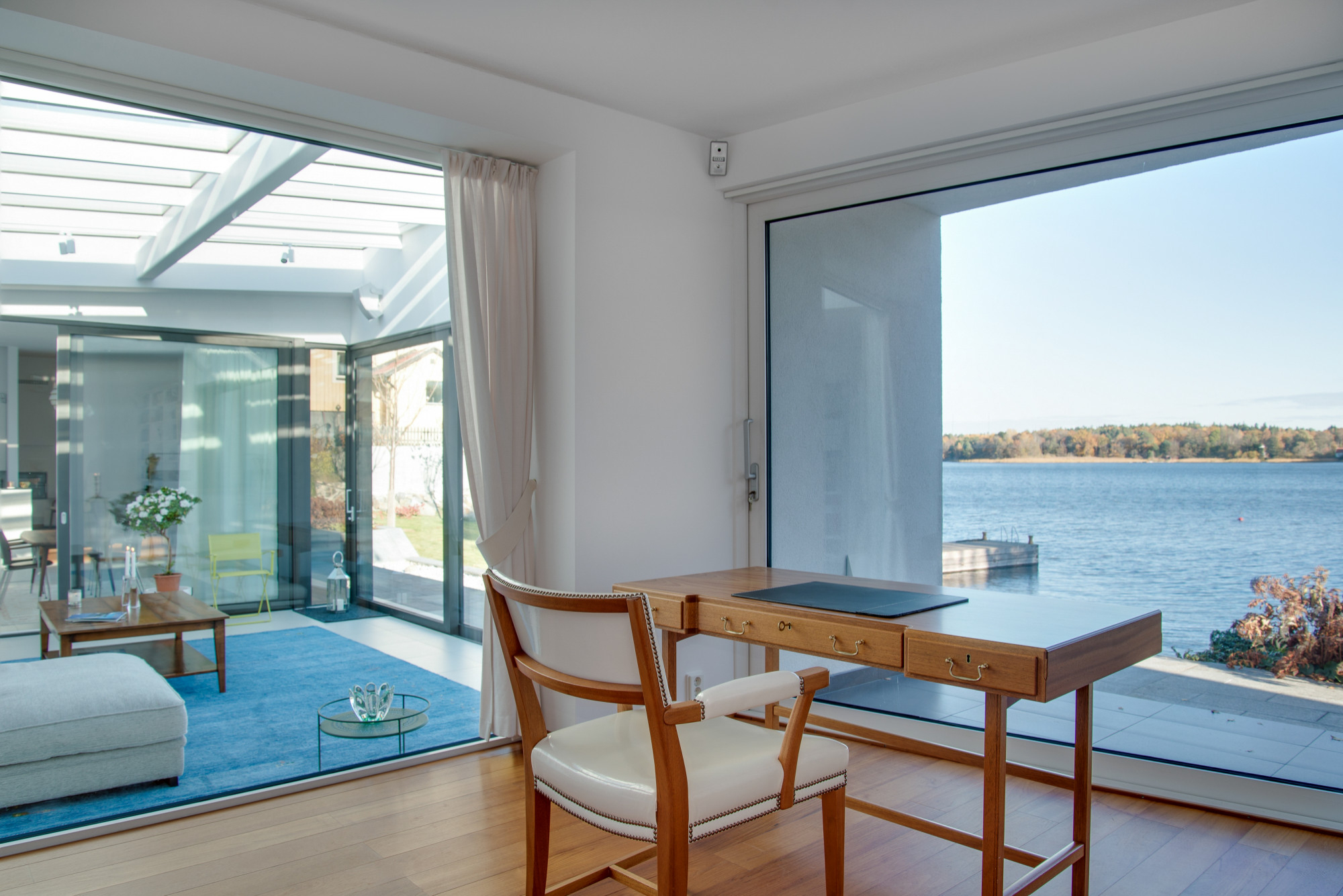
I was standing in the empty living room, barefoot on the cool hardwood, looking through the wide glass doors at the Atlantic rolling gray and silver beyond the dunes. The house smelled like fresh paint and salt air and possibility. For the first time in twelve years, something belonged to me. Not to a landlord, not to a husband who left, not to my family. To me.
Then my phone buzzed. Marissa.
I almost didn’t answer, because my sister never called unless she wanted something, but some old reflex moved my thumb.
“Finally,” she snapped. “I’ve been texting you.”
“I’m at the house,” I said, still smiling despite myself. “I just got the keys.”
“Good. That’s why I’m calling.” Her voice sharpened with an excitement that had nothing to do with me. “Listen carefully. I’ll be arriving Friday with twenty two of Greg’s family. Clear out the rooms, get meals ready for everyone, make sure there are enough towels. We’re staying two weeks.”
For a moment the ocean outside went silent in my mind.
I looked around the empty house. Three bedrooms. A small office. A den. A kitchen with new appliances I had saved for years to afford. A deck I had pictured drinking coffee on, alone, in the quiet.
“Marissa,” I said slowly, “you and twenty two people are not staying here.”
She laughed like I’d told a joke. “Don’t start. You bought a beach house. What did you think would happen?”
“That I would live in it.”
“You’re being selfish. Greg’s family already took time off. His parents are excited. I told everyone you had plenty of room.”
“You told them without asking me.”
“Oh, please. We’re family.”
That word had been her weapon since we were children. Family had meant giving up my bedroom when her friends slept over. Family had meant paying her overdue car insurance because she cried. Family had meant hosting her baby shower and then listening to her complain that the cupcakes looked cheap.
I stared at the ocean and felt something inside me go very still.
“No,” I said.
A pause. Then her voice dropped into something colder. “Excuse me?”
“No. You and twenty two people are not staying in my house.”
“You owe me,” she hissed.
I almost laughed. “For what?”
“For leaving town after Mom died. For acting like you’re better than everyone. For buying that house when you knew I wanted a beach vacation.”
Mom had been gone five years. Marissa had used her death like a receipt for every demand since. I closed my eyes. “I’m not discussing this.”
“Fine. Then I’ll discuss it with everyone else.” And she hung up.
Ten minutes later my phone exploded. Cousins, aunts, Greg’s mother whom I’d met twice, all of them responding to a post Marissa had put up: My sister bought a huge beach house and invited us, then suddenly decided to humiliate my husband’s family. Pray for her heart.
I stayed calm. And I started my plan.
I need to tell you what my plan actually was, because the phrase “made sure they learned who owned the house” sounds like it should end with a confrontation, twenty two people turned away at the door, a scene on the deck with the ocean behind it. And I want to be honest that some furious part of me imagined exactly that, imagined letting them drive four hours and arrive and stand in my driveway while I explained, slowly, that no meant no.
But I have never been a person who enjoys scenes, and I did not buy a beach house to have my first memory of it be a fight. So my plan was quieter than that, and better, and it started with a phone call I made about twenty minutes after Marissa hung up.
I called a property management company.
I had been vaguely intending to rent the house out part of the year anyway, in the seasons I wasn’t using it, because a beach house is a wonderful thing to own and an expensive thing to own, and the math worked much better if it paid for some of itself. I had a folder of information from the closing, brochures from local rental agencies, the whole thing. I had just planned to deal with it in the spring.
Marissa’s phone call moved my timeline up.
I called the best of the agencies, a company run by a brisk competent woman named Renata, and I explained that I wanted to put the house into their vacation rental program, effective immediately, and that I wanted to know whether they had any interest in the two weeks starting that Friday.
Renata laughed, a delighted professional laugh. “Starting this Friday? Peak season, oceanfront, three bedrooms, brand new? I have a waiting list for that. I can have it booked by tonight at premium rates. Are you sure you don’t want to use it yourself first?”
“I’ll use it after,” I said. “Book the two weeks. And send me the paperwork tonight.”
Because here is the thing my sister did not understand, in her certainty that a beach house was a thing that happened to the whole family the moment I bought it. The house was mine. Legally, completely, in a way that no amount of you owe me could touch. And a thing that is legally, completely yours can be rented to paying strangers for two weeks starting Friday, and once it is, there is no room in it for twenty two of anyone’s in laws, and the matter of whether they stay is settled not by an argument but by a signed contract and a lockbox code that I control and they do not.
By that evening the house was booked. A lovely family from Ohio, Renata told me, four adults and three kids, thrilled to have found an oceanfront rental on short notice, paying a peak season premium that would cover a meaningful chunk of my mortgage for the month. They would arrive Friday. My sister would also, apparently, arrive Friday, and the two would not overlap, because I would be sending Marissa a message before then, and because the house would be occupied by people who had paid for it.
I did not tell Marissa immediately. I want to be honest about that too, because part of me, the part that had paid her car insurance and hosted her baby shower and given up my childhood bedroom, wanted her to find out the hard way. But that part is not the part I want to be, so I sent her a message on Wednesday, two days before, so that no one would drive four hours for nothing, because whatever Marissa was, Greg’s parents and cousins and their kids had done nothing to me, and I was not going to punish children for my sister’s entitlement.
The message was short. Marissa, I need to be clear so nobody wastes a trip. The house is not available. It’s rented to paying guests for the next two weeks, starting Friday, through a property management company. I never agreed to host anyone, and I’m not able to, because the house is occupied. I’m sorry you told everyone something I never said yes to. That’s a conversation you’ll need to have with them.
Her response came in under a minute, and it was everything I expected. She accused me of lying, of renting the house out of spite, of humiliating her in front of Greg’s family, of being exactly the cold selfish sister she’d always known I was. She said I’d done it on purpose. She said Mom would be ashamed of me.
And I looked at that last one for a while, Mom would be ashamed of me, the receipt she’d been cashing for five years, and I typed back the truest thing I have ever said to my sister.
Mom spent her whole life watching you take from me and calling it family, and telling me to keep the peace, and I did, for forty years, because I loved her and it was easier. She’s gone now, Marissa. And I’ve decided that keeping the peace by letting you take everything isn’t actually peace. It’s just me paying for quiet. I’m done paying. The house is rented. I love you, and the answer is still no.
Then I turned off my phone, and I drove to my new beach house that was about to be full of strangers from Ohio, and I sat on the deck I had imagined, alone, with a cup of coffee, for one evening before the renters came, and I watched the Atlantic go from silver to gold to dark, and it was the most peaceful hour I had spent in twelve years.
Here is what happened after, because the rented house is not the ending, and the fallout was the real test.
Marissa did what Marissa does. She escalated. The family group chat, which I had muted, filled with her version of events, in which I had invited everyone and then cruelly rented the house out from under them out of spite and superiority. Some relatives believed her. Greg’s mother, whom I’d met twice, sent me a message of remarkable venom for a woman who barely knew me. There was, for about two weeks, a coordinated family campaign to make me feel that I had done something monstrous, and it worked, a little, the way these things always work a little, because forty years of being cast as the selfish one leaves grooves in you that the accusation slides right back into.
But something was different this time, and the difference was that I had the truth, cleanly, on my side, in a way that could be verified. I had never invited anyone. Marissa had announced it. And when a few of the more reasonable relatives, an aunt and a cousin I’d always liked, actually asked me directly what had happened instead of taking Marissa’s word, I told them the simple truth, that I’d bought a house, that my sister had informed me she was bringing twenty two people to it without asking, that I’d said no, and that when she wouldn’t accept no I’d rented the house so the no would be a fact instead of an argument.
The aunt was quiet for a moment and then she said, “She really did just announce it, didn’t she. She’s done that her whole life. I don’t know why we’re all surprised.” And that was the beginning of the story turning, because it turned out that a great many people in my family had spent decades watching Marissa take and take and calling it family, and had said nothing, because saying something was harder than looking away, and my renting the house had done something none of them had ever done, which was demonstrate that the taking could actually be refused.
The renters from Ohio, by the way, loved the house, and left a glowing review, and rebooked for the following year. My little act of self defense became the launch of a genuinely good rental business. Over the next two years the house paid for a large part of itself, and I used it in the off season and the shoulder weeks, alone or with the few friends who had shown up for me over the years, drinking coffee on the deck in the quiet I had bought it for.
Marissa and I did not speak for over a year. I grieved that, in a complicated way, because she is my sister and there is a version of us, somewhere, that was close, that got lost a long time ago under all the taking. But I did not chase her, and I did not apologize, because I had nothing to apologize for, and apologizing would only have restarted the whole machine.
The turn, when it came, came from an unexpected direction, and it came from Greg.
My sister’s husband, Greg, whom I’d always found pleasant and passive and largely silent, called me about fourteen months after the beach house. And he was not calling on Marissa’s behalf. He was calling, he said, because he’d been thinking about the whole thing for a year, and because something about it had bothered him from the start and he’d finally figured out what.
“She told all of us you’d invited us,” he said. “My parents, my cousins, everyone. She stood in our kitchen and said her sister had this big beach house and wanted the whole family to come stay for two weeks. And when it fell apart, she said you’d humiliated us. And I believed her, because she’s my wife, and it was easier.” He was quiet. “But I’ve been married to her for nine years, and I’ve watched how she talks about you, and I’ve watched her do smaller versions of this to me, to my parents, to everyone, where she decides what she wants and then acts like anyone who says no is attacking her. And I finally admitted to myself that you probably never invited us at all. Did you?”
“No, Greg,” I said. “I never did. She told me she was coming with twenty two people, and I said no, and she posted that I’d humiliated you.”
He let out a long breath. “That’s what I thought. I’m sorry. On behalf of my whole family, who all sent you nasty messages over something that never happened. I’m sorry.”
That phone call was the beginning of something, because Greg, it turned out, had been quietly drowning in the same dynamic I had, the difference being that he’d married into it and I’d been born into it. We became, improbably, friends, my sister’s husband and I, two people who’d both spent years being managed by the same person and had both finally started to see it clearly.
And here is the part I did not expect, the part that redeemed the whole miserable episode. Greg’s clarity, and the family’s slow turning, and the simple undeniable fact that I had said no and the world had not ended, worked on Marissa, over a long time, the way water works on stone. Because when the family stopped automatically taking her side, when her husband stopped automatically believing her version, when the youngest sister she’d counted on to always fold finally stopped folding, Marissa was left, for the first time in her life, having to look at what she actually was. And it was not comfortable for her, and there was a period where she got worse before she got better, lashing out, playing the victim harder, testing whether the old machine still worked.
It didn’t. And eventually, slowly, my sister ran out of people to take from, which is the only thing that has ever changed a person like Marissa, not an argument, not a confrontation, but the simple removal of the supply.
She called me, almost two years after the beach house. She did not fully apologize, because Marissa is not built for a clean apology any more than our mother was, but she said, in a smaller voice than I’d ever heard from her, “I’ve been thinking about the house. About what I said. About Mom being ashamed of you.” She was quiet. “She wouldn’t have been. That was a cruel thing to say and I said it because it always worked. And I’ve been sitting here realizing that it doesn’t work anymore, on you or on anyone, and I don’t actually know how to talk to people if I can’t.” She laughed, a broken little sound. “That’s a hell of a thing to figure out at forty two.”
We are rebuilding something now, Marissa and I, carefully, on new terms. It is not the closeness I sometimes wish we’d had, because too much happened for that, but it is honest, which we never were before, and honesty turns out to be a foundation you can actually build on. She has never asked to use the beach house. I have, twice, invited her, on my terms, for a weekend, just the two of us, and she came, and she said thank you, which she had never once said to me in forty years of taking, and both times I had to go out on the deck for a minute so she wouldn’t see my face.
I have thought a great deal about that first phone call, and about the word she used, family, and the way she’d always wielded it.
For forty years, in my family, family meant a direction. It meant that things flowed from me to Marissa and never the other way, and that any time I slowed the flow I was selfish, cold, better than everyone, a disappointment to our dead mother. I had accepted that definition my whole life because the person who taught it to me was my mother, and I loved my mother, and questioning the definition felt like questioning her.
The beach house is where I finally questioned it. Not because I set out to. Because my sister announced twenty two people into a home I’d saved twelve years to buy, and something in me, standing barefoot on that new hardwood floor, looking at the ocean that was finally mine, simply refused, for the first time in my life, to pay for quiet.
I made sure they learned who really owned the house. That’s the phrase, and it’s true, but it turned out to mean something different than I expected when I started. They did learn who owned the house, legally, when it was rented to strangers and there was no room for them. But the deeper thing they learned, the thing my whole family learned slowly over two years, was who owned me. Which was, at long last, me. Not Marissa. Not the word family used as a lever. Not my mother’s ghost cashed as a receipt.
The house was the smallest part of it, really. The house was just the place where I finally stood on ground that no one could tell me I didn’t deserve, and discovered that once you’re standing on ground like that, you can say no, and the ocean keeps rolling, and the coffee is still warm, and the quiet you bought turns out to be exactly as good as you imagined.
I drink it on the deck most mornings now, in the weeks the renters aren’t there. Alone, usually, which is not lonely, because I chose it. The Atlantic goes silver to gold to dark. And somewhere in my phone is a sister I’m slowly getting back, on terms that are finally fair, because I stopped being the house everyone stayed in for free, and became, for the first time in twelve years, a woman with a door she gets to decide who walks through.
They wanted to know who owned the house.
It was me. It was always going to be me. It just took twenty two uninvited in laws and one very good rental agency for the whole family, myself included, to finally believe it.

Sophia Rivers is an experienced News Content Editor with a sharp eye for detail and a passion for delivering accurate and engaging news stories. At TheArchivists, she specializes in curating, editing, and presenting news content that informs and resonates with a global audience.
Sophia holds a degree in Journalism from the University of Toronto, where she developed her skills in news reporting, media ethics, and digital journalism. Her expertise lies in identifying key stories, crafting compelling narratives, and ensuring journalistic integrity in every piece she edits.
Known for her precision and dedication to the truth, Sophia thrives in the fast-paced world of news editing. At TheArchivists, she focuses on producing high-quality news content that keeps readers informed while maintaining a balanced and insightful perspective.
With a commitment to delivering impactful journalism, Sophia is passionate about bringing clarity to complex issues and amplifying voices that matter. Her work reflects her belief in the power of news to shape conversations and inspire change.