The Lake House
My name is Walter Kowalski. I was born in Erie, Pennsylvania, in the spring of 1958, in a house that smelled of kielbasa and radiator heat and my mother’s hand lotion, and except for four years in the Navy and two business trips to a plumbing trade show in Las Vegas, I had spent the whole of my life within a reasonable drive of Lake Erie. People who are not from that part of the country sometimes ask what keeps a man there. I never had a good answer for them. It was the water, maybe. The flat gray light in November. The way you can smell a storm coming off the lake two hours before it arrives.
I built a plumbing-supply company from one delivery van and a rented storage unit into four warehouses stretching across Pennsylvania and western New York. I am not saying that to boast. I am saying it because I want you to understand something about the kind of man I am: I know what it costs to build something from nothing. I know what early mornings feel like when you are the first one in and the last one out, when you are locking up alone in the dark because the business is yours and no one else is going to do it, and you understand, in a way that is partly pride and partly grief, that this is simply how it is going to be. I know the particular weight of a thing you have made with your own hands and your own stubbornness and your own willingness to stay when other people would have walked away.
I came out of the Navy in 1980 with a practical education in pipe systems, hydraulics, and the organizational psychology of men under pressure. I started Kowalski Plumbing Supply in 1983 in a storage unit off Peach Street with a secondhand delivery van and a phone line I shared with the unit next door, a woman who did alterations and who would holler through the wall when a call came in for me. By 1991, I had three employees and a small warehouse. By 2000, I had four warehouses and seventeen employees and a reputation in western Pennsylvania and western New York that I had built one contract and one on-time delivery at a time. I sold a partial interest to a private equity group in 2019 and retained enough control to keep the company running the way I had always run it, which is to say with the understanding that the people who work for you deserve to know you will be there.
I also thought I knew how to protect what I had earned.
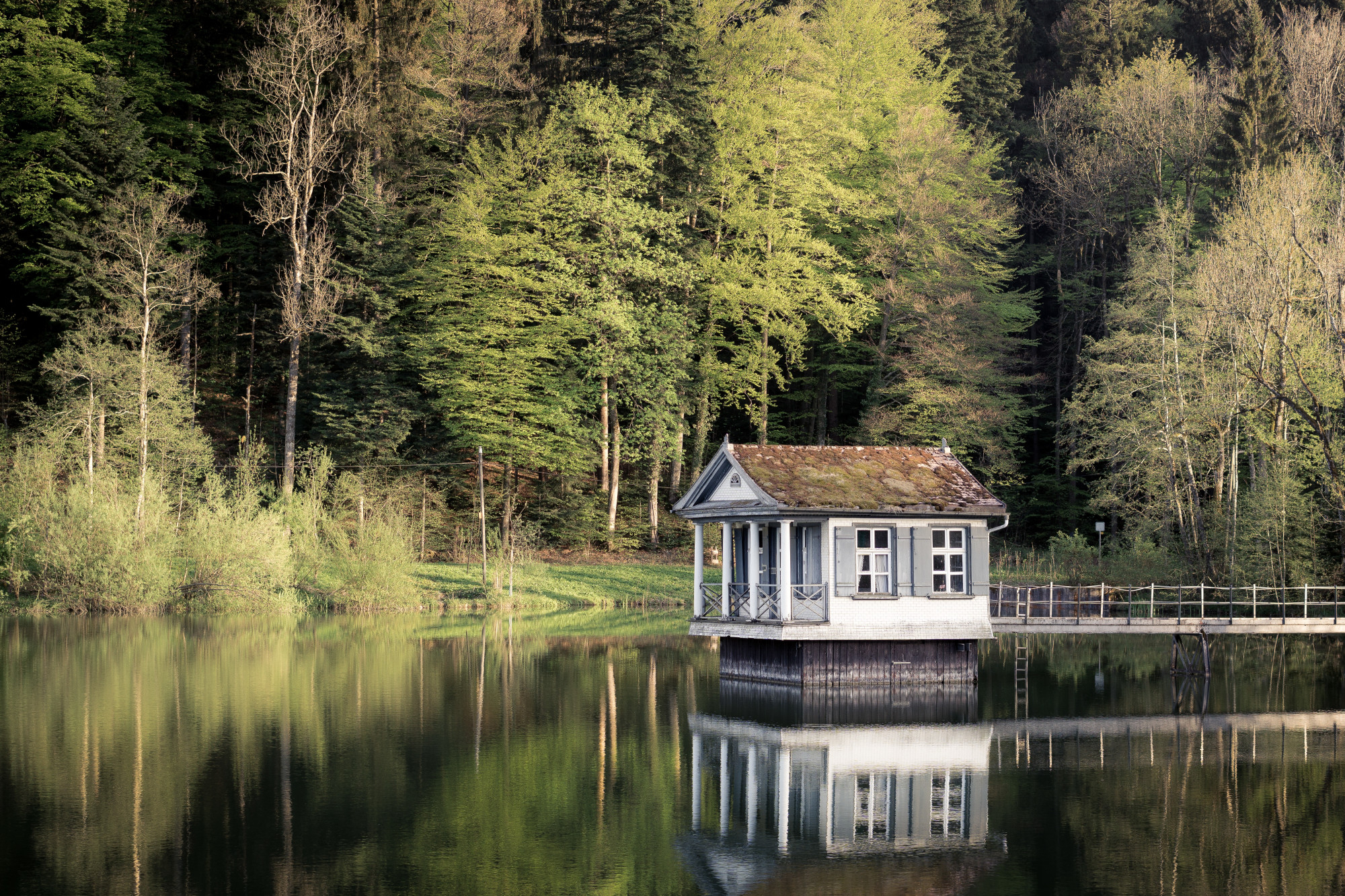
My second property sat just over the New York state line near Shiakwa Lake, about forty minutes east of my house in Millcreek. It was a modest three-bedroom cottage with cedar siding that had weathered to a soft silver, a wide deck that caught the afternoon sun, a narrow dock that stuck out into shallow, clear water, and a small American flag I hung myself the first summer I owned the place. Nothing fancy. Nothing that would make a stranger slow down in admiration. But it was mine in a way that went beyond the deed filed in the county courthouse. My late wife Carol had helped me pick the deck furniture, two Adirondack chairs and a round table with a folding umbrella, nothing expensive, chosen for the way they looked in the afternoon light coming off the water. She had planted the window boxes with geraniums, the red kind, which she said were the only honest flower because they looked exactly like what they were and made no pretenses. She had been the one who noticed, the first time we spent a night there, that you could hear the loons calling from the north end of the lake if you sat outside after ten o’clock. She had reached over and taken my hand in the dark and we had sat there listening, and neither of us had said anything, because there was nothing to say that would have improved on the moment.
I bought that cottage in 2016, two years after I retired from the daily operations of the company and three years after Carol’s diagnosis and one year after her death. I bought it after thirty-one years of six-day workweeks, of walking warehouse floors before sunrise, of calculating payroll by hand on Saturday nights because I did not yet trust the software, of choosing again and again the work and the company and the next necessary thing over the rest and the leisure and the time that I always told myself would come later. Carol had understood this about me. She had been a nurse for twenty years, a woman who understood that some people are constitutionally unable to be idle, and she had loved me without requiring me to be otherwise. But she had also told me, in the last months when she was tired and the medications made her slow and she was very direct about things in the way that people become direct when they no longer have time for circumlocution, that she wished we had taken more mornings beside water.
The cottage was not a consolation prize, but it was close to one. It was the thing I gave myself when I finally understood that time does not stop accumulating behind you no matter how hard you work, and that the water Carol had wanted was still there, still available, still exactly as she would have wished it, and that going there was not the same as having her beside me but was at least an act of faithfulness to something she had wanted.
For the last few summers I had rented it seasonally. It seemed wasteful to leave it empty, and the rental income covered the taxes and the maintenance with a little left over. My property manager, Priya Anand, was a careful woman who ran background checks and called references and never put anyone in a property without knowing exactly who they were. She had already found a retired couple from Buffalo who wanted a six-month lease beginning in September, a couple I had spoken with briefly by phone and found sensible and steady. All I needed to do that Tuesday was drive out, inspect the property, and sign off on the lease agreement before Priya sent it to them.
It was the last week of August, and the humidity had finally broken after a miserable stretch of weather that had kept me indoors more than I liked. I drove with the windows down, the air coming in warm but dry, smelling of cut grass and lake water and the faint diesel exhaust of a pickup ahead of me on the county road. I was thinking about the dock. Two of the boards near the far end had started to bow, and I wanted to replace them before winter set in and the freeze made the job harder. I had the lumber in my mind, the screws, the approximate Saturday it would take.
I was in a genuinely good mood when I turned onto Lakeshore Court.
Then I saw the vehicles.
A gray minivan with Ohio plates was parked crooked across my driveway, its nose edging over the property line and onto the gravel apron of my neighbor’s lot. Behind it sat a red pickup truck, half on the grass, leaving two dark tire tracks in the lawn I had paid to have seeded the previous spring. An SUV with a Toledo middle-school sticker on the rear window was angled against the side gate, blocking it. A fourth vehicle, a white sedan with a cracked left taillight, sat along the shoulder of the road.
My garage door was raised about a foot, not all the way up, not quite closed, in the particular position of someone who had gone in and out several times and stopped caring about shutting it fully.
Music drifted from inside the cottage. Not loud party music, not the thudding bass of something reckless, but the comfortable, settled background noise that people make after they have stopped behaving like guests and started behaving like residents. A radio, or something playing from a phone, casual and easy, the sound of people who have decided a space belongs to them.
I sat in my truck for a long moment with the engine running.
There were no broken windows. No damaged lock visible from the driveway. The gate latch was intact. Whoever was inside had entered with a key.
I turned the engine off. I got out slowly, the way I have learned to do most things since I turned sixty, not because I am feeble but because I have learned that the extra two seconds of deliberateness tend to save me from mistakes I cannot undo. I walked toward the house, my shoes on the gravel, the grass damp from an early-morning sprinkler cycle.
Through the side gate, pushed open but not latched, I could see the back deck. Folding chairs I did not own were arranged around my patio table. A large red cooler sat beside the railing. Three or four damp towels had been draped over the cedar rail to dry, and someone had left a pair of flip-flops on the top step.
I opened the front door without knocking. It was my house. I did not knock.
The living room had been rearranged. Not dramatically, not violently, but in the way that people rearrange a space when they plan to be in it for a while. The armchair had been moved toward the window. A cardboard box of what appeared to be canned food sat open on the floor beside the television stand. Empty bottles had been gathered in a paper grocery bag near the door, which I suppose was meant to be tidy but struck me as something else entirely.
Six people were distributed across my living room and kitchen as though they had checked into a vacation rental.
A man in a Cleveland Browns cap sat in my armchair with his bare feet up on my coffee table and a bottle of beer in his hand, a beer from my refrigerator, from the six-pack I kept for Priya or whoever happened to need one during an inspection visit. He was perhaps fifty, thick through the chest, and he looked at me the way men look at a stranger who has entered a room they feel they have claimed.
A woman lay across my couch with her shoes still on, the soles leaving faint smudges on the upholstery, scrolling through her phone with the incurious focus of someone waiting out an afternoon. Two younger people, a man and a woman in their late twenties, were laughing at something on the deck. A teenage boy sat at my kitchen table eating crackers from a sleeve, and a child of perhaps eight or nine was sitting cross-legged on the floor in front of the television, watching something with headphones on, apparently the only person in the room fully committed to minding her own business.
And standing at my kitchen counter, her back half-turned to me, pouring herself a glass from the twelve-year Blanton’s I kept in the cabinet above the refrigerator for the evenings when the sun went down over the lake and I felt Carol’s absence in a particular way, was Renee Castellano. My daughter Megan’s mother-in-law. A woman I had met eleven times in four years, at holidays and the wedding and two birthday parties, a woman I had never disliked but had never fully trusted, the way you sometimes sense without being able to explain it that a person operates on a different set of assumptions than you do.
She turned when she heard the door.
“Walter,” she said, and she smiled, the warm, unflappable smile of a woman who has spent her life being the most comfortable person in any room. “You’re early. We weren’t expecting you until the weekend.”
I stood in my own doorway for a moment.
We weren’t expecting you.
In my house.
“What is going on here, Renee?”
The man in the Browns cap turned his head toward me without moving his feet from my coffee table. He had the look of a man who has been told all his life that his comfort is not something other people get to object to.
“Hope you don’t mind,” he said, his voice easy, almost friendly. “Renee said you wouldn’t be up until Saturday at the earliest. We’re doing a little family get-together. Been meaning to do it for a couple of summers.”
“Who are you?” I said.
“Dennis. Renee’s brother.” He lifted his beer bottle in what might have been a greeting. “This is a great spot, by the way. Really nice.”
I looked at Renee. She was still holding the bourbon glass, and she had taken a small sip, as though this were a cocktail party we were all attending together.
“Chris and I talked about it,” she said, referring to my son-in-law, her son. “My family needed somewhere to stay for the week, and you weren’t using the place. It seemed silly for it to sit empty.”
“You talked to Chris about using my property?”
“He mentioned it to Megan, I think. Or maybe Megan mentioned it to him.” She waved her free hand slightly, smoothing over the distinction. “You know how these things go. It worked out logistically, so we made it work.”
“And the key?”
“Chris had a key.”
“I gave that key to Megan,” I said. “For emergencies.”
Renee’s smile did not waver, but something behind her eyes adjusted, recalibrated. She was not embarrassed. She was not looking for an exit. She was deciding how much ground to give and in what order.
“Walter,” she said, and her voice dropped just slightly, took on the tone of a woman who is about to be reasonable at you. “I know it wasn’t the most formal arrangement. But we’ve been talking, Chris and Megan, about their future. About eventually having a place on the water. And given that this will basically be theirs at some point anyway.” She paused, as if letting the logic settle. “It just seemed like there wasn’t any real harm.”
The room had gone very quiet. Dennis had finally lowered his feet. The woman on the couch had put down her phone. On the deck, the two younger people had come to stand at the sliding door, not quite entering, sensing something had shifted in the way that even people who are not paying close attention can sense a shift.
Renee laughed then. Not a nervous laugh, not a laugh that was trying to fill an uncomfortable silence. It was an easy, certain laugh, the laugh of a woman who believes she has read the room correctly and found nothing in it that threatens her. It was the laugh of someone who has made this kind of calculation before, who has determined that the person across from her will respond to warmth and reasonableness the way most people do, with a softening, a renegotiation, an eventual acceptance of the situation at hand.
She had miscalculated.
I stood there and looked at my coffee table, where a beer ring was forming in a slow brown circle on the wood Carol had refinished herself one weekend fifteen years ago, a Saturday project that had turned into Sunday when the first coat took longer to dry than expected, and she had stood in the kitchen that Sunday morning in her old painting clothes, looking at the table in the afternoon light, and said it was better than the original. I looked at the muddy scuff marks on the hardwood near the door. I looked at the towels over the railing of the deck that Carol and I had stained together on a September afternoon the year before she was diagnosed, both of us in old clothes with rags and brushes, laughing at something I could no longer remember, only the laughing itself, the particular quality of a Saturday afternoon with nowhere to be and a task that did not matter very much and a person beside you who made the not-mattering feel like a form of abundance.
I looked at the glass in Renee’s hand, the bourbon I had been keeping for evenings when I sat on that deck and listened for loons.
I looked at all of it and felt, very clearly, what I felt.
“Everybody needs to pack their things and leave this property within one hour,” I said.
I said it once, at a normal volume, without raising it, without any particular emphasis, in the way I had learned to give instructions in business, which is simply to mean them fully and let the meaning do the work.
Renee’s smile finally left her face. Dennis stood up from the chair, not quickly, with the residual dignity of a man who wants to appear unhurried even as he begins moving. The woman on the couch sat upright and swung her feet to the floor. On the deck, the younger couple exchanged a look with each other that I did not need to interpret.
“Walter, I think if we just talk this through,” Renee began.
“One hour,” I said. “After that, I’m calling the county sheriff’s department.”
I looked at Dennis, then at the woman on the couch, then back at Renee. I held Renee’s gaze for a moment, not with anger, because anger was not what I felt, but with the particular steadiness of a man who has made up his mind and is entirely at peace with having made it.
Then I turned, walked back through the front door, and pulled it closed behind me. I did not slam it. There was no need.
I drove ten minutes to a coffee stand near the marina, a small wooden kiosk run by a retired schoolteacher named George who had been pouring coffee for the lake community for as long as I had been coming out here. I ordered a black coffee, parked in the lot beside the bait shop, and sat with the windows down looking at the row of fishing boats tied at the dock.
The lake was flat and dark in the morning light, and a pair of gulls were working something near the far end of the dock, and it was beautiful in the particular way that Lake Erie is beautiful when you have known it long enough to stop noticing and then notice again.
I called Megan.
She answered on the third ring. She was at work, her voice slightly lowered, the ambient sound of her office behind her.
I asked, quietly, whether she was aware that her husband’s family was currently living in my lake house.
The silence on her end lasted long enough that I had my answer before she spoke.
“Dad,” she said, and the word came out like an exhale, like something released from pressure. “How did you.”
“I drove out for the inspection this morning.”
“I didn’t know they were going there. I swear to you, I didn’t know.”
“But Chris knew.”
Another silence, shorter this time. “He mentioned to me a couple of months ago that his mom wanted to use it for a week. I told him no. I told him to tell her no.” A pause. “I thought he did.”
“He gave her the key, Megan.”
“He.”
“The spare key I gave you. For emergencies.”
I heard her inhale. I heard something that might have been her setting something down on her desk, quietly, with the careful deliberateness of a person trying to keep their composure in a public place.
“I’m going to call him right now,” she said.
“Before you do,” I said, “I want to tell you what Renee said to me.”
I repeated the words precisely. The part about this being theirs eventually anyway. The part about there being no real harm. I left out the laugh, because I did not trust what my voice would do if I described the laugh.
“What?” Megan said, and I could hear that she was no longer trying to keep her voice down. “She said that to you?”
“Those were her words.”
The silence that followed was a different kind. Not the silence of embarrassment or scrambling. The silence of someone recalibrating a relationship.
“Dad,” Megan said at last. “I’m so sorry.”
“You didn’t do anything wrong,” I said, and I meant it. “I need you to speak with your husband. And I need you to understand that I’m going to handle the property in the way I think is appropriate. Whatever I decide, I want you to know that my decision has nothing to do with you and everything to do with what happened this morning.”
“I understand,” she said.
“I love you,” I said.
“I love you too, Dad.”
We hung up. I finished my coffee. George came out from behind the kiosk to collect a cup someone had left on the railing, and he lifted a hand to me across the lot, and I lifted mine back.
Then I called Marty Feldstein.
Marty had been my attorney since 1994, since the year I needed a contract reviewed and a friend of mine from the Chamber of Commerce recommended him and I walked into his office expecting to spend forty-five minutes and ended up staying two and a half hours because he asked questions I had not anticipated and made me think through things I had not thought through. He was five years older than me, bald since his forties, with a dry precision in his speech and a loyalty to his clients that I had found, over more than two decades, to be genuinely unconditional.
I told him everything. The vehicles. The strangers. The open garage. The rearranged living room. The beer ring. The bourbon. Dennis with his feet on my coffee table. Renee’s smile and the words she had said and the laugh that came after them.
Marty listened without interrupting. He had always been a good listener, which I suspected was rarer among attorneys than most people assumed.
When I finished, there was a brief pause.
“Walt,” he said, “how long do you think they’ve been staying there?”
I had not asked that question yet. I had been so focused on the fact of the intrusion, the wrongness of it, the specific images of the beer ring and the bourbon and Renee’s easy laugh, that I had not yet stepped back far enough to think about the timeline.
“I’m not sure,” I said. “Renee made it sound planned. Coordinated. She said her family needed somewhere to stay. She didn’t say for the weekend.”
“Did she say for the week?”
“She implied. She said they’d been meaning to do this for a couple of summers. Her brother said it was a family get-together.”
“A reunion of some kind.”
“That’s what he said. He seemed very comfortable.”
“When did you last physically visit the property?”
I thought back. “Late June. I replaced the screen on the back door and checked the water heater. That was the twenty-second.”
“Eight weeks ago.”
“About that.”
“And your property manager. When did she last do a walk-through?”
“She drove by in mid-July, but she didn’t go inside. No reason to, with no tenants. The lease agreement was still two weeks out.”
Marty was quiet for a moment. I could hear him thinking, the way I had learned to recognize over more than two decades, a particular quality of silence that meant he was not pausing but working, running the information through some internal framework and seeing where it settled.
“Walt,” he said, “what I need you to do right now, before anyone leaves that property, is drive back there and take photographs. Date and time stamped, with your phone. Document every room. The vehicles, the license plates, the items they’ve brought in, any food in the refrigerator, any personal belongings. I need you to get an accurate picture of how settled in they appear to be.”
“Why does that matter?”
“Because the length of occupancy changes your options,” he said. “And in some states, it changes their rights. I don’t think that’s where we are here, we’re in New York, and this is clearly unauthorized entry, but I want the full picture before I start making moves.”
I drove back.
The white sedan was gone. One of the other vehicles appeared to be loaded, the minivan’s rear door standing open and a duffel bag visible inside. I parked on the road and walked to the front door and opened it again.
Most of the Castellano family was moving with the shuffling, resentful energy of people who believe they are being wronged by being held accountable. Dennis was rolling up an extension cord in the living room. The woman from the couch was carrying a laundry basket through the kitchen. The teenager was on his phone.
Renee was sitting at my kitchen table with a cup of coffee she had made in my coffee maker, and she looked at me with an expression that had moved from its earlier warmth into something cooler, more studied.
“This is an overreaction,” she said. “We weren’t hurting anything.”
“I need everyone out of the rooms so I can document the property,” I said.
“Document.” She said the word as if it were slightly ridiculous.
“I’m going to walk through every room and photograph the condition. It’ll be easier if everyone steps outside.”
She looked at me for a long moment. Then she stood and took her coffee out to the deck.
I spent twenty minutes going through every room. I photographed the beer ring on the coffee table. The scuff marks on the hardwood. The towels on the railing. The refrigerator, which contained a case of beer, various condiments, a block of cheese, and a package of hot dogs. The bathroom, where four toothbrushes had been laid out on the counter and a wet bathing suit hung over the towel bar. The second bedroom, where two inflatable sleeping pads had been laid out and several duffel bags were stacked against the wall. The master bedroom, where the bed had been slept in and not remade. My bourbon, with roughly a quarter missing from the bottle.
I sent all of it to Marty in a single message.
Outside, I counted the bags being carried to the vehicles. There was a significant amount of luggage. Enough for at least a week, I thought, possibly longer.
It was nearly noon when the last vehicle backed out of my driveway. Renee was the last to leave. She stood beside the minivan for a moment, and I thought she might say something, and she did.
“Megan is going to hear about how you handled this,” she said.
“I hope so,” I said.
She got in and drove away.
I stood in my driveway and listened to the sound of the lake. A motorboat somewhere in the distance. The wind in the pine trees at the edge of the lot. The gulls.
Then I went inside and opened all the windows to clear the air, and I sat down at my kitchen table and waited for Marty to call back.
He called at two in the afternoon.
“All right,” he said. “Here is what I can tell you. Based on the photographs, the quantity of food, the number of sleeping arrangements, and the general state of the property, my best estimate is that they were there for somewhere between five and ten days. The inflatable mattresses suggest they came prepared for an extended stay. The amount of food in the refrigerator is not consistent with a weekend visit.”
“A week,” I said. “At minimum.”
“At minimum. Now, here is the legal picture. Unauthorized entry with a key obtained through your daughter, no forced entry, no criminal damage that I can see in these photographs. What they did likely rises to the level of trespassing, but pursuing that criminally gets complicated when there’s a family connection and when your daughter apparently knew the key had been shared, even if she believed it wouldn’t be used this way. Civilly, you have a stronger case, particularly if there’s documented damage to the property.”
“The coffee table. The scuff marks. The bourbon.”
“Yes. Minor damage in dollar terms. Not worth a civil suit on its own.” He paused. “But here is what I think you should actually be thinking about.”
I waited.
“She told you this property will be Megan and Chris’s eventually. She said that in front of witnesses, if any of her family members would be honest about it. That tells me they have been having conversations about your estate.”
“I know,” I said.
“Have you updated your estate documents recently?”
I had not. Carol and I had done our wills together in 2008, and I had not revised mine after she died because I had intended to and then had not, the way you intend to do things and then find that the days close over the intention like water over a stone.
“No,” I said.
“I think it’s time,” Marty said. “Not as punishment. Not as a reaction to this morning. But because what happened today tells you something about the assumptions that are being made, and you deserve to have your affairs in order based on your own intentions and not someone else’s expectations.”
I sat for a while after we hung up, looking at the lake through the window above the kitchen sink.
Carol had washed dishes at that sink for a dozen summers, and she had stood exactly there, with the water running and her hands submerged, and she had told me once that what she liked about the cottage was that it felt like a place that had no history yet. No one had fought in these rooms. No one had said things they couldn’t take back. It was, she said, a clean place.
I wanted to keep it that way.
I called Priya Anand next and told her what had happened. She was appalled in the efficient, practical way that a good property manager becomes appalled, which is to say that within three minutes she was already thinking about rekeying the locks, photographing the damage for an incident report, and reaching out to her contact at the county assessor’s office to understand whether an unauthorized occupancy of this duration had any legal implications.
“I’ll have a locksmith there by four o’clock,” she said. “And I’ll do a formal damage assessment before the week is out. For the record.”
“Thank you, Priya.”
“This kind of thing.” She paused. “I’ve seen it before, Mr. Kowalski. Not often, but I’ve seen it. Usually it starts smaller than people think.”
I thanked her and said goodbye and then I sat in the clean, aired-out quiet of my cottage and let myself feel, for a while, what I had not let myself feel in the driveway or on the phone with Megan or during my conversation with Marty.
I felt the specific grief of discovering that something you believed was safe had been treated as already available to others. It is a particular feeling, different from simple violation. It carries within it the recognition that someone looked at a thing you had built and loved and decided it was already partly theirs by proximity and expectation, without asking, without earning, without even acknowledging that it was not theirs to claim.
I thought about Renee’s laugh.
I had met a few people like Renee over the years. In business, mostly. People who operate on the assumption that the world will forgive their presumptions if they make those presumptions with enough confidence and warmth. They are not villains. They are not malicious in a simple, legible way. They do not lie to themselves about who they are. They simply exist in a moral ecosystem where entitlement and likability have always coexisted without friction, and they see no reason why that arrangement should ever change.
They are people who have discovered, early and empirically, that confidence reads as permission. That warmth smooths over the moments when permission has not actually been given. That if you proceed with enough ease and good humor, most people will eventually accommodate you, because most people dislike confrontation more than they dislike being accommodated.
Over the years I had watched this kind of person operate. I had learned something from watching.
The thing about that kind of person is that they do not change when you are angry at them. They reclassify your anger as an overreaction, possibly as a character flaw, and they wait, with genuine patience, for the temperature to drop. And then they resume operating as before, because nothing about the situation has actually changed. The geography is the same. Their need is the same. Your property is still there, still accessible in their imagination, still available by the logic that worked the first time and will work again if they simply wait long enough for everyone to calm down.
The only thing that kind of person responds to is a changed landscape. New facts on the ground, structural and irreversible, that make the old assumptions unworkable. Not a conversation. Not your anger. Not even your disappointment. The conversation can be reinterpreted. The anger fades. The disappointment becomes something they have absorbed and moved past. But a changed landscape requires them to start over, and most of them, when faced with the necessity of starting over from an unfavorable position, will choose another target instead.
I understood what I needed to do. And I understood that I needed to do it cleanly, without drama, without announcement, in exactly the same way I had built my company and protected my contracts and made every significant decision in my adult life: by making the change real before anyone else knew the change was coming.
Over the following two weeks, I did the following things.
I had the cottage rekeyed. All four locks, including the garage. I gave one key to Priya and kept one for myself, and I told Megan that the spare key arrangement was being discontinued. I said this without accusation. I said it as a fact, the way I would tell her that I was changing my insurance carrier.
I called a contractor I had used for years and had him address the dock boards, which I no longer felt like doing myself that Saturday. While he was there, I had him look at the deck railing, which was solid but could use a coat of stain, and the screen door, which I had replaced in June but which had gotten dusty. The contractor went through the cottage with an eye I trusted, and when he was done he gave me a full report. Nothing structural had been damaged. The coffee table had a ring that could be refinished. The floors had scuff marks that a good cleaning would mostly address. I had it all written up and kept the report.
Marty spent three weeks drafting a revised will and a full estate plan. He called me twice during that period with clarifying questions, both times in the late afternoon, both times prefacing his question with the same phrase: “I want to make sure I have this right.” That was something I had always valued in him. He did not assume. He verified.
I went to his office on a Thursday morning in late September, the kind of morning that comes to Erie exactly once per year, clear and cool and smelling of woodsmoke and wet leaves, the light low and golden and slightly elegiac, as if the season itself is aware that this particular quality of afternoon is on loan and will not be extended. His office was on the third floor of a building downtown, and from his conference room window you could see a narrow band of the lake between two other buildings, a strip of dark water that changed color with the weather.
We sat across from each other at his conference table, the same table where we had worked through every major contract my company had signed since 1994, through the acquisition of the second warehouse and the third and the fourth, through the partial sale to the private equity group, through two disputes with suppliers that had required a lawyer’s letter to resolve and one that had required something more significant, and I felt, sitting there, the particular comfort of a long professional relationship, which is not the same as friendship but carries some of the same trust, the confidence that the person across from you is not performing your interests but actually has them.
We went through everything. The house in Millcreek, which was paid off and had been my home for twenty-three years. The cottage at Shiakwa Lake. The business interests, which I had been gradually stepping back from since the partial sale but had not yet formally structured for the eventual full succession. The accounts, the brokerage, the life insurance, the pension from the years before I had the company fully established.
Marty had drawn up several options. He walked me through each of them without editorializing, because that was how he worked and had always worked, laying out the terrain and its features and the distances involved and letting his client decide where to go. I had always respected this about him. He had opinions. You could sometimes see them in the slight tightening around his eyes when he presented an option he thought was unwise. But he presented the option anyway, because it was not his money and not his life.
I had thought hard, in the three weeks since the lake house, about what I wanted. Not what I wanted in reaction to what had happened, not what I wanted as punishment or statement or message. What I actually wanted, for its own sake, from my life and from the things I had built in it.
What I wanted was this: I loved my daughter. I did not hold her responsible for what had happened. I believed her when she said she had not known, and I believed her when she said she had told Chris no. I also understood that Megan was married to Chris, and that the assumptions his family carried would continue to exert pressure on their marriage in ways I could not fully anticipate or control.
What I did not want was for any decision I had not yet made to be made for me by the expectations of people who had already demonstrated that they would treat my property as accessible on the basis of their own projections about the future. I was sixty-six years old and in good health and had no particular reason to believe my death was imminent, but I was also old enough to understand that the arrangement of your affairs is not morbid. It is, if anything, the opposite of morbid. It is the assertion that your life has been yours to live and your decisions are yours to make, and that this remains true until the end.
I told Marty what I wanted.
The cottage at Shiakwa Lake would be placed in a revocable living trust. The trustee would be Marty’s firm, an institution with no stake in the outcome and no family feelings on the subject. The beneficiary, at my death, would be a scholarship fund I wanted to establish at the community college in Erie in Carol’s name. The Carol Kowalski Skilled Trades Scholarship. For students in the plumbing and electrical and HVAC programs, the kind of programs that had made it possible for men like me to arrive at twenty-two with nothing but a practical education and a willingness to work and build something real out of those two things. The cottage would be sold after my death, and the proceeds would go into the fund’s principal.
I had not planned this. It came to me fully formed while I was sitting on the deck of the marina coffee stand, looking at the boats, thinking about what the lake house actually meant and what Carol would have said if I had described to her what Renee had done that morning. Carol would not have been angry, or not only angry. She would have been sad in a particular way, the way she was sad about things that revealed a gap between how she believed people should treat each other and how they sometimes did. And then she would have said something practical. She would have asked what I was going to do about it. She would have wanted me to do something real.
Megan would inherit the Millcreek house and a substantial portion of the financial accounts, which was right and which I had always intended. She was my daughter and I loved her and none of what had happened changed any of that.
The cottage was different. The cottage was the thing that had been presumed upon, and I found, when I sat down and thought about it honestly, that I did not want it to go to a family that had already decided it was theirs. Carol would have agreed with me. I was nearly certain of that.
Marty drew it up. I signed it on a Friday afternoon in October, with the lake wind beginning to come through the windows of his third-floor office, and the leaves outside turning the colors they turn along Lake Erie in autumn, which are different from the leaves in other places, more muted, more honest, as if the trees understand that winter is genuinely coming and there is no point in pretending otherwise.
I did not call Megan to tell her. There was nothing to tell her yet, and I did not want her to feel she was being punished, because she was not. When the time came, she would learn that the cottage had gone to Carol’s scholarship fund, and I believed she would understand. She was her mother’s daughter in the ways that mattered.
What I did tell Megan, in a conversation we had over dinner at my house in November, was that I had updated my estate planning and that I wanted her to know the broad outlines so there would be no surprises. I said it without preamble, while she was sitting at the kitchen table and I was at the stove, and I said it the way I had learned to say difficult things to my daughter, which was directly and without excessive setup, because she was her mother’s daughter and she did not need to be managed into a conversation. She needed to be trusted with information.
I told her the Millcreek house would be hers. I told her about the scholarship fund in her mother’s name. I did not mention the cottage specifically, and she did not ask about it, which I thought was interesting. She had grown up in this family enough to know that some things are answered by silence.
What I did ask her, over the venison stew I had made from a deer my friend Tom had taken in the fall, the recipe Carol had written out on a notecard in her careful schoolteacher handwriting, the notecard now taped inside the cabinet door above the spice rack where I would not lose it, was whether things were all right between her and Chris.
She thought about the question for a moment before she answered.
“We had a hard couple of weeks,” she said. “After everything.”
“I know.”
“He understood why you were upset. He said that. He just.” She paused, looking for the right words, the careful words, the words that were honest without being more than she wanted to give. “He has a hard time saying no to his mother.”
“A lot of people do,” I said.
“I know.” She looked at me. “I told him it can’t happen again. Anything like that. I was pretty clear.”
“I believe you,” I said.
“I love him, Dad. I do. But I also know what she did was wrong. What she said to you.” She shook her head slightly. “I’ve been thinking about that a lot.”
“Don’t think about it too much,” I said.
She looked up.
“I mean that,” I said. “I handled it. It’s handled. I don’t want this to be a thing you carry around.”
She nodded, and I thought she might cry, but she did not, which was like her.
We finished dinner and did the dishes together the way we had done dishes together since she was tall enough to reach the sink, her washing and me drying, though now I was slower with the drying and she was faster with the washing, and somewhere in the reversal there was a truth about time that neither of us needed to say out loud.
In the spring, I drove out to Shiakwa Lake to open the cottage for the season. Priya had found a good family for the summer rental, a couple from Rochester with two young children who wanted a quiet place near the water for six weeks. She had done the background check and the reference call, and when she described them to me she used the word careful, meaning they were people who took care of things, and that was enough for me.
I arrived two days before them, in the first week of May, when the lake was still cold and the leaves on the birches at the property’s edge were the pale, tender green of things just newly arrived. The morning was overcast, the sky the color of pewter, with a low wind coming off the water that smelled of mud and winter releasing its hold.
The dock boards I had replaced in the fall were solid. I walked their length and tested each one and found nothing that needed attention. The screen door hung properly and latched without effort. The interior of the cottage was clean, the way it gets when a space has been closed up properly and nothing has disturbed it, a still, neutral smell, a kind of readiness.
The coffee table had been refinished by the contractor in early autumn, and the ring was gone. If you knew where to look, you could find a slight variation in the sheen, the way refinished wood always carries a faint record of what was done to it. But you had to know to look.
I made coffee and brought it to the deck and planted the geraniums in the window boxes while it brewed. The same red variety Carol had always used. I had bought them from the same nursery in Millcreek I had used the previous two springs, a small place on the east side of town run by a family that had been growing things on that land since before I was born. The seedlings were small and leggy in their plastic cells, but they would fill out. They always did.
I sat on the deck with my coffee and watched a great blue heron work the shallows at the edge of the property. It stood in six inches of water with the absolute, unhurried stillness of a creature that has decided patience is not a strategy but a way of being. Every few minutes it would shift its weight, almost imperceptibly, repositioning by some fraction of a degree. And then it would be still again, and the lake would be still around it, and the only movement was the light on the water and the occasional ring of a fish surfacing somewhere out beyond the dock.
I watched it for a long time.
There was something in that watching that I found, that morning, genuinely consoling. Not because stillness is the answer to anything in particular, but because there was something honest about it. The heron was not pretending the water was other than it was. It was not claiming something that did not belong to it. It was simply there, patient and present, doing what herons do, waiting for what would come to it naturally, by virtue of its own skill and its own worthiness of the place where it stood.
I thought about Renee’s laugh. The easy, certain laugh of a woman who believed she had already assessed what she was entitled to.
I thought about the trust document sitting in Marty’s file cabinet, clean and signed and unchangeable until I chose to change it. The way a thing, when it is properly protected, sits quietly in its protection, requiring no defense and no explanation.
I thought about the students at the Erie community college who would, in some future I would not live to see, learn to solder copper pipe and trace a circuit and install a water heater, the small precise skills that keep the world working, the skills that had given me the life I had. Some of them would build something from nothing, the way I had. Some of them would take the first hard step that makes all the other steps possible.
I thought that Carol would have liked that. The geraniums in the window boxes. The scholarship in her name. The care taken with a thing that was meant to last.
The heron did not move for a long time, and then all at once it lifted, wide and gray and silent, and crossed the lake toward the north shore, and was gone.
I sat there in the morning quiet of my clean cottage, listening to the water, and I felt something that was not happiness exactly but was in the neighborhood of peace, which I had come to understand is what happiness actually is when you are sixty-six and you have buried your wife and built something with your own hands and loved your daughter and made your decisions with whatever clarity you could manage.
The season renters arrived two days later, the father carrying a toddler on his hip, the mother with a diaper bag and a folded umbrella and the slightly dazed expression of a woman who has just driven four hours with small children and cannot quite believe she has arrived somewhere quiet.
I showed them the dock and the light switches and the location of the breaker box and the spot at the north corner of the deck where the loons are audible after ten o’clock at night if you sit still and listen.
The father shook my hand at the door.
“It’s a beautiful place,” he said.
“It is,” I said.
I drove home with the windows down, the late-afternoon light coming low and gold across the fields, and I turned the radio on to something I did not particularly know but found I did not mind, and I drove the forty minutes back to Millcreek thinking about nothing in particular, which is its own kind of gift, the ability to drive home with nothing pressing on you, nothing unresolved, nothing taken from you that you did not choose to give.
The flag was still beside the porch when I left. I had straightened it that morning, its grommets tight on the pole, the fabric bright against the cedar and the sky.
I had earned that flag too, in my way.
I intended to keep it.

Sophia Rivers is an experienced News Content Editor with a sharp eye for detail and a passion for delivering accurate and engaging news stories. At TheArchivists, she specializes in curating, editing, and presenting news content that informs and resonates with a global audience.
Sophia holds a degree in Journalism from the University of Toronto, where she developed her skills in news reporting, media ethics, and digital journalism. Her expertise lies in identifying key stories, crafting compelling narratives, and ensuring journalistic integrity in every piece she edits.
Known for her precision and dedication to the truth, Sophia thrives in the fast-paced world of news editing. At TheArchivists, she focuses on producing high-quality news content that keeps readers informed while maintaining a balanced and insightful perspective.
With a commitment to delivering impactful journalism, Sophia is passionate about bringing clarity to complex issues and amplifying voices that matter. Her work reflects her belief in the power of news to shape conversations and inspire change.