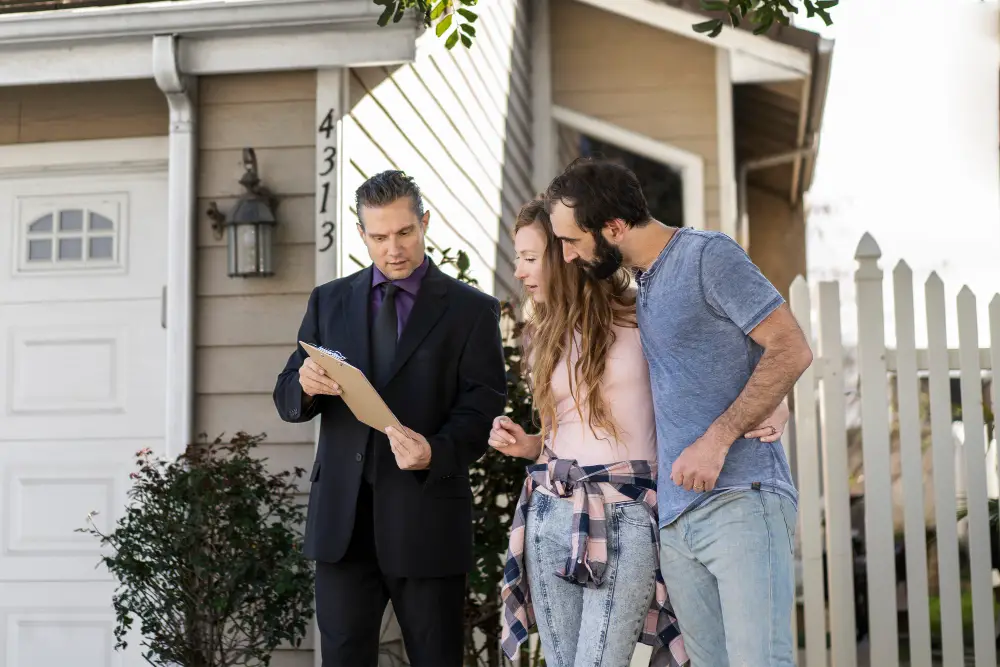
His House
My name is Lauren Mitchell, and for six years I had been telling myself a story about the limits of Derek’s temper.
The story went like this: he had limits. There were things he would not do, lines he would not cross, a floor beneath which his behavior could not fall no matter how bad the pressure or the mood or the particular quality of silence that preceded his worst moments. I had assembled this story carefully over the years, the way you assemble something necessary from the materials available to you, because the alternative understanding was one I was not equipped to hold while also getting Noah to preschool and cooking dinner and maintaining the version of my marriage that existed in front of other people.
What I had not examined with sufficient honesty was who had been moving the line.
It had been moving steadily, and I had been moving with it, adjusting my expectations downward in increments small enough to feel like accommodation rather than erosion. That is how it works, I understand now. Not a single dramatic collapse but a long, quiet subsidence, each concession becoming the new baseline from which the next concession is measured, until the person you are at the end of it would be unrecognizable to the person you were at the beginning.
The morning it finally ended, Noah was at the kitchen table with his crayons spread in a radius around him, working on something with the focused intentionality that children bring to art, as if the accuracy of the colors carries genuine consequence. I was rinsing a coffee mug at the sink. Derek stood by the counter with his arms folded in the posture he used when he had already decided something and required only my formal acknowledgment of the decision.
His parents had sold their condo in Tampa. They were moving to Columbus. They would be moving into our home before the end of the month.
He had not asked me.
He had announced it the way you announce a flight time or a weather forecast, as something external and already determined that simply needed to be communicated. The possibility that I might have a view worth consulting had not been factored into the architecture of the plan.
I turned from the sink and told him, as evenly as I could manage with Noah three feet away and his crayons on the table, that I would not do it. I explained why, though the explanation had not produced useful results on any previous occasion. His mother criticized my cooking with the consistency of someone running a long-term improvement project. She commented on the way I raised Noah in the tone of a person conducting an ongoing performance review of my fitness for a role I had not applied to her for. His father treated every visit as a demonstration that my comfort in my own home was provisional, that I was present on terms he had extended and could revoke. During their last stay, Janice had entered our bedroom without knocking to inform me, pleasantly, that a good wife rises before her husband.
I had absorbed enough.
Derek went through the sequence I knew: first the stillness, which was always worse than the noise that followed, and then the noise. He slammed his palm against the wall hard enough that Noah’s hand jumped and the crayon dragged across the paper and Noah’s shoulders came up around his ears in that particular flinch, that small involuntary self-protective gesture that I recognized because I had seen it before and had told myself each time that I was misreading it, that children startled at loud sounds, that it meant nothing specific.
He pointed toward the hallway and told me to pack everything, take my son, and get out of his house.
His house.
I looked at Noah, who was sitting very still with the crayon held motionless against the paper and his eyes carefully fixed downward, the stillness of a child who has learned that stillness is sometimes the safest available posture.
I made a decision in that moment.
I would not argue.
I would pack.
My grandmother, Eleanor Hawthorne, had purchased the property two years earlier through a family trust she had established for me before she died. She had been a precise and foresighted woman who expressed her love primarily through the careful arrangement of contingencies, through structures and documents and provisions designed to protect people she cared about from outcomes she could foresee more clearly than they could. She had adored Derek when we first married. She found his confidence charming and his attentiveness genuine, and she had welcomed him warmly. But she had watched him through my pregnancy, had noticed the way his management of my choices gradually tightened, had registered the particular quality of his interest in what I was doing and who I was seeing, and she had quietly revised the trust instructions and sat with me one afternoon over tea and reminded me, in her measured and unalarming way, to never forget whose name was truly protecting the roof above me.
She had been more prescient than either of us fully understood at the time.
Derek’s name had never appeared on the title. He had been allowed to believe that the paperwork was administrative complexity, the elaborate architecture of trusts and tax arrangements that meant nothing beyond inconvenience to the professionals who managed it. He had believed this because believing it was easier than examining it, and because examining it would have required him to sit with a reality he was constitutionally unprepared to accept: that the house he moved through with the ease of ownership was not his.
By noon I had called my attorney, Peter Walsh, and my cousin Melissa, and the property manager who worked with the trust. I arranged for Melissa to take Noah for the afternoon. By three o’clock, movers were inside the house, a locksmith was changing the access codes, and two people in suits were sitting at my dining table reviewing documents.
I was standing in the living room with my purse over one shoulder and my car keys in hand when Derek came through the front door at 5:47 and stopped.
He stood in the entryway in his navy work shirt with his laptop bag on his shoulder and looked at the room, at the movers carrying out the leather armchair, the locksmith at the side door, Peter at the dining table. He looked like a man who has opened a familiar door and found an unfamiliar room behind it, who is experiencing the particular disorientation of a reality that has been rearranged without his authorization.
“What the hell is this?”
He dropped his bag.
“Lauren. Answer me.”
“You told me to take my things and leave,” I said. “So I did. And now the house is being secured.”
His face distorted.
Peter rose from the dining table before Derek could respond, calm and unhurried, the manner of a man who has had this kind of conversation many times and has found that stillness is more effective than matching the room’s energy.
“I represent Lauren Mitchell in matters involving the Hawthorne Family Trust, which holds legal title to this property.”
Derek laughed. The laugh had panic running beneath it like water under ice.
“Stop playing games.”
Angela Reyes, the property manager, lifted a folder from the table. “The deed, tax records, and trust authorization are all here. Your right to reside in this property was conditional on your marriage to Mrs. Mitchell. You do not own this house.”
Derek looked at me with the expression of a man who has been struck unexpectedly and has not yet decided whether to characterize it as an attack or an accident.
“You let me believe this house was ours.”
I held his gaze steadily. “It was ours while you treated me like your wife instead of someone you could order out of your life with our son because I refused to obey you.”
He moved toward me. Peter stepped between us without haste, simply placing himself in the space, and Derek stopped because the room was full of witnesses and he still understood, in that moment, the difference between what he wanted to do and what he could be seen to do.
His parents arrived twenty minutes later.
Janice in her pale pink blazer, her perfume arriving ahead of her like an advance party. Walter in his habitual expression of preemptive disappointment, the look of a man who has decided before entering a room that someone inside it has let him down.
Janice looked at the movers, looked at me, and pointed. “What kind of stunt is this?”
“The kind that happens when your son orders me to leave my own house,” I said.
“Your own house?” Walter repeated the phrase as though it required translation into a language he recognized.
Peter handed them copies of the title summary and trust documents. Janice read the first paragraph and looked at Derek with an expression I had never seen on her face before, a look of genuine and unperformed surprise.
“You told us your name was on everything.”
Derek grabbed the papers from her hands. “It should have been. She never said—”
“I never said what?” The words came out before I could moderate them. “That I paid the down payment? That the trust covered property taxes during the first year? That you knew how the house was structured, Janice, because you met my grandmother at the closing brunch and spent the entire afternoon trying to charm her?”
Janice’s mouth tightened.
“That was completely different.”
“No,” Angela said, with a flatness that closed the subject. “It wasn’t.”
The silence that followed was the particular quality of silence that legal documents produce: final and indifferent to volume, unaffected by who raises their voice or who has the most to lose. Derek had spent years winning arguments by outlasting everyone else in the room. He could sustain pressure longer than most people, could make conversations so uncomfortable through sheer relentless force that the other person eventually conceded simply to make the discomfort stop. Legal documents do not concede. They sit, patient and exact, and wait.
He shifted approaches.
“Fine. If the house belongs to her trust, I want repayment for everything I contributed to this property.”
Peter nodded as if this were an expected item on a checklist. “We anticipated that claim. Bank records show your monthly payments covered utilities and household expenses, not ownership interest. Several major expenses were paid directly from Lauren’s inheritance account. We can provide full documentation.”
Janice’s color changed.
Walter said nothing.
Then Derek looked toward the staircase where Noah was upstairs with Melissa, and he pointed toward it.
“You are not keeping my son from me because of some property stunt.”
The air in the room shifted in a way I can only describe as everyone present choosing their next words with more care than they had been choosing the previous ones.
Peter’s voice dropped in temperature noticeably. “Be very careful what you say next.”
I stepped forward. “You screamed at his mother in front of him this morning and told us to leave. Until a custody order establishes otherwise, you will communicate with me through my attorney.”
That night, after Melissa and I had put Noah to bed at her townhouse and he had fallen asleep more quickly and more deeply than he had been sleeping at home, I sat in the dark of Melissa’s guest room and thought about what that meant. Children sleep that way when something that has been present is suddenly absent. When whatever they have been unconsciously bracing against is no longer in the room. I thought about how long he had been sleeping lightly without my fully registering what it signified.
Derek sent twelve messages that night. Peter had advised me not to respond, and I did not.
Janice left voicemails that framed themselves as peace offerings while apportioning blame with considerable precision. Walter sent a message informing me that decent women did not destroy their marriages over domestic disagreements. Melissa listened to it and laughed so hard she had to set down her tea.
The following morning, I sat with Peter at his downtown office and we began the formal process. Temporary custody, exclusive residential use, a protective order addressing harassment and intimidation in the presence of a minor. I had not imagined, in any version of my future I had constructed during the hopeful early years of the marriage, that I would end my marriage under office lighting surrounded by notarized paperwork. And yet once the process was underway, I found something I had not expected and could not immediately name because it had been absent for so long.
I felt steady.
Not triumphant. Not certain of anything beyond the immediate. But steady in the way of a surface that will hold weight, of ground that does not shift when you press against it.
Peter asked me to construct a timeline of the marriage. I told him everything. The first wall Derek had punched after Noah was born, framed as stress, absorbed and excused. The credit card he had opened in both our names without consulting me. The way Janice had gradually inserted herself into our finances, our parenting decisions, and the arguments Derek and I had in her presence while she observed with the expression of someone cataloguing information for later use. The accounting Derek required for my time when I spent it with friends, the messages that arrived in rapid succession if I was somewhere he had not approved, the occasions he had told me with the calm certainty of a person stating a fact that I was fortunate he put up with me.
The morning he had shouted until Noah cried.
I had documented more than I realized I had. The instinct had developed without my consciously choosing it, the way certain defenses develop when something in you understands that evidence will eventually be necessary before the part of you that is still hoping decides whether you are in the kind of situation that requires it.
Peter said, “You documented more than most people do.”
“I learned to,” I said.
Derek requested a visit with Noah two weeks after the morning he had told us to leave. Peter arranged supervised visitation at a family services center. Derek arrived in a pressed shirt with the slightly wounded demeanor of a man who has decided that being wronged is a more defensible position than being wrong. He brought Noah a remote-control car. He spent much of the visit performing the role of a father whose reasonable life had been disrupted by circumstances beyond his control.
Noah clung to me at drop-off. He relaxed only after the center’s supervisor sat beside them. He asked twice during the visit whether Daddy was angry again, quietly, directing the question at the supervisor rather than at Derek, the way children direct important questions at neutral parties when they are uncertain about the safety of asking directly.
That question stayed with me through the days that followed. Are you asking because you have learned to read the room for that information? Are you asking because knowing the answer in advance gives you time to prepare? How long have you been asking that question in your head before you finally said it out loud?
Three weeks after the morning everything changed, Derek’s employer placed him on temporary administrative leave. He had sent a series of furious emails to Peter from his work account and had accidentally included two senior managers in the thread. The error was so consistent with everything I understood about the way his anger overwhelmed his calculations that I might have felt something adjacent to pity, had I not had a four-year-old asking about his father’s anger during supervised visits.
The offer came through his attorney a month later. Derek would vacate the property without further conflict, accept a structured custody schedule, and relinquish any claim to the house, if I agreed not to pursue additional legal action related to the verbal incident on the morning in question.
I read the proposal twice and considered it carefully, the way my grandmother had taught me to consider things that seemed straightforward and might not be.
Then I made my modifications.
No unannounced visits at any time for any reason. No grandparents present during custody exchanges without my prior written approval. Mandatory completion of an anger management program certified by the court. All co-parenting communication conducted through a documented application designed for that purpose, with no exceptions.
Derek signed because he had exhausted the leverage available to him.
Some people sign because they have seen reason. Some sign because they have run out of road.
The months that followed were not simple or linear. Grief is not simple or linear even when the thing you are grieving was also causing you harm, and I had invested years in this marriage and in the particular future I had believed we were building together, and letting go of that investment was its own kind of work, separate from the legal process and the custody schedule and the practical business of reconstructing a life.
I painted the guest room pale blue and converted it into the office I had wanted for three years and deferred because Derek found the idea of me having a dedicated workspace in our shared home somehow diminishing to him in ways he never articulated clearly but always made felt. I changed the locks and changed the routines and slowly, carefully, rebuilt the daily rhythms of our household around what Noah and I actually needed rather than around the management of someone else’s moods.
I contacted Melissa when I needed company and called a therapist when I needed more than company. I let my friends back in, the ones I had been seeing less of over the years in response to Derek’s particular interest in who I spent my time with and what I did during it. I remembered, one friend at a time, what it felt like to be in a room with people who did not require management.
Noah’s sleep deepened over those months. His drawings became more elaborate. He stopped flinching at ordinary household sounds, the kind of sounds that are just sounds in a house where no one is in the practice of slamming things to demonstrate the amplitude of their displeasure. He started singing to himself while he colored, a running narration of whatever story the picture was telling, and I would stand in the kitchen listening to it and feel something that was not quite the opposite of the grief but was perhaps its counterpart: the specific quality of relief that arrives when something you had been afraid of stops being imminent.
Derek saw Noah on the schedule the court established. His behavior during visits improved, or at least became more careful, which is not the same thing but was the version available. Some people become careful only after consequences have arrived to demonstrate the cost of carelessness. Whether the carefulness indicated anything deeper taking place was not something I was able to observe or responsible for determining.
Janice and Walter maintained their distance once the court restrictions made the consequences of not maintaining it concrete. Their opinions still existed somewhere, I assumed, but they could no longer cross my threshold without my permission, which meant they had finally been returned to the status they had always actually held, regardless of how they had been behaving.
About three months after the morning Derek told me to get out of his house, I was standing in the backyard watching Noah pursue soap bubbles across the lawn with the systematic intensity he brought to most physical challenges. He had developed a theory about the optimal angle of approach and was testing it against the available data, narrating his methodology to himself in the running commentary he maintained during complex operations.
The house behind me was quiet.
Not the specific held-breath quality of a house waiting to determine what kind of evening it would be based on the sound of a car in the driveway. Not the managed quiet of people calibrating their volume and their topics and their expressions to the mood of someone whose mood controlled the room. The ordinary silence of a place where nothing threatening is preparing to happen, where the air is simply air and does not need to be read for information.
I thought about my grandmother standing in her kitchen with the deed documents spread across the table, making arrangements she believed I might need before I understood why I needed them. I thought about the particular quality of care that expresses itself not through declarations but through contingencies, through the careful architecture of protections built quietly and without announcement, designed to be there when required.
She had known something I was still in the process of learning: that the roof above you is only as safe as the name that holds it.
She had made sure my name held it.
And she had told me to remember.
One evening when I was tucking Noah into bed, he looked up at me with the gravity that children produce when they have decided to ask something that has been occupying them.
“Are we staying here?” he asked. “Like, for good?”
I looked at him. I thought about the morning I had packed and left and returned, about the hours in between when I had understood something I had been refusing to understand. I thought about the specific weight of standing in your own home and knowing it is yours without qualification or condition.
“Yes, sweetheart,” I said. “We’re staying. This is our home.”
I said it without the background calculation I had been running for years, the constant low-level check of whether the ground I was standing on would continue to support me, whether the stability was real or provisional, whether it would last until the next time something shifted.
The ground was mine.
It had always been mine.
My grandmother, who had loved me carefully and wisely and without fanfare, had made sure of that before she left, had made sure that when I needed to know it, I would be able to know it completely, without doubt or asterisk or anyone else’s name complicating the clarity of it.
I had spent six years telling myself a story about limits. The true limit, when I finally reached it, had not been the one I had been imagining. It had not been a line Derek crossed. It had been a line I finally stopped moving.
Endurance, I used to believe, was a form of strength. I understand now that I had been mistaking it for the absence of an exit. Strength was leaving when he pointed toward the door. Strength was understanding, in the moment he said his house, that the house had never been his, and that I had never needed his permission to stand in it.
I had simply needed to remember what my grandmother had known all along.
Some roofs hold because of who built them.
Some hold because of who refused to leave.

Lila Hart is a dedicated Digital Archivist and Research Specialist with a keen eye for preserving and curating meaningful content. At TheArchivists, she specializes in organizing and managing digital archives, ensuring that valuable stories and historical moments are accessible for generations to come.
Lila earned her degree in History and Archival Studies from the University of Edinburgh, where she cultivated her passion for documenting the past and preserving cultural heritage. Her expertise lies in combining traditional archival techniques with modern digital tools, allowing her to create comprehensive and engaging collections that resonate with audiences worldwide.
At TheArchivists, Lila is known for her meticulous attention to detail and her ability to uncover hidden gems within extensive archives. Her work is praised for its depth, authenticity, and contribution to the preservation of knowledge in the digital age.
Driven by a commitment to preserving stories that matter, Lila is passionate about exploring the intersection of history and technology. Her goal is to ensure that every piece of content she handles reflects the richness of human experiences and remains a source of inspiration for years to come.