When the text chimed on my phone, I was sitting on my patio with my morning tea, watching a cardinal argue with a squirrel over the bird feeder. It was one of those soft Kentucky mornings where the air still smells like night rain, and I remember thinking, before I picked up the phone, that I had nowhere to be and nothing to fix, and that this was the richest I had ever felt in my life.
Then I opened the message from my daughter Sarah.
“My wedding guests are staying at your farmhouse. I want everything perfect. Hire someone to clean the guest rooms by Wednesday.”
There was no please. There was no asking if it was okay. There wasn’t even a greeting. Just an assignment, issued from on high, the way you’d leave instructions for a cleaning service.
I read it twice, letting the sheer entitlement of those words sink all the way in. And I want you to understand why they sank so deep, so I need to back up a little.
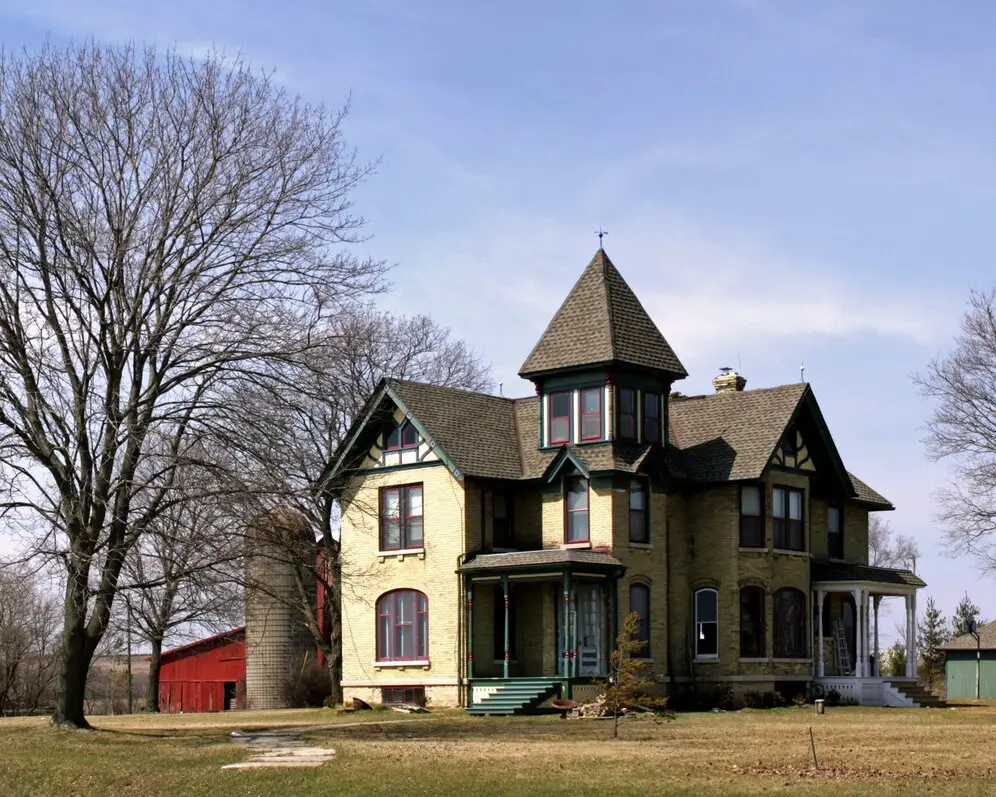
My husband, Tom, passed away seven years ago. He left me our fifty-acre property and the sprawling old farmhouse we’d spent thirty years filling with life — the wraparound porch he built the summer Sarah turned eight, the oak trees lining the gravel drive, the barn with the hayloft where Sarah and her cousins used to hide from bath time. When he died, everyone told me the farm would be my comfort. And for a while it was.
But comfort doesn’t clean gutters. Comfort doesn’t pay property taxes that climb every single year, or replace a well pump, or patch a roof that developed a leak over the kitchen the same month my furnace gave out. Comfort doesn’t mow fifty acres or haul fallen limbs after every storm. I did all of that, alone, at sixty-six years old, on a fixed income, lying awake at three in the morning doing arithmetic that never came out right.
And through all seven of those years, Sarah treated the place like a free vacation resort. She’d show up with carloads of friends whenever she pleased — sometimes with a day’s notice, sometimes with none. They’d drink wine on my porch, leave wet towels fermenting on the bathroom floor, empty bottles on every counter, and drive off Sunday evening waving cheerfully while I stripped beds and scrubbed pans. She staged photo shoots by the barn. She hosted a birthday party in my yard and had the invitations printed before she told me. Not once — not one single time — did she ask how I managed the taxes. Not once did she ask about the roof, or the well pump, or why her mother’s hands had gotten rough as fence posts.
To Sarah, the farm wasn’t my burden or even my home. It was a prop. A backdrop. An amenity that came free with having a mother.
So I sat there on my patio, reading that text a third time. And here’s the thing — I didn’t feel angry. I truly didn’t. Anger takes energy, and I’d burned through my lifetime supply of it years ago. What I felt was profoundly, bone-deep tired of being treated like an unpaid property manager by a person I had given birth to.
I set my mug down and typed back a simple, factual response.
“The property is unavailable.”
Less than a minute later, my screen lit up.
“You’ll make it available.”
Not a question either. And then, before I could even react: “David’s family is coming from out of state. Don’t ruin this for me.”
I stared at the screen for a long moment. I could have typed out a paragraph. I could have explained, defended, argued, pleaded. Thirty years of habit were pulling my thumbs toward the keyboard.
But I realized something right then, sitting in the morning sun, and it settled over me with the weight of a truth I’d been circling for years: arguing requires two people who respect each other’s reality. Sarah only respected her own. Any words I sent would just bounce off the smooth, sealed surface of what she’d already decided was true.
So I turned my phone on silent and went back to my tea. The cardinal had won the feeder. Good for him.
What Sarah didn’t understand — what she had actively, willfully refused to hear for months — was that I wasn’t being stubborn, or dramatic, or spiteful.
I was being completely literal.
But I wasn’t going to spend my morning convincing her. She was about to find out exactly what “unavailable” meant, and she was going to find out the only way people like Sarah ever learn anything: the hard way, at the worst possible moment, in front of an audience.
Let me tell you about October, because that’s where this really started.
The funny thing about telling the truth to people who only want to hear what benefits them is that your words don’t land. They just bounce. You can say a thing plainly, at a dinner table, with wine poured and eye contact made, and it will pass straight through the other person like light through glass, because it isn’t the thing they’ve already decided to believe.
Back in October, long before a single wedding invitation went out, I invited Sarah and her fiancé David over for dinner. I made a roast. I set the good table. I poured the wine. And when we’d finished eating, I folded my hands, looked them both in the eye, and said the sentence I’d been practicing for a week.
“I’m selling the farm. The upkeep is too much for me on my own. I close in a few weeks.”
I had expected shock. Maybe tears. Maybe even anger — the farm was full of her childhood, after all, and I’d braced myself for grief dressed up as fury.
What I got instead was a wave of the hand. Sarah barely looked up from her phone.
“Oh, Mom, don’t be dramatic. You love that old place. Just hire a cheaper landscaper.” She swiped at something on her screen. “We’re planning to do the engagement photos by the barn next spring, by the way. The light out there in April is insane.”
I felt the words slide right off her. I tried again, slower.
“Sarah. I’m not asking for advice. I’m telling you a fact. The papers are signed. There’s a buyer. It’s done.”
She finally looked up, and she gave David a little sideways glance, the kind two people share about a third person who is being tiresome. Then she said, not quite quietly enough, “She gets like this when she wants attention.”
David studied his wine glass like it contained the answers to the universe. He didn’t say a word. I would remember that later — that David never said a word.
And that, right there, at my own dinner table, over a roast I’d cooked for them, was the moment I stopped trying.
Something in me went very quiet and very calm. If my daughter wanted to believe the farmhouse was a permanent fixture of her life — a free prop for her rustic wedding aesthetic, a resource that would simply always exist because she wished it so — that was her choice. I had told her the truth clearly, to her face, at a table. What she did with it was no longer my department.
I didn’t bring it up again. I simply started packing.
You’d think packing up thirty years would break your heart, and parts of it did. I found Tom’s reading glasses in a desk drawer and had to sit down for a while. I found Sarah’s height marks penciled on the pantry door frame and traced them with my finger, all the way up from age four to age fifteen. I found the ribbon from the county fair the year my peach preserves took second place, and a shoebox of photographs of a young family standing in front of a farmhouse that needed painting even then.
I kept what mattered. I sorted, donated, boxed, and labeled. And the second week of November, on a gray morning with frost on the fields, I locked the front door of the Whitmore farm for the last time, pressed my palm flat against the wood the way you’d say goodbye to a horse, and drove away.
The man I sold it to was named Arthur. I want to tell you about Arthur, because he matters.
Arthur was a retired high school principal, a widower like me, a quiet, sturdy man in his early seventies with two rescue dogs — big, shaggy, gentle things named Boone and Petey — and a dream of building a greenhouse. He’d spent forty years herding teenagers, and what he wanted now, he told me, was “good fences, good soil, and nobody needing anything from me before nine a.m.”
He paid a fair price. Cash. No games, no haggling past decency, no picking apart the inspection to shave dollars off. On closing day we stood together on the porch — his porch, as of about an hour before — and he shook my hand.
“You sure you won’t miss the space, Rachel?”
“I’ll miss the memories,” I said. “But I won’t miss cleaning the gutters.”
He laughed, a deep, easy laugh, and Boone leaned against my leg like a furniture delivery, and that was that. I didn’t burden Arthur with my family drama, because it wasn’t his problem and I intended for it never to become his problem. I handed over the keys, transferred the utilities, left him a note about which apple tree fruited early and where the septic access was, and drove to my new life.
And I have to tell you the truth about that drive: I cried for the first ten minutes, and then somewhere on the highway, the crying stopped, and what came after it was the most astonishing lightness. Like I’d been carrying a piano on my back for seven years and someone had finally lifted it off.
My new home was a bright, manageable two-bedroom condo in Louisville, an hour away. Small enough to clean in a morning. New enough that nothing leaked. Mine in a way the farm, for all my love of it, had stopped being mine the day it became a job.
I planted orchids on the windowsill. I joined a Tuesday book club. I slept through the night.
And through it all — through November, December, the holidays, the new year, the entire winter and most of the spring — my daughter continued planning her wedding around a farmhouse her mother no longer owned.
You might reasonably ask: Rachel, how is that possible? Didn’t she visit? Didn’t she notice?
That’s the part that tells you everything. No. She didn’t. In eight months, Sarah did not once drive out to the farm. She didn’t come to see me at the condo either, though she had the address — I’d sent it to her, along with a change-of-address card, like a person announcing a move, because that’s what I was doing. She was busy with venues and dress fittings and tastings. The farm existed for her the way the moon exists: permanently, in the background, requiring no maintenance and no attention until the night you decide you want it in your photos.
I watched the family group chat light up through the spring. Sarah sent out detailed itineraries for David’s family — his parents, his aunts and uncles, cousins from Ohio, twenty-five people in all — promising them “a rustic weekend retreat at our family farm.” There were little graphics. A schedule. “Welcome dinner Friday on the farmhouse patio!”
One evening my phone buzzed with a direct message from her: “Send me the gate code. I think I forgot it.”
I read that message standing at my kitchen counter. The gate code. To a gate on a property I hadn’t owned since November, a code Arthur had certainly changed within a week of moving in, because he was a practical man.
I deleted the message and went to water my orchids.
I know how that sounds. Believe me, I’ve turned it over a hundred times since. Shouldn’t I have called her? Shouldn’t I have grabbed her by the shoulders and made her hear it?
Here’s my answer, and I’ll stand by it in front of anyone: I told her at dinner in October, plainly, twice. She called me dramatic and an attention-seeker. I told her by text. She ignored it. I would go on to tell her again, and again, as you’ll see — four separate times before the end, five if you count the group chat. There is no magic number of times that makes a person hear what they’ve decided not to hear. At some point, the telling is done, and all that’s left is the finding out.
Four months after the sale, in the spring, came the caterer.
My phone vibrated on the counter. Sarah: “Caterer needs a $2,000 deposit by tomorrow. I forwarded them your email. Handle it today, please.”
Forwarded them my email. She had given a vendor my contact information and assigned me a two-thousand-dollar bill the way you’d forward a receipt to accounting.
I typed back: “I will not be paying for the caterer. You and David need to handle your own wedding expenses.”
The phone rang before I’d set it down.
“What do you mean you aren’t paying?” No hello. Sarah’s voice was already at a boil. “You’re the mother of the bride. You’ve literally contributed nothing to this wedding except a free place for David’s family to stay.”
I want you to appreciate the architecture of that sentence. The “free place” — the farmhouse — was her entire accounting of my contribution, and it was a place I didn’t own, had told her I didn’t own, and was being volunteered by her without my consent even back when I did own it. I was being called selfish for failing to provide two things: money I didn’t have and a house that wasn’t mine.
“I’m living on a fixed income, Sarah. I’ve told you this.”
“Sell some of the farm equipment then. Figure it out. God, you’re being incredibly selfish.”
Sell the farm equipment. The equipment that had been sold with the farm. To Arthur. In November.
“No,” I said calmly.
There was a pause, the pause of a person encountering a word they’ve almost never heard from a particular mouth.
“No?”
“No.”
And I hung up.
I didn’t block her. I just set her ringtone to silent and stood there in my kitchen, listening to my own heartbeat. I won’t pretend it was nothing — there was a flutter in my chest, a lifetime of conditioning screaming that I’d just done something terrible. When you’ve spent decades accommodating, a boundary feels like a betrayal. It feels like cruelty. It takes a while to learn the difference between hurting someone and simply declining to keep hurting yourself.
I took a deep breath. I made dinner. The flutter passed.
Over the following weeks, I watched the disaster assemble itself in the family group chat, slowly and majestically, like a barge running aground in real time. I stayed quiet and observed from a safe distance.
David’s mother, Brenda, joined the chat. Brenda, I’d gathered from our few meetings, was a woman who liked to manage things — the sort of person who reorganizes your dishwasher while you’re still in the room.
One Tuesday she typed: “Rachel — I’ve decided the welcome dinner for out-of-town guests will be on the back patio at the farmhouse. Please ensure the string lights are working and the patio furniture is wiped down. We expect about 40 people.”
I looked at that message for a long time. I pictured Arthur — a man who went to bed at eight-thirty, whose evening ambitions ran to a crossword and two dogs snoring on the porch — suddenly discovering forty strangers with casserole dishes streaming across his back patio on a Thursday night, demanding to know why the string lights weren’t lit.
I typed back, for the record, in front of everyone: “The farmhouse is not available for your dinner. Please make other arrangements.”
Sarah chimed in within seconds: “Ignore her, Brenda. She’s just throwing a tantrum because I asked her to help with the catering bill. The patio is fine. I’ll go out there next week and wipe down the furniture myself.”
She never went out there. I know that now. If she’d driven out even once — one twenty-minute detour on any day in eight months — she’d have found Arthur’s truck in the drive, Arthur’s dogs on the porch, Arthur’s name on the mailbox. The whole catastrophe was one small act of curiosity away from being avoided, at every moment, for two-thirds of a year. She just never looked. People don’t inspect the things they’re certain of.
On Wednesday, my sister called.
“Sarah says you’re trying to ruin her wedding by holding the farm hostage.”
“I don’t own the farm,” I said, folding laundry with the phone tucked against my shoulder.
“Oh, come on, Rachel. Stop trying to prove a point and just let them use the yard. It’s two days.”
“I sold it in November.”
The silence on the line went on so long I checked whether the call had dropped.
“Wait. Really?”
“Yes.”
“Does… does Sarah know?”
“I’ve told her four times.”
My sister let out a long, slow sigh, the sigh of a woman recalculating an entire narrative she’d been sold. “Oh, Lord,” she said quietly. “Rachel. There are buses.”
“I know there are buses,” I said. “I’ve seen the itinerary.”
We both sat with that for a moment. And I knew, hanging up, that the collision was now inevitable, and that no force on earth was going to prevent it, because the only person who could — the bride herself — had her hands clamped firmly over her own ears.
It started on Thursday, two days before the wedding.
I was at the grocery store, picking through the fresh vegetables, squeezing avocados like a free woman, when a number I didn’t recognize lit up my phone. I let it go to voicemail. In the car, I listened.
A man’s voice, deeply frustrated, wind noise behind him: “Yeah, hi, this is All Occasion Rentals. We’re out here at the Whitmore farm with the twenty-by-forty tent and the folding chairs, but there’s a guy here saying he doesn’t know anything about a wedding and won’t let us through the gate. Sarah gave us this number. Call us back.”
I deleted the voicemail. I confess a small, quiet part of me thought: and so it begins.
Thirty seconds later, Sarah called. I answered on the third ring.
“Mom, what did you DO?” she shrieked, so loudly I held the phone away from my ear. “The rental company just called me. They said you hired some old man to stand at the gate and turn them away. Tell your groundskeeper to open the gate RIGHT NOW.”
I sat in my parked car in the grocery store lot, watching a woman load watermelons into her trunk, and I kept my voice perfectly level.
“Sarah. That is not a groundskeeper. That is Arthur. He owns the property.”
“Stop LYING. I know you’re punishing me because of the caterer thing. This isn’t funny anymore. Call him and tell him to let them in. David’s family arrives on buses Saturday morning.”
Buses. Plural. Even then, even with a rental crew being turned away at the gate by the actual owner of the property, the buses were still coming. The delusion had its own momentum now, like a train with no brakes and a very confident conductor.
“I cannot tell Arthur what to do on his own property,” I said. “I sold the farm in November. I live in a condo in Louisville. I have told you this repeatedly, starting eight months ago, at my dinner table, to your face.”
“You are UNBELIEVABLE,” she screamed, her voice cracking down the middle. “You’re dead to me if you ruin this.”
She hung up.
I sat in the car for a minute. I examined myself for guilt the way you’d check for injuries after a fall, and I found — nothing. Just calm, and underneath the calm, a kind of grave sadness that had nothing to do with tents or gates: sadness that my daughter, faced with a fact she’d been handed four times, still preferred to believe her mother was running an elaborate cruel hoax rather than accept that the world had not arranged itself around her.
Then I started the car, drove home, and put my groceries away. The peaches went in a bowl on the counter. They were perfect.
Friday was blissfully quiet, and the quiet fooled me.
I assumed the truth had finally landed. I figured Sarah and David were making frantic, humbling phone calls — hotel blocks, park pavilions, a relative with a big backyard. I spent the morning repotting my spider plants and the afternoon reading a novel on the balcony with iced coffee. It was a beautiful, clear June day, the kind of day the farm would have looked heart-stopping — and instead of scrubbing baseboards for forty ungrateful guests, I was listening to birds.
Around four o’clock, an email arrived. An automated update from the wedding website: “Update: The rehearsal dinner will now take place at Mario’s Italian on Fourth Street. See you there!”
No call. No message. And — I noted, with a curious absence of surprise — no invitation. A few hours later the photos surfaced on social media: Sarah radiant in white, David with his arm around her, Brenda mid-laugh, the bridal party crowded down a long table at Mario’s, everyone toasting. The mother of the bride was not in the frame because the mother of the bride had not been asked.
A younger version of me would have cried on that balcony. She’d have wondered what she did wrong, whether she should have just quietly rented a hotel block herself to keep the peace, whether being right was worth being alone at a table for one while her only child rehearsed a wedding across town.
The woman I actually was poured a glass of wine, looked at those photos one more time, and felt something I can only describe as relief with the texture of silk. They were punishing me with exclusion. They had no idea that their punishment and my preference had become the same thing.
I cooked myself a small, perfect steak. I went to bed early and slept like a well-fed cat.
Tomorrow was the wedding day. And tomorrow, two charter buses were scheduled to arrive at a house that wasn’t mine.
Saturday morning, ten o’clock. The farmers market.
I was picking out peaches — I have a weakness, clearly — when my phone began vibrating so hard it nearly walked itself off the edge of the produce stand. I glanced down. Five missed calls from Sarah. Two from David. Three from Brenda. All within eleven minutes.
I paid for my peaches. I thanked the farmer. I walked to my car, settled into the driver’s seat, set the bag carefully on the passenger side, and called Sarah back.
She picked up on the first ring. Behind her voice I could hear it: the loud, heavy rumble of idling diesel engines.
“WHERE ARE YOU?” Her voice was right at the edge of hysteria.
“I’m running errands. What’s going on?”
“We are AT THE FARM. There are two charter buses full of David’s family from Ohio. We pulled up and that old man from Thursday is sitting on the porch with a SHOTGUN.”
“Arthur does not own a shotgun,” I said smoothly. “He probably has a garden hose. Or a broom.”
“He won’t let us IN! He’s standing at the end of the driveway with two enormous dogs telling the bus drivers they’re trespassing! Brenda is crying! David’s aunt is in a wheelchair! You need to come down here and tell him to let us in RIGHT NOW!”
I closed my eyes, and I could see it as clearly as a photograph. The long gravel driveway under the old oaks, dappled morning light. Two massive charter buses idling nose to tail, blowing diesel exhaust into the clean June air, twenty-five Ohioans in wedding clothes pressed to the windows. Sarah in a white silk getting-ready robe, storming the gravel. And Arthur — calm, planted, seventy-two years old and utterly unbothered, flanked by Boone and Petey, politely declining to be bullied on his own land.
“Sarah,” I said. “Listen to me very carefully. I cannot let you in. I do not have a key. I do not have the gate code. I do not have the deed. That is Arthur’s house. It has been Arthur’s house since November.”
“MAKE HIM LEAVE!”
“I can’t make a man leave his own property. You are trespassing, sweetheart. All of you.”
“I want to talk to him—” and then suddenly David’s voice barked through the speaker; she’d put me on speakerphone, apparently for an audience.
“Mrs. Whitmore, this is completely unacceptable. Call off your hired actor right now. We have twenty-five guests who need to drop their bags and get dressed.”
A hired actor. I had, in their running theory, engaged an elderly thespian and two trained dogs, installed them on a fifty-acre property, and maintained this production for months — all as revenge over a catering deposit. It was easier for them to believe that than to believe I’d said a true thing at dinner in October.
“David,” I said, with the deep calm of a woman holding a bag of perfect peaches, “there is no actor. I sold the property in November. I told you both at dinner — you were there, drinking my wine, saying nothing. I told Sarah by text. I told Brenda in the group chat. I told the rental company would-be, through Arthur, on Thursday. You need to tell the bus drivers to turn around.”
“We CAN’T turn around!” Brenda’s voice, shrill, from somewhere in the background. “We don’t have a hotel! Sarah said the farm was ours for the weekend!”
“Sarah was mistaken,” I said.
And then I heard another voice. Deep, gravelly, unhurried, carrying the effortless authority of a man who spent forty years quieting gymnasiums full of teenagers.
“Folks.” Arthur. “I’m going to ask you one last time to clear this driveway. I’ve got a load of mulch being delivered in twenty minutes and your buses are blocking the road. I don’t know who Rachel is to you people, but she hasn’t lived here in eight months.”
The silence that followed on that phone line was one of the most remarkable things I have ever heard. Twenty-five guests, two bus drivers, a bride, a groom, and a mother-in-law, all rendered breathless at once. It was the sound of a delusion dying — not gradually, the way I’d offered it to them four times, gently, with wine and with texts, but all at once, in a gravel driveway, in front of everyone, with the mulch truck en route.
Because it finally, brutally landed: this wasn’t a trick. It wasn’t a negotiation. It wasn’t a tantrum that could be out-stubborned. It was just a man, his house, his dogs, and a driveway they were not allowed to be in.
“Mom.” Sarah’s voice had changed completely. Small now. Terrified. The voice of a girl who has just watched the floor she was standing on turn out to be painted air. “Where are they supposed to go?”
And God help me, some ancient reflex in my chest surged up with the answer: I’ll fix it. Give me an hour and my credit card. It’s what that reflex had done for thirty years.
I looked at my peaches. I let the reflex pass through me and out the other side.
“I don’t know, Sarah,” I said, gently and honestly. “I suppose you and David should start calling hotels. Goodbye.”
I ended the call. I did not turn off my phone — I’m told that matters to some people, that I remained reachable — but I did not answer it again that day.
I drove home. I washed my peaches. I made a pot of coffee.
And over the next two hours, from the peace of my living room, I watched the distant lightning of other people’s consequences flicker across my phone screen. Texts from my sister with escalating punctuation. Frantic messages from Brenda, including one asking — asking me, the tantrum-throwing attention-seeker — whether I could pay for a block of rooms at the Marriott. And a single text from David, which I will treasure forever for its perfect, crystalline lack of self-awareness:
“This is entirely your fault.”
I replied to none of them.
I knew exactly what was happening out there, and I didn’t need to witness it. Finding twenty-five hotel rooms on a Saturday in June, in wedding season, with the ceremony hours away, is next to impossible. They were sweating in formalwear on chartered buses that billed by the hour, calling every front desk in the county, discovering one after another that the county was full. Sarah was sobbing somewhere in a white silk robe. And David’s family — twenty-five people who had been promised a serene Kentucky farm retreat — were conducting the fastest possible education in exactly how this weekend had been planned, and by whom, and on what foundation.
A year ago — truly, even six months ago — I would have been in my car doing eighty down the highway with my savings account in hand, ready to immolate my own future to spare Sarah one hour of public embarrassment over a mistake that was never mine. I would have called it love. I know better now. That’s not love; that’s a subsidy. And subsidies don’t teach anyone anything except where the money comes from.
So I sat in my quiet living room, and I drank my coffee while it was hot, and the consequences stayed where they belonged. It’s a strange feeling the first time you let that happen. Like setting down a suitcase you forgot you were holding.
At three p.m. — an hour before the ceremony’s original start time — my sister texted: “They found a cheap motel near the airport. Half the guests are furious. Wedding delayed two hours. Are you coming?”
I looked at that message for a while. I thought about the rehearsal dinner I hadn’t been invited to. I thought about “you’re dead to me if you ruin this.” I thought about seven years of wet towels and property taxes and being called dramatic for stating facts at my own table.
I typed back: “No. Enjoy the wedding.”
Then I put my phone on the charger in the bedroom, closed the door on it, and spent the evening with my book and the last of the good wine.
I heard the rest secondhand, because my sister could not resist calling Sunday morning to narrate, and I confess I let her.
The cheap motel near the airport — the only place in three counties with a block of rooms available on zero notice — turned out to sit directly beside an active freight line. David’s family, promised rolling pastures and porch swings, instead spent Friday night levitating out of their beds every time a cargo train came through with its horn open. The ice machine was broken. The rooms smelled like decades of cigarettes. Brenda staged a scene in the lobby that my sister, who heard it thirdhand, described as “operatic.”
The ceremony started two and a half hours late. The photos that went up online showed Sarah with a smile stretched tight as a fence wire and makeup that had clearly been repaired at least twice, while rows of Ohio relatives stood in the background wearing the expressions of people attending a hostage negotiation rather than a celebration of love.
I looked at those photos exactly once. I didn’t feel triumph. I want to be honest about that — there was no cackling, no toast to myself. What I felt was the particular sober sadness of watching someone you love pay full price for a lesson that had been offered to them four times at a discount. She could have had the truth for free in October. By June, the truth cost her a wedding day.
For three weeks after that, I didn’t hear a word from my daughter.
I didn’t reach out. I didn’t send money to smooth things over with Brenda, though the hints came through my sister like water through a cracked pipe. Instead — and this is the part of the story I most want other mothers to hear — I just lived.
I went to Tuesday book club and, for the first time in years, actually followed the plot of the novel instead of running silent arithmetic about someone else’s bills in the back of my mind. I planted an herb garden on my balcony: basil, thyme, mint. I learned my neighbors’ names. I slept through the night, every night, without once waking at three a.m. to do mental math on a mortgage, a roof, a tax bill, or a daughter.
I had spent so many years being the load-bearing wall in other people’s lives that I’d forgotten what it felt like to just be a woman on a balcony with her coffee. It felt, if you’re wondering, like health after a long illness you didn’t know you had.
Then, on a Tuesday afternoon, while I was watering the basil, my phone rang. Sarah.
I looked at it for two full rings. Then I answered.
“Hi, Mom.”
Her voice was thin. Completely stripped of its usual demanding edge — that edge she’d carried since her twenties, the one that turned every sentence into an invoice. She sounded like a balloon that had been leaking air for three weeks.
“Hello, Sarah.”
“So. We’re back from the honeymoon. David’s parents are — well. They’re still pretty mad. They left the reception early.”
“I imagine they were quite tired,” I said, in a tone of perfect neutrality that I’d like officially recognized as one of the great achievements of my life.
She paused. The silence stretched, and I knew precisely what lived inside it. She was waiting. Waiting for me to fill it the way I had filled every difficult silence of her existence — with an apology I didn’t owe, an offer I couldn’t afford, a rescue that would lift the consequences off her shoulders and settle them back onto mine where, in her cosmology, they belonged.
A year ago I would have caved before the silence hit five seconds.
I picked a dead leaf off the basil plant and waited.
“I guess—” she finally said, and stopped, and started again. “I guess I should have listened back in October. When you said you sold the place.”
It was not an apology. Let’s be precise: there was no “I’m sorry” in it, no accounting for the screaming, the “dead to me,” the rehearsal dinner, the years. But it was the first fully true sentence about our situation that my daughter had spoken aloud in a very long time, and I have learned to recognize a foundation stone when I see one, even when it’s small.
“Yes,” I said calmly. “You should have.”
Another long pause. She cleared her throat.
“Can we come over for dinner this weekend? We want to show you the photos and… maybe talk.”
I looked around my condo. My quiet, tidy, sunlit, peaceful condo — the herbs on the balcony, the orchids blooming on the sill, the book open face-down on the arm of my chair, waiting for me. My home. Not a venue. Not a resort. Not a waiting room for the next demand. Mine.
“Not this weekend, Sarah. I have plans.” I did: they involved the book and the balcony, and they were sacred. “Perhaps next month we can meet for coffee at that little café downtown.”
Neutral territory. A public place. A firm time limit. I had learned, at last, to build the room before letting people into it.
“Oh,” she said. “Okay.” She sounded utterly deflated, and also — I think, I hope — very faintly relieved, the way people sometimes are when they finally meet the edge of something and it holds.
We said our goodbyes. And when I hung up, I knew perfectly well that nothing was healed. Healing, if it comes, will take years of coffees at that café, years of Sarah showing up as a guest in my life rather than a landlord of it. Maybe it will come. Maybe it won’t. But the dynamic — the ancient, rotten load-bearing arrangement of our family — had shifted permanently, and everyone involved knew it. I was still her mother. I would always be her mother. But the ATM was decommissioned. The maid had retired. The doormat had been taken up, beaten clean, and repurposed as a woman.
A moment later, my phone pinged once more. I braced, out of old habit.
It was a picture message. From Arthur.
No text. Just a photo: his two rescue dogs, Boone and Petey, fast asleep in a patch of warm afternoon sun on the farmhouse porch — the porch Tom built, the porch where I’d rocked Sarah as a baby, the porch where twenty-five Ohioans had recently been repelled by a septuagenarian and a mulch delivery. And next to the sleeping dogs, a brand-new rocking chair, angled to face the western fields, where the light goes gold in the evening.
The house was in good hands. The memories were in mine. And everything, at long last, was exactly where it belonged.
I smiled, locked the screen, and went back to my basil, my balcony, and my own sweet, unavailable life.
Specialty: Emotional Turning Points
Rachel Monroe writes character-driven stories about betrayal, second chances, and unexpected resilience. Her work highlights the emotional side of family conflict — the silences, the misunderstandings, and the moments when someone quietly decides they’ve had enough.