The dirt was still cool from the morning dew when Misty’s shadow fell across my hands.
“Start packing!” was the first thing my ex’s new bride said when she arrived at my dad’s house after his recent burial.
“You should start packing your bags right away, because the moment they read that will tomorrow, this entire estate is going to be ours.”
Misty’s voice cut through the air above the white rosebushes before I even had a chance to look up from my work. Her expensive heels sank deep into the damp soil of my father’s garden as if she were strutting down a runway instead of treading on the ground where he had spent half his life. I remember thinking, absurdly, that those heels would leave marks in the soil that would take days to smooth over, and that my father would have hated that more than almost anything else she’d said.
I continued to snip the dry branches with my pruning shears, moving slowly and carefully just as he had taught me when I was a little girl, standing beside him in this same spot with my hands wrapped around handles too big for my ten-year-old fingers. He always told me to work without a trembling hand but to never cause unnecessary harm to the plant. Every dead branch had to be removed at the right angle, close to the joint, so the wound would heal clean instead of festering. He’d made me practice on the same three bushes for a whole summer before he trusted me near the others.
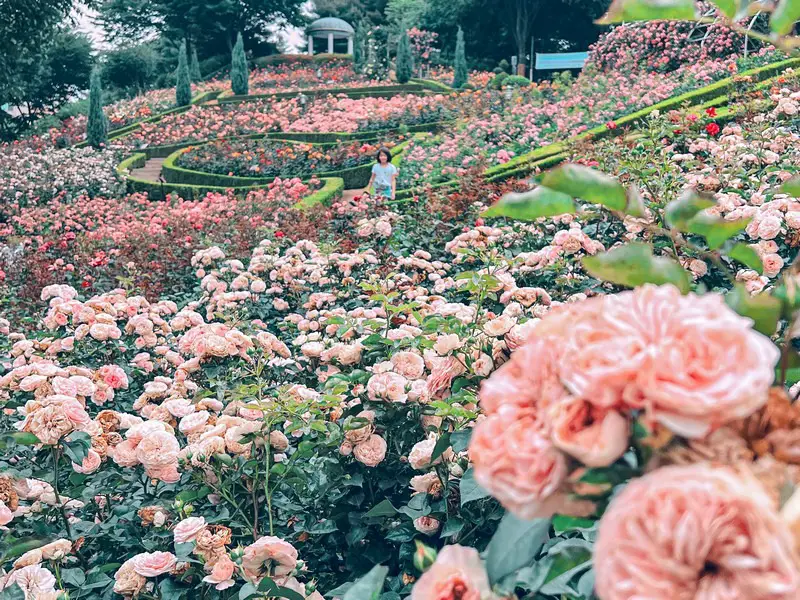
He had planted these specific rosebushes on the day I married Simon, telling me that white was the color of clean beginnings. He’d dug the holes himself that morning, in his good shirt, sweat soaking through by the time the caterers arrived for the reception, refusing to let anyone else do it because, he said, some things a father had to plant with his own hands. Looking back at it now, the irony was almost unbearable as they stood there witnessing the end of my twelve-year marriage, the same white petals that had once decorated my wedding table now trembling in a garden that had become, in the space of three weeks, a battlefield.
The flowers remained steadfast even after my ex-husband had left me for his assistant, the very woman who now stood before me smelling of perfume and radiating arrogance, as though grief were something that happened to other, lesser people, people who hadn’t already secured their next best thing.
“Good morning, Misty,” I said quietly, refusing to give her the satisfaction of a direct look.
She flashed that fake, sugary smile she always used when she intended to humiliate someone with a whisper.
“Harrison’s will is being read tomorrow morning, and Simon and I think it would be best if we talked like adults before things get uncomfortable.”
I wiped my dirt-stained hands on my gardening apron and stood up to my full height. I was several inches taller than her, even with her wearing those ridiculous designer heels, the kind that were never meant to touch soil, only marble lobbies and other people’s expensive floors.
“There is absolutely nothing for us to talk about, as this is my father’s house.”
“It is actually your father’s estate,” she corrected me, savoring every syllable of the word the way some people savor a good meal. “Simon was like a son to him for a very long time, so the least we can expect is to receive what is rightfully ours.”
I felt the heavy weight of the metal scissors in my grip and felt a surge of cold anger, the kind that doesn’t show on your face but settles somewhere behind your ribs and stays there.
“Are you talking about the same Simon who cheated on his wife with his own secretary?” I asked in a low, steady voice.
“Oh, please, all of that is in the past now,” she said while waving her hand as if she were shooing away a pesky fly, something small and beneath her notice. “Harrison forgave him, and they continued to go to the country club together every Sunday right until the very end.”
The end had come far too quickly for all of us.
It had only been three weeks since we laid my father to rest after a brutal eight-month battle with cancer. I still remembered the way his hands had grown thinner every week, the way he’d started asking me, near the end, to describe the garden to him because he could no longer walk out to see it himself. I would sit beside his hospital bed and tell him which roses had opened that morning, which ones needed pruning, and he would close his eyes and listen as though I were reading him poetry. I didn’t have enough time to tell him everything I wanted to, or to ask why my brother, Jesse, had pulled away from me to cling to Simon instead, showing up at the hospital less and less as the months wore on, always with some excuse about work, always leaving early, always somehow managing to be gone whenever the harder conversations needed having.
“My father didn’t leave Simon a single cent,” I stated firmly, knowing that my dad was many things, but he was never a fool.
For a brief moment, the confident smile on Misty’s face began to falter, just a flicker, there and gone so fast I might have imagined it if I hadn’t been watching for it.
“We will see about that tomorrow, especially since Jesse doesn’t seem to agree with your assessment.”
A sudden chill ran down my spine at the mention of my brother’s involvement.
“Have you been speaking with my brother behind my back?”
She took a step closer to me and lowered her voice to a conspiratorial hiss, the kind of voice people use when they want you to know they’re enjoying themselves.
“Let’s just say he has helped me understand your father’s true mental state during those final months.”
I gripped my shears so tightly that my knuckles turned white and my fingers began to ache. My dad always said that roses should be treated firmly but never cruelly, because even the sharpest thorns have a purpose.
“Get off my property, Misty,” I told her, “before I forget how to be polite to a guest.”
She let out a short, dry chuckle that grated on my nerves, a sound with no warmth in it at all.
“Your property? How sweet of you to think that you can keep this fortune all for yourself while the rest of us just sit back and watch.”
“My father built every inch of this house and planted every tree with his own hands, so this isn’t just about money to me.”
“Wake up, because everything in this world is about money,” she snapped back at me. “Tomorrow you are going to learn that lesson the hard way.”
She turned to leave, but before she passed through the garden gate, she delivered one final, cruel blow, tossing it over her shoulder the way you’d toss out trash without bothering to look where it landed.
“You really should start packing, because Simon and I are going to remodel the second we move in. We are going to start by ripping out these old-fashioned rosebushes since everything here needs a more modern look.”
Her heels clicked away down the stone path until she disappeared from sight. I looked down at the white flowers and realized I had accidentally crushed several delicate petals with my muddy hand, the white turning brown at the edges where my fingers had pressed too hard.
I stood there for a long moment after she was gone, listening to her car doors slam somewhere beyond the hedge, the engine turning over, the gravel crunching under tires as she drove away. Then I sat down on the low stone bench my father used to sit on when his knees got bad in his last few years, and I let myself cry for exactly two minutes, no more, because that was all I could afford before Brenda needed a clear voice on the phone.
I pulled out my phone and dialed a number I knew by heart.
“Attorney Brenda, it’s me,” I said the moment she picked up the call. “Misty just came here to threaten me.”
Her professional tone shifted instantly to one of deep concern.
“What exactly did she say to you, Cassandra?”
“She said exactly what we were afraid of, so I need to know if you can come over right now.”
“I am on my way,” she replied firmly, “and you shouldn’t worry because your father thought much further ahead than any of them.”
After I hung up, I noticed something caught under the leaves of a rosebush, half-buried where the wind must have blown it during the last rain. It was a small envelope, damp with the morning dew and covered in my father’s unmistakable handwriting, the same careful, slanted script he’d used on every birthday card he’d ever given me.
It was addressed directly to me, and I picked it up with trembling hands. I felt as if the paper weighed more than it should, as if it held a final, decisive move in a game I didn’t know we were playing. I turned it over twice before I let myself really look at it, half afraid that if I opened it too quickly, whatever was inside would slip away from me, the way so much else had slipped away in the last three weeks.
I didn’t open it right there in the garden. Some instinct told me I needed steadier ground first, and a witness, someone who had known my father as long as I had and could tell me if what I was about to read was real or some cruel trick of grief playing itself out in my hands.
Attorney Brenda arrived twenty minutes later carrying her briefcase and a bottle of wine, her car pulling up the same gravel drive Misty’s had just left. She had been my father’s legal counsel for decades, but she was also a dear friend who had known me since I was a child, the kind of friend who had sat through my ballet recitals and my father’s fortieth birthday party and, eventually, the quiet, difficult months of his illness.
We locked ourselves in the study, which still smelled of the mild tobacco and old wood that always reminded me of my father, the leather of his reading chair worn soft in the shape of him, the shelves of books he’d collected over forty years, everything exactly as he’d left it because I hadn’t been able to bring myself to touch any of it yet. I sat in his large leather armchair while still clutching the unopened envelope in my hand.
“You didn’t want to open that alone, did you?” Brenda asked gently, setting her briefcase down and pouring two glasses of wine neither of us would finish.
I shook my head because I was terrified of what Misty had hinted about my brother Jesse, terrified that whatever was in this envelope would confirm the thing I’d been trying not to believe for the past eight months — that my own brother had chosen Simon and Misty over me, over our father, over the family we used to be before all of this began.
“Your father left very specific instructions, and some things were meant to be discovered only at the right time.”
I looked up at her with confusion.
“What do you mean, the right time? Brenda, what did he tell you?”
She sat down across from me, folding her hands in her lap the careful way she did when she was choosing her words for a courtroom rather than a conversation between old friends.
“I mean that your father spent the last two months of his life rewriting parts of his estate plan. I visited him three times in that period, always when Jesse and Simon believed he was resting. He was very deliberate about who knew what, and when.”
“Why didn’t you tell me?”
“Because he asked me not to. He said you carried enough weight already, watching him decline, and that he didn’t want you spending his final months managing a legal strategy instead of simply being his daughter.”
I felt something crack open in my chest, grief and fury tangled together so tightly I couldn’t tell where one ended and the other began.
“He was planning something.”
“He was protecting something,” Brenda said. “There’s a difference.”
The heavy silence of the study was broken only by the sound of Brenda’s fountain pen scratching against her notepad as she made a note to herself, some small legal formality she was already preparing for tomorrow’s reading. Outside, the sky had turned a bruised, twilight purple, casting long shadows across the leather-bound books my father had spent a lifetime collecting, their spines catching the last of the light.
“Open it, Cassandra,” Brenda said, her voice dropping to a low, steady register. “Your father knew exactly what Jesse was doing. He knew about the country club lunches with Simon, and he knew about the whispers.”
My fingers trembled as I tore the lip of the damp envelope. Inside was a single sheet of heavy parchment, written in his precise, architect’s script, the same handwriting I’d grown up reading on grocery lists and birthday cards and, once, a note tucked into my suitcase the day I left for college that had made me cry in a gas station bathroom somewhere in Ohio.
My dearest Cassandra,
If you are reading this, it means the wolves have finally descended upon the garden. I am sorry I had to play the fool in my final months, letting Simon believe he had coddled his way back into my graces, and letting Jesse believe his betrayal went unnoticed. A dying man sees with perfect clarity.
They want the estate because they see it as a trophy. They do not know that a house is just wood and stone, but a home is the earth beneath it. Do not fight them for the walls, my girl. Let them have the tomorrow they think they bought.
I read it once, then again, my chest tightening with every line. I remembered, suddenly, all those Sunday afternoons over the last year when my father had insisted on sitting in his study with the door closed, telling me he was resting, telling Jesse the same thing, and I understood now that he had been sitting there with Brenda, building something none of us could see, brick by careful brick, while his body failed him in every other way.
A cold dread pooled in my stomach. I looked up at Brenda, my vision blurring with tears. “He gave it to them? After everything Simon did? After Jesse sold me out?”
Brenda didn’t answer. She simply reached into her briefcase and pulled out a certified copy of the final deed, pushing it across the mahogany desk, the paper crisp and official in a way that felt almost obscene against the raw grief still sitting in my throat.
“Read the addendum, Cassandra,” Brenda instructed softly.
I wiped a tear from my cheek and focused on the legal jargon, the dense, careful language that had always intimidated me as a child, back when my father would sometimes let me sit in his study while he worked, explaining that contracts were just promises written down so people couldn’t pretend later that they hadn’t made them. My father had indeed signed the house and the surrounding structure over to Simon and Jesse in a revised clause drafted just a week before his death — validating Misty’s arrogant boasts, confirming, in black and white, exactly the outcome she’d promised me in the garden.
For a moment, sitting there, I felt something close to despair. I thought of every summer I’d spent in that garden, every winter evening by that fireplace, every argument and reconciliation that had happened within those walls, and I thought that my father, in some final act of exhaustion or confusion or misplaced fairness, had simply handed it all away.
But then, my eyes caught the final, ironclad condition, buried in a paragraph so dense I nearly skimmed past it.
…With the explicit restriction that the structural transfer excludes the northern acreage, specifically designated as the historical conservatory gardens. Furthermore, any alteration, demolition, or damage to the existing flora—specifically the white rosebushes planted on the western terrace—shall result in an immediate, irreversible breach of contract. In the event of such a breach, ownership of the entire estate immediately reverts to my daughter, Cassandra, alongside a mandatory liquidation penalty of the occupants’ personal assets to fund the perpetual care of said gardens.
I read the clause three times before I let myself believe it. Then a breathless laugh escaped my throat, thick with grief and a sudden, sharp triumph, the kind of laugh that surprises you as it leaves your body.
“He set a trap,” I whispered.
“He knew their nature,” Brenda replied, a grim smile touching her lips. “He knew Misty wouldn’t be able to resist tearing down those roses the second she took possession. He gave them exactly what they wanted, just to let them hang themselves with their own arrogance.”
I sat back in my father’s chair, the parchment trembling slightly in my hands, and for the first time since the funeral, I felt something other than grief settle over me. It wasn’t happiness, exactly. It was closer to recognition — the sudden, overwhelming understanding that my father had spent his last strength making sure that even after he was gone, he could still protect the one thing in that house that had always been mine.
“Brenda,” I said quietly. “Did he know I would find this envelope? What if I hadn’t seen it in the garden?”
She smiled, a small, knowing smile that told me she’d been waiting for the question. “There’s a second copy in my office safe, set to be delivered to you regardless. Your father was many things, Cassandra, but careless was never one of them. He built in every failsafe he could think of. He wanted you to find peace in the garden before the will was read, not panic in a lawyer’s office surrounded by people who wished you ill.”
I thought about that for a long moment — my father, weeks from death, thinking not just about how to protect his daughter’s inheritance, but about how to protect her heart in the process, choosing to let me discover the truth quietly, in the place that mattered most, rather than in some sterile conference room the next morning.
“There’s something else you should know,” Brenda said, her voice softening. “Your father asked me to tell you, if this moment ever came, that he was not confused in his final months. He knew exactly what he was signing. He wanted me to remind you of something he used to say when you were small.”
“What was that?”
“That the deepest roots are invisible. That anyone can admire a flower, but only the person who tends the soil ever really owns the garden.”
I closed my eyes, and for a moment I could hear his voice saying it, the way he used to when I was small and impatient, wanting to see roses bloom the same week I planted the bulbs. Anyone can admire a flower. Only the person who tends the soil ever really owns the garden. I hadn’t understood it then. I understood it completely now.
We stayed in the study for another two hours, going over every page of the will with Brenda’s careful, patient guidance, until the wine sat forgotten and the room had gone fully dark except for the desk lamp. She explained the timeline for tomorrow’s reading, who would be present, what Simon and Misty and Jesse would be told, and what they would not learn until it was far too late to matter.
“They’re going to think they’ve won,” Brenda said as she gathered her papers to leave. “Let them think that. It won’t last.”
That night, I didn’t sleep in the guest room where I’d been staying since the funeral. I walked out into the garden instead, sat on the same stone bench where I’d cried that morning, and looked at the rosebushes in the dark, pale and ghostly under the moon. I thought about my father digging those holes on my wedding day, sweating through his good shirt, refusing help from anyone. I thought about Simon standing beside me at the altar that same afternoon, promising things he would later break so easily, and Jesse as my best man, laughing, happy, a brother I recognized then and barely recognized now.
I thought, too, about the eight months of his illness — the chemotherapy that thinned him down to something I barely recognized, the mornings I’d driven two hours each way to sit with him during treatments, the nights Jesse had promised to visit and simply didn’t show, always some excuse, a work trip, a headache, a scheduling conflict that always seemed to align suspiciously well with the country club lunches Misty had mentioned so casually in the garden. I remembered, near the very end, asking my father directly if he’d noticed Jesse pulling away, and the way he’d simply patted my hand and said, “Let him go where he needs to go, Cassie. Some people have to lose everything before they understand what they had.” At the time, I’d thought he meant it as forgiveness. Now I understood he’d meant it as a warning to himself, a decision already half-made.
The next morning arrived gray and quiet. I dressed carefully for the reading — not in mourning black, which I had worn enough of in the past three weeks, but in a simple navy dress my father had once told me made me look like I meant business, a compliment he’d delivered with the same dry humor he brought to everything.
The law office was cold, all glass and steel, nothing like the warm, book-lined study where I’d read my father’s letter the night before. Simon and Misty arrived first, Misty in a cream suit that looked entirely too celebratory for the occasion, already talking about contractors, about timelines, about a groundbreaking date for the infinity pool she wanted installed by summer. Jesse came in last, avoiding my eyes, settling into a chair as far from me as the small conference room allowed.
Brenda ran the reading exactly as she’d told me she would — calm, procedural, giving away nothing in her tone that might hint at what was coming. She read the transfer of the main house and its surrounding structure to Simon and Jesse jointly, and I watched Misty’s face light up with the particular glow of someone whose greed has just been formally validated by the law. She reached over and squeezed Simon’s hand under the table, not quite hiding the gesture, wanting me to see it.
Then Brenda read the addendum.
I watched their faces as she worked through the dense legal language — the exclusion of the northern acreage, the explicit protection of the rosebushes, the reversion clause that would strip everything away the instant anyone touched those flowers. Misty’s expression flickered with confusion first, then irritation.
“That’s absurd,” she said, cutting Brenda off mid-sentence. “Rosebushes? He’s protecting rosebushes in a legal document?”
“Your father-in-law was very specific about his wishes,” Brenda replied evenly, not looking up from the page. “The gardens, and specifically the western terrace roses, remain under Cassandra’s stewardship regardless of the ownership status of the main structure.”
“So we just… don’t touch some flowers,” Simon said slowly, exchanging a look with Misty. “That’s it? That’s the entire condition?”
“That is the entire condition,” Brenda confirmed.
I watched relief settle over both of them, the tension leaving their shoulders as they recalculated. It seemed, to them, like such a small thing — an old man’s sentimental attachment to a garden, easily worked around, easily ignored once the ink had dried and the house was legally theirs. Jesse, for his part, said nothing at all, staring down at his own hands through most of the reading, and I found I couldn’t read anything in his silence except the same discomfort he’d been carrying since our father’s diagnosis.
When the meeting ended, Misty didn’t even wait until we’d left the building before turning to me in the hallway.
“Well,” she said, adjusting the strap of her handbag, “I suppose you can keep your little garden hobby. The rest of us have an estate to modernize.”
I didn’t answer her. I had already said everything I needed to say the day before, in the garden, and I had learned by then that some victories are quieter than others, that the smartest thing I could do was let her walk out of that building believing she’d won everything worth winning.
The following weeks passed in a strange, suspended quiet. I moved out of the main house, as I’d been instructed to, packing only what mattered most — my father’s journals, stacked carefully in a box I could barely see over; his old flannel shirt, still smelling faintly of the cedar closet where he’d kept it; and my gardening tools, wrapped in cloth the way he’d taught me to store them, oiled and ready for whenever I’d need them next. I found a small apartment ten minutes away, close enough that I could still watch the property from a distance if I wanted to, though for the first week I made myself stay away entirely, giving myself space to grieve without an audience.
Brenda checked in every few days, always with the same quiet reassurance. “They’ll get there,” she told me once, over coffee in her office. “People like Misty don’t wait long once they’ve decided something belongs to them.”
She was right.
Ten days after the will was read, a construction crew arrived at the estate, hired by Simon to begin what Misty had been calling, on social media, her “dream renovation.” I heard about it not from Brenda, but from an old neighbor, Mrs. Delacroix, who called me in a fluster to tell me she’d seen a flatbed truck pull into the driveway loaded with equipment, and men in hard hats walking the property with clipboards, and Misty herself standing in the middle of the terrace pointing at things like a general surveying a battlefield.
I didn’t rush over. I sat very still in my apartment for a long moment, feeling my pulse in my throat, and then I called Brenda.
“They’re at the house,” I said.
“I know,” she said. “I have someone watching the property. We’ve been expecting this.”
The next morning arrived hot and unforgiving, the kind of relentless summer sun that made the whole world feel a little sharper around the edges. I stood by the estate gates, my single suitcase resting against my leg, though by then I had already moved most of my belongings out over the previous week. I had packed light that final morning anyway, taking only my father’s journals, his old flannel shirt, and my gardening tools, the same things that had mattered most to me from the very beginning, as though some part of me had known I would need to be ready to walk away cleanly, without excess weight, without anything Misty could later claim I’d stolen.
Simon’s sleek black sports car roared up the driveway, throwing gravel against the manicured hedges my father had once trimmed with such patience. Misty stepped out of the passenger side, already wearing a hard hat like a queen surveying a conquered territory, the yellow plastic absurd against her styled hair and manicured nails. Jesse followed closely behind them, his eyes cast downward, unable to meet my gaze, his hands shoved deep into his pockets in a way that reminded me, painfully, of how he used to stand as a boy whenever he knew he’d done something wrong and hadn’t yet found the courage to admit it.
“Oh, look, the squatter is finally leaving,” Misty mocked, walking up to me with her arms crossed. “I told you, Cassandra. Everything is about money. And today, this house is ours.”
Simon didn’t look at me either. He was already gesturing to a crew of laborers climbing out of a flatbed truck behind him, men in work boots and reflective vests, one of them carrying a chainsaw balanced against his shoulder like it weighed nothing at all. “Get the chainsaws,” Simon directed the foreman. “Start with those white bushes by the terrace. We need room for the infinity pool.”
Something in my chest went very still and very quiet, the way the air goes still right before a summer storm breaks. I looked at Jesse one last time, searching his face for some flicker of the brother I remembered, the boy who used to help me carry watering cans across this same lawn when we were children, racing each other to see who could finish first.
“You really didn’t know him at all, did you?” I asked quietly.
Jesse shifted uncomfortably, opening his mouth as though he might say something, but Misty stepped between us before he could, her patience for sentiment clearly exhausted.
“Save your breath. Move your bag, Cassandra. You don’t belong here anymore.”
I didn’t say another word. I picked up my suitcase, walked past the gates, and stepped into Brenda’s waiting car, which had pulled up along the curb exactly where she’d said it would be, engine already running.
As we drove down the winding road, I looked in the rearview mirror. I watched the foreman approach the white rosebushes, shears in hand, completely oblivious to the invisible wire he was about to trip. My father had taught me never to cause unnecessary harm to a plant, but he also taught me that sharp thorns always serve a purpose. They were about to find out just how deep those roots went.
Brenda didn’t say anything for the first few minutes of the drive, letting me watch the estate shrink in the mirror until the hedges swallowed it from view. Then she reached over and turned up the radio, low, just enough to fill the silence without demanding conversation, the kind of gesture only a true friend knows how to make.
“How long do you think it will take?” I finally asked.
“Knowing Misty’s patience? Not long.”
We drove to a small café a few miles away, the kind of place with mismatched chairs and a chalkboard menu, and sat by the window with coffee neither of us really wanted, both of us simply needing somewhere to be while the clock ran out on something we couldn’t watch happen. Brenda’s phone sat on the table between us, face up, waiting.
It rang forty minutes later. It was her associate, the one she’d stationed near the property with instructions to call the moment anything happened. Brenda answered on the first ring, listened for almost a full minute without speaking, her expression unreadable, and then she looked up at me and smiled.
“They cut down the first bush eleven minutes ago,” she said. “All three rosebeds on the western terrace are gone. My associate has photographs, timestamped, along with video from the property’s exterior cameras, which — as it turns out — your father had upgraded and rerouted to a private server just two months before he passed.”
I stared at her.
“He was recording the garden?”
“He was recording anyone who might one day forget his instructions.”
I let out a breath I hadn’t realized I was holding, something between a laugh and a sob catching in my throat. My father, in his final weeks, thin and exhausted and barely able to walk the length of his own hallway, had still found the strength and the foresight to install cameras aimed at a rosebed, certain, with a conviction I still couldn’t quite fathom, that someone would eventually be foolish enough to destroy it.
“What happens now?” I asked.
“Now,” Brenda said, folding her hands together with quiet satisfaction, “we file the breach notice. By this time tomorrow, the reversion clause activates. The entire estate — house, land, structures, everything — reverts to you. And per the liquidation penalty clause, Simon and Misty’s joint assets connected to the property, including whatever they’ve already spent on this renovation, become forfeit toward the garden’s perpetual maintenance fund.”
I sat with that for a long moment, watching the steam rise off my untouched coffee, feeling something shift and settle inside me that I hadn’t felt since before my father’s diagnosis, since before any of this had begun. It wasn’t triumph, not exactly. It was closer to relief — the specific, bone-deep relief of watching a plan finally arrive at the place it was always meant to go.
“He knew,” I said quietly. “He knew exactly what she would do.”
“He knew Simon too,” Brenda said. “A man who cheats once rarely learns patience the second time around. Your father used to say that greedy people are the easiest people in the world to predict, because they always reach for the thing right in front of them without checking what it costs.”
We drove back to the estate two days later, once the paperwork had been formally processed and Brenda’s office had sent the certified notice of reversion to Simon’s attorney. I hadn’t expected to feel nervous walking back through those gates, but I did, my hands unsteady on the car door until Brenda reached over and squeezed my arm.
“You belong here,” she said simply. “You always did.”
The house looked strange when we arrived — half-finished demolition equipment still parked in the driveway, a dumpster near the terrace filled with debris that included, I realized with a fresh wave of grief, the uprooted remains of the white rosebushes, their thorny branches sticking up out of the metal container like something from a nightmare. Simon’s car was gone. Misty’s was still there, parked crookedly, as though she’d left in a hurry.
I found them both in the study — my father’s study, with his books still on the shelves because even in their rush to remodel, they apparently hadn’t decided what to do with a dead man’s library yet. Misty was on the phone, her voice climbing into a register I recognized instantly as panic dressed up as outrage. Simon stood by the window, staring out at the wreckage of the garden with an expression I couldn’t quite name.
“You can’t just take everything back,” Misty said the moment she saw me, hanging up on whoever she’d been shouting at. “There has to be some kind of appeal. Some kind of loophole.”
“There isn’t,” Brenda said calmly, stepping past me into the room. “The condition was explicit, the breach was documented on camera, and the notice has already been filed with the county. You have thirty days to vacate.”
“This is insane,” Misty said, her voice cracking. “Over some flowers?”
“Over a promise,” I said quietly, and something in my own voice surprised me — steady, clear, entirely unlike the trembling woman who had clutched a damp envelope in this same room three weeks earlier. “My father asked you not to touch them. You didn’t even wait two weeks.”
Jesse appeared in the doorway then, having apparently followed the commotion from somewhere else in the house. He looked at me, and for the first time since the funeral, he actually held my gaze instead of looking away.
“Cassie,” he said. “I didn’t know about the will. I swear I didn’t know he’d done this.”
“I believe you,” I said, and I meant it. “But you knew about the lunches. You knew about the way you stopped coming to see him. You knew, and you let it happen anyway.”
He didn’t have an answer for that. Nobody in that room did.
I want to say I felt only vindication in that moment, standing in my father’s study while Misty’s outrage curdled into something closer to panic and Simon stared silently at the ruined garden outside. But mostly what I felt was tired, the particular exhaustion of grief that doesn’t end just because justice, in whatever small form it takes, finally arrives.
Simon left first, without saying anything to me at all, walking past me and out the front door as though I were a piece of furniture that had been moved slightly out of place. Misty followed a few minutes later, still arguing on her phone with someone — a lawyer, I assumed, though Brenda had already made it clear there was nothing left to argue about.
Jesse stayed behind after they’d gone.
“What happens to me?” he asked quietly, standing near the window where Simon had been standing moments before.
I looked at my brother for a long moment before I answered. He looked older than I remembered, tired in a way that had nothing to do with the summer heat, and some old, stubborn part of me still wanted to reach for him the way I had when we were children, when a scraped knee or a bad dream was the worst thing either of us had to survive.
“You didn’t lose anything in the will, Jesse. You still have your share of the trust Dad set up years ago. But this house isn’t yours anymore. It never should have been, and I think, somewhere, you already knew that.”
He nodded slowly, his eyes wet, though he didn’t let himself cry in front of me.
“I’m sorry,” he said. “For all of it. For the lunches. For not coming when he was sick. For believing Misty when she said you were trying to cut me out.”
“I know,” I said. “I’m not ready to forgive it yet. But I’m not ready to lose you either.”
That was as far as either of us could go that day, and it was enough. He left a few minutes later, and I stood alone in my father’s study for a long time, looking at the space where the rosebushes used to be, the raw, torn earth still visible through the study window.
The gardens took most of a year to restore.
I spent that year exactly the way my father would have wanted — on my knees in the dirt more often than not, replanting, rebuilding the terrace bed by bed, ordering new rose stock from the same nursery he’d used decades earlier, a family-owned operation two states away whose owner remembered my father by name and cried a little on the phone when I told him why I was calling. I used part of the liquidation penalty funds, exactly as the will had specified, to restore not just the roses but the entire northern acreage — the old greenhouse my father had built when I was twelve, the stone paths that had crumbled over the years, the small pond where he used to sit and read on Sunday afternoons.
I moved back into the main house that autumn, once the last of the renovation crew’s mess had been cleared away and the study had been returned, book by book, to exactly the way my father kept it. I didn’t change much. I didn’t want to. There was something in leaving his reading chair exactly where it had always been, his journals still on the shelf beside my own growing collection, that felt less like preserving a shrine and more like continuing a conversation neither of us had finished.
Jesse and I found our way back to something resembling a relationship, slowly, over months of careful, sometimes painful conversations. He never fully explained why he’d let himself be pulled toward Simon and Misty during our father’s illness, and I stopped needing him to. Some betrayals don’t come with tidy explanations. Sometimes people simply choose the easier path because the harder one asks too much of them, and all you can do afterward is decide whether you’re willing to let them try again.
I never spoke to Simon or Misty again. I heard, eventually, through Mrs. Delacroix and the small-town grapevine that never seems to run dry, that they’d moved to a rental two towns over, that the liquidation penalty had cost them more than either of them had expected, that their engagement — because it turned out they hadn’t even married yet, something Misty had conveniently implied without ever quite stating — had quietly fallen apart sometime that winter. I felt no satisfaction hearing it. By then, I had already moved past needing to feel anything about them at all.
The following spring, the roses bloomed again on the western terrace, the same spot where Misty had once stood in her ruinous heels and told me to start packing my bags. I knelt in the soil on the first warm morning of April, pruning shears in hand, moving slowly and carefully, working without a trembling hand and never causing unnecessary harm to the plant, exactly the way my father had taught me thirty years earlier.
I thought about his letter that morning, the one I still kept folded in the drawer of his old desk, and about the line that had haunted me the most in the weeks after I first read it. A house is just wood and stone, but a home is the earth beneath it. I understood, finally, standing there with dirt under my fingernails and the smell of new roses in the warm air, that he hadn’t been telling me to let go of the house at all.
He had been telling me exactly how to get it back.

Specialty: Legal & Financial Drama
Michael Carter covers stories where money, power, and personal history collide. His writing often explores courtroom battles, business conflicts, and the subtle strategies people use when pushed into a corner. He focuses on grounded, realistic storytelling with attention to detail and believable motivations.