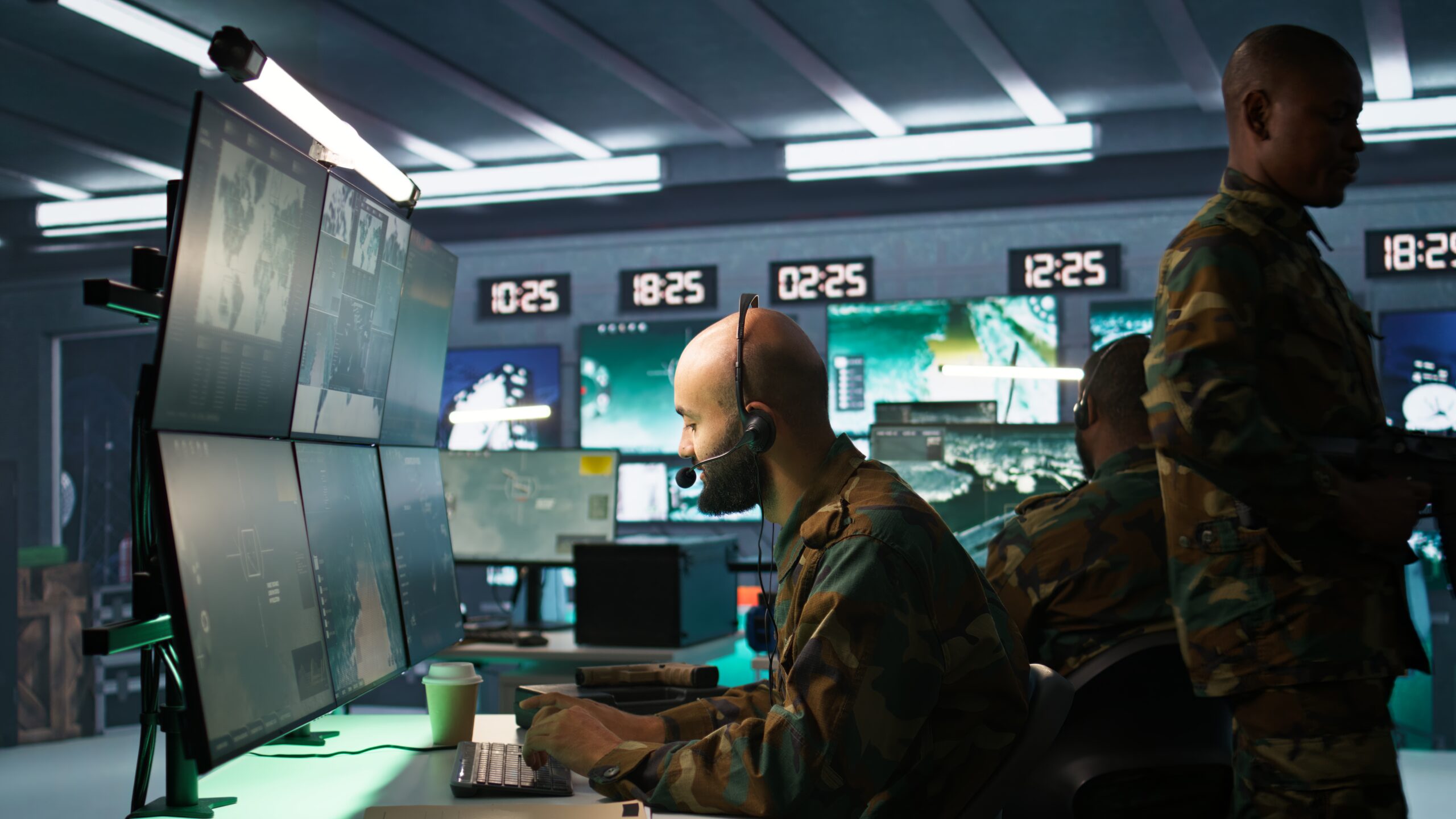
My daughter arrived at my base barefoot at two in the morning, and by the time the sun came up, I understood something about myself that fifteen years of training other people to handle violence had never quite taught me. Knowing exactly what to do with your hands when someone hurts the person you love, and actually keeping those hands still, are two entirely different kinds of discipline.
I train security and protection teams for a living. Convoy drills, counter-surveillance, emergency extraction, the kind of work that teaches you to notice a threat three seconds before anyone else in the room does. I’ve spent my career telling people that the moment you let your emotions choose your next move, you’ve already lost. I believed that completely, right up until the night it stopped being theory and became my own daughter standing under the security lights at the front gate, one eye swollen shut, barefoot on cold gravel.
Emily was nineteen that spring. She’d grown up mostly with her mother, Denise, after our divorce, though she’d spent every summer with me since she was six, learning to read a map, learning to change a tire, learning, I think, more than either of us realized at the time, how to notice when something was wrong before anyone said it out loud. She had my stubborn chin and her mother’s quick laugh, back before the laugh started disappearing whenever Denise’s new family came up in conversation.
Denise remarried about two years before that night. She married into the Whitakers, a family that looked, from the outside, like something out of a holiday catalog. Pressed collared shirts. Watches that cost more than my truck. Charity dinners, church committees, Christmas cards where everyone wore matching sweaters and nobody’s smile ever looked forced in the photograph. I’d shaken a few of their hands over the years, at graduations and the occasional awkward holiday handoff, and I’d watched, more than once, the particular way they looked past Emily, like she was a piece of luggage Denise had accidentally carried into the marriage and hadn’t quite found a place to put down.
I want to say plainly, because it matters for everything that follows: cruel families don’t always look cruel. Sometimes they bring casseroles to your door when you’re sick. Sometimes they fund scholarships with their name on a plaque in the lobby. Sometimes they smile warmly at you across a dinner table while quietly learning exactly where you’re most vulnerable, filing it away for later. I didn’t understand that about the Whitakers until it was almost too late to matter.
That night, I was in the middle of a training rotation at Forward Operating Site Redstone, a private facility where I run courses for former police officers, contract security specialists, and protective detail leaders. We’d spent the week on incident documentation and evidence preservation, which is, in hindsight, a strange kind of preparation for what was coming, like the universe had been quietly arming me for a fight I didn’t yet know I’d have to have.
The guard at the vehicle checkpoint radioed in a little after two, saying there was a young woman at the gate who looked disoriented, maybe intoxicated. I remember the exact half-second it took for that description to register as wrong, because I was already moving before I’d consciously decided to move.
She was barefoot on the gravel, one arm pressed hard against her ribs, her whole body shaking under those harsh white perimeter lights. Her left eye had swollen almost completely shut beneath a spreading bruise the color of a storm cloud. Her lip was split. There was dried blood at the collar of her sweatshirt.
“Dad,” she whispered, and her knees gave out the second she reached me.
I caught her, careful, one arm under her shoulders, keeping my other hand well clear of whatever was wrong beneath her shirt. She was shaking so hard against my jacket that I could feel it in my own chest.
“Who did this?” I asked her.
She tried to answer. The breath caught somewhere under her ribs and folded her forward instead, and that was when I heard boots on gravel behind me, our on-site medic running over with a trauma bag already open.
I waved him closer, but Emily’s hand caught my sleeve first, hard, harder than I thought she had strength left for.
“Mom’s new family,” she said.
I bent down closer to her face, not sure I’d heard right. “What?”
“All of them.” Her good eye filled with tears. “Eleven.”
Then she said the part that changed the shape of everything that followed.
“They filmed it.”
Those four words landed flatter than the bruises did, and that flatness was exactly what made them so frightening. This wasn’t a chaotic accident. This was something that had been recorded, on purpose, by people who apparently believed having a camera running gave them some kind of control over what had happened.
Denise had married into the Whitaker family two years earlier. Her husband, Charles, ran a family business with old money behind it. His parents, Margaret and Vernon, sat on more charity boards than I could count. His brothers, Neil and Grant, and his sister Lori, all lived within twenty minutes of each other, in the kind of close, self-contained family orbit where outsiders were tolerated but never quite let all the way in. Emily had been orbiting the edge of that circle for two years, and I hadn’t understood, until that night, just how sharp the edge actually was.
The medic looked at me. “Sir, we need to move her.”
I nodded, and something in me, some part trained by fifteen years of exactly this kind of moment, clicked into a different gear entirely. “Infirmary. Full examination. Photograph everything medically appropriate before treatment. Preserve the clothing. Nobody touches her phone without logging it.”
Emily looked up at me, panic flickering across her face. “I’m not leaving,” she said, meaning me, meaning she didn’t want me to leave her.
“I’m not going anywhere,” I told her, and only then did her hand release my sleeve.
They carried her toward the infirmary, past the flagpole and the concrete steps of the administration building, and by then my current training class had started gathering outside the barracks. Twenty-four of them. Former police officers. Contract security specialists. Protective detail leaders. Emergency response trainers. People who, over the course of that week, I had personally taught convoy drills, counter-surveillance awareness, emergency extraction procedures, and evidence preservation. None of them said a word. One of them stood there holding a paper coffee cup, tilted at an angle, completely forgotten in his hand. Mara Vale, a former detective who’d been one of the sharpest students I’d ever had, watched the infirmary doors swing shut behind Emily and didn’t move.
I didn’t take Emily’s phone myself. I waited until our communications specialist, a careful, methodical man named Patel, arrived with gloves and a sealed evidence bag, because I already knew, on some level, that the version of this night where I acted first and thought second was a version that would cost Emily more than it would cost anyone who’d hurt her.
“02:17. Device sealed,” Patel said, writing it down.
“02:23. Clothing logged.”
“02:31. Initial medical photographs taken.”
I stood there and watched him work, and I felt something settle in my chest that I can only describe as method fighting for control against fury. Not revenge. Not blind rage. Not the kind of anger that burns hot and stupid and useless, the kind I’d spent my whole career training other people out of. People like the Whitakers believed, I would come to understand over the following days, that power meant nobody could ever tell them no. What they didn’t understand, what they never saw coming, was the difference between losing control and deliberately taking control back.
I turned to face my class. Twenty-four faces looked back at me in the gray predawn light.
“Who wants a field exercise?” I asked.
Every hand went up.
“This is not vengeance,” I told them, and I made myself say it slowly, deliberately, partly for their benefit and partly because I needed to hear myself say it out loud. “We identify every person involved. Every device. Every copy. Every witness. Every lie.”
Mara stepped forward. “Rules?”
“Everything lawful. Public records only. Preservation requests. Witness identification. Timeline reconstruction. No contact with suspects unless police authorize it. Nobody sets foot on private property. Nobody.”
I pulled two folded sheets of paper from my jacket pocket, sheets I’d started filling out almost without realizing it while I waited for the medic to finish his first pass on Emily. The first page had Denise’s address on it. The second belonged to Charles Whitaker. Behind those, a short list of the adult relatives who’d apparently been in that house.
“No mercy,” I said, and I meant it, even as I heard how it sounded coming out of my mouth. “But no stupidity.”
Someone near the back nodded slowly. “We build the case so tight money can’t make it disappear,” he said, and that, more than anything I’d said, told me the room understood exactly what I was asking of them.
Mara studied the pages I’d handed her. And then, from inside the sealed evidence bag sitting on the table between us, Emily’s phone buzzed. Every single person on that gravel lot turned toward the sound at once.
Patel looked at me. “We don’t open it without consent.”
“Correct,” I said, though every muscle in my body wanted to tear that bag open myself.
The infirmary door swung open a few minutes later, and the medic called my name. I went inside and found Emily lying on the examination table under a thin blanket, her sweatshirt already removed and bagged as evidence, purple bruising spreading visibly across one side of her torso, her ribs already beginning to swell beneath the skin. Captain Renee Morris, the base physician, stood beside her holding a tablet.
“Two ribs appear fractured,” Renee said quietly. “Possible concussion. We’re transferring her to the civilian trauma center for imaging.”
Emily’s eyes drifted toward the evidence bag Patel had carried in with him. “It’s them,” she said.
“How do you know?”
“They’ve been messaging me.”
“Do you want Patel to preserve the messages?”
“Yes.” Her voice was small but certain.
Renee nodded. “We need that consent documented.”
Emily gave it, clearly, on the record, and Patel set the phone on a sterile tray and began a controlled extraction while another staff member documented every step of the process. The first messages appeared within minutes. A family group chat labeled simply “Whitaker Family.” Twenty-seven unread messages. The most recent one was from Denise.
You embarrassed everyone. Come back before this gets worse.
Then one from Charles.
Delete whatever you recorded and we can still handle this privately.
Emily closed her good eye. I said nothing, though something in my chest had gone very cold and very still.
Another message appeared, this one from Denise’s sister, Lori.
If you show anybody that video, remember there are ten of us who saw you start it.
Ten. Not eleven.
I looked at Emily. “Who was the eleventh?”
She swallowed hard before she answered. “My mother.”
The room went completely quiet. I’d understood, in some abstract way, when Emily first said “Mom’s new family,” that Denise was part of it. But some stubborn corner of my mind had still been quietly separating Denise from the rest of them, still trying to protect some older version of the woman I’d once married, the one who used to sing off-key in the kitchen while she made Emily’s lunch for school. Emily didn’t let me keep that comfort.
“She held the camera first,” Emily said.
I sat down in the chair beside the bed. “Start wherever you can.”
Her voice shook when she began. “It was supposed to be dinner.”
“Why were you there?”
“Mom kept asking. She called me three times that week. She said Charles’s parents wanted everyone together before the family foundation gala.”
I already knew Emily hadn’t wanted to go. She’d told me before, more than once, that she hated visiting that house. Charles’s brothers made jokes about her choice of college. His sister called her “Denise’s first draft,” a phrase that had stuck in my head the first time Emily repeated it to me over the phone, low and hurt, trying to make it sound like it hadn’t bothered her as much as it clearly had. His mother, Margaret, had once asked Emily, in front of other people, whether she planned to “keep using her father’s money forever,” as if the child support I’d paid faithfully for a decade was some kind of moral failing on Emily’s part rather than mine.
I’d told her, more than once, that she never had to go visit people who made her feel small. That should have been enough. But then Denise had called her crying, saying she missed her daughter, and Emily, being Emily, being someone who still loved her mother even when loving her cost something, had gone anyway.
Dinner had started normally enough, or as normally as anything in that house ever started. Eleven people were present. Denise. Charles. Charles’s parents, Margaret and Vernon. His brothers, Neil and Grant. His sister, Lori. Neil’s wife. Grant’s adult son. A cousin named Peter. And Peter’s girlfriend, Rachel.
Emily had arrived at 7:10 in the evening. At 7:40, Charles had asked whether she was planning to attend the upcoming gala. She’d said no. Margaret had asked why, and Emily had said she had to work, a reasonable answer that should have ended the conversation entirely.
Instead, Lori had made a joke, something about Emily being too embarrassed to attend because she couldn’t afford the right clothes. Emily had stood up to leave. Charles had blocked the hallway.
“He said nobody walks out while my mother is talking,” Emily told me, and I felt something in my own chest tighten into a fist.
“What did Denise do?” I asked.
“Nothing.”
“What happened next?”
“Grant took my car keys.”
“Did you tell him to give them back?”
“Yes.”
“Did he?”
“No.”
I want to be honest about something, because it matters for understanding what happened in that dining room, and it matters for what came after. What unfolded in that house wasn’t eleven people suddenly, chaotically attacking one person all at once, the way you might picture a riot breaking out. It happened in steps, small enough that at every single point, any one of them could later try to claim the worst part belonged to somebody else. A joke. A blocked doorway. A stolen set of keys. Someone lifting a phone to start filming. Someone saying “calm down” in the exact tone that means the opposite. Someone grabbing an arm. Someone insisting, later, that she’d started it.
Emily had tried to take her keys back from Grant. He’d pulled them out of reach. She’d shoved his hand away. Charles had grabbed her wrist. She’d told him to let go. And that was the moment Denise raised her phone and started recording.
“Mom started recording?” I asked, needing to hear it again, needing to be sure I hadn’t misheard.
“Yes.”
“Why?”
“She said if I made accusations later, they’d have proof.”
Proof. My ex-wife had begun filming before the worst of it even happened. Not to protect our daughter. To build a defense against her.
“Then what?” I asked, my voice barely steady.
Emily stared up at the ceiling for a long moment before she answered. “Neil pushed me back into the dining room.”
“One push?”
“Twice.”
“Did you fall?”
“The second time.”
Her ribs had struck the corner of a dining chair on the way down, which was, the doctors would later confirm, likely the moment the first fracture occurred. She’d tried to stand back up. Margaret had slapped her across the face. Vernon had grabbed her by the shoulder. Grant had taken her phone out of her pocket. Peter had stood squarely in front of the exit. Rachel had laughed. Lori had kept telling Denise to “get all of it” on camera.
“What did your mother do?” I asked, though some part of me already dreaded the answer.
Emily started crying then, quietly, the kind of crying that comes from somewhere much deeper than the physical pain. “She told me to stop making them hurt me.”
I had to look away from her for a second. That sentence went somewhere inside me that rage couldn’t reach, some older, quieter place, and it sat there like a stone.
Emily kept going, because I think some part of her needed to get all of it out at once, now that she’d started. Charles had demanded an apology to his mother. Emily had refused. Neil had shoved her again. Grant’s son had kicked her leg out from under her, and her head had struck the carpeted floor. Then several voices had overlapped at once — apologize, stop fighting, you always create drama, your father made you like this — until the noise itself became its own kind of assault. The second rib had likely broken when Charles pressed his knee against her back while Neil held her arms down. After that, Emily said she couldn’t remember every individual hand on her body. Trauma doesn’t record events the way a security camera does. It records flashes. Shoes. Voices. Pressure against her ribs. The taste of blood in her mouth.
Eventually, Charles let go of her. Someone threw her phone toward the staircase. Denise told her to leave. Barefoot. No keys. No jacket.
Emily had crawled to where her phone landed, grabbed it, and run.
“How did you get here?” I asked.
“A truck driver,” she said. “A delivery truck stopped for me.”
The driver had found her walking barefoot along a service road nearly seven miles from the Whitaker property. Emily had known Redstone was closer than my apartment, and she’d told him her father worked there. He’d driven her straight to the outer gate.
Mara was standing near the infirmary doorway by then, having quietly stepped in to listen. “Do we know the driver?” she asked.
Emily nodded. “His name was Sam.”
“Company?”
“Blue Ridge Logistics.”
Mara wrote it down without another word. Our first independent witness.
Then Patel spoke up from where he’d been working on Emily’s phone. “We found something.”
There was an incoming shared-file notification on Emily’s phone, he explained. A video, sent accidentally to the family group chat at 1:42 that morning, then deleted almost immediately afterward. But the preview cache had survived the deletion, and Patel had recovered seventeen seconds of footage from it. The image showed Emily on the floor. Charles above her. Denise holding up a phone. Margaret shouting something at the edge of the frame. Then a voice from off-camera, clear enough to make out.
“Make her say she started it.”
Patel looked up at me. “We can probably recover more through the platform with legal process.”
I looked at Mara. She nodded once. “I’ll call the county detective I know.”
“No favors,” I told her.
“Not asking for one.”
“Good.”
I turned back to Emily and took her hand. “We’re going to the hospital.”
She caught my hand tighter. “Dad.”
“I’m here.”
“Don’t do something stupid.”
That nearly broke something in me right there in that small infirmary room. My daughter, lying on a table with two fractured ribs and a swollen eye, was worried about me ruining my own life trying to defend hers.
“I won’t,” I said.
“You look like you’re going to.”
“I’m going to do exactly what I teach.”
“What’s that?”
“Control the scene. Preserve evidence. Make the right people do their jobs.”
She studied my face for a long moment. “No revenge?”
I squeezed her hand. “No revenge.” Then, quieter, “Consequences are better.”
By four that morning, the county sheriff’s office had opened a formal aggravated-assault investigation. Mara’s contact turned out to be Lieutenant Carla Ruiz, who arrived at the civilian trauma center before sunrise and waited patiently until doctors had finished clearing Emily before conducting her interview. The scans confirmed two broken ribs, a probable concussion, bruising across both arms, and soft-tissue injuries throughout her torso. Nothing immediately life-threatening.
That phrase didn’t comfort me the way it was supposed to. People use “not life-threatening” as if the only standard that matters is whether someone nearly died. It doesn’t account for what it costs a nineteen-year-old to be slapped by her step-grandmother while eleven adults she’d once trusted stood around deciding, individually, how much of the worst part they were each willing to participate in.
At 5:18, Lieutenant Ruiz requested emergency preservation orders for the family group chat, several cloud storage accounts, and the Whitaker home’s security camera system. At 5:31, officers reached out to Blue Ridge Logistics and located the driver, Sam Porter, the man who’d stopped his truck for a barefoot nineteen-year-old walking along a dark service road at nearly two in the morning. His truck had a forward-facing dash camera, and it had captured Emily walking along the roadside at 1:57 a.m., and it had captured the conversation inside the cab when he pulled over.
“Who hurt you?” Sam had asked her.
“My family.”
“Do you need police?”
“My dad first.”
“You need a hospital.”
“My dad will know what to do.”
According to Sam’s later statement to investigators, Emily had repeated that sentence four times during the drive to Redstone. My dad will know what to do. I remember hearing that detail later and having to step outside for a few minutes, because I genuinely wasn’t sure, at two in the morning with my daughter’s blood still on my jacket, whether I did.
By six that morning, I was back at Redstone, standing in front of my class in the briefing room. The coffee had gone cold hours ago. Nobody complained about it. Mara had already begun dividing up public-record research assignments, and I want to be clear about what those assignments actually were, because it would have been easy, in that moment, for this to become something else entirely. These weren’t addresses handed out for confrontation. They were addresses for context. Business ties. Publicly accessible vehicle registrations. Public social media posts. Known security cameras on nearby commercial properties. Event timelines. Anything that could help identify additional witnesses or preserve evidence before someone with money and lawyers made it disappear.
I stood at the whiteboard at the front of the room. “New objective,” I said, and twenty-four faces looked back at me, waiting.
“We are not finding dirt,” I told them.
Nobody moved.
“We are not humiliating them. We are not contacting employers. We are not posting anything anywhere.”
Mara nodded from the front row. “We establish the truth.”
“Yes.”
“Timeline from 1900 to 0200?”
“Correct.”
By eight that morning, the first cracks in the Whitakers’ story had already started to appear, and they’d appeared because the Whitakers themselves had put them there, weeks and hours before any of us went looking. A public social media post from Lori showed the family dining room at 7:22 the previous evening, Emily visible at the table, her shoes clearly visible beneath her chair. A later photo, posted by Rachel at 8:03, showed several family members drinking together out on the rear patio. Emily wasn’t in that photo. But her purse was still sitting on the dining chair behind them.
At 8:11, Grant had posted a joking video with the caption “Family intervention getting spicy,” then quietly deleted it before dawn. One of my students found the cached preview anyway. It showed Emily standing near the hallway with Charles physically blocking her path.
Then came the home security footage. The Whitakers’ attorney initially claimed the system had simply malfunctioned that night. The cloud storage provider disagreed entirely. The cameras had been manually disabled at 8:14 p.m. By Charles. They weren’t reactivated until 10:52. For two hours and thirty-eight minutes, there was no home security footage at all.
Except Denise had been filming the whole time on her own phone.
That turned out to be the single biggest mistake any of them made that night, though it took months for its full weight to become clear. Every one of them had assumed that controlling the footage meant controlling the truth. What none of them understood, or maybe what they simply forgot in the moment, was that digital files multiply the second they exist. Phones create automatic backups. Chat applications generate preview thumbnails even after a message is deleted. Cloud services log every upload with a timestamp. Deleted messages leave behind metadata trails. One person forwards a clip to another person. That person trims it, saves it, maybe shares it with someone else entirely. By noon that day, investigators had already identified at least six separate copies of footage from that dining room.
The longest copy, thirty-eight minutes of continuous video, came from Grant’s adult son, who’d filmed most of it from the staircase. Not because he intended to help Emily. Because, according to his later statement, he thought it was funny.
The footage itself was brutal without ever needing to show anything gratuitously graphic. Emily asking for her keys back. Grant refusing to hand them over. Charles telling everyone to calm down while physically blocking her only way out of the room. Denise standing there, recording. Neil pushing her. Margaret’s hand connecting with her face. Vernon’s fingers wrapped around her upper arm. The others laughing, or encouraging, or physically blocking her exit, or restraining her at different moments throughout. There was no single coordinated attack, no eleven people acting as one. What the footage showed instead was something the prosecutor would later argue was, in its own way, legally worse: eleven separate adults, each making their own individual choice, one after another, about how much harm they were personally willing to contribute to or allow.
The most damaging moment in the entire recording came near the very end. Emily was on the floor, both arms wrapped around her ribs. Denise stood over her, phone still raised.
“Mom, please,” Emily said on the recording.
For one brief second, Denise lowered the phone slightly, and I remember watching that exact moment later, on a screen in a detective’s office, and thinking, for just that one second, that maybe this was where she finally became a mother again.
Instead, Denise said, “You always ruin everything.”
Then she raised the phone back up and kept recording.
I watched that particular clip exactly once. I have never watched it again, and I don’t intend to.
At 1:30 that afternoon, Lieutenant Ruiz called me directly. “We’re executing warrants,” she said.
I looked over at my classroom, where twenty-four people were still quietly working through timelines and preservation requests. “Do you need anything from us?”
“No,” she said.
That was the correct answer, and I made myself accept it. The professionals took over from there, exactly the way they were supposed to. Officers served search warrants on the Whitaker property and on several individual devices throughout the day. Charles initially tried to deny access to his phone; the warrant covered it regardless. Grant claimed his phone had been lost; officers found it sitting in the center console of his truck less than an hour later. Lori claimed she’d deleted the family group chat because Emily had “made threats” against the family; the messaging platform’s servers had already preserved a complete copy hours before she deleted anything. Margaret insisted, repeatedly, that Emily had attacked her first, right up until prosecutors played the opening sequence of the video showing Emily trying, calmly and repeatedly, to leave the room before anyone laid a hand on her. Vernon claimed he’d never touched Emily at all; the footage showed his hand wrapped firmly around her upper arm for nearly a full minute. Peter claimed he’d simply been standing near the door, nothing more; the footage showed Emily attempting to pass him twice, and Peter deliberately stepping sideways both times to keep blocking her exit.
Rachel, Peter’s girlfriend, was the first person to fully cooperate with investigators. By three that afternoon, she’d given a complete statement admitting she’d laughed during parts of the assault, admitted she’d filmed a portion of it herself, and admitted that Denise had instructed everyone afterward to tell people that Emily had been drunk and had started the confrontation herself. Most damaging of all, Rachel had received a text message from Denise at 11:16 the previous night, one she’d never deleted.
Delete anything where Charles has his knee on her.
Lieutenant Ruiz sent me a screenshot of that message only after it had already become part of the official case file, which I understood, and respected, even as I sat staring at it for a long time afterward. Denise. Not Charles. Not Margaret. My ex-wife had personally tried to coordinate the cleanup of evidence documenting our daughter’s assault.
I had spent fifteen years quietly resenting Denise for ordinary failures. Late pickups. Arguments about who would cover Emily’s tuition. Her occasional habit of making Emily feel guilty for loving me too openly. None of that, not fifteen years of smaller grievances, had prepared me for this.
At 5:45 that evening, Denise called my phone directly. I didn’t answer. She called again a few minutes later. Then she started texting.
Please talk to me before this gets worse.
I forwarded the message straight to Lieutenant Ruiz without responding.
Emily is confused. Everyone was drinking.
I forwarded that one too.
You know how dramatic she gets when she feels rejected.
I read that message twice before forwarding it.
Then, finally: If you destroy my marriage over this, she’ll blame you eventually.
That last one, I read several times. Still about her marriage. Still about blame. Not once, in any of those messages, did she ask how Emily was doing. Not once did she ask whether her daughter was in pain, or scared, or safe.
By that evening, the first arrests had begun. Charles. Neil. Grant. Margaret. The charges varied depending on each person’s specific conduct — assault, unlawful restraint, evidence tampering, and various conspiracy-related counts tied to the coordinated attempt to destroy footage and pressure witnesses. Others were cited, questioned, or placed under investigation for obstruction and related conduct without being formally arrested that first night. Police did not arrest all eleven people simply because Emily had named eleven people. Evidence mattered, and it needed to hold up. That mattered to me too, more than I expected it to. Justice built on exaggeration is just another kind of dishonesty, and I didn’t want that for Emily any more than I wanted the alternative, where money and connections simply made the whole thing quietly disappear.
Denise was arrested the following morning. Not for striking Emily — the footage never showed her doing that directly. She was arrested for her role in preventing Emily from leaving the house, for coordinating false statements among the other family members afterward, and for attempting to destroy or suppress evidence of the assault. When officers arrived at her door, she reportedly asked whether she could call me. They told her she could call her attorney instead.
Three days after Emily first arrived at my base barefoot and shaking, she was discharged from the hospital. She wore one of my old sweatshirts home, since her original one had been preserved as evidence. Her ribs were wrapped as tightly as the doctors thought medically appropriate, and she moved carefully, slowly, like every motion had to be planned in advance.
My class was standing outside when I brought her back onto the base. Nobody clapped. Nobody made a speech, which I think Emily appreciated more than any kind of celebration would have. Mara simply walked over and held out a paper cup.
“Hot chocolate,” she said.
Emily managed a small, lopsided smile, the good side of her face doing most of the work. “Thanks.”
Then she noticed the whiteboard still standing in the briefing room behind us, covered in the timeline we’d built together over those three days. Witness names. Preservation request numbers. Screenshots of public posts. Evidence catalog numbers, neatly organized in Mara’s careful handwriting. No insults scrawled anywhere. No photographs with anyone’s face crossed out. Nothing that looked like the kind of vengeance fantasy people probably assumed a room full of angry security professionals would build.
Just structure.
“You did all that?” Emily asked, looking around the room.
“They did,” I told her, nodding toward my class.
The whole room looked almost embarrassed by the attention. Emily stepped closer to the board, studying it.
“Why?” she asked.
Mara answered before I could. “Because your dad made it a lesson.”
Emily turned to look at me. “What lesson?”
“That anger without discipline just helps the other side,” I said.
She managed a faint, tired smile. “That sounds annoying.”
“It is.”
The criminal case took more than a year to work through the courts. The Whitakers hired excellent attorneys, the kind money buys when there’s enough of it, and those attorneys did exactly what excellent attorneys do. They delayed hearings. They challenged the validity of the warrants. They questioned every link in the chain of custody. They tried, repeatedly, to reframe the entire night as some kind of mutual family conflict rather than what it plainly was.
But money, it turns out, cannot reverse metadata. It cannot turn a deleted message into one that never existed in the first place. It cannot make a truck driver’s dash camera footage disappear. It cannot unrecord Denise’s own voice saying, “You always ruin everything,” while her daughter lay on the floor with two broken ribs.
Several of the defendants eventually accepted plea agreements rather than face trial. Rachel cooperated fully from the very beginning and received significant consideration for it. Peter admitted to deliberately blocking the doorway and received a reduced sentence in exchange for his full cooperation. Vernon tried to claim age and general confusion as a defense; the jury watched the footage of his hand around Emily’s arm and didn’t buy it. Margaret insisted, right up until the trial, that she’d only slapped Emily in self-defense, until prosecutors played the opening minutes of the video showing Emily calmly, repeatedly trying to leave the house before anyone had touched her at all.
Charles went all the way to trial. His attorney argued that Charles had only restrained Emily because she’d become “out of control.” The prosecutor, a sharp, patient woman named Alicia Ferro, simply paused the video at the exact moment Charles first stepped into the hallway to block Emily’s exit — before Emily had touched a single person in that house.
“Out of control,” Ferro asked the jury, “before she’d tried to leave?”
Nobody on the defense team ever found a good answer to that question.
Denise’s case hurt Emily worse than any of the others, and not physically. At her hearing, Denise cried on the stand. She said she loved her daughter. She said she’d felt trapped between Emily and the Whitaker family. She said she’d panicked in the moment and hadn’t been thinking clearly.
Then prosecutors read the text message into the record.
Delete anything where Charles has his knee on her.
Denise lowered her head and didn’t say anything else. Emily watched the hearing from a separate room over a video feed, because she’d told me plainly, beforehand, that she couldn’t sit ten feet away from her own mother and listen to her cry about being trapped.
Afterward, in the car on the drive home, Emily asked me quietly, “Do you think Mom loves me?”
There wasn’t a safe answer to that question, so I took my time before giving her one. “I think she has feelings she calls love,” I finally said.
Emily looked over at me. “That’s not the same thing?”
“Love that doesn’t protect you when it’s able to, and then protects the people who hurt you instead — that’s not enough. Whatever you want to call it, it isn’t enough.”
She nodded slowly, looking back out the window. “I still miss her.”
“You can miss someone who failed you.”
“Does that make me stupid?”
“No,” I said. “It makes you someone who loved your mother honestly, even after she stopped deserving it.”
She cried then, quietly, just enough, and I let her, and I kept driving.
Healing took a lot longer than the legal case did, which I think surprised both of us, even though it probably shouldn’t have. Emily couldn’t tolerate crowded rooms for months afterward. If people laughed behind her in a restaurant or a store, she’d turn automatically, bracing for something that wasn’t coming. She stopped going to family-style restaurants entirely. She deleted every social media account she’d ever had. Worst of all were cameras — a phone lifted casually in her direction, even by a stranger just trying to take a picture of a menu, could make her freeze completely, her whole body locking up for a few seconds before she could remind herself where she actually was.
So we didn’t rush any of it. She worked with a therapist who specialized in trauma recovery, someone Ruiz had actually recommended, and she went back to college part-time when she felt ready and not a day before. Her ribs healed within a few months. Her eye healed faster than that. The fear kept its own schedule entirely, slower than any of the physical injuries, and I learned not to push it.
Six months after that night, Emily came to sit in on one of my training sessions. The class had changed by then, all new faces, new students who had no idea what had happened to the instructor’s daughter. I was teaching a module on evidence preservation after violent incidents, using an anonymized case study, careful never to make it obviously about her.
One student raised a hand partway through. “Why not confront the suspects before they have a chance to delete everything?”
Emily was sitting quietly in the back row. I answered without looking at her. “Because confrontation feels satisfying for about five minutes. Preservation is what actually survives in court.”
Another student asked, “What if you already know who did it?”
“Knowing isn’t the same thing as proving it,” I said.
I caught Emily smiling faintly from the back of the room.
After class ended, she came up to me while the room was clearing out. “You sound like a brochure,” she said.
“I’m getting old.”
“You were always old.”
“That’s cruel.”
She hugged me then, carefully, mindful of her ribs even though they’d healed months earlier by then, old habits apparently taking longer to fade than the actual injury had. It was the first time since that night at the gate that she’d initiated a hug on her own, without me reaching first. I stood very still and let her hold on for as long as she wanted.
On the first anniversary, she asked if we could drive out to the road where Sam had found her that night. I didn’t ask why. I just drove.
We parked along the shoulder in almost the exact spot, as close as either of us could remember. The place looked completely ordinary in daylight, just an empty stretch of road with weeds growing up along the shoulder, and that seemed to bother her more than she expected.
“I thought it would feel bigger,” she said.
“Most bad places don’t.”
She walked a few feet away from the truck, shoes on this time, and stood there for a while before turning back to look at me.
“Do you remember what you said that night?” she asked.
“What part?”
“‘No mercy.'”
I remembered. “I do.”
“I thought you were going to send everybody after them. All of them.”
“So did half my class, honestly.”
“What did you actually mean by it?”
I considered lying to her, just for a second, and then decided against it. “For about three seconds,” I told her, “I meant exactly what it sounded like.”
She raised an eyebrow at that. “And then?”
“And then I remembered I wanted to be your father longer than I wanted to be angry.”
Her eyes filled up. “You would have ruined your whole life.”
“Yes.”
“For me.”
“That’s not a gift I ever wanted you carrying around for the rest of your life,” I said. “I didn’t want you to have to live knowing I threw everything away trying to get even for you. I wanted you to have your father instead.”
She looked back out at the dark stretch of road ahead of us. “So the evidence thing saved you too. Not just the case.”
“Yes,” I said. “It did.”
That’s the part of this story nobody ever tells when they’re picturing the satisfying version, the one where a furious father shows up with a small army and burns everything down. Discipline hadn’t only protected the legal case against eleven people who deserved to answer for what they’d done. It had protected me, too, from becoming just one more person Emily eventually had to recover from.
The Whitaker name suffered plenty in the aftermath, and none of it came from anything I did. Board members resigned. Business contracts quietly dissolved. The family’s charitable foundation folded entirely after major donors pulled their support one after another. Charles was removed from leadership at the company that bore his family’s name. Margaret stepped down from every church committee she’d sat on for years. None of that was my doing. The footage did that. Their own choices, recorded in their own words, did that.
A reporter called me once, midway through the trial, asking for an interview. I turned her down.
“Don’t you want people to know what they did to your daughter?” she pressed.
“They know what the court record says,” I told her.
“Don’t you want to expose them publicly? Tell your side?”
“No.”
“Why not?”
“Because my daughter isn’t content for a headline,” I said, and I ended the call there.
Years later, people still get the story wrong when it makes the rounds secondhand. They say a security trainer’s daughter was attacked, so he mobilized an entire class of specialists and personally destroyed the family responsible. It’s a cleaner story that way. More exciting to tell at a dinner table. It’s also not what actually happened.
I did mobilize my class, that part is true. But we never kicked down a single door. We never threatened a single person. We never terrorized anyone, however much some small, honest part of me might have wanted to in the first ten minutes after I saw my daughter’s face under those security lights. What we did instead was something the Whitakers, for all their money and confidence, never once saw coming.
We slowed everything down. We preserved what needed preserving. We documented what needed documenting. We identified every witness who could be found. And then we handed all of it, carefully organized and fully verified, to the people who actually had warrants, badges, prosecutors, and courts behind them.
That was the one thing their influence could never fight. They knew exactly how to handle an angry father. They could have called him unstable, dangerous, vindictive, and made it stick in front of a judge or a jury or the local paper. They knew how to fight rumors, how to threaten lawsuits against people who posted accusations online. What they had absolutely no idea how to fight was a timestamp. A cloud storage log. A set of medical photographs taken within the hour. A stranger’s dash cam footage. A properly documented witness statement. A deleted message that had already been backed up somewhere they couldn’t reach. And thirty-eight uninterrupted minutes of their own voices, saying exactly what they said, in exactly the order they said it.
Emily asked me once, a long time after everything had settled, whether I regretted not doing more that first night at the gate.
I told her no. That was almost entirely true. There will probably always be some small part of me that remembers her standing barefoot under those white security lights, and that part of me will always want to answer what was done to her with something violent of my own. That part is real, and I don’t pretend otherwise. It simply never got command authority that night, and it never will.
The last time Denise tried to reach Emily, she sent a handwritten letter instead of a phone call. Emily read exactly one paragraph of it before handing the rest to me.
“She says she wishes you hadn’t made everything public,” Emily said.
I looked down at the envelope in my hand. “I didn’t.”
“I know.”
She took the letter back from me, folded it once, and set it aside. “Everything was already public. They filmed it themselves.”
Exactly. That had always been their own arrogance, from the very first second Denise raised her phone to start recording. Eleven comfortable, protected adults had genuinely believed that filming Emily gave them ownership of the story. They thought they could edit it into whatever shape suited them later. Delete it. Explain it away. Twist it around and use it against her instead. What they never understood, not once, not even as officers came through their front door with warrants, was that the cameras they’d trusted to protect them had become the very witnesses that convicted them.
Emily arrived at my base that night barefoot, bruised, and utterly convinced that those eleven people had taken something from her that she’d never get back. In the ways that mattered most, they hadn’t. They hurt her badly. They frightened her in ways that took a full year and more to heal. They damaged her trust in people, and in family, in ways I still watch her working through even now. But they never got to keep the final version of what actually happened in that dining room.
The night she arrived, my class stood waiting for an order from me, and I gave them one. “No mercy,” I said, and at the time, some part of me meant it exactly the way it sounded.
By sunrise, I meant it differently. No mercy for missing evidence. No mercy for convenient gaps in a story. No mercy for eleven adults trying to share the blame so thin that none of them ended up carrying any of it. And absolutely no mercy for the idea, however tempting it was that night, that protecting my daughter required me to become a criminal myself.
The Whitakers walked into that year expecting to face a furious, reckless father, the kind of man they could discredit with a single well-placed phone call to the right people. What they got instead was a documented, methodical, airtight case that not one of their attorneys could talk their way around.
That frightened them far more than anything I could have done with my own two hands ever would have.

Specialty: Quiet Comebacks & Personal Justice
David Reynolds focuses on stories where underestimated individuals regain control of their lives. His writing centers on measured decisions rather than dramatic outbursts — emphasizing preparation, patience, and the long game. His characters don’t shout; they act.