My parents had always cared too much about status. Dad owned a successful business, Mom came from money, and they’d always imagined I’d marry someone with an impressive career and a sizable bank account.
Then, during my last year of university, I met Andrew. He was a student too, but worked evenings as a waiter at a small restaurant to support himself.
He didn’t have much money, but I never cared. Andrew was hardworking, kind, and treated me better than anyone I’d ever dated.
We were incredibly happy together, and after three wonderful years, Andrew proposed. I said yes without hesitation.
My parents reacted exactly as I’d feared.
“You’re throwing your life away on a waiter,” Dad told me. “You’ll regret this.”
I explained that Andrew’s job didn’t define him and begged them to come to our wedding, but they refused.
It broke my heart, but I wasn’t giving up the man I loved just to satisfy them.
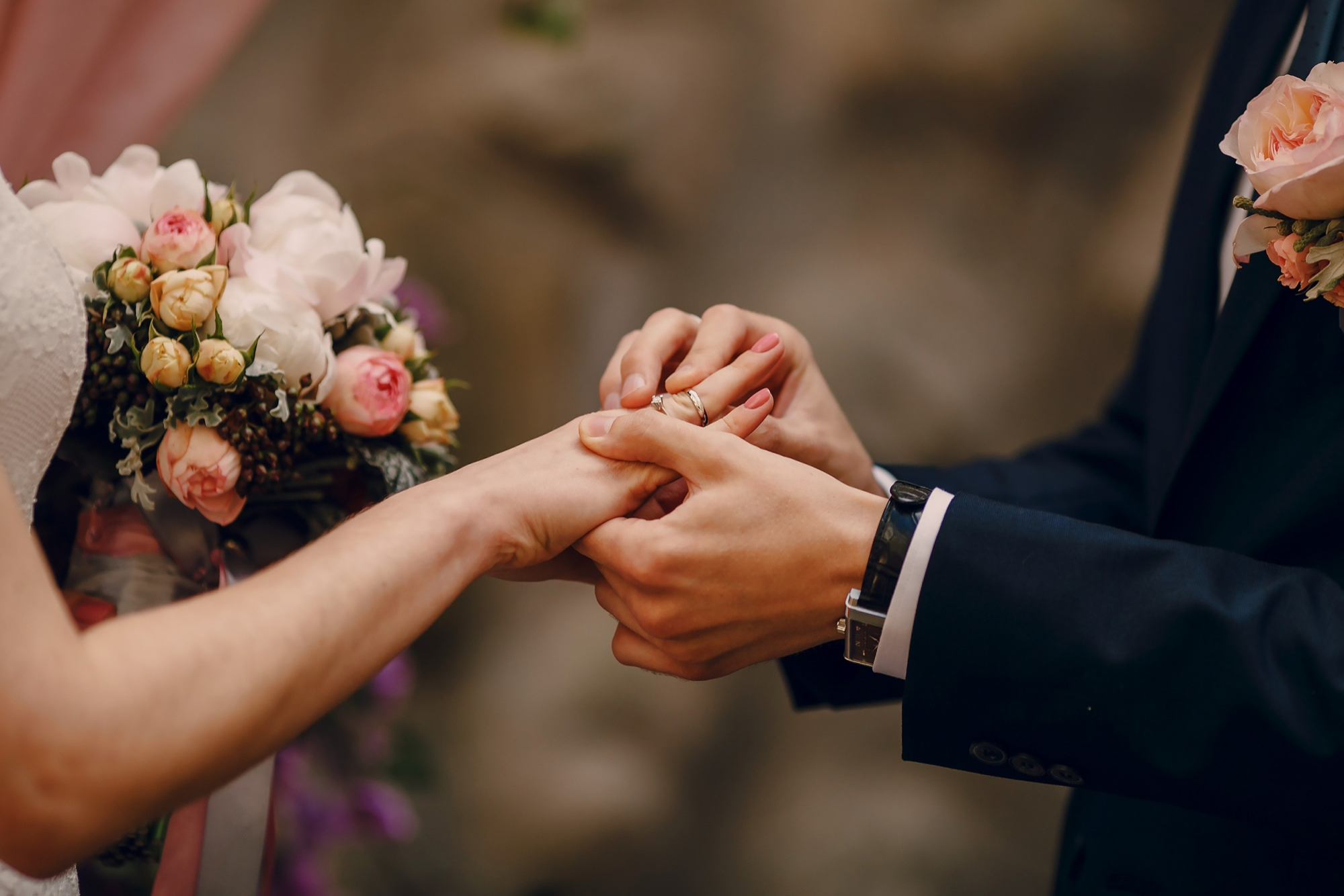
Andrew and I had a small wedding surrounded by people who genuinely supported us, and despite my parents’ absence, it was one of the happiest days of my life.
For the next eight months, I barely spoke to them. Losing that relationship hurt more than I admitted, but they’d made their choice, and I couldn’t change it.
Then, one evening, someone knocked on our door.
When I opened it, my father was standing there. I hadn’t seen him since before the wedding, and his serious expression immediately worried me.
Before I could ask why he’d come, Andrew walked into the hallway.
Dad looked at him for several seconds before his expression hardened.
Then he asked,
“Does my daughter know what you did to that family?”
For a moment, nobody moved. I remember the strange, suspended quality of that second, the refrigerator humming in the kitchen behind us, a car passing slowly on the street outside, the ordinary sounds of an ordinary evening continuing on as though my father hadn’t just said something that made the floor feel unsteady beneath me.
“What are you talking about?” I asked, looking between the two of them. “What family?”
Dad didn’t answer me. He kept his eyes fixed on Andrew, waiting, as though he expected my husband to confess something on the spot, standing in our own hallway in his sock feet, a dish towel still slung over one shoulder from where he’d been drying our dinner plates.
Andrew’s face had gone very pale. Not confused, I noticed, with a sinking feeling. Not the blank, bewildered look of someone accused of something he didn’t understand. He looked like someone who had just heard a name he’d been dreading for a long time.
“Come in,” Andrew finally said, his voice quiet, careful. “Please. Come in, and I’ll explain.”
“I’d rather you explain it to my daughter first,” Dad said. “Since apparently I’m the only one who’s bothered to actually look into who she married.”
“Dad,” I said, my voice sharper now, “you can’t just show up here after eight months of silence and say something like that and refuse to explain it. What is going on?”
My father finally looked at me, and something in his expression softened slightly, though not enough to erase the hardness underneath it. “I hired someone,” he said. “A private investigator. After the wedding, before you’d even come back from your honeymoon. I told myself I was doing my due diligence, the kind of due diligence you deserved before marrying someone this quickly, someone we knew almost nothing about.”
I felt something cold settle in my stomach. “You investigated my husband.”
“I investigated the man my daughter married without so much as introducing him to us properly first,” Dad said. “And I found something I think you deserve to know about, whether or not you want to hear it from me.”
I turned to Andrew. His eyes were wet, and his hands, I noticed, were trembling slightly at his sides, the same trembling I would later come to recognize, once I understood the whole story, as something he’d carried with him for years, something that surfaced whenever this particular subject threatened to come to the surface.
“Andrew,” I said, “what is he talking about?”
“Can we sit down,” Andrew said. “Please. All three of us. I don’t want to explain this standing in a hallway.”
We moved into the living room, an arrangement that felt absurdly formal given the tension crackling between the three of us, my father settling stiffly into the armchair by the window, Andrew and I sitting side by side on the couch, though I noticed he left more space between us than usual, as if bracing himself for me to pull away once I heard whatever he was about to tell me.
“I need you to understand something before I start,” Andrew said, looking at me rather than my father. “I should have told you this before we got married. I’ve known that for three years, honestly, since almost the beginning of us dating. I kept telling myself there would be a better time, a time when it wouldn’t feel like I was handing you something too heavy to carry alongside everything else in our relationship. I was wrong to wait this long, and I’m sorry for that, whatever else you think of me after tonight.”
“Just tell me,” I said, my heart pounding now, bracing myself for something I genuinely couldn’t have predicted.
Andrew took a long breath.
“When I was sixteen,” he said, “my father was driving me home from a family dinner. It was raining hard, the kind of rain where you can barely see the road in front of you, and my father had been drinking, more than I realized at the time, more than I think even he realized. I was in the passenger seat. We were maybe ten minutes from home when he ran a red light at an intersection, and hit another car broadside. A family car. A mother, a father, and their son, who was maybe eight years old at the time.”
I felt my breath catch, already understanding, in some inarticulate way, where this story was heading, and already understanding that it was going to be far more complicated, and far sadder, than anything I had braced myself for.
“The father in the other car died at the scene,” Andrew continued, his voice steady now, the practiced steadiness of someone who had told this story to himself many times in the privacy of his own head, even if he had rarely said it aloud to anyone else. “His name was Daniel Reyes. He was thirty-four. The mother, Carmen, survived, but she broke both legs and several ribs, and spent almost four months in the hospital and in rehabilitation afterward. Their son, Mateo, was in the back seat. He walked away with a concussion and a broken collarbone, but he watched his father die in the wreckage before paramedics could get him out.”
“Oh, God,” I whispered.
“My father was arrested that night,” Andrew said. “He was charged with vehicular manslaughter, driving under the influence, several other charges I don’t remember all the specifics of anymore. He eventually served four years in prison. I want to be honest that I’ve spent a long time being angry at him for what he did, and an even longer time being angry at myself, for reasons I’ll explain.”
“Why would you be angry at yourself,” I asked, though something in his tone already told me the answer was going to be complicated. “You were sixteen. You were a passenger.”
“Because I knew he’d been drinking before we left that dinner,” Andrew said, and here, finally, his voice cracked slightly, the composure he’d been holding onto beginning to fray. “I noticed. I remember noticing, actually, standing in my aunt’s kitchen watching him refill his glass a fourth time, and I remember thinking I should say something, offer to drive even though I only had my learner’s permit at the time, or call my mother to come pick us up instead. I didn’t say anything. I told myself I was probably wrong about how much he’d had, that he seemed fine, that I was being paranoid. I got in the car. And ten minutes later, a man was dead because I didn’t say the one sentence that might have stopped it.”
I reached for his hand instinctively, even amid my own shock and confusion, unable to stop myself from responding to the genuine pain in his voice.
“You were a child,” I said. “Andrew, you were sixteen years old. That is not your fault.”
“I’ve heard that from a lot of people over the years,” Andrew said. “My mother, my therapist, eventually. I understand it intellectually. But understanding something intellectually and actually believing it in your body are two very different things, and I don’t think I’ve ever fully managed the second one, not completely.”
He was quiet for a moment before continuing.
“After the accident, my father’s insurance covered some of the Reyes family’s immediate medical expenses, but it wasn’t nearly enough, especially once Carmen’s rehabilitation stretched on for months and she couldn’t work. My father was in prison. My mother was working two jobs just to keep our own household running, and there wasn’t money left over for restitution beyond what the court eventually ordered, which itself was a fairly small amount given how limited my father’s assets actually were. I started working the summer after the accident, whatever jobs I could find, and I started, quietly, without telling my mother at first, sending a portion of every paycheck to the Reyes family. Not because anyone required it of me legally. Because I genuinely didn’t know what else to do with the guilt I was carrying, and giving them something, anything, felt like the only action available to me that might actually mean something.”
“You were sixteen,” I said again, softer this time, beginning to understand the shape of what he was telling me. “You’ve been doing this since you were sixteen?”
“I’ve been doing some version of it ever since,” Andrew said. “It slowed down during college, obviously, when I had less income to spare, but I never stopped entirely. I picked up the waiting job specifically because restaurant work paid better in tips than most part-time jobs available to students, and because the hours let me still attend classes during the day. A significant portion of what I’ve earned every single year since I was sixteen has gone to the Reyes family, first as informal support while Carmen recovered, and later, once Mateo got older, as a contribution toward his education. I set up a small trust for him when I was twenty-two, once I’d finished my undergraduate degree and had slightly more financial stability. It isn’t much by your father’s standards, probably. But it’s meant something to them, I think. Carmen and I still talk, actually, every few months. She knows exactly who I am and what happened, obviously, and she’s told me more than once that she doesn’t blame me, that she’s watched me try to make something right for over a decade now in a way she never expected or required, and that she considers it, in her words, an act of genuine honor rather than obligation.”
I sat with all of this for a long moment, feeling several different emotions moving through me at once, grief for the Reyes family and the loss they’d suffered, a fierce, almost overwhelming tenderness toward Andrew for having carried this weight silently for so many years, and a growing, uncomfortable understanding of exactly what my father’s investigator must have found, and exactly how badly it must have been misread.
I turned to my father, who had been sitting silently through all of this, his expression unreadable.
“Dad,” I said, “is this what your investigator found? A connection between Andrew and a family named Reyes?”
“The report,” my father said carefully, “showed financial transfers, over a period of years, from Andrew to a woman named Carmen Reyes, connected to a fatal accident report from when Andrew was sixteen. It also showed that Andrew was a passenger in the vehicle at the time of the accident. The report I was given didn’t specify who had been driving. It simply flagged Andrew’s name, a fatality, ongoing payments to the victim’s family, and left me to draw my own conclusions.”
I felt something sharp move through me, understanding, all at once, the terrible, careless cruelty of what had actually happened. My father had received an incomplete report, filled in the most damning possible interpretation of it himself, and driven directly to our house to confront my husband with an accusation he hadn’t bothered to verify.
“You thought Andrew killed someone,” I said slowly, “and instead of asking him directly, calmly, like a reasonable person, you drove over here and ambushed him in our hallway.”
“I wanted to see his face when I asked,” my father said, though I noticed, for the first time since he’d arrived, something like uncertainty creeping into his voice. “I wanted to see whether he’d deny it, or explain it, or panic.”
“And what did you see,” I asked.
My father was quiet for a long moment, looking at Andrew, who had not moved from his spot on the couch beside me, who had, in fact, spent the last several minutes explaining, unprompted and with obvious pain, one of the most difficult chapters of his entire life to a man who had shown him nothing but contempt for the past eight months.
“I saw someone telling the truth,” my father finally admitted. “Even a difficult, complicated truth. I didn’t see someone panicking, or someone constructing an excuse on the spot. I saw someone who had clearly already spent a great deal of time thinking through exactly what happened and exactly how he felt responsible for it.”
“Because he has,” I said. “Because that’s who Andrew is, Dad. That’s exactly who he’s always been, every single day I’ve known him. You just never bothered to find out, because you’d already decided, the moment you learned he was a waiter, that there was nothing worth finding out.”
I want to pause the story here, because I think it’s important to describe what happened over the following several hours, since I believe the specific, uncomfortable honesty of that conversation mattered enormously to everything that came afterward.
My father asked, once the initial shock had settled somewhat, whether he could hear more of the story directly from Andrew, rather than simply the fragments the investigator’s report had given him. Andrew, to my surprise and, I think, my father’s as well, agreed without hesitation, seeming almost relieved at the prospect of finally telling the full story to someone in my family rather than continuing to carry it in silence.
“My father was released from prison when I was twenty,” Andrew continued, once we’d all settled again, my mother having called partway through and been convinced, reluctantly, to come over as well, so that the whole difficult conversation didn’t need to happen twice. “I want to be honest that our relationship never really recovered. I visited him a handful of times while he was incarcerated, mostly out of a sense of obligation rather than any genuine desire to see him, and after his release, we spoke maybe twice a year, brief, awkward phone calls that never really addressed what had actually happened that night. He passed away four years ago, a heart attack, relatively sudden. I flew back for the funeral, but I remember feeling, standing at his graveside, less grief than a kind of complicated, unresolved anger that I don’t think I’ve ever fully worked through, even now.”
“Why didn’t you tell me any of this,” I asked, unable to stop the question even amid everything else unfolding in the room. “Three years together, Andrew. We talked about everything. Why did this feel different?”
Andrew looked at me for a long moment before answering. “Because every time I imagined telling you,” he said, “I imagined you looking at me the way your father just did, before he understood the full story. I imagined you seeing the words ‘fatal accident’ and ‘ongoing payments to victim’s family’ and immediately assuming the worst, the way anyone reasonably might, before I’d had the chance to explain the actual context. I kept telling myself I’d find the right moment, but the right moment never felt like it existed, and the longer I waited, the more terrifying it became to imagine finally bringing it up. I’m not proud of that. I think, looking back, I let my own fear decide something that should have been your choice to make, whether or not to know this about me before we got married rather than eight months afterward, forced into the open by your father’s investigator instead of by my own honesty.”
I sat with that admission, feeling a complicated mixture of hurt and understanding. Part of me genuinely wished he had told me sooner, wished I hadn’t learned something this significant about my husband’s history through the accidental, clumsy intervention of my estranged father. But a larger part of me, the part that had spent three years watching Andrew’s genuine, consistent kindness, his patience, his quiet generosity toward strangers and friends alike, understood exactly why he had carried this particular story so carefully, so privately, for so long. This wasn’t a man hiding a crime. This was a man who had spent more than a decade trying, imperfectly but genuinely, to make amends for a night he hadn’t caused but had never stopped feeling responsible for.
“I’m not going anywhere,” I told him, taking his hand again, more firmly this time. “I wish you’d trusted me with this sooner. But I understand why it was hard, and nothing about what you’ve just told me changes how I feel about who you are. If anything, it explains a great deal about why you are who you are.”
My father, who had been listening to this exchange with an expression I hadn’t seen on his face in years, something that looked almost like shame, finally spoke again.
“I owe you an apology,” he said, looking directly at Andrew for the first time since arriving. “Several apologies, actually. I should never have hired someone to investigate you in the first place, without ever giving you the chance to simply tell me about yourself directly, the way any reasonable future father-in-law might have done before the wedding rather than skulking around behind your back afterward. And once I had that report in hand, I should have asked you directly, calmly, rather than showing up at your door prepared to condemn you based on half a story I never bothered to verify.”
“I appreciate you saying that,” Andrew said, though I noticed a careful reserve in his voice, an understandable unwillingness to simply forgive eight months of contempt and one deeply unfair accusation in the space of a single evening’s apology.
“I also owe you both an apology for missing your wedding,” my father continued, turning to me now. “I told myself I was protecting you from a mistake. I understand now that I was protecting my own vanity, my own vision of the life I’d imagined for you, rather than actually paying attention to the person you’d become or the man you’d chosen to build a life with.”
I felt tears forming, unexpectedly, at the specific, hard-won honesty of that admission. I had waited eight months for some acknowledgment from my parents, some sign that our estrangement mattered to them as much as it had mattered to me, and I hadn’t expected it to arrive wrapped in quite so much chaos, quite so much unnecessary hurt inflicted along the way.
“It’s not going to be that simple, Dad,” I said. “You can’t undo eight months of silence and one deeply unfair accusation with a single apology, however sincere. I need you to actually understand what you did, not just to me, but to Andrew, showing up here tonight prepared to believe the absolute worst about him without giving him the basic courtesy of asking first.”
“I understand that,” my father said. “I’m not asking for instant forgiveness. I’m asking for the chance to actually get to know my son-in-law properly, the way I should have done from the beginning, rather than continuing to let my own assumptions define who I believe he is.”
Before I describe what happened over the following weeks, I want to go back briefly to the years before any of this, to explain something about my own relationship with my parents that I think matters to understanding why that single evening hit me as hard as it did.
I was an only child, and I grew up in a house where achievement was treated less like an accomplishment and more like a baseline expectation. Report cards were reviewed the way other families might review a budget, with a kind of clinical attention to anything that fell short of an A. My father, in particular, had built his own business from almost nothing, starting as a junior salesman at a company he eventually came to own outright, and I think he genuinely believed, in some deep and unexamined way, that the sheer force of ambition was the only reliable predictor of a good life. He wasn’t a cruel father, not in the way some fathers are cruel. He came to every school play, every academic awards ceremony, every parent-teacher conference. But underneath all of that attendance was an unmistakable message, absorbed slowly over eighteen years of childhood, that love in our house was, at least partially, conditional on continuing to meet a certain standard.
My mother, for her part, had grown up genuinely wealthy, the daughter of a man who’d inherited rather than built his fortune, and I think she carried her own complicated relationship to money, a kind of anxious vigilance about status that I only came to fully understand once I was old enough to notice how carefully she tracked the professions and postcodes of everyone in her social circle, how quickly she could recite, from memory, exactly which of her friends’ children had married doctors or lawyers or, in one particularly celebrated case, a minor foreign diplomat.
I don’t say any of this to excuse what my parents eventually did, refusing to attend my wedding, treating Andrew with such immediate and unexamined contempt. I say it because I think it explains something about the particular kind of fear that had shaped both of them for decades before I ever met Andrew at all, a fear that comfort and security could vanish as quickly as they’d been acquired, and that marrying “well,” in the narrow, financial sense they’d always meant by that phrase, was the only reliable insurance against that vanishing.
I understood, intellectually, even in the depths of my anger toward them, that this fear didn’t come from nowhere. But understanding where a hurtful belief comes from doesn’t make it any less hurtful to be on the receiving end of it, and I want to be honest that the eight months of estrangement following our wedding were genuinely some of the loneliest of my life, made lonelier by the fact that everyone around me kept assuring me I’d done the right thing, that Andrew was clearly wonderful, that my parents would eventually come around, none of which made the actual, daily absence of my mother’s voice on the phone, my father’s presence at the milestones of my early marriage, any easier to bear in the moment.
I want to describe what happened over the following weeks, because I think the slow, sometimes halting process of actually rebuilding a relationship with my parents mattered as much as that single dramatic evening did.
My mother, who had arrived partway through the conversation and largely sat listening in stunned silence, called me the following morning, her voice thick with an emotion I hadn’t heard from her in years.
“I’ve been thinking all night about the wedding,” she told me. “About what we said to you, about throwing your life away. I keep thinking about everything Andrew told us last night, everything he’s apparently been quietly doing since he was sixteen years old, and I keep comparing it to what your father and I actually valued when we decided he wasn’t good enough for you. We valued the wrong things entirely. We valued a career title and an income bracket, and we never once asked whether the person attached to those things was actually kind, actually principled, actually someone who would treat you well for the rest of your life.”
“He is all of those things, Mom,” I said. “He always has been. You just never gave yourselves the chance to see it.”
“I know,” she said. “And I’m ashamed of that, genuinely. I think your father is too, even if he doesn’t always know how to say it directly.”
I want to be honest that rebuilding trust with my parents, particularly with my father, was not a quick or entirely comfortable process, and I think it would be dishonest to suggest that a single evening of confession and apology instantly repaired eight months of genuine hurt. There were several difficult conversations over the following weeks, moments where old resentments resurfaced, moments where I found myself, unexpectedly, defending Andrew all over again against some smaller, subtler version of the same old judgment, a passing comment from my father about career trajectories, an offhand remark from my mother about financial planning that carried, underneath it, the same old assumptions about what kind of life was actually worth building.
But there was also, gradually, genuine progress. My father began inviting Andrew to lunch, just the two of them, ostensibly to discuss business, though I suspected, from the way Andrew described these lunches afterward, that my father was using them as an opportunity to actually get to know him as a person rather than as a category. I remember Andrew coming home from one such lunch, several weeks after that first difficult evening, looking genuinely moved.
“Your father asked me today,” Andrew told me, “whether I’d ever considered getting back in touch with Mateo directly, rather than just managing things through Carmen. He said it in this very careful, almost hesitant way, like he wasn’t sure it was his place to suggest it. And then he told me, completely unprompted, that he thought what I’d done for that family over the years was one of the most genuinely admirable things he’d ever heard about, and that he was ashamed it had taken an investigator’s report to actually learn who his son-in-law was.”
“What did you say,” I asked.
“I told him I actually had thought about reaching out to Mateo directly,” Andrew said. “He’s nineteen now, starting his second year of college on partial scholarship, using some of the trust money I set up for him toward tuition. Carmen’s mentioned, more than once, that he’s curious about me, that he’s expressed some interest in actually meeting the person who’s supported his education all these years, though he was too young to remember much about the accident itself directly. I think I’ve been putting it off because I’m not sure how to have that conversation, how to actually sit across from him and explain everything without it feeling like I’m asking for something from him, gratitude or forgiveness or absolution I have no right to ask for.”
“Maybe he’s not looking to give you any of those things,” I suggested gently. “Maybe he just wants to actually know you, the way people who’ve been quietly connected to each other’s lives for over a decade eventually want to know each other properly.”
I want to describe what happened when Andrew finally did meet Mateo, several months after that difficult evening with my father, because I think it represents one of the most genuinely moving moments of that entire year for both of us.
Carmen arranged the meeting, at a coffee shop partway between our city and the town where she and Mateo still lived, a careful, neutral space that felt appropriately low-stakes for a conversation that carried, underneath its ordinary coffee-shop trappings, an enormous amount of unspoken weight. I came with Andrew, though I sat at a separate table nearby, understanding that this particular conversation needed to happen primarily between the two of them, with Carmen present as a kind of steadying presence for her son.
I watched from a distance as Andrew stood when Mateo arrived, a tall, serious-looking young man with his mother’s dark eyes, and I watched the two of them shake hands somewhat stiffly before sitting down together, Carmen settling beside her son with the quiet, protective attentiveness of a mother who had spent years carefully managing this particular relationship on her son’s behalf.
I couldn’t hear most of what was said, and I’ve never asked Andrew for a complete transcript of that conversation, understanding that some of it belonged only to the two of them. But Andrew told me afterward, on the drive home, some of what had passed between them.
“He asked me what my father was like,” Andrew said, staring straight ahead at the road, his voice carrying a rawness I rarely heard from him. “Not accusingly. Just curious, I think, wanting to understand something about the man who’d caused his father’s death, beyond simply the facts of the accident itself. I told him honestly, that my father struggled with drinking for most of his adult life, that I don’t think he ever fully processed his own guilt over what happened, that we never really repaired our relationship before he died. Mateo listened to all of it very carefully, and then he told me something I wasn’t prepared for.”
“What did he say,” I asked.
“He said he’d spent years being angry at an idea rather than an actual person,” Andrew said. “Angry at ‘the drunk driver’ as this abstract, monstrous figure, without ever really thinking about the fact that this abstract figure had a son who was sitting in the car too, a scared sixteen-year-old who’d watched the same crash happen and had spent every year since trying to make some kind of amends for it. He said meeting me actually helped him, in a strange way, separate his anger at what happened from any lingering resentment toward my father’s family as a whole. He said he doesn’t think he ever really resented me specifically, not once he understood, from his mother, everything I’d quietly done over the years. But actually meeting me, actually hearing me explain it directly, made something feel more resolved than it had before.”
“How do you feel,” I asked, reaching over to take his hand as he drove.
“Lighter,” Andrew admitted. “Genuinely lighter, in a way I wasn’t expecting. I think some part of me had been braced for that meeting to go badly for over a decade, had been avoiding it specifically because I couldn’t predict how it would go. Having it actually happen, and having it go as well as it did, feels like something has finally been allowed to close, even if I don’t think the guilt itself ever fully disappears.”
I also want to describe a conversation I had with Andrew’s mother, Linda, during this same stretch of weeks, because I think it added an important layer of understanding I hadn’t fully had before.
Linda lived several hours away, in the same small town where Andrew had grown up, and though we spoke regularly by phone, I hadn’t seen her in person since our small wedding, where she’d been, by a wide margin, the most joyful person in the room, dancing with nearly every guest and crying happily through both the vows and the toasts. I drove out to visit her not long after that difficult evening with my father, partly to process what I’d learned with someone who had lived through the entirety of it alongside Andrew, and partly, I think, because I needed to hear the story again from a different angle, to make sure I fully understood everything my husband had carried for so long.
“I remember the exact moment he told me he was going to start sending money to Carmen,” Linda told me, sitting across from me at her small kitchen table, a cup of tea going cold between her hands. “He was sixteen, and he’d just gotten his first paycheck from a summer job bagging groceries, and he came home and told me he wanted to put half of it, right then, toward whatever the Reyes family needed. I remember trying to explain to him that he wasn’t legally responsible for anything, that this was his father’s burden to carry, not his. He looked at me and said, ‘Mom, I was in the car. I knew something was wrong and I didn’t say anything. I have to do something or I don’t know how I’m supposed to keep living with myself.’ I was so frightened for him, hearing a sixteen-year-old talk that way. I worried, for a long time, that the guilt would swallow him whole, that he’d spend his entire life punishing himself for something that was fundamentally his father’s doing and not his own.”
“Did it,” I asked. “Swallow him, I mean. Before I came along.”
Linda considered the question seriously before answering. “I think it came close, some years,” she said. “There were periods, especially right after his father’s release from prison, when I watched Andrew grow very quiet, very inward, working himself almost to exhaustion between school and work and whatever additional shifts he could pick up. I used to worry he was punishing himself through overwork rather than actually healing from what happened. But something changed, gradually, over the years, and I think a great deal of that change happened once he met you.”
“Me?” I said, surprised. “I didn’t even know about any of this until a few weeks ago.”
“You didn’t need to know the specifics to change something in him,” Linda said. “I watched him, over the three years you two were together before the wedding, become steadier, lighter, more willing to actually enjoy his own life rather than treating every good thing that happened to him as something he needed to earn through continued sacrifice. I think loving you, and being loved by you in return, taught him something his guilt had never quite allowed him to believe on his own, that he was allowed to have good things in his life without that goodness canceling out or minimizing what happened to the Reyes family. I think, if I’m honest, that’s part of why he waited so long to tell you the full story. Some part of him was afraid that once you knew, you’d see him the way he sometimes still saw himself in his darkest moments, as someone permanently defined by another person’s accident, rather than as the man he’d actually built himself into in the years since.”
I left that visit with a fuller, more tender understanding of my husband than I think I’d ever had before, even after three years of dating and eight months of marriage. I understood, more clearly now, the particular quality of patience and gentleness he brought to even small, ordinary moments in our life together, a quality I now recognized as having been forged, at least in part, in the fire of an experience most sixteen-year-olds would never have to carry.
I want to describe the following Thanksgiving, nearly a year after that first chaotic evening when my father showed up at our door with an accusation instead of an apology, because I think it captures, more than any other single moment, how far our family had actually come.
My parents hosted that year, the first time since our wedding that we’d all gathered together as a full family, and my father, in a gesture that surprised me more than almost anything else that entire year, had invited Carmen and Mateo as well, having grown, over the intervening months, into a genuine, if somewhat unlikely, friendship with Carmen through his own occasional check-ins with her, ostensibly on Andrew’s behalf but increasingly, I suspected, simply because he’d come to respect her resilience and her grace.
I remember standing in my parents’ kitchen that afternoon, watching my father carve the turkey while Andrew and Mateo set the table together, easily now, the stiffness of that first coffee shop meeting long since faded into something more like an easy, if still occasionally careful, friendship. I remember my mother pulling me aside at one point, watching the same scene with an expression of quiet wonder.
“I keep thinking about what almost didn’t happen,” she told me. “If your father hadn’t shown up that night the way he did, badly as he handled it, we might never have actually learned who Andrew really was. We might have just kept assuming the worst about him from a distance, the way we’d been doing for years already, and none of this,” she gestured toward the dining room, toward Mateo laughing at something Andrew had just said, “none of this would have ever happened.”
“I wish Dad had handled it better,” I said. “I wish none of you had needed an accusatory ambush in our hallway to finally take Andrew seriously.”
“I know,” my mother said. “I think your father knows that too, even if he doesn’t always say it directly. But I also think, sometimes, healing arrives through the door it actually finds, rather than the door we would have preferred it to use, and I’ve stopped trying to wish this particular story had unfolded any differently than it did, given where it’s actually brought all of us.”
I think about that entire year often now, several years removed from the evening my father stood in our hallway and asked Andrew, with such certainty in his own judgment, whether I knew what he’d done to that family. I think about how close I came, in the confusion and hurt of that first terrible moment, to believing the very worst interpretation of a story I didn’t yet understand, and how grateful I remain that Andrew trusted me enough, even in that difficult, unplanned moment, to tell me the complete truth rather than retreating further into the silence he’d maintained for so many years.
I think, too, about the particular unfairness of how that truth finally emerged, forced into the open not by Andrew’s own timeline or comfort but by my father’s clumsy, well-intentioned but genuinely hurtful intervention. I’ve made my peace with that unfairness, mostly, though I still occasionally find myself wishing Andrew had felt safe enough, sooner, to simply tell me himself, in his own time, rather than having the story dragged into daylight by an outside investigation neither of us had asked for.
But I also think, with real and growing gratitude, about everything that particular difficult evening ultimately made possible. My parents finally, actually knowing my husband, rather than simply the category they’d initially assigned him. Andrew finally releasing some of the isolating weight he’d carried alone since he was sixteen years old, finding, in Mateo especially, a kind of resolution he hadn’t realized he was still waiting for. And our own marriage, if anything, made stronger by the experience of surviving that unexpected crisis together, of learning that whatever difficult truths either of us might eventually need to share, we could actually trust each other to meet them with understanding rather than immediate judgment.
Andrew still works some evenings at the restaurant where I first met him, though he’s also, in the years since, finished a graduate degree in social work, drawn, he’s told me more than once, by everything he learned during his own long process of trying to make amends, toward helping other families navigate the aftermath of similarly devastating losses. My father, for his part, has become something of an unlikely advocate for Andrew’s work, occasionally connecting him with resources or contacts through his own business network, a small but meaningful gesture of the respect he once withheld so completely.
Last month, Mateo graduated from college, and I watched Andrew cry, genuinely and without embarrassment, sitting in the audience beside Carmen as her son crossed the stage to collect his diploma, a young man whose life had been shaped, in ways both devastating and, eventually, quietly redemptive, by a rainy night more than a decade earlier that none of us had been present for but all of us, in our different ways, had spent years learning to carry forward.
“He’s going to be a teacher,” Andrew told me afterward, wiping his eyes, his voice thick with an emotion that had nothing left in it of guilt and everything, finally, of something closer to pride. “He wants to teach high school history. He told me, actually, that he wants to eventually teach a unit on restorative justice, on what accountability actually looks like when it’s done right, rather than just punitively. He said I was part of what made him believe that kind of accountability was actually possible.”
I squeezed his hand, watching Mateo make his way through the crowd toward us, his cap still slightly crooked from where he’d adjusted it too many times during the ceremony, his smile, when he reached us, wide and unguarded in a way that made it easy, finally, to see him simply as a young man beginning his life rather than as a symbol of anyone’s guilt or grief.
“Congratulations,” Andrew told him, pulling him into a brief, warm hug that would have been unthinkable, I realized, watching them, at that first stiff coffee shop meeting years earlier.
“Thank you,” Mateo said, “for everything. Not just the money. I mean that, genuinely. For actually showing up, once you finally did.”
I think about that phrase often, actually showing up, once you finally did, because I think it captures something essential about everything our family went through that year, and everything we’re still, in smaller ways, continuing to work through even now. None of us showed up perfectly, or on the timeline we might have chosen if given the choice. My father showed up eight months too late, and in exactly the wrong way, at exactly the wrong moment, forcing open a door that should have been opened with far more care. Andrew waited years longer than he probably should have to share the full truth of his own history with the people who loved him most. And I spent eight months allowing a genuine, painful estrangement from my parents to calcify into something I told myself I’d simply learned to live without.
But eventually, imperfectly, all of us did actually show up, for each other and for the people whose lives had been permanently altered by a single terrible night none of us could undo. I’ve come to believe that this, more than any tidier, more immediate version of reconciliation, is probably the most honest kind of healing available to imperfect people carrying genuinely difficult histories. Not a clean resolution arriving all at once, but a slow, sometimes clumsy, ultimately sincere process of actually choosing, again and again, to keep showing up for the people who matter, even after we’ve failed to do so as quickly or as gracefully as we might have wished.
My father and Andrew still have lunch together most months, and though their relationship carries, I think, a permanent undercurrent of the mistake my father made that first difficult evening, it has also grown, genuinely, into something neither of us could have predicted the night my father stood in our hallway certain he already knew exactly who my husband was. I watch them sometimes, at family dinners, deep in conversation about something entirely unrelated to any of what happened that year, business or sports or some minor disagreement about politics, and I feel a quiet, hard-won gratitude for how far all of us have actually come, from a wedding my parents refused to attend to a family, however imperfect, however marked by the mistakes we all made along the way, that has genuinely found its way back to each other.
Andrew and I are expecting our first child now, a fact that has brought its own complicated mixture of joy and reflection, given everything our family has survived together over these past several years. My mother has already begun, somewhat overzealously, planning a nursery she insists on decorating herself, and my father, in a gesture that still occasionally catches me off guard with its tenderness, has started a small savings account for the baby, quietly mentioning, during one recent dinner, that he wants to make sure this grandchild grows up understanding that love and worth were never actually about the size of anyone’s bank account, whatever mistaken lessons he himself had once tried to teach me about exactly that.
“I got it wrong,” he told me that evening, his hand resting gently on my still-flat stomach as though he could somehow will that lesson directly into the next generation before they’d even arrived. “I got it badly wrong, for a long time, about what actually makes someone worth marrying, worth loving, worth building a life around. I don’t want my grandchild growing up with the same mistaken priorities I once had. I want them to understand, from the very beginning, that character is the only inheritance that actually matters.”
I think about Andrew, waiting tables through college to send money to a family he’d never even met before that terrible night, quietly building a trust fund for a boy who grew up to become a teacher, sitting across from my father at lunch every month with a patience and grace that never once curdled into the resentment he would have been entirely justified in holding onto. I think about everything he taught our entire family, not through any grand speech or dramatic confrontation, but simply through the quiet, consistent accumulation of doing the right thing, year after year, long before anyone was watching or keeping score.
And I think, finally, about that terrible, chaotic evening when my father stood in our hallway and asked the wrong question in exactly the wrong way, and how, against every reasonable expectation, it became the unlikely beginning of everything good that followed. I don’t think I’ll ever fully forgive the manner of how that truth emerged, the ambush, the accusation, the eight months of unnecessary hurt that preceded it. But I have made my peace, genuinely and completely, with where it ultimately led all of us, toward a family healed more thoroughly than I ever would have believed possible on the night my father first refused to walk me down the aisle because he’d decided, based on nothing more than a job title, that the man I loved wasn’t worth truly knowing.
He was wrong about that, more completely wrong than he could have imagined. And I am endlessly grateful, now, that he eventually found his way, however clumsily, however painfully, to finally understanding exactly how wrong he’d been.
Sometimes, late at night, when I can’t sleep, I find myself replaying that evening in the hallway, the exact sound of my father’s voice asking his terrible question, the exact way Andrew’s face had gone pale before he’d said a single word in his own defense. I think about how easily that moment could have gone differently, if Andrew had reacted with anger instead of openness, if I had believed the worst before hearing the whole story, if my father had simply left after making his accusation instead of staying to actually listen. I think about how many marriages, how many families, might have shattered permanently under the weight of a moment like that, a devastating question asked in exactly the wrong way, an old wound reopened without warning or context.
I don’t think our family survived that evening because we were somehow wiser or stronger than anyone else might have been in our position. I think we survived it because Andrew, despite every reason he might have had to protect himself with silence or defensiveness, chose honesty instead, even knowing how badly it might be received. I think we survived it because I chose, in that critical first moment of shock and confusion, to ask questions rather than assume answers, to give the man I loved the same patience and good faith he had always shown me. And I think we survived it because my father, for all his considerable flaws and all the damage his assumptions had already caused, was still capable, in the end, of recognizing the truth when it was finally placed in front of him, and of admitting, painfully but sincerely, how badly he had misjudged the situation.
I’ve thought often, too, about Carmen and Mateo, about the particular grace it must have taken for them to accept, and eventually even welcome, a continued relationship with the son of the man responsible for the worst night of their lives. I don’t think their forgiveness was ever owed to Andrew, and I don’t think it would have been wrong of them to want nothing to do with our family at all, given everything they lost. That they chose otherwise, that they allowed Andrew’s years of quiet, consistent effort to actually mean something rather than dismissing it as an inadequate substitute for what could never be returned to them, has taught me more about the actual mechanics of forgiveness than almost anything else I’ve witnessed in my life. It isn’t a single decision made once and then finished. It’s something rebuilt, gradually, through years of small, consistent actions, the same way trust itself is built, one demonstrated kindness at a time.
My daughter was born in the spring, a healthy, loud, remarkably strong-willed little girl we named Elena, after Andrew’s grandmother, a woman he barely remembered but whose name, he told me, had always felt to him like a kind of quiet strength worth passing forward. My father was in the waiting room the entire day of her birth, pacing, according to my mother, in a way she hadn’t seen from him since I was born myself, and when he finally held his granddaughter for the first time, I watched something in his face soften permanently, some last vestige of the rigid, achievement-oriented certainty that had once cost us eight months of each other’s lives.
“She’s going to know exactly who her father is,” he told me that day, still holding Elena carefully against his chest, “and exactly what kind of man he’s always been, from the very beginning. I’m going to make sure of that, even if it means telling her the story myself, someday, when she’s old enough to understand it. I don’t ever want her growing up with the same mistaken ideas about worth that I very nearly passed down to you.”
I believed him, watching him then, in a way I don’t think I would have been able to believe him a year earlier, before everything that difficult, chaotic evening had ultimately set into motion. Some doors, I’ve come to understand, only open through the force of a crisis none of us would have chosen. But once they’re open, what actually walks through them, the honesty, the accountability, the slow and genuine work of finally seeing each other clearly, is worth almost any amount of difficulty it took to get there.
Andrew still keeps, tucked into the top drawer of his desk, a single photograph Carmen gave him years ago, a picture of Daniel Reyes, the father lost that rainy night before any of the rest of this story had even begun, laughing at some long-forgotten joke, Mateo perched as a toddler on his shoulders. Andrew told me once that he keeps it there not out of guilt anymore, not primarily, but as a reminder of exactly why the life he’s built, the marriage, the eventual reconciliation with my parents, the career helping other families navigate similar tragedies, matters as much as it does. A reminder, he said, that a single terrible night doesn’t have to be the only story anyone tells about what came after it, if enough people are willing to keep choosing honesty, and patience, and the slow, unglamorous work of actually showing up for one another, for as long as it takes.
I think that’s the truest thing I can say about everything our family survived, and everything we ultimately built from the wreckage of that single, unexpected question asked in our hallway one ordinary evening eight months into a marriage my parents had once refused to bless. Not that everything worked out perfectly, or quickly, or without real and lasting cost. But that it worked out at all, that genuine understanding and reconciliation proved possible even after such a painful beginning, remains, to this day, the single thing I’m most grateful for in my entire life.

Sophia Rivers is an experienced News Content Editor with a sharp eye for detail and a passion for delivering accurate and engaging news stories. At TheArchivists, she specializes in curating, editing, and presenting news content that informs and resonates with a global audience.
Sophia holds a degree in Journalism from the University of Toronto, where she developed her skills in news reporting, media ethics, and digital journalism. Her expertise lies in identifying key stories, crafting compelling narratives, and ensuring journalistic integrity in every piece she edits.
Known for her precision and dedication to the truth, Sophia thrives in the fast-paced world of news editing. At TheArchivists, she focuses on producing high-quality news content that keeps readers informed while maintaining a balanced and insightful perspective.
With a commitment to delivering impactful journalism, Sophia is passionate about bringing clarity to complex issues and amplifying voices that matter. Her work reflects her belief in the power of news to shape conversations and inspire change.