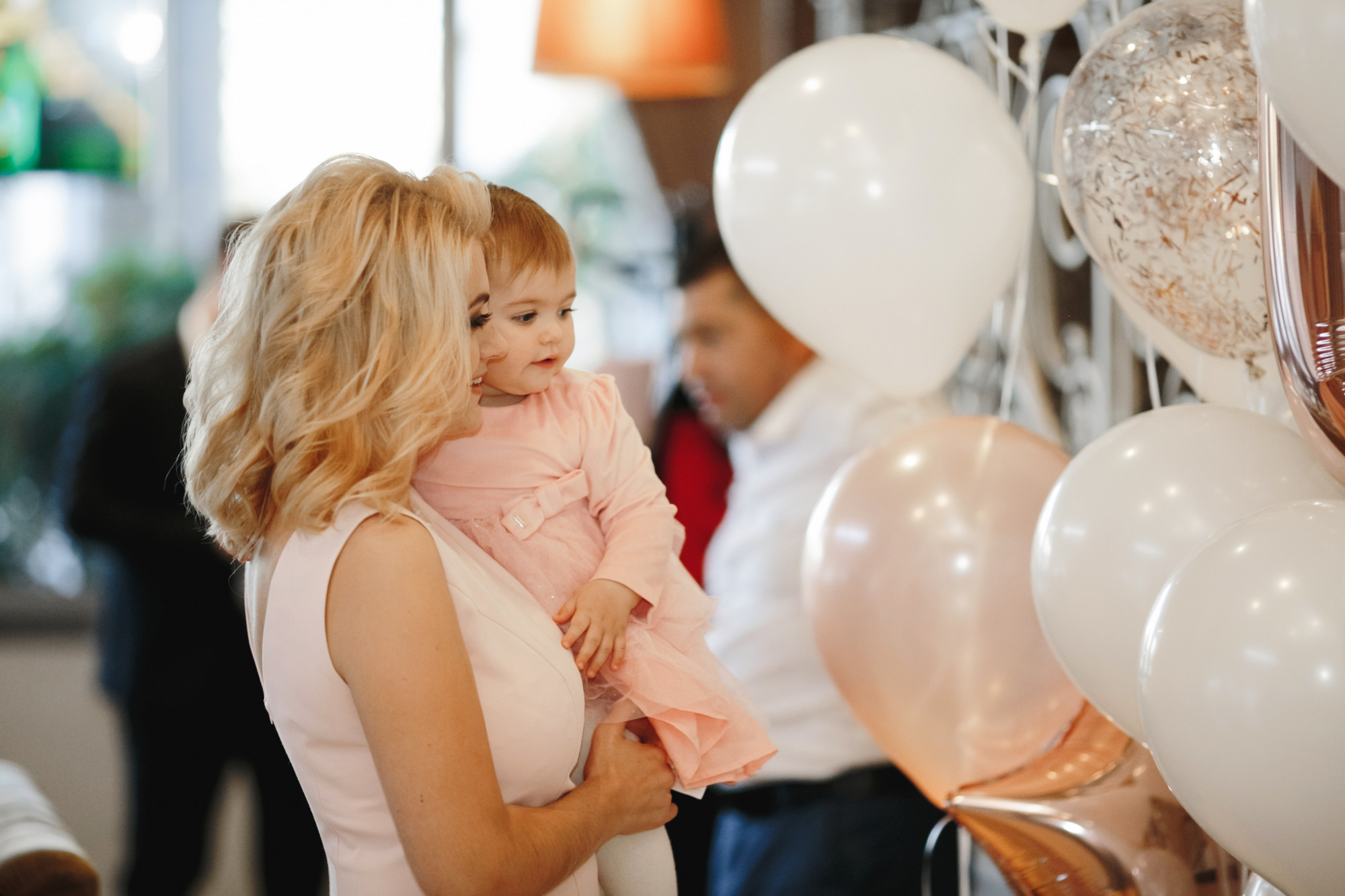
After years of struggling to get pregnant, Lucas and I were overjoyed when we finally learned we were expecting.
He has been incredible throughout my pregnancy, constantly reminding me how beautiful I am and never making me feel insecure about my changing body.
Honestly, I haven’t even gained much weight.
I was naturally petite before pregnancy, and now I simply have a healthy baby bump that my doctor says is perfectly normal.
But my mother-in-law, Brenda, has always been obsessed with appearances.
And ever since I became pregnant, she’d found every opportunity to comment on my body.
I usually ignored her to keep the peace.
I want to describe, before returning to the shower itself, what those months of comments actually felt like to live through, because I think it matters to understanding why my mother eventually reached the breaking point she did. Brenda had a particular gift for delivering her observations in a tone that always sounded, on the surface, like genuine concern, which made them almost impossible to call out directly without appearing oversensitive or ungrateful. At a family dinner during my second trimester, she’d reached over, uninvited, and patted my stomach while remarking to the table at large that I was “really letting things go” for someone who used to be “so disciplined” about her figure. At my own baby registry appointment, which she’d insisted on attending despite my gentle attempts to keep it to just my mother and me, she’d suggested, while I was trying on nursing bras, that I should “get ahead of things now” before the baby weight became “permanent.”
Lucas heard some of these comments directly and brushed them off as his mother simply being clumsy rather than cruel, telling me, more than once, that she’d always been like this, that it wasn’t personal, that I shouldn’t let it get to me. I understand now, looking back, that this particular brand of reassurance, however well-intentioned, asked me to carry the emotional weight of his mother’s behavior entirely alone, absorbing it quietly so that he wouldn’t have to confront the more uncomfortable question of why his mother behaved this way in the first place, or what it might actually be costing the people around her.
I confided in my own mother about it more than once during those months, usually in the kind of exhausted, tearful phone call that comes after a particularly difficult family gathering, and I remember her listening carefully each time, asking careful, pointed questions about exactly what Brenda had said and how, questions I understand now were probably her quietly building a fuller picture of a pattern she suspected went considerably deeper than ordinary in-law friction.
“You don’t have to just take this,” my mother told me, during one of these calls, a few weeks before the shower. “I know you don’t want to cause problems in your marriage. But there’s a difference between being gracious and simply absorbing harm indefinitely because confronting it feels uncomfortable.”
I told her, at the time, that I appreciated her concern but that I genuinely believed things would improve once the baby arrived, once Brenda had something else to focus her attention on besides my changing body. I understand now how much my mother must have already suspected, by that point, that this particular pattern of behavior wasn’t going to simply resolve itself with the arrival of a grandchild, and I understand, too, that she was likely already deciding, in the back of her mind, exactly how far she was willing to let things go before she intervened directly.
Then came my baby shower.
My mom had spent weeks decorating our backyard with flowers, and with around fifty guests gathered to celebrate, everything felt perfect.
Until Brenda decided to give a toast.
She stood up, raised her glass, and made sure everyone could hear her.
“Here’s to the baby,” she began. “And a special toast to my daughter-in-law. Let’s hope you finally stop eating for two after today and hit the gym soon. Otherwise, my son is going to be incredibly embarrassed to be seen with you.”
The entire backyard went silent.
I could feel tears burning behind my eyes.
Lucas looked furious and was about to say something when my mom suddenly stood up.
She walked right up to Brenda, wearing a dangerously sweet smile.
The crowd held its breath.
My mom didn’t shout. She just leaned in and spoke softly, right into Brenda’s face as it became whiter with every word.
I couldn’t hear most of it from where I sat, my heart pounding too loudly in my own ears to make out anything beyond fragments. But I caught the last sentence clearly, because my mother made absolutely certain Brenda heard it, low and steady and unmistakable.
“You can sit down and apologize to my daughter right now,” my mother said, “or I can say Renee’s name out loud in front of every single person in this backyard. Your choice, Brenda.”
I watched the color drain completely from Brenda’s face, watched her glass tremble in her hand, watched something that looked almost like panic flash across features that had, moments earlier, been arranged into that same smug, superior expression she always wore whenever she was delivering one of her carefully aimed insults.
“How dare you,” Brenda whispered, though there was no real force behind it, just a kind of desperate, cornered fear.
“I dare because somebody finally should,” my mother said, still in that same low, controlled voice. “You’ve spent years pretending that part of your life doesn’t exist. I’m giving you exactly one chance to leave with whatever dignity you have left, or I can make sure everyone here understands exactly what kind of mother you actually are.”
Brenda set her glass down on the nearest table so abruptly that champagne sloshed over the rim, and without another word, without even glancing at Lucas, she turned and walked briskly across the lawn, through the side gate, and out to her car. I remember the specific, strange silence that followed, fifty guests frozen in various stages of shock, my mother calmly returning to her seat as though she’d simply commented on the weather, and Lucas standing beside me with an expression I had never seen on his face before, something between confusion and a dawning, painful understanding.
“Mom,” Lucas said, his voice unsteady, “what did you just say to her?”
I turned to look at him, registering, for the first time, that whatever secret my mother had just wielded like a blade wasn’t something she’d invented on the spot to frighten Brenda into submission. It was something real. Something Lucas himself seemed to recognize, even if he clearly hadn’t expected to hear it spoken aloud at his own wife’s baby shower.
“Who is Renee?” I asked, looking between my husband and my mother, feeling a strange, vertiginous sensation, as though the ground beneath this celebration had just shifted in some way I didn’t yet understand.
Lucas didn’t answer right away. He sat down heavily in the chair beside me, running both hands through his hair, and for a long moment he simply stared at the grass, as though gathering the strength to say something he’d clearly spent years avoiding.
“Renee is my older sister,” he finally said. “I haven’t spoken to her in eleven years.”
I stared at him, feeling a fresh wave of shock layer itself on top of everything else that had already happened that afternoon. “You have a sister? Lucas, we’ve been together for six years. You’ve never once mentioned a sister.”
“I know,” he said quietly. “I know how that sounds. I should have told you a long time ago. I think I convinced myself it was easier not to, the same way I convinced myself it was easier to just tolerate my mother’s comments about your weight rather than actually confronting what they reminded me of.”
I want to describe what happened over the following hour, because I think the way that entire baby shower dissolved into a difficult, overdue family conversation mattered enormously to everything that came afterward.
Most of the guests, sensing the shift in the atmosphere, began quietly gathering their things and making their exits, murmuring apologetic goodbyes and awkward congratulations as they filed out through the side gate, leaving behind a scattering of half-finished plates and wilting floral centerpieces that had, only an hour earlier, represented the happiest celebration of my pregnancy. My mother stayed. Lucas’s father, a quiet, gentle man named Walter who had said almost nothing throughout the entire toast and its aftermath, stayed as well, sitting with his hands folded in his lap, looking, I thought, almost relieved that something had finally cracked open after what must have been years of carefully managed silence.
“I think it’s time we all actually talked about this,” my mother said, once the last guests had gone and it was just the four of us, plus Walter, sitting amid the wreckage of what should have been an entirely joyful afternoon.
“How do you even know about Renee,” Lucas asked, turning to my mother with an expression that mixed genuine confusion with something like wary hope. “We’ve never met before today, not properly, not outside of a couple of family dinners. How would you possibly know anything about my sister?”
My mother was quiet for a moment, and I watched her consider how much to say, the same careful weighing I’d seen in her my entire life whenever she was deciding how to deliver difficult news gently.
“I need to tell you both something,” she said, “that I probably should have mentioned before now, though I want you to understand I’ve been keeping this particular confidence for reasons that felt important to me at the time. Fourteen years ago, I was working as a nurse in the eating disorder recovery unit at Fairview Behavioral Health. I treated a patient there for almost seven months, a teenage girl who’d been admitted in critical condition, severely malnourished, her heart function so compromised that the doctors weren’t initially certain she was going to survive the first few weeks of treatment. Her name was Renee Whitfield.”
I felt my breath catch, understanding, even before my mother finished, exactly where this story was heading.
“Whitfield is Brenda’s maiden name,” Lucas said slowly. “Renee kept it, after everything happened. She didn’t want anything else connected to Dad’s last name, or to any of us, once she left.”
“I didn’t know, at the time, that she was your sister,” my mother continued. “I only learned that recently, actually, when I finally met your parents properly at your engagement dinner two years ago, and Brenda mentioned, in passing, a daughter she rarely spoke to who lived out of state. Something about the way she said it, dismissively, almost irritably, made me curious enough to ask a few gentle questions afterward. Once I put together the timeline, her age, the general details Brenda mentioned about her estrangement, I became fairly certain I’d once cared for this same young woman during one of the most dangerous periods of her life.”
Walter, who had been silent throughout this entire exchange, finally spoke, his voice rough with an emotion he seemed to be working hard to control. “Renee was sixteen,” he said. “Brenda had always been particular about her appearance, about all of our appearances, really, but it got worse once Renee started developing, once she started looking less like a little girl and more like a young woman. Brenda made comments, the kind of comments she’s apparently been making about you,” he glanced at me, his expression pained, “for years before Renee ever showed any signs of trouble. About her weight. About what she ate at family dinners. About how she’d ‘let herself go’ compared to how thin she’d been as a child. I should have said something sooner. I told myself it was just Brenda being Brenda, the same way I’ve apparently kept telling myself that for the past thirty years about everything else.”
“By the time we realized how serious it had become,” Walter continued, “Renee was already dangerously ill. We found out later, once she was finally in treatment and willing to talk to a therapist, that she’d been restricting food since she was fourteen, that she’d developed elaborate strategies to hide how little she was actually eating, wearing baggy clothes, claiming she’d already eaten before family meals, exercising secretly for hours after everyone else had gone to bed. She collapsed at school one afternoon, during gym class, and was rushed to the hospital, where the doctors told us, in no uncertain terms, that she was closer to permanent organ damage than any of us had understood.”
I felt tears forming, imagining this entire hidden chapter of my husband’s family, a sister I’d never known existed, nearly dying from an illness that had apparently been fed, quite literally, by the same kind of comments Brenda had just made at my own baby shower.
“After she recovered enough to be discharged,” Lucas said, taking up the story now, his voice thick with an old, clearly still-raw grief, “she went to live with our aunt for the rest of high school, our mother’s older sister, who actually seemed to understand how dangerous the environment at home had become for her. Mom never really acknowledged what had happened, not directly. She’d occasionally mention, to other people, that Renee had ‘gone through a phase’ or ‘had some health issues’ as a teenager, but she never once, in my hearing, actually said the words eating disorder, or admitted any connection between her own comments and what Renee had nearly died from. Renee and Mom had one enormous fight, the week Renee turned eighteen, right before she left for college on the opposite coast. I wasn’t in the room, but I heard most of it through the wall. Renee told Mom she was never coming back, that she couldn’t spend one more holiday sitting across the table from someone who’d nearly killed her without ever once taking responsibility for it. She’s kept that promise for eleven years now. She sends me a card at Christmas. We talk maybe twice a year, brief, careful phone calls where neither of us quite knows how to bridge everything that’s happened in between.”
“Why didn’t you ever tell me any of this,” I asked, my voice gentler now, understanding, more fully, the particular kind of pain Lucas had apparently been carrying in silence throughout our entire relationship.
“Because every time I imagined telling you,” Lucas said, echoing, almost word for word, a sentiment I hadn’t expected to hear from him but which struck me as achingly familiar, “I imagined having to explain why I never intervened more forcefully myself, why I let my mother keep making the same kinds of comments to you that had nearly destroyed my sister, comments I should have shut down the very first time I heard them rather than simply telling myself she’d eventually stop, or that you were strong enough not to let them bother you the way they’d once affected Renee. I think some part of me has spent years minimizing how serious my mother’s obsession with weight and appearance actually is, because fully reckoning with it means fully reckoning with how badly I failed my own sister by not doing more to protect her when it mattered most.”
I want to describe what happened over the following weeks, because I think the slow, difficult process of actually addressing this long-buried family history mattered as much as that single explosive afternoon at the baby shower.
Lucas called Renee the following evening, the first time, he told me afterward, that he’d initiated a phone call to her himself in longer than he could remember, rather than simply waiting for her occasional, careful check-ins. I sat beside him on our couch while he made the call, watching his hands shake slightly as he dialed, and I listened to his side of a conversation that stretched on for nearly two hours, moving gradually from stiff, careful catching-up to something considerably more raw and honest than I think either of them had allowed themselves in over a decade.
“She cried,” Lucas told me afterward, his own eyes red. “About ten minutes in, once I told her what had happened at the shower, what Mom said to you, what your mom said back. She said she’d spent years wondering if anyone in the family had actually understood what happened to her, or if everyone had simply agreed, silently, to treat it as some embarrassing footnote nobody wanted to examine too closely. She said hearing that your mother, a stranger to her, had actually said her name out loud, had actually held Mom accountable in front of fifty people, meant more to her than she knew how to properly explain.”
“Does she want to talk to me,” I asked, feeling suddenly nervous at the prospect of speaking with this sister-in-law I’d never known existed, whose private tragedy had apparently been sitting, unaddressed, at the center of my husband’s family for over a decade.
“She does, actually,” Lucas said. “She asked about you specifically. She said she’s sorry you had to be the one standing there when eleven years of unresolved family dysfunction finally came out into the open.”
I want to describe a separate conversation I had with Walter during this same period, because I think his own quiet reckoning with what had happened deserved its own careful accounting, distinct from Brenda’s more public, more halting process of change.
Walter called me one afternoon about ten days after the shower, while Lucas was at work, and asked, somewhat awkwardly, whether he could take me to lunch, just the two of us. I agreed, curious and a little wary, unsure what to expect from a father-in-law who had always struck me as pleasant but largely passive, someone who moved through family gatherings offering polite agreement rather than any strong opinions of his own.
“I need to apologize to you,” he told me, once we’d settled into a booth at a quiet diner near his office. “Not just for what Brenda said at the shower, though obviously that too. I need to apologize for the fact that I’ve watched her behave this way toward you for months, and I never once said anything to stop it. I told myself the same thing I told myself with Renee, that it wasn’t really my place to interfere in how my wife spoke to the women in this family, that confronting her directly would only create more conflict than it resolved. I understand now that this reasoning cost my daughter enormously, back when she was a teenager who needed someone to intervene on her behalf, and it very nearly repeated itself with you and your own daughter.”
“Why do you think you found it so hard to say anything,” I asked, genuinely curious rather than accusatory, sensing that Walter had been turning this question over privately for some time already.
“I think,” he said slowly, “I’ve spent most of our marriage telling myself that keeping the peace was the most important thing I could contribute to this family, that avoiding conflict was itself a kind of protection. I understand now that I had that exactly backward. Avoiding conflict protected me, mostly, from the discomfort of standing up to someone I love. It didn’t protect Renee, and it wasn’t protecting you either. I’m genuinely trying to do better now. I’ve started going to a few of Brenda’s therapy sessions with her, actually, when the therapist thought it might help for me to be part of some of those conversations, given how much of what happened with Renee involved my own silence as much as Brenda’s comments.”
I found myself moved by that admission, understanding that Walter’s particular contribution to the harm in this family had been quieter and less visible than Brenda’s, but no less real for its quietness. I told him as much, and I remember him nodding slowly, turning his coffee cup in small circles on the table.
“I’d like to be a better grandfather than I was a father,” he said. “I know that’s a strange thing to admit out loud. But I’d like the chance to actually try.”
I spoke with Renee for the first time about a week later, a long, occasionally halting phone call in which she was warm and funny in a way that surprised me, given everything I now understood about what she’d survived, though I could also hear, underneath the warmth, a carefully guarded wariness that I imagined had taken years to build as a kind of necessary self-protection.
“I want you to know something,” she told me, partway through that first call. “What my mother said to you at your shower, about stopping eating for two, about hitting the gym, that’s not really about your body at all, whatever it might feel like in the moment. It’s about her own relationship with control, and appearance, and some fear she’s never once been willing to examine about her own worth being tied entirely to how she looks or how the women around her look. I spent years thinking her comments about my body were actually about my body. It took a long time in therapy to understand that they were never really about me at all. I hope you can get to that understanding faster than I did, for your own sake and for the baby’s.”
I want to describe what happened at Thanksgiving that year, nearly two months after the baby shower, because I think it represented the first genuine, if still difficult, attempt our newly expanded family made to actually address what had happened rather than simply retreating back into old patterns of avoidance.Lucas invited Renee to join us, the first time she’d agreed to be in the same physical space as his parents in over a decade, and I remember the particular tension of that afternoon, everyone moving carefully around each other, Brenda visibly rattled by her daughter’s presence, Walter alternating between genuine joy at seeing Renee again and obvious anxiety about how the day might unfold.
Renee arrived looking calm and composed, considerably more put-together, I thought, than any of the rest of us managed to appear throughout that entire fraught afternoon. She hugged her father warmly, hugged Lucas even more warmly, and then turned to Brenda with an expression that was careful but not unkind.
“Hi, Mom,” she said.
“Renee,” Brenda said, her voice tight, uncertain. “I’m glad you came.”
They didn’t hug. I noticed that immediately, the careful physical distance both of them maintained throughout the meal, though I also noticed, as the afternoon wore on, small moments of genuine, if tentative, connection, Renee asking Brenda a question about a recipe she remembered from childhood, Brenda answering with something that looked almost like relief at being asked something so ordinary, so entirely unconnected to the enormous unaddressed history sitting at the center of their relationship.
The real conversation, the one that had apparently been building for eleven years, happened later that evening, after most of the dishes had been cleared and the rest of us had drifted into the living room, giving Renee and Brenda the space to talk privately in the kitchen. I don’t know everything that was said during that conversation, since neither Renee nor Brenda has ever given me a complete accounting of it, but Lucas told me afterward that his mother had cried, actually cried, for what he said was the first time he could remember witnessing in his entire adult life.
“She apologized,” Renee told me, calling a few days later to check in, since we’d begun, in the weeks since that first phone call, developing what felt like the beginnings of a genuine friendship alongside our new status as sisters-in-law. “Not perfectly. Not completely. I don’t think my mother is capable, even now, of fully articulating everything she did wrong, or why she did it. But she said she was sorry, directly, using those actual words, for the first time in my entire life. She said she’d been in denial for years about how serious things had actually gotten when I was sixteen, that some part of her had convinced herself I’d simply gone through a difficult phase rather than nearly died because of choices she’d made about how she talked to me. She said watching your mother confront her at the shower had forced her to finally see, from the outside, exactly how her comments sounded, exactly how much damage they were capable of causing.”
“Do you believe her,” I asked. “That she’s actually sorry, I mean, not just embarrassed at being called out in front of fifty people.”
Renee was quiet for a moment before answering. “I think I believe she’s starting to understand something she’s spent years refusing to look at directly,” she said. “I don’t think one Thanksgiving conversation undoes eleven years of estrangement, or the years before that when I was actually sick and she couldn’t, or wouldn’t, name what was happening. But I think it’s a genuine beginning, and I’m cautiously willing to see where it leads, especially with a niece or nephew on the way who I’d very much like to actually know, rather than remaining the distant, mysterious aunt nobody talks about.”
I want to describe what happened with Brenda specifically over the following months, because I think her own gradual, uneven process of change deserves its own careful telling, however imperfect and incomplete it remained.
Brenda began seeing a therapist that winter, a decision Walter told me, with obvious relief, that he’d been quietly encouraging for years without success. She called me directly about a month after Thanksgiving, the first time she’d ever initiated a phone call to me rather than simply delivering comments during family gatherings, and I remember my own nervousness answering, uncertain what to expect.
“I owe you an apology,” she said, without any of her usual preamble or deflection. “For what I said at your shower, obviously, but also for every comment I made before that, about your weight, about your body during your pregnancy. I’ve been doing a lot of difficult work in therapy these past several weeks, trying to understand where all of that came from, and I won’t pretend I have it fully figured out yet. But I understand now that it was never really about you. I think I’ve spent my entire adult life terrified of my own body, of aging, of losing whatever value I believed I had tied up in how I looked, and somewhere along the way, I started directing that fear outward, at Renee first, and then, once she was gone, at you.”
“I appreciate you saying that,” I told her, carefully, still not fully certain how much trust to extend given everything I now understood about the damage this same pattern of behavior had already caused within her family. “I need you to understand that if this happens again, if you make comments like that to me, or to my daughter once she’s born, I won’t simply absorb it quietly the way I did for months during my pregnancy. I have a family, and I have a mother, who will not allow that kind of thing to continue unchallenged, and honestly, I don’t think I want to allow it either, not anymore.”
“I understand,” Brenda said. “I don’t expect you to simply trust that I’ve changed based on a single phone call. I know I have a long way to go, actually earning that trust rather than just asking for it. I’d like the chance to try, if you’re willing to let me.”
I want to describe one more conversation with Brenda, from a few weeks later, because I think it revealed something about the roots of her own behavior that none of us, not even Walter, had fully understood before.
She invited me to lunch, tentatively, the way Walter had once invited me, and over the course of that meal, she told me, haltingly, about her own mother, a woman I’d never met, who had died before Lucas was born.
“My mother used to weigh me every Sunday morning,” Brenda said, staring down at her plate rather than at me. “From the time I was about nine years old until I left for college. She kept a chart on the inside of the pantry door, my weight recorded next to hers, and if the number had gone up even slightly from the week before, she wouldn’t speak to me for the rest of the day. I used to skip meals on Saturdays, just to make sure Sunday’s number came out right. I never told anyone that, not even Walter, not until I started talking about it in therapy a few weeks ago. I think I convinced myself, for most of my adult life, that what she did to me was simply strict, old-fashioned parenting, the kind of thing that made me disciplined rather than something that actually harmed me. It took nearly losing Renee, and now nearly damaging things with you, for me to admit to myself that it was never discipline. It was its own kind of harm, one I apparently just passed forward without ever examining it.”
I felt something shift in my understanding of Brenda, hearing that, a grudging, complicated compassion beginning to form alongside the wariness I still carried from months of her comments during my pregnancy. It didn’t excuse what she’d done, to Renee or to me, but it helped me understand, more fully, the particular, generational shape of the harm she was only now beginning to untangle.
“I’m not telling you this so you’ll feel sorry for me,” Brenda added quickly, as though sensing the direction of my thoughts. “I’m telling you because I think you deserve to understand that this pattern didn’t start with me, and I want you to know I’m genuinely trying to make sure it ends with me too, rather than continuing on to Josephine the way it continued on to Renee, and nearly to your own daughter before she was even born.”
I want to describe the day my daughter was finally born, nearly four months after that chaotic baby shower, because I think it represents, more than any other single moment, how much our newly reconfigured family had already begun to shift in the intervening time.
Renee flew in for the birth, having asked, with obvious nervousness, whether she’d be welcome in the waiting room alongside the rest of the family, a question that made my heart ache slightly, understanding how much courage it must have taken her to even ask, given everything she’d spent the past decade avoiding. I told her, without hesitation, that of course she was welcome, that she was family, and I watched something in her expression loosen with visible relief.
Brenda came as well, and I remember the particular, cautious warmth of watching her hold her new granddaughter for the first time, her hands trembling slightly, her eyes wet in a way that felt entirely different from the careful, controlled composure she’d maintained throughout every other family gathering I’d witnessed since meeting her.
“She’s perfect,” Brenda said, looking down at the baby we’d named Josephine, after my own grandmother. “I promise you, I will never say a single word to her about her body, about her weight, about any of it, not for as long as I live. I’ve already broken that promise once, with Renee, and I’m not going to break it again.”
I watched Renee, standing nearby, absorb her mother’s words with an expression I couldn’t quite read, something between hope and a carefully guarded skepticism that I understood she’d earned the right to hold onto for as long as she needed.
“I’m going to hold you to that,” Renee told her mother, her voice steady. “Not just for Josephine’s sake. For mine too. I think I’d like to actually be part of this family again, properly, if we can keep building toward something that feels safer than what I grew up with.”
“I’d like that too,” Brenda said, and for the first time since I’d known her, I believed her completely.
I want to describe where things stand now, nearly two years after that explosive afternoon in our backyard, because I think the imperfect, ongoing process of healing our family has undertaken deserves its own honest accounting.
Brenda still occasionally slips into old patterns, a comment about a dessert being “so tempting, better not,” or an offhand remark about someone else’s weight at a family gathering that makes the whole table go quiet for a beat before someone, usually Lucas now, gently but firmly redirects the conversation. She’s not perfect, and I don’t think anyone in our family expects her to be, given how deeply entrenched these particular habits apparently run in her. But she catches herself more often than she used to, apologizes more readily when she doesn’t catch herself in time, and has, remarkably, become one of the more attentive and genuinely affectionate grandmothers I could have imagined, given where we started.
Renee visits several times a year now, and Josephine, at eighteen months old, already lights up whenever her Aunt Renee’s face appears on our video calls, entirely unaware of the complicated, painful history that once kept this particular relationship from existing at all. Renee and I have grown genuinely close, closer, I think, than either of us anticipated when we first spoke on that awkward, tentative phone call following the baby shower, and I’ve come to think of her as one of the most important friends in my life, not simply a sister-in-law I happen to share family gatherings with.
My mother and Brenda have developed an unlikely but genuine friendship of their own, an outcome I never would have predicted given the ferocity of that first confrontation in our backyard. They speak on the phone occasionally, and my mother, who still works part-time at the same eating disorder recovery clinic where she once treated Renee, has become something of an informal resource for Brenda as she continues working through her own complicated relationship with body image and control in therapy.
“I’ll never regret what I said to her that day,” my mother told me recently, when I asked her, somewhat belatedly, how she’d found the courage to confront Brenda so directly in front of fifty guests. “I’d been sitting on that information for two years, honestly, ever since I pieced together who Renee actually was. I told myself it wasn’t my place to say anything, that it was a private family matter I had no business interfering with. But watching her stand up and humiliate you like that, at your own baby shower, while you were carrying my granddaughter, something in me finally decided that protecting you mattered more than staying quiet about a secret that was never really mine to protect in the first place.”
I think about that moment often, the exact second my mother’s face shifted from polite social patience into something considerably more formidable, the precise, quiet ferocity of a mother deciding, in real time, that her child’s wellbeing mattered more than the delicate social fiction everyone else in that backyard had apparently agreed to maintain around Brenda’s behavior. I think about how close our family came to simply absorbing another round of casual cruelty, the way I’d absorbed so many similar comments throughout my pregnancy, if my mother hadn’t decided, in that single decisive moment, that enough had finally become enough.
I think, too, about Renee, about the eleven years she spent building a life entirely separate from a family that had nearly cost her everything, and about the particular courage it took for her to eventually let us back in, cautiously, on her own terms, rather than simply pretending the past could be neatly resolved with a single apology. I think about Brenda, imperfect and still working through decades of her own unexamined fear, choosing, gradually and unevenly, to actually try to become someone safer for the people she loves, rather than continuing to hide behind the same brittle, controlling perfectionism that had already cost her so much.
Josephine is asleep in the next room as I write this, and I find myself thinking, watching her chest rise and fall through the baby monitor beside me, about everything I hope to give her that Brenda never quite managed to give her own children, an unconditional sense of worth entirely separate from how she looks, or how much space she takes up in a room, or whether her body ever meets someone else’s arbitrary, ever-shifting standard of acceptability. I think about my own mother, whose fierce, unflinching protectiveness that afternoon in our backyard set an entire, painful family reckoning into motion, and I hope, more than almost anything else, that I’ve inherited at least some fraction of that same willingness to stand up, clearly and without apology, for the people I love.
Lucas and I still talk, sometimes, about that afternoon, about how close we came to simply enduring one more humiliating comment and moving on the way we always had before. He’s told me, more than once, that watching my mother confront his own mother that day taught him something he wishes he’d learned decades earlier, that silence in the name of keeping the peace often costs considerably more, in the long run, than whatever discomfort might come from finally speaking a difficult truth out loud.
“I should have protected Renee the same way your mom protected you,” he told me recently, watching Josephine sleep in her crib. “I was a kid myself when it happened, and I’ve tried to forgive myself for not understanding, back then, how serious things had actually become. But I think about it constantly now, especially watching our own daughter grow up. I don’t ever want her to feel like she has to shrink herself, physically or otherwise, to be acceptable to the people who are supposed to love her unconditionally.”
“She won’t,” I told him, with a certainty I hadn’t fully possessed before that chaotic, unexpected afternoon transformed our entire family’s relationship to honesty. “Not with all of us watching out for her now.”
And I believe that, genuinely, watching my daughter sleep peacefully in the next room, surrounded by a family that finally learned, however painfully and however many years too late for Renee’s own adolescence, that love should never require anyone to earn it through the size of their body or the sharpness of their cheekbones. It took a ruined baby shower, a furious confrontation in front of fifty stunned guests, and eleven years of unresolved family silence finally cracking open all at once for us to arrive at that understanding. But we arrived at it eventually, together, and I’ve come to believe that arriving late, with real, hard-won honesty, still matters considerably more than never arriving at all.

Specialty: Quiet Comebacks & Personal Justice
David Reynolds focuses on stories where underestimated individuals regain control of their lives. His writing centers on measured decisions rather than dramatic outbursts — emphasizing preparation, patience, and the long game. His characters don’t shout; they act.