My mother never complained about pain.
This is the first thing you need to understand about her, because everything else follows from it. She was sixty-one years old and she had been managing discomfort with a kind of cheerful stubbornness since long before the diagnosis, since the years when she worked double shifts at the hospital administrative office and still made dinner and still showed up to every single one of my school events, even the boring ones, even the one where I played a non-speaking tree in the fourth-grade production of a play no one remembers, and she sat in the second row and took three photographs of my tree costume and told me afterward that I had been the most expressive tree on the stage.
Her name was Ruth. Ruth Eleanor Calloway, though she went by Ruthie to everyone who knew her before sixty and by Ruth to the various doctors and nurses and specialists she had accumulated over the preceding six months. She was small, five-two, with the kind of posture you only get from decades of conscious effort, and she had my grandmother’s dark eyes and a laugh that could fill a room without trying.
The diagnosis had come in November, at the end of a year that had already been long.
I will not use the clinical name of it here because it is not the point and because my mother would find the clinical emphasis tedious. She would say, as she had said to me in December when I had spent forty-five minutes reading research papers aloud from my laptop at her kitchen table, that she was more than her bloodwork and that I was treating her like a case study and that I should close the computer and have some soup.
I closed the computer.
We had the soup.
This was the mode of our relationship and had been since I was old enough to understand that she was the kind of person who required engagement rather than management, who would accept help only in the forms she had chosen, and who was most herself when the people around her were also fully themselves rather than performing concern.
I was thirty-four. I lived in Portland, Maine, which was three hours from her house in western Massachusetts by car and slightly less by the regional carrier that flew twice a day out of the small airport outside the city. I had driven down to see her every other weekend since November, and on the weekends I was not there I called every morning and every evening, calls that she answered promptly and kept to a reasonable length because she had opinions about long phone calls and their tendency to replace actual presence with the simulation of it.
By April she was doing well enough for the doctors to use words like stable and managed, which are not the same as fine but are meaningfully different from the vocabulary of November. Her energy had returned in partial form, enough for her to resume her Tuesday morning book club and her Thursday afternoon walks with her friend Donna and her habit of sending me articles she found interesting clipped from actual physical magazines with a Post-it note that said simply: Thought you’d like this.
In May I asked her what she wanted to do this summer.
She thought about it for longer than I expected.
“I’ve been thinking about New Mexico,” she said.
This surprised me. My mother was not a destination person. She was a New England person, in the specific way of people who have organized their entire sensory memory around a particular landscape and weather pattern and find other climates interesting but not quite right.
“Why New Mexico?” I said.
“Because I’ve never been,” she said. “And because I’ve been looking at photographs of the light there for twenty years and thinking I’ll go eventually, and eventually has gotten a little theoretical lately.”
I understood what she was not saying.
“When do you want to go?” I said.
“July,” she said. “Before it gets too hot.”
“It’s already hot in July,” I said.
“Then early July,” she said.
I booked the flights the following week. Portland to Albuquerque with a connection in Philadelphia, which was not the most direct route but was what the regional carrier served and what fit the schedule I had negotiated with my supervisor at the architecture firm where I worked, who was understanding in the specific way of people who had been through something similar and did not need it explained.
I booked my mother the window seat.
She had always loved looking out airplane windows, a preference that predated flying frequently and had not diminished with it. When I was a child and we flew to visit my grandmother in Florida, my mother spent the entire flight looking at the cloud formations with the focused attention of someone who found them genuinely interesting rather than just something to look at. She had explained to me once that clouds were one of the few large natural phenomena that most people experienced from the outside only, and that seeing them from above, from within their actual altitude, was one of the stranger and more underrated pleasures of modern life.
I put her at the window.
I booked myself the aisle, because I did not care which side I was on and because I wanted to be easy for her to reach if she needed something.
The flight was on a Thursday in early July.
I drove down to her house the night before and stayed in my old room, which she had not converted to anything else despite the years. The bed was made with the same comforter I had grown up with, a faded blue quilt that had been her mother’s and that she had kept in active rotation rather than putting away, which was her philosophy about useful things generally. You used them, she said, or they weren’t really yours.
In the morning she was already in the kitchen when I came downstairs, and she had made coffee and sliced fruit and put out the cheese crackers she kept for occasions she considered worth marking. She was dressed carefully, which I noted without commenting on, a deliberate outfit with the pearl earrings she wore when she wanted to feel like herself at full strength.
“You look nice,” I said.
“I feel good today,” she said, and the way she said it told me she was not performing optimism, that she actually felt the particular good that comes on some mornings without announcement and without guarantee of return.
We drove to the airport.
At security she went through without difficulty, which was a relief, because I had spent some time the night before worrying about the equipment she was carrying and the documentation we had from her cardiologist and from the oncology team and what the TSA protocol was for passengers with certain kinds of implanted devices. We had the documentation and the TSA agent was routine and professional and the whole process took four minutes.
We sat at the gate and she read a magazine and I read a chapter of a novel I had been working through since March and we had coffee from the airport coffee counter that was not very good and that she pointed out was not very good with the specific candor she reserved for substandard things presented as acceptable.
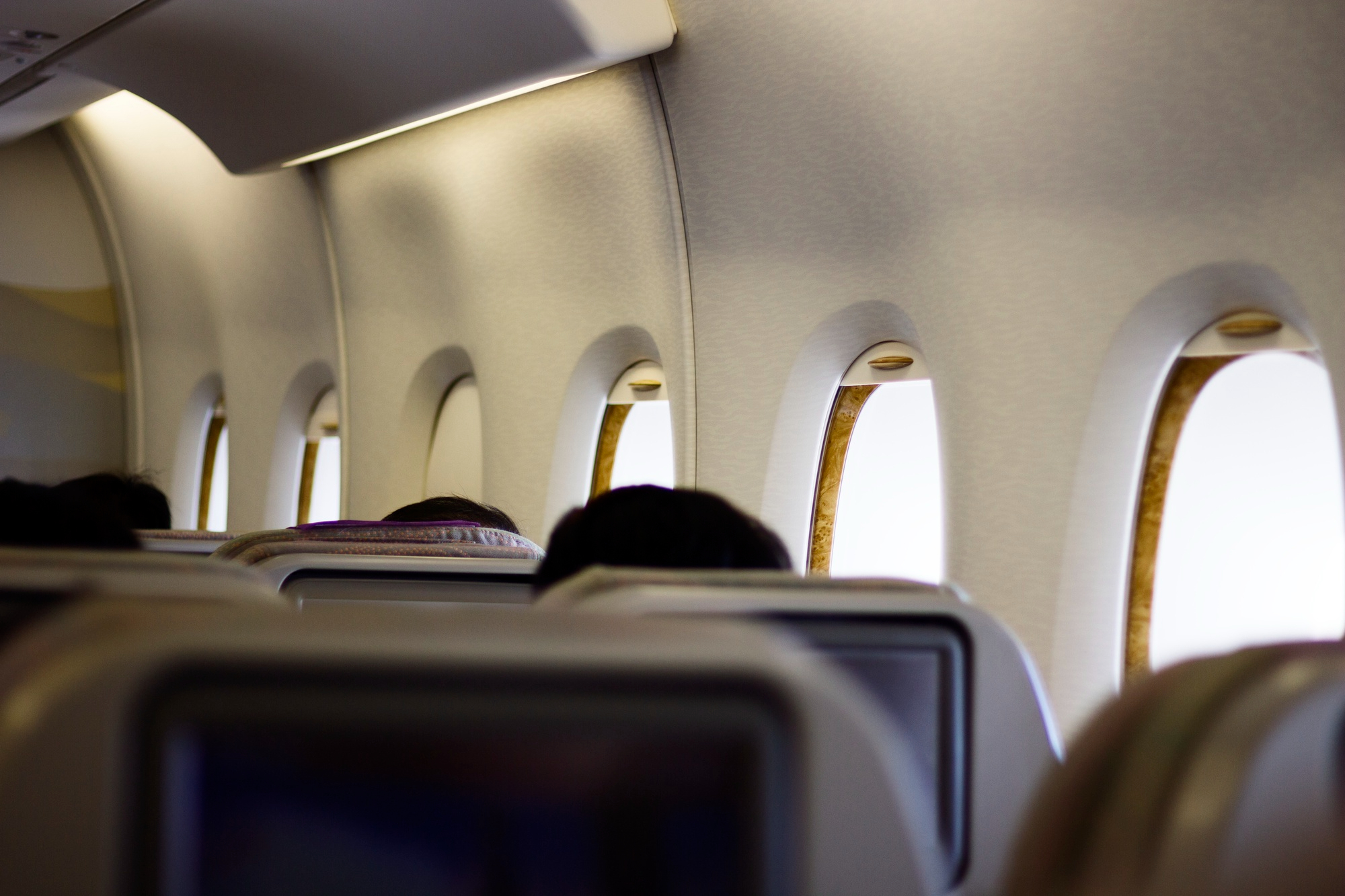
The plane was a regional jet, fifty seats, the kind where you duck your head getting on and the overhead bins are sized for optimism rather than reality. My mother settled into the window seat with the ease of someone who had been looking forward to this exact moment, pressing her shoulder against the side of the cabin and leaning toward the glass.
“We’re going to be in the clouds in twenty minutes,” I said.
“I know,” she said, the way you say I know when you already knew and the confirmation still pleases you.
We took off.
We were climbing over the Connecticut River Valley, the landscape below organized into the particular summer patchwork of fields and tree lines and small towns that looks from altitude like a quilt made by someone with a preference for green, and my mother was leaning toward the window pointing things out.
“Is that the river?” she said.
“I think that’s the Deerfield,” I said, looking past her. “The Connecticut is further east.”
“How do you know which direction east is?”
“I’m guessing,” I said.
She smiled. “You’ve always been confident in your guesses.”
“You taught me that.”
“I taught you to be confident,” she said. “The guessing part you arrived with.”
She was happy. I want to be specific about this because it was not a performance and not the tamped-down happiness of someone trying to appear all right. She was genuinely happy, in the way people are when they have arrived at a moment they were not certain they would reach, and the moment is actually as good as they had hoped it would be.
I kept talking to her.
About the landscape below. About the trip, what I had read about Santa Fe, the specific restaurants I had bookmarked, the lighting conditions in the late afternoon that the photographers I followed said were unlike anything else in the country. About whether she wanted the window open or the shade down when we got over the plains, and whether airplane pretzels had gotten worse in the past decade or whether I was misremembering how good they had been.
She answered everything. Not at volume. We were speaking the way you speak on a plane, which is slightly quieter than ordinary conversation but not a whisper, the natural register of two people talking across a shared armrest.
About an hour into the flight, the man in the aisle seat across from us slammed his magazine shut.
It was the kind of slam that is designed to be heard, a behavioral punctuation mark intended to communicate displeasure before any words are used. Several people looked up. I registered it but continued what I was saying, which was something about the hotel’s proximity to the plaza.
He turned toward us.
“Keep it down or get out.”
He said it the way people say things they want the surrounding rows to hear, not quietly, with the full projection of someone who has decided they are the aggrieved party in a public space and would like witnesses.
The cabin went quiet in the way it goes quiet when something social and uncomfortable has been said. The couple behind us stopped their own conversation. A woman two rows forward with headphones around her neck looked back. The man to my left, who had been asleep, opened his eyes.
My face went hot.
I have a specific physical response to public humiliation that I have never been able to train away, a flush that begins at my neck and rises regardless of whether I am actually embarrassed or simply angry. In this case it was both.
“I’m sorry,” I said. “We’re trying not to disturb anyone.”
He rolled his eyes with the performative exhaustion of someone who has been personally victimized by the concept of other people existing in shared spaces.
“Trying?” he said. “You’ve been talking nonstop since takeoff. Some of us paid for a peaceful flight.”
My mother’s hand found mine under the armrest.
She squeezed it.
“It’s okay,” she said softly.
I looked at her. She was still turned slightly toward me from our conversation, and her expression was not embarrassed or diminished. It was the expression she had worn my entire life in situations where she wanted me to understand that the thing happening was not worth the energy it wanted to consume.
“No,” I said quietly. “It’s not.”
I was trying to decide what to say to the man, how to say it in a way that was clear without escalating something that my mother would find upsetting, when the flight attendant appeared.
Her name tag said Meredith. She was somewhere in her forties, with the specific composed efficiency of someone who has managed confined spaces and human behavior at altitude for many years and has developed a comprehensive understanding of when a situation is routine and when it is something else.
“Is everything all right here?” she said.
Before I could respond, the man pointed at us.
“They’ve been chatting the whole flight,” he said. “Either move them or make them shut up.”
Meredith looked at him with the professionally neutral expression that manages to communicate a position without stating it.
Then she looked at me.
Then at my mother.
Her expression changed.
It was a small change but it was real, a shift in the quality of her attention, as if something she had noticed in the periphery had come into focus. She crouched beside my mother’s seat, which brought her eyes level with my mother’s, and she said, quietly and without performance, in the tone of someone asking a sincere question rather than a procedural one:
“Ma’am, may I see your boarding pass for just a moment?”
My mother looked slightly surprised, but she reached into the small zip pouch she kept her travel documents in and produced the boarding pass and handed it over.
Meredith looked at it.
I watched her face.
She read something at the bottom of the pass, and what happened in her expression was not dramatic but was complete, a full reorganization of understanding, the look of someone who has just been given a piece of information that changes the context of everything else.
She looked at my mother.
She looked at the boarding pass again.
Then she straightened up slowly and looked toward the front of the plane, and I saw her make a decision in the particular way that people make decisions when they understand that what is required is something beyond the parameters of the ordinary script.
She walked to the phone mounted on the forward galley wall.
She lifted it.
She said, clearly enough for the surrounding rows to hear: “Captain, I think you need to come out here. Right now.”
The man across the aisle looked at her with the expression of someone who has gotten what he wanted and is settling into satisfaction.
I was watching Meredith.
She had turned back toward us and she was looking at my mother with an expression I could not entirely read, a compound thing with professional care in it and something else underneath.
The cockpit door opened.
The captain was a woman in her mid-fifties, trim and silver-haired, with the particular quality of movement that people have when they are accustomed to being the calmest person in a situation. She came out of the cockpit and walked the length of the cabin toward us, which caused a renewed ripple of attention from the surrounding passengers, because a captain walking the aisle mid-flight commands a different quality of notice than a flight attendant.
She reached Meredith.
Meredith handed her the boarding pass.
The captain looked at it.
Then she looked at my mother.
And what happened in her face was the same thing I had watched happen in Meredith’s, the same reorganization, the same shift from professional assessment to something more personal, except that in the captain’s face it went one step further.
She put her hand over her mouth briefly.
Then she lowered it and said, to my mother: “Mrs. Calloway?”
My mother looked at her.
“Yes?”
“I’m Captain Diana Chen,” she said. “I need to ask you something. Is your daughter’s name Rachel?”
My mother’s eyes changed.
“Yes,” she said slowly. “How do you know my daughter?”
“Rachel Calloway,” Captain Chen said. “Rachel Calloway, who was seventeen and in the youth volunteer program at UMass Memorial in Worcester in the summer of 1997. Who spent three weeks sitting with a twelve-year-old girl in the pediatric ward because that girl’s parents couldn’t always be there. Who brought books and played cards and told terrible jokes.”
She stopped.
My mother was very still.
“My name then was Diana Park,” the captain said. “I was the twelve-year-old.”
I had known my mother for all thirty-four years of my life and I had seen her in many conditions, in joy and exhaustion and grief and the various states that illness produces, and I had never seen her look the way she looked in that moment. It was the look of someone receiving something they had forgotten they were owed, or had not known they were owed, or had given so long ago that it had passed entirely out of their accounting.
“Diana,” my mother said.
“I recognized the name on the boarding pass,” Captain Chen said. “There’s a medical notation on your ticket. I didn’t know for certain until Meredith showed me.” She paused. “I think about you. I have thought about you for twenty-seven years. You sat with me every afternoon for three weeks. You never made it seem like a burden. When I was discharged you gave me a card and inside it you wrote: The sky goes on longer than you think.”
My mother’s hand found mine under the armrest.
“I remember,” she said.
“I became a pilot because of that sentence,” Captain Chen said. “Among other reasons. But that sentence was part of it.”
The cabin was so quiet I could hear the air systems.
The man across the aisle had not moved.
Captain Chen straightened up and looked around the cabin with the calm authority of someone who has spent decades managing environments in which things must be said precisely.
“This is Ruth Calloway,” she said to the surrounding rows. Clearly. Without any self-consciousness. “Twenty-seven years ago, when I was a sick child, she sat with me and kept me company when I needed it. She is now traveling for the first time in six months after her own health difficulties, and she has been talking with her daughter. That is what has been happening in this cabin.”
She looked at the man across the aisle.
He looked at the tray table.
“Meredith is going to relocate this gentleman to a different seat,” Captain Chen said. “And she is going to move Mrs. Calloway and her daughter to row one, which is currently unoccupied.”
She looked at Meredith.
Meredith nodded.
“Mrs. Calloway,” Captain Chen said, “I have to go back. But I’m glad you’re on this plane. I’m glad you’re going somewhere.”
My mother reached out and took the captain’s hand briefly.
“You look like you turned out very well,” my mother said.
Captain Chen pressed her lips together.
“Because of people like you,” she said.
Then she walked back up the aisle and the cockpit door closed behind her.
Meredith turned to the man across the aisle.
She said something to him quietly. He gathered his jacket and his magazine without making eye contact with anyone and followed her toward the back of the plane.
Then Meredith came back to us.
“If you’ll follow me,” she said to my mother, with the warmth of someone who has just watched something happen that she will think about for a long time, “I have two seats in row one that have a much better view.”
My mother stood up.
She straightened her jacket the way she straightened her jacket when she wanted to be herself at full strength.
She looked at me.
“Well,” she said. “Come on.”
We followed Meredith to the front of the plane.
Row one had the extra legroom that comes with bulkhead seating and a slightly larger window, though from here the view was more of the sky and less of the ground, which my mother found preferable.
She settled into the window seat and leaned toward the glass.
“It really does go on longer than you think,” she said.
I did not trust my voice to respond immediately.
I sat in the aisle seat and looked at her looking out the window, and I thought about seventeen-year-old Ruth Calloway driving herself to a hospital in Worcester in the summer of 1997 to sit with sick children because she thought it mattered, and I thought about the sentence she had written in a card to a twelve-year-old girl who would carry it for twenty-seven years.
“You never told me about that,” I said finally.
“About the volunteer program?”
“About Diana. About the girl you sat with.”
She looked out at the clouds.
“I sat with a lot of children that summer,” she said. “I don’t think I thought of any of them as stories. They were just people who needed company.”
“You wrote her a sentence she remembered for twenty-seven years.”
“I wrote a lot of things in a lot of cards,” she said. “You never know which ones land.”
This was so entirely my mother that I found myself halfway between laughing and something that was not laughing.
“You’ve been doing this your whole life,” I said.
“Doing what?”
“Just quietly being the thing that helps people.”
She turned from the window.
“Everyone does that,” she said. “Or should.”
“Not everyone.”
She looked at me for a moment with the expression she wore when she was deciding whether to say something directly or to let it rest.
“I was scared this morning,” she said.
“I know.”
“Not about flying. About whether I was going to feel well enough to enjoy it. Whether I’d get here and be too tired to be present for any of it.” She looked back out the window. “I feel present.”
“You are present,” I said.
“And that man,” she said, with the particular tone of someone who has filed something away for the appropriate use of it, “was very unpleasant.”
“He was.”
“But it turned out all right.”
“It turned out remarkably all right.”
She smiled. It was the full one, the one that used her whole face.
Meredith came by with water and a small plate of things that were not standard coach class offerings. She set them on the tray table and said nothing about them except that she hoped we enjoyed the flight.
My mother looked at the plate.
“She didn’t have to do that,” she said.
“No,” I agreed.
“People are mostly decent,” my mother said. “The indecent ones are just louder.”
“That is an extremely optimistic read of what just happened.”
“I’m extremely optimistic,” she said. “It’s a choice. Don’t let anyone tell you it isn’t.”
I had been hearing versions of this my entire life and it had taken me until approximately this moment, at thirty-four, on a plane over the middle of America, watching my mother look out at the sky she had always loved, to understand that it was not her personality exactly. It was her practice. It was something she had decided to do and had kept deciding, every morning, including the mornings when it was harder than it looked.
We crossed into the plains.
The landscape below flattened and went enormous, the scale of it something that only registers from altitude, the way the land keeps going past every horizon without apology. My mother watched it the way she had watched the cloud formations when I was a child, with the specific quality of someone who believes that looking carefully at things is one of the primary obligations of being alive.
She told me about New Mexico. About the photographs she had been looking at for twenty years, the particular quality of the light at four in the afternoon, the way the red rock held color differently from anything in New England, the smell of sage after rain which she had read about and wanted to verify for herself.
“What if it’s not as good as the photographs?” I said.
“Things never are,” she said. “They’re usually different in a way that’s better. Photographs can’t get the smell right.”
“Or the heat,” I said.
“I’m going to drink a great deal of water,” she said. “I’ve already told my doctor. He thinks I should also have a hat.”
“I packed you a hat.”
She looked at me.
“Of course you did,” she said. It was not criticism. It was the particular warmth she had always had for the version of me that could not stop trying to provide for her what she might need.
We began the descent into Albuquerque.
The city appeared below us at the edge of a valley ringed by mountains that were abrupt and dramatic in the way of southwestern topography, nothing gradual about them, just flat land and then suddenly peaks. My mother leaned toward the window and her whole face opened.
“Oh,” she said.
That was all.
Just oh, with the full weight of someone who has been promised something by twenty years of photographs and has just received confirmation.
We landed smoothly.
As the plane taxied to the gate, Meredith appeared at row one.
“Mrs. Calloway,” she said. “The captain asked me to give you this.”
She handed my mother a folded piece of paper.
My mother unfolded it.
It was a piece of captain’s stationery, the standard letterhead, and on it in a clean, careful hand was a note.
I did not read it. It was my mother’s note and she held it in her lap for a moment after reading it before she folded it again and put it in the zip pouch with her boarding pass.
“What does it say?” I said.
“She says thank you,” my mother said. “And she says she hopes the sky looks as good from the ground in New Mexico as it does from up here.”
“Does it feel strange?” I said. “Knowing that someone you sat with for three weeks has been thinking about you for twenty-seven years?”
My mother considered this.
“It feels like something you didn’t know you’d lost and then found,” she said. “Which I think is the best kind of found thing, because you couldn’t have gone looking for it.”
The jetway connected. People began to stand and reach for their bags with the collective impatience of people who have been in a confined space longer than they wanted to be.
We waited.
My mother was not a person who rushed off planes, and I had inherited this from her along with several other qualities she had not necessarily intended to transmit. We let the cabin empty until we were among the last remaining, and then we stood and gathered our things, and Meredith walked us to the door.
“Safe travels,” she said.
“Thank you,” I said. “For everything. For noticing.”
“It was hard to miss,” she said, and there was something in her voice that was not quite a description of what she had noticed.
We walked up the jetway.
In the terminal my mother stopped and looked around with the orientation of someone arriving in a new place and choosing to take it in rather than move through it.
The Albuquerque airport was smaller than most hub airports, with a particular quality of Southwestern light coming through the large windows, the kind of light that even filtered through glass had a different temperature than what we knew from the Northeast.
“We’re here,” my mother said.
“We are,” I said.
She started walking.
I fell into step beside her and we moved through the terminal at her pace, which was not fast and was not slow, the pace of someone who has arrived somewhere they intended to be and sees no reason to rush the experience of it.
We got our bags.
We got the rental car, a compact that smelled new and had a navigation system that mispronounced Albuquerque in a way my mother found both incorrect and charming.
I drove north on the interstate.
The mountains were to the east, the Sandias, already taking on the color they were known for in the late afternoon light, a shade of pink that the local name described as watermelon and that was, my mother said, looking at them as we drove, exactly as advertised.
“You see?” she said. “The photographs were right.”
“The photographs didn’t have that,” I said, gesturing at the whole of it.
“No,” she agreed. “But they pointed in the right direction.”
The hotel was in Santa Fe, ninety minutes north.
I had booked a room with a view of the mountains and a courtyard with native plantings, which the website had shown in photographs and which my mother had approved after studying the photographs for several minutes with the focused attention she brought to useful things.
We arrived at early evening.
The light was at the angle that the photographers I followed had described and that turned out to be, in person, not an exaggeration. The mountains went every shade between gold and purple depending on which face you were looking at, and the town itself had a quality of lateness that was not sleepiness but richness, the feeling of a day that has fully used its hours.
We checked in.
The room was good. The view from the window was better than the website’s photographs, which my mother noted with the satisfaction of someone whose modest optimism has been exceeded.
She sat in the chair by the window.
She looked at the mountains.
I unpacked both our bags while she sat, because she was tired in the way that travel creates, the good tired, and because unpacking was something I could do without requiring anything of her.
“Rachel,” she said.
“Mm.”
“Come sit.”
I came and sat on the edge of the bed, which put me at an angle to see both her and the mountains, and we sat together in the early evening quiet of a hotel room far from home.
“I’m glad we came,” she said.
“Me too.”
“I was worried I wouldn’t feel well enough to be glad. But I feel glad.”
“You look glad,” I said.
She smiled.
“Diana Chen,” she said. “Captain Diana Chen. I would never have imagined.”
“What do you remember about her?” I said. “When she was twelve?”
My mother looked at the mountains for a moment.
“She was very serious,” she said. “Not solemn. Serious in the way of children who are used to understanding things and are frustrated when they don’t. She didn’t like not knowing what was happening to her body. She wanted it explained in terms she could work with.”
“What did you do?”
“I explained it,” she said. “As much as I understood it, which wasn’t much. I found books in the hospital library about how immune systems worked and we read parts of them together. I mostly just kept her company while she was thinking about things.”
“You wrote her a sentence she remembered for twenty-seven years.”
“I wrote her the sentence I believed,” my mother said. “Which is all you can really do with sentences. The other person decides whether to keep it.”
I thought about this.
“She said it made her want to be a pilot.”
“I think she was already going to want to be a pilot,” my mother said. “She was always looking at the window. Even in the hospital room, even with everything happening, she wanted to know about the weather. What the clouds were. Whether it was going to rain.” She paused. “The sentence just gave her something to put next to what she already wanted.”
Outside the window the mountains were losing the gold and going toward purple, the transition happening slowly enough that you could watch it if you watched.
“Mom,” I said.
“Mm.”
“Thank you for this trip.”
She looked at me.
“I’m the one who wanted to come,” she said.
“I know. I mean thank you for wanting to. For feeling well enough to. For being here.”
She looked at me with the expression she wore when she was deciding whether to say something directly or to let it rest, and then she chose direct.
“I intend to be here for considerably longer,” she said. “Don’t give the eulogy yet.”
“I’m not giving a eulogy,” I said. “I’m expressing gratitude.”
“It edged toward eulogy.”
“You’re impossible,” I said.
“You love it,” she said.
I did.
We went to dinner at a restaurant near the plaza that I had bookmarked months ago, a small place with a courtyard and a menu that used ingredients I had read about and wanted to try. My mother ordered the green chile stew because the menu described it as the thing people came back for, and she had a policy about ordering the thing people came back for.
It was very good.
She said so, plainly, the way she said things that deserved plain acknowledgment.
We ate slowly.
We talked about my grandmother, who had been gone eight years and who would have loved New Mexico in the specific way of people who respond to large landscapes with personal relief. We talked about my father, who had been out of our lives since I was seven and who existed in my mother’s conversation occasionally as a reference point, not a wound, just a piece of the past that had its place. We talked about my work, the project I had been struggling with for three months, a renovation of a building in Portland with a complicated structural history and a client with strong opinions about the use of natural light.
My mother had opinions about natural light.
“The windows need to face southwest,” she said. “I know nothing about architecture. But southwest in the late afternoon changes everything. I can see that from twenty minutes in this city.”
“You’ve been looking out windows your whole life,” I said.
“I recommend it,” she said.
After dinner we walked around the plaza.
The evening was warm without the weight of East Coast humidity, a dryness that my mother found agreeable and that I registered mostly as a difference in the quality of the air, the way it moved, how it carried the smell of things.
“Sage,” my mother said, stopping.
She had been right about the sage.
She stood on the sidewalk and breathed it in with the deliberate attention she brought to things she had been anticipating, and then she looked at me with the expression of someone who has had a prediction confirmed in the most satisfying possible way.
“Exactly as advertised,” she said.
We walked back to the hotel.
She was tired in a way that was genuine and did not require managing. I walked her to her room and stood in the doorway and she put her hand on my face for a moment, the way she had always said goodnight when I was small, the specific warmth of it.
“We’re going to have a good trip,” she said.
“Yes,” I said.
“And that man on the plane is going to have a very uncomfortable six hours of thinking about himself.”
“Probably,” I said.
“Good,” she said, with the specific satisfaction of someone who believes in consequences without requiring them to be dramatic.
She went inside.
I went to my room.
I sat by my own window and looked at the mountains in the dark, which were dark shapes against a darker sky, the outline of them still present, still the same mountains, just differently lit.
I thought about my mother at seventeen, driving herself to a hospital to sit with sick children. I thought about Diana Park at twelve, looking at the window of her hospital room and wanting to know about the weather. I thought about a sentence written in a card, the sky goes on longer than you think, and the twenty-seven years it had traveled before it came back to the person who had written it.
I thought about the man across the aisle, his magazine, the particular effort he had made to be the loudest version of his displeasure.
I thought about the cabin going quiet when Captain Chen spoke.
I thought about my mother in row one, leaning toward the larger window.
In the morning I knocked on her door at eight and she answered it already dressed, in the outfit she had chosen for the first full day, with the hat I had packed and which fit her correctly because I had checked the size on the hat she kept in the front closet at home.
She saw me look at the hat.
“It fits,” she said.
“I know,” I said.
“You measured my hat.”
“I looked at the tag,” I said.
She shook her head in the way that meant she was not going to say anything more about it because the thing had been done with love and love makes certain kinds of practicality both unnecessary to explain and impossible to argue with.
“Where are we going first?” she said.
I had a list.
She looked at the list.
“Canyon Road first,” she said. “The galleries.”
“I thought you’d want breakfast first.”
“I want coffee and then the galleries,” she said. “Breakfast later when we’re hungry.”
We got coffee.
We went to Canyon Road.
The galleries were not yet open when we arrived but the street itself was already worth the walk, the adobe walls and the morning light and the art visible through the windows of places not yet unlocked, and my mother walked slowly and looked at everything with the same attention she had given the mountains from the plane and the clouds from the window and the twelve-year-old girl in the hospital ward in Worcester in 1997.
The same quality of full presence.
The same understanding that looking carefully was not passive but was itself a kind of work, the kind that returns something to the world simply by being done.
I walked beside her.
The street was quiet and the light was doing the thing it did here, the thing the photographs pointed toward without fully arriving at, and the sage smell was still in the air from the plantings along the walls, and my mother was here, next to me, in a hat that fit, in a city she had wanted to reach for twenty years.
“Well,” she said, stopping at a gallery window to look at a large canvas inside.
“Well?” I said.
“I think this was a very good idea,” she said.
“Whose idea was it?” I said.
She looked at me with the expression she had always worn when I was being unnecessary.
“Mine,” she said. “Obviously.”
She was right.
It had been hers.
And she had been right about that too, the way she was right about most things she had looked at carefully and long enough, the way she was right about windows and light and sentences written in cards and twelve-year-old girls who grew up to be captains.
The gallery opened.
We went inside.

Adrian Hawthorne is a celebrated author and dedicated archivist who finds inspiration in the hidden stories of the past. Educated at Oxford, he now works at the National Archives, where preserving history fuels his evocative writing. Balancing archival precision with creative storytelling, Adrian founded the Hawthorne Institute of Literary Arts to mentor emerging writers and honor the timeless art of narrative.