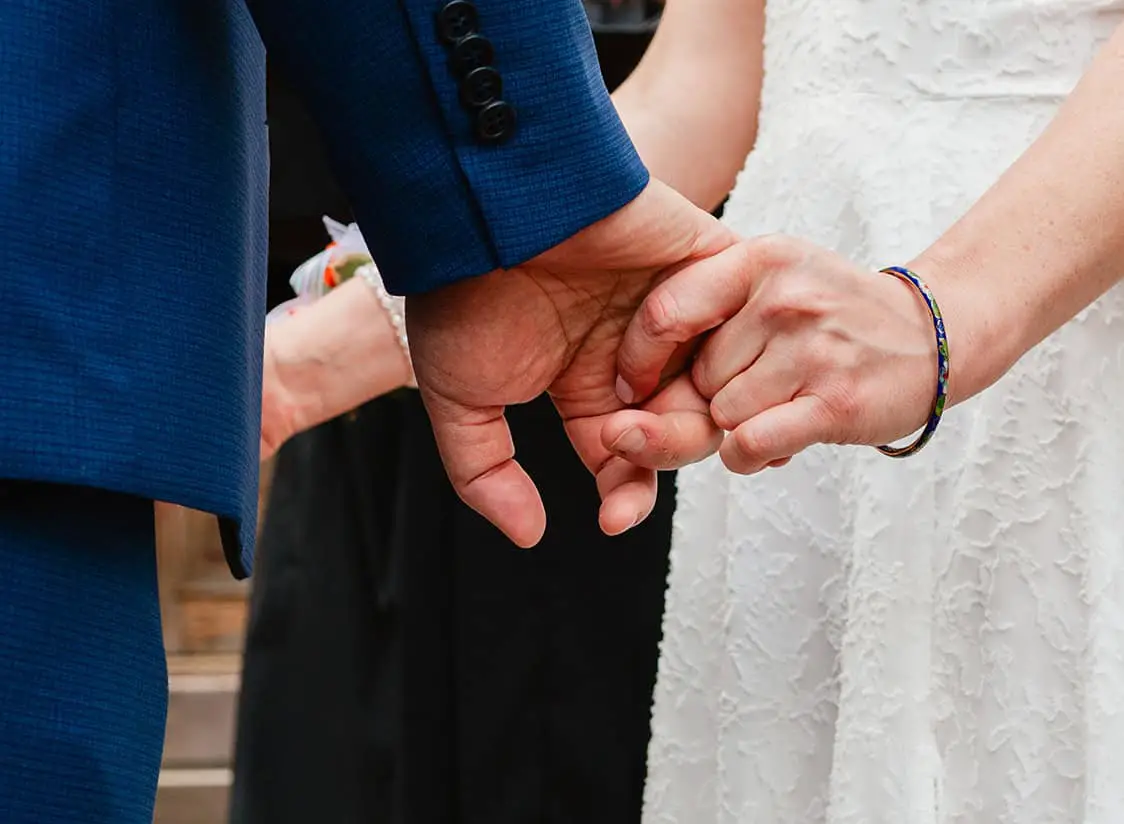
On my wedding day, my husband and I were eating burgers in our wedding clothes when he pulled a folded legal letter from his pocket and made me question every sacrifice my family had ever praised.
My dress cost twelve dollars at a thrift store, a pale ivory thing with a slightly loose seam at the waist that I’d hand-stitched tight the night before at my kitchen table, humming to myself, more excited than nervous. Daniel wore his late father’s old suit jacket, with sleeves too long and cuffs frayed at the edges, a jacket he’d told me once he almost didn’t keep after his dad passed, until he realized it was the only thing left that still smelled faintly like him. We had no fancy ballroom, no flowers, no string lights, and no family clapping with wet eyes. We only had each other at a small bistro downtown, eating burgers and splitting a forty-dollar bottle of wine we’d budgeted for over three weeks, setting aside five dollars here and ten dollars there from both our paychecks until we had enough.
To me, it was perfect.
“You’re sure you don’t want the rest of my fries, Sav?” Daniel asked, pushing the red basket toward me.
“I married you, not your potatoes,” I teased.
He smiled, but it faded when his eyes slid to the couple at the next table. They’d heard the waiter congratulate us. I saw them glance at my dress, Daniel’s jacket, and our burgers. Then they shared a pitying smile, the kind that assumed our whole life could be summed up by the price of the paper napkins we were using, the kind of smile I’d been catching from strangers and relatives alike for the past six months, ever since I’d told my family who I’d actually chosen.
“Your family would’ve cared about that,” he said.
“My family isn’t here.”
“Because of me.”
“Because of their pride.”
That pride had a name: Connor.
Connor was my dad’s boss, a young millionaire with polished shoes and a polished voice, the kind of man who ordered wine by pointing at a number on the list rather than a name, who complimented restaurants by saying they’d “held up” since his last visit. He’d offered me everything my parents wanted for me: a five-carat ring, a penthouse, and cars I couldn’t pronounce. I remembered the first dinner he took me to, a restaurant so quiet you could hear ice settling in the glasses, and how he’d ordered for both of us without asking what I wanted, and how my mother, seated across the table for reasons I still didn’t fully understand, had beamed at him the entire meal like he was the one auditioning for her approval instead of me. I remember driving home that night and feeling, for the first time, like I’d attended a job interview rather than a date, and not being at all sure I wanted the position.
I said no.
I chose Daniel instead.
Daniel was my best friend from high school. He worked at an auto shop, drove an old pickup with a check-engine light that had been on so long it had become a kind of decoration, knew my coffee order down to the extra pump of vanilla, and never made me feel small for counting coupons at the grocery store. We’d been friends for eleven years before either of us said the word love out loud, both of us too cautious, too aware of what it might cost if it went wrong, if the friendship that had carried us through college breakups and job losses and, in his case, his father’s slow decline, turned out not to survive being something more.
My parents stopped speaking to me the week I told them. My sister, Stacey, sent one text.
“You’re an idiot. He’ll never be able to give you anything.”
I deleted it, then cried in the grocery store parking lot anyway, sitting in my car with the engine off for twenty minutes before I could make myself drive home, gripping the steering wheel like it was the only stable thing left in the world.
Daniel reached across the table. “Savannah, Connor could’ve given you a better life.”
“Connor could’ve given me expensive rooms to feel lonely in.”
His fingers tightened around mine.
“With him, I felt like something he wanted to display,” I said. “With you, I feel like a person.”
I remember thinking, clearly and calmly, that I had made the right choice, that whatever came next — the smaller apartment, the budget wine, the family silence — was a fair trade for feeling like myself.
That’s when Daniel went still. His hand slipped from mine. He stared at the table, then reached into the inside pocket of his jacket.
“Daniel?”
His fingers shook as he pulled out a folded piece of thick paper, the kind of heavy cream stock that legal offices used, entirely out of place against the grease-spotted burger basket between us.
“Sav,” he said, his voice unsteady, “there’s something you don’t know about me.”
My stomach tightened. “What does that mean?”
“I couldn’t show you this until we were married.”
I pulled back. “That is a terrible sentence to say on our wedding day.”
“I know.”
“Then explain.”
He placed the paper between our burger baskets. “Your parents didn’t cut you off because I’m poor.”
“What does that mean?”
“They were scared of me because I know their secret. Look.”
I opened the letter. The first line made the room tilt.
“To my granddaughter, Savannah.”
I stopped breathing.
“My grandmother died three years ago.”
“I know,” Daniel said. “Keep reading.”
My eyes moved down the page. House. Savings account. Maintenance funds. Personal security.
“She left me a house?”
“And money to maintain it,” Daniel said. “Your parents knew.”
I stared at him. “No. Mom and Dad told me she died with nothing. I remember Dad standing in the kitchen saying the funeral costs had eaten through whatever was left.”
“They lied.”
“How do you know this?”
“Two months ago, an old customer mentioned your name was tied to a property record. I checked it, then called the attorney’s office. They confirmed there was a file you’d never seen and sent a copy.”
“You knew for two months?”
I shoved my chair back an inch.
“We promised no secrets.”
“I know.”
“You let me marry you without knowing my own life.”
“I was wrong. I wanted to tell you,” he said. “But every time your family called me worthless, I panicked. I was afraid you’d think I wanted you to hate them, that I was manufacturing a reason for you to cut them off completely.”
“That wasn’t your choice to make.”
“I know.”
“You don’t get to manage my truth because you’re scared. That’s what they did.”
Daniel lowered his eyes. “I’m sorry.”
I believed him. That didn’t make it right.
I folded the letter carefully and put it in my purse, my hands steadier than I expected, though something underneath my ribs had gone cold and sharp.
“Are you leaving me?” he asked.
“No. But from now on, I make the decisions. Not you. Not Mom, Dad, or Connor.”
He nodded. “Anything you want.”
“Good. Get the check.”
He blinked. “Are we going home?”
I stood in my twelve-dollar wedding dress. “No. We’re going to my parents’ house.”
The drive over took eleven minutes, though it felt much longer, the two of us silent while the radio played something neither of us was listening to. I remember watching my own reflection in the passenger window, still in my wedding dress, still with the small braid my college roommate had done in my hair that morning, thinking how strange it was to be going into battle dressed for a celebration.
Mom opened the front door and froze. “Savannah? Why are you dressed like that?”
“Let me in.”
I stepped past her. Dad saw Daniel and stood. “What is he doing here?”
I pulled the letter from my purse and set it on the coffee table, right in the center, on top of the coasters Mom kept fanned out like she was expecting company for tea.
“Tell me this is fake.”
Mom’s face changed. She reached for the paper. I snatched it back. “No. You answer first.”
Dad pointed at Daniel. “That mechanic is poisoning you against your family.”
“Daniel didn’t write Grandma’s name on this letter,” I said. “He didn’t hide a house from me. You did. So talk.”
Mom picked up her phone and began typing. “We were protecting you.”
“From owning a roof?”
Dad’s jaw tightened. “You were too young to handle property.”
“I’m old enough to marry a man you hate, but not old enough to own what Grandma left me?”
“You weren’t ready,” Mom whispered.
“When would I be ready? After Connor?”
She looked away.
There it was. The truth sat in the silence, heavier than anything either of them had actually said.
I laughed once. It hurt coming out. “You wanted me married to him before I found out I had options.”
Mom’s phone buzzed. Connor’s name lit up before she flipped it facedown.
“You called him?” I asked.
Mom wiped under her eyes. “I didn’t know what else to do.”
“You called the man you wanted me to marry while I’m standing here in my wedding dress?”
Dad stepped between us. “He understands the situation.”
“No,” I said. “He understands control.”
The doorbell rang five minutes later.
Connor walked in calm and polished, like he’d come to handle a problem, his coat still buttoned, his shoes barely touched by the light rain that had started outside. “Savannah,” he said. “Your mother was worried.”
“Of course she was.”
His eyes found the letter in my hand. I lifted it. “You knew.”
Connor didn’t even blink. “I knew there were assets your parents were managing.”
“Assets,” I said. “You mean my grandmother’s house.”
“A house can become a burden when someone isn’t prepared.”
That was when I saw him clearly, saw the whole shape of what he’d actually been offering me — not partnership, but management, the same thing my parents had been offering all along, just with better furniture. “Funny,” I said. “Nobody called your penthouse a burden when you offered it to me.”
His jaw tightened. “Comfort isn’t a crime.”
“No. But trying to marry me before I found out I had choices isn’t love.”
Dad stepped forward. “You will not embarrass this family in front of my boss.”
“You already embarrassed this family,” I said. “I’m done hiding it.”
Mom whispered, “We only wanted you safe.”
“Safe women know the truth, Mom.”
I picked up the letter. “Tomorrow morning, I’m speaking to the attorney who signed this.”
Dad’s face darkened. “You will do no such thing.”
I walked to the door. “Watch me.”
Outside, Daniel waited by the truck, leaning against the passenger door with his hands in his pockets, giving me the space to have that conversation without him standing over my shoulder, though I could tell from his face he’d heard most of it through the screen door.
“I’m angry at you too,” I said.
“I know.”
“You should’ve trusted me.”
“I know.”
The drive home was quiet, the kind of quiet that isn’t cold so much as full, both of us processing separately the same enormous day. I stared out the window at streetlights sliding past and thought about every conversation my parents had ever had with me about being “practical,” about “not throwing away opportunities,” and understood, with a fresh, sick clarity, that they hadn’t been talking about my future at all. They’d been talking about a house they were quietly collecting rent on.
The next morning, I sat across from an attorney with Grandma’s letter in my hands, my wedding dress still smelling faintly of the bistro’s grill exhaust from the day before, hanging now in a garment bag in the back of Daniel’s truck because I hadn’t had the heart to take it off until nearly midnight.
He read the letter, and his mouth went tight. “You never saw this?” he asked.
“Not until last night.”
Daniel shifted beside me, but I lifted one hand.
The attorney nodded. “Your grandmother was clear. The house was yours at twenty-five. The savings account was for repairs, taxes, and upkeep.”
“Then how did my parents keep it?”
“They said they were helping with the paperwork because you were grieving.”
“And you believed them?”
His face softened. “At first, yes. Then they delayed. After that, they stopped responding.”
“Have they been renting it out?”
“Yes.”
“And keeping the rent?”
He paused. “That appears to be what happened.”
My stomach turned. “Can I get it back?”
“Yes. It may take paperwork, but the house was left to you.” He slid a copy of the file toward me. “Your grandmother added a note.”
“What do I do first?” I asked.
“That’s the right question, Savannah.”
An hour later, Daniel parked across from Grandma’s old house. The porch needed paint, but the swing was still there, hanging at a slightly crooked angle from the one hook that had never quite been reset properly, the way I remembered it my whole childhood. A woman next door lowered her watering can.
“I’m Savannah. My grandmother used to live here.”
Her face opened. “You’re her granddaughter?”
I nodded.
“I lived across the road for years,” she said. “When this place went up for rent, I took it. Your grandmother was good to me. She talked about you like you hung the moon.”
Daniel came to stand beside me, quiet.
“I used to sit on that swing during storms,” I said. “Grandma told me loud things were usually just trying to sound bigger than they were.”
I looked at the front door. “I thought I was choosing between love and security.”
Daniel waited.
“Now I know security was supposed to be mine before any man offered it.”
That afternoon, the attorney sent formal notice. Mom called fourteen times. Dad said I was “making things ugly.” Connor sent flowers with a card about coming to my senses.
I threw the card away.
Then Mom invited me to a family dinner. “Please, Savannah,” she said on the phone. “We can talk like a family.”
I almost said no. Then I looked at Grandma’s letter on my kitchen table and remembered how long they had counted on my silence.
At dinner, Mom sat beside Dad. Stacey sat quiet and pale. Connor stood when I walked in. I stopped near the empty chair.
“Why is he here?”
“Savannah, please,” Mom said. “We invited everyone so we could talk calmly.”
“No,” I said. “You invited the man who has tried to buy my silence for your lies, Mom.”
“I came because I care about you, Savannah,” Connor said.
“I’m married,” I said. “So stop saying things like that, Connor. It’s just nonsense.”
Dad’s jaw tightened. “Sit down.”
“Not until you answer me.”
Mom reached for my hand. I stepped back. “If Connor is more welcome in this family than Daniel, then say that. If the man who helped hide the truth from me gets a chair while my husband gets blamed for telling it, then I know where I stand.”
The table went silent.
Dad lifted his glass. “Parents make sacrifices their children don’t understand.”
I pulled Grandma’s letter from my purse. “Since we’re talking about sacrifice, let’s talk about Grandma.”
Mom went white. Dad snapped, “Sit down, Savannah.”
“No. I sat down for years while you called me foolish and poor. I’m standing now.” I looked at Connor. “And you don’t get to speak for my future anymore.”
His face hardened. “I offered you comfort.”
“You offered me a cage with a good view and smiled while my parents helped lock the door.”
Then I turned back to my parents. “Choose. Your daughter and her husband, or Connor and the story you’ve been protecting.”
Mom started crying. “We were scared for you.”
“Of what?” I asked. “That I’d have my own future?”
No one answered.
Stacey stood slowly. “I read the letter. She’s telling the truth.”
Mom whispered, “Stacey…”
“No,” Stacey said. “You told me she was throwing her life away. You left out the part where it was already hers.”
I picked up my purse. “You can keep your stories. You can keep pretending this was love. But you cannot keep my house.” Then I looked at Connor. “And stop sending flowers. I already chose my husband.”
Daniel and I left before dessert.
Outside, he opened the truck door, then stopped. “Savannah, I need to say it now. I was wrong.”
I looked at him.
“I should’ve trusted you before the wedding,” he said. “I was scared you’d think I wanted you to hate them.”
“I don’t need you choosing what I can handle.”
“I know.”
“I chose you because you made me feel like a person,” I said. “Don’t ever make choices for me like I’m not one.”
His eyes filled. “Never again.”
The legal part took forms, calls, meetings, and rent records. My parents handed over control rather than let the dispute grow, their lawyer apparently advising them, quietly, that the paper trail Daniel had uncovered left almost no room to negotiate. There were weeks where I barely slept, sitting up late reviewing bank statements the attorney’s office sent over, watching years of small, steady rent deposits land in an account with my parents’ names on it, money that should have been fixing the roof or paying property taxes I hadn’t even known existed in my name. Some nights Daniel sat up with me, not saying much, just being present while I worked through folders of paper that represented, in the end, three years of quiet theft dressed up as parental concern.
Weeks later, I stood on Grandma’s porch with a brass key.
Daniel held up a hardware bag. “First thing?”
“Change the locks.”
He smiled.
“And then,” I said, looking through the window at the faded kitchen, “I’m painting it blue.”
That evening, we sat on the porch swing with takeout burgers in our laps. No penthouse. No five-carat ring. No Connor. No parents deciding what safety meant.
Only Daniel beside me, honest at last, and a house that smelled like dust, roses, and home.
I turned down a millionaire for my broke best friend. But Daniel didn’t give me a fortune. He gave me the truth. And with it, I finally gave myself back my life.

Ethan Blake is a skilled Creative Content Specialist with a talent for crafting engaging and thought-provoking narratives. With a strong background in storytelling and digital content creation, Ethan brings a unique perspective to his role at TheArchivists, where he curates and produces captivating content for a global audience.
Ethan holds a degree in Communications from Zurich University, where he developed his expertise in storytelling, media strategy, and audience engagement. Known for his ability to blend creativity with analytical precision, he excels at creating content that not only entertains but also connects deeply with readers.
At TheArchivists, Ethan specializes in uncovering compelling stories that reflect a wide range of human experiences. His work is celebrated for its authenticity, creativity, and ability to spark meaningful conversations, earning him recognition among peers and readers alike.
Passionate about the art of storytelling, Ethan enjoys exploring themes of culture, history, and personal growth, aiming to inspire and inform with every piece he creates. Dedicated to making a lasting impact, Ethan continues to push boundaries in the ever-evolving world of digital content.