For eight years, I had been the easy wife.
Greg made the big decisions; I handled the house and our six-year-old son, Leo, and whenever we disagreed, I usually let it go. I told myself I was choosing peace. Greg seemed to think it meant he was always right.
That Saturday morning, the three of us walked to a neighborhood yard sale a few blocks from our house. I wasn’t looking for anything. Leo was.
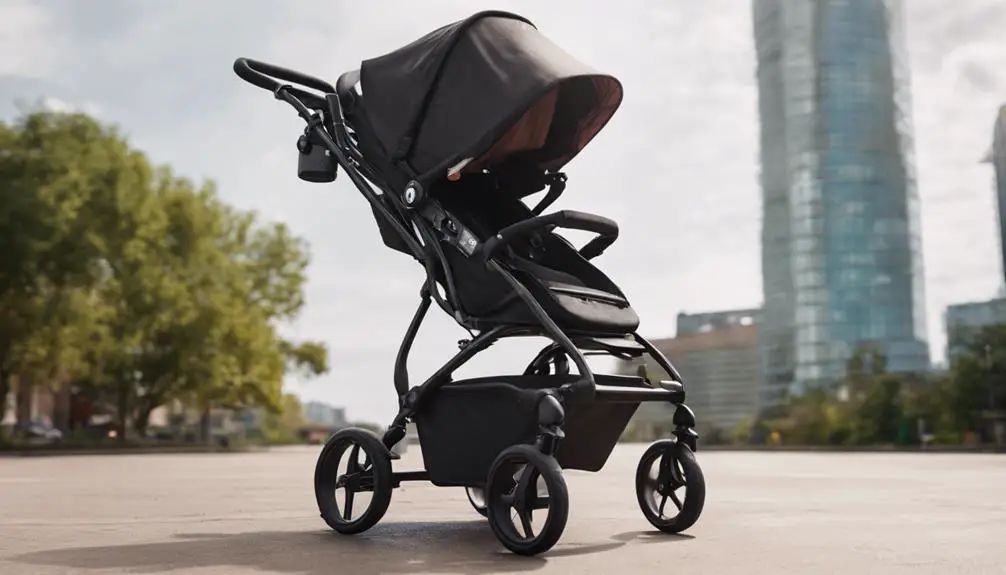
The stroller was two dollars, and I paid Marla, the woman running the yard sale, in quarters I dug out of the bottom of my purse. Leo had circled the pink stroller for ten minutes, one hand gripping the handle. Inside sat a baby doll with a smudged cheek and one missing sock.
Greg stood behind me with his arms crossed. “Hannah. Come on. He’s got a whole toy box at home.”
“It’s two dollars, Greg.”
“That’s not the point.”
“Then what is the point?”
He gave me that smile I’d been seeing for eight years, the one that used to feel warm. “The point is you buy every piece of junk you see. My country girl can’t walk past a yard sale.”
“Boys don’t push strollers,” he added, lower, like it was the real objection underneath the money one.
Marla laughed politely. I didn’t. I handed her the quarters and crouched down to Leo.
“It’s yours, buddy. Take care of it.”
His whole face lit up like Christmas. “I will, Mama. I promise.”
We walked home, Leo pushing his new treasure with the seriousness of a father walking a bride down the aisle. I grew up on a farm and learned early that things didn’t need to be new to be loved. A stitched seam holds just as well as a fresh one.
Greg walked beside me with his hands in his pockets. “I don’t know why you encourage him with stuff like this.”
“He’s six. He likes what he likes.”
“Boys don’t push strollers, Hannah.”
“This one does.”
Greg shook his head and let it drop. That was our rhythm. He’d push a little, I’d hold still. He’d say, “Leave the complicated stuff to me,” and I’d smile because I hated pointless fights more than being talked down to. That rhythm had built itself brick by brick over eight years, so gradually I’d never once stopped to ask myself whether I actually agreed with any of it, or whether I’d just gotten tired of being the one who argued.
That night at dinner, Greg’s phone buzzed on the table. He flipped it face down before I could see the name.
“Work?” I asked.
“Nothing important.”
Later, he took a call in the garage. I heard his voice through the door but not the words, just the low, steady rhythm of a conversation he clearly didn’t want carrying into the kitchen. When he came back, he ruffled Leo’s hair.
“Dad, are you picking me up tomorrow?”
“Not tomorrow, buddy. I have to leave for a business trip.”
Leo’s face fell. “Then when you come back, can we go to the special place again?”
Greg’s eyes flicked to me for half a second. “We’ll see.”
I stirred my coffee and didn’t ask what the special place was. I told myself little boys gave ordinary places important names — the gas station with the good slushies, the park with the tall slide, anywhere that felt, to a six-year-old, worth remembering.
After dinner, Leo pushed his stroller down our driveway in the fading light, humming to the doll. Greg watched from the front window, something in his face pulling tight. I noticed it and let it go, the way I let most things go, filing it under Greg being Greg, moody about something at the office probably. At the time, I thought the secret was whatever Greg was hiding on his phone. I had no idea Leo already knew more about it than I did.
The next morning, Leo insisted on taking his new stroller to the park. I watched from a bench as he pushed it toward the soccer field, the wheels squeaking a little on the pavement, one of them slightly bent so it pulled left if he wasn’t careful. Three boys from his class stopped kicking the ball when they saw him. I recognized Jamie and Cole right away, boys from his kindergarten class whose mothers I nodded to at pickup without ever quite becoming friends with.
The tallest one pointed first. “Why are you pushing a baby around? That’s for girls!”
“Yeah, are you a mommy now?” Cole added, doubling over.
I was already on my feet, walking fast across the grass, my heart doing that particular clench mothers know, the one that arrives before you’ve even decided what you’re going to say. Leo did not flinch. He did not look for me. He stopped the stroller in front of them and pointed at the doll inside.
“I’m not the mommy,” Leo said, in that clear, careful voice, the voice he used when he’d decided something mattered enough to say correctly. “I’m taking care of Carol’s baby until she comes back.”
Carol. The name landed somewhere in the back of my mind and didn’t quite settle. Leo turned the stroller around and pushed it back toward me, entirely unbothered, already moving on to whether we could stop for a snack on the way home.
On the walk home, I kept my voice light. I asked him who Carol was.
“She’s bigger than me,” Leo said, kicking a pebble along ahead of him, watching it skitter and bounce. “We played with dinosaurs at her house. She let me hold the baby.”
“Her house? When were you at her house, buddy?”
“With Daddy. A lot of times.” Leo looked up at me, cheerful, entirely without guile. “The stroller is Carol’s. That’s why I wanted it. I recognized it.”
The sidewalk seemed to tilt under me, just slightly, the way ground does right before you understand you’ve been standing on something less solid than you thought. “Why didn’t you ever tell me about Carol, sweetie?”
Leo shrugged with his whole small body, the gesture kids make when a question feels bigger than they know how to answer. “Dad said it was our secret.”
I squeezed his hand, kept my pace even, kept my voice from doing anything that would frighten him. That was the moment Carol stopped sounding like an imaginary friend, stopped sounding like the invented company small children sometimes keep, and started sounding like something I needed to understand before I let myself feel anything about it.
That evening, Greg came into the kitchen and gestured at the stroller parked by the coat rack. “Han, seriously. Can we get rid of that thing? It’s cluttering the hallway.”
I stirred the pasta and did not turn around. “Apparently it reminds Leo of Carol.”
The spoon in my hand kept moving. Behind me, everything else stopped. I could hear it, actually — the particular quality of a silence where a person has just realized they need to choose their next sentence very carefully.
“What?”
“That’s what he told the boys at the park today.” I kept my voice mild, curious, the voice I used when I genuinely wanted an honest answer and didn’t want to scare it away. “He said he was taking care of Carol’s baby until she came back. Who’s Carol?”
“Oh. Right. She’s an acquaintance’s kid. I took Leo over there once to drop off some paperwork. Nothing.”
“Once?”
“Maybe twice. Han, why does this matter?”
“He said it was your secret.”
He walked to the sink and ran water he didn’t need, a delay tactic I recognized even as it was happening, the kind of small physical business people do with their hands when they need a few extra seconds to build a sentence. “He’s six. He calls everything a secret.”
“He said you told him it was.”
“Trust me.” He turned off the tap and dried his hands on a dish towel he then folded twice, a habit of his I’d always found oddly endearing before that night, and would never find endearing again after it. “It’s complicated, Han. I was handling it. Kids make a bigger deal out of these things than they are.”
I could feel the shape of every late pickup, every face-down phone, every call taken in the garage settling quietly into place inside my chest, each one a piece of a puzzle I hadn’t known I was assembling.
“Okay.”
That night I lay in the dark next to my husband and made myself a promise. I would not accuse him of anything. Not until I had the facts. My mother had raised me on one rule: don’t decide anything until you’ve got the facts. Weather, cattle, people. All the same. You didn’t call a storm before you’d checked the sky, and you didn’t call a man a liar before you’d checked the evidence, however much your gut had already made up its mind.
The following morning, Greg packed his suitcase and left for his business trip. “Drive safe,” I said. He studied my face for a second too long, the way you study something when you suspect it might be studying you back. I gave him my usual soft smile, and he left.
Once his car cleared the driveway, I opened my laptop. The yard sale post was still up in a neighborhood group. I opened the message box and typed.
Me: Hi, Marla! I bought the little pink stroller from you yesterday. My son loves the doll that came with it. Do you happen to know if she had a name?
She replied within an hour.
Marla: Oh, Hi! That stroller belonged to my friend Rachel’s daughter. Her name’s Carol. They just moved, so Rachel left a bunch of things with me to sell.
Rachel. I opened Marla’s profile and searched her friends list. There were four Rachels. The third one made me stop. Her profile picture showed a woman about my age standing beside a freckled little girl. Carol.
I clicked her page and started scrolling. Nine years back, I found a photo of Rachel kissing Greg on a rooftop, both of them younger, both of them laughing, the kind of easy, unguarded laugh you only really have in your twenties, before life has taught you to be careful with your face. Greg had mentioned a serious girlfriend before me once, years ago, in the vague, dismissive way men mention old relationships they consider fully closed. He’d never told me her name. Finding Rachel explained the past. But it didn’t explain why my six-year-old had been inside her house.
I kept scrolling. Then I scrolled forward and found Carol. Seven years old, freckled, grinning at the camera, one front tooth missing in a way that made her smile look bigger than it was. Something about her face made me stop. I leaned closer to the screen. There was something familiar there, something in the set of the eyebrows, the particular shape of the chin, and for a moment I told myself I was imagining it, that grief and suspicion could make a person see resemblance in any stranger’s face if they were frightened enough.
I didn’t cry. I made coffee. By the time I’d worked my way back nine years and forward to a post uploaded that morning, it was past noon, and the coffee had gone cold twice, and I’d refilled it once without really tasting either cup.
The new post showed Rachel and Carol standing in front of a house I didn’t recognize, boxes stacked behind them. The caption read: “New home, new beginning.”
I zoomed in on the driveway. Half of a silver SUV was visible at the edge of the frame. I knew that dent above the wheel well. For a year, I’d argued with Greg about getting it fixed, and he’d always said he’d get to it, never quite finding the time.
My phone buzzed on the counter.
Greg: “Long day. Going to bed early. Kiss Leo for me ”
He wasn’t on a business trip. That much I knew. Everything else, I needed to hear from him.
I stared at the screen for a full minute, my thumb hovering, and then typed only:
Me: “Sleep well ❤️”
I called my mother, Denise.
“Mom. Can Leo stay with you tonight?”
“Of course. Everything all right?”
“I don’t know yet. I’ll tell you when I do.”
She didn’t push. She never did. That was one of the things I’d always loved about her, the way she could sit with not knowing without needing to fill the space with questions I wasn’t ready to answer.
I picked Leo up from school and drove him straight out to the ranch with his overnight bag and his little dinosaur pillow. He hugged my neck and asked if we could bring the stroller.
“It stays home, buddy. It’ll be waiting when you get back.”
Mom walked me to my car. “You need me to come with you?”
“No. I need to do this by myself.”
She held my face in both hands for a second, the way she’d done since I was small, checking me over the way she’d check a calf for fever, and then let go. I still didn’t know what I’d find at the end of that drive. I only knew my husband had lied about where he was.
For the first hour, I kept the radio off and watched flat farmland slide past the windows, the fence posts ticking by in a rhythm that used to calm me and, that day, only made the silence feel louder. I thought about the first time Greg called me his country girl. We’d been dating four months. I’d changed a flat tire in a parking garage in heels, and he’d laughed. “Look at you, country girl.” I’d taken it as a compliment then. Somewhere along the way, it had become his way of reminding me which one of us he thought was smarter, and I’d let it, the way I’d let most things.
At a rest stop, I pulled over and sat with my hands on the wheel, engine still running, wipers ticking against a light rain that had started somewhere along the last twenty miles. I could still turn around. Greg could come home the next day, kiss my forehead, and I could pretend I hadn’t seen his SUV in Rachel’s driveway. There was a version of the rest of my life available to me in that parking lot, a version where I simply drove home, unpacked nothing, asked nothing more. Then I thought about Leo telling me, Dad said it was our secret, the easy, trusting way he’d said it, like keeping a secret from his mother was just one more ordinary thing a good son did for his father.
I put the car back in drive.
By the time I turned onto Rachel’s street, rain was tapping against the windshield in earnest now, porch lights glowing along a row of modest houses, the kind of quiet residential street that looks the same in every town in America. Greg’s silver SUV sat at the curb. I parked one house down and stared at it through the rain, watching the wipers on my own car slide back and forth, back and forth, giving myself thirty more seconds before I had to move. For the first time that day, I stopped wondering whether I was wrong. Now I only wondered how much Greg had lied about.
I knocked. Rachel opened the door. For a second, she just stared at me, and I watched her face do the same thing I imagined mine had done scrolling through her photos hours earlier — a fast, silent recalculation.
“Hannah?”
“Rachel?”
Her grip tightened on the doorknob. “What are you doing here?”
“I think you know.”
She glanced over her shoulder, and something in her expression changed, softened into something closer to dread. “He said he’d told you.”
“Told me what?”
Her eyes flicked toward Greg. “About Carol. About him being here.” She swallowed. “He said you two were separating. That you knew he was helping us move.”
Behind her, Greg stood in sweatpants beside an open kitchen box, a roll of packing tape still in his hand, and I watched the color drain out of him in real time, watched him understand, before either of us said another word, exactly what was about to happen.
I looked at him. “Separating?”
“Hannah…”
Carol ran past Rachel and wrapped her arms around Greg’s leg like she’d done it a hundred times, an easy, unconscious gesture of a child who trusted the man in front of her completely.
I looked straight at him. “Is she yours?”
“Hannah, it’s not…”
“Greg.”
His shoulders dropped. “Yes. I only found out a few months ago. Rachel had a DNA test done. Another man was ruled out, and a second test confirmed me.”
“So you started visiting her.”
“I wanted to know my daughter.”
“And you brought Leo.”
“I wanted them to know each other.”
“Without telling me they were brother and sister.”
Rachel stared at him. “You told me she knew.”
“Is that true?” I asked him.
“I was going to tell you.”
“When?” I asked. “After this business trip?”
His face changed, some last thread of composure giving out.
I nodded toward his SUV at the curb. “That’s where you’re supposed to be, Greg. On a business trip.”
“Hannah, I was helping Rachel move. That’s all.”
“For almost three months.”
“That’s all?” I looked at Rachel. “Is that true?”
She hesitated.
“Rachel?”
“He told me you two had been separated for months.”
My stomach dropped, a fresh betrayal opening up underneath the first one. “Are you two together?”
“For almost three months,” Rachel said quietly, not meeting my eyes.
Greg rubbed a hand over his face. “Can we stop doing this on the porch?”
“No.” I looked straight at him. “You lied to me about where you were. You lied to Rachel about our marriage. And you taught our six-year-old to keep both of those lies for you.”
“I didn’t tell you because you couldn’t handle something this complicated,” Greg finally said.
There was that word again. Complicated. For eight years, Greg had used it whenever he wanted me to stop asking questions. Leave the complicated stuff to me. And for eight years, I’d let him mistake my silence for ignorance.
I almost laughed. “You kept confusing simple with stupid, Greg.”
Carol was watching us from the hallway now, her small face uncertain, sensing without understanding that something important and unhappy was happening around her. I stepped back onto the porch. “She didn’t ask for any of this.”
Greg followed me outside, the rain catching in his hair almost immediately. “Hannah, please. Let’s talk about this at home.”
“You’ll hear from my lawyer.”
“What about Leo?” Panic finally cracked through his voice, the first real fear I’d heard from him all evening. “Think about Leo.”
I turned around, standing in the rain, feeling strangely calm, the way you feel calm once the worst thing you were afraid of has already happened and there’s nothing left to brace for. “You should have thought about our son before you taught a six-year-old to hide his other family from his mother.”
I walked to my car without looking back.
The drive home felt entirely different from the drive out, though the same fence posts ticked by in the same rhythm, the same flat farmland stretched out under the same darkening sky. I didn’t cry until I was almost to my mother’s ranch, and even then it wasn’t loud crying, just a steady, exhausted leaking that I let happen without fighting it, both hands still on the wheel.
I called my lawyer the next morning, a woman named Priscilla Ortiz whom my mother had used for the sale of a parcel of land years earlier and had recommended, half-joking at the time, “for when you need someone who doesn’t blink.” Priscilla didn’t blink. She listened to the whole story without interrupting, made a few notes, and then said, in a voice as level as a carpenter’s, “We’ll need everything you have. Screenshots, the messages with Marla, anything with dates on it. Judges like dates.”
I gave her everything. The message thread. The photo of the dented SUV. The text where Greg had told me he was going to bed early on a night he was, in fact, three hours away in another woman’s kitchen. It felt strange, assembling my marriage into a folder of evidence, the way you might assemble a case against a stranger, but there was also something clarifying in it, the same clarifying feeling I’d had scrolling through Rachel’s photos — the sense of finally being allowed to see the shape of something I’d spent years only feeling the edges of in the dark.
Greg came home four days later, not to our house — I’d already changed the locks by then, a decision Priscilla had encouraged and my mother had driven out to help me execute, the two of them standing in my driveway supervising a locksmith like a small, grim committee. He came instead to the porch, where I met him with the door only half open, Leo asleep upstairs, unaware his father was standing twenty feet from him.
“You can’t just lock me out of my own house,” Greg said, his voice pitched somewhere between anger and pleading.
“It’s my house, Greg. It was my house before we married. You’re on the deed as a courtesy, and my lawyer tells me that courtesy doesn’t survive what you did.”
“I want to see Leo.”
“You will. Through the arrangements Priscilla and your lawyer work out. Not by showing up at ten at night.”
He stood there for a long moment, rain-damp again, though it wasn’t raining this time, just the particular dampness a person carries when they’ve spent days sleeping badly in someone else’s guest room. “I never meant to hurt you.”
“You meant to keep two families running at once without either of us noticing,” I said. “That’s not the same as not meaning to hurt me. That’s meaning to get away with it.”
He didn’t have an answer for that. He never did, once the explanations ran out and only the truth was left standing.
Six weeks later, Rachel stayed with Greg, the two of them apparently deciding, in the wreckage of everything, that they’d rather build something honest out of the mess than start over separately. I heard, secondhand, through Marla, of all people, who still occasionally messaged me small updates I hadn’t asked for but didn’t quite have the heart to decline, that they’d moved into a bigger place, that Carol had started calling him Dad, that things seemed, in Marla’s careful phrasing, “settled, for what it’s worth.”
Leo and I started over without him. The custody arrangement gave Greg alternating weekends, supervised for the first two months while the court sorted out what, exactly, six-year-old Leo understood about any of this and how much he needed protecting from the rest. My son still pushed that two-dollar pink stroller down our driveway most evenings, humming to the doll with the smudged cheek, entirely unaware for a long while of everything that little pink frame had helped me uncover. I never told him the full truth of it, not at six, not at seven. I told him only that Carol was his sister, that some families are built in complicated ways, and that none of that was anything he’d done wrong.
Every time I saw that stroller parked by the coat rack, I remembered what Greg had spent eight years getting wrong about me — that quiet meant simple, that patience meant permission, that a woman who’d learned young not to call a storm before checking the sky was somehow slower than a man who never checked anything at all.
Greg thought he’d married a simple country girl who would never figure it out. I was simple, but I was never stupid. And in the end, it wasn’t a private investigator or a lucky accident that unraveled him. It was a two-dollar stroller, a six-year-old boy who told the truth without knowing its weight, and a mother who’d learned, a long time ago on a farm that didn’t tolerate guesswork, to gather her facts before she ever said a word.

Specialty: Emotional Turning Points
Rachel Monroe writes character-driven stories about betrayal, second chances, and unexpected resilience. Her work highlights the emotional side of family conflict — the silences, the misunderstandings, and the moments when someone quietly decides they’ve had enough.