Before I even knew how deeply my own family’s greed could run, I knew that some wounds never heal. I just didn’t expect my own mother to turn my dying grandmother’s last wish into a financial chess game.
For months, my mother had been controlling the entire narrative around my grandmother’s hospice care, cutting corners, canceling appointments, and convincing the rest of the family that any effort spent on a dying woman was a complete waste of time. She wanted everyone to look away, waiting for the inevitable so she could quietly seize the family estate and a four-hundred-thousand-dollar inheritance.
But one week before Grandma’s ninety-third birthday, she made a final simple request that broke the family completely apart. When my mother coldly shut it down, saying she wouldn’t even remember it, the entire family fell in line and canceled. They thought they were saving a few dollars and avoiding an inconvenient trip to the Massachusetts coast. What they didn’t know was that taking her there alone would set off a chain of events that would completely dismantle their lives. And months later, standing in the middle of a crowded funeral service as my father sobbed about how much he missed her, a single video began to play on the church projector screens. A message from beyond the grave that didn’t just expose their cruelty, it carried a legal and financial judgment that left them completely ruined.
My name is Maya, and I was the only one who saw through the calculated cruelty of my own flesh and blood.
Clara was my grandmother’s name, and she was the last anchor of sanity in a family driven by corporate ambition and toxic entitlement. I grew up spending more of my summer afternoons at her colonial house in Marblehead than I ever spent at my own, because my parents were always busy with something that mattered more than I did, and Grandma Clara never once made me feel like an inconvenience for existing. She taught me to identify tide pools when I was six, sitting on the rocks in her sun hat with a paperback field guide, patiently naming every creature I dragged over to show her. She taught me to bake bread from scratch at nine, flour dusted across both our aprons, laughing when I overproofed my first loaf into something resembling a small dense brick. She was the one who came to my school plays when my mother had “an unmissable client dinner,” the one who sat with me for six hours in the emergency room the night I broke my wrist falling off my bike, the one who never once, in twenty-six years, treated me like a line item to be managed.
Grandma Clara had been battling terminal stage 4 respiratory failure, and her hospice doctors had quietly informed us that she had less than two months left. She was staying in a modest assisted living facility that she paid for out of her own savings account, one she’d chosen herself years earlier, before her diagnosis, because she liked the garden courtyard and the fact that the staff called her by her first name instead of “dear.” But because her cognitive function occasionally slipped due to her heavy pain medications, my mother had legally secured power of attorney over her health decisions, a fact that had seemed, at the time, like a reasonable precaution, the kind of thing responsible families arrange. I hadn’t understood yet how much room that piece of paper would give my mother to operate unwatched.
My mother, Eleanor, along with my father and my younger brother, treated Grandma Clara like an inconvenient line item on a balance sheet. They were constantly calculating the value of her historic New England colonial home and her remaining liquid assets, terrified that her medical bills would eat into their future inheritance. I remember overhearing my mother on the phone with my father once, months before any of this came to a head, saying, “The physical therapy is three sessions a week at that price, Richard, and for what, so she can walk to the dining hall instead of using the wheelchair? It’s throwing money at a problem that’s already decided.” I stood frozen in the hallway outside her home office, my hand still on the doorframe, and understood for the first time that my mother had already filed my grandmother under a heading in her mind labeled Resolved, Pending.
One evening, while I was sitting by Grandma Clara’s bedside, holding her fragile, paper-thin hand, she looked out the window at the distant horizon and whispered a final wish. “I just want to smell the salt air one last time,” she said, her voice cracking beneath the oxygen mask. “Just one afternoon by the sea before my ninety-third birthday next week. That’s all I want.”
I immediately opened our family group chat and proposed a weekend trip to Cape Cod. I offered to rent an accessible van, book a ground-floor beach cottage, and handle all the logistics myself so it wouldn’t burden anyone else. I typed it out carefully, trying to make it sound as simple and manageable as possible, because I already had a bad feeling about how it would land.
But less than ten minutes later, my mother called my phone, her voice sharp and dripping with cold, practical corporate detachment. “Are you completely out of your mind, Maya?” Eleanor snapped down the line. “The logistics alone are a nightmare. She’s on oxygen. She can barely walk. And frankly, she won’t even remember it by the time we drive back. It is a massive waste of energy and money.”
I stood in my kitchen holding the phone away from my ear slightly, staring at the pattern of my own tile floor, feeling something in my chest go very still and very cold. “She asked for one thing, Mom. One thing.”
“And I’m telling you it’s not practical. You’re being sentimental. This is exactly why you shouldn’t be the one making these calls.”
Within an hour, the rest of the family fell right into line. My father texted saying he was too swamped with his corporate accounting firm’s quarterly audits, a sentence that took him four tries to spell correctly, which somehow made it worse. My brother, Tyler, claimed he had a networking golf weekend he couldn’t skip, one that turned out, I later learned, to be entirely optional, a casual outing with two guys from his gym rather than anything resembling a professional obligation. One by one, everyone canceled the trip. They used my mother’s phrase as a shield to justify their own selfishness.
“She won’t even remember it.”
They repeated it back to each other in the group chat like a mantra, each message a small validation of the one before it, until the sentence had hardened into something that felt, to them, almost like compassion, like they were sparing an old woman an unnecessary ordeal rather than simply declining to be inconvenienced. They truly believed that because a person’s mind is failing, their dignity no longer matters.
I sat in my apartment that night looking at the messages, feeling a burning wave of anger and disgust settle somewhere behind my sternum and stay there. I knew exactly what my mother was doing. She didn’t want Grandma Clara leaving the facility because she was terrified that a trip to the coast might inspire Grandma to look into her financial records or question why Eleanor had recently moved fifty thousand dollars out of Clara’s primary trust account to fund my brother’s new startup business, a fact I’d only stumbled onto myself two weeks earlier, glimpsing a bank statement my mother had left on the counter and immediately regretted, though I hadn’t yet understood the full shape of what I was looking at. Eleanor was using the excuse of Grandma’s failing memory to completely isolate her from the outside world, ensuring that no outside lawyers or financial advisers could speak to her before the end.
But I refused to let them turn her final days into a prison sentence.
The next morning, without uttering a single word to my mother or answering any of their text messages, I called out of my own job, a marketing coordinator position I’d have to explain myself for later, and drove down to the assisted living facility. I signed the voluntary temporary medical release forms, paying the out-of-pocket insurance waiver fee myself, a few hundred dollars that felt like nothing compared to what I was buying with it. The nurse on duty, a kind woman named Priya who’d cared for Grandma Clara for months, helped me carefully load the portable oxygen concentrator into the back of my car, along with a spare tank, Grandma’s medications sorted into a labeled pill organizer, and her favorite woolen blanket, the one with the faded blue anchors stitched along the border that she’d had since before I was born. Priya squeezed my hand before we left and said, quietly, “This is a good thing you’re doing.” I didn’t trust myself to answer without crying, so I just nodded.
I drove ninety minutes down to a quiet, secluded beach near Chatham, one Grandma had mentioned once, years earlier, as the place she and my grandfather had gone on their honeymoon, back when the whole stretch of coast had been mostly undeveloped, before the summer houses and the tourist shops arrived. She’d described it to me so many times over the years that I felt, pulling into the small gravel parking lot, like I was arriving somewhere I’d already visited in my imagination a hundred times.
The moment the car tires hit the coastal highway, something miraculous happened. The glassy, distant look in Grandma Clara’s eyes completely vanished when I wheeled her down the wooden ramp onto the sand and the cool Atlantic breeze hit her face. She let out a deep, clear breath that she hadn’t been able to find in months. She didn’t look like a dying woman in that moment. She looked alive.
She spent hours watching the waves, pointing out the seagulls, and telling me vivid stories about her childhood that I had never heard before — about growing up the daughter of a lobsterman in a town two towns over, about the summer she’d worked at a soda fountain and saved every tip in a coffee can to buy her first bicycle, about meeting my grandfather at a dance hall that had long since been torn down and replaced with a strip mall. Her memory wasn’t gone. It was just suffocating under the fluorescent lights of that facility, buried under sedation schedules and the low, constant hum of a place designed for efficient care rather than for living.
At one point she asked me to walk her, wheelchair and all, right down to where the wet sand met the dry, close enough that the very edge of a receding wave curled up around the wheels. She closed her eyes and tilted her face up toward the sun, and I watched a woman who had, only a week earlier, needed help lifting a spoon to her mouth, sit there looking more present and more herself than I had seen her in over a year.
“Your grandfather used to say the ocean doesn’t care what year it is,” she said, eyes still closed. “It sounds exactly the same now as it did the day he proposed to me right over there, past those rocks. Everything else changes. Not that.”
While we sat there, I pulled out my high-definition camera, the one I usually used for hiking videos I posted for a small audience of maybe two hundred people who liked watching me get lost on trails in New Hampshire. I didn’t take the video to show off or to start a family fight. I took it because I wanted to preserve the pure joy on her face, something to hold onto for myself, selfishly, once she was gone.
But as the afternoon sun began to set over the ocean, painting the whole sky in that particular shade of orange-gold that only seems to happen in autumn, Grandma Clara turned her head toward the lens. She looked directly into the camera, her eyes sharp, clear, and completely focused in a way that startled me enough that I almost lowered the camera, thinking something was wrong. She smiled a gentle, knowing smile, rested her hand over mine, and began to speak directly to the recording.
She knew exactly what her daughter Eleanor had said about her. She knew exactly why the rest of the family had canceled. And what she recorded in that five-minute video clip was a detailed, legally binding statement that would completely rewrite the destiny of our family’s estate.
I didn’t understand, in the moment, exactly what she was doing. I thought she was simply talking to me, or perhaps to some imagined future version of the family who might watch it someday and feel something. I had no idea that three days later she would ask Priya to help her contact her attorney, a man named Mr. Harrison whom I’d never met and whose name I’d never once heard spoken in our family, and that the conversation on that beach was, in fact, the opening statement of something far larger.
When I brought her back to the facility that evening, exhausted but glowing in a way I hadn’t seen from her in months, she kissed my cheek and whispered, “Thank you for remembering me, Maya.” Those were the last coherent words she ever spoke to me. Over the following days her breathing grew shallower, her lucid windows shorter, until three days later she fell into a deep sleep from which she rarely surfaced. And two months after that, in the early hours of a Tuesday morning, with only Priya and a night nurse in the room, her breathing finally stopped.
I got the call at 4:47 a.m. I remember the exact time because I’d been staring at my phone anyway, unable to sleep, some instinct keeping me awake that night in a way I still can’t fully explain.
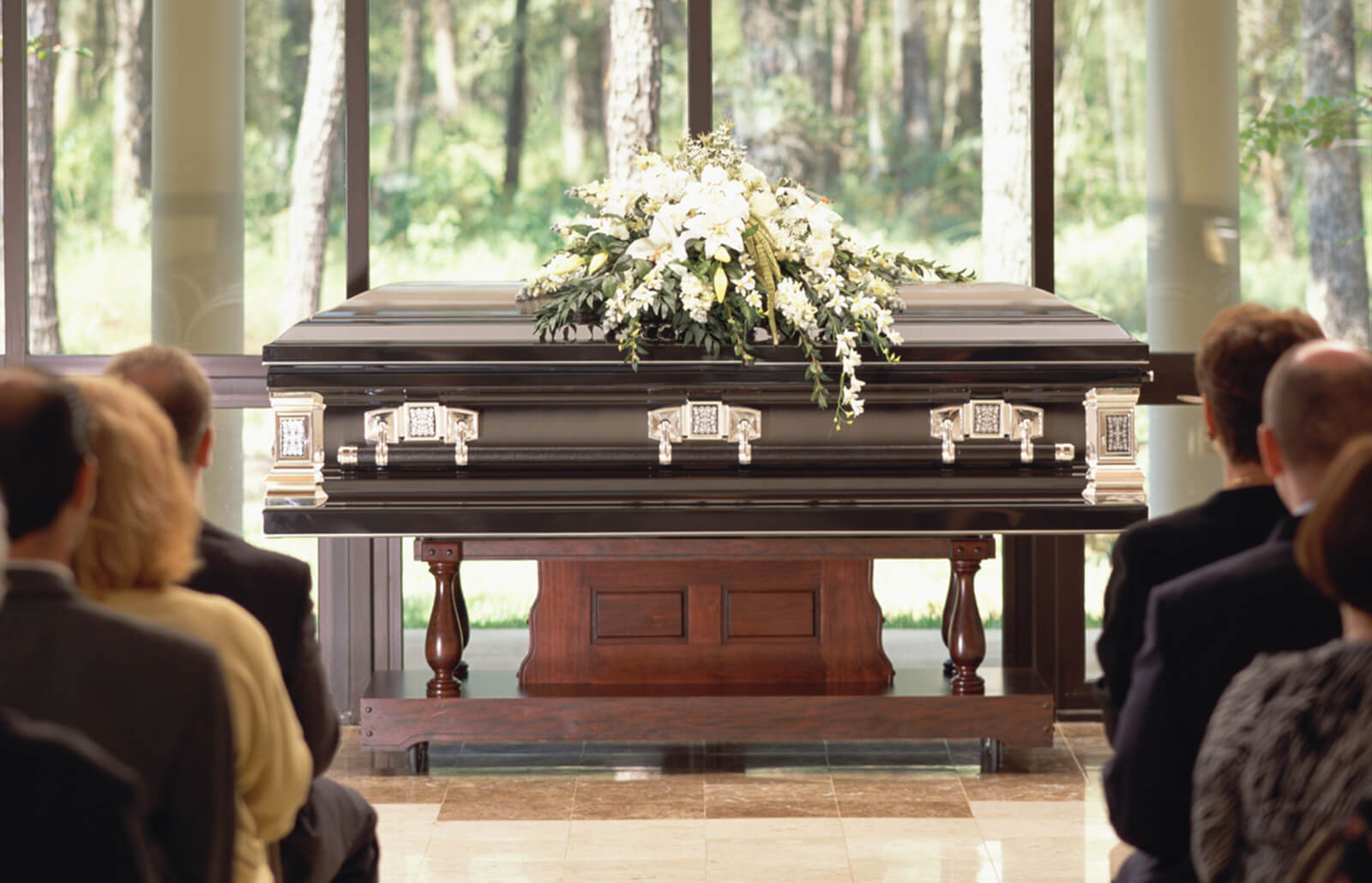
The funeral was held on a gray Tuesday at a prominent church in the historic district of Boston, the kind of church my mother had insisted on specifically because of its reputation among her social circle, never mind that Grandma Clara herself had attended a small Methodist congregation near her old house for sixty years and had, as far as I knew, never once set foot inside this particular sanctuary. The sanctuary was packed with my father’s corporate colleagues, local politicians who’d donated to whatever charity board my mother currently chaired, and distant relatives I hadn’t seen since I was a teenager, most of whom, I suspected, could not have told you Grandma Clara’s birthday or her favorite color.
My mother, Eleanor, sat in the front pew wearing a pristine, custom-tailored black designer dress, dabbing her dry eyes with a silk handkerchief, playing the role of the grieving, beautiful daughter to absolute perfection. I watched her check her phone twice during the opening hymn, tilting it discreetly against her thigh, and felt something curdle further in my stomach. My father sat right next to her, burying his face in his hands, loud, dramatic sobs shaking his shoulders as he wailed about how much he missed his mother, how much he regretted not having more time, and how he would give anything to have just one more day with her. I remember thinking, distantly, that he’d had roughly sixty available days in the two months after her diagnosis and had used perhaps four of them.
I sat three rows back, watching the theatrical display with a cold, unblinking stare. The hypocrisy in the room was thick enough to choke on. My brother, Tyler, seated beside my mother in a suit that looked freshly pressed for the occasion, was already whispering to a real estate agent cousin about the listing price for Grandma’s house, gesturing with his phone, apparently pulling up comparable sales in the neighborhood, completely oblivious to the storm that was about to hit them.
The service proceeded smoothly through the opening prayers and the first eulogy, delivered by a cousin of my mother’s who had clearly never met Grandma Clara but had been handed a set of biographical notes to read aloud, until it was time for the final memorial tribute. The pastor stood up, cleared his throat, and announced, with a small note of surprise in his own voice, as though he too had only just been informed, that according to the explicit instructions left in the deceased’s legal updates, a special video message from Clara herself would now be played for the congregation.
My mother’s head snapped up, her eyes narrowing as the lights in the church began to dim. I watched the back of her neck go rigid.
The massive projector screen lowered from the altar ceiling with a soft mechanical whir, and the bright blue sky of Cape Cod filled the room, the horizon line stretching wide and clear above the heads of three hundred mourners. There was a collective gasp from the crowd as Grandma Clara’s face appeared on the screen, sitting in her wheelchair right on the edge of the shore, the sound of the crashing Atlantic waves booming through the church’s high-end sound system, filling every corner of that vaulted stone ceiling with the sound of a place my grandmother had loved more than any building she’d ever sat inside.
My father stopped sobbing instantly, his mouth falling open as he stared at his mother’s vibrant, smiling face, a face he hadn’t seen look that alive in over a year.
Grandma Clara took a deep breath of the sea air, looked straight into the camera, and her voice rang out with a terrifying crystal-clear authority that echoed off the stone walls of the sanctuary. “I remember,” Grandma Clara said on the screen, her voice steady and entirely devoid of the confusion my mother had claimed she suffered from. “I remember every single word. I am recording this message on Cape Cod. I am here because my granddaughter Maya was the only person in my family who chose to remember that I am still a human being.”
I felt every eye in the church shift, briefly, toward the back rows where I sat, and I kept my gaze fixed forward on the screen, my hands folded tightly in my lap.
“One week ago, when I asked for this final trip to see the ocean, my own daughter, Eleanor, told this family that it was a waste of time. She said I wouldn’t even remember it. She assumed that because my body is failing, my mind had completely vanished. But my mind is perfectly clear, and my memory is sharp enough to recall every single act of betrayal that has occurred over the last twelve months.”
My mother’s face instantly shifted from a mask of elegant grief to one of pure unadulterated panic. She stood up halfway, clutching her designer purse, looking frantically around the church, but my father grabbed her arm, forcing her back into the pew, his own face gone pale and rigid. The hundreds of guests in the congregation were completely spellbound, a silence settling over the room so total I could hear the projector fan humming somewhere above us.
“For the past year,” Grandma Clara’s voice rang out, cold and unyielding, “I have watched my daughter and son-in-law treat my life like a ticking clock, waiting for me to expire so they could claim my estate. They cut corners on my medical treatment. They canceled my therapy sessions, and they isolated me in that assisted living facility. But what they didn’t know is that while they were busy looking through my property listings, I was quietly running a forensic audit of my own trust funds with the help of an independent financial adviser.”
A collective murmur rippled through the church like a wave, heads turning toward one another, whispers rising and falling.
My brother buried his face in his hands as the video took an even darker turn.
“Two months ago, Eleanor used her power of attorney privileges to illegally transfer fifty thousand dollars from my primary healthcare fund,” Grandma Clara revealed, her voice never once wavering. “She logged into my account from her corporate office and moved those funds into a shell corporation registered under my grandson’s name to fund his failing tech startup. Eleanor thought I was too weak and too confused to notice the digital paper trail. She was wrong. Because of this betrayal, I met with my estate attorney, Mr. Harrison, immediately after returning from the beach with Maya. This video serves as the official public declaration of my final legally binding amendment to my last will and testament.”
The screen showed a brief shot of a signed, stamped legal document, held up to the camera in what I now realized had been recorded separately, likely in Mr. Harrison’s office, and spliced into the footage from the beach — I hadn’t known she’d done that, hadn’t known there’d been a second recording session at all.
“To my daughter Eleanor, my son-in-law, and my grandson, I leave you exactly zero,” she said, her voice dropping to a chillingly calm whisper that somehow carried further than her shouting could have. “I have completely revoked Eleanor’s power of attorney, and I have explicitly disinherited all three of you from the Vance family estate. My historic New England colonial home, my investment portfolios, and the remaining four hundred thousand dollars of my liquid assets have been placed into an ironclad, unchallengeable trust. That trust is now under the sole ownership and management of my granddaughter Maya, who was the only one who didn’t view my final days as a financial burden.”
I felt tears finally break free and slide down my face, silent, unstoppable, my hands still clenched together in my lap.
“And to ensure that justice is fully served, the digital audit logs of the unauthorized fifty-thousand-dollar transfer, along with the signed affidavit from my medical team regarding elder neglect, have already been submitted to the Massachusetts State Police Financial Crimes Division and the District Attorney’s Office. You wanted me to forget, Eleanor, but the law will ensure you remember this day for the rest of your life.”
The screen went black.
The church lights slowly came back up, illuminating a room filled with absolute shock, three hundred faces frozen mid-reaction, some hands still pressed over open mouths, someone’s phone visibly recording from the fourth pew, a detail that would end up on a local news broadcast by that evening.
Before the final hymn could even begin, the heavy oak doors at the back of the sanctuary swung open with a groan that seemed to echo for a full ten seconds. Two uniformed state troopers stepped into the aisle, accompanied by an investigator from the economic crimes unit, a woman in a plain gray suit carrying a slim folder under one arm. They walked past the rows of whispering guests, their footsteps unhurried and deliberate against the stone floor, straight down to the front pew where my mother was collapsed in tears, her earlier composure completely gone.
Right there in front of her corporate peers and the entire extended family, she was asked to stand, her wrists snapped into steel handcuffs as she was formally charged with felony elder financial exploitation and grand larceny. The click of the cuffs closing was, somehow, audible even from where I sat, or maybe I only imagine that now, looking back. My father sat frozen beside her, his face the color of ash, unable to speak, unable to move, while my brother had slid so low in the pew he was nearly invisible behind the person in front of him.
The revenge, if that’s what it was — though I’ve come to think of it less as revenge and more as simple, delayed justice — was absolute. My father’s corporate accounting firm immediately dropped him from his senior partner track due to the public scandal, the firm issuing a brief statement about “reviewing internal relationships” within forty-eight hours of the story breaking in the local press. His name, which had once opened doors at every country club dinner in three counties, became instead a punchline whispered behind hands at those same dinners. And my brother’s startup, the one my grandmother’s stolen fifty thousand dollars had propped up, was forced into immediate liquidation within the month to cover the legal restitution fees the court ordered, the office lease broken, the two junior employees he’d hired let go with barely two weeks’ notice.
The criminal case against my mother moved slowly, the way these things do, through arraignment and discovery and a string of continuances her attorney requested, each one delaying the inevitable by another few weeks. I was called to testify twice, once before a grand jury and once, eventually, at the trial itself, describing the day at the beach, the phone call where she’d said “she won’t even remember it,” the group chat messages I’d screenshotted almost by instinct the night everyone canceled, never imagining at the time that I was building a record rather than simply preserving a hurt. My mother did not look at me either time I sat in that witness box. She stared instead at a point somewhere over my shoulder, her jaw tight, her hands folded on the table in front of her attorney.
She ultimately pleaded to a reduced charge in exchange for a sentence that kept her out of prison but left her with a felony record, five years of probation, and a court-ordered restitution schedule that would take her most of a decade to pay off, given that her assets had been frozen and her reputation, along with any hope of a comparable job, had evaporated within weeks of the funeral. My father filed for divorce eight months later, a decision I understood less as principle and more as damage control, though I try not to speculate too much about what passed between them in private during those months.
I did not speak to my mother again for over a year. When she finally called, from a number I didn’t recognize, her voice smaller and older than I remembered it, she didn’t apologize so much as explain, at length, the pressures she’d been under, the financial strain of maintaining appearances, the belief that Grandma Clara’s care was, medically, a lost cause anyway, and that she’d only ever wanted to secure the family’s future. I listened to all of it without interrupting, standing in my kitchen exactly where I’d been standing the night she told me the trip was a waste of money, and when she finished, I told her, gently but without hesitation, that I hoped she found peace, and that I wasn’t ready to have a relationship with her, and that I didn’t know if I ever would be. She cried. I didn’t. I’d used up whatever tears I owed that particular relationship, I think, sitting in that church pew watching the ocean fill a projector screen.
They had tried to turn my grandmother’s final days into a quiet, profitable isolation. But by taking her to the sea alone, I didn’t just give her one last beautiful memory. I gave her the power to dismantle their entire empire from beyond the grave.
Now I stand on that same Chatham beach at least once a season, the colonial estate safely under my name, completely free from the toxic greed of the family I left behind. I’ve kept the house largely as she had it, replaced the roof, which badly needed it, and turned the sunroom where she used to do her crossword puzzles into a small office where I now handle the modest scholarship fund I set up in her name, offering a few thousand dollars a year to local nursing students who plan to work in elder care, the kind of unglamorous, essential work that so rarely gets celebrated the way it should.
I visit her grave more than anyone else in the family does now, which isn’t hard, since as far as I know, none of them have gone at all. I bring a thermos of coffee and sit for a while, sometimes talking to her the way I used to on her porch, telling her about my week, about the tide pools I still visit sometimes just to see if the same kinds of creatures are living there that she taught me to name when I was six. I think, more than the money, more than the house, what she really left me was the last real proof I needed that paying attention to someone, actually seeing them, costs almost nothing and is worth almost everything. My family learned that lesson far too late, and at far too high a price. I got to learn it on a beach in Chatham, with the salt wind in my grandmother’s hair and her hand steady over mine, while she was still there to teach it to me.

Laura Bennett writes about complicated family dynamics, difficult conversations, and the quiet moments that change everything. Her stories focus on real-life tensions — inheritance disputes, strained marriages, loyalty tests — and the strength people find when they finally speak up. She believes the smallest decisions often carry the biggest consequences.