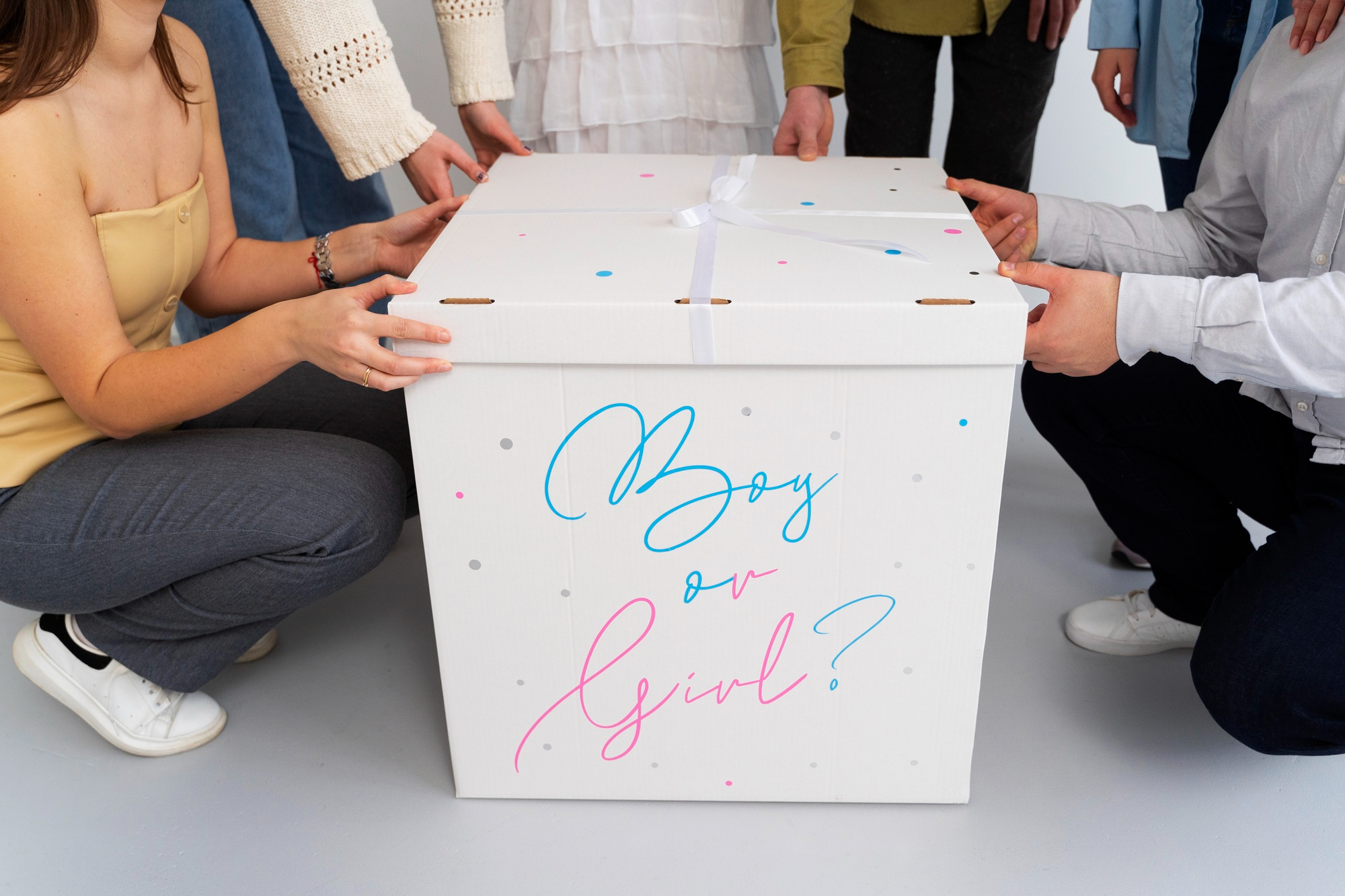
The envelope sat on my kitchen counter for three days before I delivered it to the bakery.
I want to be clear about this because it matters to everything that followed: I did not open it.
This is always the first thing people ask. Every person I have told this story to, from my sister to my next-door neighbor to the woman at the bakery when she called, they all eventually get around to asking whether I peeked, and the answer is a genuine and uncomplicated no. I understood that the envelope was not mine to open. I had been a mother for thirty-two years and I had learned, across those years, that one of the gifts you can give your children is the gift of restraint, of not knowing something when you could have known it, of protecting for them an experience that exists only once and cannot be reconstructed once it is consumed.
Emily had brought the envelope to my house in a paper lunch bag because it was the only thing she had in the car when the doctor handed it to her, and she had put it on my counter and kissed me on the cheek and said please don’t open it, Mom and I had said I won’t and she had looked at me with the look she had inherited from her grandmother, the one that said I believe you and I’m watching, simultaneously, and then she had gotten back in her car to drive home.
The envelope sat on my counter in its paper bag.
It sat there for three days while I arranged the other things, made the calls about the chairs and the decorations, confirmed the food order with the caterer who was doing a small grazing table because Emily had said something weeks earlier about not wanting to make the day about feeding people but about the moment, about the cut, and I had respected this and arranged accordingly.
On the third day, a Wednesday, I drove the envelope to Hartwell’s Bakery on Clement Street.
Hartwell’s had been in our town for nineteen years. Diane Hartwell had opened it with her husband when they were both in their early forties and the children were grown enough to not need constant attention, and she had built it from a small cake and pastry shop into the place that everyone in town went for the cakes that mattered. Emily’s wedding cake had come from Hartwell’s. My sister’s retirement cake, a three-tier lemon chiffon with violets that my sister still talked about three years later. My own sixtieth birthday cake, which Diane had made without anyone asking her to because she had known me for years and knew I would not ask for a fuss but would appreciate one.
I trusted Diane the way you trust someone who has never let you down.
I brought the envelope inside and I handed it to Diane personally. I did not hand it to the young woman at the counter or leave it in a box or mail it ahead. I drove to the bakery and I went in and I waited the four minutes for Diane to come out from the kitchen and I handed it to her with both hands in the manner of someone handing over something valuable.
“Doctor’s envelope,” I said. “Unopened.”
“Good for you,” she said. “I’d have looked by day two.”
“I thought about it,” I said honestly.
She wrote my name and the order number in black marker on the front of the envelope before she put it in the file. I watched her do this. She put it in the manila folder with Carter, Gender Reveal, Saturday written on the tab and she put the folder on the shelf with the other active orders and she told me the cake would be ready Friday evening for pickup or she could deliver it Saturday morning, her preference being the latter because she liked to see the display tables before handing over the cake so she could advise on positioning.
I said delivery Saturday morning was perfect.
I went home.
For the rest of the week I thought about the envelope with the satisfaction of someone who has completed a task correctly.
Emily was thirty-two years old.
She had wanted to be a mother since she was old enough to understand what the wanting meant in any concrete sense, and she had organized her adult life around this eventual chapter with the patient intention of someone who understands that some things cannot be hurried, only prepared for. When she was twenty-six she had told me, on a Sunday afternoon in my kitchen over tea, that she thought she had found the right person but that she wanted to be sure before she said anything, and two months later she had introduced me to Ryan.
Ryan Calloway was thirty-four, a high school history teacher with sandy brown hair and the particular quality of someone who finds the world genuinely interesting and who communicates this interest in a way that makes other people feel the world is more interesting than they had previously understood. He remembered small details about people, not performatively but naturally, in the way of someone whose attention is real rather than social. He had remembered, on his second visit to my house, that I had mentioned the previous time that the roses in my garden were struggling with aphids, and he had arrived with a small bottle of neem oil and a printout of organic treatment methods, which he presented without ceremony and which had made me like him more than I could adequately express in the moment.
They had tried for two years.
I knew this because Emily told me things, had always told me things, which was one of the genuinely good outcomes of the years I had spent trying to be the kind of mother she could talk to. The two years had not been simple. There had been months that ended in disappointment in the particular quiet way of those months, the specific silence on the phone call when she was telling me how the week had gone, the way the subject changed without being acknowledged as having been present.
I had not always known what to say during those months. I had not always said the right thing. I had sometimes said too much and sometimes said too little and once I had said something about time and patience that I immediately understood was wrong and that she had forgiven me for in the way she forgave things, quietly and without extended processing.
When she called me in March, I knew what the call was before she said the word. The quality of her hello was enough. There is a specific vibration in a person’s voice when they are carrying news that is too large for ordinary conversation and that requires a different kind of containment, and Emily’s hello had that vibration.
She got as far as I have something to tell you before she was crying.
I was crying before she finished the sentence.
We cried on the phone for four minutes before either of us said anything that could be understood as language, and I want to tell you about those four minutes because they were not embarrassing or excessive, they were exactly right, they were the correct response to the arrival of something that had been hoped for and waited for and carefully managed for two years.
She was twelve weeks.
They had waited to tell anyone until twelve weeks.
She was barely through telling me before I was calculating the summer, the timing, the fall arrival, what that would mean for the year.
The gender reveal was entirely Emily’s idea in its specifics. She had not been interested, she told me, in the kind of reveal that involved smoke cannons or confetti or explosions of any kind, not because she was against joy but because she wanted the reveal to be something that stayed, something with a photograph at the center, and a cake was what she had arrived at.
She wanted the cake to come from me.
This is what she said when we were discussing the logistics, that she wanted the specific piece of the day that held the answer to come from her mother’s hands, or rather from the place I chose to provide it, because she trusted my taste and she trusted my care and she wanted those qualities to be literally inside the thing that told them.
I had been moved by this without being able to articulate why until later, when I understood that what she was doing was including me in the moment in a specific and irreplaceable way. She was not asking me to help. She was asking me to carry the information to the place it needed to be, and then to stand there when it arrived.
Just the cake, Mom, she had said. I want it to come from you.
So I had done the cake correctly, and I had delivered the envelope personally, and I had confirmed the delivery time, and I had spent the week before the party managing every other detail of my contribution, which was the garden chairs I had rented and the extra napkins and the pitcher of lemonade I had promised to bring because Emily loved my lemonade and had asked for it specifically.
Fifty people were in Emily and Ryan’s backyard on a Saturday in late June.
The number does not capture what fifty people in a backyard feels like on a warm afternoon, the specific quality of that many people gathered for a singular purpose, the energy of shared anticipation. Gordon and Susan Calloway had driven six hours from their home in the Catskills. Ryan’s college roommate and his wife had come from Philadelphia. Emily’s oldest friend Carla had taken a red-eye from Seattle, which she had done twice before in her life for Emily’s significant occasions, and which spoke to the quality of a friendship built over twenty-five years.
Emily’s Aunt Patricia and her family were twenty minutes late, which was so precisely on schedule for Patricia that I had factored it into my timeline. They arrived in a tumble of apologies and hugs and the four children who had been in the car for two hours and were expressing their arrival energy with the full force of liberated children.
The backyard was beautiful.
Emily had spent two evenings making the flower arrangements herself, pink and white and a few stems of deep blue for contrast, and Ryan had strung the lights in the old oak tree that anchored the back corner of the property, the small warm lights that turn any outdoor space into something that exists slightly outside ordinary time. There were picnic tables draped in white linen, and the grazing table with cheeses and fruit and the things Emily had assembled with the careful eye she had always had for what makes a table look like someone cared about it.
And in the center of it all, on the table beside the cutting board and the knife Emily had chosen because it had been her grandmother’s, was the cake under its glass cover.
The cake was beautiful.
Diane had outdone herself in the way she occasionally did when she was pleased with a commission, the exterior a pale cream frosting with pink and blue sugar flowers in alternating clusters, the petals on the flowers given a slightly translucent quality through some technique I did not understand but that made them look as though they might be real, as though they were something more delicate than sugar. I had approved the exterior design at a tasting the previous Saturday, sitting at the small table in the back of Hartwell’s with a cup of tea while Diane walked me through the concept, and I had felt a genuine pride of the modest kind, the pride of someone who has made a good choice about something that mattered and who can see that the choice was right.
I had photographed the cake under its glass cover when I helped Diane position it on the table at nine that morning, and I had texted the photograph to Emily with just a heart emoji, and she had texted back three hearts and a crying face, which told me she was already in the mood that the day deserved.
I was in the kitchen getting napkins when my phone rang.
I had brought three packages of extra napkins because I have hosted enough outdoor events to know that the napkin situation is always more complicated than anticipated, that outdoor eating and the general looseness of celebration produces a napkin demand that exceeds any reasonable pre-event estimate. I had retrieved them from the bag I had left on Emily’s kitchen counter and I was heading back outside when the number appeared on my screen.
An unfamiliar number, but a local exchange.
“Mrs. Carter?” The woman’s voice had a quality that I registered before I understood why I was registering it, a careful quality, the tone of someone who is delivering information they would prefer not to deliver.
“Yes?” I said.
“This is Claire at Hartwell’s Bakery.”
“Oh, hello,” I said. And I smiled, because I was in the pleasant mode of someone whose day is going well and who expects it to continue going well.
“Mrs. Carter, I’m calling because there’s been a situation with your order and we’re asking that you please don’t serve the cake.”
I laughed.
The laugh was involuntary, the nervous laugh of someone whose mind has received information that does not fit the category of things that are currently possible and whose response mechanism has therefore produced the wrong response, the laugh rather than the question.
“I’m sorry?” I said.
“There was a problem with your order,” she said. Her voice was lower now, the deliberate lowering of someone who is trying to contain information within a conversation rather than letting it spread. “Someone came into the bakery this morning and made a change.”
“What kind of change?”
“Someone came in with your order number,” she said. “And with the customer’s full name. She also had what appeared to be a copy of the doctor’s envelope.”
My stomach did the specific thing that stomachs do when information arrives that does not fit the framework of how a day is supposed to go.
“Who was it?” I said.
“We assumed it was you,” she said. “She had all the information. We only realized afterward that something wasn’t right when Diane saw the order ticket and recognized that there were two different handwriting styles on the modifications.”
“What did she change?” I said.
“That’s what I’m trying to explain,” she said. “She was very specific. She said the exterior had to remain exactly the same. She said you had been in contact with her about the interior filling.”
“I have been in contact with no one,” I said.
“She replaced the cream filling,” Claire said. “But Mrs. Carter, she didn’t change the color. Whatever color Diane put in originally is still there. She only changed what else was in the filling.”
“What else is in the filling?” I said.
And that was when I heard the cheering from the backyard.
The sound came through the kitchen window, the specific eruption of fifty people responding to something at the same moment, the collective joy of a crowd that has been waiting for an announcement and has received it, and I spun around and looked through the window and I could see that the glass cover had been lifted from the cake and Ryan was already holding the knife and the guests were gathered and I was inside and too far away.
I went through the back door at speed.
I said wait.
I said it loud enough that I knew it had been heard because several people near the back of the crowd turned to look at me, but Ryan was already mid-cut and the momentum of a room in its moment of peak anticipation is not a thing that stops for one voice from a distance.
The knife went through.
Blue filling bloomed at the cut edge.
The sound that followed was the specific explosion of a gender reveal crowd at the moment of confirmation, a roar that was joyful and absolute, and someone close to the table screamed it’s a boy and the information moved outward through the fifty people like a wave.
Emily burst into tears.
She was standing beside Ryan with both hands over her mouth and her face was doing the thing that faces do when an emotion is too large for any single expression, cycling through joy and disbelief and relief and something older and deeper that had to do with the two years and the months of trying and everything that had preceded this moment.
I was moving through the crowd toward the table and I was watching Ryan, not Emily, because something in Ryan’s expression had changed in the way that expressions change when the hand encounters something unexpected.
He frowned.
He looked down at the knife.
He put the knife on the table and he reached into the cut section of the cake with two fingers, carefully, in the way you reach into something when you are not sure what you are reaching into, and he pulled out something small and metal.
He held it up.
The crowd noise shifted.
Not silenced, not stopped, but altered, the particular shift in the sound of a gathering when the mood has changed in a way no one has yet articulated. People near the table could see what Ryan was holding. People further back were still processing the blue filling announcement, still in the celebration, not yet aware that something else had happened.
Emily turned to look at what Ryan had in his hand.
Her face went white.
Not pale, not flushed, but the specific white of a person who has understood something before they have been told it, who has connected dots faster than language can follow.
I was at the table now.
I raised my phone to my ear. Claire was still on the line. I had never put her on hold, never set the phone down, and she was still there, waiting.
“Who went to the bakery?” I said.
She told me the name.
I looked across the backyard.
Susan Calloway was standing at the far edge of the gathering, near the rose bushes that bordered the property on the east side, holding a glass of lemonade. She was watching the table. She was not celebrating. She was watching with the particular stillness of someone who has a specific relationship to what is being discovered, the stillness of someone who knows what is in the cake.
People who are surprised do not look like that.
I put my phone in my jacket pocket.
I said to Ryan, quietly, before I moved: “Can you give everyone a minute? Get them settled with drinks or something.”
He looked at me.
He had not yet understood the full shape of what was happening but he understood enough to respond to the request, and he turned to the crowd with the ease of a man who was comfortable in front of people, which was his professional training, and he said in his classroom voice: “We are celebrating. Somebody get the champagne. My wife is having a boy.”
The crowd responded.
The champagne appeared, which had been waiting on the side table, and people moved toward it, and the moment expanded in the way that celebration moments expand when given a focus and a drink, and I walked through the dispersing crowd toward Susan.
She saw me coming.
She looked at me with the expression of someone who has been expecting this approach and has prepared for it, and I noticed that the preparation was the preparation of someone who has rehearsed a position rather than someone who has rehearsed a genuine account.
“What is it?” she said, meaning the metal thing Ryan had pulled from the cake.
“I think you know what it is,” I said.
“I have no idea what’s in that cake,” she said.
“The bakery told me your name,” I said. “Claire, the woman who called me. She told me someone came in this morning with my order number and Emily’s full name and a copy of the doctor’s envelope. She told me that person’s name.”
Susan held her lemonade glass with both hands.
“I was trying to do something meaningful,” she said.
“What kind of meaningful thing?” I said.
“It’s a family tradition,” she said. “The Calloway family, for three generations. When a boy is born, his name is sealed inside something at the celebration. A cake, or a bread, or whatever the occasion calls for. Ryan’s grandfather Charles was the one who started it. Ryan’s father was the second. Ryan was the third. We have the pieces at home, the three name plates, in a shadow box.”
I looked at her.
I kept my voice at the level I had decided it needed to be, which was the level of someone who is clear and serious but who is not performing anger in front of fifty guests.
“You did this without asking Emily,” I said.
“I didn’t think I needed to,” she said. “It’s a Calloway tradition.”
“Emily is a Calloway now,” I said. “Which means her knowledge and consent are required for Calloway traditions.”
“She would have agreed if I’d explained it,” Susan said.
“That is not something you can know,” I said. “Because you didn’t ask.”
She shifted slightly.
“How did you have my order information?” I said. “How did you have a copy of the doctor’s envelope?”
She was quiet for a moment.
“Ryan sent me a photo,” she said. “When Emily brought the envelope home from the doctor. He took a photo and sent it to me because he was excited and he wanted to share it.”
“And you used it to go to the bakery and change the cake.”
“To add to the cake,” she said. “The filling color is unchanged. I only added the name plate.”
“The name plate with a name that Ryan and Emily have not agreed to,” I said.
She looked at me.
“What name have they agreed to?” she said.
“That’s not for me to tell you,” I said. “That’s a conversation between you and your son and his wife.”
“The family name is Charles,” she said.
“The baby’s name is not my information to share,” I said again.
She looked across the yard to where Ryan was standing with Emily, his arm around her, and Emily had stopped crying and was composed in the way she composed herself when she needed to, the particular composure of a woman who knows how to be in front of people even when something hard is happening.
“I love my son,” Susan said.
“I know you do,” I said.
“I love this baby already,” she said.
“I know that too,” I said.
“I wanted to be part of it,” she said, and for the first time since I had approached her, the layer beneath the position was briefly visible, the thing underneath the tradition and the rehearsed account, which was the simple and painful thing, the fear of a mother-in-law who does not know her place in the new arrangement and who has handled that fear badly.
I recognized this.
I did not excuse it.
But I recognized it.
“Come inside with me,” I said. “We need to have a conversation, the four of us.”
She followed me across the backyard.
Ryan saw us coming.
He said something to Emily, and she looked at her mother-in-law, and something moved across her face that I could not read fully but that resolved into the composure I recognized.
The four of us went inside.
We sat at Emily’s kitchen table, Emily and Ryan on one side, Susan across from them, me at the end. Through the window I could see the party continuing, Carla had found the music speaker and activated it and people were talking and drinking champagne and the afternoon was doing what June afternoons do when people are gathered in a yard with string lights and an occasion.
Ryan set the name plate on the table between them.
Emily looked at it.
“Charles Ryan Calloway,” she said, reading it.
“It’s the tradition,” Susan said. “Three generations.”
“Ryan,” Emily said, to her husband. Not to her mother-in-law, to Ryan. “Did you know she was planning this?”
“No,” he said. Immediately, without qualification.
“He sent me a photo of the envelope,” Susan said. “He wanted me to know you were doing a proper reveal.”
“He shared a photo with his mother,” Emily said. “He didn’t give you permission to use it to access my order and change my cake.”
“I added to your cake,” Susan said. “The color is still there. The reveal happened.”
“The reveal happened after ten minutes of me thinking something was very wrong because you put a piece of metal in a cake without telling anyone,” Emily said.
Susan was quiet.
“I want to ask you something,” Emily said. “And I want you to answer me honestly.”
Susan looked at her.
“Did it occur to you, at any point while you were planning this, to call me and ask me if this was something I would want?”
A long pause.
“I thought you’d be happy about it,” Susan said.
“That’s not what I asked,” Emily said.
Another pause.
“No,” Susan said finally. “It didn’t occur to me to ask.”
“Why not?” Emily said.
Susan looked at the name plate.
“Because it’s been done for three generations,” she said. “And it was never a question before.”
“It was never a question before,” Emily said slowly, “because Ryan is the first of those three generations to be married to someone who isn’t you. I’m not you, Susan. I’m me. And what matters to me matters to this baby. And what I decide with Ryan about our son’s name and our son’s traditions matters.”
“I wasn’t trying to override you,” Susan said.
“What would you call it?” Emily said.
The question sat in the kitchen.
Ryan had been quiet for most of this, and I had let him be quiet, because this was between Emily and his mother in a way that required him to be present but not to manage. But now he said: “Mom. The name plate says Charles Ryan. Our son’s name is not Charles.”
Susan looked at him.
“It’s a tradition,” she said. “Charles in the first position, the family name.”
“The baby’s name is James,” Ryan said. “James Oliver Calloway. Emily and I decided that together, months ago. His middle name honors Emily’s grandfather.”
“Oliver,” Susan said.
“Oliver,” Ryan confirmed.
“You never mentioned a name,” she said.
“We were keeping it between us until after the reveal,” he said. “Which is why you should have asked before you changed anything.”
“I didn’t know the name,” she said.
“Which is exactly why you should have called first,” he said.
Susan looked at the name plate.
She picked it up and held it in both hands and looked at it for a long time, and I watched her doing this and I thought about what it must feel like to have planned something for weeks, to have driven six hours for it, to have gone to the bakery that morning with a small package of meaning and a family tradition, and to have arrived at this kitchen table.
I am not a person who enjoys watching other people in the moment of their mistakes.
This is worth saying.
The plant in the backyard, the confusion at the table, the white face of my daughter, Ryan’s frown over the knife, all of it had been the consequence of a choice Susan had made from love, poorly directed love, love that had failed to ask the essential question, but love nonetheless.
“I’ve overstepped,” she said finally.
Emily looked at her.
“Yes,” she said. “You have.”
“I wanted to be part of it,” Susan said. And again I saw the thing underneath, visible again, the fear of the woman who does not know how to be the mother-in-law, who is not sure of her place in the new configuration, who has responded to that uncertainty by trying to install herself in the middle of a moment rather than waiting to be invited to the edges of it.
“You are part of it,” Emily said. “You’re his grandmother. You were in that backyard when we found out. You were part of the moment.”
“I wanted to contribute something,” Susan said.
“The contribution that would have meant the most,” Emily said, “would have been calling me beforehand and telling me about the tradition and asking if it was something we wanted to carry forward.”
“Would you have said yes?” Susan asked.
Emily was quiet for a moment.
“I don’t know,” she said honestly. “We already have the name. I don’t know if we would have wanted a different name on a plate inside the cake. But I would have been grateful that you asked. And we could have figured out something together that honored the tradition and honored us.”
Susan set the name plate down.
She looked at Ryan.
“I’m sorry,” she said. It came out with the quality of something that had been held and is being released, not easily, not with full grace, but genuinely.
Ryan said: “I know you meant well, Mom.”
“I should have asked,” she said.
“Yes,” he said.
She looked at Emily.
“I should have asked,” she said again. It was the same sentence but directed differently, and the directing of it mattered.
“Yes,” Emily said. “You should have.”
A pause.
“I’d like to know him,” Susan said. “James. I’d like to be his grandmother properly.”
“That’s what I want too,” Emily said. “I want James to know you. I want him to love you. That’s what I’m hoping for.”
“Then tell me how,” Susan said. “Tell me what I should do.”
Emily looked at her husband.
Then she looked at her mother-in-law.
“Ask,” she said. “Whatever you’re thinking of doing. Call me first and ask.”
“All right,” Susan said.
“That’s the whole thing,” Emily said. “That’s all of it.”
Susan nodded.
Ryan stood up first.
“There are fifty people in the backyard waiting to celebrate,” he said.
I stood up.
Emily stood up.
Susan picked up the name plate.
“Can I keep this?” she said to Emily.
Emily looked at it.
“Yes,” she said. “Keep it. It’s still a beautiful tradition. We’ll find a way to make a version of it that works for us. Maybe James can have his own version when the time comes.”
“His own name,” Susan said.
“His own name,” Emily said.
We went back outside.
The party received us with the particular warmth of a gathering that has been happily occupied in the absence of its hosts and is glad to have them back. Carla caught my eye from across the yard and raised her eyebrows in the question that old friends convey without words, and I gave her the small nod that said handled.
Gordon Calloway appeared beside me.
He was a quiet man, Gordon, in the way of certain men who are married to louder people and who have learned over many years that the space beside them is usually occupied and that patience is its own form of participation. He held a glass of champagne and he looked at me with the expression of someone who had observed everything from a distance and had understood it.
“She told me she was making a quick stop on the way here,” he said. “I thought she meant flowers.”
“She did not mean flowers,” I said.
“No,” he said. “I gathered.”
“She loves Ryan,” I said.
“More than anything,” he said.
“She loves the baby already.”
“Absolutely,” he said.
“She just doesn’t always know how to love something without trying to organize it,” I said.
He looked at me.
“That’s very precisely put,” he said.
“I’m a mother-in-law too,” I said. “In a few years. When Carla finally decides to get married.” I nodded across the yard toward Carla, who was teaching Ryan’s friend from Philadelphia to do something with a napkin that had become the center of an impromptu activity. “We all have to figure out where we stand.”
“She’ll learn,” he said. “If Emily gives her the chance.”
“Emily will give her the chance,” I said. “That’s who Emily is.”
He looked at his wife, who had found a seat at one of the tables and was talking with Emily’s Aunt Patricia. Something in Susan’s posture had changed in the twenty minutes since the kitchen, a loosening, the subtle physical evidence of someone who has put something down.
“She wants so much to be needed,” he said quietly.
“She is needed,” I said. “She’s a grandmother. She just has to let them tell her how.”
He nodded.
He raised his glass in a small gesture toward me.
“Thank you,” he said. “For handling it the way you did.”
“Emily handled it,” I said. “I just organized the chairs.”
He smiled.
He went to his wife.
The afternoon continued.
The cake was served, the blue filling bright and definitive in each slice, and Emily and Ryan cut the pieces together and passed them around and the champagne toasts happened in the slightly chaotic way of outdoor champagne toasts where someone always starts before everyone has a glass and then has to wait while the late arrivals are found and poured for, and Gordon gave a toast that was brief and warm and that made Susan press her hand to her eyes.
I gave a toast.
I said: for three years of watching my daughter prepare herself to be a mother, and for the absolute certainty that she is going to be extraordinary at it. I said: for Ryan, who is the kind of man who remembers about neem oil. I said: for James Oliver, who is going to arrive in September into a family full of people who already love him so much they cannot behave themselves about it.
There was laughter.
Susan laughed.
I noticed this.
Before everyone began to leave, when the afternoon was in its final hour and people were gathering their things and finding their children and saying goodbye in the extended way of gatherings where no one wants to be the first to leave because leaving is an acknowledgment that the good thing is ending, Emily found me near the rose bushes.
She put her arms around me.
She held on.
“The cake was beautiful,” she said.
“Diane outdid herself,” I said.
“Before the name plate,” she said. “The outside was perfect.”
“Yes,” I said.
She pulled back and looked at me.
“How did you know?” she said. “To come inside with Susan instead of saying it all outside.”
“Because you had fifty people watching,” I said. “And because what needed to happen needed space.”
“How did you know to let me lead it?”
“Because you’re his mother,” I said. “And because you’re better at that than I would have been.”
She looked at me.
“I wasn’t going to be mean,” I said. “But I would have been less patient. You were patient with her.”
“I want her to be his grandmother,” Emily said.
“She will be,” I said.
“I need her to understand this is our family now,” she said. “Ryan and me and James. And she can be in it. But we’re the center of it.”
“She understood that today,” I said.
“Did she really?”
“She asked to keep the name plate,” I said. “And you told her you’d find a way to make a version of it that works for you. And she accepted that.”
Emily was quiet.
“That was generous,” I said. “What you said to her about finding a version that works.”
“I meant it,” she said.
“I know,” I said.
“It’s a beautiful thing,” she said. “The tradition. Three generations of names in cakes and breads and celebrations. I just want it to be ours too, not just theirs.”
“That’s the conversation you’ll have,” I said. “When it’s closer. When James is here and the family is really itself.”
She nodded.
“James Oliver Calloway,” she said.
“James Oliver Calloway,” I said.
She smiled.
It was the smile she had been wearing all day, the one that was underneath everything else that had happened, the smile of a woman who is going to have a son in September and who has known for hours now and is still discovering what it means.
I drove home at seven in the evening with the leftover napkins and a box with two slices of blue-filled cake that Emily had pressed on me despite my protests, and the name plate, which Emily had handed me at the door with the request that I keep it safe until they figured out what to do with it.
I put the name plate on my kitchen counter.
I looked at it for a while.
Charles Ryan Calloway, in neat engraved letters, the kind that last.
It was a beautiful thing, in its way. Three generations of names, in boxes and breads and now in a cake, a family tracking itself through the ceremonies it chose to mark the arrivals of its members.
James Oliver would have his own version.
He did not need to be Charles to belong to that lineage.
He would be James, named for the man his mother’s grandfather had been, carrying that forward the way families carry things forward when they are paying attention, with intention and love and the understanding that the new arrivals get to say which inheritances they accept.
I called Diane.
She answered on the first ring, which told me she had been waiting.
“I am so sorry,” she said. “We should have called you the moment she came in. We should have known something was wrong.”
“You didn’t know,” I said. “She had my order number. She had the information. There was no reason not to believe her.”
“Is Emily all right?” she said.
“Emily is wonderful,” I said. “She’s having a boy.”
“Oh,” Diane said. “Oh, congratulations. A boy.”
“James Oliver,” I said. And saying it was the first time I had said it out loud to someone outside the family, the first time I had offered it to the world as his name, and the saying of it made it real in a new way.
“Congratulations, Grandma,” Diane said.
I sat down at my kitchen table.
Grandma.
I had been a mother for thirty-two years and the word grandmother had existed in my future in the abstract way of things you know are coming and cannot yet imagine, and now it was not abstract, it was a name I had, a name that James Oliver Calloway was going to call me when he arrived in September and grew into words.
I looked at the name plate on the counter.
I looked at the two slices of cake in their box.
I thought about the envelope on the counter for three days, the restraint of not opening it. I thought about driving it to Hartwell’s personally. I thought about Claire’s phone call and the ten minutes and the knife going into the cake and the blue filling and Ryan’s frown and the metal thing in his fingers.
I thought about Emily at the kitchen table across from Susan, asking her to ask.
Ask. Whatever you’re thinking of doing. Call me first and ask.
That’s the whole thing. That’s all of it.
I thought about what it meant, to be the grandmother, to be the one who was not the center of the new family but who was invited into it, and how the invitation required something of me too, the same discipline Emily had asked of Susan, the patience to wait, to ask rather than arrange, to let them tell me how.
James Oliver was coming in September.
I had three months to practice.
I put the name plate in the small wooden box where I kept important things, the box that had my mother’s ring and Emily’s first school photograph and the note Ryan had left me after their first Christmas as a married couple, the note that had said thank you for raising her the way you did.
I put it there because it was part of the story now. Not the tradition Susan had intended, not the tradition that would organize itself around a name he was not going to have, but something else, something this specific family was making, which was the story of the day they found out he was coming and everything that the finding out had required of everyone involved.
James would hear this story someday.
Emily would tell it to him the way she told things, with the warmth and the humor that she had and that he would inherit, and she would show him the name plate and explain what it meant and who had put it in the cake and why, and she would make it into the thing that difficult stories become when they are told by the right person to the right audience, which is not a cautionary tale and not a wound but a part of the family’s specific and irreplaceable account of itself.
And Susan would be in it.
As the grandmother who drove six hours and made a mistake from love and sat at a kitchen table and said I should have asked and meant it.
That was not nothing.
That was, in fact, something close to everything.
I turned off the kitchen light.
I went to bed.
In September, a boy named James Oliver Calloway arrived in the world, seven pounds and eleven ounces, with his father’s brown hair and his mother’s stubborn chin and, according to his great-aunt Patricia who claimed authority on the subject, my mother’s nose.
He was everything.

Specialty: Quiet Comebacks & Personal Justice
David Reynolds focuses on stories where underestimated individuals regain control of their lives. His writing centers on measured decisions rather than dramatic outbursts — emphasizing preparation, patience, and the long game. His characters don’t shout; they act.