I had been counting the days for four months.
I was an ordinary man who had one clear reason to get through each morning: the thought of walking back through my front door and holding my newborn daughters for the first time.
My mother had sent me their photograph the week before. I had looked at that photo more times than I could count. I had it folded in the breast pocket of my uniform for the entire flight home, and I had taken it out so many times the crease had gone soft.
I hadn’t told my wife, Mara, or my mother about my leg.
But to understand why I made that choice, and everything that came after it, I need to go back to the beginning, to who Mara and I actually were before any of this happened, because I think that’s the part people skip when they hear the short version of this story.
My name is Arnold Whitfield, though everyone’s always called me Arnie. I grew up in a small town two hours outside the city, the only son of a widowed schoolteacher who worked two jobs most of my childhood to keep us afloat after my father passed when I was nine. I enlisted at nineteen, mostly because college felt like a door that wasn’t fully open to a kid like me, and the military offered something I badly wanted at the time: structure, purpose, a clear path forward that didn’t require anyone handing me anything I hadn’t earned myself.
I met Mara at a friend’s wedding when I was twenty-six, home on a two-week leave. She worked as a receptionist at a dental office then, bright and quick with a laugh that seemed to fill up whatever room she was standing in. I fell for her fast, the way you sometimes do when you’ve spent years moving through a world built on discipline and distance, and suddenly here’s a person who makes you want to stay still for once. We married eighteen months later, a small ceremony in her parents’ backyard, string lights and folding chairs and my mother crying through the whole thing.
The early years of our marriage were shaped almost entirely around my deployments. Mara learned to run a household alone for months at a stretch, learned the particular loneliness of an empty side of the bed, and I want to say, honestly, that she handled it with more grace than I think I ever fully appreciated at the time. We talked on scratchy satellite calls when we could get them, wrote long letters when we couldn’t, and built a marriage in the gaps between my absences that felt, to me at least, genuinely solid.
We lost two pregnancies before the twins. The first, early on, in our second year of marriage, a loss so early that some people might not even call it a loss, though it broke something in Mara that took months to mend. The second, three years later, further along, far enough that we’d already picked a name, far enough that losing it felt like losing an actual person rather than a possibility. I was home for that one, and I watched my wife disappear into a grief so total that some days she couldn’t get out of bed, and I remember feeling, for the first time in my adult life, genuinely helpless in a way my military training had never prepared me for.
So when she got pregnant a third time, with twins this time, discovered at an ultrasound that had both of us crying in the exam room, I understood, without either of us needing to say it explicitly, that this pregnancy carried the weight of everything we’d already lost. Every single week it held was a small, fragile victory neither of us wanted to jinx by celebrating too loudly.
I deployed again when she was four months along, my final scheduled deployment before I planned to leave active service entirely and take a training position stateside, something that would keep me home permanently once the twins arrived. I want you to understand that leaving her pregnant and alone for that stretch was already the hardest thing I’d ever done, and I told myself, repeatedly, that it would be worth it, that I’d be home well before her due date, that this was simply the last hard thing before an easier chapter began.
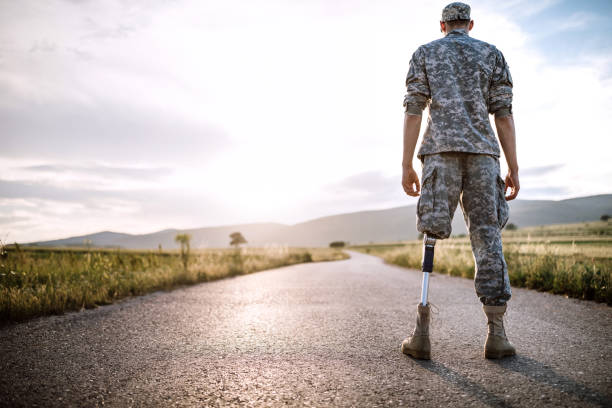
The injury happened during a routine patrol eleven weeks before I was due to rotate home, an IED that took my right leg below the knee and very nearly took considerably more than that. I spent the following weeks in a military hospital overseas, then a longer stretch stateside in rehabilitation, learning to walk again on a prosthetic that felt, in those early months, like wearing a stranger’s leg that had been bolted onto my body without my consent.
When the injury happened, Mara was seven months pregnant. I made the call, from that hospital bed, not to tell her.
I want to be honest about how much I turned that decision over before I made it, because I know now, with the particular clarity hindsight always provides, that I got it wrong. But at the time, watching what those two earlier losses had done to my wife, watching how fragile the third pregnancy still felt even at seven months, I told myself I could not put that pregnancy at risk by delivering news that would frighten and grieve her while she was still carrying our daughters. I told myself I was protecting her. I told myself, and I believed it completely, that the truth could wait until the girls were safely born and Mara had the emotional bandwidth to receive it without it costing us anything more.
I told only one person. Mark, my best friend since we were twelve years old, the kid who lived three houses down and grew up practically as a second son to my mother, the man who stood beside me at my wedding as best man. He cried on the phone when I told him and said, “You’re going to have to be strong now, man. You’ve always been stronger than you think.”
I believed him without reservation. I had no reason not to. We’d known each other for over twenty years by then, weathered our own separate hardships together, and I trusted him with things I told almost nobody else, including, apparently, the exact details of my injury while I kept that same information from my own wife.
The twins, Katie and Mia, were born six weeks after my injury, three weeks before their due date, both healthy despite arriving early, both perfect in every way new parents mean when they use that word. I saw photographs before I saw them in person, my mother sending updates from the hospital, and I remember lying in my own hospital bed, freshly missing part of my own leg, crying over a photograph of two tiny faces I hadn’t yet held.
I spent the following four months in rehabilitation, learning to walk on my new prosthetic, pushing myself harder than the physical therapists strictly recommended because I had one singular goal driving every session: walking through my own front door on two functioning legs, however imperfect the second one might be, and holding my daughters without needing to explain, in that first moment, everything that had happened while I was gone.
At a small market near the airport, on the day I finally flew home, I found two hand-knitted sweaters in yellow, because my mother had written to say she was decorating the nursery in yellow. Then I bought white flowers from a roadside stall because white had always been Mara’s favorite, ever since our wedding, when she’d insisted on simple white peonies instead of anything more elaborate.
I didn’t call ahead. I wanted to surprise my wife. I imagined the door opening. Her face. The girls. God, I was so excited.
The drive from the airport felt like the longest thirty minutes of my life, and I spent most of it smiling. I remember thinking nothing could ruin that moment.
I was wrong.
I pulled into the driveway and sat there for a second, then stepped out and walked up to the porch. Something felt off before I even touched the door.
No light in the windows. No sound of a television or music, or the particular domestic noise of a home with two new infants in it.
I stood at the door with the flowers in one hand and the sweaters tucked under my arm. Then I slowly pushed the door open.
“Mara? Mom? Guys… I’m back…”
The walls were bare. The furniture was gone. Every surface we had built our home on had been cleared away, and the rooms I had memorized from a photograph were now just empty rooms.
Then I heard crying from upstairs.
I moved up the stairs as fast as I could manage, pain shooting through my prosthetic with every step, adrenaline overriding whatever caution the therapists had drilled into me about pushing too hard too soon.
The door to the nursery was open. My mother was inside, still in her coat, one baby pressed to her shoulder, the other lying in the crib. Mom looked up when I came in and started crying, her eyes dropping from my face to my leg.
“Arnie…”
“Mom? What happened? Where’s Mara?”
Mom looked away from me. She kept saying the same words.
“I’m so sorry, Arnie. Mara asked me to take the girls to church. Said she needed some time alone. But when I got back…”
I saw the note on the dresser.
One line locked everything into place: “Mark told me about your leg. And that you were coming to surprise me today. I can’t do this, Arnold. I won’t waste my life on a broken man and changing diapers. Mark can give me more. Take care… Mara.”
I read it twice. Some things take a second pass before the brain accepts them.
Mark didn’t just tell Mara; he handed her a reason to leave. He was the only person I trusted with the truth. But he decided it was information worth sharing with my wife so that she could make a different choice.
I put the note back on the dresser.
I picked up Katie, who was still crying, and I sat on the floor with my back against the crib and held her. My mother put Mia in my other arm without saying anything, and the four of us sat there in a nursery with yellow walls.
I didn’t resist it. I let all of it hit at once.
The sweaters were still tucked under my arm. I set them on the floor beside me. The white flowers were downstairs, where I had dropped them.
My mother put her hand over mine and did not speak.
I don’t know how long we were there. At some point, both girls quieted. They had cried themselves into a still, heavy kind of sleep, and now they were just warm weight against my chest.
I looked at their faces in the yellow light of the nursery, and I made them a promise out loud, even though they couldn’t understand a single word of it: “You are not going anywhere, sweethearts. Neither am I.”
I want to describe that first night in more detail, because it set the shape of everything that followed. My mother stayed, of course, and together we found the twins’ actual bottles and diapers, which Mara had apparently left behind along with most of their small belongings, a detail that struck me later as strange, since I don’t think Mara had actually planned this departure so much as reacted to it in a panic once Mark’s information reached her. My mother made up a makeshift bed for me on the living room floor, since the bedroom furniture was gone entirely, and I lay there that night with my new prosthetic still aching from the day’s exertion, listening to my daughters breathe in the borrowed crib my mother had somehow managed to locate and set up within a few hours.
I called Mark exactly once, two days later, my hands shaking with a fury I’d never experienced in combat, not even under fire. He answered on the third ring, and I could hear, immediately, that he already knew why I was calling.
“Arnie, man, I—”
“Don’t,” I said. “I just need to hear you say it. You told her.”
A long silence. “I thought she deserved to know before you showed up and it was just, sprung on her. I thought—”
“You thought wrong,” I said, and I hung up before he could offer whatever explanation he’d apparently been rehearsing. I never called him again after that. I heard from mutual friends, months later, that he and Mara had already been seeing each other in secret for weeks before I came home, that the phone call about my leg hadn’t been some act of misguided honesty at all, but rather the final piece of information he needed to give her the push she was apparently already looking for.
I didn’t chase her. I didn’t call her parents demanding explanations. I didn’t hire an investigator or make any of the dramatic gestures I sometimes imagined, late at night, in the early exhausted weeks of single-handedly learning to care for two infants on a prosthetic leg that still sent shooting pain up through what remained of my calf every time I climbed the stairs. I simply focused, entirely and completely, on my daughters.
The next three years were the most demanding and the most defining of my life.
My mother moved in for the first year, taking the guest room and functioning as something closer to a full partner than simply help, given how thoroughly the two of us had to coordinate every single day. We developed a rhythm. I learned to move through the world differently than I had before, adjusting the house itself in small ways, a ramp built into the back steps, cabinet handles lowered so I could reach things one-handed while balancing a baby, and in the process of adapting, I started sketching something I had been thinking about since the first week of my rehabilitation.
The joint mechanism in my prosthesis was functional but inefficient. The prosthetic worked, but not well enough. It hurt and slowed me down, particularly the way it handled uneven terrain, stairs, the simple, constant physical demands of chasing after two increasingly mobile toddlers. So I started fixing it.
I had ideas about how to reduce the friction, drawing on some rudimentary mechanical knowledge I’d picked up years earlier during a brief stint helping my uncle run an auto shop before I enlisted. I sketched at the kitchen table after the twins were in bed, on whatever paper was available, in whatever spare hour the evening gave me. Some nights it was just twenty minutes before exhaustion won out. Other nights, particularly once the girls started sleeping through more consistently, I’d work for hours, filling notebook after notebook with revisions to the same basic idea, refining a joint design that could better absorb impact and distribute weight more naturally through a stride.
I filed the patent alone, working with a patent attorney I found through a veterans’ support group I’d started attending, mostly for the community rather than any particular expectation that it would lead anywhere professionally. I found a manufacturing partner who understood what I was building, a small firm out of the Midwest run by another veteran who’d lost an arm and understood, in a way most able-bodied engineers simply couldn’t, exactly what problem I was actually trying to solve. The first prototype worked better than I had expected. The second one was the one that mattered.
I signed the contract with a company that specialized in adaptive technology when the twins were just over two, and I did not announce it, did not give interviews, and did not post about it anywhere. I had two daughters who needed their father present and a business to build, and I had no interest in being a story that other people told about themselves, some inspirational veteran narrative reduced to a headline. I just wanted to keep building something that actually worked.
By the time the twins were old enough for preschool, the company was real and so was what it had become. What started as one improved joint mechanism had expanded, through partnerships and licensing agreements I mostly let my business partner handle while I focused on continued design work, into a small but genuinely profitable adaptive technology firm, one that had already helped hundreds of veterans and civilian amputees alike move more comfortably through their own lives.
I moved us to a new city that year, enrolled the girls in a preschool my mother recommended after doing her own careful research, and went to work in a building with a view of the river. My mother stayed close, moving into a small apartment fifteen minutes away rather than back to our old hometown, unwilling, she told me plainly, to miss a single more year of her granddaughters growing up.
One Wednesday afternoon, three years almost exactly after that terrible homecoming, as I was reviewing quarterly reports at my desk, my secretary knocked on my office door and said there was an important envelope.
I opened it.
Inside was the property document my business partner had sent for a project I had approved weeks earlier, part of an expansion initiative we’d been discussing for months, converting an underused property into a residential facility specifically designed for injured veterans working through adaptive limb needs. The team had been scouting foreclosed estates for the past several weeks, and this particular envelope contained the details of the one they’d finally settled on: a foreclosed estate that the firm had identified as a suitable location. The address. The square footage. And the former owners’ names.
I read the names twice. Then I read them again to make sure I wasn’t imagining it.
Of all the properties in the city, it had to be theirs.
I sat at my desk for a long moment after that, feeling something complicated move through me, not quite anger, not quite satisfaction, something closer to the strange, dizzying sensation of watching a circle finally close on its own without my ever having pushed it there deliberately.
Then I folded the document, put on my jacket, and drove to the address. I finally understood something I hadn’t back then: some endings don’t close quietly.
I didn’t rush. I just drove quietly, knowing I wasn’t the one walking into something I didn’t understand.
When I got there, the first thing I noticed was the movers. A van sat in the driveway, and men carried boxes marked in black while a pile of furniture grew across the lawn in the afternoon light.
Then I saw them standing there.
Mara was on the porch steps in old clothes, arguing with one of the workers in the clipped, rising tone of someone who knows they have already lost and cannot accept it.
Mark was beside her, saying something that she wasn’t listening to, his shoulders bent in a way I had never seen before when we were young and everything was easy for him.
I sat in the truck and watched them for a moment, long enough to understand exactly what they had become. They were arguing, then Mara turned and went inside. Mark followed, and the door slammed hard behind them.
I want to explain, briefly, what I’d learned over the intervening three years, pieced together mostly from mutual acquaintances who occasionally passed along updates I never asked for but didn’t entirely mind receiving either. Mark and Mara had married about eight months after she left, a quick, small ceremony that apparently surprised most of the people who attended it, given how recently she’d been my wife. Mark’s own contracting business, which he’d always talked up as far more successful than it actually was, had apparently been struggling for years even before any of this happened, propped up by loans and increasingly desperate financial maneuvering that Mara, I gathered, had known nothing about until well after she’d committed herself to him.
Then I got out, straightened my jacket, and walked toward the door.
I knocked. Mara opened the door a moment later and looked at me like she’d seen a ghost. Then it hit her. She went very still.
Mark heard the silence and turned. He had less of a reaction than Mara did. Mostly he just looked like a man who had been waiting for something unpleasant to arrive and had simply underestimated when.
“Ar… Arnold?” Mara gasped.
I looked at the worker nearest the door. “How much longer?” I asked him.
He checked his clipboard. “Process is finalized, Sir. We’re just clearing the remaining items.”
I turned back to Mara and Mark. “This property belongs to me now,” I announced, and let the silence do the rest.
They stood there while that settled.
Mara’s hands were shaking. Mark was very quiet. He looked at me as if he wanted to say something, an explanation, maybe. But there wasn’t anything left that I needed to hear.
I told them how it had happened. Not everything, but just the outline: the sketches on the kitchen table. The patent. The contract. The company. And the quiet, unglamorous accumulation of work that I had been doing while they were building something else entirely.
“You bought this house?” Mara asked.
“My company identified it as suitable for a project. I didn’t know who it belonged to until I saw the document.”
She looked at me for a long moment. Her eyes moved to my leg. Then she asked the question I anticipated.
“I made a mistake, Arnie. I was wrong. Our daughters… Can I see them? Just once?”
I looked at Mara without raising my voice. “They stopped waiting for you a long time ago. I made sure they didn’t have to.”
Silence settled. Behind us, the movers kept working, the sound of boxes and footsteps filling the space.
Then Mark finally spoke. “It wasn’t supposed to go like this, man. Things just… didn’t work out. I made some bad calls, alright? I thought I had it handled.”
Mara turned on him with the kind of exhausted fury that accumulates when two people have been blaming each other for long enough. “Don’t start. You promised me this would work,” she snapped at him. “You said you had it all figured out. Look at us now.”
I had nothing more to say to either of them.
“There’s nothing left here. For any of us.”
“Arnold, wait… please,” Mara called after me as I turned to leave. “You can’t do this. This is our home.”
Mark stepped forward, desperation brimming in his eyes. “We’ll figure something out, alright? Just… just give us time, man. Don’t throw us out like this.”
I didn’t answer. I got into the truck and closed the door.
For a moment, I just sat there. Then I picked up my phone and called the lead mover.
“I need the keys by five.”
There was a pause on the other end. “Understood, Sir.”
I hung up.
Outside, Mara had gone quiet. Mark didn’t say anything else.
I started the engine and drove away.
When I got home, the girls were at the table with my mother, their heads bent close together as they colored, crayons scattered across the surface and laughter slipping out in small bursts.
I stood in the doorway for a second, just watching.
My mother looked up. “How was your day, Arnie?”
I smiled. “Never better, Mom.”
That was a month ago.
The mansion that had once belonged to Mara and Mark was repurposed into a residential retreat center for injured veterans, complete with therapy rooms, a garden, and a workshop space where people with adaptive limb needs could work through problems the same way I once did. I hired a small permanent staff, several of them veterans themselves who understood the work intimately, and I structured the whole facility around the same basic philosophy that had gotten me through those first exhausting three years, the belief that losing something didn’t automatically mean losing everything, that a person could rebuild a different, genuinely good life out of pieces that looked broken from the outside.
I named it after nothing in particular. I didn’t want a monument to myself. I wanted a place where people who had lost something could learn they weren’t finished.
The girls are five now, sharp and curious and entirely unaware of most of what I’ve just told you, though I imagine there will come a day, years from now, when they’re old enough to ask the harder questions and deserve honest answers. My mother still comes by most weekends, and some evenings, watching Katie and Mia argue fiercely over whose turn it is to pick the bedtime story, I catch myself thinking about that nursery floor, the two of them warm against my chest, the promise I made them before they could understand a single word of it.
Mara and Mark’s story ended the way those stories tend to end. I heard how it turned out, and that was enough for me. Some things don’t need revenge. They just need time to arrive at their own conclusions.

Laura Bennett writes about complicated family dynamics, difficult conversations, and the quiet moments that change everything. Her stories focus on real-life tensions — inheritance disputes, strained marriages, loyalty tests — and the strength people find when they finally speak up. She believes the smallest decisions often carry the biggest consequences.