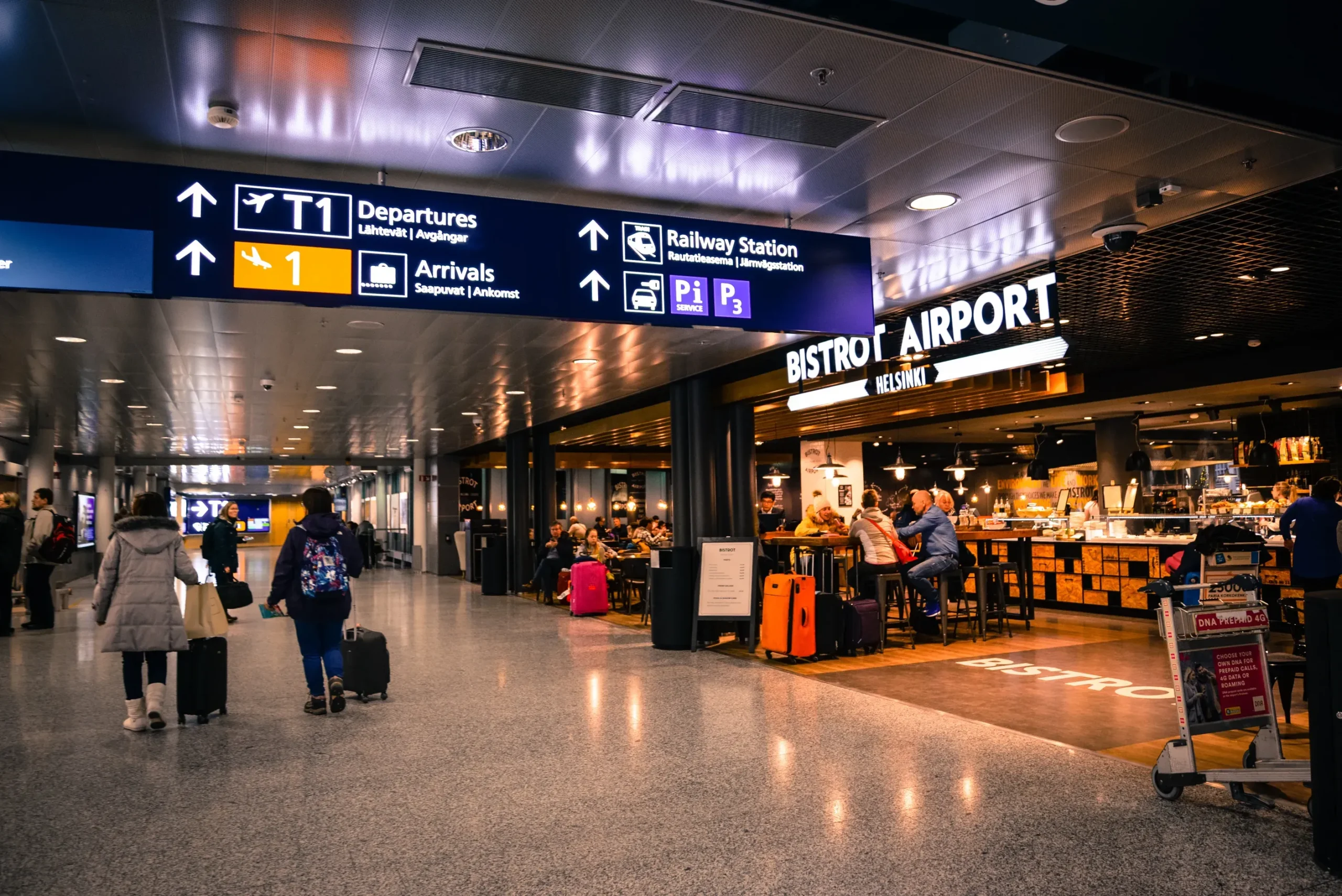
My father took my grandmother’s $30,000, led her to an airport counter, and told her he’d forgotten her ticket. Told her to go home.
My mother, my aunt, and my cousins all looked away when he said it. Nobody’s eyes landed on Grandma. Nobody’s eyes landed on me either, which was its own kind of answer. They thought she’d be too humiliated to fight back. What none of them counted on was that I’d stay behind, and that three weeks later I’d be the one calling the one lawyer they had spent twelve years hoping she would never contact again.
But to understand how we all ended up standing in that terminal, watching my grandmother’s hands go white around the handle of a suitcase she’d packed for a trip that had never actually included her, you need to understand what the previous year had looked like from the inside, because from the inside, it looked like love.
My name doesn’t matter much to this story, so I’ll leave it where it’s always sat, quietly in the background, the way I’ve sat in the background of my family for most of my twenty-six years. I’m the oldest grandchild, the one who used to spend summers at Grandma Hazel and Grandpa Walter’s house while my parents worked, the one who learned to deadhead roses standing on an overturned bucket beside her because I was too short to reach the good blooms otherwise. I loved my grandmother the plain, uncomplicated way you love someone who fed you cinnamon toast and never once made you feel like a burden, and I loved my father too, in the more complicated way you love someone who taught you to ride a bike and also taught you, without meaning to, exactly how far a person’s patience could be stretched before it simply stopped mattering to the people stretching it.
Grandpa Walter built a small manufacturing company from nothing, starting in a rented garage the year my father was born, growing it slowly over four decades into a business that supplied custom metal fixtures to construction firms across three states. Grandma worked beside him for most of those years, doing the books at the kitchen table long before they could afford an actual accountant, answering phones, learning to read a balance sheet the hard way, the way you learn anything when the alternative is losing everything you’ve built.
Grandpa died six years before that terrible morning at the airport, a stroke that took him fast, in his sleep, which I’ve always told myself was its own small mercy even though I know grief doesn’t really work in mercies. My father took over running the company almost immediately afterward, and for years, everyone in the family simply assumed, the way you assume the sun will rise, that the company and the building it operated out of belonged to him outright, inherited the ordinary way a son inherits his father’s life’s work.
I want to be honest that I assumed the same thing. Nobody had ever told me otherwise. Nobody had ever needed to, until the year everything came apart.
Twelve years before the airport, back when Grandpa was still alive and healthy enough to be thinking carefully about the future rather than reacting to an emergency, he and Grandma had sat down with an estate attorney named Elias Grant and built something my father never fully understood the shape of, a family trust that held the building, that held a significant portion of Grandma’s assets, and that came with conditions attached, conditions Mr. Grant had explained plainly to both my father and my Aunt Monica at the time. Grandma’s assets were protected. Any beneficiary who deceived her, pressured her, or financially exploited her could be removed from the trust entirely, permanently, with no appeal.
My father hated Elias Grant from that day forward, the particular, resentful hatred you reserve for someone who has correctly identified something about you that you’d rather nobody ever say out loud. I didn’t understand that hatred at the time. I understood it completely, twelve years later, standing in an airport terminal watching my father’s face go through every stage of a controlled collapse.
Grandma never invoked that protection. Not once, in twelve years, not through every small slight, every late Sunday call that never came, every birthday my father forgot until my mother reminded him the day of. She held that power in reserve the entire time, I think because using it would have meant admitting something about her own children that she wasn’t ready to admit, the same reason so many parents hold onto hope for their kids far longer than the evidence actually supports.
Then, about a year before the airport, something shifted, and for a while it felt wonderful.
My father started calling her every Sunday, real calls, twenty, thirty minutes, not the perfunctory five-minute check-ins that had become the norm over the previous years. My mother started bringing her flowers when she visited, small bouquets from the grocery store, nothing extravagant, but consistent, weekly, the kind of small gesture that adds up over months into something that feels a great deal like being cherished. Aunt Monica, who lived two states away and had always been more distant, more wrapped up in her own busy, image-conscious life, started sending photographs. Paris in the spring. The Amalfi coast at golden hour. Captions like We need one beautiful family memory before it’s too late, Mom, don’t you think?
I watched all of this unfold mostly from a slight distance, since I lived twenty minutes from Grandma and saw her more regularly than the rest of the family did, and I remember feeling something I can only describe now as cautious relief. I’d spent years quietly worried that my father’s neglect of his own mother, small and undramatic as it usually was, some slow erosion of attention rather than any single cruel act, was simply the shape their relationship had permanently taken. Watching it seem to reverse itself felt like watching a garden come back after a hard winter.
Grandma bloomed under the attention too, the way anyone would. She started wearing her good earrings more often, the pearls Grandpa had given her on their fortieth anniversary, small things that signaled, to anyone who knew her, that she felt like herself again in a way she hadn’t in a while. She talked more at dinner. She laughed more easily. I told myself, more than once, that whatever had shifted in my father, whatever late guilt or genuine love had finally surfaced in him, it didn’t much matter what had caused it as long as it was real.
Then, about two months before the trip, the actual ask arrived, dressed up carefully in the language of family and memory-making. They wanted to take Grandma to Europe. A real family trip, the kind Grandpa had always talked about and never quite managed to take her on, too busy running the company, too careful with money that needed to go back into the business instead. Paris, then Florence, then a few days in Barcelona. First-class flights, a private tour guide, a hotel with a view of the Eiffel Tower that Aunt Monica sent a link to with three separate exclamation points in the caption.
The cost came to just over thirty thousand dollars for the whole trip, and my father, sitting at Grandma’s kitchen table with the same casual ease he’d once used to ask her for a loan on a business expansion, suggested she might want to contribute toward it, since it was, after all, a trip built around celebrating her and Grandpa’s whole life together.
She paid without a moment’s hesitation. I remember her telling me about it afterward, genuinely delighted, genuinely moved that her children wanted to do this for her, for all of them together, one last real family memory while she still had the health and the years left to make new ones. I remember feeling happy for her. I want that on the record, because it makes what happened next land differently, understanding that none of us, including me, saw it coming until we were standing in the middle of it.
The morning of the flight, Grandma stood beside her worn green suitcase with both hands wrapped tightly around the handle, dressed carefully in her travel clothes, wearing the pearl earrings, her white hair set the way she always set it for occasions that mattered to her. I picked her up myself that morning to drive her to the airport where we’d meet the rest of the family, and I remember thinking, watching her check her passport for the third time in the car, that I hadn’t seen her this excited about anything in years.
We met my parents, Aunt Monica, and my two cousins at the check-in counter. Everyone seemed a little rushed, a little too focused on their own bags, their own boarding passes, not quite making eye contact with Grandma the way you’d expect a family this excited about a shared trip to behave. I noticed it and dismissed it, the way you dismiss a hundred small oddities every day because examining each one would leave you no time to actually live your life.
The airline clerk searched the system for Grandma’s reservation twice before looking up, her expression carefully neutral in that specific way customer service employees learn when they’re about to deliver news that isn’t going to go well.
“I’m sorry, ma’am. There is no reservation under Hazel Carter.”
Grandma turned to my father, still smiling, still entirely trusting. “Richard, where is my ticket?”
He didn’t check his phone. He didn’t open the document folder Aunt Monica was holding against her chest like a shield. He only sighed, the specific, put-upon sigh of a man who has somewhere better to be, as though Grandma had genuinely inconvenienced him by simply existing at that counter.
“I forgot your ticket,” he said. “You should just go home.”
The clerk froze, her fingers still resting on her keyboard. My mother suddenly found something urgent to examine on her phone. Aunt Monica looked over Grandma’s shoulder, at the departures board, at anything that wasn’t Grandma’s face. My cousins studied the floor with the particular intensity of teenagers desperate not to be asked a question they’d have to answer honestly.
Nobody looked surprised. That was how I knew.
Grandma’s fingers tightened around the suitcase handle. Her shoulders trembled once, a small, involuntary motion I’d never seen from her before, and then she forced a smile, small and brave and utterly heartbreaking.
“It’s all right,” she whispered. “I don’t want anyone missing the flight because of me.”
Aunt Monica finally looked at her then, and I remember hoping, for one stupid second, that she was about to say something that would fix all of this. Instead she said, “Please don’t make this dramatic, Mom. We already told you Dad forgot the booking.”
Grandma had just paid for their entire vacation, and my aunt was scolding her for being abandoned by it.
My father reached for my carry-on, already moving toward security. “Come on. Security will take forever.”
I pulled it away from him. “I’m staying with Grandma.”
His face changed immediately, that particular flicker of irritation he gets whenever anyone in the family deviates from whatever script he’s written in his head. “Don’t be ridiculous.”
“Then book her a seat.”
“There aren’t any left.”
The airline clerk, still standing there, still processing whatever she’d just witnessed, said quietly, “There are eleven available seats on the flight.”
My father’s jaw tightened. Aunt Monica stepped closer to me and lowered her voice, the tone you use when you want something to sound reasonable rather than actually be reasonable. “Your grandmother is tired. Take her home and meet us in Rome tomorrow.”
But she would not meet my eyes while she said it.
I picked up Grandma’s green suitcase and led her away from the counter, from my family, from a departures board that was about to send five people to Europe on a trip her money had entirely paid for. Behind us, nobody called her name.
During the drive home, Grandma stared through the window, her hands folded quietly in her lap. She did not ask why her own children had done it. She did not ask for the money back. She only said, after a long silence somewhere around the second exit, “I should have known kindness that sudden was being purchased with something.”
For three weeks after that, we lived quietly together. I moved a few things into her guest room, told myself it was temporary, told my own landlord I’d be staying with family for a while. We drank tea every morning at her kitchen table, the same table where she and Grandpa had once done the company’s books by hand. She watered her roses. I canceled the hotels I’d booked for myself as part of the trip and ignored the increasingly indignant messages my father started sending, accusing me of ruining the family vacation, of taking sides, of being dramatic exactly the way my aunt had accused Grandma of being.
Then a travel brochure arrived in the mail, forwarded from some mailing list Grandma had apparently ended up on after the initial booking inquiries. Paris in spring, a glossy photograph of the Eiffel Tower on the cover. Grandma folded it neatly, carefully, and set it on the table without a word. When I looked over, there were tears on her face, silent, the kind that come without any sound at all.
That afternoon, she went to her bedroom closet and pulled out a small metal box from the very back, behind a stack of old quilts. Inside were things I’d never seen before. Grandpa’s death certificate. The deed to the building where my father’s company operated. Several trust documents, their edges soft with age. And a yellow envelope, sealed, with a single sentence written across the front in Grandpa’s distinctive, slanted handwriting.
Hazel, if the children ever pressure you for money or signatures, call Elias Grant.
She handed it to me without opening it herself, her hands shaking slightly. “I think it’s time,” was all she said.
Elias Grant was the attorney who had created Grandpa’s estate plan, and I knew, even before Grandma explained the history, exactly why my father had never once mentioned his name over the years. Twelve years earlier, Mr. Grant had warned my father and Aunt Monica plainly, in front of witnesses, that Grandma’s assets were protected by a family trust, that any beneficiary who deceived, threatened, or financially exploited her could be removed permanently. Grandma had never invoked that protection. Until now.
I called the number on the envelope that same evening. Mr. Grant arrived the next morning carrying a gray folder, a tall, unhurried man in his seventies with the particular stillness of someone who has spent decades watching families come apart over money and has long since stopped being surprised by any specific way it happens.
He listened while Grandma described the trip, the thirty thousand dollars, the airport counter, the whole quiet, humiliating morning laid out plainly on her kitchen table. When she finished, he asked one question.
“Hazel, did anyone ever show you a ticket bearing your name?”
She shook her head slowly.
With her written authorization, he began contacting the bank, the travel agency, the independent trustee named in Grandpa’s original documents. By the end of the first week, we knew the truth. No ticket had ever been purchased for Grandma. Her money had paid for six premium seats instead of seven, luxury hotel upgrades, private drivers, and a balance sitting on Aunt Monica’s credit card that had apparently been growing for months.
Then Mr. Grant found something worse. The thirty thousand dollars was not the first suspicious transfer.
He spent the next two weeks quietly preparing court papers while my family posted smiling photographs from Paris, from Florence, from Barcelona, each one landing in my phone like a small, deliberate cruelty, though I doubt any of them meant it that way. I don’t think they were thinking about us at all.
My father sent Grandma one message from what looked like a rooftop restaurant, a glass of wine visible at the edge of the frame. Hope you’ve calmed down. We’ll discuss your behavior when we return.
Grandma read it once, her face entirely unreadable, and handed me the phone. “Save that,” she said, and I did, screenshotting it with the timestamp still visible, some instinct telling me it would matter later.
When their return flight landed, I waited near the arrivals doors with Mr. Grant beside me, the gray folder resting against his leg. My father came through first, laughing at something on his phone, tan and relaxed in a way that made something cold settle in my chest. My mother followed with shopping bags looped over both wrists. Aunt Monica was showing my cousins a video from the trip on her phone, all three of them laughing.
Then they saw us.
My father’s smile vanished first. My mother’s hand tightened around her shopping bags. Aunt Monica stopped walking so suddenly that a stranger bumped into her suitcase and muttered an apology she didn’t seem to hear.
Mr. Grant stepped forward and placed the gray folder on top of my father’s rolling luggage, unhurried, deliberate.
“Richard,” he said, “before you take another step, tell your mother why her thirty thousand dollars paid for six seats instead of seven.”
My father glanced around the crowded terminal, some old instinct for public appearances still working even now. “This is a private family matter.”
“Not anymore.”
Mr. Grant opened the folder. The first page carried a title my father had not seen in twelve years.
NOTICE OF REMOVAL AS BENEFICIARY.
For several long seconds, nobody moved. The airport around us continued exactly as it always does, suitcases rolling across polished floors, children laughing somewhere near a baggage carousel, an announcement echoing indistinctly from the ceiling speakers. But my father stood completely still, his eyes fixed on that single line of type.
He swallowed hard. Then he looked up at Mr. Grant.
“You have no authority to do this.”
Mr. Grant didn’t blink. “I haven’t done anything yet.”
My father’s expression hardened. “Then close that folder.”
“No.”
The single word seemed to hit harder than shouting would have.
My mother stepped forward, finally finding her voice. “Mr. Grant, this is unnecessary. Hazel is emotional right now. She doesn’t understand what she’s signing.”
I almost laughed out loud. Grandma wasn’t even there. She had stayed home, told me plainly, days earlier, that she didn’t want to see any of them until she understood exactly what they had done, all of it, laid out completely rather than dribbled back to her in careful, defensive fragments.
Mr. Grant looked at my mother evenly. “Hazel signed nothing.”
My mother frowned, genuinely confused. “Then why are you here?”
“Because she asked me to protect her.”
Aunt Monica’s face went pale, all the color draining out of it at once. She glanced at my father. “Richard—”
He raised a hand sharply. “Don’t.”
He looked back at Mr. Grant, something ugly settling into his features. “You’ve always hated this family.”
Mr. Grant calmly closed the folder. “I have never hated your family.” He paused, letting the silence stretch just slightly. “I simply refused to let you confuse inheritance with ownership.”
My father’s jaw tightened. “What exactly are you accusing me of?”
Mr. Grant opened the folder again, unhurried, methodical. “Financial exploitation.”
The word seemed to make my mother’s shoulders drop several inches all at once. Aunt Monica shook her head immediately. “That’s absurd.”
“Is it?”
He removed several sheets from the folder, one at a time. “The first payment from Hazel’s account was made three months ago.” My father stared at the papers, saying nothing. “The second was four weeks later.” He placed another page on top of the first. “The third was two weeks after that.”
Aunt Monica stepped closer, her voice tight. “What are those?”
“Transfers.”
My father looked at her. She looked back at him. Neither of them spoke.
Mr. Grant continued in the same calm, unhurried voice. “Over the last eleven months, Hazel’s account transferred a total of eighty-seven thousand four hundred dollars to accounts controlled by members of this family.”
My stomach tightened, the number settling into me slowly, wrongly. Eighty-seven thousand. The thirty thousand from the airport suddenly seemed much smaller against that figure, a single visible tip of something far larger sitting mostly submerged.
My father shook his head. “Those were gifts.”
“No.” Mr. Grant said it quietly, almost gently, which somehow made it land harder. “They were not documented as gifts.”
He pulled out another document. “Three transfers were labeled as medical expenses.”
My mother crossed her arms defensively. “She had medical expenses.”
“Not these.” He handed her the page. “The hospital confirmed Hazel was not receiving treatment on those dates.”
My mother stopped breathing for a moment, her whole body going still.
Aunt Monica whispered, barely audible, “Maybe the bank made a mistake.”
“The bank didn’t make the transfers.” Mr. Grant looked directly at her. “You did.”
Her lips parted, but no sound came out at first. “I never—”
“You used Hazel’s online banking credentials.”
“I had permission.”
“To pay your utility bill?”
Aunt Monica’s face went entirely white.
Mr. Grant placed another document on top of the growing stack. “To pay your credit card.” Another. “To pay the deposit on your Paris hotel.” Another. “To purchase the premium seats.”
My father suddenly reached for the folder. Mr. Grant moved it smoothly out of reach.
“Don’t touch that.”
“This is private.”
“It belongs to Hazel.”
My father’s voice rose, drawing glances from strangers passing by with their own luggage. “You don’t get to walk into an airport and accuse me in front of my children.”
I stepped forward then, something finally breaking loose in my chest after weeks of holding it carefully still. “You accused Grandma first.”
He turned toward me, genuinely startled, as though he’d forgotten I was standing there at all. “What?”
“You told her to go home.”
His eyes narrowed. “You don’t understand what happened.”
“I was standing there.”
“You were confused.”
“No.” I looked at him directly, my voice steadier than I expected it to come out. “I was the only person in that family who wasn’t pretending.”
My mother whispered my name, a soft, pleading sound. I ignored her.
My father stared at me for a long moment. Then his voice dropped, became quiet in a way that was somehow more frightening than the anger had been.
“You have no idea what you’ve done.”
I almost smiled, despite everything. “Actually, Dad, I think I finally do.”
Mr. Grant turned another page. “There is something else.”
My father’s expression shifted. “What?”
“Your mother didn’t just lose thirty thousand dollars.” He removed a copy of the family trust document, holding it up briefly before setting it on the suitcase. “She nearly lost control of the building where your company operates.”
Silence again, heavier this time.
My father stared at the document. “What are you talking about?”
Mr. Grant pointed to a paragraph near the top. “Your father placed this property into Hazel’s trust before he died.”
My father shook his head. “No.”
“Yes.”
“I’ve operated there for twelve years.”
“Operating a property doesn’t make you the owner.”
My father looked at me then, and I saw something in his face I had genuinely never seen there before, not once in twenty-six years. Fear. Not anger, not embarrassment, both of which I’d seen plenty of times growing up. Real fear.
Mr. Grant continued, unhurried. “The trust allowed you to use the building for your business as long as you remained in compliance with the terms.”
My father’s voice dropped further. “What terms?”
“Your mother was never to be pressured, deceived, or financially exploited.”
Aunt Monica whispered, “Oh my God,” her hand rising slowly to cover her mouth.
Mr. Grant nodded once. “Exactly.”
My father stared at the floor. I remembered something Grandma had told me weeks earlier, sitting at that same kitchen table, about how Grandpa had built that company from literally nothing, working alongside her for forty years, the two of them a real partnership in every sense the word could carry. After he died, my father took over running things, and everyone, myself included, had simply assumed he owned everything outright, the natural, unremarkable transfer of a family business from father to son. Apparently that assumption had never once been accurate.
Mr. Grant turned to the final page in his stack. “Your father’s estate plan was very specific.”
My father looked up, something desperate entering his expression. “What does it say?”
Mr. Grant read slowly, deliberately, letting each word land on its own. “Any beneficiary who attempts to obtain trust assets through coercion, deception, unauthorized transfers, or financial exploitation may be removed from the trust.”
My father’s face went completely blank.
My mother grabbed his arm. “Richard.”
He pulled away from her. “No.”
Mr. Grant closed the folder gently. “That notice was prepared twelve years ago.”
My father stared at him. “You’ve been waiting?”
“No.” Mr. Grant’s voice stayed calm, almost gentle. “I’ve been hoping I would never need to use it.”
Nobody spoke for a long moment. Then Aunt Monica started crying, not, I understood watching her closely, because of what this meant for Grandma, but because she’d finally understood what it meant for her.
“Am I on it?”
Mr. Grant looked at her steadily. “You are a beneficiary.”
She covered her mouth again. “If I’m removed—”
“Your inheritance would be redistributed according to the trust.”
“To whom?”
Mr. Grant looked over at me, and I felt my stomach drop entirely, some cold, sudden weight settling into it.
“That is between Hazel and the trustee,” he said.
My father suddenly laughed, a bitter, humorless sound that didn’t belong anywhere near an arrivals terminal. “You think this is going to work?”
Mr. Grant didn’t respond right away. My father stepped closer to him. “You think you can destroy my company because of one stupid vacation?”
“No.” Mr. Grant looked him directly in the eye, unflinching. “This isn’t about the vacation.” He placed one final document on top of the suitcase. “The vacation is simply the first time Hazel’s family made the mistake of leaving evidence in writing.”
My father looked down. The document was a bank statement, but something had been highlighted in yellow. A transfer. Twelve thousand five hundred dollars. Recipient: Richard Carter. Description: Home Repair — Hazel.
My father’s face changed again, something crumbling behind his eyes.
Mr. Grant continued. “There are eleven transfers like this.” My father said nothing. “Some were sent to your company.” More papers appeared. “Some went to your personal account.” More. “Some were used to pay debts that had nothing to do with your mother at all.”
My mother slowly backed away from him, several small steps. “Richard—”
He turned toward her sharply. “Don’t.”
She stared at him, tears already forming. “Did you know?”
He didn’t answer.
“Did you know?” Her voice cracked on the repetition.
Still nothing.
Aunt Monica suddenly shouted, her composure finally shattering completely. “Of course he knew!”
Everyone turned toward her. She was crying openly now, her carefully applied makeup already streaking. “He told me Mom wouldn’t notice!”
My father’s head snapped toward her. “Monica.”
“You said she was old!”
“Stop.”
“You said she had enough money and would never check!”
“Stop talking.”
“You told me to use her card!”
My father grabbed her arm, his grip visibly too tight. Mr. Grant immediately stepped between them, calm and immovable.
“Let her go.”
My father released her arm. Aunt Monica covered her face with both hands, sobbing now, the sound drawing more curious glances from travelers moving past us toward the exits.
And in that moment, the entire family collapsed. Not loudly, not dramatically, not the way you’d imagine it playing out if someone had described this scene to you in advance. Just piece by piece, quietly, in the middle of a busy airport terminal, the truth finally becoming heavier than all the lies that had been holding everything upright.
I looked at my father. “Why?”
He didn’t answer.
“Why did you do this to Grandma?”
He looked away, out toward the parking structure visible through the terminal windows. Then he said something so quietly I almost missed it entirely.
“Because she was going to change the trust.”
Mr. Grant’s expression hardened. “She had every right to.”
My father looked at him. “She was going to leave everything to charity.”
That surprised me. Grandma had never once mentioned that to me, not in all our weeks of quiet mornings together.
Mr. Grant nodded slowly. “She was considering it.”
My father laughed bitterly again. “So you see?”
“No.” Mr. Grant shook his head firmly. “I see a son who believed his mother’s money belonged to him before she was even dead.”
My father’s face turned red. “She promised me.”
“Your mother promised you nothing.”
The terminal seemed suddenly, impossibly silent around us, despite the ordinary chaos continuing everywhere beyond our small circle.
Mr. Grant picked up the folder. “Tomorrow morning, the trustee will file the formal notice.”
My father stepped toward him, something desperate and cornered in his posture now. “You’re destroying my life.”
Mr. Grant answered quietly, without any satisfaction in his voice at all. “No, Richard.” He looked toward the exit doors. “Your choices are doing that.”
Then he walked away. I followed him, my legs feeling strange and distant beneath me. Behind us, I heard my mother crying. I heard Aunt Monica arguing with my father, their voices overlapping in ways I couldn’t fully parse. And I heard one sentence that stayed with me for a very long time afterward.
“I thought you said Mom would never find out.”
I didn’t turn around.
For the first time in my entire life, I didn’t feel responsible for fixing my family’s problems. I went home instead.
Grandma was sitting in her favorite chair beside the window when I got there, the late afternoon light falling across her lap. She looked up when I came in.
“Are they angry?”
“Yes.”
She nodded slowly. “Good.”
I sat down beside her.
“Grandma…”
She reached over and took my hand in both of hers.
“I know.”
“What?”
“I know everything.”
She looked toward the window, toward her roses outside catching the last of the sun. “Your grandfather warned me.”
“Why didn’t you tell me?”
“Because I wanted to believe my children would never become people I needed protection from.” Her voice trembled slightly on the last few words. “I was wrong.”
I squeezed her hand. “What happens now?”
She looked at me, and after a long moment, a small smile appeared. “Now?” She squeezed back. “Now they learn that being family does not give you permission to steal from someone.”
The next morning, Grandma and I met Mr. Grant at his office. There were no dramatic speeches waiting for us there, no shouting, no cameras. Just documents. Lots of them, spread carefully across a long conference table.
The independent trustee, a measured man named Walter Kim, sat at the end of the table and explained that the trust would be reviewed immediately, that his role from this point forward was strictly administrative, following the terms Grandpa had laid out twelve years earlier with a precision that clearly hadn’t anticipated needing to be used this thoroughly.
Grandma listened carefully to everything he said. Then she asked the question I knew had been weighing on her since the airport.
“Will they go to prison?”
The trustee looked toward Mr. Grant. Mr. Grant answered, his voice even. “That depends on what the investigation finds.”
Grandma nodded, unsmiling. She wasn’t celebrating anything. She simply looked tired, the particular exhaustion of a woman who has spent seventy-nine years building a family only to spend the last several months discovering how much of it had been built on assumptions that weren’t holding weight anymore.
“I don’t want revenge,” she said.
Mr. Grant folded his hands on the table. “What do you want?”
Grandma looked at me first. Then she looked out the window at nothing in particular.
“I want the truth.”
That was all. So the investigation continued, methodical and unglamorous, the way most real investigations actually are, nothing like the courtroom dramas television had trained all of us to expect.
The bank produced records going back well beyond the eleven months Mr. Grant had originally flagged. The travel agency produced booking information showing exactly six rooms reserved, never seven, at every hotel along the itinerary. The credit card company produced payment histories that traced, line by line, the slow, steady drain from Grandma’s accounts into my aunt and father’s lives. The airline confirmed formally, in writing, that there had never once been a reservation under the name Hazel Carter, on that flight or any connecting one. The hotel in Paris confirmed that six rooms had been booked under my father’s corporate account. Six. Not seven. The private driver had been paid in advance, weeks before the trip. The restaurant reservations, three of them, spanning three different cities, had all been made weeks in advance as well. And every single expense, when the investigators finally finished tracing it all the way back, had been charged directly or indirectly to money taken from Grandma.
Then investigators found something that changed everything, or maybe just confirmed what all of us had already started to suspect but hadn’t yet had the stomach to fully accept.
Aunt Monica had emailed my father three days before the trip. The subject line read, simply, Mom — don’t let her come. The message itself was short.
If she comes, she’ll ask questions. Richard, just tell her the ticket was lost. She’ll be embarrassed and go home.
My father had replied two words later that same evening. Already handled.
That email became part of the evidence file. But there was more. Another message, this one from my father directly to my mother, sent about six months earlier, buried further back in the timeline than any of us had initially looked.
Once Mom gets used to giving us money, she’ll stop questioning it.
My mother had replied simply, I hope so.
Grandma read both messages in Mr. Grant’s office, sitting perfectly still at the conference table, her reading glasses perched low on her nose. She didn’t cry. That surprised me more than almost anything else in the entire ordeal. She simply closed her eyes for a long moment.
After a while, she said, quietly, “I loved them.”
Mr. Grant nodded. “I know.”
“I raised them.”
“I know.”
“They were my babies.”
“I know.”
She opened her eyes finally. “And they still chose this.”
Nobody answered, because there was genuinely nothing left to say to that.
Three weeks later, the family trust held a formal hearing. My father arrived with an attorney of his own, a younger man who looked perpetually uncomfortable throughout the proceedings, as though he’d only just realized, somewhere between accepting the retainer and walking into that room, exactly what he’d agreed to represent. Aunt Monica arrived alone, her usual polish entirely absent, dressed simply in a way I’d never once seen from her. My mother didn’t come at all. My cousins sat quietly in the back row, sixteen and nineteen, old enough to understand most of what was happening, young enough that I still felt a pang of sympathy for them despite everything.
I sat beside Grandma.
The trustee reviewed the evidence methodically, item by item. The unauthorized transfers. The falsified medical expense descriptions. The credit card payments. The travel expenses. The forged expense explanations Aunt Monica had apparently submitted to justify several of the larger withdrawals. The emails. The airport incident itself, documented through the security footage the airline had provided. Everything, laid out plainly across nearly two hours.
When the trustee finished, he asked Grandma if she wished to speak. She stood slowly, steadying herself with one hand briefly against the table, and looked at my father directly.
For a moment, I genuinely thought she might cry. Instead, she said, in a voice steadier than I expected, “Richard, I don’t want your apology.”
My father lowered his head.
“I don’t want you to tell me you were confused.”
He remained silent.
“I don’t want you to tell me you needed the money.”
Still silent.
“I want you to tell me why.”
My father finally looked up at her, his eyes visibly wet. “Because I thought you would always forgive me.”
Grandma stared at him for a long moment. He continued, his voice breaking slightly. “You always did.”
She nodded slowly. “That was my mistake.”
My father’s face crumpled entirely. “Mom—”
She raised one hand, and he stopped immediately.
“You don’t get to call me Mom when you want forgiveness and treat me like an account number when you want money.”
My father’s eyes filled further. “I was wrong.”
“Yes.”
“I was selfish.”
“Yes.”
“I was scared.”
Grandma looked at him steadily. “Of what?”
He swallowed hard before answering. “Of having nothing.”
Something in Grandma’s expression softened, just slightly, for the first time in the entire hearing. “You already had something.” She paused. “You had a mother who loved you.” Silence stretched between them. “You had a family.” She took a slow breath. “And you traded that for money you didn’t even need.”
My father began crying openly then, right there at the table. But Grandma didn’t move toward him. She didn’t offer comfort. She simply sat back down, folded her hands in her lap, and waited for the trustee to continue.
He announced the decision shortly after. My father and Aunt Monica would be removed as beneficiaries under the terms of the trust. Their future inheritance would be redistributed according to amended provisions Grandma would finalize with Mr. Grant in the coming weeks. The building used by my father’s company would remain fully under the trust’s control, his right to continue operating the business there subject to separate review by the trustee. The unauthorized transfers would be pursued for recovery through whatever legal channels applied. And Grandma would retain complete, unrestricted control over her remaining assets, going forward, without any of the pressure or manipulation that had apparently been quietly building around her for the better part of a year.
My father stared down at the table for a long time after the trustee finished. Aunt Monica cried quietly beside her attorney.
Then my father asked the question that, more than anything else that day, changed the entire room.
“Mom, are you cutting us out forever?”
Grandma looked at him for a long moment. “I don’t know.”
He looked up, something like hope flickering across his face.
She continued, her voice measured. “That depends on what you do when you no longer expect money from me.”
Nobody spoke.
“Because if the only reason you come back is because you want your inheritance, then you haven’t changed.”
My father nodded slowly, absorbing that.
“And if I change?”
Grandma’s voice softened just slightly. “Then we’ll see.”
The hearing ended shortly after that. Outside, the sky had gone gray, the particular flat gray of an afternoon that couldn’t decide whether it wanted to rain. My father approached Grandma near the courthouse steps as we were leaving. I stayed several feet back, watching.
He looked older than he had even at the airport, something worn down and diminished in his posture that hadn’t been there before all of this started.
“Can I walk you to the car?”
Grandma hesitated for a long moment. Then she nodded.
They walked slowly together across the parking lot, and I followed a few steps behind, giving them what space I could. At the car, my father stopped.
“Mom.”
She turned to face him.
“I’m sorry.”
She looked at him steadily. “I believe you.”
He looked genuinely surprised. “But forgiveness?”
Grandma shook her head slowly. “That takes time.”
He nodded, accepting it. “I understand.”
He stepped back then, and Grandma got into the car. Before closing the door, she looked at him one last time.
“Richard.”
“Yes?”
“Never make your children choose between you and their conscience.”
He lowered his head, and she closed the door.
For months afterward, things continued to shift and settle, the way they do after any real rupture. The investigation recovered most of the money eventually, though not all of it. Some had already been spent, some debts already paid off with it, some transactions simply too tangled to fully reverse. But Grandma stopped caring, at some point, about the exact number. She told me one evening, sitting at her kitchen table with tea going cold between us, “I spent twelve years worrying about what my children would inherit.” She looked slowly around her kitchen, at the roses visible through the window, at the small metal box now sitting openly on a shelf instead of hidden at the back of a closet. “Now I worry about what kind of person I leave behind.”
I asked what she meant. She smiled, a real smile.
“I’m changing the trust.”
I knew immediately she was serious. She didn’t give everything to charity, in the end, the way she’d apparently once considered. She didn’t leave everything to me either, something I want to be honest I’d half expected given everything Mr. Grant had implied at the airport. Instead, she created a scholarship fund in Grandpa’s name for students studying mechanical engineering, the field he’d built his whole career in. She set aside money specifically for her grandchildren’s education, mine and my cousins’ both, regardless of what had happened with their parents. She established a small fund for elderly people who had been financially exploited by relatives, working with a local nonprofit to structure it properly. And she kept enough for herself. Enough to travel. Enough to garden exactly the way she wanted, without asking anyone’s permission first. Enough to live entirely on her own terms.
One spring morning, almost a year after the airport incident, a letter arrived addressed in my father’s handwriting. Grandma opened it at the kitchen table while I sat across from her, my own coffee going lukewarm as I waited.
He wrote that he had sold his expensive car, the one he’d been so proud of two years earlier. He had moved into a smaller apartment. He had repaid a portion of the money already, working with an accountant to slowly repair the financial damage he’d caused, both to Grandma and, it turned out, to the company itself, which had apparently been carrying more debt than any of us had known while he’d been quietly siphoning funds elsewhere.
He didn’t ask for money. He didn’t ask for forgiveness. He only wrote, near the end of the letter, I’m trying to become someone you can trust again.
Grandma folded the letter carefully and didn’t say anything for a long time. Then she got up, walked to the shelf, and placed it inside the same metal box where Grandpa’s documents had once been kept, alongside the yellow envelope and everything else that mattered enough to preserve.
I asked why she’d kept it there, in that particular box.
She smiled faintly. “Because change should be remembered too.”
A few weeks after that, Aunt Monica sent her own letter, considerably shorter than my father’s. She apologized plainly, without much elaboration. She admitted she had convinced herself, somewhere along the way, that Grandma would simply never notice the money disappearing. She admitted that jealousy, watching my father’s business succeed while her own ventures repeatedly failed, and a kind of entitlement she’d apparently absorbed without ever fully examining it, had turned her into someone she barely recognized when she finally looked at herself clearly.
Grandma read that letter too, twice, sitting quietly with it at the same kitchen table. She forgave her eventually, months later, in her own time, on her own terms. But forgiveness never once meant giving her access to the trust again. That distinction became something Grandma repeated to me often in the following year, a small, steady refrain.
“Forgiveness closes a wound,” she would say. “It doesn’t give the person who caused it another knife.”
My cousins visited occasionally over that first year, tentative at first, clearly embarrassed by everything that had happened around them, things they’d been too young or too sheltered to fully understand while it was unfolding. Eventually they started asking real questions, wanting to know why nobody in the family had stopped their parents sooner, why so many adults had simply looked away at that airport counter instead of saying something.
Grandma never blamed them for any of it, not once. Instead she told them, gently but firmly, “Never let someone else’s silence convince you that something is right.”
I kept turning that sentence over in my own head for a long time afterward, especially whenever I found myself remembering the airport, the specific, coordinated way everyone had looked anywhere except at Grandma’s face. My mother. My aunt. My cousins, even, young as they’d been. Everyone had known, on some level, that something was deeply wrong. But nobody had wanted to be the first person to actually say it out loud.
I had stayed. That was the only thing, in the end, that I’d done differently from anyone else standing at that counter.
One year almost exactly after the airport incident, Grandma decided to return to the airport herself. Not to fly with my father, not to prove any particular point to anyone. Just to take a trip, finally, entirely on her own terms.
She wore the same pearl earrings Grandpa had given her all those years earlier. She carried a new blue suitcase this time, having finally retired the old worn green one after nearly forty years of faithful service.
At the check-in counter, the clerk smiled warmly. “Good morning, Ms. Carter. Passport, please.”
Grandma handed it over, her hand steady this time. The clerk typed for a moment, checking the system, and then smiled again.
“Everything is confirmed.”
Grandma looked at me, standing beside her, since I’d insisted on coming along to see her off properly this time. “Everything?”
“Everything,” the clerk confirmed.
Grandma laughed then, a real laugh, unguarded and full, the kind I honestly hadn’t heard from her in years, maybe not since before Grandpa died.
As we walked together toward security, she suddenly stopped.
“Wait.”
I turned back toward her.
She reached into her purse, and for one brief, terrifying second, some old anxious part of me thought she’d forgotten something important. Instead, she pulled out a small yellow envelope, the same one Grandpa had left twelve years earlier, the one that had started everything.
She handed it to me.
“Keep this.”
I opened it carefully. Inside was a copy of the original note, Grandpa’s careful, slanted handwriting still perfectly legible after all these years. Hazel, if the children ever pressure you for money or signatures, call Elias Grant.
Underneath it, in Grandma’s own hand, she had added a single sentence of her own.
Sometimes the people who hurt you are the people you spent your whole life protecting.
Then, below that, one more line.
But protecting yourself is not betrayal.
I looked up at her. “Are you sure you want me to keep this?”
She nodded firmly. “Your grandfather wanted me to have a warning.” She smiled, reaching up to touch her pearl earrings briefly. “I want you to have a lesson.”
We walked through security together after that, and I felt something settle in my chest, watching her move confidently through the terminal, her new blue suitcase rolling smoothly beside her.
Behind us, the airport doors opened and closed continuously, the ordinary rhythm of an airport on any given day. People hurried toward their gates. Families embraced near the arrivals area. Children dragged their own small suitcases behind exhausted parents. Announcements echoed indistinctly overhead, the way they always do.
And for the first time, standing there watching my grandmother walk toward her gate with her head held high, I understood something about what that terrible morning a year earlier had actually given her, underneath all the pain of it. It hadn’t taken away her family, not entirely, not in the end. It had shown her, with a clarity nothing gentler ever could have managed, exactly which parts of her family had been real all along.
When we reached the gate, she sat down beside the window, the afternoon light falling across her face, and she looked entirely at peace.
I asked her where she wanted to go first.
She thought about it for a moment, her fingers still resting lightly against her pearl earrings.
“Paris.”
I smiled. “Are you sure?”
She touched the earrings again, gently. “Your grandfather always wanted to take me.”
Then she looked at me, something bright and steady in her eyes.
“And this time, I’m buying my own ticket.”
I laughed. She laughed too, and it was the easiest, most unguarded sound I’d heard from her in longer than I could remember.
Our flight was called shortly after. Grandma stood, picked up her own suitcase without waiting for anyone to offer, and together we walked toward the gate.
No one was waiting to abandon her this time. No one was holding her money over her head. No one was standing between her and a life she’d more than earned the right to live entirely on her own terms.
For the first time in longer than any of us could probably measure, Grandma Hazel was not someone’s mother, obligated and overlooked in equal measure. Not someone’s beneficiary, valued only for what she could provide. Not, in the end, anyone’s bank account.
She was simply Hazel. A woman who had finally learned, at seventy-nine years old, that love could be entirely unconditional without ever needing to be unlimited.
And as she stepped onto the plane, she turned back one last time and smiled at me, standing there at the gate.
I smiled back.
Then the doors closed. And this time, nobody told her to go home.

Laura Bennett writes about complicated family dynamics, difficult conversations, and the quiet moments that change everything. Her stories focus on real-life tensions — inheritance disputes, strained marriages, loyalty tests — and the strength people find when they finally speak up. She believes the smallest decisions often carry the biggest consequences.