The bat was already at the top of its arc when I came around the corner of the porch, and I remember thinking with a strange, clean clarity that had no business being there.
That’s a good swing for a 10-year-old.
Then it came down.
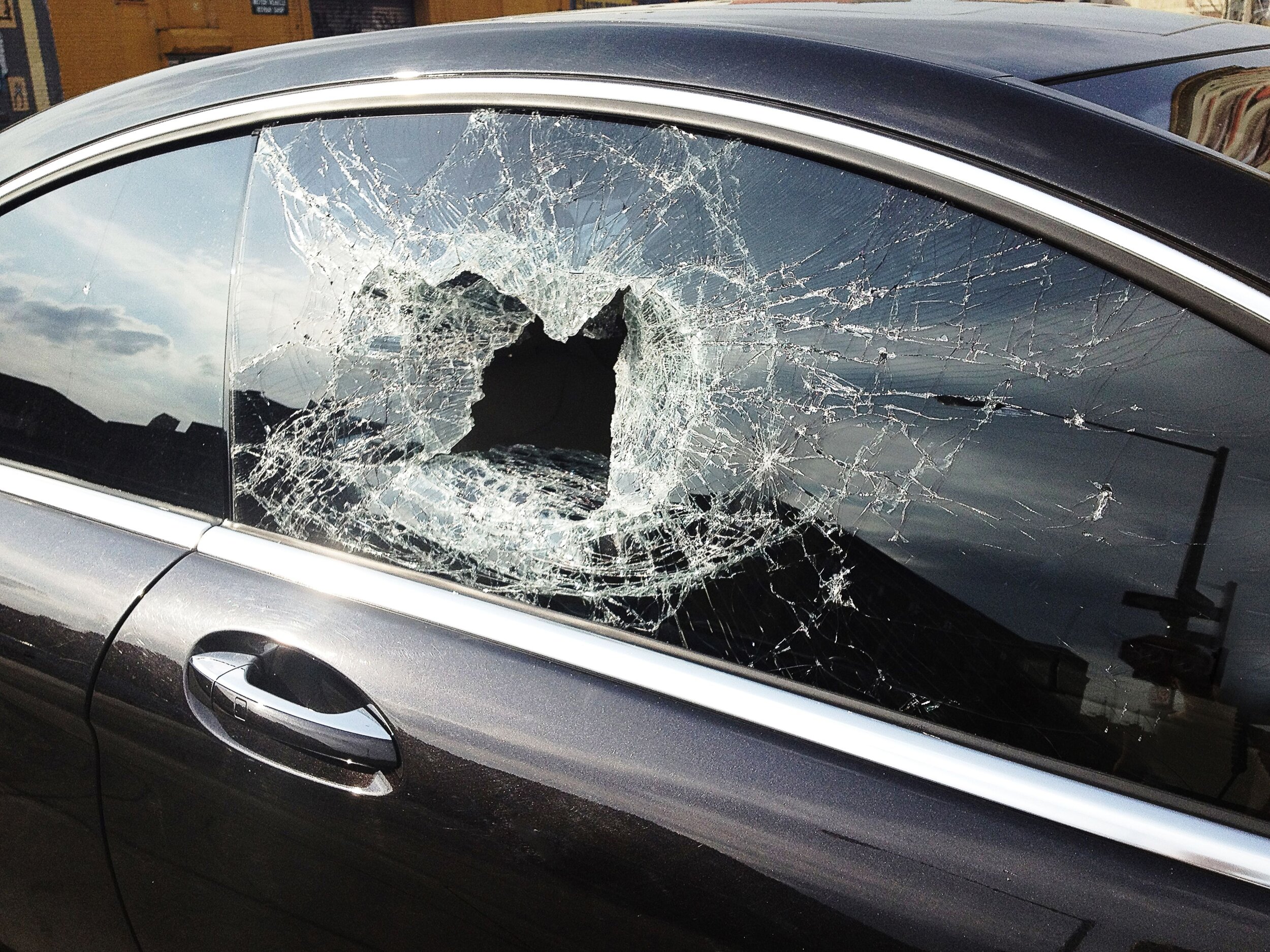
The sound wasn’t what I expected. Not a crash, more like a crack of ice on a lake. A single sharp report. And then the long, slow spider of fracture lines racing out from the point of impact across the windshield of my brand new Honda Accord.
Dark green. Off the lot. 11 days earlier. Four years of saved paychecks, sitting behind that glass like a vault nobody was supposed to be able to open.
Jeremy stood there with the bat still raised over his shoulder, breathing hard, grinning the specific grin of a kid who has just done something he was told to do and is waiting for the applause. He got it from the porch.
My sister Kelsey was standing at the top of the steps in her sundress with a glass of white wine sweating in her hand. And she was laughing. Not gasping, not covering her mouth in horror. Laughing, a bright, delighted sound like she’d just watched a firework go off early.
I didn’t scream. I want to be clear about that because when I’ve told this story since, people expect the scream. There wasn’t one.
I stood at the bottom of the porch steps with a serving dish still in my hands, deviled eggs, my mother’s recipe, the one thing I’d made for my own car party, and I watched the glass finish falling apart in that terrible unhurried way safety glass does. And I felt something in my chest go very quiet. Not calm like peace, calm like a held breath.
That should have scared Kelsey more than any scream ever could have. It didn’t, because Kelsey has never once in 34 years paid attention to the quiet ones.
I need to back up, because none of this makes sense without the four years that came before it. And it especially doesn’t make sense without understanding what gentle parenting means when my sister says it, which is no consequences ever for anyone as long as the anyone in question is her son.
I’m a claims adjuster. Total loss auto division. 6 years now. First with a regional carrier and then with one of the majors after they poached half our office. What that means practically is that I spend 8 hours a day looking at photographs of destroyed cars and translating damage into dollar figures. And I have gotten disturbingly good at knowing from a single cracked windshield and the angle of a dent roughly how a car was hit and roughly what it’s going to cost to fix.
It is not a romantic job. It has, however, made me a person who documents things instinctively, the way some people flinch instinctively. I photograph receipts. I keep folders. I do not throw away emails. My coworkers joke that I could reconstruct my own life from a filing cabinet if the rest of it burned down. And they’re not wrong. I’ve never once thought of that as a character flaw.
The job also means I know better than most people exactly how thin the line is between an accident and a story someone tells about an accident. I’ve sat across from claimants who swore up and down a parking lot dent had appeared out of nowhere, and I’ve watched security footage prove otherwise in under 90 seconds. I’ve learned to trust documentation over declarations every single time, because declarations are just what people want to be true and documentation is what actually happened.
I didn’t think of myself as bringing that instinct home with me. I just always had, apparently, a folder open somewhere in the back of my head, waiting.
My sister has never had a job that lasted longer than eight months. She married Doug when she was 23, had Jeremy at 25, and somewhere in there decided that the entire concept of telling a child no was a form of violence she wasn’t willing to commit. I used to think this was just a philosophy she’d read about and liked the sound of. Over the years, I came to understand it was something narrower and more specific. Kelsey doesn’t discipline Jeremy because disciplining Jeremy would require Kelsey to be the bad guy in a story, even for 30 seconds. And Kelsey has never in her life been willing to be the bad guy in a story if there was any way to hand that role to someone else.
I’d been the someone else more times than I could count. The overprotective aunt, the uptight one, the one who just doesn’t get kids. I’d absorbed it for years the way you absorb weather, because it was easier than the alternative, which was watching my mother’s face do the thing it does when her daughters disagree in front of her. A kind of flinching stillness, like she’s bracing for a blow that never quite lands, but never quite stops being possible either.
I want to explain a little more about the shape of our family, because it matters to everything that followed. Our parents, Diane and Walter, ran a small hardware store for most of my childhood, unglamorous, steady work that put three kids through the same school district without much fanfare. Marcus is the oldest, five years ahead of me, steady and quiet in a way that made him easy to overlook at family gatherings even though he was, in every practical sense, the most reliable person in our family. I came next. Kelsey came last, three years younger than me, and somewhere in the family’s collective mythology she became “the sensitive one,” a label that started, I think, as genuine concern when she struggled through a rough adolescence, and calcified over the decades into a permanent excuse for whatever she did next.
I watched that pattern solidify slowly, year by year, the way you watch a crack in a foundation before you understand it’s actually structural. Kelsey missed curfew, and it was because she was “finding herself.” Kelsey dropped out of community college twice, and it was because the programs “weren’t right for her.” Kelsey borrowed money from our parents that never quite got paid back, and somehow the conversation always ended with my mother apologizing to her for not having understood her needs sooner.
I built my own adult life quietly, almost defensively, around the opposite instinct. I finished my degree. I took the claims adjuster job right out of school because it paid steadily and the benefits were good, and I stayed with it because I turned out to be genuinely good at it, methodical in a way that suited both the work and, I think, some deeper need in me to have at least one part of my life where the facts simply spoke for themselves and nobody could argue me out of them with enough charm.
I bought the Accord with money I’d been not spending since I was 28. Every bonus, every overtime check straight into an account I’d made deliberately hard to access. No debit card, no app on my phone, just a paper statement that came once a month and made me feel every single time like I was getting away with something.
I picked it up on a Friday. I sat in the driver’s seat in the dealership lot for five full minutes before I even started the engine. Just breathing in that smell, running my hand along the dash, feeling like a person who had finally actually built something.
I threw a small party the following weekend. My parents, Kelsey, Doug, Jeremy, my brother Marcus, and his wife. Nothing fancy. A cookout in my own backyard. The car parked proudly in the driveway where everyone would walk right past it on the way in.
I asked Kelsey for exactly one thing. Watch Jeremy. Keep him away from the car.
She did the smile. The specific Kelsey smile that means you’re being difficult and I’m choosing to be gracious about it. “He’s a good boy, Kristen. Relax.”
I should have followed him outside the second I noticed how good he was being. Jeremy was suspiciously perfect that whole afternoon. Please and thank you. Napkin in his lap. Helped carry the lemonade pitcher without being asked, which for Jeremy was roughly equivalent to volunteering for the Peace Corps. Every adult in the yard commented on it at some point. Doug, beaming, said something about how he must be growing up. And I remember thinking, even then, in the part of my brain that does this for a living, “This data doesn’t fit the pattern.”
Twice during the afternoon, I caught him glancing toward the driveway window with a small private smile. The specific smile of someone who is in on a joke nobody else has heard yet. Both times, I told myself I was reading too much into a kid looking out a window. I do this for a living, catching the thing that doesn’t fit, and I still talked myself out of it because it is exhausting to be suspicious of your own family at your own party and because some tiny stupid hopeful part of me wanted for once to just enjoy something I’d built without bracing for it to be taken from me.
I carried the last of the serving dishes into the kitchen around 6:30. I was gone maybe 4 minutes. I heard the alarm before I heard anything else. That flat electronic shriek. And by the time I got the back door open, I was already running and the deviled egg dish was still somehow in my hands.
And I came around the corner of the porch just in time to watch the second swing land. Not the first, the second, which I only understood later meant something.
“Jeremy, stop.”
He looked at me over his shoulder, grinning, not even winded, bat resting easy on his shoulder like he’d just finished batting practice.
“Mom said to teach you a lesson, Aunt Kristen.”
I turned to Kelsey. She was still on the top step, wine glass loose in her hand, and she just shrugged. An actual shrug, shoulders up and down. The universal gesture for what did you expect me to do?
“You can afford another one,” she said. “Maybe next time, don’t rub it in our faces.”
That was the whole reason. Not a lesson, not a teaching moment. Jealousy with her own son as the delivery mechanism.
I didn’t yell. I want to be honest that some part of me wanted to. Wanted to scream until the neighbors came outside. And instead, I felt that quiet settle over me like a coat. And I pulled out my phone and I started photographing. Hood, windshield, corner to corner, every fracture line, the door panel, where a cluster of small dents caught the porch light in a way that made my stomach drop, even before I understood why.
I made Jeremy stand next to the car so I’d have him in frame, too. Bat still on his shoulder, grinning like he’d hit a home run in the bottom of the ninth.
“You’re being so dramatic,” Kelsey called down.
I said nothing. I went inside, sat at my dining table, and opened my laptop. My family filed in behind me one by one, nobody speaking, and took their seats like they had been summoned to a meeting none of them had agreed to attend. My mother sat with her hands folded so tightly her knuckles went pale. Marcus stood in the doorway like he was deciding whether he was allowed to be in the room.
I sent the photos to every body shop within 20 miles that did after-hours estimates. Then I sat there, hands folded, and waited while the only sound in the house was my mother’s ring clinking against her glass and Kelsey examining her manicure like none of this had anything to do with her.
The first estimate came back within 40 minutes. I read the number twice to make sure I hadn’t misplaced a decimal. My mother read it over my shoulder and went the color of the tablecloth.
I slid both estimates across to Kelsey. She barely glanced at them.
“You have a good job. You can replace it.”
“I won’t be replacing it,” I said. “You will.”
She called me vindictive. Actual word, vindictive, like I was the one who’d shown up with a bat. Grabbed Jeremy’s hand and walked out mid-sentence, still talking to the door on her way through it.
She thought that was the end of it. She had absolutely no idea what was sitting unsigned in my email inbox, 6 weeks old, waiting on a single signature. I’ll get to that.
By 9:00 the next morning, my phone had 31 unread messages in the family group chat, which is a thread I had muted 18 months earlier and only kept checking out of some masochistic sense of duty. Kelsey had gotten there first, obviously, framed the whole thing as me attacking a 10-year-old over a car and caring more about a windshield than my own nephew’s feelings. My mother, three messages later, asked if we couldn’t all just calm down and talk like a family. Marcus, God bless him, sent one message. “Did you actually see this happen, or are you just repeating what Kelsey told you?” That got no response from anyone, including me, because I didn’t have the energy yet.
What got me wasn’t the framing. I’ve had 30 years of Kelsey’s framing. I could recite it in my sleep. What got me was a message from my aunt Diane, who hadn’t been at the party, who I hadn’t spoken to in probably 4 months, saying she’d heard I was trying to bankrupt a 10-year-old. And didn’t I think that was a little extreme.
I sat with my coffee going cold and did the math on how fast that had traveled. Less than 14 hours. Kelsey hadn’t just walked out of my house angry. She’d spent the drive home or the morning after, actively working the phones, calling relatives who hadn’t been there, building a version of events where I was the unhinged one and she was the reasonable mother defending her child from her cruel sister.
I typed out a response three times and deleted it three times. What finally worked was the photos. I didn’t argue. I just posted the pictures, the windshield, the door panel, Jeremy grinning with the bat on his shoulder, into a chat of 11 people with a single line underneath.
“This happened at 6:40 in the evening. My sister told him to do it. I have the estimates if anyone wants to see those too.”
The chat went quiet for 11 minutes. Then Marcus sent a single word. “Jesus.” And Aunt Diane never responded to me again, which told me everything about where her information had actually been coming from.
Kelsey called me 40 minutes after the photos went up. Not to apologize. To tell me I’d humiliated her in front of the whole family and that I was choosing a car over your own nephew.
“I’m choosing accountability,” I said, “over a 10-year-old thinking he can swing a bat at anything he wants as long as his mother’s clapping.”
She hung up on me. That was fine. I hadn’t expected the phone call to go anywhere. I’d made it for the group chat, not for her.
I took the car to Aggerwall Collision on Tuesday, partly because I trusted them and partly because I needed professionally an estimate I hadn’t generated myself. Insurance companies get twitchy about self-assessed claims, even from adjusters, especially from adjusters. And I wanted this done clean. I’d used them before for oil changes and a rear bumper scuff two winters back. Nothing dramatic, but enough to know their intake process was thorough in a way some of the chain shops weren’t. Full walkaround, every angle photographed under the same lighting, notes dictated out loud as they went rather than scribbled after the fact from memory.
The estimator was a guy named Ray Ferris, mid-50s, 22 years in the trade, according to the certification framed behind the counter. The kind of guy who talks to a damaged car the way a vet talks to an anxious dog. Low voice, unhurried hands, like the Accord might spook if he moved too fast. He walked the full length of the car first without saying anything, notebook tucked under one arm, and only then started the actual walkaround, running his hand along the door panel. He stopped at the cluster of small dents I’d photographed the night of the party, and I watched his expression change from professional neutral into something closer to genuine focus.
“These aren’t from last night,” he said.
I felt something cold move through my stomach. “What do you mean?”
“These have a little bit of oxidation starting in the chipped paint. Fresh damage, the metal’s exposed and clean underneath. This,” he tapped the cluster of dents, “this has been sitting a few days, maybe longer. Somebody’s been taking practice swings at this car before the big one.”
I stood in that garage with the smell of solvent and rubber in my throat and thought about every afternoon over the previous two weeks that Kelsey had asked to drop by just to say hi. Always with Jeremy in tow, always finding a reason to wander out to the driveway while I made drinks in the kitchen. I thought it was sweet. I’d thought, God help me, that she was finally trying. She’d been letting her son case my car.
Ray wrote up the full estimate. Windshield replacement, door panel repair and repaint, a hood dent I hadn’t even clocked in my own photos, and the number came in at just over $4,000. He also, without my asking, wrote a supplemental note in plain language. Damage pattern consistent with repeated impact over multiple occasions, not a single incident.
I didn’t ask him to write that. He just did. Because 22 years in the trade means you’ve seen enough insurance disputes to know what documentation is worth. And I think honestly because he could tell from my face that I needed it in writing more than I needed him to say it out loud.
I sat in the parking lot afterward for a long time before I could make myself drive home.
Kelsey’s next move, which I only found out about because Doug quietly, guiltily, over a text I still have saved, gave me a heads up, was to call my insurance company directly and file what she framed as a concern about my policy. Her angle, as best I can reconstruct it, was that I’d somehow staged or exaggerated the damage to get a bigger payout, and that as the responsible adult present, she wanted to make sure the company had the full picture.
I want to be clear about why this almost worked and why it ultimately backfired spectacularly. My sister does not understand how claims work, has never understood how claims work, and made the mistake every bad-faith caller makes, which is assuming the person on the other end of the phone won’t recognize the pattern.
I found out because my own claims handler, a woman named Priya Okonkwo-Reyes, 14 years with the company, who I’d actually trained a junior adjuster alongside 2 years earlier, called me directly, slightly bemused, to confirm a few details since there had been a call flagged on the file.
“Someone called in claiming to be a witness disputing the damage timeline,” Priya said. “She said the windshield was already like that before the alleged incident. Didn’t want to give a last name at first. When I pushed, she said, ‘Kelsey Marsh.'”
“That’s my sister,” I said.
There was a pause on the line that told me Priya understood immediately what kind of family situation this was, because 14 years in claims means you’ve heard every version of this story.
“Okay,” she said carefully. “For what it’s worth, and I probably shouldn’t say this, but you’ve been a colleague. The timeline she gave doesn’t match the police non-emergency report your neighbor apparently filed about the noise, which has a time stamp of 6:42 p.m. the night of your party. It also doesn’t match the body shop’s supplemental note about repeated prior impact, which actually works against her claim. Not for it. If anything, she’s helped establish a pattern of premeditation.”
I hadn’t known about the neighbor’s report. That was new information even to me. Apparently the noise had been enough that someone two doors down had called it in, more out of nosiness than anything else. And that timestamp sat in a public record now, corroborating a story Kelsey had spent 2 weeks trying to rewrite.
Priya closed the flag on the file within the hour. But I want to note the specific texture of what Kelsey had actually attempted here because it wasn’t small. She had tried to manufacture insurance fraud against her own sister using a false witness account to protect a 10-year-old from a $4,000 repair bill she’d engineered in the first place.
My hands were shaking a little by the time I hung up the phone. Not from fear. From the very specific, very cold understanding of exactly how far she was willing to go.
The part that actually broke something in me wasn’t the car and it wasn’t the counter claim. It was my niece.
Bri is seven, Kelsey and Doug’s second, and she is nothing like her brother. Quiet, careful, the kind of kid who asks permission before she takes a cookie off a plate that’s already been offered to her. I’d been her Saturday morning aunt for years. Pancakes and the little library on Fifth Street, a standing thing Kelsey had never once complained about because unlike everything involving Jeremy, it cost her nothing and asked nothing of her.
9 days after the party, Kelsey texted me. “Given everything, I don’t think it’s appropriate for you to be around the kids right now. We’ll revisit when you’ve calmed down.”
I read that message four times. Jeremy had swung a bat into my car on his mother’s instruction. I was the one being cut off from access to a child.
I called Doug directly, which I almost never did because Doug has spent 15 years being the quiet third wheel in his own marriage, and I didn’t want to put him in a position he couldn’t win. He picked up on the second ring, and I could hear underneath his careful, neutral voice something that sounded almost like relief that someone had finally asked him directly.
“She’s scared,” he said. “Not of you, of what you might actually go through with. If the group chat sees the whole story, if the estimates get shown to your parents, she’s trying to control who you talk to before that happens by using Bri.”
A long pause.
“You know that’s what this is, right?” I asked.
“Yeah,” he said quietly.
I didn’t fight that battle in the group chat. I fought it with my mother one-on-one over coffee, laying out calmly, the way I’d lay out a claims file, exactly what had happened, what Ray had found, what Priya had confirmed about the timeline and the false witness call. I watched my mother’s face do the thing it does, the careful flinching stillness. Except this time, it didn’t stop at flinching. This time, she got very quiet and then said, “She’s using Bri as leverage. That’s not discipline, Kristen. That’s just cruelty.”
3 days later, Bri called me herself on Doug’s phone to ask if Pancake Saturday was still happening. Kelsey never explicitly reversed the no-contact message. She just let it quietly stop mattering once she realized my mother had seen through it. And once she realized, though not yet in the way she was about to, that cutting me off wasn’t going to change what was coming for her.
The following week, I filed a small claims petition, not out of spite, out of the plain mechanical fact that Kelsey had received two written repair estimates, a formal payment plan proposal, and had responded to both with laughter and a refused signature. I had four years of savings sitting in that car, and a body shop bill that wasn’t going to pay itself, and I was done waiting for an apology that clearly wasn’t coming.
I want to name the third professional here properly because she mattered. Rosalind October has practiced family and small claims law for 19 years out of a two-room office above a dry cleaners. And she is exactly as unglamorous and exactly as good as that sentence makes her sound. She read the file, my photos, Ray’s estimate and supplemental note, Priya’s confirmation of the closed false witness flag, the neighbor’s police report timestamp, in about 4 minutes and then looked up at me over her glasses.
“This isn’t complicated,” she said. “You have documentation of the incident, documentation of intent since the boy told you outright his mother instructed him, and documentation that the other party attempted to interfere with your insurance claim through misrepresentation. Small claims will find in your favor almost certainly. The interesting part isn’t the case. It’s whether she can actually pay a judgment given what you’ve told me about her situation.”
I hadn’t told her about the house yet. I told her then.
Here’s the thing I hadn’t mentioned to anyone. Not my mother, not Rosalind, not even Doug when he’d called with his quiet apologetic heads up about the insurance call. Kelsey and Doug had been trying to buy a house for three years. Three bedrooms, a good school district, the kind of place that would finally get Jeremy and Bri out of the cramped two-bedroom rental they’d been in since Bri was born.
Kelsey couldn’t qualify for the mortgage on her own. No steady income history, a credit profile that had never recovered from her mid-20s, and Doug’s income alone didn’t clear the threshold either. 6 weeks before the party, drowning in a wave of guilt I now recognize as almost embarrassingly naive, I had agreed to cosign. The paperwork had been sitting in my email since then, unsigned. I’d been putting it off, some instinct I hadn’t examined, telling me to wait. And then the party happened and I simply stopped. Didn’t withdraw it. Didn’t confirm it. Just let it sit, because I genuinely didn’t know what I wanted to do and because some small vindictive part of me that I’m not proud of wanted to see what she’d do next before I decided.
What she did next was try to manufacture insurance fraud against me and cut off my access to a 7-year-old.
Their closing date was 11 days away. I knew this because Doug had mentioned it months earlier, in the offhand way people mention things they’re excited about, back when I still thought I was going to be the aunt who helped make this happen for them. The loan needed the cosigner paperwork finalized at least a week before closing for underwriting to clear, which meant I had, by my own count, about 72 hours before my decision, sign or don’t, would functionally make itself one way or the other, by simple deadline.
I sat at my dining table with my laptop open to the bank portal for a long time. My hands weren’t shaking anymore by that point. They’d gone past shaking into something stiller and colder. The way water goes past choppy into flat right before it freezes.
I want to be honest about what I was actually deciding, because it wasn’t revenge, or it wasn’t only revenge. It was this. I did not want to be legally and financially tied for the next 30 years to a person who had proven, with documentation, with a paper trail, with a professional’s confirmation, that she was willing to lie to an insurance company and weaponize a child’s access to family in order to avoid paying $4,000 she owed for something she’d orchestrated herself.
That wasn’t spite. That was just information. And I am professionally, and by now, apparently personally, a person who acts on information.
I opened the cosigner application, found the withdrawal option buried two screens deep, worded in the flat, bloodless language banks use for things that are actually enormous. Remove applicant from joint application. My cursor sat over the button for what felt like a long time and was probably closer to 90 seconds.
I clicked it.
The confirmation email came back within the minute, CCing the loan officer of record, a man named Terrence Whitfield, who I had never spoken to and who I imagine had no idea, reading that automated notice, what he’d just become a small part of.
I didn’t call Kelsey. I didn’t post anything. I sent her nothing at all because I had genuinely nothing left to say to her that hadn’t already been said. In photographs, in estimates, in a payment plan she’d laughed at.
3 days later, her phone rang. A number she didn’t recognize, according to what Doug told me afterward. The bank, asking her to come in. Something about her file having changed overnight. Needed to discuss it in person rather than over the phone. She had no idea why.
I know that for a fact because Doug called me an hour after she got home from that meeting, and he wasn’t angry. He sounded, if anything, tired in a way I understood completely.
“She’s saying you did this to destroy the house,” he said. “I told her, I actually said this to her, Kristen, out loud. I told her you didn’t destroy anything. You just stopped agreeing to something you’d never actually finished agreeing to in the first place.”
“How’d she take that?”
“About how you’d expect.”
The closing didn’t happen without a qualifying cosigner. Underwriting couldn’t clear in the window, and the sellers, who’d had two other offers waiting, moved on within the week. Doug told me later, in the same quiet, resigned voice, that they were back to looking at two-bedroom rentals and that Kelsey had spent most of that week not speaking to anyone in the family at all.
She never paid the repair bill. I let Rosalind’s small claims judgment run its course. A modest monthly garnishment against Kelsey’s part-time paycheck, the kind of thing that will take about 2 years to fully resolve and that Kelsey will feel every single month in a way that $4,000 pulled from my own account quietly and once never would have made her feel.
I want to describe what those following months actually looked like, because the fallout didn’t resolve itself in one dramatic scene, the way it might in a story someone tells at a dinner party. It unfolded slowly, awkwardly, in a hundred small adjustments across a family that had never before had to sit with an actual accounting of what one of its members had done.
My mother started calling me more, tentative at first, almost apologetic calls where she’d ask small, careful questions about my life that had nothing to do with Kelsey, as though she were relearning how to have a relationship with me that wasn’t filtered entirely through managing conflict on her younger daughter’s behalf. I noticed, slowly, that she’d stopped doing the thing she used to do, where any criticism of Kelsey got immediately redirected into a question about what I might have done to provoke it. That redirection simply stopped happening, sometime around the point where she’d seen the timeline discrepancy in Kelsey’s insurance call laid out plainly enough that there was no longer room for a kinder interpretation.
Marcus and I started getting dinner together every few weeks, something we’d never really done as adults, always orbiting the same family gatherings without ever quite building anything separate from them. Over one of those dinners, months later, he told me he’d spent years quietly assuming I exaggerated things about Kelsey, that some sibling rivalry was coloring how I told the stories. “I’m sorry I ever thought that,” he said, turning his glass slowly on the table. “I should have just asked to see things for myself a long time ago, instead of assuming the version I got secondhand was the whole picture.”
Doug and I settled into an odd, careful alliance neither of us had planned for. He never once badmouthed Kelsey to me directly, some old loyalty I respected even while it frustrated me, but he also never again let her narrative go unchallenged when he had the facts to challenge it with. He started, gradually, taking Bri and Jeremy to their activities without automatically running everything through Kelsey first, small assertions of his own judgment that I think had been quietly building for years and finally found room to surface once the family’s usual conflict-avoidance machinery had visibly, undeniably failed.
Jeremy, for what it’s worth, I never fully understood how to feel about. He was ten years old, following an instruction given by the parent who was supposed to be teaching him right from wrong, and some part of me could never quite locate blame in a child for that particular failure. I didn’t cut him off the way Kelsey had tried to cut me off from Bri. I simply stopped expecting, for a while, that visits with him would look the way they used to, easy and uncomplicated. Doug mentioned, close to a year later, that Jeremy had started asking, unprompted, why Aunt Kristen didn’t come around as much anymore, and that when Doug explained, carefully, age-appropriately, what had actually happened, Jeremy had gone very quiet and then said he was sorry, on his own, without anyone standing behind him telling him to say it.
I believed him. I still do.
Kelsey and I have spoken exactly three times since that Mother’s Day dinner unraveled into everything that followed, twice over brief, strained phone calls about logistics for our parents’ anniversary, once at that same anniversary party itself, standing several feet apart near a dessert table, exchanging the kind of hollow pleasantries strangers manage at a bus stop. She has never apologized, not for the bat, not for the insurance call, not for cutting me off from Bri. I’ve made a kind of uneasy peace with that absence. Some people, I’ve come to understand, will spend their whole lives constructing a version of events where they were never actually wrong about anything, and waiting for that particular person to finally arrive at genuine accountability is its own quiet trap, one I’ve decided not to keep stepping into.
My mother and I talk more now than we used to. Mostly because the flinching stillness in her face finally settled into something that looks a lot like relief that she doesn’t have to keep pretending not to see what Kelsey does.
Marcus and I are closer, too. In this specific way siblings get closer after one of them finally stops absorbing something quietly on everyone’s behalf.
Bri still gets her pancakes on Saturdays. Kelsey has never brought it up again. Not once, in either direction. Not an apology, not another attempt to control it. I think in her own way she understands that this is the one thing in the whole fallout she doesn’t get to touch.
I had the windshield replaced the week after the party, before any of the rest of it played out. Aggerwall Collision did clean work. You’d never know looking at the glass now that anything had ever happened to it.
I still catch myself some mornings running my hand along the dash before I start the engine, the way I did that first Friday in the dealership lot. It still feels like something I built. It just also now feels like something I was willing to defend.

Laura Bennett writes about complicated family dynamics, difficult conversations, and the quiet moments that change everything. Her stories focus on real-life tensions — inheritance disputes, strained marriages, loyalty tests — and the strength people find when they finally speak up. She believes the smallest decisions often carry the biggest consequences.