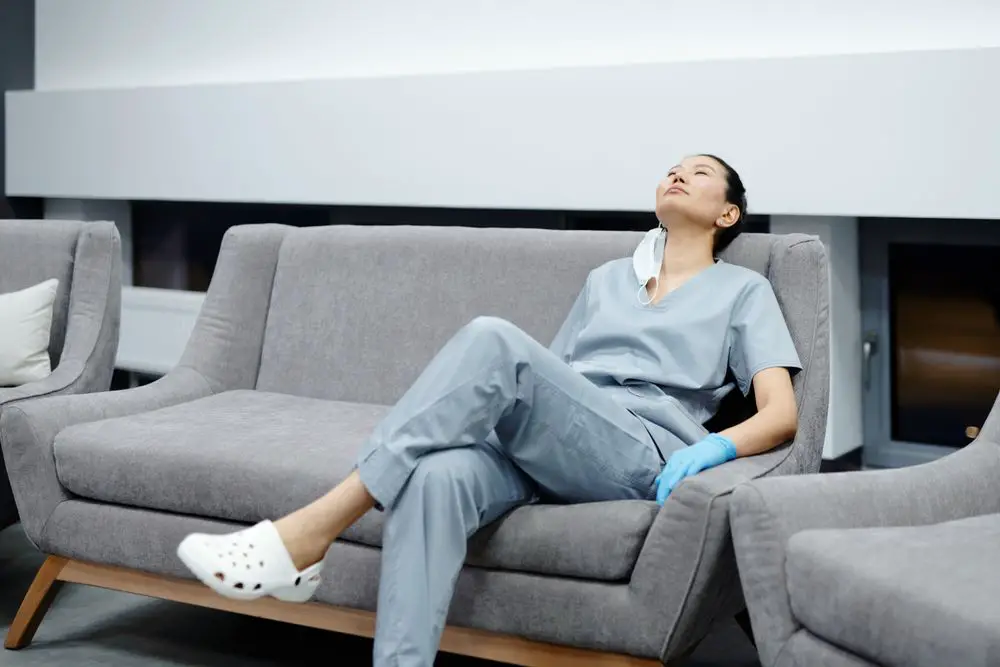
My wife, Maeve, is the kind of person who texts me if she’s going to be ten minutes late.
I need you to understand that before I tell you the rest, because otherwise none of what I did that night will make any sense. Ten minutes. If she got stuck behind a train, she texted. If the line at the pharmacy was long, she texted. In eleven years of marriage, I could count on one hand the times I didn’t know exactly where she was.
She’s a pediatric nurse, so her schedule was never easy. Shifts ran long. Parents needed one more question answered before they could breathe. A kid would get scared right at discharge and Maeve would sit on the edge of the bed and talk them down while the clock ran past the end of her shift. She never complained about it. That was just who she was.
But lately the job had been getting to her. More than usual.
Maeve always cared about her patients, sometimes too much, if you ask me, but every so often one of them got right under her skin and stayed there. For the last few months it had been a six-year-old named Ava. She never told me the medical details, she was careful about that, patient privacy, but she’d mention Ava’s name at dinner sometimes and go quiet after. All she’d say was that Ava’s family was having a hard time, and that sending a kid home from the hospital didn’t always mean the hard part was over.
I didn’t think much about it then. I think about it a lot now.
The distance started a few months back, though I didn’t have a name for it at the time.
One night I woke up around one in the morning and Maeve wasn’t in bed. I came out to the kitchen and found her at the table with her laptop open and a stack of papers spread out beside it, and she was leaning in close, focused, the way she got when something mattered.
The second she heard me, she closed the laptop. Just like that. And she scooped all the papers into a folder before I could get a look at any of them.
“What are you working on?” I asked.
“Hospital stuff.” She smiled at me. “Go back to bed, babe.”
She kissed my cheek like it was nothing at all, and I went back to bed, and I lay there in the dark longer than I want to admit.
It bothered me more than I let on. And it wasn’t just that one night. There were others. There were dinners where she was sitting right across from me but somewhere else entirely, nodding at the right times, laughing a half-second too late. There were phone calls she took in the other room with the door mostly shut.
And I’m embarrassed to tell you where my mind went. But I’ll tell you, because it matters to the rest of it.
I wondered if there was someone else.
I’d get the thought, and then I’d feel like the worst husband alive for having it. Maeve had never once, in eleven years, given me a reason not to trust her. She was the most honest person I knew. She was the person other people came to precisely because she wouldn’t lie to them. And here I was lying in bed doing math on her late nights like some jealous character in a bad movie.
So I pushed it down. I told myself I was being ridiculous. I told myself that whatever was going on, it wasn’t that, because Maeve wasn’t like that.
And here’s the thing. Whatever had changed in her, one thing hadn’t. She was still reliable to a fault. If she said she’d be somewhere, she was there. If she was running late, she texted.
Which is exactly why, the night she broke that pattern, I knew in my gut that something was really wrong.
It was yesterday morning. She kissed me on the cheek while I stood at the counter drinking my coffee.
“I’ll be home by seven fifteen,” she said, grabbing her keys. “I’m gonna pick up Thai on the way. The green curry you like.”
“Perfect,” I said. “Love you.”
“Love you.”
That was it. That was the whole thing. The last normal moment before the worst night of my life.
At seven thirty, I wasn’t worried. Traffic, probably. The Thai place got backed up on weeknights.
At eight, I texted. Hey, everything okay? Getting hungry over here.
Nothing.
At eight forty-five, I called. It rang once and went straight to voicemail, which meant her phone was either dead or off, and Maeve’s phone was never dead, she was religious about charging it, part of the whole reliable thing.
That’s when the first real crack of fear went through me.
I called the hospital. I got the pediatric ward and a nurse I’d met once at a Christmas party, and she checked and told me Maeve had clocked out on time and told everyone she was heading straight home.
So she’d left. On time. And she wasn’t home, and she wasn’t answering, and nobody knew where she was.
By ten o’clock I was calling everyone. Her sister Nora first. Then her friend Dana. Then Priya, who I knew from the hospital crowd. I tried to keep my voice steady on every call, tried not to sound like a man coming apart, and I don’t think I fooled a single one of them.
Nobody had heard from her. Not one of them.
Nora said, “Have you called the police?” and the fact that she said it, that somebody else’s mind went there too, made my hands go cold.
I called the police.
The dispatcher was kind but there wasn’t much she could do. An adult, gone four hours, no sign of foul play. She told me that legally, without evidence of an emergency or immediate danger, their hands were mostly tied this early. But she said if I found her car abandoned, or found anything at all that suggested she was in danger, I should call back that second and they’d move.
By eleven, my hands were shaking so hard I could barely hold the phone.
I’d spent four hours by then doing the one thing you’re not supposed to do, which is imagine. A wreck on the highway, her car upside down in a ditch where nobody could see it. Somebody following her out of the parking garage. Maeve unconscious somewhere, hurt, alone, while I sat on my couch staring at a screen like an idiot.
And underneath all of that, quieter but still there, the other fear. The one from all those late nights. What if she was fine, and with someone, and the phone was off for a reason I didn’t want to name.
I hated that I could hold both of those fears at the same time. I hated myself for the second one especially. But there it was.
And then I remembered the app.
The family tracker. We barely ever used it. Maeve had put it on both our phones a year or so back, after I started traveling more for work, because she said she liked being able to peek and see whether my flight had landed without having to bug me with a text.
I’d honestly forgotten it existed. But I remembered it now, and I fumbled it open with shaking fingers, and there she was.
Her blue dot popped up instantly.
Not moving. Sitting still, way out in the industrial district on the edge of town.
“What the hell,” I said out loud to my empty kitchen.
The industrial district. There was nothing out there. Warehouses, loading docks, a couple of shuttered businesses. There was no reason on earth for Maeve to be out there at eleven at night with her phone turned off.
I grabbed my keys and I ran.
The drive should have taken twenty-five minutes. I did it in eighteen and it felt like a year. I ran two yellow lights that had gone fully red and I didn’t care. The whole way there my brain kept flipping between the two horrors, she’s hurt, she’s cheating, she’s hurt, she’s cheating, and I gripped the wheel and told myself to just get there, just get there and find out.
The address was a row of warehouses and low commercial buildings out past where the streetlights got sparse. In the daytime I’m sure it looked like nothing, like anywhere, forklifts and delivery trucks and men in vests. At close to midnight it looked abandoned. It looked like the kind of place you see on the news with yellow tape around it.
I found Maeve’s SUV parked behind a long gray building with no sign over the door.
The car was fine. Intact. Not crashed, not broken into, just parked there neat as anything.
And that answered one question and immediately handed me a worse one. If she was here, and her car was fine, and she was fine enough to park it properly, then why in God’s name hadn’t she answered a single call for four hours?
Then I saw the back door of the building.
It was propped open with a chunk of cinderblock. White fluorescent light spilled out across the concrete in a long rectangle.
I pulled in next to her SUV and got out. The night was cold and dead quiet, just the buzz of the lights inside and my own heartbeat going in my ears.
I didn’t call her name.
I still can’t fully explain why. I think part of me was afraid that if I called out, I’d hear her scream. And another part of me, the ugly part I’m ashamed of, was afraid I’d hear a man’s voice call back. That fear had ridden shotgun the whole drive over, and now, standing in that empty lot, it was louder than ever. She’d been so stressed. So distant. What if she’d found comfort somewhere I couldn’t give it.
I walked toward the open door.
The first thing I saw through it was her phone. Sitting on a folding table just inside, screen dark. Not plugged in. Not smashed on the floor. Just turned off and set down, calm and deliberate, like she’d done it on purpose.
My heart dropped straight through the floor.
I stepped through the doorway.
And then I stopped.
Because what I saw killed the explanation I’d been dreading, both of them, and replaced them with one I could not begin to understand.
Shelves. Rows and rows of shelves, some of them freshly built, the wood still raw and unpainted at the ends. And they were stacked with things. Children’s clothes, folded in neat piles by size. Boxes of diapers. Canned food and boxes of pasta and jars of baby food. School supplies, backpacks, notebooks, boxes of crayons.
There were cardboard boxes open on the floor, and someone had written on the sides in thick black marker. INFANT. SIBLING SUPPORT. POST-DISCHARGE.
The smell of fresh paint hung in the air. Half a wall had a new coat on it. There was a stepladder and a paint tray and a roller still wet. This wasn’t something thrown together overnight. This was something that had been getting built, carefully, for a long time.
And there, right in the middle of all of it, was my wife. Kneeling on the concrete floor, arranging little pairs of children’s socks in a row beside a stack of coloring books, humming faintly to herself.
Alive. Whole. Perfectly, completely safe.
I couldn’t make a sound.
She looked up, and across all that space, all those shelves, our eyes met.
“Finally!” She sat back on her heels and laughed, this bright happy laugh. “What took you so long?”
I just stared at her. The relief and the confusion and four hours of terror all crashed into each other in my chest at once and I couldn’t get a single word out.
She got to her feet, still smiling, and started walking toward me, wiping her hands on her jeans.
“You were supposed to get here hours ago,” she said.
I finally found my voice, and what came out was flat and strange, not even sounding like me.
“You turned your phone off.”
Her smile flickered, just a little. “Well. Yeah.”
“Why?”
“So you’d check the tracker.” She said it like it was obvious. Like it was clever.
For a couple of seconds I genuinely thought I’d misheard her. I actually replayed the words in my head to be sure.
“You wanted me to track you here,” I said.
“Yes.” She spread her arms out at the shelves, the boxes, all of it, and beamed. “Surprise!”
And here’s the thing that turned my stomach, standing there. She was safe. My wife was safe, and every terrible thing I’d pictured on that drive was false, and I should have felt nothing but relief flooding through me.
But her answer made the last four hours worse instead of better. Because it meant she had done it on purpose. She had turned her phone off, knowing I’d panic, knowing I’d go looking, wanting me scared enough to come find her. She had engineered my fear as part of a surprise.
I looked at her phone on the table. Then at her. Then at all those shelves.
“I called the hospital, Maeve,” I said. “I called Nora. I called Dana. I called Priya.”
Her face started to change.
“I called the police.” My voice cracked on it. “I’ve spent four hours thinking you were dead in a ditch somewhere. Or worse. I’ve been imagining every horrible thing there is to imagine.”
“Oh.” She frowned, and something dawned on her, slow, like she was only now doing a math problem she should’ve done weeks ago. “Oh, no. I didn’t, I thought you’d just check the app right away. I thought you’d see the dot and come straight over. I didn’t think you’d call everyone.”
“You told me you’d be home at seven fifteen. With Thai food.”
“I know. I’m sorry, I just wanted it to be a whole thing. A reveal.” She reached for my arm and I didn’t pull away exactly, but I didn’t lean in either, and she felt it. “I really thought you’d just come.”
I looked around the room again, at all of it, and shook my head.
“What is this, Maeve? What am I even looking at?”
And that brought the smile back to her face, smaller now, but real. Because this part, this was the part she was proud of, and I could see that clear as day.
“You know how I’ve been buying supplies for hospital families for years,” she said. “Just little things. A pack of diapers here. A gift card there. Whatever I could do.”
I nodded. I did know that. It was one of the things I loved about her. She was forever slipping twenty bucks to a family that couldn’t make the parking fee, forever showing up with a stuffed animal for a kid who didn’t have one.
“Well.” She took a breath. “I decided to scale it up.”
“Ava,” I said. It came out before I’d even decided to say it. “This is about Ava.”
Maeve’s eyes went soft, and she nodded. And she told me, carefully, without breaking any of her rules, that Ava’s family had been drowning after the little girl got discharged. Food, rent, no reliable car to get to follow-up appointments, none of the supplies a sick kid needs at home. Maeve had packed them a bag herself, the first time, out of her own locker.
Two months later, Ava was right back in the hospital.
“The hospital fixes what’s happening inside the hospital,” Maeve said, and her voice got that edge it got when she really cared about something. “They patch the kid up and they send them home. And then a bunch of these families go right back into the exact same situation that was making everything worse. Nobody’s catching them on the other side.”
“So this is for after,” I said, looking at the box marked POST-DISCHARGE. “After they go home.”
“During, too. Siblings who get forgotten because all the attention’s on the sick kid. Parents, eventually, if we can get big enough.” She turned in a slow circle, taking it in, her whole face lit up. “A real place. Not just me and my locker. A real place families can come to.”
And God help me, standing there, for one clean second I felt it lift. The fear, the anger, all of it. Because this was so completely, unmistakably Maeve. Of course this was where all those late nights had gone. Of course this was the secret. Not another man. Not anything ugly at all. Just my wife, being more herself than anyone I’d ever met, building something to catch kids nobody else was catching.
“Maeve,” I said. “It’s incredible. It really is.”
Her shoulders came down a little, relieved.
And then I asked the question that ended the good part of the night.
“Who’s helping you with all this?”
“Rachel. Theo. Priya. A few others from the hospital, on and off.”
“And who’s paying for it?”
She hesitated. Just for a beat. But I’ve known this woman for eleven years and I saw the beat.
“I signed the lease,” she said.
Something cold started moving through me, slow, from the bottom of my spine up.
“Maeve. With what money?”
“…Our savings.”
She said it quiet. Almost too quiet to hear over the buzz of the lights.
I had to sit down. There was a folding chair by the table and I just sort of found my way into it, because my legs had gone strange.
The whole warehouse looked different now. A second ago it had been this beautiful, generous, Maeve-shaped thing. Now I was looking at it and seeing dollar signs on every shelf. The lease. The renovations. The paint, the lumber, the supplies, all of it. This wasn’t a secret project anymore. This was a decision about our entire future that had already been made, finished, signed, without me anywhere near the room.
And then another thought hit me, and it was worse.
“If this opens,” I said slowly, “what happens to your job?”
She looked down at the floor.
“Maeve. What happens to your job.”
“I gave my notice three weeks ago,” she said. “My last shift is next Thursday.”
I want to be fair to her, even now. I knew the nursing had been grinding her down. I’d seen it. I’d told her, more than once, sitting on our back porch, that if she ever wanted out we’d figure something else out together. I meant it.
Together. That was the word. Together.
But she hadn’t come to me and said she was ready. She’d just gone ahead and been ready, quietly, on her own, and quit her job, and poured years of our savings into a decision I never got a single vote on.
We were not rich people. I want to be clear about that. That savings account was the thing we’d built slowly, painfully, over years of skipped vacations and packed lunches. It was the mortgage cushion. It was the emergencies. It was the maybe-we-move-somewhere-nicer-someday. It was our floor, the thing under our feet, and because it was long-term money I almost never looked at it.
And then a memory surfaced that made me feel physically sick.
A month earlier, our water heater had started making a low groaning noise, the kind that means it’s about to fail and take a chunk of money with it. I’d said we should just replace it now, before it went and flooded the basement. And Maeve had pushed back, hard, harder than made sense at the time.
“It’s still working,” she’d said. “Why spend the money if we don’t have to?”
I’d thought she was just being frugal. Sitting in that warehouse, I finally understood. She’d been guarding a bank account that was already half gone. She’d been so careful with money she knew I didn’t know was disappearing.
“How long,” I said. “How long has this been going on.”
She was quiet.
“Maeve. How long.”
“About eight months.”
Eight months.
Eight months of meetings I knew nothing about. Eight months of signing paperwork, touring this building, negotiating a lease, buying shelves, hiring people, painting walls. Eight months of resigning from her career one conversation at a time. And every single night of those eight months she’d sat across from me at our dinner table and looked me in the eye and said nothing.
“Why?” I said. “Just tell me why.”
“I told you. I wanted it to be a surprise.”
“Bull.”
She flinched.
“Maeve, people don’t secretly drain their savings for a surprise. People don’t quit their jobs and sign commercial leases and turn their whole lives inside out for a surprise. That’s not what this is and we both know it.”
Her eyes went hard then. She was done pretending.
“Fine,” she said. “You want the truth? I knew you’d worry. You’d have told me to slow down. You’d have said don’t quit until there’s funding, don’t sign until there’s a board, don’t spend the savings, maybe we can’t even afford it. You’d have had a hundred reasonable little objections.”
“You thought I’d say no.”
“I thought you might.”
“So you made sure I couldn’t.”
She didn’t deny it. That was the thing. She just lifted her chin and said, “This place is going to help families. Sick kids. Real people who are suffering right now.”
“I’m not arguing with that.” My voice was rising and I couldn’t stop it. “I think it’s beautiful. I think you’re beautiful for building it. I am not arguing with a single thing about the mission. I’m arguing with you taking our money and deciding the whole shape of our life without me in the room.”
“We can rebuild savings,” she said.
“That is not the point.”
“Then how can you stand there and talk to me about a bank account when you’ve seen what these families are going through?”
And there it was. The move. Making it about whether I cared about sick children, so that being upset about the deception made me the villain.
“Because it was our bank account,” I said. “Our money. Our marriage. And you spent it and quit your job and never once said a word to me. I’m not upset that you want to help families, Maeve. I’m upset that you looked me in the eye every night for eight months and lied.”
That’s when it stopped being private.
There were voices behind us, and a door opened at the far end of the warehouse, and three people came in carrying pizza boxes and a couple of two-liter bottles, laughing about something.
I recognized Rachel from the hospital Christmas parties. There was a guy with her, tall, that Maeve had mentioned before, Theo. And Priya, Maeve’s friend, one of the people I’d frantically called just hours ago.
Rachel saw me first and her whole face opened up in a grin.
“He found you!” she said, delighted. “Aw, the big reveal! How’d it—”
Nobody answered. She looked between me and Maeve, at Maeve’s face and then at mine, and the grin slid right off.
“…What’s wrong?” Priya said.
I looked at Maeve. She was staring at the floor. And I looked back at the three of them, standing there with their pizza, and I asked the question I already half knew the answer to.
“Did you all know,” I said, “that I hadn’t agreed to any of this?”
Rachel frowned. “What do you mean?”
“The lease. The savings. Maeve quitting her job. Any of it.”
Priya’s face went white. “I thought you knew,” she said. “Maeve, I, we all thought he knew.”
“So did I,” Theo said quietly, setting his drinks down on a shelf.
Rachel put the pizza boxes down slow, like they’d gotten heavy. “I thought you two had worked out the money part together months ago. That’s what she—” She stopped and looked at Maeve. “You’ve been telling us for months how lucky you were. How supportive he was. How he was behind this a hundred percent.”
And that, somehow, was the part that hurt the worst. Not just that she’d built a whole secret life. That she’d built a whole fake version of me to go inside it. A supportive husband, offstage, who’d already talked it through and given his blessing. She’d used me as a character in her story to make these good people comfortable handing over their time and, I’d find out, some of their own money.
Maeve wiped at her cheek. “I thought he would be,” she said. “Supportive. I thought once he saw it—”
“That’s not the same thing,” Rachel said. Not angry. Just sad, and firm. “Maeve, that’s not the same thing at all.”
Nobody was yelling. That’s what made it so awful. If somebody had yelled it would have felt like a fight, and fights end. This was quieter and heavier than that.
Priya looked over at me, and then back at Maeve. “For what it’s worth,” she said, “I believe in this place. I do. I still do. But believing in it doesn’t make this okay. It doesn’t.”
Rachel looked around at all the shelves she’d probably helped build, and then at Maeve. “We can’t keep planning an opening,” she said. “Not until the finances and the ownership are actually sorted out. Properly. On paper. With everybody who’s actually involved.”
“And I’m not asking one more person for a donation,” Priya added, “until everyone knows the real situation. I can’t. I won’t put my name on it.”
Maeve hung her head, and she didn’t argue, because there was nothing to argue.
They didn’t stay long after that. There wasn’t much to say. They filed out with their pizza gone cold in the boxes, and Priya squeezed my shoulder on her way past, which almost undid me. And then the big warehouse was just the two of us again, and the buzz of the lights, and it was very, very quiet.
Maeve started to cry. Really cry, not the single tears from before.
“I messed everything up, didn’t I,” she said. “I quit without telling you. I spent our money without asking you. And I hid all of it because I didn’t want you to have a vote. Because I was scared the vote would be no.”
I didn’t say anything. I didn’t trust myself to.
“I’m sorry,” she said. “I am so, so sorry.”
I stared at the concrete floor between my shoes.
“I’m not going to ask you to forgive me tonight,” she said.
“Good,” I said. Because I couldn’t have, and I was glad she wasn’t going to make me refuse.
She nodded, like that was fair, like she’d expected it and knew she deserved it. And then, after a while, in a small voice, she asked the only useful question there was.
“What can we fix?”
So we fixed what could be fixed, that night, right there.
We sat down at the folding table and went through the folders together, the first time I’d ever seen any of it. Some of it was already gone and gone for good. The lease deposit. The renovation money, the paint and the lumber and the shelving, all sunk into a building we didn’t own. A genuinely painful amount of our savings, money that had taken us the better part of a decade to build, that wasn’t coming back no matter what we did now.
But there was still a lot sitting on those shelves. And there was still time to stop the rest.
That night, at that table, Maeve wrote an email to everyone involved. I watched her type it. We are pausing all spending and all opening plans, effective immediately, until the finances and the ownership structure can be properly reviewed with everyone. She read it out loud. She turned the laptop so I could see the screen.
“Okay?” she said.
“Yes.”
She hit send.
And that stopped the project from going any further off the cliff. It just didn’t tell either one of us how our marriage was supposed to go forward from here. There’s no email you can send for that.
We got home a little after two in the morning. The kitchen light was still on from when I’d run out. And the two plates I’d set out on the counter for the Thai food that never came were still sitting there, clean and empty, waiting for a dinner that had turned into all of this.
I slept on the couch that night.
Not to punish her. I want to be clear about that, because it would be easy to make it that. I slept on the couch because I couldn’t lie down next to her and pretend that everything was fine now just because she’d finally, at the end, been honest. The truth coming out at midnight in a warehouse doesn’t erase the eight months of lies that came before it. It just means the lies are over. That’s a start. It isn’t the same as being okay.
That was a while ago now, and I’ll tell you where things landed, because I know that’s what you want to know.
The center survived. Just not the way Maeve had it in her head.
With Rachel and Priya and Theo, and a local church that came on board, and eventually a small community foundation, it turned into a real nonprofit. A proper one. With donors and a board and actual financial controls, the kind where no one person can sign a lease alone or empty an account without other people seeing it. It’s smaller than the empire Maeve had been building in secret. It opens fewer days a week. It helps fewer families, for now.
But it helps them. Ava’s family is one of them. And every dollar of it is out in the open, on the books, where anybody involved can see it.
Maeve and I are not all the way okay. I won’t sit here and tell you we are, because it wouldn’t be true, and I’m done with people in this story not telling the truth. Eight months of secrecy doesn’t vanish because of one hard night and one good apology. We lost money we’re still slowly clawing back. She lost trust that she is earning back the only way trust ever gets earned back, which is slowly, and in the open, one honest thing at a time.
Her career changed. The dream got smaller. Some nights I still catch her looking at the shelves in that place like she’s mourning the bigger version of it that lived only in her head.
But it’s being built in the daylight now. All of it. Every shelf, every dollar, every decision, where I can see it, where everyone can see it.
And I’ve come to think that’s the only way it was ever going to work anyway. Not just the center.
Us, too.

Lila Hart is a dedicated Digital Archivist and Research Specialist with a keen eye for preserving and curating meaningful content. At TheArchivists, she specializes in organizing and managing digital archives, ensuring that valuable stories and historical moments are accessible for generations to come.
Lila earned her degree in History and Archival Studies from the University of Edinburgh, where she cultivated her passion for documenting the past and preserving cultural heritage. Her expertise lies in combining traditional archival techniques with modern digital tools, allowing her to create comprehensive and engaging collections that resonate with audiences worldwide.
At TheArchivists, Lila is known for her meticulous attention to detail and her ability to uncover hidden gems within extensive archives. Her work is praised for its depth, authenticity, and contribution to the preservation of knowledge in the digital age.
Driven by a commitment to preserving stories that matter, Lila is passionate about exploring the intersection of history and technology. Her goal is to ensure that every piece of content she handles reflects the richness of human experiences and remains a source of inspiration for years to come.