What Happens on Saturdays
“Buddy,” I said. “Listen to me. I know you’re Mom’s protector. But even superheroes have to go home and rest sometimes. Or they can’t protect anybody. Let’s go home tonight.”
My seven-year-old son looked up at me from the plastic chair beside his mother’s hospital bed. He had his Spider-Man backpack on his lap. He’d been holding his mother’s hand for three hours.
“What day is it today?” he asked.
“Saturday.”
He shook his head. Firmly. Like I’d suggested something ridiculous.
“I can’t do Saturdays,” he said. “Mom won’t have anyone to talk to.”
I thought he was playing. Pretending. The way kids do when the real thing is too big to hold.
“Don’t joke about that, Noah.”
“I’m not joking.” He said it like I was being slow. “She only talks to me. It’s our secret.”
I crouched down beside his chair. My knees cracked. I’d been sleeping in hospital recliners and on my mother’s couch for two months, and everything in my body hurt.
“Noah,” I said, as gently as I could. “I know this is hard to understand. But Mom isn’t able to talk right now. She can hear you. I really believe she can hear you. But she can’t answer. That’s what the coma means.”
My son looked at me for a long time. Long enough that the monitor beside the bed beeped four times. Long enough that I started to feel strange under his stare.
Then he said, “So why are you scared to stay in the room with me?”
I didn’t have an answer for that.
He turned back to his mother. He adjusted her hand inside his, very carefully, like he was holding something that might break.
“Stay tonight,” he said, without looking at me. “Stay. And we’ll see.”
I was in Denver when my mother called.
I still remember exactly where I was standing. The third floor of a convention center, outside Conference Room C, holding a cup of terrible coffee and a lanyard that said MICHAEL REYES, REGIONAL SALES, HARTWELL MEDICAL SUPPLY. I was about to give a presentation on hospital bed rails. I’d practiced it in my hotel room the night before. I’d practiced the joke at the beginning.
My phone buzzed. Mom.
I almost didn’t answer. I almost let it go to voicemail. I almost walked into that conference room and gave a forty-minute talk about bed rails while my wife was being rushed into surgery.
I answered.
“Michael.” My mother’s voice was wrong. High and tight. “Michael, you need to listen to me.”
“Mom, I’m about to go in. Can I call you back?”
“Emma’s in a coma.”
The coffee cup slipped out of my hand. I watched it hit the carpet and splash across my shoes, and I didn’t feel it.
“She collapsed at home. This afternoon. They think it’s her brain. Something burst. An aneurysm. She’s in surgery right now at St. Vincent’s. Noah’s with her. He won’t leave. They tried to make him go to the waiting room and he screamed so loud they let him stay. You need to drop everything and get here…”
I didn’t let her finish the sentence. I was already running.
I left my laptop in Conference Room C. I left my suitcase at the hotel. I got a cab to the airport and paid four hundred dollars for the last seat on the last flight to Ohio, a middle seat in the back row next to the bathroom. I sat there for three hours with my phone in my lap, staring at the screen, waiting for it to light up with the worst news of my life.
It didn’t light up. That was almost worse.
I will not forgive myself for not being there.
I know that’s not rational. I know aneurysms don’t care about business trips. I know if I’d been home, I would have been at work anyway, forty minutes away, and I still wouldn’t have been there when it happened.
It doesn’t matter.
My wife’s name is Emma. She’s thirty-six. She teaches second grade at Hillcrest Elementary, the same school Noah goes to, two classrooms down the hall from his. She has red hair that she cuts herself in the bathroom mirror because she says hairdressers never listen. She laughs at her own jokes before she finishes telling them. She sings in the car, loud, badly, to songs she doesn’t know the words to, and makes up the words, and Noah corrects her, and she says, “No, I’m pretty sure that’s the real lyric,” and he groans so hard he almost falls out of his booster seat.
She is the best person I have ever known. I’ve known that since the night I met her, when she spilled a full glass of red wine on my white shirt at a friend’s party, and then laughed so hard she cried, and then took off her own cardigan and tried to give it to me to wear.
It was pink. With little buttons shaped like strawberries.
I wore it for the rest of the party.
I married her eleven months later.
Here is what happened that Thursday afternoon, while I was in Denver.
Emma picked Noah up from his classroom at three fifteen, like she always did. They walked to the car together. She drove home. She told Noah she had a headache. A bad one. Worse than she’d ever had. She said it felt like someone had hit her in the back of the head with a baseball bat.
She took two ibuprofen in the kitchen. She told Noah to go change out of his school clothes. She said she was going to lie down on the couch for a minute.
When Noah came back downstairs, she was on the kitchen floor.
He was seven years old. He told me later that he thought she was playing a game. That she was pretending to be asleep, the way she sometimes did when he was being too loud, to make him laugh.
“Mom,” he said. “Mom. Get up. I’m not falling for it.”
She didn’t get up.
He shook her. He said her name. He put his face right next to hers and said “MOM” as loud as he could.
Then he did the thing that saved her life.
He went to the refrigerator, where Emma had taped a piece of paper at kid height when he was four. A piece of paper with three things on it, in her neat teacher handwriting, and little drawings next to each one.
IF SOMETHING IS WRONG AND A GROWN-UP CAN’T HELP:
1. Call 911. (Drawing of a phone.)
2. Say your name, your address, and what’s wrong. (Drawing of a house. 4417 Larch Street.)
3. Stay with the person until help comes. Hold their hand. (Drawing of two hands.)
He took her phone off the counter. He knew her passcode. It was his birthday. He called 911. He told the dispatcher his name was Noah Reyes and he lived at 4417 Larch Street and his mom was on the floor and she wouldn’t wake up.
The dispatcher asked him if his mom was breathing.
Noah said, “I don’t know. How do I check?”
And the dispatcher, a woman named Darlene who I have since sent flowers to four times, talked my seven-year-old son through putting his ear next to his mother’s mouth and watching her chest.
“She’s breathing,” he said. “But it sounds weird. Like snoring.”
“Okay, honey. That’s good. That means she’s breathing. The ambulance is coming. Can you stay with her?”
“Yes.”
“Can you hold her hand?”
“It’s on the paper,” Noah said. “I’m already holding it.”
The paramedics got there in six minutes. They found my son sitting on the kitchen floor in his school clothes, holding his mother’s hand, telling her the plot of Avengers: Endgame. In order. From the beginning.
“I wanted to keep her busy,” he told me later. “So she wouldn’t go anywhere.”
The surgeon said the aneurysm was large. Ruptured. Bleeding into the space around her brain. He said if the ambulance had gotten there twenty minutes later, she would have died on that kitchen floor.
He said my son saved her life.
He said she might not wake up.
She didn’t wake up.
The surgery went as well as it could have. That’s what they told me when I came running through the doors of St. Vincent’s at two in the morning, still in my presentation suit, with dried coffee on my shoes. They’d clipped the aneurysm. They’d stopped the bleeding. They’d put in a drain to relieve the pressure on her brain.
But there had been a lot of bleeding. And a lot of pressure. For a long time.
“We won’t know the extent of the damage for a while,” said the neurologist, a tall gray-haired man named Dr. Lindqvist. “It could be days. It could be weeks. She’s in a coma. Her body needs time to heal.”
“When will she wake up?”
He looked at me for a long moment. He had the kindest, most tired eyes I’ve ever seen.
“I don’t know, Mr. Reyes,” he said. “I wish I did. I’m not going to tell you something unless I’m sure it’s true.”
They let me see her at four in the morning.
She was in the neuro ICU, in a room with glass walls and a sliding door. There were machines everywhere. A ventilator breathing for her, with a soft regular hiss. Monitors. Tubes. A bandage wrapped around her head, and under it, I knew, they’d shaved off half her red hair.
She’d hate that. That was the first thing I thought. She’d be so mad about her hair.
And in a plastic chair beside the bed, curled up under a hospital blanket, holding her hand, was our son.
He was asleep. His face was streaked with dried tears. His school shirt had a stain on the front. One of his sneakers had come untied.
My mother was sitting in the corner of the room. She stood up when she saw me. She didn’t say anything. She just came over and put her arms around me, and I fell apart.
Noah woke up. He saw me. He didn’t get up, because he wouldn’t let go of his mother’s hand. He just looked at me with enormous, exhausted eyes.
“Dad,” he whispered. “I held her hand. It was on the paper.”
I knelt down beside his chair and pulled him into my arms, blanket and all, while he kept holding Emma’s hand with his other one.
“You did so good, buddy,” I said into his hair. “You did so, so good.”
That was two months ago.
Two months. I honestly don’t know how. Every single day without her feels like a year. And somehow, at the same time, the weeks are just gone. Like I blinked and it was October, and then I blinked again and it was almost December.
Emma never woke up.
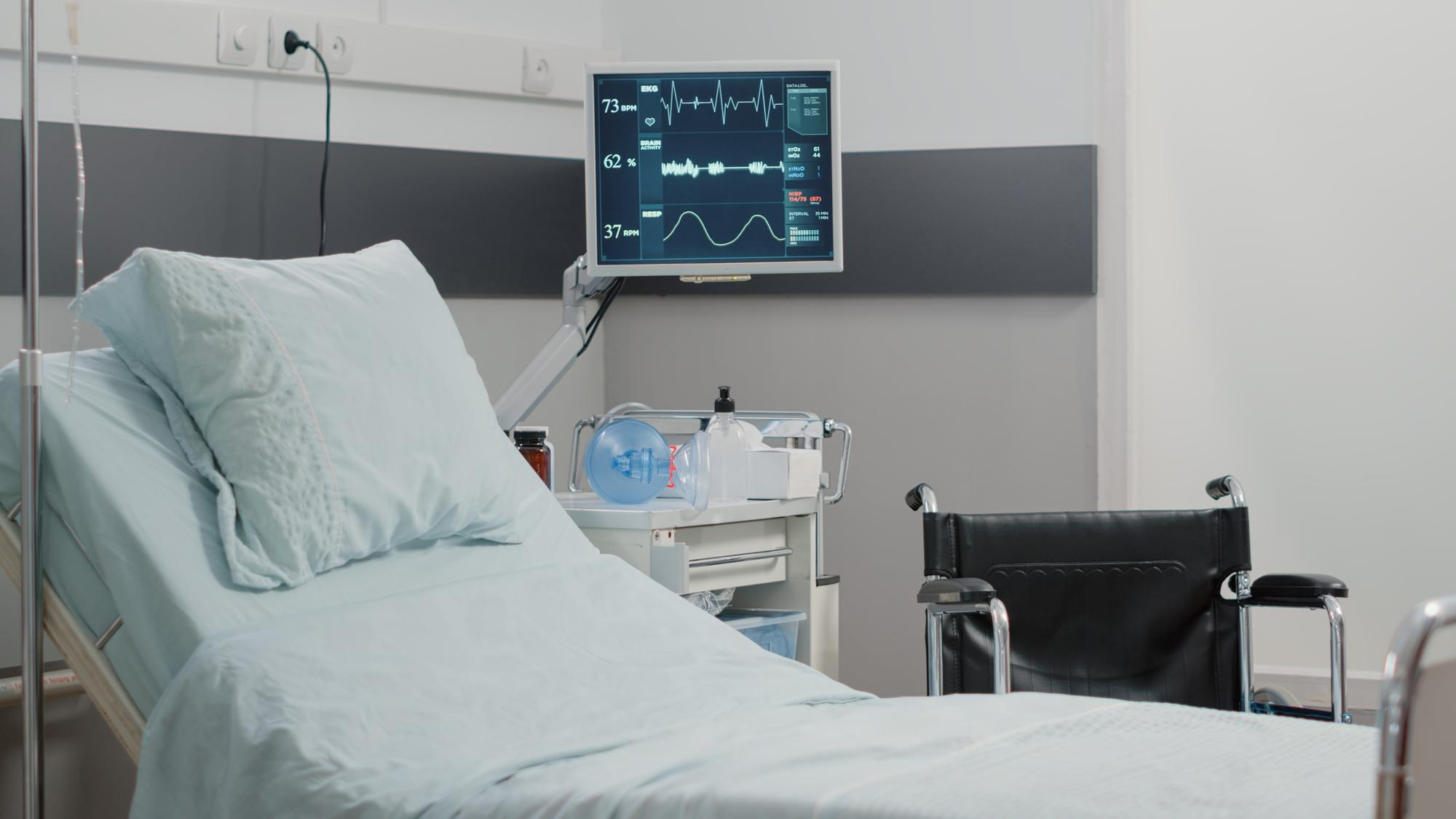
They moved her out of the ICU after three weeks, into a regular room on the neurology floor. Room 614. A window that looks out over the parking garage. A whiteboard on the wall where the nurses write the date and their names. They took her off the ventilator after a month. She breathes on her own now, through a tube in her throat called a trach. They feed her through another tube in her stomach.
Her eyes open sometimes. That was the hardest part at first. Sometimes in the morning her eyes just open. She looks at the ceiling. She doesn’t look at anything. She doesn’t follow you when you move. She doesn’t blink when you wave your hand in front of her face.
“That’s normal,” Dr. Lindqvist told me, the first time I saw it and ran down the hallway shouting for a nurse. “Patients in a coma can progress to what we call a vegetative state, or unresponsive wakefulness. The eyes open. There are sleep and wake cycles. But it doesn’t mean she’s aware. It’s the brainstem doing it. Not her.”
Not her.
I went into the bathroom across the hall and threw up.
Noah goes to the hospital every day after school. My mother picks him up at three fifteen, the same time Emma used to, and drives him straight to St. Vincent’s. He goes up to the sixth floor. He says hi to the nurses at the station by name. He walks into room 614 and he pulls the plastic chair up to the bed and he takes his mother’s hand.
And he doesn’t want to leave.
He does his homework there, on the rolling tray table. He eats dinner there, from the cafeteria. He reads her his library books. He tells her about his day. Who got in trouble at recess. What they had for lunch. That his friend Mateo has a new hamster named Thanos.
He asks to sleep there. Every night. He’s done it more times than he should have. The nurses let him. They bring him an extra blanket and a pillow. He curls up in the recliner next to her bed and falls asleep holding the bed rail, because that’s as close as he can get to her hand.
My mother and I have been talking about it.
He needs to be at home. He needs to sleep in his own bed. He needs to see his friends and watch cartoons and be a kid for at least an hour a day. He’s lost weight. He has dark circles under his eyes. His teacher called me last week and said he’s been falling asleep at his desk.
“He’s seven, Michael,” my mother said. “He can’t carry this. It’s too heavy for him.”
She was right. I knew she was right.
But there was something else. Something I didn’t say to my mother. Something I didn’t say to anyone.
I was scared of that room.
I’d go to the hospital every day too. After work. I’d taken a leave from Hartwell for the first month, but after that, the bills started coming, and I had to go back. So I’d go to the hospital every evening. I’d walk down that hallway on the sixth floor. I’d stand outside room 614.
And I’d sit down in the hallway.
There’s a row of plastic chairs out there, by the window. I’d sit in the one closest to the door. I’d open my laptop. I’d answer emails. I’d call insurance companies. I’d fill out forms. I’d be busy.
I’d go in to say hi to Emma. I’d kiss her forehead. I’d hold her hand for a minute. I’d ask Noah about school.
Then I’d go back out to the hallway.
I told myself it was because I had work to do. Because somebody had to deal with the bills. Because Noah needed his time alone with her.
That wasn’t why.
The truth is, I couldn’t look at her. Not for long. I couldn’t sit in that room and look at her face, at her eyes open and staring at the ceiling, at her red hair growing back in a short uneven fuzz around the scar on her head, without hearing that phone ring in Denver.
I wasn’t there. I was in a convention center, holding a cup of coffee, about to make a joke about bed rails. And my seven-year-old son was alone on the kitchen floor, putting his ear next to his mother’s mouth, trying to figure out if she was breathing.
I wasn’t there.
And there was something else. Something worse.
Three weeks ago, Dr. Lindqvist asked to meet with me. In a small room at the end of the hallway with a box of tissues on the table. He brought a social worker named Cheryl and a palliative care doctor I’d never met.
“Mr. Reyes,” Dr. Lindqvist said, “it’s been seven weeks. We’ve done three MRIs. Multiple EEGs. Emma hasn’t shown any signs of awareness. No response to commands. No tracking. No purposeful movement.” He folded his hands on the table. “I have to be honest with you. The longer a patient stays in this state, the less likely meaningful recovery becomes. At this point, I’d estimate the chances of Emma ever recognizing you, or speaking, or living independently again, as very, very low.”
I couldn’t breathe.
“I’m not saying this to take away your hope,” he said. “I’m saying it because you’re going to have to make some decisions soon. About her long-term care. About what Emma would have wanted. About her feeding tube, eventually. About whether to move her to a long-term facility, or to hospice.”
“Hospice,” I repeated.
“It’s a conversation,” said the palliative care doctor gently. “Not a decision. Just a conversation. We’d like to schedule a family meeting. To talk about goals of care. Whenever you’re ready.”
I said I needed time. They gave me three weeks.
The meeting was scheduled for Monday morning. Nine a.m.
The Monday after that Saturday.
I hadn’t told anyone. Not my mother. Not Emma’s sister in Oregon. And definitely not Noah.
But I’d been thinking about it. Every night. In my mother’s guest room, staring at the ceiling.
Emma and I had talked about it once. Years ago. After her grandmother spent eighteen months in a nursing home after a stroke, unable to move, unable to speak. We’d been driving home from the funeral. Emma had been quiet for a long time.
“Don’t ever let that happen to me,” she’d said finally. “Promise me, Michael. If I’m ever like that. If I’m just lying there and I’m not in there anymore. Let me go.”
“Don’t say that.”
“I’m serious. Promise me.”
I’d promised. I’d said it like you say things you never think you’ll have to do.
And now here I was. Lying awake every night, trying to figure out if she was still in there. Trying to figure out if I was supposed to keep that promise.
Trying to figure out if I’d already failed her once, in Denver, and was about to fail her again.
So that Saturday, when I crouched down beside Noah’s chair and told him even superheroes need to go home and rest, I wasn’t just thinking about his sleep. I was thinking about Monday. I was thinking that if I was going to have to tell my son what was coming, he needed to be in his own bed. Not in that recliner. Not holding that bed rail.
And then he looked up at me and said, So why are you scared to stay in the room with me?
He knew. He’d always known. He’d watched me sit in that hallway every night for two months, and he knew exactly why.
Stay tonight. Stay. And we’ll see.
I stayed.
I texted my mother that we were both sleeping at the hospital. She called me immediately.
“Michael. We talked about this.”
“I know, Mom.”
“He needs to come home.”
“I know. Just. One more night. He asked me to stay. He asked me.” My voice cracked. “He’s never asked me for anything, Mom. Not once. Not in two months.”
She was quiet for a long time.
“Okay,” she said finally. “One night. Call me in the morning.”
I went back into room 614. I didn’t sit in the hallway. I pulled the second plastic chair up to the other side of Emma’s bed. Across from Noah.
He looked at me. He didn’t say anything. But he smiled a little. Just at the corner of his mouth.
“What happens now?” I asked him.
“We have to wait,” Noah said. “For Miss Marge.”
“Who’s Miss Marge?”
“The Saturday nurse,” Noah said, like I should know. “She comes at seven.”
At 7:02, the door slid open, and a nurse walked in.
She was in her sixties, small and round, with short gray curls and purple scrubs with little cartoon cats all over them. She had reading glasses on a beaded chain around her neck and a big canvas bag on her shoulder that said I’D RATHER BE KNITTING. She was humming.
She saw me and stopped.
“Well,” she said. “Look who’s here.”
“Miss Marge!” Noah said. “This is my dad. He’s staying.”
Miss Marge looked at me over her glasses for a long moment. It wasn’t an unfriendly look. It was the look you’d give a student who’d finally shown up to class in the last week of the semester.
“Margaret Dubois,” she said, holding out her hand. “Everybody calls me Marge. I’m the night charge nurse on weekends. I’ve been doing this for thirty-eight years.” She shook my hand firmly. “Your boy talks about you all the time.”
“He does?”
“Mm-hm.” She set her bag down on the counter. “He says you sit in the hallway.”
I didn’t know what to say to that.
Miss Marge went around the bed checking things. The IV. The trach. The feeding pump. She checked Emma’s eyes with a little flashlight. She wrote things on the whiteboard. SATURDAY. NIGHT RN: MARGE. Then she drew a little cat next to her name.
Then she did something strange. She went to the wall and turned off the big overhead fluorescent lights. She turned on the small lamp over the sink instead, so the room was soft and dim and gold.
She went to the monitor beside the bed and turned the volume down. Way down. So the beeping was just a soft whisper.
She closed the door all the way. She pulled the curtain across the glass.
Then she pulled a third chair over, a rolling stool, and sat down at the foot of Emma’s bed.
“Okay, Noah,” she said. “Ready when you are.”
Noah unzipped his Spider-Man backpack. He took out a comic book. A brand new one, still in its plastic bag.
I recognized it immediately.
Every Saturday morning since Noah was four, Emma and Noah went to Galaxy Comics on Fourth Street. It was their thing. Just the two of them. They’d get pancakes at the diner next door first, and then they’d go to the comic shop, and Noah would pick out one new comic. Just one. And they’d bring it home and read it together on the couch, Emma doing all the voices.
She did terrible voices. Her Iron Man sounded like a game show host. Her Hulk sounded like a cranky grandpa. Her Black Panther had an accent that was somewhere between Jamaican and Swedish.
Noah loved it. He’d laugh until he couldn’t breathe.
They called it Comic Saturday. It was the most important day of the week to him.
I hadn’t thought about Comic Saturday once since the aneurysm. Not once.
“Grandma takes me to Galaxy,” Noah said, pulling the comic out of its bag. “Every Saturday. After she picks me up from soccer. I get one and I bring it here.” He looked at me. “Mom gets mad if we skip.”
“Noah,” I said carefully. “Mom can’t get mad.”
He ignored me. He opened the comic on his lap. He took his mother’s hand in his left hand, and held the comic in his right.
“Okay, Mom,” he said. “It’s issue forty-two. Miles Morales. Remember, in forty-one, he was trapped in the building with the bad guy and the bomb? This is the one where we find out what happens.”
He started reading.
He read it out loud, slowly, carefully, sounding out the big words. He did voices. Not as good as Emma’s. But he tried. He made Miles sound young and nervous. He made the villain sound deep and scary. He described every panel. “Okay, now there’s a picture of the bomb, and it says ten seconds, and Miles is looking at it and he’s sweating.”
I sat across from him and watched my son read to his mother in the dim gold light, with the monitors whispering, and my throat ached so badly I couldn’t swallow.
Miss Marge sat at the foot of the bed with her knitting. Something blue. She didn’t say anything. But I noticed she wasn’t really knitting. She was watching Emma’s face. Very closely. The way I used to watch the road on the night Noah was born, when I was driving Emma to the hospital in a snowstorm.
About halfway through the comic, Noah stopped reading.
He looked up at his mother’s face.
“Mom,” he said softly. “Do you want me to keep going?”
Nothing happened. Emma’s eyes were open, staring at the ceiling, like they always were.
I felt my heart breaking all over again. For him. For the hope in his voice.
“Buddy,” I started.
“Shh,” said Miss Marge, without looking away from Emma.
Noah leaned closer. “Mom. Remember the spy code? From when I had my tonsils out?”
I froze.
When Noah was five, he had his tonsils and adenoids removed. He couldn’t talk for almost a week. It hurt too much. He was miserable and frustrated and kept crying because nobody could understand what he wanted.
So Emma invented a code. She told him it was a secret spy code, like the Avengers used on missions when they couldn’t talk. One blink meant yes. Two blinks meant no. And if he squeezed her hand twice, it meant keep going. Like keep reading, keep singing, keep scratching my back.
He used it all week. He loved it. He used it for months afterward, even when he could talk again, just because it was fun.
I’d forgotten all about it.
“Mom,” Noah said again. Very slowly. Very clearly. “Do you want me to keep reading? One blink for yes.”
I watched my wife’s face.
I watched her eyes. Open. Staring. Blank.
And then, slowly, so slowly that if I’d looked away for one second I would have missed it, Emma’s eyelids came down.
And went back up.
One blink.
I stopped breathing.
“I saw that,” I whispered. “Did you see that? Noah. Did you…”
“Shh,” said Miss Marge again. But her voice was shaking now. “Ask her again, sweetheart. Ask her something else. Something with a no.”
Noah leaned in. “Mom. Is it Tuesday? Two blinks for no.”
Emma’s eyes were still. Five seconds. Ten. Long enough that I thought it had been a fluke. A reflex. The brainstem. Not her.
Then her eyelids came down. And up. And down. And up.
Two blinks.
I grabbed the edge of the bed rail so hard my knuckles turned white.
“No,” I said. “No. That’s. That can’t be. They said. Dr. Lindqvist said there’s no response. They’ve tested her. They’ve done everything.”
Miss Marge put down her knitting. She looked at me over her reading glasses.
“Mr. Reyes,” she said quietly. “When do they test her?”
I didn’t understand the question.
“The neurology team,” Miss Marge said. “When do they come in to do their exams?”
“I don’t know. In the mornings? On rounds?”
“Seven a.m. on weekdays,” Miss Marge said. “With the overhead lights on. With six residents and a medical student in the room, all talking. With the monitors beeping full volume and the television in the next room on and the floor polisher going in the hallway. They stand at the foot of the bed and say, ‘Emma, squeeze my hand. Emma, look at me. Emma, wiggle your toes.’ Three tries. Thirty seconds. Then they write ‘no response’ and move on to the next patient.” She shook her head. “I’ve seen it a thousand times. I’ve done it a thousand times myself, back in the day.”
“But you think she’s…”
“I think,” Miss Marge said carefully, “that your wife has a brain that got hurt very badly. And that it’s tired. And that it’s working very, very hard to do even the smallest thing. Like blinking on purpose. And I think it can do that sometimes. When it’s quiet. When it’s dim. When it’s not overwhelmed. And when it’s somebody she loves, asking her something she cares about, in a voice she knows.” She looked at Noah. “On a Saturday night.”
Noah grinned at me. A huge, triumphant grin.
“I told you,” he said. “She only talks to me. On Saturdays.”
I couldn’t speak.
Miss Marge reached into her canvas knitting bag. She pulled out a spiral notebook. A kid’s notebook. Green, with a picture of the Hulk on the cover. She handed it to me.
“He’s been keeping it,” she said. “I told him to. The third Saturday he was here. I saw her blink at him. Once. When he asked if she wanted him to do the Hulk voice. I wasn’t sure. So I told him, every time she blinks at you, write it down. Write down the time. Write down what you asked. Write down what she did.”
I opened the notebook.
It was full of my son’s handwriting. Big, uneven, seven-year-old letters, in pencil. Some words misspelled. Some letters backward.
SATERDAY OCTOBER 5. 8:14. I askd do you want the hulk voice. ONE BLINK. Miss Marge saw.
SATERDAY OCTOBER 5. 8:31. I askd do you miss Dad. ONE BLINK.
SATERDAY OCTOBER 12. 7:52. I askd is my name Steve. TWO BLINKS. (Its not Steve its NOAH.)
SATERDAY OCTOBER 12. 8:05. I askd do you like this comic. ONE BLINK.
SATERDAY OCTOBER 19. 9:10. I askd are you scared. ONE BLINK. I said dont be scared. I am here. Miss Marge cried.
SATERDAY OCTOBER 26. 7:44. I askd is it sunny out side. TWO BLINKS. (It was raining. She was rite.)
SATERDAY NOVEMBER 2. 8:22. I askd do you want me to go home. TWO BLINKS.
SATERDAY NOVEMBER 9. 7:58. I askd do you want Dad to come in the room. ONE BLINK. ONE BLINK. ONE BLINK. She did it 3 times.
I stopped reading. I put my hand over my mouth.
Do you want Dad to come in the room.
One blink. One blink. One blink.
While I sat in the hallway with my laptop. Answering emails. Ten feet away.
“I told him,” Noah said quietly. “I told you to come in. Every night. You always said you had work.”
“I’m sorry,” I whispered. “Noah. I’m so sorry.”
“That’s why I can’t go home on Saturdays,” Noah said. “Because if I’m not here, nobody asks her anything. And she just lies there. And nobody knows she’s in there.” His chin wobbled. “And then she’s all alone. And she’s in there all alone and she can’t tell anybody.”
I put the notebook down. I came around the bed. I knelt down beside my son’s chair, on the cold hospital floor, and I held him. He let me. He still didn’t let go of his mother’s hand. But he let me hold him.
“Why didn’t you tell me?” I asked into his hair. “Why didn’t you tell anybody?”
“I told Grandma,” Noah said, muffled. “She said it was a reflex. She said Mom’s eyes just do that.” He pulled back and looked at me. “And Miss Marge told the doctors.”
I looked up at Miss Marge.
She nodded slowly. “Three times,” she said. “I wrote it in the nursing notes. Every Saturday. Patient appeared to blink in response to yes or no questions from family member. I called the on-call neurology resident twice. He came up once, at eleven at night. He turned on the overhead lights. He stood at the foot of the bed. He said, ‘Emma, blink twice if you can hear me.’ Nothing happened. He said it was probably spontaneous blinking. He wrote ‘no reproducible response.’ He left.”
She took off her reading glasses and rubbed her eyes.
“I’ve been doing this for thirty-eight years, Mr. Reyes. I’ve seen a lot of patients in that bed. Most of the time, the doctors are right. Most of the time, it’s a reflex. Most of the time, it’s just the brainstem.” She put her glasses back on. “But I’ve seen it a few times. When they weren’t right. And I’ve learned something. Brains like hers get tired very fast. You only get a few tries. And you only get them when the room is quiet, and the person asking is somebody who matters.”
She looked at Noah.
“And there’s nobody on earth who matters to her more than this boy.”
I sat back down in my chair. Across from my son. Next to my wife.
I took Emma’s other hand. The first time in two months I’d really held it. Not for a minute before running back to the hallway. Really held it.
It was warm. Softer than I remembered. Her nails had grown long. Somebody had painted them. A pale pink.
“Miss Marge does them,” Noah said, seeing me look. “On Saturdays. I pick the color.”
I swallowed.
“Can I,” I said. My voice wasn’t working. “Can I ask her something?”
Miss Marge looked at the clock on the wall. 9:20.
“She gets tired around nine thirty,” she said. “Usually. You’ve got time for one or two. Make them count. Ask clearly. Ask slowly. Give her time. Don’t rush her. It takes her a long time to answer.”
I leaned close to my wife’s face. Close enough to smell her. Under the hospital soap and the antiseptic, she still smelled a little bit like Emma. Like the lavender lotion she used.
“Emma,” I said. “It’s Michael. It’s me.”
I waited. Nothing.
“Emma, can you hear me? One blink for yes.”
Her eyes stared at the ceiling. Five seconds. Ten. Fifteen.
My heart was pounding so hard I could feel it in my ears.
Twenty seconds.
Her eyelids came down. Slowly. Like it took everything she had.
And went back up.
One blink.
I made a sound I didn’t recognize. Something between a laugh and a sob.
Noah squeezed my arm.
“Ask her the other thing,” he whispered. “The thing you want to ask.”
I didn’t know how he knew. But he knew.
I leaned closer. I put my forehead against the side of my wife’s head, against the short soft fuzz of red hair growing back over her scar.
“Emma,” I whispered. “I wasn’t there. When it happened. I was in Denver. I wasn’t there. Noah was alone. You were alone on the kitchen floor.” My voice broke apart. “I’m so sorry. I’m so sorry. Can you forgive me? One blink for yes.”
I pulled back so I could see her eyes.
Nothing happened.
Ten seconds. Twenty. Thirty. Her eyes stayed open, staring at the ceiling.
Forty seconds.
“She’s tired,” Miss Marge said softly. “It’s late. It might be too late tonight.”
Fifty seconds.
I closed my eyes. I couldn’t watch anymore. I couldn’t stand to see her not answer.
And then I felt it.
Not her eyes. Her hand. The one I was holding.
Her fingers moved. Just barely. Just the very tips, pressing against my palm.
Once.
Then, after a long, long pause.
Twice.
I opened my eyes and stared down at our hands.
“Two squeezes,” Noah breathed. He was staring too. “That’s not yes. That’s not no.” He looked up at me, and his face was blazing. “That’s the other one. Two squeezes means keep going.”
Keep going.
I put my face down on the edge of my wife’s hospital bed, on the white sheet, next to her hand, and I cried harder than I had at any point in the last two months. Harder than in the airport bathroom. Harder than in the little room with the box of tissues.
Keep going.
Noah climbed out of his chair. He came around the bed and he climbed into my lap, the way he hadn’t done since he was four. He put his arms around my neck. He still held onto his mother’s hand with one of his.
Miss Marge got up very quietly and went to the counter by the sink. She picked up a pen. She wrote something in the nursing notes on the computer. Then she picked up Noah’s green Hulk notebook from where I’d put it on the bed, and handed it to him.
“Write it down, sweetheart,” she said. “Write down everything. Then let’s put this whole family to bed.”
Noah wrote it down. I watched him.
SATERDAY NOVEMBER 30. 9:31. DAD askd can you forgive me. TWO SQUEEZES. That means KEEP GOING. DAD CAME IN THE ROOM.
He underlined the last part three times.
I didn’t sleep that night. Noah did. He fell asleep in the recliner holding the bed rail, the way he always did. But I sat in my chair beside Emma’s bed all night long, holding her hand, watching her breathe.
At around four in the morning, I did something I hadn’t done in two months. I talked to her.
I told her about Denver. About the coffee on my shoes. About the four-hundred-dollar middle seat by the bathroom. I told her about Darlene the dispatcher and the flowers I’d sent. I told her about Noah, about the paper on the refrigerator, about how he’d told her the plot of Endgame on the kitchen floor so she wouldn’t go anywhere.
I told her I’d been scared. That I’d been sitting in the hallway because I couldn’t look at her. That I’d been lying awake every night thinking about the promise I’d made her after her grandmother’s funeral. That I’d been getting ready to keep it.
“I almost did it, Em,” I whispered. “There’s a meeting on Monday. I almost. I thought you weren’t in there anymore. I thought you’d want me to let you go.”
Her eyes were closed now. She was asleep. Really asleep, I think. Her breathing was slow and deep.
“I’m not going to,” I said. “Not until you tell me. Not until I know. I’m going to keep asking. Every day. I’m going to keep going.”
Her fingers didn’t move. She was asleep.
But I swear, in the dim gold light, I saw the corner of her mouth move. Just a little. Just for a second.
It might have been the brainstem.
I don’t think it was.
On Monday morning at nine o’clock, I walked into the small room at the end of the hallway with the box of tissues.
Dr. Lindqvist was there. Cheryl the social worker. The palliative care doctor, whose name was Dr. Feld. And this time, someone else. A younger woman with dark hair in a neat bun and a white coat with a badge that said A. RAO, MD, NEUROCRITICAL CARE.
“Mr. Reyes,” Dr. Lindqvist said. “Thank you for coming. Please sit down.”
I sat down. I put a green spiral notebook with the Hulk on the cover on the table in front of me. Next to it, I put my phone. And a folder.
“Before we start,” I said, “I need to show you something.”
I’d spent all of Sunday getting ready. After I took Noah home to sleep in his own bed, finally, where he slept for fourteen hours straight, I went back to the hospital. I sat with Emma all day. And on Sunday night, I asked Miss Marge, who was working a second weekend shift, to help me.
We did it the way she said. Lights off. Lamp on. Door closed. Monitors down. Noah wasn’t there, so I was the one who asked. And I asked slowly. Clearly. One question at a time. And I waited. As long as it took.
And I recorded it. On my phone. Every second.
Is your name Emma? One blink.
Is your name Susan? Two blinks.
Do you have a son named Noah? One blink.
Is Noah eight years old? Two blinks.
Is Noah seven? One blink.
Are you in pain? Two blinks.
Are you tired? One blink. Long pause. One blink again.
Forty-one minutes of video. Eighteen questions. Sixteen correct answers. Two where she didn’t respond at all, toward the end, when she was getting too tired.
I’d also printed Miss Marge’s nursing notes from the last eight Saturdays. She’d gotten them for me, through the proper channels, with my permission as Emma’s legal decision-maker. Every entry. Patient appeared to blink in response to yes or no questions from family member. On-call resident notified.
And I put Noah’s notebook on top.
I pushed it all across the table to Dr. Lindqvist.
He looked at me for a long moment. Then he picked up the green notebook and opened it.
He read every page. Slowly. I watched his face. When he got to SATERDAY NOVEMBER 9. I askd do you want Dad to come in the room. ONE BLINK. ONE BLINK. ONE BLINK, he stopped. He looked up at me over the top of the notebook.
He didn’t say anything. He just kept reading.
When he finished, he closed the notebook and set it down very gently. Then he picked up my phone.
“May I?”
“Please.”
He watched the video. All forty-one minutes of it. Nobody in the room said a word. Dr. Rao leaned over his shoulder and watched too. Cheryl the social worker had her hand pressed against her mouth. Dr. Feld, the palliative care doctor, closed her laptop.
When it was over, Dr. Lindqvist set the phone down. He took off his glasses. He rubbed his eyes for a long time.
“Mr. Reyes,” he finally said. “I owe you an apology.”
“You don’t…”
“I do,” he said. “Let me say it. I’ve been a neurologist for twenty-nine years. I’ve seen a lot of families in this room. A lot of families who saw something. A twitch. A blink. A tear. Who wanted it to be real so badly that they built their whole lives on it. And it wasn’t real. And they spent years by a bedside waiting for someone who was never coming back.” He looked at the notebook. “I’ve watched that destroy people. Marriages. Children. I promised myself a long time ago I’d never be the doctor who gave a family false hope.”
He put his glasses back on.
“But in protecting you from false hope,” he said quietly, “I think I may have missed real hope. And that’s worse. That’s much worse.”
He turned to the dark-haired doctor beside him.
“Dr. Rao runs our research program on what we call covert consciousness,” he said. “Patients who appear unresponsive at the bedside, but who may actually be aware. It’s called cognitive motor dissociation. Some patients can understand and think and even follow commands, but the connection between their brain and their body is so damaged that they can barely move. Sometimes not at all. Sometimes just their eyes. Sometimes just a finger. And sometimes only when conditions are right.” He paused. “Studies suggest it may be as many as one in five patients we’d otherwise classify as unresponsive.”
“One in five,” I repeated.
“We’ve been missing them,” Dr. Rao said. Her voice was very gentle. “For a long time. All over the world. Because our bedside tests are too fast. Too loud. Too rushed. Because we’re doing them at seven in the morning with eleven people in the room.” She looked at the notebook. “Your nurse knew that. Your son figured it out by himself. He’s seven.”
“Can you test her?” I asked. “Can you prove it?”
“We can try,” Dr. Rao said. “There’s a special kind of MRI. A functional MRI. We put her in the scanner and ask her to imagine things. Like playing tennis, or walking through her house. If she’s aware and following our instructions, we’ll see specific parts of her brain light up. Every time we ask. In exactly the right places. It’s very hard to fake. And very hard to miss.”
“When?”
Dr. Rao looked at Dr. Lindqvist. He nodded.
“Wednesday,” she said.
Dr. Feld, the palliative care doctor, very quietly gathered up her papers.
“I think,” she said, “we should postpone our conversation about goals of care.”
“Yes,” said Dr. Lindqvist firmly. “Indefinitely.”
They did the scan on Wednesday afternoon.
I wasn’t allowed in the scanner room. But Dr. Rao let me sit in the control room behind the glass, next to the technician, watching the screens.
They’d asked me for something specific. Something that would mean something to Emma. Something she could picture vividly.
“Not tennis,” I told them. “She hates tennis.”
So instead, Dr. Rao spoke into a microphone, into headphones Emma was wearing inside the machine.
“Emma. Imagine you’re reading a comic book with Noah on the couch. Imagine you’re doing the voices.”
Thirty seconds.
“Now rest.”
Thirty seconds.
“Emma. Imagine you’re reading a comic book with Noah. Do the Hulk voice.”
Thirty seconds.
“Now rest.”
They did it eight times.
I watched the screen. I didn’t understand most of it. Gray shapes of a brain, in slices, with numbers and graphs running along the bottom.
But I understood when the colors came.
Every time Dr. Rao said “Imagine you’re reading a comic book,” a patch of bright orange and yellow lit up on the screen. In the same place. Every single time. And every time she said “Now rest,” it faded away.
Eight times out of eight.
The technician, a young man with headphones around his neck, stopped typing. He just stared at the screen.
“Oh, wow,” he said quietly.
Dr. Rao didn’t say anything for a long time. She was watching the screen with her hand pressed flat against the desk.
Then she turned to me. Her eyes were shining.
“She’s in there, Mr. Reyes,” she said. “She’s in there. And she’s listening.”
I had to go out into the hallway. I sat down on the floor against the wall, outside the MRI suite, and I called my mother.
“She’s in there, Mom,” I said. “She’s in there.”
My mother started crying so hard she had to put the phone down.
Then I called Galaxy Comics on Fourth Street.
“Hi,” I said to the teenager who answered. “This is going to sound strange. I need to order every Miles Morales comic you have. The whole run. All of them. And I need you to hold the new one every Saturday. Forever. For a family named Reyes.”
I’d love to tell you that Emma woke up the next morning and sat up and asked for pancakes.
She didn’t. That’s not how it works. Not in real life.
But everything changed.
They moved her to a special rehabilitation unit for patients with severe brain injuries. They started her on a medication that helps some people’s brains wake up more. They brought in a speech therapist named Gwen who built Emma a board with letters on it. Gwen would point to letters one by one, and Emma would blink when Gwen got to the right one. It took almost twenty minutes to spell a single word.
The first word she spelled was N-O-A-H.
The second word was H-A-I-R.
“I think,” Gwen said carefully, “she wants to know what happened to her hair.”
I laughed so hard the nurses came running.
Noah goes every day after school. My mother still picks him up at three fifteen. But now, at six o’clock every night, I pick him up from the hospital and take him home. He eats dinner at our kitchen table. He does his homework. He watches cartoons. He sleeps in his own bed.
Every night except Saturday.
On Saturdays, we both sleep at the hospital. Me in the recliner, him in a little cot the nurses bring in. Miss Marge always works Saturday nights. She turns down the lights and the monitors and closes the door. And Noah reads his mother that week’s comic, and does the voices, and asks her questions. And she answers.
She’s getting faster. In January, it took her twenty seconds to blink. In February, ten. In March, she started moving her right thumb. By April, she could squeeze my hand on command, every time, with the lights on, with eleven people in the room, at seven in the morning.
The residents on rounds wrote it down. Follows commands consistently.
Dr. Lindqvist came to see her personally that morning. He held her hand and asked her to squeeze. She did. He asked her to blink twice. She did.
Then he asked her if she’d like him to leave so she could get some rest, and she blinked once very firmly, and he laughed out loud.
In May, they took out the trach. Emma’s voice was gone. Her vocal cords were weak from months of disuse. For two weeks she could only whisper. Rough, hoarse, barely there.
The first thing she whispered, with Gwen and Dr. Rao and Miss Marge and my mother and me and Noah all crowded around her bed, was so quiet I had to put my ear right against her mouth.
“Michael.”
“I’m here.”
“You. Sat. In the. Hallway.”
Everyone in the room burst out laughing. Even Dr. Rao. Even me, while I cried.
“I know,” I said. “I know. I’m sorry.”
Emma’s eyes, those eyes that had stared at the ceiling for two months, moved slowly, slowly, until they found mine. And held there.
“Two,” she whispered. “Squeezes.”
Her fingers moved in my hand. Once. Then twice.
Keep going.
It’s been almost a year now.
Emma came home in September. She uses a wheelchair most of the time, and a walker for short distances, with a physical therapist named Luis who comes three times a week and who she has nicknamed “The Torturer.” Her right side is still weak. Her speech is slow, and sometimes she can’t find the word she wants and gets so frustrated she cries. She can’t teach yet. She might never teach again. We don’t know. She gets tired very fast.
But she’s in there. All of her.
She laughs at her own jokes before she finishes telling them. She still can’t sing, and now she has an excuse, and she sings anyway. Her red hair is growing back. She’s cutting it herself again, in the bathroom mirror, very slowly, with her left hand, and it looks terrible, and she doesn’t care.
Miss Marge retired in June. Thirty-nine years. We had a party for her in our backyard. Emma made a speech, slowly, from her wheelchair, with Noah holding the paper so she could read it. She thanked Miss Marge for turning down the lights. Everybody cried. Miss Marge cried the hardest. Then she gave Noah her knitting bag, the one that said I’D RATHER BE KNITTING, and inside it was a blue scarf, finally finished, a year after she started it, in his mother’s room.
“Every stitch,” she told him, “was a Saturday.”
Dr. Rao published a paper this spring about cognitive motor dissociation and the importance of what she calls “environmental conditions” in bedside assessment. Lights. Noise. Time of day. Familiar voices. In the acknowledgments, at the very end, she thanked a seven-year-old research assistant named Noah, for his meticulous data collection, and a night nurse named Margaret Dubois, for thirty-eight years of paying attention.
St. Vincent’s changed its protocols. Every patient on the neurology floor with a disorder of consciousness now gets a “quiet assessment” at least once a week. Lights down. Door closed. Monitors low. Family present. A nurse or a doctor sitting at the bedside, not standing at the foot of the bed. Asking slowly. Waiting.
They call it the Saturday Protocol. Officially. It’s in the hospital handbook.
Dr. Lindqvist told me in August that they’d found two more. Two more patients in the last six months who’d been marked unresponsive. Who weren’t. Two more people in there, alone, who nobody knew were listening.
“Two families,” he said, “who almost had the same meeting you almost had.”
I didn’t say anything. I just shook his hand.
I don’t travel for work anymore. I quit Hartwell in February. I sell medical supplies for a local company now, in town, twenty minutes from home. I make less money. I’m home by five thirty every night.
I’m never going to Denver again.
This morning is Saturday.
It’s the first cold day of November. Frost on the windows. The furnace ticking. The whole house smells like pancakes, because Noah insisted on making them himself, and burned the first three, and is now on the fourth, standing on a stool at the stove in his Spider-Man pajamas while I hover behind him pretending not to help.
Emma is at the kitchen table in her wheelchair, wrapped in the pink cardigan with the buttons shaped like strawberries. The same one she tried to give me eleven years ago at that party, after she spilled wine on my shirt. It’s faded now, and the elbows are thin, and one of the strawberry buttons is missing. She wears it every Saturday.
In front of her, on the table, is a new comic in a plastic bag. Issue fifty-four. Noah and I picked it up from Galaxy yesterday afternoon, because she can’t sit in the car that long yet, and Saturday mornings are for pancakes now, at home.
Noah slides a slightly burned pancake onto a plate and carries it to her very carefully with both hands. He sets it down. He sits down next to her. He takes the comic out of its bag and opens it on the table between them.
“Okay, Mom,” he says. “Issue fifty-four. Remember, in fifty-three, the bad guy got away on the train?”
Emma nods slowly. She reaches out with her left hand and takes his.
“Do the voices,” she says. Her words come slowly. Carefully. One at a time. “I want. To hear. The Hulk.”
“You do the Hulk,” Noah says. “You do it better.”
Emma laughs. That big, silly, wonderful laugh, a little rough now, a little slower than it used to be.
I lean against the kitchen counter with a cup of coffee and watch them. The two of them, at the table, in the gray November light, with the comic open between them and their hands holding on.
Noah starts reading. Emma does the Hulk. It sounds like a cranky grandpa. It always has.
On the refrigerator behind them, at kid height, there’s still a piece of paper with three things written on it in Emma’s neat teacher handwriting. Call 911. Say your name. Hold their hand. We never took it down. And right next to it, held up by a magnet shaped like Captain America’s shield, there’s another one now. Newer. In pencil, in big uneven seven-year-old letters, a little crooked.
ONE BLINK = YES.
TWO BLINKS = NO.
TWO SQUEEZES = KEEP GOING.
The furnace hums. The pancakes are cooling on the stove. Out the window, the frost is starting to melt off the grass, a little at a time, in the thin early sun. And at the table, my wife does the voice of the Hulk, slowly and badly and perfectly, while my son laughs so hard he can barely breathe, and squeezes her hand twice.

Specialty: Quiet Comebacks & Personal Justice
David Reynolds focuses on stories where underestimated individuals regain control of their lives. His writing centers on measured decisions rather than dramatic outbursts — emphasizing preparation, patience, and the long game. His characters don’t shout; they act.