I knew that voice. Everyone in my family knew that voice. It was low and level and it left no room for anything else, and I had spent a good part of my childhood hating it.
So I sat still.
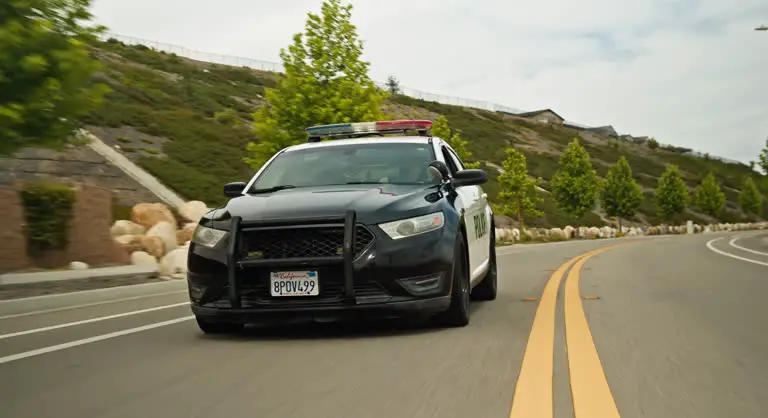
She walked to the back of the Buick in her flowered Sunday dress and her good white sandals, and she stood there on the gravel. He walked back to his patrol truck, climbed in, and shut the door. The engine was running. The windows were up. I could see the little shimmer of cold air fogging the bottom of his windshield.
And that is where he left her.
I watched it all in the side mirror.
I want to tell you I did something. I did not. I sat in that car and watched my mother stand on the gravel in the full sun with her handbag hooked on her arm like she was waiting for a bus, and I watched a boy sit in air conditioning behind tinted glass, typing on a laptop.
At ten minutes, I rolled my window down.
“Mom. Get in the car.”
“He asked me to stand here.”
“He can’t make you do that.”
“He can ask,” she said, without turning around. “And I can stand.”
The sun was coming straight down. There was no breeze. The corn didn’t move at all. A grasshopper landed on the hood of the Buick and sat there like it was waiting to see what would happen too.
At twenty minutes, he finally got out. I thought it was over. I actually let out my breath.
It was not over.
He walked up and stood too close to her. Closer than you stand to a stranger. He asked where she was headed. He asked whose car it was. He asked how long she had lived at the address printed on the paper.
“Forty-six years.”
“Forty-six years,” he said, “and you never got yourself a real license.”
That was when he held it up to the sun. That was the library line, and the little laugh through his nose.
Then he asked her if she was on any medication. He asked her if she knew what day it was.
My face went hot. I felt it all the way down my neck. He was talking to my mother like she was a confused old woman who had wandered away from a nursing home.
“It’s Saturday the eighth, Deputy,” she said. “The social starts at two.”
He looked at her a second longer, the way you look at a dog that won’t come when you call it. Then he went back to his truck and sat down again in the cold air.
A grain truck came up from the east. It slowed way down passing us. The driver had his elbow out the window and his mouth hanging open, staring at an old woman in a church dress standing behind her car in that heat.
My mother lifted two fingers off her handbag. Just barely. The way you wave somebody through at a four-way stop.
Go on.
The truck went on.

Specialty: Quiet Comebacks & Personal Justice
David Reynolds focuses on stories where underestimated individuals regain control of their lives. His writing centers on measured decisions rather than dramatic outbursts — emphasizing preparation, patience, and the long game. His characters don’t shout; they act.