I didn’t sleep that night.
I sat on the bed in my cabin with the small wooden box in my lap. I’d found it in the corner of my suitcase, wrapped in one of our old bath towels. It was simple dark oak, with a brass plate on the top.
MARTIN JAMES HALE. 1953–2026. CAPTAIN.
David had packed his father’s ashes in my suitcase. A small portion of them. The rest were in the urn on our mantel at home. Martin had arranged it all. Every detail.
I held the box against my chest and talked to him until the sky outside began to turn gray.
At five o’clock, Thomas knocked on my door.
I was wearing the blue dress again. I couldn’t think of anything else to wear.
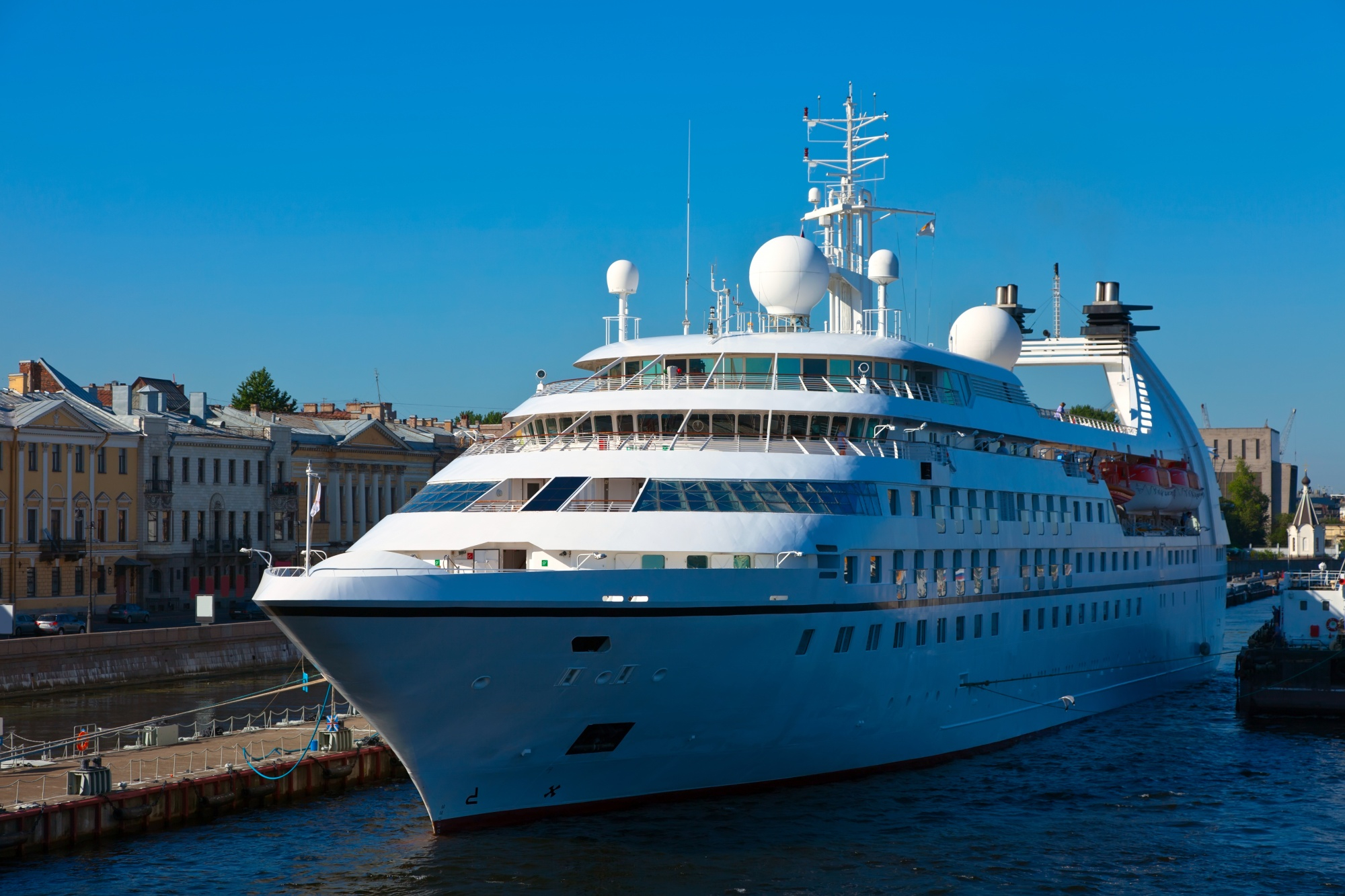
They took me to the stern of the ship. The very back. Deck Four, a small open deck usually used only by crew.
The sun wasn’t up yet. The sky was turning from deep blue to pale gold at the edges. The sea was completely calm. Like glass. Like a mirror. The ship had slowed to almost nothing. I could barely feel it moving.
In the distance, rising out of the water, was Santorini. White villages clinging to the tops of dark cliffs. Little blue domes catching the first light.
And waiting for me on that deck were thirty crew members. Officers in white. Captain Brandt. Joel. Maria. The old engineer. They stood in a half circle near the railing, perfectly silent, their hands folded in front of them.
Thomas walked me to the railing.
I looked down.
For the first time in sixty-two years, I looked straight down at the ocean.
It was so blue. Deep and clear and endless. Not black, like the water under the Pier Pavilion. Not gray and churning, like Higgins Beach. It was the blue from the postcards. The blue Martin had been trying to show me for fifty years.
I held on to the railing with one hand. My knees were shaking. But I didn’t look away.
Captain Brandt stepped forward. She opened a small leather book and read a few words. A sailor’s prayer. Old and simple.
We commit his body to the deep. To be turned into corruption, looking for the resurrection of the body when the sea shall give up her dead.
Then she closed the book and looked at me.
“Mrs. Hale,” she said softly. “Whenever you’re ready.”
There was one more envelope. Thomas handed it to me.
It was short. Just a few lines. Martin’s handwriting was almost unreadable by then. He must have written it in his very last days.
Evie —
These coordinates are where I was standing on the deck of my very first ship, in August 1975, when I wrote you my first postcard. The one from Puerto Rico. I was looking at the water and thinking about a girl in a blue dress who was afraid of the ocean. And I made a promise to myself that someday, I’d show her how beautiful it was.
It took fifty years. But here you are.
Don’t be afraid, mermaid. It’s just me down there now.
And I’ll be in every ocean you ever see.
— M.
I folded the letter. I put it in the pocket of the blue dress.
Then I opened the wooden box.
The ashes were soft and gray, in a small sealed bag inside. Thomas helped me open it. His hands were steady. Martin’s hands, I thought. He’d taught him well.
I held the bag over the railing.
The sun came up.
Right at that moment. As if he’d planned it. And knowing Martin, he probably had. The first gold edge of the sun broke over the horizon behind Santorini, and the whole sea lit up at once, gold and blue and glittering, as far as I could see.
“Goodbye, sailor,” I whispered.
I let the ashes go.
They drifted down slowly in the still morning air. Gray and soft. They touched the water and spread out across it, catching the light, turning silver and gold. Then the sea took them. Gently. Like it was taking him home.
Behind me, thirty crew members of the Aurelia raised their hands in a salute.
And then the old engineer, the one with grease on his hands, began to sing.
Softly. Off-key. In a rough, deep voice.
Moon River, wider than a mile.
One by one, the others joined in. Joel. Maria. Thomas. Captain Brandt. All of them. Singing my husband’s song to the sunrise over the Aegean Sea.
I’m crossing you in style, someday.
I stood at the railing in my blue dress and cried. But it wasn’t the same crying as before. It wasn’t the crying of the funeral, or the empty space by the window, or the tickets I almost tore apart.
It was something else. Something softer. Something almost like peace.
I did one more thing that week.
Two days later, we were docked in Athens. The last stop. The end of the voyage.
On my final afternoon, I took a taxi to a small beach on the coast south of the city. Thomas came with me. He’d asked to.
It was a quiet beach. Pebbles instead of sand. Clear turquoise water lapping gently at the shore. A few families swimming. An old Greek man fishing off the rocks.
I stood at the edge of the water for a long time.
Sixty-two years. Since Higgins Beach. Since Tommy.
I hadn’t put so much as a toe in the ocean in sixty-two years.
I took off my sandals.
Thomas didn’t say anything. He just stood a little behind me, close enough to catch me if I fell.
I took a step forward. Then another.
The water touched my toes.
It was cool. Clear. I could see straight through it to the smooth gray pebbles underneath. A tiny silver fish darted past my ankle.
I stood there with my feet in the Mediterranean Sea and I laughed. Out loud. I couldn’t help it. Seventy-one years old, standing in the ocean in my skirt, laughing and crying at the same time.
“I’m in, Martin,” I said to the water. “Look. I’m in.”
I reached down and touched the surface with my hand. It rippled out in little circles, catching the sun.
Don’t be afraid, mermaid. It’s just me down there now.
I wasn’t afraid.
For the first time in sixty-two years, I wasn’t afraid.
That was two years ago.
I’m seventy-three now. I still live in our house in South Portland. The postcards from the shoeboxes are still in the hall closet. All eleven boxes.
But the three hundred and twelve postcards from the big white box are somewhere else.
They’re in a binder. A big blue binder that lives on my kitchen table. Every postcard in a clear plastic sleeve, organized by place.
And I’ve started checking them off.
Last spring, I went to Alaska with David and my granddaughters. We stood on the deck of a ship and watched a glacier calve into the sea. I read Martin’s postcard out loud to the girls.
Evie — The ice is bluer than you can imagine. When a piece breaks off, it sounds like thunder. Hold my hand when it happens. Love, M.
The girls held my hands. Both of them. One on each side.
In the fall, I went to Lisbon with Dottie. Yes, that Dottie. She’s seventy-three too, and still dragging me places I don’t want to go. We rode the old yellow tram up the hill and ate custard tarts and drank too much wine. I read her the postcard. She cried harder than I did.
This past winter, I went back to the Aurelia. Alone. A Caribbean cruise. Thomas is her captain now. Captain Brandt retired, and the cruise line gave him the ship. His first command. He has Martin’s old cabin. He says the crew still talks about the night in the Grand Ballroom.
On the last night of that cruise, Thomas invited me up to the bridge. I’d never been. Martin always wanted to show me.
I stood at the big windows and looked out at the dark Caribbean Sea, with the stars so bright and so close it felt like I could touch them. Thomas showed me where Martin used to stand. Right in the center. With his hands behind his back.
“He used to stand here every night,” Thomas said. “Looking at the water. Sometimes he’d say something out loud. Just to himself.”
“What did he say?”
Thomas smiled.
“Wish you were here.”
I’ve checked off forty-one postcards so far. Two hundred and seventy-one to go.
I don’t know if I’ll make it to all of them. Probably not. I’m seventy-three. My knees aren’t what they used to be.
But I’m going to try.
Because a sailor once found himself a mermaid who only wanted to stay on land. And for fifty years, he waited patiently, sending her pieces of the world one postcard at a time. Hoping that someday she’d be brave enough to come and see it for herself.
And he never broke a single promise.
Not even after he was gone.
Every year now, on June eleventh at six-thirty in the evening, wherever I am, I put on my blue dress.
Sometimes I’m at home in my living room. Sometimes I’m on a ship. Once, I was in a hotel room in Norway, with the midnight sun shining through the window at ten o’clock at night.
I put on the dress. I put on the silver shoes. I put on “Moon River” on my phone.
And I dance.
Slowly. By myself. With my eyes closed and my arms held out in front of me, around someone who isn’t there.
But he is there. I know he is.
He’s in every ocean I’ll ever see.
He promised.

Sophia Rivers is an experienced News Content Editor with a sharp eye for detail and a passion for delivering accurate and engaging news stories. At TheArchivists, she specializes in curating, editing, and presenting news content that informs and resonates with a global audience.
Sophia holds a degree in Journalism from the University of Toronto, where she developed her skills in news reporting, media ethics, and digital journalism. Her expertise lies in identifying key stories, crafting compelling narratives, and ensuring journalistic integrity in every piece she edits.
Known for her precision and dedication to the truth, Sophia thrives in the fast-paced world of news editing. At TheArchivists, she focuses on producing high-quality news content that keeps readers informed while maintaining a balanced and insightful perspective.
With a commitment to delivering impactful journalism, Sophia is passionate about bringing clarity to complex issues and amplifying voices that matter. Her work reflects her belief in the power of news to shape conversations and inspire change.