The first year was good. I mean that. I want to be fair.
Lily was eleven and Owen was eight, and they used to knock on my door in the evenings with their homework. Lily liked history. Owen liked anything with numbers. I’d make hot chocolate on the little hot plate in the suite and we’d sit at my desk and work through fractions and the Revolutionary War. Some nights Daniel would come up and stand in the doorway and smile, and for a few minutes it felt like Margaret was still in the next room.
But little things started to shift.
The property taxes came due in the spring, and Daniel came up the stairs with the bill in his hand and a look on his face like a boy who broke a window.
“Dad, the business had a slow winter. Could you cover this one? Just this once?”
I covered it.
Then it was the kids’ school. Daniel and Vanessa had decided the public school wasn’t good enough. They wanted the private academy across town. Twenty-four thousand a year for both kids.
“It’s for their future, Dad. You always said education was everything.”
I had said that. I paid it.
Then Vanessa’s car broke down. She didn’t want another used car. She wanted the white SUV she’d seen at the dealership on Route 9. The lease was nine hundred a month.
“I’m driving your grandchildren around in that car,” she said. “You want them safe, don’t you?”
I paid it.
Then Daniel’s business insurance lapsed because he forgot to renew it, and a client threatened to sue over a cracked patio. I paid the premium, the penalty, and I sat down with him and set up an automatic payment from my own account so it would never lapse again.
Then the credit cards. Vanessa asked if I could add them as authorized users on one of my cards, “just for emergencies.” Then it was two cards. The emergencies turned out to be restaurants, a spa weekend in Asheville, and a wall-sized television for the basement.
And every month, on the first, I transferred three thousand dollars into the household account. That was for groceries, utilities, “the little things.”
Family helping family, they called it.
I want you to understand something. I wasn’t stupid. I saw what was happening. But every time I thought about saying no, I heard Margaret’s voice. Promise me you’ll take care of Danny. And I looked at Lily and Owen, and I thought, what’s money for if not this?
The problem is, the more you give some people, the less they see it. It stops being a gift. It becomes the weather. And nobody thanks the weather.
By the second year, nobody knocked on my door anymore. Lily was twelve and had her phone. Owen had his games. Daniel stopped coming up the stairs unless there was a bill in his hand.
Vanessa started saying things. Little things. In the kitchen, while I was rinsing my coffee cup.
“Must be nice not having to work.”
“Some of us have actual responsibilities.”
“Thomas, could you not leave your shoes by the back door? We have people over.”
I moved my shoes.
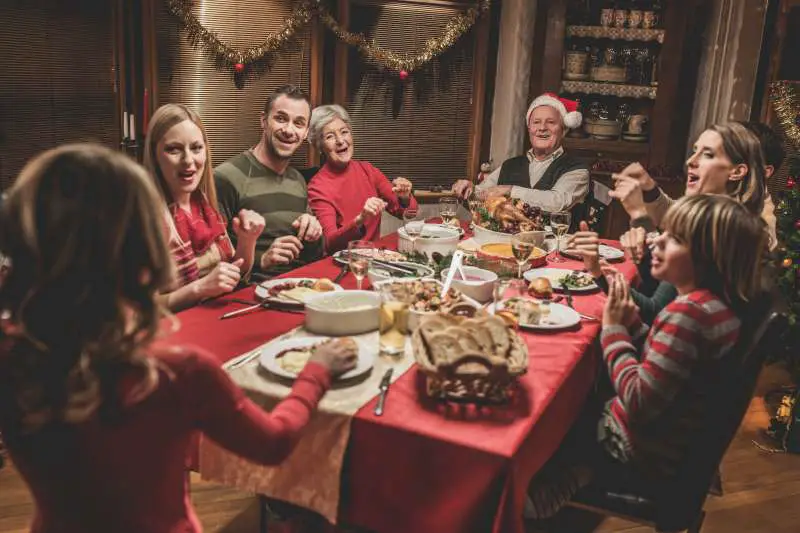
The Thanksgiving before that Christmas, she seated me at the kitchen island instead of the table because, she said, there wasn’t room. I ate turkey on a barstool and listened to them toast “everything we’ve built.”
I should have known then. Maybe I did know. Maybe I just didn’t want to.

Adrian Hawthorne is a celebrated author and dedicated archivist who finds inspiration in the hidden stories of the past. Educated at Oxford, he now works at the National Archives, where preserving history fuels his evocative writing. Balancing archival precision with creative storytelling, Adrian founded the Hawthorne Institute of Literary Arts to mentor emerging writers and honor the timeless art of narrative.