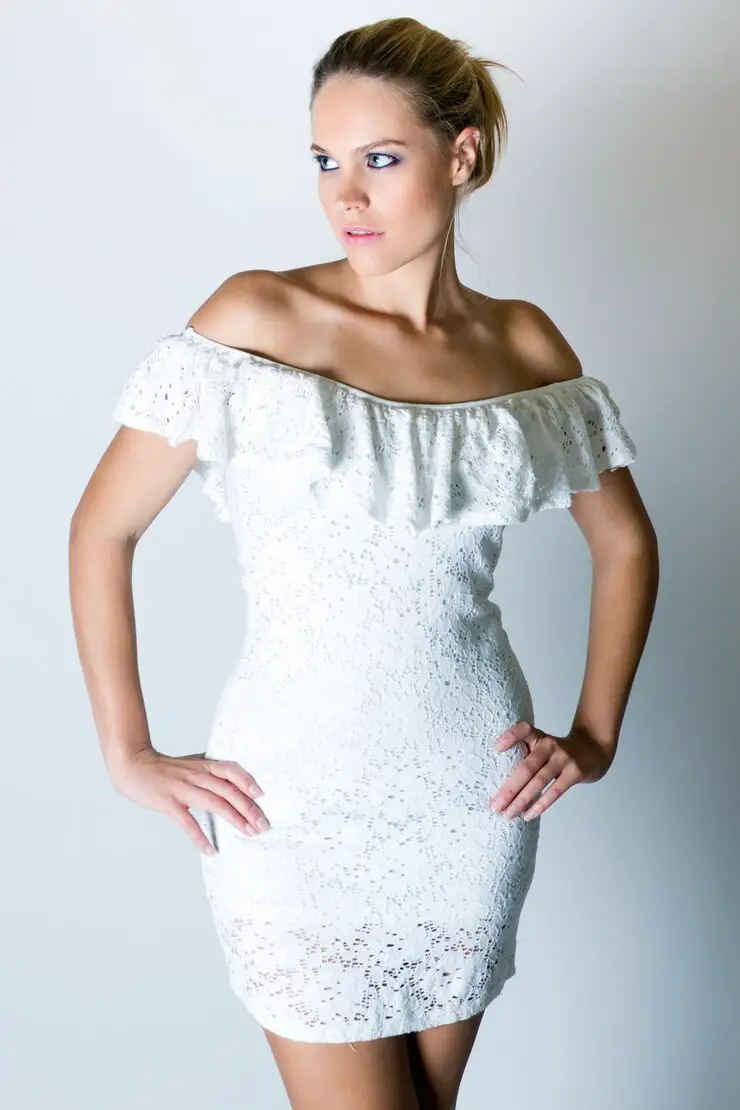
“I believe you. He just told us so himself.” She nodded once. “But, Sharon, there is clearing a basement, and there is this. You knew which one you were doing. A woman knows.”
Sharon’s face went pink to the hairline. She opened her mouth and closed it.
Mrs. Novak turned back to me. “Emily, honey, where’s your car?”
“Right there. The gray one.”
“Go open the back of it.”
I did not understand her. I stood there with the dress over my arm.
“Go on,” she said. “And then come across to my garage, because I’ve got some things that belong to you.”
Here is what Marie Novak had done that morning, at eighty years old, with no one asking her to.
She had walked across the street at twenty to eight with her pocketbook. She had looked over the tables. She had recognized my mother’s Singer sewing machine in its case, and my mother’s jewelry box, and the afghan off the couch, and a stack of church cookbooks with my mother’s handwriting in the margins. She had asked my father, at his end, whether he knew what was for sale, and he had said, “It’s just basement things, Marie. Sharon’s handling it,” and reached past her to make change for a man with a weed trimmer. She had not been sure it was her place to say more.
So she had gone back up the driveway and bought all four things. Thirty-one dollars. She had Sharon write it down. Then she had carried them home in three trips and set them on the workbench in her garage, and gone back to her kitchen window to wait.
She had not seen the dress. The rack had not come out of the garage until almost eleven.
I opened the hatch of my car. When I turned around, Barb Meyer was coming down the driveway toward me with the four Pyrex bowls nested in her arms.
“These were your mother’s,” she said. “I ate out of that yellow one for twenty years.” She set them in my car and went back up for more.
The woman in the red sweatshirt came next. She had the Christmas tablecloth folded over one arm and the bedroom lamp in the other hand.
“I’m Kathy,” she said. “I was in your mom’s circle at church. We did funeral lunches together.” Her eyes were wet. “She’d have ironed this before she let anybody see it.”
Then it was like something had been decided without anyone saying it. Women I had known all my life, and two I had not, began picking things up off those tables and walking them to the curb.

Specialty: Emotional Turning Points
Rachel Monroe writes character-driven stories about betrayal, second chances, and unexpected resilience. Her work highlights the emotional side of family conflict — the silences, the misunderstandings, and the moments when someone quietly decides they’ve had enough.