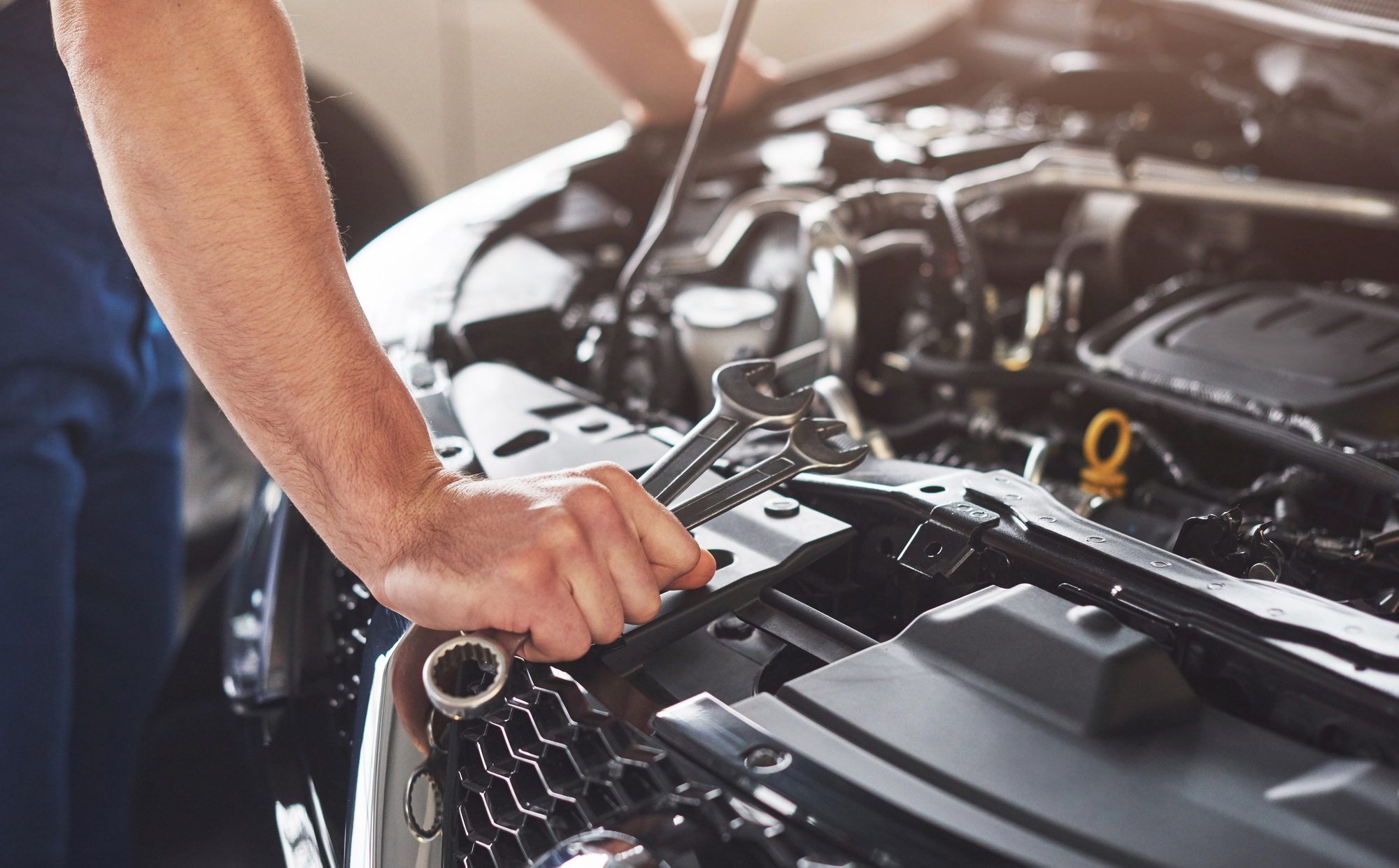
The squeak started in September.
My mother called me on a Sunday night to tell me about it. She calls every Sunday at seven. She has since I left for college thirty-one years ago. You could set a clock by her.
“It’s the Buick,” she said. “There’s a little squeak when I brake. Front end. Left side, I think.”
“How bad?”
“Not bad. Just a squeak. Like a mouse.”
“Mom, you should get it looked at.”
“I’m going to. Ray’s place, in town. Next week.” She paused. “But my knee’s acting up again. I don’t love driving on it right now. The clutch on the—” She stopped. “The brake. Pushing the brake. It hurts.”
“I’ll drive you,” I said. “I’ll come down Thursday.”
“You don’t have to do that, Beth.”
“I want to.”
That was true. But it was also true that I worried about her. More every year. She was seventy-four. She lived alone in the house I grew up in, a white farmhouse on eleven acres outside Harlan Falls, Pennsylvania. Sixty miles from the nearest hospital. Sixty miles from me. My father had been gone four years. Her knee was bad. Her eyes weren’t great at night. And her car was a 2009 Buick LaCrosse with a hundred and forty thousand miles on it.
Every time the phone rang at a strange hour, my stomach dropped.
So I drove down Thursday morning. Two and a half hours from Pittsburgh. She was waiting on the porch in her gray cardigan with her purse on her lap, like she’d been sitting there since dawn. She probably had.
“You didn’t have to come,” she said, climbing into my passenger seat with a small grunt of pain.
“Yes, I did.”
She patted my hand. “Thank you, sweetheart.”
My mother’s name is Helen Brooks.
She’s five foot three. She has short white hair she cuts herself in the bathroom mirror, and reading glasses she loses on top of her head at least twice a day. She wears sensible shoes and cardigans with tissues in the sleeves. She makes the best apple pie in Harlan County and she has never, to my knowledge, raised her voice in public.
People underestimate her. They always have.
I did too. For fifty-two years.
I just didn’t know it yet.
Ray’s Auto Repair is on Main Street, at the edge of town, between the feed store and the old movie theater that closed in 1998. It’s been there as long as I can remember. A cinder block building painted white, with two service bays and a small office with a big window. A faded red sign over the door.
RAY’S AUTO REPAIR. HONEST WORK. SINCE 1971.
My father took our cars there my whole childhood. Every oil change. Every inspection. Every winter tire swap. Dad would drive the car in, chat with Ray for twenty minutes about the weather and the Steelers, and come home.
At least, that’s how I remembered it.
I helped my mother out of the car in the gravel lot. Her knee was swollen that week. She’d wrapped it in an elastic bandage under her slacks. She leaned on my arm all the way to the office door.
Inside, it smelled like motor oil and old coffee. There was a counter with a computer on it. A rack of air fresheners shaped like pine trees. A calendar from an auto parts company, still on August. A coffee maker with a half-burned pot. And a bulletin board covered in faded business cards and photos of customers’ cars.
There was nobody behind the counter.
“Hello?” I called.
A door at the back opened into the service bay. Loud music. The whine of an air compressor. Somebody yelled, “Be right there!”
We sat down in two plastic chairs by the window. My mother folded her hands on her purse.
“Ray’s getting old,” she said quietly, looking around. “The place didn’t used to look like this.”
“Like what?”
“Tired,” she said.
We’d brought the car in for a squeak. That was all. A little squeak when she braked.
The young man who took the keys had a name patch on his blue work shirt that said TRAVIS.
He couldn’t have been twenty-five. He was tall and broad-shouldered, with a buzz cut and a little goatee and a silver chain around his neck. He had an earpiece in one ear. He took my mother’s keys without looking at her.
“What’s it doing?”
“A squeak when I brake,” my mother said. “Front left. It started about three weeks ago. Only when the car’s warmed up. Only at slow speeds. It goes away when I brake hard.”
Travis nodded vaguely. He was looking at his phone.
“Okay. We’ll take a look. Give us an hour.”
He disappeared into the bay.
We waited forty minutes. My mother read a three-year-old copy of Field & Stream from the side table. I answered work emails on my phone. I’m a project manager for a hospital system in Pittsburgh. My job is mostly emails.
Through the office window, I could see the Buick up on the lift in the second bay. Travis and another young man, a skinny kid with a ponytail, were walking around underneath it. Travis was pointing at things. The skinny kid was nodding.
My mother put down her magazine and watched them through the glass. She watched for a long time. She didn’t say anything.
But I noticed her mouth go tight.
Then Travis came out of the bay wiping his hands on a red rag.
“Okay,” he said. “So. It’s not good.”
He didn’t look at my mother. He looked at me.
I remember that. I remember it clearly now. At the time, I didn’t think anything of it. My mother was sitting right there. It was her car. She’d brought it in. She’d described the problem.
But he stood in front of us and talked only to me, the way you’d talk to the parent of a small child.
“Brakes front and back,” he said, counting on his fingers. “Rotors. Calipers. Ball joints are shot. Tie rod ends.”
My stomach dropped.
“How much?” I asked.
He looked at a clipboard.
“Thirty-eight hundred, give or take.”
Thirty-eight hundred dollars.
For a squeak.
“Both front calipers?” my mother asked.
It was a quiet question. Polite. Like she was asking about the weather.
Travis turned his head and looked at her for the first time. He smiled at her. The way you smile at a child who asks where clouds go.
“Ma’am,” he said, “you wouldn’t understand if I explained it.”
My mother didn’t say anything. She just looked at him.
Here is what I’m not proud of.
I was going to pay it.
My card was already halfway out of my purse. My fingers were on it. I wasn’t even thinking. Thirty-eight hundred dollars was a lot of money. But I had it. And my mother didn’t. Her whole pension was nineteen hundred a month.
And all I could think about was her. Alone. On a dark road sixty miles from anywhere. In a car with brakes that didn’t work and ball joints that were shot. Whatever ball joints were.
I wanted that car safe.
I didn’t even ask a question. I didn’t ask to see the parts. I didn’t ask for a second opinion. I didn’t ask what a tie rod end was. I just reached for my card, because a man in a work shirt with grease on his hands told me something was broken, and I believed him.
And because he’d looked at me instead of my mother, I’d let him.
My mother put two fingers on my wrist.
That was all.
Just two fingers. Light as a feather. Resting on the inside of my wrist, right over the pulse.
She didn’t look at me. She didn’t say a word. She kept her eyes on Travis.
But I knew that touch. I’d known it my whole life. That was the touch she used in church when I was fidgeting. In the grocery store when I reached for a candy bar. At the dinner table when my father started talking politics with my uncle. Two fingers on the wrist.
Wait.
I put the card back.

Specialty: Quiet Comebacks & Personal Justice
David Reynolds focuses on stories where underestimated individuals regain control of their lives. His writing centers on measured decisions rather than dramatic outbursts — emphasizing preparation, patience, and the long game. His characters don’t shout; they act.