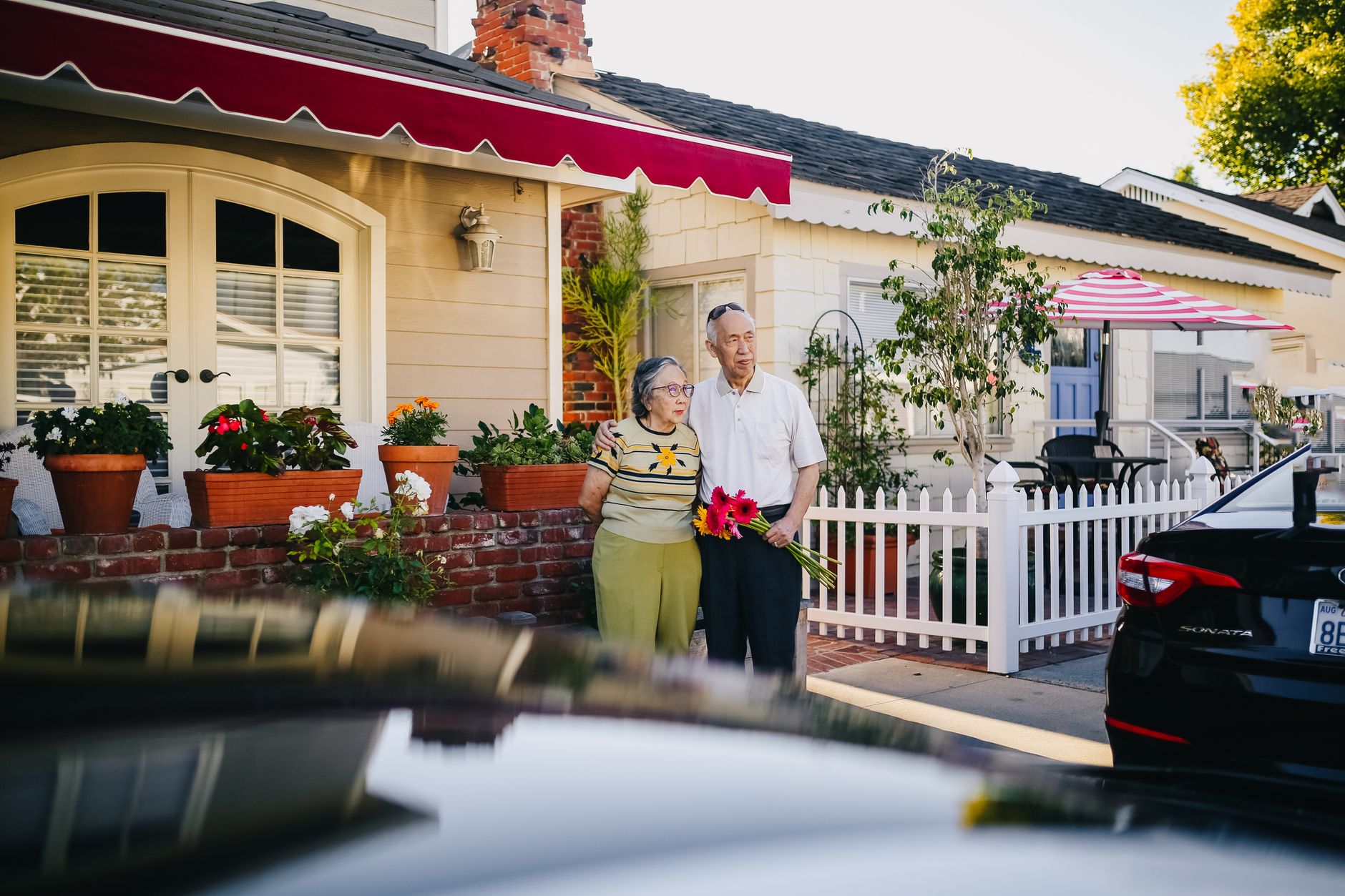
“Three feet apart,” he said. “First one three feet off the step, last one three feet shy of the sidewalk. That’s eleven.”
“Eleven what?”
“Roses.”
“Dale Henry, you have never planted a thing in your life.”
“Then it’s about time,” he said, and he went and got the truck keys.
He drove out to Pruett’s Garden Center on the highway and came home with eleven potted rose bushes standing up in the truck bed like passengers. Six were Mister Lincoln, which is a dark red. Five were Queen Elizabeth, which is pink. He had them alternate, red and pink, with a red one at each end. They were thirty-two dollars apiece. I know that because he left the receipt on the kitchen table under the salt shaker the way he left every receipt for forty-four years, and it said three hundred fifty-two dollars, and I said, “Three hundred and fifty-two dollars, for flowers,” and he said, “For eleven flowers. That’s cheap, per flower.”
It took him four days to plant them. He could only do three in a day by then. On the last day he did two, and he sat on an overturned bucket to plant the eleventh, the one by the sidewalk, and I knelt down and tamped the dirt in around it with my hands because he was worn out.
He lived to see them bloom once. He died the second week of October, and there was still one red rose open on that end bush the morning of his funeral. I cut it and it went with him.
So that is what the beagle was standing in.
Vicki had moved into the Hayes house next door in April. I knew three things about her. She was somewhere in her fifties. She answered the phones at the propane company. And every morning at half past six she walked that dog down her front step, across the end of her yard, and straight into my rose bed, as regular as the freight train.
The first time I asked her, I was nice about it. I said, “I wonder if you could keep him out of the roses. My husband put those in.” She said, “Oh, he’s harmless,” and smiled, and the next morning he was back.
The second time I held out a roll of bags. She looked at the bags like I had handed her a parking ticket. “He’s a dog,” she said. “It’s what they do.”
The third time was the fertilizer.
My daughter Amy lives two hours west of here, in Blue Springs, and she calls on Friday nights. I told her about it while I was drying the supper dishes.
“Mom. Call the city.”
“I’m not calling the city.”
“There’s an ordinance. There has to be. They’ll send somebody out and that will be the end of it.”
“Amy, I am not going to have a man from the city come to a woman’s door over an old dog. She’s lived here two months. She’d never speak to a soul on this street again, and I’d have to look at her house every day for the rest of my life.”
“Then put up one of those little wire fences. The green ones. They’re ten dollars.”
“Your father planted those roses along the walk so a person could walk up to them. He didn’t plant them to be put in a cage.”

Specialty: Quiet Comebacks & Personal Justice
David Reynolds focuses on stories where underestimated individuals regain control of their lives. His writing centers on measured decisions rather than dramatic outbursts — emphasizing preparation, patience, and the long game. His characters don’t shout; they act.