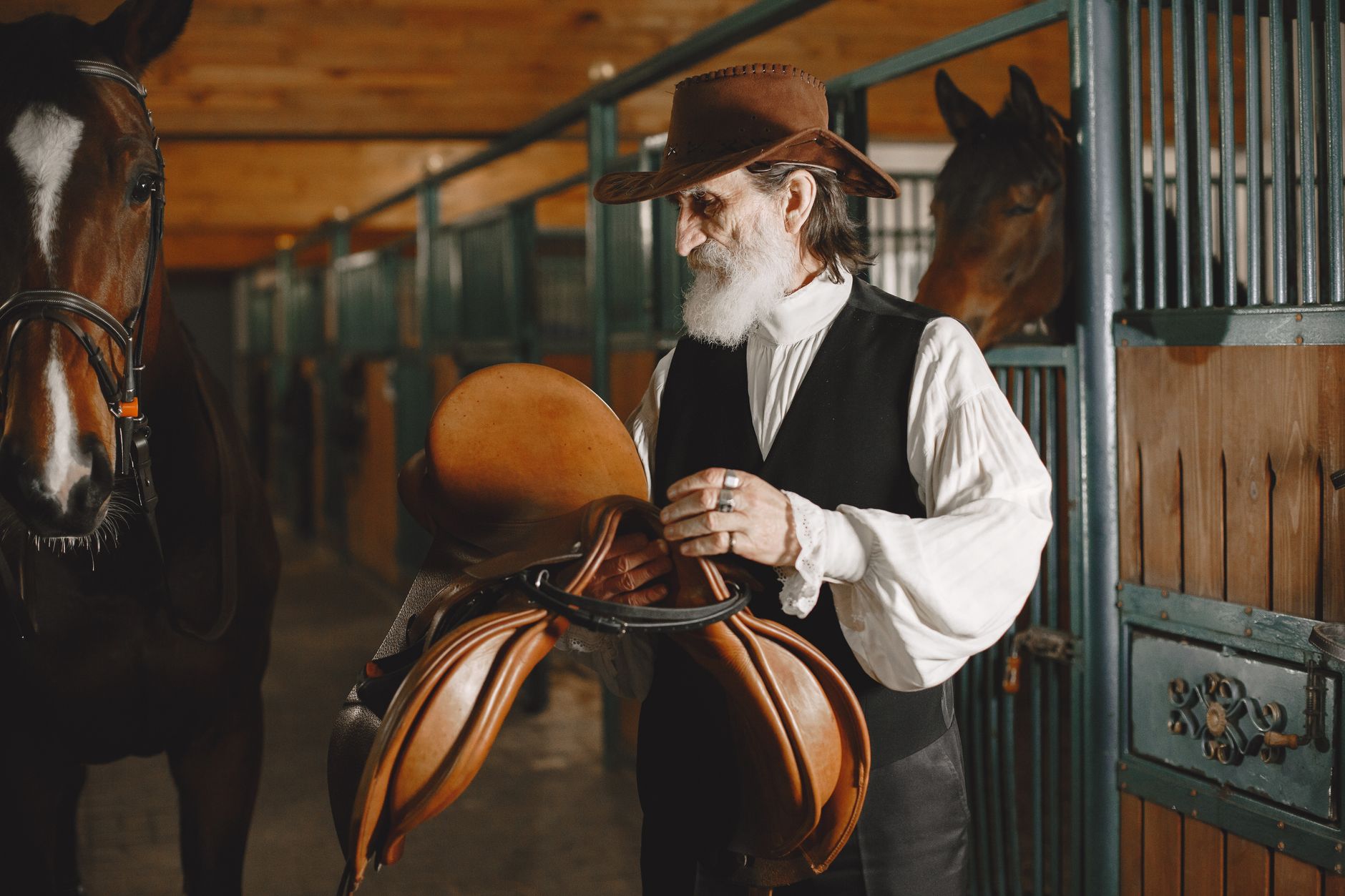
The saddle rack in Dad’s shed was empty, and for a second I honestly thought I had walked into the wrong shed.
I was forty-four years old, standing in the doorway of a building I had been in and out of since diapers, with a can of cat food in my hand.
But there was Dad’s vise on the bench, his calving chains on their nail, his good bridle with the split reins looped just so. There was the old yellow tomcat coming out from under the bench to complain at me.
And there was the rack he built out of a cedar post and a length of two-by-six the year he bought the saddle, with a dark shape worn into the wood where it had sat ever since.
Nothing on it but a saddle blanket, folded.
It was Friday. We had buried him Thursday.
I set the cat food down. I put my hand on the rack. The wood was cool and slick. There were two clean spots in the dust on the floor, right where the stirrups always hung.
Somebody had folded that blanket. A thief does not stop to fold the blanket.
And I knew who folded like that, corners squared and the fold turned to the wall, because the same man taught both of us.
I fed the cat. Then I went in the house.
Dad’s place was a little two-bedroom on the east edge of Mooreland, ten miles out of Woodward, that he bought when he came off the Miller ranch for good. He had cowboyed for the Millers forty years, and when his knees finally quit he moved to town with a pickup, a recliner, and that saddle.
He kept every piece of paper he ever got in a red coffee can on top of the icebox. Feed tickets. Vet bills. The receipt for Mama’s headstone. If you were in that family and you had a paper that mattered, that’s where you put it.
So that’s where I looked.
It was right on top. A yellow slip about the size of a bank deposit ticket.
Hale’s Pawn and Gun, Woodward, Oklahoma.
One western saddle, roping, used, with rear cinch.
Amount financed, $300. Finance charge, $50. Total due, $350, on or before the twenty-ninth of October.
And at the bottom, in the square, careful printing he has had since the second grade, my brother’s name. Randy.
It was dated Tuesday.
I sat down in Dad’s recliner with the ticket in my lap and worked it out.
Dad died Monday morning in that very chair, with the television on and his boots off. The neighbor, Jeff, found him when he didn’t come out for the paper. Tuesday at ten, Randy and I sat side by side in the funeral home in Woodward and picked the plainest casket they had. Dad’s burial policy came up $800 short of the total, and the man said, very kindly, that they would need the difference before the service.
“Four hundred apiece,” Randy said. He took out his wallet and counted twenties onto the desk, right then, without a flicker.
I wrote a check. I remember being proud of him.
That was ten o’clock Tuesday morning. The ticket said Tuesday afternoon.
So my brother had walked out of that funeral home, driven the ten miles back to Mooreland, let himself into Dad’s shed with the key off the nail, carried our father’s saddle out to his truck, folded the blanket, and driven it straight back to Woodward. And then he had come here, into this kitchen, and put the ticket in the coffee can.

Specialty: Legal & Financial Drama
Michael Carter covers stories where money, power, and personal history collide. His writing often explores courtroom battles, business conflicts, and the subtle strategies people use when pushed into a corner. He focuses on grounded, realistic storytelling with attention to detail and believable motivations.