The Mark on His Finger
I saw it when he reached for his water glass.
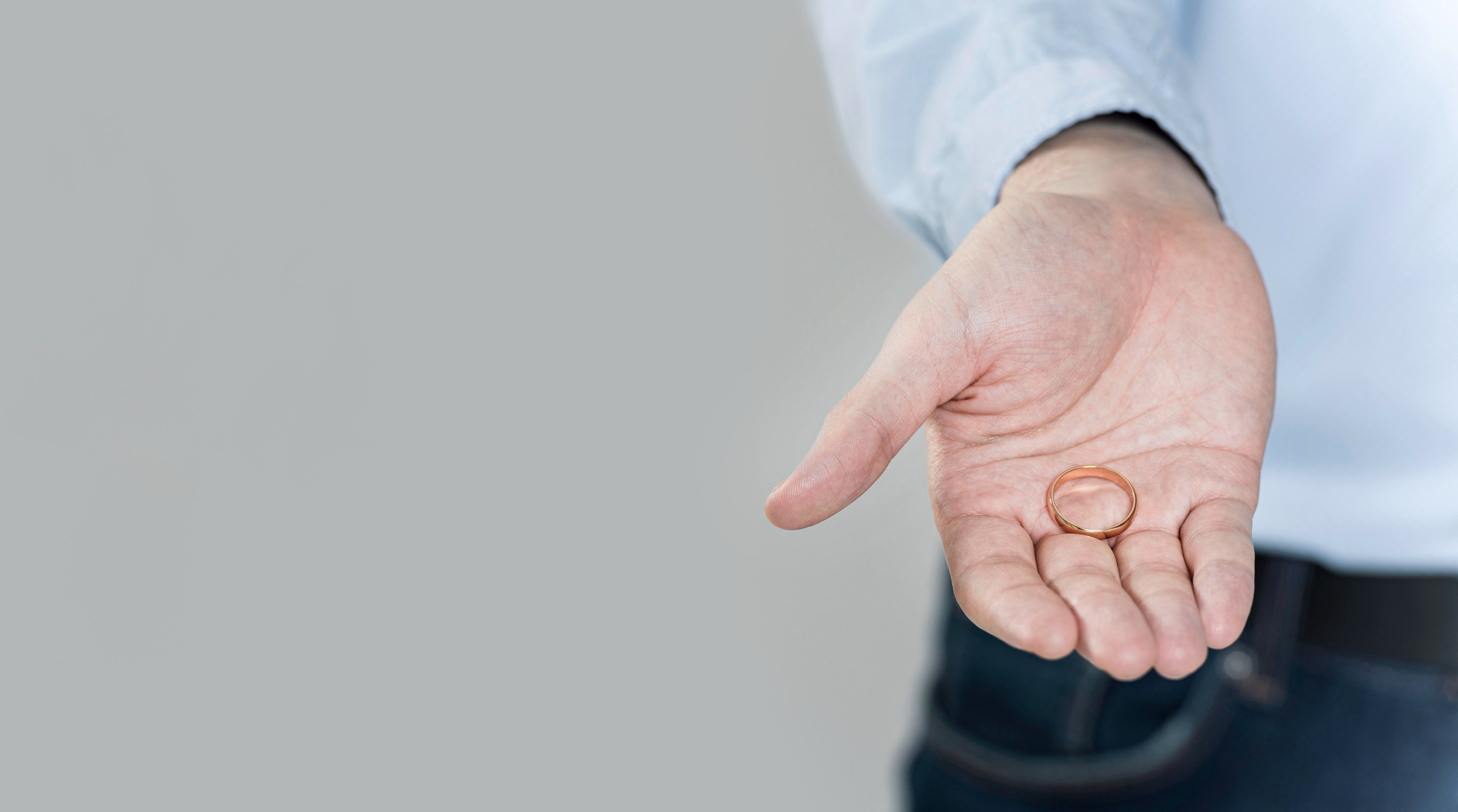
A pale band of skin around his left ring finger. White against the sunburn on the rest of his hand. Clean edges. Perfect width.
A wedding ring mark.
I set my fork down very slowly.
Mark hadn’t worn his wedding ring in twelve years.
“What’s that?” I asked.
He was chewing. He looked up at me, then followed my eyes down to his own hand.
For one second, he froze. Completely. Like a man caught in a flashlight in the middle of the night.
Then he laughed.
“Huh,” he said. He turned his hand over and looked at it like he’d never seen it before. “Probably from holding the fishing rod. Gripped that thing for three days straight.”
“From the fishing rod.”
“Yeah. You know how it is. Sun hits everything except where your hand’s wrapped around the handle.” He picked up the glass and drank. “This chicken’s great, Lena. Did you do something different?”
“Same as always.”
“Well, it’s great.”
I didn’t argue. I just picked up my fork and pushed a piece of potato around my plate and watched him eat.
I’d been married to Mark Ellison for twenty-six years. I knew every expression that man had. I knew the face he made when he was tired, the face he made when he was lying about liking my sister’s lasagna, the face he made when he was trying not to cry at a movie.
And I had never, not once in twenty-six years, seen the face he made just now.
That freeze.
That flashlight look.
He was hiding something.
Mark had taken the same fishing trip every summer for nine years.
Same three friends. Dave, who he’d worked construction with since they were twenty. Ray, Dave’s brother-in-law, who talked too much and laughed too loud. And Tommy, the quiet one, who’d been Mark’s best man at our wedding.
Same lake. Loon Lake, three hours north, up where the pine trees get so thick the roads turn dark at noon.
Same cheap motel by the water. Same bad cell service. Same three days, Friday to Sunday, the second weekend of August.
Nothing unusual. Ever.
He’d come home every year sunburned and smelling like bug spray and lake water, with a cooler full of fish nobody wanted to clean and a dozen stories about Ray falling out of the boat.
He’d kiss me at the door. He’d tell me he missed me. He’d hand me a jar of wild blueberry jam from the little farm stand at the edge of town, because I’d said once, nine years ago, that I liked it, and he never forgot.
This year, there was no jam.
He’d come in the door Sunday night at seven-thirty. He’d hugged me fast. A quick one-armed hug, his face turned to the side. Then he’d carried his duffel bag straight upstairs without stopping.
“How was it?” I’d called after him.
“Good,” he said from the stairs. “Tired. Gonna shower.”
“Did Ray fall out of the boat?”
A pause.
“Twice,” he said. But he didn’t laugh when he said it.
At dinner, he barely talked. I asked about the fishing, and he said it was fine. I asked about Tommy’s new knee, and he said it was holding up. I asked if they’d gone to the diner with the pie, and he said yes, and then he said no, and then he said he couldn’t remember, it all blurred together.
And then he reached for his glass.
That night, I lay awake listening to him breathe.
Mark always fell asleep in about four minutes. It was one of the most annoying things about him. I’d lie there thinking about bills and our daughter at college and whether I’d remembered to turn off the oven, and he’d be out like someone had pulled his plug.
Tonight was no different. He was snoring softly by ten-fifteen.
I turned my head on the pillow and looked at his hand on top of the blanket.
Even in the dark, I could see it. The pale stripe.
Probably from holding the fishing rod.
I’d held a fishing rod before. My dad took me every Saturday when I was a kid. I’d come home with blisters and sunburn and dirt under my fingernails.
I’d never come home with a wedding ring mark.
You don’t get a clean, even band all the way around one finger from holding a fishing rod. You get a tan line across your knuckles, maybe. A white patch on your palm. Not a perfect circle at the base of one finger.
Only a ring does that.
I closed my eyes and thought about the day he took his off.
It was twelve years ago. March. Cold and wet.
Mark was a foreman on a job building a parking structure downtown. A steel beam swung wrong off a crane. He put his hand up to guide it, and it pinned his left hand against a column.
I got the call at work. Dave’s voice, shaking.
“Lena, it’s Mark. He’s okay. He’s okay, but you need to come to the hospital.”
His ring finger was broken in three places. The doctors had to cut his wedding band off with a tiny saw before they could set the bones. I sat beside him in the emergency room while they did it, and he squeezed my other hand so hard I thought he’d break mine too.
When they finally pulled the cut band off, Mark looked at it lying in the little metal tray and he said, “Damn it.”
Not about the finger. About the ring.
“We’ll get it fixed,” I told him. “They can solder it back together. It’ll be good as new.”
And we did. We took it to a jeweler a few months later, and they repaired it. But the finger had healed crooked. The knuckle was thick and knotted and stiff. The ring wouldn’t go over it without a fight, and when it did, it pinched.
He tried for a few weeks. Then one night he came to bed and put it in my hand.
“I’m sorry, Lee,” he said. That was his name for me. Lee. Nobody else ever called me that. “It hurts like hell. I just can’t.”
“It’s okay,” I said. “It’s just a ring. I know you’re married. You know you’re married. That’s what matters.”
So he put it in the little wooden box in the top drawer of his dresser. The box his grandfather had made, with the carved pine tree on the lid.
And it had stayed there for twelve years.
I knew it had. I dusted that dresser every Thursday.
The next morning, Mark left for work at six-forty, like always. He kissed my cheek at the kitchen counter. Quick. His eyes didn’t quite meet mine.
“Love you,” he said.
“Love you too.”
As soon as I heard his truck back out of the driveway, I went upstairs.
I stood in front of his dresser. My heart was beating so hard it made my ears ring.
You’re being crazy, I told myself. You’re fifty-one years old. You’re standing in your bedroom in your bathrobe, about to go through your husband’s sock drawer like some woman on a daytime talk show.
I opened the drawer anyway.
The wooden box was right where it always was. In the back left corner, behind his rolled-up socks.
I lifted the lid.
His wedding ring was inside. Gold, simple, a little scratched. You could see the faint seam on the bottom of the band where the jeweler had soldered it back together.
I picked it up and held it in my palm.
It was still here. He hadn’t worn it. He hadn’t taken it to the lake.
So what had he been wearing?
I stood there for a long time with the ring in my hand. Then I put it back, closed the box, closed the drawer, and sat down on the edge of our bed.
I felt sick.
My daughter, Sophie, called that afternoon. She was a sophomore at the state university, two hours away, studying nursing. She called every Monday on her way from her anatomy lab.
“Hey, Mom. Did Dad get back okay?”
“He did.”
“Did Ray fall out of the boat?”
“Twice, apparently.”
She laughed. “Classic. Tell Dad I said hi. And tell him to send me pictures of the fish. He always sends me fish pictures.”
“He didn’t this year?”
“Nope. Not one. I texted him Saturday, and he didn’t answer until Sunday morning. And then all he said was ‘Love you, kiddo.’” She paused. “Is he okay? He seemed weird.”
My throat tightened.
“He’s fine, honey. Just tired.”
“Okay.” She didn’t sound convinced. “Love you, Mom.”
“Love you too.”
After she hung up, I sat at the kitchen table with my phone in my hand.
He hadn’t sent fish pictures. He always sent fish pictures. Sophie had a whole album on her phone called “Dad’s Dumb Fish.” Nine years of Mark holding up bass and perch and once, gloriously, a pike that was almost as long as his arm.
Not this year.
I opened Facebook.
Ray posted everything. Ray had never had a thought he didn’t share with the internet. If Ray ate a sandwich, there was a photo of the sandwich.
His page from the weekend was full.
Boats. A sunrise over the lake, the water flat and pink and gold. Dave holding up a bass, grinning. Tommy asleep in a lawn chair with his mouth open and a beer can balanced on his stomach. A campfire with sparks rising into the dark.
I scrolled through all of it slowly.
Thirty-one pictures.
Mark was in two of them.
In the first, he was sitting in the back of the boat, wearing his old Twins cap and sunglasses. He was half-turned away from the camera, looking out at the water. His right hand was on the motor. His left hand was in his jacket pocket.
In the second, all four of them were standing in front of the campfire with their arms around each other. Ray’s selfie. Mark was on the end, squeezed half out of the frame. His right arm was around Tommy’s shoulders.
His left hand was behind his back.
Behind his back.
Who stands for a group photo with one hand behind his back?
I zoomed in until the picture went blurry. I couldn’t see anything.
I kept scrolling.
And then I found the one that made me stop breathing.
Saturday morning. 9:42 a.m. Ray had posted a photo of himself and Dave and Tommy sitting at an outdoor table with plates of pancakes in front of them. Behind them was a wooden building with a big painted sign.
THE GULL’S NEST — MARINA CAFE.
The caption said: Breakfast of champions! Fueling up for a big day on the water!
Three men at the table.
Not four.
Mark wasn’t there.
There were four plates on the table, though. I counted them. Four plates, four coffee mugs. One of the plates was untouched. Still full. Pancakes, eggs, bacon.
Mark’s breakfast, sitting there going cold.
And Mark nowhere in sight.
I stared at that picture for an hour.
I told myself every possible story.
He was in the bathroom.
He was the one taking the picture.
But no. Ray was in the picture, so it was a selfie, and Ray’s arm was stretched out on the left side of the frame.
He went to get the boat ready.
He went back to the room for something.
He wasn’t feeling well.
I could have made up stories all day. But the stories didn’t explain the ring mark. They didn’t explain the freeze at dinner. They didn’t explain the missing fish pictures, or the hand behind his back, or the jam he didn’t bring.
The Gull’s Nest had a phone number on its website.
I looked at it for a long time.
Then I called.
It rang four times. A woman picked up. She sounded older, with a gravelly smoker’s voice and a friendly lilt.
“Gull’s Nest, this is Carol.”
“Hi, Carol.” My voice came out too high. I cleared my throat. “I’m calling because my husband was there on Saturday morning. With some friends. He thinks he might have left something behind.”
“Oh, sure, hon. What’s he think he left?”
I hadn’t planned that far. I said the first thing that came into my head.
“His sunglasses.”
“Okay. What’s his name? I can check the lost and found.”
“Mark. Mark Ellison.”
The line went quiet.
Not a normal quiet. Not the sound of someone setting the phone down to look in a box. A heavy, holding-your-breath kind of quiet.
Then Carol said, very carefully:
“Is this his wife?”
Everything in my body went cold.
“Yes,” I said.
Another pause. Longer this time. I heard her breathe out.
“Oh,” she said softly. “Oh, honey.”
My stomach dropped straight through the floor.
I hung up.
I didn’t even say goodbye. I just pressed the red button and threw the phone onto the kitchen table like it had burned me. It slid across the wood and fell onto the floor and lay there, face down.
Is this his wife?
Why would a waitress at a marina café three hours away know who I was?
Why would she ask that question, in that voice, like she’d been waiting for me to call?
Oh, honey.
I knew that voice. Every woman knows that voice. It’s the voice other women use when they know something about your marriage that you don’t.
I sat at the kitchen table and put my head down on my arms.
I didn’t cry. I was too scared to cry.
Mark came home at five-thirty, like always.
I’d thought about confronting him at the door. I’d practiced it in my head all afternoon. Who is she? How long? Did you think I wouldn’t find out?
But when the front door opened and I heard his boots on the mat, I lost my nerve.
Because what if I was wrong?
And worse, what if I was right?
“Hey, Lee,” he said, walking into the kitchen. He kissed the top of my head. “Something smells good.”
“Meatloaf.”
“My favorite.”
He was smiling. Relaxed. He loosened his collar and grabbed a beer from the fridge and leaned against the counter and asked me about my day.
He was normal.
Completely, totally normal.
Almost too normal.
That was the thing. The night before, he’d been a ghost. Quiet, distracted, hiding his hand. Tonight, he was cheerful. Chatty. He told me a long story about a delivery driver who’d backed into a porta-potty on the job site. He laughed at his own story. He helped me set the table. He rinsed the dishes after dinner without being asked, which he never did.
It felt like watching an actor play my husband.
Every time he moved his left hand, I watched it. The pale band was already fading a little, blending into the sunburn.
“You’re quiet tonight,” he said, drying a plate.
“Just tired.”
“Want to watch something? That baking show?”
“Sure.”
We sat on the couch together. He put his arm around me, the way he’d done for twenty-six years. I leaned against his chest, and I could hear his heart beating, steady and slow.
I didn’t watch a single minute of that show.
I kept thinking about Carol’s voice. Oh, honey.
He fell asleep at ten-fourteen.
I lay beside him until eleven, until his breathing was so deep and even that I knew nothing short of a fire alarm would wake him.
Then I slid out of bed.
His duffel bag was on the floor of the closet. The old green army surplus one he’d had since before we were married. He hadn’t unpacked it yet. That wasn’t like him either. Mark always unpacked the second he got home. He couldn’t stand a bag sitting around.
I carried it out into the hallway and sat on the carpet with it under the nightlight.
My hands were shaking as I unzipped it.
Dirty clothes. Jeans that smelled like lake water. His flannel shirt. Socks. A bottle of sunscreen, almost empty. His shaving kit. A paperback mystery he’d been reading since June.
Nothing.
I almost zipped it back up. I almost felt stupid.
Then I felt the side pocket.
There was something flat and stiff inside.
I unzipped it.
A plastic key card. White, with a picture of a pine tree on it and the words LAKEVIEW INN — ROOM 12 printed in green letters.
I stared at it.
The Lakeview Inn wasn’t the motel the guys stayed at. They stayed at the Pine Rest, a cinderblock place by the highway with a broken ice machine. Mark complained about it every year.
The Lakeview Inn was the nice place. The old white Victorian hotel right on the water, with the wraparound porch and the rocking chairs.
I knew it was nice because I had stayed there.
Twenty-six years ago.
On my honeymoon.
Room 12.
My hand started to shake so hard I nearly dropped the card.
He took her there. He took her to our room.
I reached back into the pocket. There was a piece of paper folded small.
A receipt.
HOLLOWAY & SONS FINE JEWELRY — Birch Falls
Birch Falls was two towns over from Loon Lake. About twenty minutes away.
The receipt was dated Saturday. 9:15 a.m.
Right when the guys were sitting down to pancakes without him.
There were no items listed. Just a line that said Custom order — balance paid and an amount that made my breath catch. Over two thousand dollars.
Two thousand dollars at a jeweler.
I turned the receipt over.
On the back, someone had written in pen, in neat, old-fashioned handwriting:
Ready Sept. 14. Engraving as requested. Thank you, Mr. Ellison — and congratulations.
Congratulations.
I sat on the hallway carpet with the key card in one hand and the receipt in the other.
No fishing receipt. No bait shop. No gas station. No farm stand jam.
Just a jeweler, a hotel room, and the word congratulations.
I thought about the ring mark. A ring he’d worn all weekend, long enough for the sun to leave its shape on his skin.
A ring he’d taken off before he came home to me.
I folded the receipt along the same lines and put it back in the pocket. I put the key card back. I zipped the bag and carried it back into the closet and set it down exactly the way I’d found it.
Then I went into the bathroom, locked the door, sat on the edge of the tub, and pressed a towel against my mouth so he wouldn’t hear me.
I didn’t sleep.
I lay there in the dark and thought about our whole life.
I thought about the first time I saw Mark. I was twenty-three, working the counter at my uncle’s hardware store. He came in covered in drywall dust looking for a specific kind of hinge, and he didn’t know the name of it, so he drew it for me on the back of a receipt. It was a terrible drawing. I laughed out loud.
“Hey,” he said, pretending to be offended. “I’m a builder, not an artist.”
“Clearly,” I said.
He came back the next day for more hinges he didn’t need. And the next day. And the next. On the fourth day, he finally asked me out.
Our first date was at a pizza place with sticky tables. Our second date was a drive up north to Loon Lake, because he’d grown up going there with his grandfather and he wanted to show me the water at sunset.
We sat on the dock at the marina, right next to an old bait shack that would one day become The Gull’s Nest. The sun went down orange and red and purple behind the pines. And Mark turned to me with his heart in his eyes and said, “I’m going to marry you, you know.”
“You’ve known me eight days.”
“I know,” he said. “I’m going to marry you anyway.”
He did. Fourteen months later. We had a small wedding in my parents’ backyard and drove straight up to Loon Lake for our honeymoon. Four nights at the Lakeview Inn. Room 12, with the window that looked out over the water.
I thought about all of it.
The tiny apartment over the laundromat where we started out. The day Sophie was born, and Mark holding her in the hospital chair, crying so hard the nurse brought him tissues. The year his company almost went under and we ate spaghetti four nights a week. The broken finger. The night he put his ring in my hand and said, I’m sorry, Lee. I just can’t.
Twenty-six years.
And now there was a ring I’d never seen, and a hotel room that had been ours, and a woman at a café who said oh, honey like she felt sorry for me.
At four in the morning, I got up and stood at the window. The street was dark and empty. A cat crossed the road under the streetlight.
I made a decision.
Tomorrow, I would find out the truth. All of it. Whatever it cost.
He left for work at six-forty.
“Love you,” he said, kissing my cheek.
I made myself say it back. “Love you too.”
I stood at the front window and watched his truck back out of the driveway. I watched it go down the street. I watched it turn left at the stop sign. I waited until I couldn’t hear the engine anymore.
Then I went to his office.
It wasn’t really an office. It was the small bedroom at the end of the hall, where he kept his desk and his work papers and the old laptop he used for bids and invoices. He never closed the door. I’d been in there a thousand times to vacuum.
The laptop was sitting closed on the desk.
I sat down in his chair and opened it.
The screen lit up. A login box.
The password used to be Sophie2004. Our daughter’s name and birth year. He’d used it for everything for years. I’d told him a hundred times it wasn’t safe.
I typed it in.
Incorrect password.
My heart sped up.
He’d changed it.
In twenty-six years, Mark had never once changed a password without telling me. He’d never had a reason to.
I tried our anniversary. June1998.
Incorrect password.
I tried his grandfather’s name. Walter.
Incorrect password. One attempt remaining before lockout.
I took my hands off the keyboard. I sat back in the chair and pressed my palms against my eyes.
Think, Lena. Think.
What was on his mind? What did he care about right now?
The lake.
He’d spent the weekend at the lake. Whatever he was hiding started there.
I leaned forward and typed it slowly, letter by letter.
LoonLake
I held my breath and hit enter.
The screen unlocked.
His desktop was the same as always. The same picture of Sophie at her high school graduation in her blue cap and gown. The same messy rows of files. Bid_Henderson. Invoice_July. Taxes_2025.
And one folder I’d never seen before.
It was right in the middle of the screen. No name. No title. Just a tiny icon that he must have downloaded from somewhere and set on purpose.
A small gold ring.
I sat there staring at it.
I thought about closing the laptop. I thought about walking away, going downstairs, making a cup of coffee, and pretending I’d never seen any of it. Some women do that. They decide not to know. They keep the marriage and lose the truth, and maybe that’s a fair trade.
I couldn’t do it.
I moved the mouse over the little ring.
I clicked.
The folder opened.
Inside were dozens of files. Pictures. Documents. A spreadsheet. And at the very top, sorted first, one video file.
It was named START HERE — FOR LEE.
For Lee.
My name. The name only he called me.
My hand hovered over the mouse. My fingers had gone cold.
I double-clicked.
The video opened. It took a second to load.
And then there was Mark.
He was sitting in the chair I was sitting in right now. In this room. The same wall behind him, the same calendar from the lumber yard. He was wearing his gray work shirt. The light from the window made his face look tired and older than I remembered.
He looked straight into the camera.
He took a deep breath.
“Hi, Lee,” he said.
His voice was shaking.
“If you’re watching this, then either I finally worked up the guts to show you, or something’s happened and I can’t. I hope it’s the first one.” He gave a small, broken smile. “Knowing me, it’s probably the second.”
He looked down at his hands. Then back up.
“I need to tell you some things,” he said. “And I need you to know first that everything in this folder, every single thing, is for you. All of it. It’s always been for you.”
He swallowed hard.
“My name is Mark Ellison. I’m fifty-three years old. I’ve been married to Lena Ellison for twenty-six years. We have a daughter named Sophie who’s going to be a nurse. We live at 418 Cedar Street.” He was speaking slowly. Carefully. Like a man reading the instructions off the back of a box. “I’m saying all this out loud because my doctor said it helps to practice. And because one day, I might need to watch this to remember it.”
My hands went numb.
I mean that. Literally numb. Pins and needles, all the way up to my elbows. I couldn’t feel the mouse under my fingers.
On the screen, Mark rubbed his face with both hands.
“In March,” he said, “I went to see a doctor because I kept forgetting things at work. Little stuff. Names. Measurements. One day I drove to a job site I’d been going to every day for two months, and when I got to the corner of Fifth and Main, I didn’t know which way to turn. I just sat there at the green light while people honked at me. I didn’t know where I was, Lee. For about a minute, I didn’t know where I was.”
He looked away from the camera. His jaw was tight.
“They did a bunch of tests. Brain scans. Memory tests. Blood work. I didn’t tell you. I told you I was going to the dentist. Three times. I’m sorry about that. I’m sorry about all of it.”
He took another breath. A long, shaking one.
“It’s Alzheimer’s,” he said. “Early onset. The doctor says I’m in the early stages. She says there are medicines that might slow it down. She says I might have years. Good years. But she also said it’s going to get worse. And one day, I’m going to forget things I never thought I could forget.”
He looked straight into the camera again. His eyes were wet.
“One day I might forget you, Lee.”
I made a sound. I don’t know what kind of sound. Something torn.
“And I can’t…” He stopped. He pressed his fist against his mouth. When he took it away, he was crying openly. “I can’t stand that. I can’t stand the idea of looking at you and not knowing. So I’m doing something about it. While I still can. Everything’s in this folder. And I’ll explain it all. But I wanted you to hear this part from me first. In my own voice. While it’s still my voice.”
He reached toward the camera.
“I love you,” he said. “I’ve loved you since you laughed at my hinge drawing. Whatever happens, I need you to remember that. Even if I can’t.”
The screen went black.
I don’t know how long I sat there.
The room was very quiet. Somewhere outside, a lawnmower started up. A dog barked twice. A car drove by with its radio playing.
The world was going on like nothing had happened.
I pressed play again. I watched it again. And again.
It’s Alzheimer’s. Early onset.
One day I might forget you, Lee.
I’d spent two days thinking my husband was having an affair.
I’d spent a whole night on the bathroom floor imagining another woman in Room 12. Imagining him slipping a ring on her finger. Imagining Carol at the café pouring her coffee and smiling.
And all along, he was dying.
No. Not dying. That’s not quite right. The doctor said years. Good years.
He was disappearing. Slowly. A little at a time.
And he hadn’t told me.
Since March.
Five months. Five months of dentist appointments. Five months of me nagging him about forgetting to pick up milk, about leaving the garage door open overnight, about calling Sophie’s roommate by the wrong name at Easter. I’d teased him. I’d called him an old man. I’d rolled my eyes.
He’d known.
He’d known the whole time, and he’d let me roll my eyes.
I wiped my face with the back of my hand and made myself look at the rest of the folder.
There was a spreadsheet called THE PLAN.
I opened it. It was so Mark it almost made me laugh through my tears. Neat rows and columns, the way he did his construction bids. Dates and names and phone numbers and dollar amounts.
Gull’s Nest — Carol — Deck reserved Sept. 20, 5 p.m. Sunset 7:12. DEPOSIT PAID.
Lakeview Inn — Rm 12 — Sept. 20–23. DEPOSIT PAID. (Asked for same room. They said yes!!)
Holloway & Sons — new ring. Wide band, sized for bad knuckle. Hinged so it opens over the joint. Engraving. Pick up Sept. 14.
Pastor Jim — confirmed. He says he’s honored.
Sophie — TELL HER. Ask her to help with Lee’s dress?? (Lee will kill me if I pick it.)
Dave, Ray, Tommy — keep your mouths shut. ESPECIALLY RAY.
Lee’s sister — call after Sophie.
Flowers — white daisies. Like the first time.
Song — “At Last.” Like the first time.
At the very top of the spreadsheet, in bold, he’d typed:
MARRY LEE AGAIN. WHILE I STILL REMEMBER WHY.
I read that line about twenty times.
There was a folder of photos. Pictures from our wedding, scanned from the old album in the hall closet. Me in my mother’s dress, squinting in the sun. Mark in a rented tux that was too big in the shoulders. The two of us on the dock at Loon Lake on our honeymoon, my head on his shoulder, the sunset behind us.
There was a document called VOWS — DRAFT 9.
Draft nine.
I didn’t open it. I couldn’t. Not yet. I felt like that belonged to him. Like it was something he should get to say out loud first.
And there was one more video. Shorter. Called RING.
I clicked it.
It was filmed on a phone. Shaky. Outdoors. I could see trees and water behind him. The lake.
Mark was holding up his left hand to the camera. On his ring finger was a band. Wide and gold, with a thin line of silver running around the middle.
“Okay,” he said, a little out of breath. He was smiling. A real smile. “So the jeweler made a test one. A practice ring. Just a cheap one, to check the fit before he makes the real thing. And Lee… it doesn’t hurt.” He laughed. “Twelve years, and it doesn’t hurt. He made it with this little hinge, see? So it opens up and closes over the knuckle.” He fiddled with it. “I’m gonna wear it all weekend. Make sure it’s right. Make sure I can fish in it and sleep in it and everything.”
He looked at the ring on his finger for a long time. The smile faded into something softer.
“The doctor says routines help,” he said quietly. “Things you do every day. Things your body remembers even when your brain doesn’t. So I figure, if I wear this every day, then maybe one day, when I don’t remember why… my hand will. Maybe I’ll look down and see it and feel something. Even if I don’t know what. Maybe that’s enough.”
He looked at the camera.
“See you soon, Lee,” he said. “Act surprised.”
The video ended.
That was the ring mark. Three days in the August sun with a practice ring on his finger. Long enough to leave its shape behind.
Probably from holding the fishing rod.
My poor, sweet, terrible liar of a husband.
The key card to Room 12 wasn’t for her. It was for us. He’d gone there Saturday morning, while the guys ate pancakes, to look at the room. To make sure it was still the same.
The receipt from the jeweler. Congratulations.
Carol at the café. Is this his wife?
She hadn’t been feeling sorry for me because he was cheating.
She’d been feeling sorry for me because she knew.
She knew he was sick. He must have told her. He must have stood at her counter and explained why he wanted the deck at sunset on September twentieth, and she’d heard it all.
And when I called, she thought I’d found out. She thought the surprise was ruined. Oh, honey.
I sat in his office chair with my head in my hands, and I cried. Really cried. Big, ugly, heaving sobs that I couldn’t have stopped if I tried.
I cried because he was sick.
I cried because I’d thought the worst of him.
I cried because he’d carried this alone for five months, getting up every morning and driving to work and kissing my cheek and saying love you like everything was fine.
And I cried because, under all of it, under the shock and the grief and the fear, there was something else.
He wanted to marry me again.
I thought that was the worst of it.
I thought nothing could be worse than finding that video.
I was wrong.
The worst part came an hour later.
I’d made myself get up. I’d washed my face. I’d closed the laptop and put it exactly back where it was. I’d gone downstairs and sat at the kitchen table with a cup of coffee I wasn’t drinking, trying to figure out what to do.
Should I tell him I knew? Should I pretend I didn’t, and let him have his surprise? Should I call his doctor? Should I call Sophie?
Should I call Sophie.
Oh God. Sophie.
I was sitting there with my head in my hands when my phone rang.
It was still on the floor, where I’d thrown it after Carol’s call the day before. I’d picked it up and set it on the table without even looking at it. Now it was buzzing against the wood.
MARK.
I stared at his name on the screen.
He never called me from work. Never. He texted at lunch. Sometimes. But he didn’t call. The job sites were too loud.
I picked up.
“Mark?”
Silence. I could hear wind. Traffic. A loud truck going by.
“Mark? Honey?”
“Lee.” His voice was strange. Small. “Lee, is that you?”
“It’s me. Where are you? What’s wrong?”
“I don’t…” He stopped. I heard him breathing fast. “I don’t know where I am.”
The coffee cup slid out of my hand and tipped over. Coffee ran across the table and dripped onto the floor. I didn’t move.
“What do you mean?”
“I was driving to the Henderson job. And I was driving, and I was driving, and then I looked up and I didn’t…” His voice cracked. “I don’t know this road, Lee. I don’t know where I am. I pulled over at a gas station. I’ve been sitting here. I’ve been sitting here a long time, I think. I don’t know how long.”
“Okay.” My voice was steady. I don’t know how it was steady. “Okay, honey. It’s okay. Can you see a sign? Can you read me the name of the gas station?”
“It’s a…” A pause. “It says Kwik Fill. There’s a Kwik Fill. And a Dairy Queen across the street.”
“Okay. Can you see a street sign?”
Another long pause. I could hear him turning around. Breathing hard.
“Route 9,” he said. “It says Route 9 North.”
Route 9 North.
Route 9 North was the road to the lake.
The Henderson job was ten minutes from our house, in the opposite direction. He’d been driving it every day for three weeks.
And this morning, he’d turned the wrong way and kept going.
“Mark,” I said. “Look at the clock in your truck. What time does it say?”
“It says eight… eight-fifty.”
He’d left the house at six-forty.
He’d been driving for two hours. North. Toward Loon Lake.
Toward the place he’d been dreaming about all weekend. Toward the dock where he told me he’d marry me.
Some part of him, the part that wasn’t working right anymore, had just pointed the truck at the place he loved most and gone.
“Stay right there,” I said. “Do you hear me? Don’t drive anywhere. Lock the doors and stay right there. I’m coming to get you.”
“Lee.” He was crying now. I could hear it. “Lee, I’m scared.”
“I know, baby. I know. I’m coming. Just stay on the phone with me. Okay? Don’t hang up. Just stay on the phone with me the whole time.”
“Okay,” he whispered. “Okay.”
I grabbed my keys and my purse and ran out the door in my slippers.
It took me an hour and forty minutes to get there.
I kept him on the phone the whole time. I talked about everything. Nothing. The weather. Sophie’s anatomy class. The new neighbors with the yappy dog. Whether we should paint the bathroom blue or green.
Every few minutes, I’d ask him, “You still there?”
“Still here,” he’d say.
Around the halfway point, his voice changed. It got clearer. Calmer. Like he was coming back into himself.
“Lee,” he said. “I know where I am now. I know. Route 9. Near Harmon. I can drive home, I can—”
“No,” I said. “You stay right there. You don’t drive anywhere.”
He was quiet.
“You found it,” he said finally. “Didn’t you? The folder.”
I gripped the steering wheel.
“Yes.”
He let out a long breath.
“How?”
“The ring mark,” I said. “And the receipt. And Room 12. And Carol.” I laughed, and it came out half a sob. “I thought you were having an affair, Mark. I thought you had another woman. I went through your bag in the middle of the night like a crazy person.”
He was quiet for a long time.
“I’m sorry,” he said. “God, Lee. I’m so sorry.”
“Your password was LoonLake. It took me four tries.”
He made a sound. Almost a laugh.
“I changed it in March,” he said. “After the doctor. I thought, if I ever forget it, I’ll just think about where I’d most want to be. And I’ll remember.”
I had to pull over onto the shoulder for a minute after that. I couldn’t see the road.
He was sitting in his truck at the Kwik Fill with the doors locked, just like I told him.
When I pulled in next to him, he looked over at me through the window.
For one horrible second, I was afraid. Afraid he would look at me and not know who I was.
But his face crumpled. He knew me. He knew me.
He unlocked the door and got out, and I got out, and we met in the middle of that gas station parking lot between the pumps, and he held me so tight I couldn’t breathe.
“I’m sorry,” he kept saying into my hair. “I’m sorry, I’m sorry, I’m sorry.”
“Stop it,” I said. “Stop saying that.”
“I should have told you.”
“Yes, you should have.”
“I didn’t want you to look at me different. I didn’t want you to watch me. Every time I lost my keys or forgot a word. I didn’t want to see that look on your face.”
“What look?”
He pulled back. His eyes were red. He looked so tired.
“That one,” he said softly. “The one you’ve got right now.”
I didn’t know what my face looked like. Scared, probably. Heartbroken.
“Mark,” I said. “This is my face because you got lost, and I didn’t know where you were. That’s all. This is just my face when I love you and I’m scared.”
He put his forehead against mine.
A man came out of the gas station with a bag of chips and stopped. He looked at us, two middle-aged people crying and holding each other by pump number four. Then he walked a wide circle around us to his car.
Neither of us cared.
I drove us home in my car. I called Dave on the way and asked him if he could pick up Mark’s truck. He didn’t ask a single question. He just said, “I’ll get it, Lena. Don’t worry about anything.”
That’s how I knew Dave knew too.
Mark was quiet for the first half hour. He sat in the passenger seat with his hands in his lap, looking at his left hand. Running his thumb over the pale band on his finger.
“How long have the guys known?” I asked.
“Since June.” He didn’t look up. “I had to tell them. I needed them for the trip. To cover for me Saturday morning so I could go to the jeweler. And to look at the room. I needed Ray to post a bunch of stupid pictures so you wouldn’t wonder.”
“Ray posted a picture with your plate of pancakes sitting there full.”
Mark closed his eyes.
“Of course he did,” he said. “Of course Ray did that.”
I almost laughed. Almost.
“And Carol?”
“Carol owns the Gull’s Nest. She’s owned it for thirty years. Before it was the Gull’s Nest, it was the bait shack. Remember? Where we sat on the dock that night.” He looked out the window. “When I called to reserve the deck, I told her why. I told her everything. I don’t know why. She just had that kind of voice. She cried on the phone. And then she said she’d do the whole thing at cost. She wouldn’t take a dime over.”
Oh, honey.
“She thought I found out,” I said. “When I called. She thought the surprise was ruined.”
“Probably.”
“I hung up on her.”
“She’ll forgive you. She’s tough. She’s got a tattoo of an anchor on her forearm.”
We drove for a while in silence. The pine trees went by. The sun came out from behind the clouds and lit up everything gold.
“Who else knows?” I asked.
“Pastor Jim. My doctor. The jeweler. The lady at the Lakeview.” He paused. “That’s it.”
“Not Sophie.”
“Not Sophie.” His voice broke. “I didn’t know how. I kept practicing. In the truck. In the shower. How do you tell your little girl that you’re…” He couldn’t finish.
“We’ll tell her together,” I said.
He looked at me.
“You’re not mad?”
“I’m furious,” I said. “I’m so mad at you I could scream. You lied to me for five months. You let me make fun of you for forgetting things. You let me call you an old man. You went to the dentist three times, Mark. Three times. You have perfect teeth.”
“I know.”
“I’m going to be mad at you for a long time.”
“Okay.”
“And I’m also going to be right here. The whole time. For all of it. Every single day. You don’t get to do this alone. Not one more day. Do you understand me?”
He didn’t answer. He just reached over and put his hand on my knee, the way he used to when we were young and drove everywhere with the windows down.
I put my hand on top of his.
His left hand. The one with the pale stripe.
We told Sophie that Saturday.
She drove home from school. We sat at the kitchen table, all three of us. Mark had tried to write out what he wanted to say on an index card, like he was giving a speech at a job site meeting. His hands were shaking so much he couldn’t read it.
So I said it. Slowly. Carefully. While he held her hand.
Sophie didn’t cry at first. She sat very straight in her chair and asked a lot of questions. Nursing student questions. What stage. Which medications. Had they done genetic testing. What was his MMSE score. Mark didn’t know what half of the questions meant. Sophie wrote everything down in a little notebook.
Then she put the pen down.
She looked at her father.
“Daddy,” she said. She hadn’t called him Daddy since she was about eleven.
And then she cried. She cried into his shoulder, and he held her and rocked her like she was still small enough to fit in his lap.
“It’s okay, kiddo,” he said into her hair. “I’ve got some good years left. The doctor said. I’m going to be at your graduation. I’m going to walk you down the aisle someday. I’m going to make terrible jokes at your wedding.”
“You’d better,” she said into his shirt.
“I will.”
He didn’t know if that was true. None of us knew. But I loved him for saying it.
After a while, Sophie sat up and wiped her face with the heel of her hand. She sniffed hard and looked from him to me and back.
“Okay,” she said. “So what’s in the folder? Mom said there was a folder. With a ring on it.”
Mark looked at me.
I nodded.
He took a deep breath.
“I’m going to marry your mother again,” he said. “September twentieth. At the lake. And I need your help picking out her dress, because if I do it, she’ll kill me.”
Sophie stared at him.
Then she burst into laughter. Real laughter, through the tears. She threw her arms around his neck.
“You big sap,” she said. “You big stupid romantic sap.”
“Guilty,” he said.
The next few weeks were a strange kind of beautiful.
We went to Mark’s neurologist together. Dr. Patel, a small, brisk woman with kind eyes who shook my hand and said, “I’m glad you’re here, Mrs. Ellison. I told him he should bring you in March.”
“Did you?” I said, looking at Mark.
“Several times,” said Dr. Patel.
Mark looked at the ceiling.
She explained everything again. The medicines. The stages. What we could expect, and what we couldn’t. She told us about routines. Labels on cabinets. A whiteboard calendar in the kitchen. A GPS tracker on his phone. No more driving, she said, after what happened on Route 9. Not ever.
Mark took that one hard. He was quiet the whole ride home.
When we pulled into the driveway, he sat in the passenger seat looking at his truck parked by the garage. Dave had brought it back that Wednesday and left the keys under the mat.
“I’ve been driving since I was fifteen,” Mark said. “My grandpa taught me in his old Ford. Up at the lake, on the dirt roads. I stalled it about forty times.”
“I know,” I said. “You’ve told me.”
“Have I?”
“Lots of times.”
He was quiet for a second.
“Guess I’ll be telling you lots more,” he said.
“That’s okay,” I said. “I like that story.”
That night, he gave me the keys to his truck. He put them in my hand the same way he’d put his wedding ring in my hand twelve years ago.
“I’m sorry, Lee,” he said. “I just can’t.”
“It’s okay,” I told him. “It’s just a truck. I know you’re you. You know you’re you. That’s what matters.”
I called Carol the next week.
When she heard my voice, she was quiet for a second. Then she said, “Well. Did you find what you were looking for, hon?”
“I did,” I said. “I’m so sorry I hung up on you.”
“Oh, don’t you worry about that.” I could hear her smiling. “I’d have hung up on me too. I just about had a heart attack. I thought I’d gone and spoiled the whole thing.”
“You didn’t.”
“Is he okay?”
“He’s okay. Mostly.” I hesitated. “He got lost a few days ago. Driving. He ended up on Route 9, heading north.”
Carol didn’t say anything for a long moment.
“Heading this way,” she said quietly.
“Heading your way.”
“Well,” she said, and her gravelly voice went soft. “I guess some part of him already knew where he was supposed to be.”
Sophie and I went dress shopping on a Saturday in early September.
I didn’t want anything fancy. I was fifty-one. I’d already had the big white dress once, my mother’s, with the high lace collar that itched like crazy.
“You’re getting a nice one,” Sophie said firmly, pulling me into a little boutique in town. “Dad would want you to have a nice one.”
“Dad thinks khakis are formal wear.”
“That’s exactly why he left it to me.”
We found it in the third store. Pale blue. The color of the lake on a clear morning. Simple and soft, with short sleeves and a skirt that moved when I walked.
I came out of the dressing room, and Sophie put both hands over her mouth.
“Mom,” she said. “Oh, Mom.”
I looked in the mirror. I didn’t look twenty-five. I looked like a woman who’d been married for twenty-six years. Who’d had a baby and buried her parents and stayed up through a thousand hard nights. Who had lines around her eyes from laughing and lines on her forehead from worrying.
I looked like me.
“He’s going to cry,” Sophie said.
“He cries at dog food commercials,” I said.
“That’s you, Mom. You cry at dog food commercials.”
“Oh. Right.”
We both laughed. And then we both cried. Right there in the boutique, in front of the saleslady, who brought us a box of tissues without saying a word, the way people do when they’ve seen a lot of things in a dressing room.
Mark and I didn’t talk about the vows.
He’d asked me, the second night after I found the folder, not to read his draft.
“Draft nine,” I said. “That’s a lot of drafts.”
“There’s a draft eleven now,” he said. “I keep changing it.”
“Why?”
He looked at me for a long time.
“Because I keep reading it back and forgetting I wrote parts of it,” he said quietly. “And then I read it fresh and it’s like… I’m reading what some guy wrote about his wife. And I think, man, that guy really loves her. And then I remember the guy is me.”
I didn’t say anything. I couldn’t.
“So I keep writing it,” he said. “Every time I read it, I add something. So it’s all in there. Everything I want to say. Before I can’t.”
The ring was ready September fourteenth.
Dave drove Mark up to Birch Falls to pick it up. I wasn’t allowed to come. “It’s tradition,” Mark said. “The bride doesn’t see the ring before the wedding.”
“I’m pretty sure that’s the dress.”
“It’s the ring too. I’m making it a tradition.”
When they came back, Mark walked straight upstairs without letting me see. He hid the little velvet box somewhere in the bedroom. I didn’t look for it.
That night, I found him sitting on the edge of our bed holding the old wooden box with the pine tree carved on the lid. His grandfather’s box. He had the lid open. He was looking down at the old ring inside. The scratched gold band with the soldered seam.
“Twenty-six years ago,” he said without looking up, “your dad gave a speech at our wedding. Do you remember what he said?”
I sat down next to him.
“He said a lot of things. He talked for twenty minutes. My mom kept pinching him.”
Mark smiled.
“He said that a ring is a circle. It doesn’t have a beginning and it doesn’t have an end.” He turned the old ring over in his fingers. “He said that’s what love is supposed to be. You can’t find where it starts. And it doesn’t stop.”
“I’d forgotten that,” I said.
“I hadn’t,” Mark said. “Isn’t that funny? I can’t remember what I had for lunch. But I remember that.”
He closed the box very gently and set it on the nightstand.
“I’m going to give this one to Sophie,” he said. “Someday. For whoever she marries. The old one. With the crack in it that got fixed.”
“That’s a good idea.”
“I wrote it down. On the whiteboard. In case I forget.”
I looked over at the whiteboard on the wall by the closet. Dr. Patel’s idea. It had his medicine schedule on it, and Sophie’s phone number, and our address, and a list of things he wanted to remember. Fix the porch step. Call Tommy re: knee. Lee likes the blueberry jam from the farm stand — DON’T FORGET.
At the bottom, in fresh blue marker, he’d written:
Old ring → Sophie. Someday.
September twentieth was a Saturday.
We drove up to Loon Lake on Friday. Sophie drove, with me in the passenger seat and Mark in the back with the cooler, complaining the whole way that he could drive perfectly well, thank you very much, he’d only gotten lost one time.
“One time is enough, Dad,” Sophie said.
“One time is a fluke.”
“One time is a diagnosis.”
“Your mother’s been talking to you.”
“Your mother,” I said, “is sitting right here.”
He leaned forward between the seats and kissed my cheek.
“I know,” he said. “Believe me. I know.”
We checked into the Lakeview Inn at four o’clock. The same white Victorian building with the wraparound porch and the rocking chairs. The paint was a little more peeled. The steps creaked a little more. Everything else was the same.
The woman at the desk was young, maybe twenty-five. When Mark gave his name, she looked up at him and smiled the biggest smile.
“Mr. Ellison,” she said. “We’ve been looking forward to this all month. Room 12 is all ready for you.”
Mark held out his hand for the key. I watched his face. I watched him look down at the little white card with the green pine tree on it, the same one I’d found in his duffel bag.
“Room 12,” he repeated softly. Like he was saying it to himself. Filing it away.
We went upstairs. The door creaked when he opened it.
And there it was.
The same window looking out over the water. The same old brass bed. They’d changed the wallpaper and the curtains, and there was a flatscreen TV on the wall where there used to be a painting of a duck. But the window was the same. The view was the same. The lake spread out silver and blue all the way to the dark pine trees on the other side.
I stood at the window, and Mark came up behind me and wrapped his arms around my waist and put his chin on my shoulder. Exactly the way he did twenty-six years ago.
“Hi, Lee,” he whispered.
“Hi.”
“I remember this,” he said. “I remember everything about this.”
I closed my eyes and leaned back against him and held onto his arms.
Remember it, I thought. Please. Hold onto this one. Hold onto it as long as you can.
The next day, at five o’clock, we walked down the hill to The Gull’s Nest.
Carol was waiting at the top of the deck stairs.
She was exactly like her voice. Short and solid, maybe seventy, with cropped gray hair and a weathered face and the faded blue anchor tattoo on her forearm. She was wearing a black dress that she clearly hated, tugging at the collar.
When she saw me, she stopped tugging. She just looked at me.
Then she opened her arms.
I walked straight into them. We’d never met. We’d only had one phone call, and I’d hung up on her halfway through. But she hugged me like she’d known me for thirty years.
“There she is,” she said into my ear. “The wife.”
“I’m so sorry I hung up on you.”
“Oh, hush. Look at you. Look at that dress.” She pulled back and held me at arm’s length. Her eyes were wet. “He’s going to fall right over.”
“That’s what everyone keeps telling me.”
“Well, everyone’s right. Now come on. Come see what we did.”
The deck was covered in white daisies.
They were everywhere. In mason jars on the railing. Woven around the posts. Scattered on the wooden boards. Carol had strung little white lights along the edge of the roof. Someone had set up rows of folding chairs, maybe twenty of them, with an aisle down the middle.
And at the end of the aisle, at the very edge of the deck, the old dock stretched out into the water. The same dock. Where he’d turned to me with his heart in his eyes and said, I’m going to marry you, you know.
The chairs were filling up. Sophie, in a yellow dress, standing at the front, already crying. My sister and her husband. Dave and his wife, Dave in a tie so tight his face was red. Tommy, leaning on his good knee. Mark’s mother’s best friend, Joan, ninety-one years old in a wheelchair, who’d known Mark since he was born.
And Ray. In the front row. Holding his phone up already, ready to take a picture.
Of course.
Pastor Jim stood at the edge of the dock. He was old now too, white-haired and stooped. He’d married us the first time in my parents’ backyard. He smiled at me and gave me a little wave.
And beside him stood Mark.
He was wearing a dark gray suit. Not a rental this time. It actually fit. His hair was combed. He was standing very straight with his hands clasped in front of him.
When he saw me at the top of the stairs, his whole face changed.
I’d seen that face before. I’d seen it twenty-six years ago in my parents’ backyard. I’d seen it the day Sophie was born. I’d seen it the night in the hardware store when I laughed at his hinge drawing.
He looked at me like I was the only thing in the world.
He started crying before I even reached the aisle.
Carol put on the music. An old speaker with a crackle in it. Etta James. At Last.
Same song. Like the first time.
Sophie had wanted to walk me down the aisle. “Somebody’s got to do it,” she’d said. “Grandpa’s not here, so it’s my job.”
She took my arm at the top of the stairs. She was shaking.
“You okay, kiddo?” I whispered.
“No,” she whispered back. “Not even a little.”
“Me neither.”
We walked down the aisle together between the chairs, between the daisies, toward the water and the man waiting at the end of it.
When we got there, Sophie took my hand and put it in her father’s. She kissed his cheek. She kissed mine. Then she went and sat down in the front row next to Ray and immediately took the phone out of his hand.
Mark held both my hands. His were cold and shaking.
“Hi, Lee,” he said.
“Hi.”
“You look…” He shook his head. He couldn’t finish.
“I know,” I said. “Sophie picked it.”
“Remind me to thank her.”
“I will,” I said. “I’ll remind you.”
He smiled. I could see he understood exactly what I meant.
Pastor Jim said a few words. I don’t remember most of them. I was looking at Mark the whole time.
Then he said, “Mark has written his own vows. Mark?”
Mark let go of my hands. He reached into the inside pocket of his jacket and took out some folded papers. Several sheets. Covered front and back in his blocky handwriting.
Draft eleven. Or maybe draft fifteen by now.
He unfolded them. His hands were shaking so badly the paper rattled.
He looked down at them for a long moment.
Then he looked up at me. And he folded the papers back up and put them in his pocket.
“I wrote it all down,” he said. “Every word. Because I was scared I’d forget it.” His voice was trembling. “But I’m standing here looking at you, and I don’t need the paper.”
There was a sound from the chairs. Someone sniffing. Carol, I think.
“Twenty-six years ago,” Mark said, “I sat on this dock and told a girl I’d known for eight days that I was going to marry her. She told me I was crazy. She was right. I was crazy about her. I still am.”
He took my hands again.
“Lee, the doctors tell me there’s going to come a day when I don’t remember a lot of things. They say I might forget this lake. This dock. They say I might forget Sophie’s name, and my own address, and how to tie my shoes.” His voice broke. “They say I might forget your name.”
I couldn’t breathe.
“So I’m not going to make you promises about remembering,” he said. “Because I can’t keep them. And I’ve lied to you enough this year.”
A tiny laugh went through the chairs. Mine too, through the tears.
“Here’s what I can promise you,” Mark said.
He reached into his other pocket and took out a little velvet box. He opened it.
Inside were two rings. One was small and delicate, gold, with a thin line of silver running around the middle. The other was wide and gold, with the same silver line and a tiny hinge on one side.
He took out the small one first.
“This one’s yours,” he said. “If you want it. It matches mine. Read the inside.”
He handed it to me. I tilted it toward the light.
Engraved inside the band, in tiny letters, were the words:
Even if I forget — I chose you.
I couldn’t speak. I just nodded.
He slipped it onto my finger, next to my old wedding band. It fit perfectly.
Then he held up the wide ring. The one with the hinge.
“Mine says the same thing,” he said. “Only backwards. Even if I forget — she chose me.” He looked at me. “So that when I look at it, someday, and I don’t know why I’m wearing it… maybe I’ll read the inside, and I’ll know somebody loved me enough to stay.”
He held it out to me.
“Will you put it on me, Lee?”
I took the ring. My hands were shaking too now. I opened the little hinge, the way I’d seen him do in that video by the lake. I slid it carefully over his bad knuckle. The thick, crooked knuckle that had broken twelve years ago and never healed right.
I closed the hinge.
It clicked into place right where the pale band had been.
“Does it hurt?” I whispered.
He looked down at his hand for a long time.
“No,” he said. “For the first time in twelve years, it doesn’t hurt at all.”
I didn’t have anything written. I hadn’t known I’d need to.
But Pastor Jim looked at me, and everyone looked at me, and Mark looked at me with his whole heart on his face. So I said the only true thing I had.
“When you forget,” I said, “I’ll remember for both of us.”
Mark’s face crumpled.
“When you don’t know my name,” I said, “I’ll tell you. Every day. As many times as you need. When you don’t know where you are, I’ll tell you where you are. When you don’t know why you’re wearing that ring, I’ll tell you the whole story. The hinge drawing and the dock and the pizza with sticky tables and Room 12. All of it. From the beginning. Every time.”
I squeezed his hands.
“You chose me once. On this dock. And I’m choosing you now. Right here. Knowing everything. With my eyes wide open.” I smiled at him through the tears. “I’m not scared, Mark. Okay, I’m a little scared. But I’m not going anywhere. You’ll have to forget me a thousand times before I stop showing up.”
He let out a sound that was half a laugh and half a sob. Then he pulled me against him and held on.
“Well,” Pastor Jim said, wiping his eyes, his old voice wobbling. “I believe that’s the part where you kiss her, son. Again.”
Mark kissed me.
Behind us, the sun went down over Loon Lake, orange and red and purple, exactly the way it had twenty-seven years before. Exactly the way it would keep doing, long after both of us were gone.
From the front row, I heard Ray say, “Sophie, give me my phone back, I’m missing it!”
And Sophie said, “No. Just watch it, Ray. For once in your life, just watch it.”
That was four years ago.
I’m writing this down now because Sophie asked me to. She said someday she might need to remember it too. She said I’m not getting any younger either.
She’s right. Nobody is.
Mark is in a care home now. A good one. Twelve minutes from our house. I drive there every morning at nine and stay until the dinner bell at five. His room has a window that looks out on a little pond with ducks. I asked for that room specially. I told them my husband loves the water.
He doesn’t know that anymore. That he loves the water.
He doesn’t know a lot of things.
He doesn’t know Sophie’s name. She graduated from nursing school two years ago, and he was there, in the third row, in his gray suit. He clapped for her and cried. And afterward, he asked me who the pretty girl in the cap was.
“That’s our daughter,” I told him.
“We have a daughter?” He looked at her across the room with such wonder. “Well, look at that. Isn’t she something?”
“She is.”
“Does she know how proud I am?”
“She knows,” I said. “You’ve been telling her her whole life.”
He doesn’t know our address. He doesn’t know the lake. He doesn’t know Dave, who still visits every Thursday and talks to him about baseball anyway.
Most days, he doesn’t know my name.
Most days, I’m the nice lady who comes in the mornings. He likes me. He tells the nurses I’m his favorite. Sometimes he flirts with me. Sometimes he asks if I’m married, and I tell him yes.
“Lucky guy,” he says.
“I think so,” I say.
But here’s the thing. Here’s the thing I want Sophie to remember. Here’s the thing I want anybody who ever reads this to remember.
He never takes off the ring.
The nurses have tried, a few times, to clean it or check his skin. He won’t let them. He gets upset. He holds his hand against his chest and shakes his head and says, “No. No. That’s mine. That’s mine.”
He doesn’t know why. He can’t tell you who gave it to him. But his hand knows.
Just like he hoped. Just like he said in that video by the lake.
Maybe one day, when I don’t remember why… my hand will.
Some afternoons, when the sun comes through the window and the ducks are out on the pond, I find him sitting in his chair, turning the ring around and around his finger. Opening the little hinge. Closing it again. Click.
And once, just last month, he slid it off his finger and held it up to the light. And he squinted at the tiny letters inside. And he read them out loud, very slowly, moving his lips over every word, like a child learning to read.
“Even if I forget,” he read. “She chose me.”
He looked up at me. His eyes were clear for a second. Clearer than they’d been in a long time.
“Who’s she?” he asked.
I sat down beside him and took his hand. His left hand. The one with the bad knuckle that never healed right.
“Well,” I said. “It’s kind of a long story. Do you want to hear it?”
He smiled. That same smile. The smile from the hardware store.
“I’ve got time,” he said.
So I told him.
I told him about a man covered in drywall dust who couldn’t remember the name of a hinge, so he drew one on the back of a receipt. I told him about pizza at a table so sticky our elbows stuck to it. I told him about a dock on a lake at sunset, and a boy who said, I’m going to marry you anyway.
I told him about a broken finger and a ring cut off with a tiny saw. About a pale stripe on a sunburned hand, and a fishing trip that wasn’t really a fishing trip, and a wife who went through his bag in the middle of the night because she thought he’d stopped loving her.
“Had he?” Mark asked. He was leaning forward, listening hard. “Had he stopped loving her?”
“No,” I said. “He loved her so much he couldn’t stand the thought of forgetting her. So he married her twice. Just to be sure.”
Mark sat back in his chair. He looked down at the ring in his palm for a long time.
Then he slid it back onto his finger. Over the bad knuckle. Click.
“That’s a good story,” he said quietly.
“It is.”
“Does it have a happy ending?”
I looked at him. This man. My husband. Who didn’t know my name, and didn’t know the lake, and didn’t know that he once sat on a dock and changed my entire life with one crazy sentence.
But who still wore the ring. Who still held his hand against his chest when anyone tried to take it. Who still, somewhere deep down, in the part of him that no disease could reach, knew that someone had chosen him.
And that he had chosen her back.
“Yes,” I said. “It has a happy ending.”
“How do you know?”
I leaned over and kissed his cheek.
“Because she’s still here,” I said.
He smiled. And he reached over, very slowly, and put his hand on my knee, the way he used to when we were young and drove everywhere with the windows down.
I put my hand on top of his.
And outside, on the little pond, the ducks went gliding across the water in the late afternoon light, silver and gold, the way the lake used to look from the window of Room 12.
He doesn’t remember.
But I do.
I’ll remember for both of us.
That’s what I promised. And unlike him, I’ve never once been good at lying.
Specialty: Emotional Turning Points
Rachel Monroe writes character-driven stories about betrayal, second chances, and unexpected resilience. Her work highlights the emotional side of family conflict — the silences, the misunderstandings, and the moments when someone quietly decides they’ve had enough.