Who the Beans Are For
The letter came on a Tuesday.
I was standing at the sink rinsing out Dad’s coffee pot when he opened it. I heard the envelope tear. Then nothing. No sound at all.
I turned around.
Dad was sitting at the kitchen table with his reading glasses down his nose, holding a single sheet of paper. He read it once. Then he turned it over to see if there was anything on the back. There wasn’t. He turned it back over and read it again.
“Dad? What is it?”
He didn’t answer right away. He set the paper down on the table and smoothed it flat with both hands, the way he smooths the soil after he plants a seed.
“Says here,” he said slowly, “I’ve got unmaintained agricultural use in a residential zone.”
“What?”
He slid the letter across the table to me.
It was from the county. Code Enforcement Division. There was a seal at the top and a case number and a lot of words that all meant the same thing.
A complaint has been received regarding the property at 1147 Ridge Road. An inspection will be conducted on Thursday, August 14. Please be advised that unmaintained agricultural use in a residential zone may constitute a public nuisance under County Ordinance 14-207.
I read it twice. Then I looked out the kitchen window.
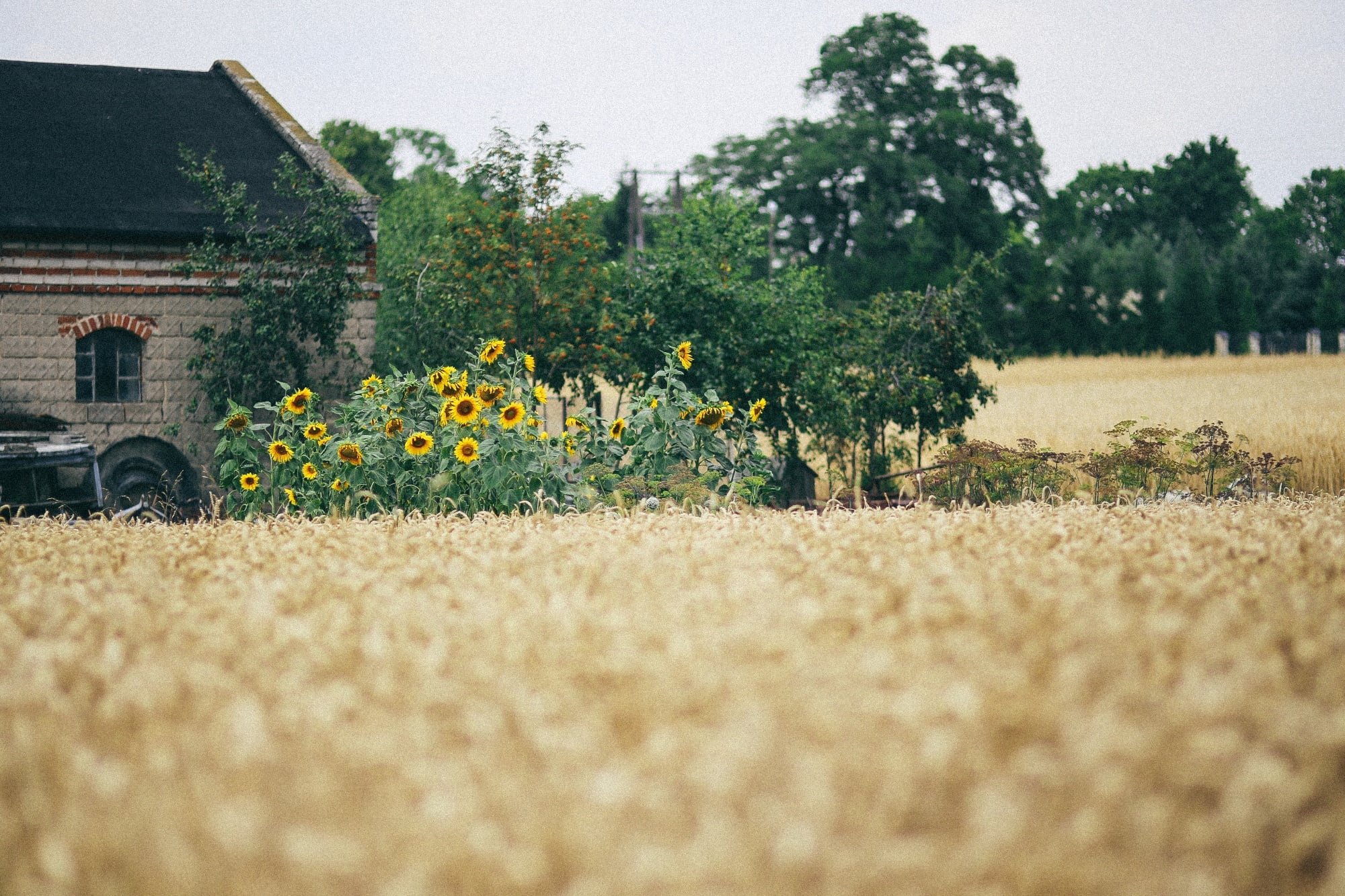
Out past the back porch, past the clothesline, past the old red shed, was my father’s garden.
Half an acre. Nine rows of green beans, climbing up strings he tied by hand every May. Three hundred tomato plants, staked and caged, heavy with fruit. Potatoes. Squash. Onions. Beets. Carrots. Cucumbers sprawling over a wire fence. Two long rows of sweet corn, taller than me, rustling in the morning wind. A patch of strawberries along the edge that my mother planted thirty years ago.
There wasn’t a weed in it.
Not one. I’d seen Dad out there at five in the morning on his knees in the dirt, pulling weeds the size of a fingernail.
“Unmaintained,” I said.
“That’s what it says.”
“Dad. That garden is the most maintained thing in this entire county.”
He took off his reading glasses and folded them and put them in his shirt pocket.
“Well,” he said. “Somebody doesn’t think so.”
My father is seventy-nine years old.
His name is Arne Lindqvist. He was born in this house, on this land, in 1947. His father was born here before him. He worked thirty-four years at the paper mill in town until it closed, and then he worked another twelve driving a school bus, and then he retired and did what he’d always wanted to do.
He grew things.
My mother, Marta, died three years ago this October. Pancreatic cancer. Four months from the diagnosis to the funeral. They’d been married fifty-one years.
After she died, I thought Dad would let the garden go. I thought he’d sell the house and move into one of those senior apartments in town, the ones with the little patios and the shuffleboard court.
He didn’t. If anything, the garden got bigger.
Dad lives alone. He eats like a bird. A bowl of oatmeal in the morning. A sandwich at noon. A piece of fish and some potatoes at night. That’s it. He’s thin as a fence post.
One summer, maybe two years ago, I stood at the edge of those nine rows of green beans and did the math in my head. There had to be hundreds of pounds of beans out there. Thousands of tomatoes. Enough potatoes to feed an army.
“Dad,” I said. “Who are all those beans for?”
He was on his knees in the dirt, tying up a tomato plant that had fallen over in the wind. He didn’t look up.
“People,” he said.
That was it. That was the whole answer.
I waited for him to say more. He didn’t. He just kept tying the tomato plant with a strip of old bedsheet, his big knotted fingers moving slow and careful.
I figured he was giving them away to the neighbors. Or taking them to church. Or maybe just letting them rot. I didn’t ask again.
I should have.
The neighbor was a man named Brent.
Brent Hollis. He’d built the big gray house on the old Swenson lot last spring.
The Swensons had lived next door to my parents for forty years. Old Mr. Swenson taught me how to ride a bike on the gravel road between our houses. After he died, his kids sold the land to a developer. The developer sold it to Brent. And Brent tore down the Swensons’ little white farmhouse, every board of it, and built something that looked like it belonged in a magazine.
Two stories of gray siding. Black window frames. A three-car garage with a basketball hoop that nobody ever used. A lawn so green and so perfect it looked painted on.
And a deck.
A huge, wraparound deck on the back of the house, up on the second floor. It looked right over Dad’s fence. Right over the corn and the beans and the tomatoes and the potatoes.
I came out to Dad’s house most Sunday mornings to have coffee with him and check on him, the way you do when your father is seventy-nine and lives alone. And most Sunday mornings, I’d see Brent out on that deck. Standing at the railing in a bathrobe, holding a coffee mug, frowning down at Dad’s garden.
Especially the corn. He always seemed to be frowning at the corn.
The corn was tall that summer. Over seven feet. It blocked most of his view of the valley.
“He doesn’t seem to like the garden much,” I said to Dad once, watching Brent through the kitchen window.
Dad shrugged.
“Takes all kinds,” he said.
I’d only talked to Brent once before the letter came.
It was back in June. I was out in the garden helping Dad pick the first strawberries of the summer. Brent came out onto his deck and stood there watching us. He was maybe forty-five. Tall. Fit, in the way of a man who goes to a gym and pays someone to tell him what to do there. Good haircut. Expensive watch that caught the sun.
Dad straightened up from the strawberry patch. He wiped his hands on his overalls and walked over to the fence.
“Morning,” he called up.
Brent looked down at him. “Morning.”
“Arne Lindqvist. I’ve been meaning to come over and say welcome.”
“Brent Hollis.”
Dad held up a little green cardboard pint basket, the kind you get at a farmer’s market. It was full of strawberries. Bright red, still warm from the sun.
“First of the season,” Dad said. “My wife planted these. Best strawberries in the county, if I do say so. You’re welcome to them.”
Brent looked at the strawberries. He looked at Dad. He looked at the garden, all those rows, all that dirt.
“No, thanks,” he said. “I’m not big on fruit.”
Dad lowered the basket a little.
“Well,” he said. “Offer stands. Anytime you want something. Tomatoes will be ready in July. Beans in August. Just holler.”
Brent nodded once. He didn’t smile. He went back inside and slid the glass door shut behind him.
Dad stood at the fence for a moment, holding the little basket of strawberries.
Then he walked back over to me and set it down in the dirt.
“Not big on fruit,” he said. “Huh.”
“Dad, he was rude.”
“He was busy.”
“He was standing on his deck doing nothing.”
“Maybe he was busy thinking.” Dad knelt back down in the strawberry patch. “Man’s allowed to think.”
That’s my father. He’d find something kind to say about a rattlesnake.
So when the letter came that Tuesday, I knew exactly who’d sent the complaint.
“It’s Brent,” I said, slamming the letter down on the table. “It has to be. Nobody else can even see the garden. The road’s on the other side of the house. It’s him. He’s been staring at that corn all summer like it insulted his mother.”
Dad didn’t say anything.
“He can’t do this,” I said. “He can’t just move in here and start telling you what to do with your own land. Your family’s been on this land for a hundred years, Dad. He’s been here five months.”
“County says he can.”
“The county’s wrong.”
“Maybe.”
I pulled out my phone and started typing. “I know a lawyer. Well, Jen from work knows a lawyer. Her brother-in-law. He does property stuff. Zoning stuff. I’m calling him.”
“Kristin.”
“I’m calling him right now.”
“Kristin,” Dad said again, and his voice was so calm, so quiet, that I stopped. “Let’s just wait and see what the inspector says.”
“Dad, they’re going to make you tear it out.”
“Maybe they will. Maybe they won’t.”
“How can you be so calm about this?”
He looked out the window at the garden. At the corn rustling in the wind. At the tomato plants, so heavy with fruit they were bending their cages.
“Because I’ve been growing things for seventy years,” he said. “You learn some things can’t be rushed. You plant the seed. You wait. You see what comes up.”
I didn’t know what he meant.
I wrote the lawyer’s name on the back of the county’s envelope anyway. Doug Pratt. With his phone number underneath. Just in case.
I took Thursday off work.
I’m a dental hygienist in Cedar Falls, forty minutes away. I’d only taken two sick days in three years. My boss gave me a funny look when I asked.
“Family thing,” I said.
“Is your dad okay?”
“He’s fine. It’s the neighbor who’s the problem.”
I drove out to the house at seven in the morning. Dad was already in the garden, of course. On his knees in the bean rows with his bucket, picking.
“Dad, the inspector’s coming at nine.”
“I know.”
“Shouldn’t you come inside? Change your shirt?”
He looked down at his shirt. It was his old blue work shirt, faded almost white at the elbows, with a tear in the pocket.
“What’s wrong with my shirt?”
“Nothing. Never mind.”
I sat on the back porch steps and drank coffee and watched him work. The sun came up over the trees and lit up the garden gold. Bees were moving through the squash blossoms. A robin hopped along the end of a row, looking for worms.
It was beautiful. It was honestly one of the most beautiful things I’d ever seen.
And some man in a gray house had called it an eyesore.
I looked up at Brent’s deck. It was empty. The glass door was shut. The curtains were drawn.
Coward, I thought.
The inspector came at five minutes to nine.
He was young. Maybe twenty-six, twenty-seven. Thin, with glasses and a short haircut and a county ID badge clipped to his belt. His name was Tyler Ostrowski. He drove a little white county car with a seal on the door.
He was polite. That was the first thing I noticed. He shook my hand. He shook Dad’s hand. He called Dad “sir.”
He carried a clipboard.
“Mr. Lindqvist,” he said. “Thanks for meeting with me. I’m sorry to bother you.”
“No bother,” Dad said. “You want some coffee?”
Tyler blinked. I don’t think anyone had ever offered him coffee on an inspection.
“Uh. No, thank you, sir. I’m all right.”
“Suit yourself.”
Tyler walked the edges of the garden. He took pictures with his phone. He measured things. He wrote on his clipboard. Dad walked beside him, quiet, his hands in his overall pockets.
I followed behind them, ready to fight.
At one point, Tyler stopped at the end of the tomato rows. He just stood there for a minute, looking at them. Three hundred plants, every one of them staked and caged and tied with strips of old bedsheet. Not a single yellow leaf. Not a single weed.
“Sir,” he said, “how many hours a day do you spend out here?”
Dad thought about it.
“Six,” he said. “Maybe seven. More in June when the weeds are bad.”
“Every day?”
“Every day God gives me.”
Tyler wrote something on his clipboard. He looked over at the big gray house. At the empty deck. Then back at the garden.
When we got back to the porch, Tyler took a deep breath. He looked uncomfortable. He kept tapping his pen against the clipboard.
“Mr. Lindqvist,” he said, “I’m sorry. I really am. But a complaint’s a complaint. The ordinance says agricultural use over a quarter acre in an R-2 zone requires a special permit. You’ve got about half an acre out there. And you don’t have a permit.”
“Never needed one,” Dad said. “My dad grew this garden. His dad before him.”
“I understand. The zoning changed in 2019. When they rezoned this whole stretch of Ridge Road for residential development.” Tyler looked genuinely sorry. “It’s a grandfathered use, technically, but only as long as nobody complains. And somebody complained.”
“So what happens now?” I asked. My voice came out sharp.
Tyler looked at his clipboard. He didn’t want to say it.
“I have to issue a notice of violation,” he said. “Thirty days to bring the property into compliance.”
“Meaning what?”
“Meaning reduce the cultivated area to under a quarter acre. Or remove it.”
“Tear it out,” I said. “You’re saying he has to tear out half his garden.”
“Or apply for the special permit. But that takes about six months, and the complaint would stay open in the meantime, and the fines would…” He trailed off. “I’m sorry. I really am.”
“Thirty days,” Dad said quietly.
“Thirty days, sir.”
I stood up. I was shaking. I had the envelope with the lawyer’s name in my back pocket, and I could feel it there, burning.
I wanted to say a lot of things. I wanted to tell this kid with his clipboard that my father’s garden was older than he was. That my mother planted those strawberries. That this land had been in our family since before his grandparents were born.
I wanted to march over to that big gray house, bang on the door, and tell Brent Hollis exactly what I thought of him and his deck and his perfect painted lawn and his expensive watch.
I opened my mouth.
Dad put his hand on my arm.
Just put it there. Didn’t squeeze. Didn’t pull. Just rested it there, heavy and warm, the way he used to when I was little and got too upset at the dinner table.
I closed my mouth.
Dad stood up from the porch steps. His knees cracked. He walked over to Tyler.
He held out his hand.
Tyler looked at it, surprised. Then he shook it.
“I appreciate you coming out,” Dad said. “I know you’re just doing your job.”
“Thank you, sir.”
Dad didn’t let go of his hand right away.
“Would you do me one favor,” he said, “before you write it up final?”
Tyler hesitated. “If I can.”
“Come back Saturday,” Dad said. “Six in the morning.”
Tyler looked at me.
I shrugged. I didn’t know either. I had no idea what my father was talking about.
“Six in the morning,” Tyler repeated. “This Saturday?”
“This Saturday.”
“Can I ask why?”
Dad finally let go of his hand.
“There’s something I’d like you to see,” he said. “Before you decide.”
Tyler looked at the garden. He looked at Dad. He looked at the gray house next door, at the empty deck.
“Okay,” he said slowly. “Six a.m. Saturday. I’ll be here.”
“Thank you, son.”
Tyler walked back to his little white car. He sat in it for a minute before he drove away, looking at his clipboard.
I turned to my father.
“What’s on Saturday?”
Dad picked up his bucket from the porch.
“Saturday’s Saturday,” he said.
And he walked back out to the beans.
I didn’t go home that night.
I couldn’t. I was too angry. I called work and told them I needed Friday off too. My boss sighed loud enough that I could hear it through the phone.
Then I did something I probably shouldn’t have done.
I walked next door.
It was about six in the evening. The sun was low and orange. Brent’s car was in the driveway. A black SUV, so clean it shone.
I walked up the long, perfect front walk, past the perfect lawn, and I rang the doorbell. It played a little song. Of course it did.
Brent opened the door. He was wearing a golf shirt and khakis. He was holding a glass of wine. He looked at me like he was trying to remember if he’d ordered something.
“Can I help you?”
“I’m Kristin Lindqvist,” I said. “Arne’s daughter. From next door.”
Something flickered across his face. Just for a second. Then it was gone.
“Okay,” he said.
“You called the county on my father’s garden.”
He didn’t deny it. He took a sip of his wine.
“I filed a complaint,” he said. “Yes. Through the proper channels.”
“Why?”
“Because it’s an eyesore.” He said it simply. Like it was obvious. “It’s half an acre of dirt and corn and rotting vegetables right outside my back windows. I paid a lot of money for this lot. I paid a lot of money for this house. I did not pay a lot of money to look at a farm.”
“It’s not rotting. It’s the cleanest garden in the county.”
“It’s a farm,” he said. “In a residential neighborhood. There’s a reason the county has zoning laws.”
“He’s seventy-nine years old. He’s lived there his whole life. His family’s been on that land for a hundred years.”
“And I’m sure that’s very meaningful to him.” Brent’s voice was flat. Bored. “But the zoning changed. He’s out of compliance. That’s not my fault.”
“You could have talked to him. You could have walked over and knocked on his door like a human being.”
“I don’t need to talk to him. The county will handle it.”
“He offered you strawberries,” I said. My voice was shaking now. “In June. Remember? He walked over to that fence and offered you strawberries my mother planted before she died. And you said you weren’t big on fruit.”
Brent’s jaw tightened.
“Look,” he said. “I don’t know what your father’s running over there. But I see the trucks. Early in the morning. Every week. He loads up boxes and drives off before sunrise. That’s not a hobby garden. That’s an operation. He’s probably selling it. Without a license. Without paying taxes. I’m doing the county a favor.”
I stared at him.
“You have no idea,” I said. “You have no idea who my father is.”
“I don’t need to,” Brent said.
And he shut the door.
I walked back home across the lawn, past the fence, past the corn.
Dad was sitting on the back porch in his old metal lawn chair, shelling peas into a bowl. He’d seen me go. He’d seen me come back.
“Well?” he said.
“He says you’re running an operation. Selling vegetables without a license.”
Dad laughed. An actual laugh. I hadn’t heard him laugh like that since before Mom died.
“An operation,” he said. “That’s a good one. I’ll have to remember that.”
“Dad, it’s not funny.”
“It’s a little funny.”
I sat down hard on the porch steps.
“He saw your truck,” I said. “He said you leave before sunrise every week. Loading up boxes.”
Dad’s hands stopped shelling peas.
“Fridays,” I said. “That’s what he’s talking about, isn’t it? You’ve been leaving every Friday since Mom died. I always figured you just couldn’t sleep.”
Dad didn’t answer. He went back to shelling peas.
“Where do you go, Dad?”
He snapped open a pod with his thumb. The peas rolled into the bowl. Plink, plink, plink.
“You’ll see,” he said.
“I want to know now.”
“You’ll see Saturday,” he said. “Everybody will.”
I slept in my old bedroom that night. The one with the faded yellow wallpaper and the twin bed and the shelf of horse figurines I collected when I was ten.
At four-fifteen in the morning, I woke up to the sound of a truck engine.
I went to the window.
It was still dark. But the porch light was on, and in its glow, I saw my father loading boxes into the back of his old green pickup. Cardboard boxes. Banana boxes, the kind you get from the back of the grocery store. He was carrying them out from the shed one at a time and setting them in the truck bed. They were full of vegetables. Tomatoes and beans and potatoes and squash.
I counted. Eleven boxes.
He tied a tarp down over all of them. He checked the knots twice. Then he climbed into the cab, and the truck backed slowly down the driveway with its headlights off until it got to the road.
Then the headlights came on, and he drove away.
I stood at the window and watched the taillights disappear into the dark.
I almost followed him. I almost grabbed my keys and jumped in my car and followed him down Ridge Road.
But I didn’t.
You’ll see Saturday, he’d said.
I went back to bed. I didn’t sleep.
He came home at nine-thirty. The truck bed was empty. He walked into the kitchen, washed his hands, poured himself a cup of coffee, and sat down at the table across from me like nothing had happened.
“Morning,” he said.
“Morning.”
He blew on his coffee.
“You should go to bed early tonight,” he said. “Big day tomorrow.”
I set my alarm for five.
I didn’t need it. I was awake at four-thirty, lying in my old twin bed, staring at the ceiling.
When I came downstairs, Dad was already in the kitchen. He’d made a big pot of coffee. Not his usual little four-cup pot. The big one. The thirty-cup urn that my mother used to bring to church potlucks. It was sitting on the counter, perking and gurgling.
“What’s that for?” I asked.
“People,” he said.
He was wearing his old blue work shirt. The faded one with the tear in the pocket.
He picked up his bucket and walked out the back door into the garden.
Saturday morning was foggy.
The kind of thick, soft fog that rolls up out of the river valley in late summer and sits on everything like a blanket. You could barely see the end of the garden. The corn disappeared into it. The fence disappeared into it. The world was gray and white and quiet.
I stood on the back porch with a cup of coffee.
At five to six, headlights came slowly up Ridge Road through the fog. A little white car. The county seal on the door.
Tyler Ostrowski parked on the side of the road, at the end of Dad’s driveway. He got out. He was wearing a county jacket over a sweatshirt. He had his clipboard. He looked half asleep. He looked a little nervous too.
He walked up the driveway toward me.
“Morning,” he said. “I’m here. Like he asked.”
“Want some coffee?”
This time, he said yes.
I poured him a cup from the big urn. He held it with both hands.
“Where’s your father?”
I pointed. Out in the fog, in the bean rows, you could just barely make out a shape. A thin old man in a faded blue shirt, bent over with his bucket. Picking beans. Like any other day.
“What’s he want me to see?” Tyler asked.
“I honestly have no idea,” I said.
Then I looked up at the gray house.
Brent was already on his deck.
He was standing at the railing in a dark blue bathrobe, holding his coffee mug, staring down at us. At the county car. At Tyler. At me.
He’d seen the car pull up. He’d come out to watch.
Of course he had. He wanted to see the inspector write it up. He wanted to see my father lose.
Tyler followed my eyes. He saw Brent too. Brent lifted his mug a little. Like a toast.
Tyler didn’t toast back.
At six o’clock exactly, headlights came down the road through the fog.
One pickup. An old red Ford with rust on the wheel wells. It slowed down, pulled off onto the shoulder, and parked along the ditch at the bottom of Dad’s property.
Then two more pickups. A white Chevy and a blue Dodge with a cracked windshield. They parked behind the red Ford.
Then a car. A little brown Corolla with a dented bumper.
Then four more. A station wagon. A sedan with a donut spare tire. A rusty old Buick. A minivan with a handicap tag hanging from the mirror.
They kept coming. One after another, their headlights cutting through the fog, pulling off onto the shoulder and parking along the ditch in a long, neat line.
Tyler set his coffee cup down on the porch railing very slowly.
I counted. I couldn’t help it.
Eleven cars. Fourteen. Seventeen.
People got out.
An old man in a feed store cap and suspenders. A young woman with a baby strapped to her chest in a carrier, holding a toddler by the hand. A heavyset man in a Walmart vest, like he was coming straight from a night shift. Two teenage boys, brothers maybe, carrying a laundry basket between them. A woman in scrubs. An old lady with a cane and a canvas tote bag. A man with a prosthetic leg. A family of five, the kids still in pajamas with jackets thrown over them.
They were all carrying something.
Empty boxes. Empty buckets. Empty grocery bags. Empty laundry baskets. A little red wagon.
Nobody said much. A few people nodded to each other. Somebody said, “Morning, Earl.” Somebody said, “How’s your hip, Doris?”
And then they walked up the driveway, past the porch, past me and Tyler, and into the garden.
Everybody knew where to go.
The old man in the feed store cap went straight to the potatoes. He knelt down with a little hand fork and started digging. The young mother with the baby went to the strawberries along the edge, the ones my mother planted, and she sat the toddler down in the grass and let him pick, and he ate more than he put in the bag, and she laughed.
The two teenage boys went to the corn. They worked together, one pulling the ears down and the other one twisting them off. They’d clearly done it before.
The woman in scrubs went to the tomatoes.
The old lady with the cane walked very slowly down to the end of the bean rows, where my father was. She stopped next to him. She put her hand on his arm. He straightened up and said something to her that I couldn’t hear. She laughed. He handed her his bucket. It was already full of beans. He’d been picking them for her.
Everywhere I looked, there were people. Moving through the fog in my father’s garden. Quiet. Careful. Filling their boxes and buckets and bags.
Taking only what they needed. I could see that. Nobody was grabbing. Nobody was greedy. They’d pick a bag of beans and a few tomatoes and some potatoes, and then they’d stop. They’d leave plenty for the next person.
Tyler stood next to me on the porch.
He’d stopped writing. His pen was still in his hand, hovering over the clipboard. But he wasn’t writing anything.
“What is this?” he whispered.
I couldn’t answer.
My eyes were full of tears. I didn’t even know why yet. I just knew.
Who are all those beans for?
People.
I looked up at the deck.
Brent was still standing there. But he wasn’t holding his mug up anymore. He’d lowered it. He was gripping the railing with his other hand.
He was staring down at the garden. At all of those people. At the line of cars along the ditch, disappearing into the fog.
His face had gone very still.
The last car was a silver minivan.
It came slowly down the road, the way people drive when they’re not sure they’re in the right place. Or when they’re sure, but they wish they weren’t.
It parked at the very end of the line. Way down at the bottom of the hill, behind all the others.
For a moment, nobody got out.
Then the driver’s door opened.
A woman stepped out into the fog. She was older. Maybe seventy. Small and thin, wearing a tan raincoat that was too big for her and a pair of white sneakers. Her gray hair was pulled back in a clip. She had two empty grocery bags folded under her arm. The cloth kind. Faded.
She closed the car door very quietly. Like she didn’t want to wake anybody.
Then she started walking up the driveway.
She walked slowly. Her eyes were on the ground. Her shoulders were hunched up inside the raincoat. She walked like someone who’d made this walk many times before and still hadn’t gotten used to it.
Halfway up the driveway, she lifted her head.
She looked toward the garden.
And then her eyes went past the garden. Past the fence. Up.
To the deck of the big gray house.
To the man in the dark blue bathrobe.
She stopped walking.
She stopped so suddenly that one of her grocery bags slipped out from under her arm and fell onto the gravel.
She didn’t pick it up.
She just stood there in the middle of my father’s driveway, in the fog, staring up at Brent Hollis.
And up on his deck, Brent set his coffee cup down on the railing.
Very slowly. Very carefully.
Like his hands had stopped working.
For a long moment, nobody moved.
The people in the garden kept picking. They hadn’t noticed. The teenage boys were still twisting off ears of corn. The toddler was still eating strawberries.
But I noticed. And Tyler noticed. And down at the end of the bean rows, my father straightened up and looked toward the driveway.
He noticed too.
The woman in the tan raincoat bent down slowly and picked up her fallen grocery bag. She held both bags against her chest. She didn’t take her eyes off the deck.
Then Brent moved.
He left his coffee cup on the railing. He disappeared through the glass door. I heard it slide open and slam shut.
A minute later, he came around the side of his house. Fast. Barefoot. Still in his bathrobe. Down his perfect lawn, across the grass, wet with dew, to the fence that divided his property from my father’s.
There was no gate in that fence. There had never been a gate. Old Mr. Swenson and my father used to just step over the low part in the corner, where the post had leaned for thirty years.
Brent stepped over it.
He walked through the edge of the corn, pushing the stalks aside, until he came out on the driveway.
He stopped about ten feet from the woman in the tan raincoat.
They looked at each other.
“Mom?” he said.
The woman’s face crumpled.
She didn’t cry. Not right away. Her face just folded in on itself, like a paper bag when you crush it. She pressed the empty grocery bags harder against her chest.
“Brent,” she said. Her voice was very small. “What are you doing here?”
“I live here,” he said. He pointed back toward the gray house. His hand was shaking. “That’s my house. That’s… Mom, that’s my house.”
She turned and looked at it. The big gray house. The black windows. The three-car garage. The deck.
“I didn’t know,” she whispered. “I didn’t know which one was yours. You never… I’ve never been out here. You never invited me.”
Brent opened his mouth. Then he closed it.
“What are you doing here?” he said again. Quieter this time.
His mother looked down at the grocery bags in her arms. At the white sneakers on her feet. At the gravel.
She didn’t answer.
She didn’t have to.
Brent looked past her. At the garden. At all those people with their boxes and buckets and bags, moving through the fog, quietly picking vegetables. At the old man in the feed store cap. At the young mother with the baby. At the man in the Walmart vest.
He looked back at his mother.
At the two empty grocery bags.
I watched it happen. I watched him understand. It moved across his face like a shadow across a field.
“No,” he said. “No. Mom. No.”
“Brent—”
“You’re here for… you’re here to get food?”
His mother lifted her chin. Her lip was trembling.
“Every Saturday,” she said. “For a year and a half.”
Brent took a step backward. Like she’d pushed him.
“Why?” he said. “Why would you… Mom, I send you money. I send you money every month.”
“You send me two hundred dollars,” his mother said quietly. “Every month. And I’m grateful for it. I am, honey. I’m so grateful.”
“Then why—”
“Because my pension is eleven hundred dollars a month,” she said. “And my rent is eight hundred. And my heart medicine is three hundred and forty after the insurance. And the electric. And the phone. And the car insurance.” She shook her head. “It doesn’t add up, Brent. It hasn’t added up since your father died. I can’t make it add up.”
“You never told me.”
“How could I tell you?” Her voice broke. “You worked so hard to get out of that house. You worked so hard. You went to college on loans and worked two jobs and built your company from nothing. You were so proud. I was so proud.” She was crying now. “And every time you called, you were so happy. Telling me about your clients. Your new car. Your new house. I didn’t want to be the thing that dragged you back.”
“You’re not dragging me anywhere. You’re my mother.”
“I know,” she whispered. “I know. But I didn’t want you to look at me and see the old house. The old kitchen. The cupboards with nothing in them. I didn’t want you to remember.”
Brent stood there in his bathrobe in the middle of the driveway, barefoot on the gravel.
“Remember what?” Tyler asked quietly beside me. He didn’t mean to. It just slipped out.
But I knew. Somehow I knew already.
My father had walked up from the bean rows. He was standing a little way off, near the edge of the garden, holding his bucket. He hadn’t said anything. He was just watching.
Brent’s mother turned and saw him.
“Arne,” she said. “I’m sorry. I’m so sorry. I didn’t know he was your neighbor. I swear, I didn’t know.”
“Morning, June,” my father said gently. “No need to be sorry.”
Brent stared at my father.
“You know her?”
“Every Saturday for a year and a half,” Dad said. “June likes the yellow squash. And the little red potatoes. Not the big ones. Says the little ones taste like the ones her mother grew.”
June let out a sound. Half sob, half laugh.
Brent looked from my father to his mother and back.
“I called the county,” he said. His voice was hollow. “I called the county on this. I told them it was an eyesore. I told them to make you tear it out.”
“I know,” Dad said.
“You knew? You knew she came here?”
“No,” Dad said. “I didn’t know she was your mother. I knew she was June. I knew she was a widow who lived in the apartments by the Dollar General and liked yellow squash. That’s all. People don’t have to tell me who they are to get a bag of beans.” He set his bucket down in the gravel. “But I knew you’d see it. If you just watched long enough. I figured if you saw who was eating out of this garden, you might feel different about looking at it.”
Brent sat down.
Right there on the gravel driveway. In his expensive blue bathrobe. He just sat down, hard, like his knees gave out. He put his elbows on his knees and his face in his hands.
June stood over him. She reached down. Hesitated. Then she put her hand on his head, on his good haircut, the way you’d touch a little boy’s head.
“Honey,” she said. “It’s okay.”
“It’s not okay,” Brent said into his hands. “It’s not okay at all.”
The people in the garden had noticed now. They’d stopped picking. They were standing in the rows in the fog, holding their buckets, watching.
Nobody said anything.
Brent lifted his head. His eyes were red.
“When I was a kid,” he said. He wasn’t talking to anybody in particular. Maybe he was talking to all of us. “We lived out on County Road 9. In a trailer. My dad drove a delivery truck until he hurt his back, and then he didn’t drive anything. And my mom grew a garden. Not because she wanted to. Because we had to. Because otherwise, we didn’t eat.”
June closed her eyes.
“Every summer, I’d come home from school and she’d have me out there picking beans,” Brent said. “Hours. In the heat. And I’d go to school with dirt under my fingernails that wouldn’t come out no matter how hard I scrubbed. And the kids called me Bean Boy. Every day. For six years. Bean Boy. Because that’s all we ever had in our lunches. Beans. Green beans. Bean sandwiches. Beans and rice.” He laughed, but it wasn’t a laugh. “I swore I’d never pick another bean as long as I lived. I swore I’d never be poor again. I swore I’d never let anybody look at me and see dirt.”
He looked up at the gray house. At the perfect lawn. At the deck.
“So I built that,” he said. “And every morning, I’d go out on that deck with my coffee. And I’d look down at your garden.” He looked at my father. “And all I could see was County Road 9. The trailer. My mom on her knees in the dirt. The empty cupboards. I couldn’t stand it. I couldn’t stand looking at it. It was like the whole thing was following me. Like I couldn’t get away from it, no matter how much money I made.”
He put his face back in his hands.
“And she was here,” he said. “The whole time. She was right here. Every Saturday. Eating out of the garden I wanted to tear out.”
It was quiet for a long time.
The fog was starting to lift. You could see the sun now, a pale white circle behind the gray.
Then my father walked over and sat down on the gravel next to Brent. He did it slowly. It took him a long time. His knees cracked so loud I heard it from the porch.
He sat there next to Brent for a while without saying anything.
“In nineteen eighty-two,” my father said, “the paper mill laid off two hundred men. I was one of them.”
Brent lifted his head.
“I had a wife and a five-year-old daughter.” Dad nodded toward me on the porch. “That one, there. Kristin. And a mortgage. And no job. And no prospects, because every other mill in the valley was laying off too.” He looked out at the garden. “We had a garden then. A little one. Maybe a quarter of what it is now. Marta grew it. My wife. She grew it because she liked flowers, mostly. Some tomatoes. A few beans.”
He rubbed his hands together. They were stained brown with soil that would never come out.
“That winter was bad,” he said. “Real bad. There was a week in February when we had nothing in the house but a box of crackers and a jar of peanut butter. Marta was giving Kristin her share. I watched her do it. Pretending she wasn’t hungry. Pretending she’d already eaten.”
I didn’t remember that. I was five. I didn’t remember any of it.
“And one morning,” Dad said, “I opened the front door to go look for work. And there was a box on the porch.”
He stopped. He looked down at his hands.
“Potatoes. Onions. Canned beans and canned tomatoes and a big bag of flour. A ham. A whole ham. And a note. No name. Just a note that said, From the neighbors. Pass it on.”
Brent was staring at him.
“Every week,” Dad said. “Every Friday, until I found work again in May. A box on the porch. Never saw who left it. Never found out. Marta always thought it was the Swensons. That was your lot, there, Brent. Where your house is. The Swensons lived there for forty years. Little white farmhouse.”
Brent turned and looked at his gray house.
“I don’t know if it was them,” Dad said. “Never asked. Old man Swenson wouldn’t have told me anyway. Stubborn as a mule. But Marta believed it was. And she made me promise. That spring, when I got the job at the school bus garage, she sat me down at the kitchen table and made me promise. ‘Arne,’ she said. ‘We are going to pass it on. As long as we live. We are never going to let anybody on this road open their cupboards and find nothing.’”
He looked out at the garden. At all those people standing in the rows.
“So she made the garden bigger,” he said. “Every year. A little bigger. And every Saturday, she’d open it up. To anybody. Didn’t matter who. Didn’t matter why. No questions. No sign-up sheet. You just came and you took what you needed. And on Fridays, before sunrise, she’d load up the truck and drive boxes to the people who couldn’t come. The shut-ins. The old folks. The ones who were too proud to come up a driveway in daylight.” He glanced at June. “No offense, June.”
“None taken,” June whispered.
“She did that for forty years,” Dad said. “Forty years. Every Saturday. Every Friday. And then she got sick.” His voice went rough. “And the last thing she said to me, in the hospital, the very last thing she ever said to me, she grabbed my hand and she said, ‘Arne. The Fridays. Don’t you dare stop the Fridays.’”
He was quiet for a moment.
“So I didn’t,” he said.
I was crying on the porch.
I hadn’t known. I hadn’t known any of it. I knew my mother grew a garden. I knew people came by sometimes on Saturdays. I’d thought they were friends from church. I’d thought it was a hobby. I’d moved away to college at eighteen and never really come back except for holidays, and I’d never asked. Not once.
Forty years. And I’d never asked who the beans were for.
Tyler was standing beside me. He’d put his clipboard down on the porch railing. He hadn’t touched it in a long time.
“How many people?” he asked my father. His voice was rough. “How many people does this feed?”
Dad thought about it.
“Saturdays, about forty families. Sometimes more. Depends on the week.” He shrugged. “Fridays, I do eleven houses. And I drop off whatever’s left at the food pantry at St. Luke’s. Sister Rosemary says it’s the only fresh vegetables they get all summer.”
Tyler looked out at the garden. At the old man with the potatoes. At the young mother with the baby. At the teenage boys with the corn.
“Forty families,” he said.
“Give or take.”
Tyler picked up his clipboard.
He looked at it for a long moment. Then he took the top sheet, the one with the notice of violation already half filled out, and he tore it off.
He folded it in half. Then in half again. Then he put it in his jacket pocket.
“Mr. Lindqvist,” he said, “the ordinance says unmaintained agricultural use.”
“That’s what the letter said,” Dad agreed.
“In my professional opinion,” Tyler said, “this is the most maintained property I’ve ever inspected. In my life.” He cleared his throat. “I don’t see any violation here, sir. I’ll write it up as unfounded.”
Dad looked up at him from the gravel.
“Thank you, son.”
“Don’t thank me.” Tyler shook his head. “My grandmother used to get vegetables from somebody like you. When I was a kid. Down in Iowa. I never knew who. I just knew some weeks there was a bag of tomatoes on our back step.” He blinked hard. “I’m going to look into getting you that special permit. Fast-tracked. Community garden exemption. There’s a category for it. I’ll find it. I’ll walk the paperwork through myself.”
“You don’t have to do that.”
“Yes,” Tyler said. “I do.”
Brent was still sitting on the gravel.
He looked at Tyler. He looked at my father. He looked at his mother, standing over him with her two empty grocery bags.
Then he stood up.
He brushed the gravel off his bathrobe. He wiped his face with his sleeve.
He turned to Tyler.
“I want to withdraw my complaint,” he said. “Officially. Today. Whatever I have to sign. I want it gone.”
“I’ll bring you the form Monday,” Tyler said.
Brent nodded.
Then he turned to my father.
“Mr. Lindqvist,” he said. His voice cracked. “I’m sorry. I’m so sorry. I don’t know what else to say.”
Dad looked up at him from the ground.
“Help me up,” Dad said. “My knees don’t work like they used to.”
Brent reached down and took my father’s hand and pulled him up off the gravel. Slowly. Carefully. Dad was wobbly. Brent held his elbow until he was steady.
“Thank you,” Dad said.
They stood there, the two of them. My seventy-nine-year-old father in his faded blue work shirt with dirt on his knees. And the man in the expensive bathrobe who’d tried to make him tear out his garden.
“Mr. Lindqvist,” Brent said again.
“Arne.”
“Arne. Is there anything… is there anything I can do? Anything at all?”
My father looked at him for a long moment.
Then he bent down, very slowly, and picked up his bucket from the gravel. The old dented metal bucket he’d been carrying since I was a little girl.
He held it out to Brent.
“Beans are on the left,” he said. “Nine rows. Your mother likes the yellow squash, but she’ll need beans too. Pick from the bottom up. The ones near the ground are ready first.”
Brent stared at the bucket.
He didn’t take it right away. I watched his face. I watched him think about County Road 9. About the trailer. About the dirt under his fingernails that wouldn’t come out. About six years of being called Bean Boy.
His mother was watching him too. Her face was so full of something it was hard to look at.
Brent reached out.
He took the bucket.
“Bottom up,” he said quietly.
“Bottom up,” Dad agreed.
And Brent Hollis walked out into my father’s garden in his bare feet and his blue bathrobe and knelt down in the dirt at the end of the first row of green beans.
He started to pick.
June stood at the edge of the garden with her hands pressed over her mouth and watched her son pick beans for the first time in thirty years.
Nobody said anything.
But one by one, the people in the garden went back to work. The old man went back to his potatoes. The teenage boys went back to the corn. The toddler went back to the strawberries.
And the fog lifted all the way, and the sun came out over the valley, and lit up the whole garden gold.
I came down off the porch.
I walked over to my father. He was standing at the edge of the garden, watching Brent pick beans. His hands were in his overall pockets.
I put my arm around him. He felt so thin. So light.
“You could have told me,” I said. “About Mom. About the Fridays. About all of it.”
“You never asked,” he said.
“I asked once. Who the beans were for. You said ‘people.’”
He looked at me sideways.
“Well,” he said. “That was the answer.”
I laughed. I couldn’t help it. Then I cried a little more. Then I laughed again.
“I had a lawyer,” I said. “I had a lawyer’s name written on the back of the envelope. Doug Pratt. I was going to call him Monday. I was going to fight the county. I was going to go after Brent with everything we had.”
“I know.”
“Why didn’t you let me?”
My father was quiet for a while.
“You could’ve won,” he said finally. “Maybe. Lawyer might’ve found a loophole. Grandfather clause. Something. And Brent would’ve stood up on that deck every morning for the rest of his life hating this garden. Hating me. Hating whatever it made him remember.” He shook his head. “Lawyer can make a man stop complaining. Can’t make him stop hurting.”
He nodded toward the bean rows. Toward Brent, on his knees in the dirt.
“Only way to fix a thing like that,” he said, “is to let him see it. All of it. Who eats out of this garden. Why it’s here. Then he gets to decide for himself who he wants to be.”
“What if he’d seen it and still wanted it torn out?”
Dad shrugged.
“Then I’d have called your lawyer,” he said. “But I figured it was worth a try first. Your mother always said most people aren’t mean. Most people are just scared of something they haven’t looked at yet.”
That Friday, I rode along.
I set my alarm for three-forty-five. When I came downstairs, Dad was already in the kitchen packing banana boxes. Eleven of them.
“You coming?” he asked. Like it was the most normal thing in the world. Like I’d been coming every Friday for forty years.
“I’m coming.”
We loaded the boxes together in the dark. He showed me how to pack them so the tomatoes didn’t bruise. Potatoes on the bottom. Then squash. Then beans. Then tomatoes on top, wrapped in newspaper.
We drove down Ridge Road with the headlights off until we got to the main road. “Don’t want to wake the neighbors,” Dad said.
We stopped at a little blue house on Elm Street first. An old man named Walt lived there. He was ninety-one and couldn’t drive anymore and couldn’t walk more than a few steps without his walker. Dad carried the box up the porch steps and set it by the door. He didn’t knock. He just tapped the window twice, and through the glass, I saw a light come on, and an old hand waved.
“Walt’s been getting boxes for nine years,” Dad said, climbing back into the truck. “Since his wife died. Marta brought him a pie the week of the funeral, and he cried so hard she just kept coming back.”
We stopped at a trailer park on the edge of town. A young woman named Dee with three kids and a husband in the hospital. We stopped at an apartment building where four different elderly people lived on the same floor, and Dad carried a box up three flights of stairs, wheezing, and I made him let me carry the next one.
We stopped at a little house with a ramp out front, where a man named Curtis lived. He’d lost both his legs in Afghanistan. He was waiting on the porch in his wheelchair at four-thirty in the morning with a thermos of coffee.
“Arne,” he said. “Who’s this?”
“My daughter. Kristin.”
Curtis looked at me for a long moment.
“Your mother,” he said, “used to bring me peach pie. Every August. When the peaches were good.” He took the box from Dad and set it in his lap. “I miss her.”
“So do I,” I said.
We stopped at seven more houses. Then we stopped at St. Luke’s, and Dad carried the last two boxes into the back of the church kitchen, where Sister Rosemary hugged him and called him a saint and he told her to hush.
The sun was coming up by then. Pink and gold over the hills.
On the way home, Dad took a turn I didn’t expect. He pulled into the cemetery on the hill behind the church.
He parked by the big oak tree. He got out. He reached into the cab and pulled out a small paper bag I hadn’t noticed.
I followed him across the wet grass to my mother’s grave.
MARTA ELISE LINDQVIST. 1949 – 2023. SHE PASSED IT ON.
I’d never noticed that last part before. I’d been to her grave a dozen times. I’d never noticed.
Dad opened the paper bag. He took out a single tomato. Big and red and perfect. The best one from the whole garden. I’d seen him pick it on Thursday, holding it up to the light, turning it around and around in his hands.
He set it on top of her headstone.
“Eleven houses this week, Marta,” he said. “And St. Luke’s. And forty-two families on Saturday. That’s a record.”
He stood there for a moment.
“And the neighbor’s going to be all right,” he said. “June’s boy. He’s coming around. You’d like him, I think. Once he lets you.”
He put his hand flat on top of the stone, next to the tomato.
“I haven’t missed a Friday,” he said quietly. “Not one.”
Then he turned around and walked back to the truck.
I stood at my mother’s grave for a long time.
Then I touched the tomato. Just once. And I followed my father home.
That was a year ago.
A lot has changed since then.
Tyler Ostrowski got Dad the special permit in six weeks instead of six months. He walked the paperwork through the county office himself, desk to desk. The garden is officially registered now as the Marta Lindqvist Community Garden. There’s a little wooden sign at the end of the driveway. Tyler made it in his garage. He comes most Saturdays now with his girlfriend. They pick tomatoes for her grandmother.
Brent withdrew his complaint on that Monday. And then he did something none of us expected.
In October, a construction crew showed up at the big gray house. I was scared at first. I thought maybe he was building a higher fence. A wall.
They tore out half of his perfect painted lawn.
Brent stood on his deck in a sweatshirt and watched them do it. Then he walked over and knocked on my father’s back door.
“I want to make the garden bigger,” he said. “On my side. If that’s okay with you. My mother says if we put in pole beans along the property line, we can double the yield. And she’s got opinions about squash.”
My father looked out the window at the torn-up lawn.
“Your mother’s right about the squash,” he said.
They put a gate in the fence that fall. A real one. Wooden, with an iron latch. Brent built it himself. He’s terrible with tools. It took him three weekends and he hit his thumb with a hammer so many times it turned purple. But he built it.
It hangs a little crooked. Dad says that’s how you know it’s handmade.
June moved in with Brent in November.
She didn’t want to. She fought him on it for weeks. She said she didn’t want to be a burden. She said she had her own life. She said she liked her little apartment by the Dollar General.
“Mom,” Brent finally said. “I’ve got four empty bedrooms. And a garden that needs somebody who knows what they’re doing. Please.”
She moved in the week before Thanksgiving. She has the bedroom with the window that looks out over the garden.
Every morning now, there are two people on that deck. Brent with his coffee. June with her tea. Looking down at the garden. Not frowning anymore. Pointing at things. Arguing about where to put the tomatoes next year.
Brent comes on Fridays now.
Not every week. He’s got his company, and sometimes he has to travel. But most Fridays, at a quarter to four in the morning, there’s a knock on my father’s back door, and Brent is standing there in a hooded sweatshirt and jeans with dirt on the knees.
He drives now. Dad sits in the passenger seat and gives directions. Brent carries the boxes up the stairs. All three flights. Dad lets him.
They talk the whole way, Dad says. About gardens, mostly. About the mill. About County Road 9. About Brent’s father, who was angry and sad and never got over hurting his back. About Marta.
“He’s a good boy,” Dad told me once. “Just took him a while to stop running.”
My father turned eighty in May.
He had a little health scare in March. His heart. They put a stent in. He was in the hospital for four days, and he spent all four of them complaining that nobody was planting his peas.
Brent planted his peas.
Brent and June and Tyler and the two teenage brothers, Marcus and Devon, who turned out to be the old man in the feed store cap’s grandsons. And the young mother with the baby, whose name is Ashley, and whose baby is walking now. And Curtis, from his wheelchair, giving instructions from the end of the row.
They planted all of it. Every row. Peas and beans and onions and potatoes. They put the tomato cages up. They tied the strings for the green beans.
When I brought Dad home from the hospital, he stood on the back porch for a long time looking out at the garden. At all those neat rows. All that dark, turned earth, already sprouting green.
“Well,” he said. His voice was shaking. “Would you look at that.”
“You’ve got help now, Dad.”
“I see that.”
He sat down in his old metal lawn chair. I sat down on the steps next to him.
“Your mother used to worry about this,” he said. “Toward the end. Who’d keep it going. After.”
“I know.”
“I told her I’d figure something out.” He laughed a little. “Didn’t figure on the guy who tried to get it torn out.”
This morning was a Saturday.
I drove out at five-thirty. I come every Saturday now. Every single one. I bring an extra coffee urn. Mom’s old church urn isn’t big enough anymore.
It was foggy again. That thick, soft late-summer fog that rolls up out of the river valley.
At six o’clock, the headlights started coming down the road.
I counted them.
Twenty-three cars. A record.
People got out carrying their boxes and buckets and bags. Nobody said much. Everybody knew where to go.
I saw June at the squash, of course. Yellow squash. And the little red potatoes, not the big ones.
I saw Tyler at the tomatoes with his girlfriend.
I saw Ashley at the strawberries with her little girl, who ate more than she put in the bag.
And I saw my father, eighty years old, down at the end of the bean rows with his old dented bucket. Moving slower than he used to. Stopping to rest more often. But still there. Still picking. Still on his knees in the dirt.
And next to him, in the next row over, I saw Brent.
On his knees. In jeans with holes in them now. With dirt under his fingernails that won’t come out no matter how hard he scrubs.
He doesn’t try anymore.
A new family came this morning. I’d never seen them before. A young couple with a little boy, maybe seven, in a car with a cracked windshield and Texas plates. They stood at the end of the driveway for a long time before they came up. The way June used to. The way people do when they’ve never done this before and they wish they didn’t have to.
The little boy was holding his mother’s hand. He was looking at the garden with big eyes.
Brent saw them.
He stood up. He brushed the dirt off his knees. He walked down the driveway to meet them.
“Morning,” he said. “First time?”
The father nodded. He looked embarrassed. He looked like he hadn’t slept in a week.
“Somebody at the gas station told us,” the father said. “Said there was a place up here. Where you could… where people could…”
“There is,” Brent said. “Come on up.”
He led them up the driveway. He handed them a bucket from the stack by the shed.
The little boy looked up at Brent.
“Mister,” he said. “Whose garden is this?”
Brent thought about it.
He looked out over the rows. At June, at the squash. At Tyler, at the tomatoes. At Ashley’s little girl, with strawberry juice all over her face. At my father, down at the end of the bean rows, slowly straightening up to see who’d come.
“It’s Mr. Lindqvist’s garden,” Brent said. “And his wife’s. She started it a long time ago.”
“Who are all the beans for?”
Brent smiled.
I’d never seen him smile like that before. Not on his deck. Not with his coffee. Not at his perfect painted lawn.
He knelt down so he was eye level with the little boy.
“People,” he said.
The little boy considered that.
“Like us?”
“Exactly like you,” Brent said. “Beans are on the left. Nine rows. Pick from the bottom up. The ones near the ground are ready first.”
He handed the little boy the bucket.
And the little boy walked out into my father’s garden, in the fog, and knelt down in the dirt at the end of the first row, and started to pick.
Down at the end of the rows, my father was watching.
He caught my eye across the garden.
He didn’t say anything. He didn’t have to.
He just lifted his hand, very slightly, the way you’d wave to someone across a crowded room. Then he bent back down to his beans.
I stood on the porch with my coffee and watched them. All of them. Twenty-three cars’ worth of people moving quietly through the fog. Taking only what they needed. Leaving plenty for the next person.
Somewhere up on the hill behind St. Luke’s, there’s a headstone with a tomato on top of it.
SHE PASSED IT ON.
And she did.
And he did.
And now, so do we.

Sophia Rivers is an experienced News Content Editor with a sharp eye for detail and a passion for delivering accurate and engaging news stories. At TheArchivists, she specializes in curating, editing, and presenting news content that informs and resonates with a global audience.
Sophia holds a degree in Journalism from the University of Toronto, where she developed her skills in news reporting, media ethics, and digital journalism. Her expertise lies in identifying key stories, crafting compelling narratives, and ensuring journalistic integrity in every piece she edits.
Known for her precision and dedication to the truth, Sophia thrives in the fast-paced world of news editing. At TheArchivists, she focuses on producing high-quality news content that keeps readers informed while maintaining a balanced and insightful perspective.
With a commitment to delivering impactful journalism, Sophia is passionate about bringing clarity to complex issues and amplifying voices that matter. Her work reflects her belief in the power of news to shape conversations and inspire change.