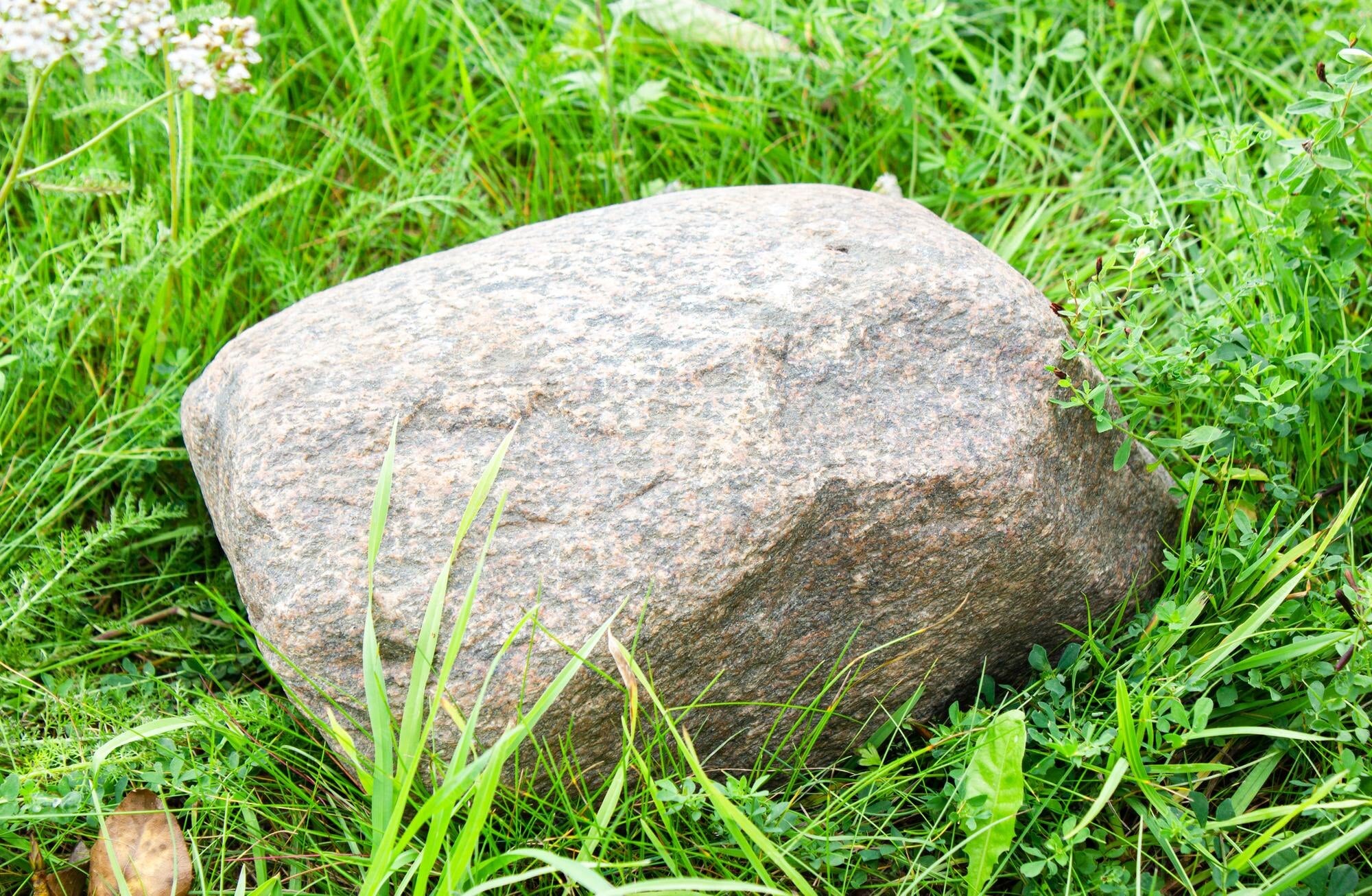
“Then what good is a rock?” I said.
She nodded back toward the corner.
“Nobody argues with a stone that has a name on it. They have to walk out here and stand in front of it first. I can’t make them vote right, Beth Ann. But I can make them look.”
“And if nobody comes?”
“Then on the fourteenth of November, there’ll be thirty-some names that man has to drive his gravel truck over. I’d like to see the man who can do it.”
She reached behind her into the trunk and handed me the green notebook.
It was her handwriting. But younger. Round and careful, in blue ballpoint. At the top of the first page it said:
Burial Record, County Poor Farm. Copied from the Superintendent’s book, June 1968. W. Becker.
Becker was her name before she married my father.
“I was twenty-one,” she said. “I was the junior girl in the county clerk’s office. The superintendent of the poor farm had kept his own book at home, separate from the county’s. When his daughter died that spring, her family carried his papers into the courthouse in apple boxes. They thought the county would want them.”
“Did it?”
“No. That book was headed for the dump. The cover had come off. The mice had been at it.”
“So you copied it?”
“On my lunch hours. It took me nine days.”
I turned the pages. Every entry looked the same. A number. A name. An age. A date. A cause of death. And at the end of each line, a row and a place.
No. 1. Peter Hale, laborer, aged 66. Died November 4, 1887. Lung fever. Row 1, place 1.
No. 2. Mrs. Anna Novak, widow, aged 71. Died January 1888. Old age. Row 1, place 2.
Six pages of it. All the way to Number 61, in 1931.
“They had wooden crosses once,” my mother said. “Painted white. A grass fire took most of them in the fifties, and nobody put them back. After that it was just lawn.”
“Mom, how do you even know they’re where the book says? It’s been a hundred and forty years.”
“Go look inside the fence corner.”
I walked over. Almost hidden in the tall brome grass was the gray stub of an old hedge post. Cut off a foot above the ground, and hard as iron.
“The book says row one starts eight feet east of the corner post,” she said. “Nobody pulls a hedge post if he can help it. They’ll outlast all of us.”
She pointed at my father’s tile probe lying in the grass.
“Now take that, and push it in where nobody is. Over there.”
I picked it up. I leaned on the handle. The rod went in about ten inches and stopped dead, like I’d hit a board.
“That’s ground nobody ever dug,” she said. “Clay. Now come four feet south of my hole and try again.”
I moved. I leaned on it again.
The rod sank all the way past my wrists.
I stood there holding it.

Adrian Hawthorne is a celebrated author and dedicated archivist who finds inspiration in the hidden stories of the past. Educated at Oxford, he now works at the National Archives, where preserving history fuels his evocative writing. Balancing archival precision with creative storytelling, Adrian founded the Hawthorne Institute of Literary Arts to mentor emerging writers and honor the timeless art of narrative.