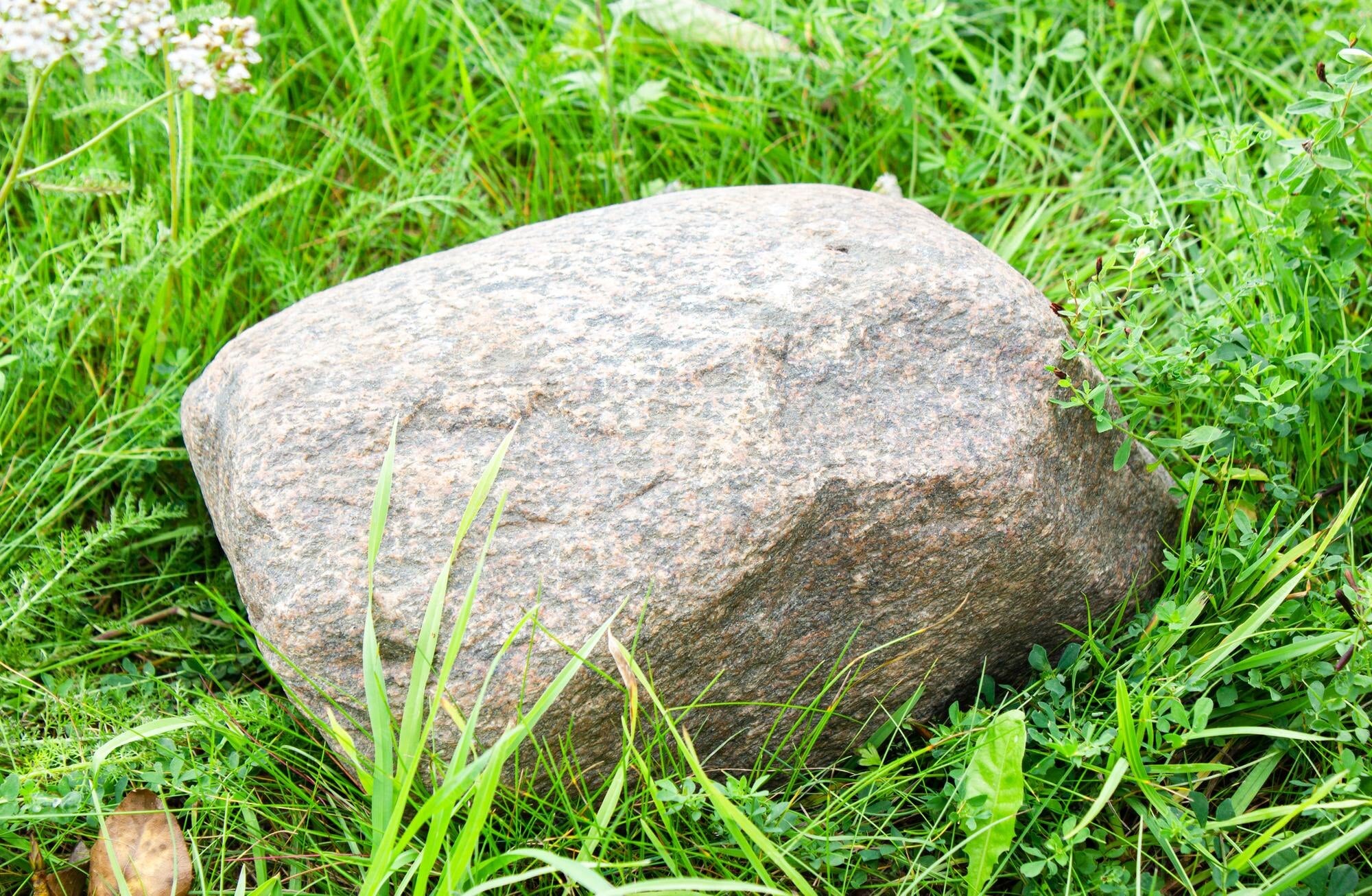
Eleven of Tom’s markers were the first eleven names in the book.
The twelfth was out of order. It said:
Unknown, 1924. Known to God.
“I didn’t want that fellow waiting till spring with nothing but a number,” Tom said. “The last line’s on me.”
Each gray marker went at the head of its place, flush with the ground, bedded in sand. The white fieldstones stayed where they were, at the foot. Nobody wanted to be the one to pull up a stone my mother had set.
Darlene Voss knelt at row one, place two, and bedded the gray marker for Anna Novak, widow, aged seventy-one. She did it carefully. She didn’t talk to anybody while she did it.
Everybody else got a white stone that day, with a name painted on it. All the way down to the end of row five.
Larry Timm was there.
He came alone, and late. He stood off by the fence for a long while in his feed store jacket, not doing anything. Then he walked slowly down row three to place seven. He read the white stone Kayla had lettered for a girl of nineteen named Clara Timm.
He stood there with his hands hanging at his sides.
I walked over. I didn’t say anything. I just stood next to him.
“My grandfather had a sister,” he said finally. His voice was rough. “We were told she moved off.”
I handed him my trowel.
Somewhere around eleven, I noticed my mother wasn’t working. She was sitting in a lawn chair somebody had brought for Walt. There was something at her feet wrapped in a bath towel.
The crew working row four reached place nine and found it skipped. There was an orange flag, but no stone.
“Wilma,” Ron Beck called. “We’re missing one here.”
“No, you’re not,” my mother said. “That one’s mine.”
She wouldn’t let me carry it.
It was the last of the four peony stones. She had held it back from the very first day. She had painted it white at her own kitchen table.
She carried it against her chest in both arms. I walked beside her with the towel and the trowel and my hands out, the way you walk beside a child on a bicycle.
She got down on her knees. It took a long time. Forty people found something else to look at.
She cut the sod herself. She bedded the stone herself. Then she held out her hand, and Kayla put the little brush in it, and my mother lettered it right there.
Ida Marie Becker. 1930.
“My father’s mother,” she said.
I got down beside her in the grass.
“They lost the farm in twenty-eight,” she said. “Dad was seventeen. He went up to Saunders County to hire out, because that’s where there was a man paying wages. His mother had a bad heart and nobody to keep her. So the county took her in.”
She pressed the edge of the stone flat with the heel of her hand.
“He was sixty miles off when she died. By the time the letter found him, she’d been in the ground two weeks.”

Adrian Hawthorne is a celebrated author and dedicated archivist who finds inspiration in the hidden stories of the past. Educated at Oxford, he now works at the National Archives, where preserving history fuels his evocative writing. Balancing archival precision with creative storytelling, Adrian founded the Hawthorne Institute of Literary Arts to mentor emerging writers and honor the timeless art of narrative.