He’s Not Coming
“He’s not coming.”
I actually laughed.
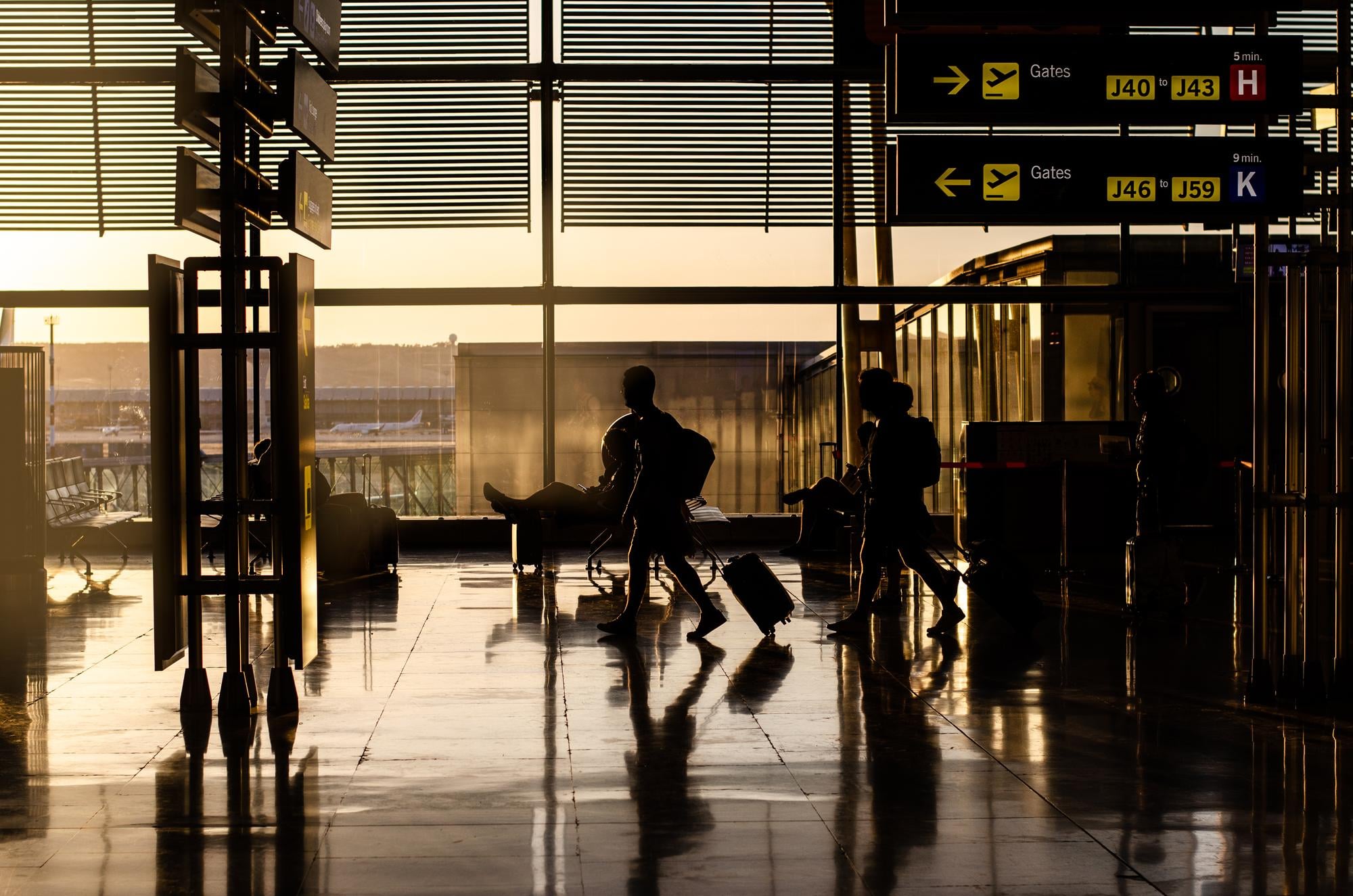
I was standing at the arrivals gate at Nashville International Airport with a double stroller and three balloons and two five-month-old babies in matching onesies that said DADDY’S HOME in red letters. I’d been awake for thirty-one hours. My hair was in a ponytail I’d redone four times in the bathroom mirror. I’d put on mascara for the first time since March.
“I’m sorry,” I said. “I think you’ve got the wrong person.”
The soldier in front of me didn’t move.
Dress uniform. Army green. Ribbons on the chest. No bag. No carry-on. No duffel. Just a man standing very still in the middle of a crowd that was screaming and crying and clapping all around us.
“You’re here for Jeremy?” he said.
“Yes,” I said. “That’s my husband.”
“Ma’am. He’s not coming.”
I laughed again. It came out high and strange.
“I’ve been tracking his flight since last night,” I said. I held up my phone. “Look. I watched it the whole way. Across the whole map. He sent me a video getting on the plane. It landed twenty minutes ago.”
The soldier looked at my phone. Then at me.
“Ma’am,” he said quietly. “He was never on that flight. You need to go home. Immediately.”
“What did you just say?”
And I turned and looked at him properly.
I knew him.
Not in person. I’d never met him. But I knew his face.
Square jaw. Dark buzz cut. A scar through his left eyebrow. I’d seen that face in the background of a hundred video calls over nine months. Walking behind Jeremy in a dusty tent. Leaning into the camera to say Hey, Mrs. Brooks! Holding up a paper plate with HAPPY BIRTHDAY GIRLS written on it in Sharpie on the day the twins were born.
Staff Sergeant Luis Navarro.
Jeremy’s squad leader. His best friend over there. The one Jeremy called Nav.
My whole body went cold.
I know how this works. Every Army wife knows how this works. You learn it before you learn anything else.
When something terrible happens, they don’t call. They come to your door. Two of them. In dress uniforms. A chaplain and an officer.
I looked behind Luis. For a chaplain.
There wasn’t one.
“Is he dead?” I whispered.
“No,” Luis said immediately. “No, ma’am. He’s alive. He’s not hurt. I promise you. He’s alive.”
My knees almost buckled. I grabbed the handle of the stroller.
“Then where is he?”
Luis looked down at the twins. At the onesies. At the three balloons tied to the stroller handle. One for each of his girls. That’s what Jeremy always called us. My three girls.
“He’s at your house,” Luis said.
My name is Kayla Brooks. I’m twenty-seven years old.
I met Jeremy Brooks in tenth grade at Clarksville High School in Tennessee. He sat behind me in chemistry and kicked my chair for an entire semester. On purpose. I turned around in April and told him if he did it one more time, I’d pour hydrochloric acid on his sneakers.
He laughed so hard Mr. Feldman sent him to the hall.
He asked me to prom the next day. I said no. He asked again a week later. I said yes.
We got married at twenty. In my grandmother’s backyard. He enlisted in the Army six months later. 101st Airborne. Fort Campbell. Fifteen minutes from where we grew up.
He’s done two deployments. Afghanistan when we were twenty-one. And this one. The one that started last June.
I found out I was pregnant three weeks before he left.
I took the test in our bathroom on a Saturday morning while he was making pancakes. I came out holding it. He was standing at the stove in his boxers with a spatula.
He saw my face.
He dropped the spatula.
“Are you serious?” he said.
I nodded.
He crossed the kitchen in two steps and picked me up off the floor and spun me around until I got dizzy. Pancakes burning on the stove. Smoke alarm going off.
“I’m gonna be a dad,” he kept saying. “Kay. I’m gonna be a dad.”
Then he set me down.
And his face changed.
“I leave in three weeks,” he said quietly.
“I know.”
“I’m gonna miss it,” he said. “All of it. The whole thing. I’m gonna miss you getting big. I’m gonna miss the doctor’s appointments. I’m gonna miss the birth.”
“You’ll be back in time to meet the baby,” I said. “Nine months. You’ll be home when it’s still tiny.”
He looked at my stomach.
“I’m gonna miss the birth,” he said again.
At the twelve-week ultrasound, there were two heartbeats.
I called Jeremy from the parking lot. It was the middle of the night over there. He picked up anyway.
“Twins,” I said.
There was silence on the line. Then a crash. Then somebody yelling in the background. Brooks! Brooks, you okay?
“I dropped my phone,” Jeremy said when he came back. His voice was shaking. “I dropped my phone, Kay. Twins? Two? Two babies?”
“Two girls,” I said.
He started crying.
Right there. In a tent in the desert at three in the morning with half his squad listening.
“Two girls,” he said. “I’ve got three girls now.”
They were born on March nineteenth.
Six weeks early. Preeclampsia. My blood pressure went through the roof at thirty-four weeks and they did an emergency C-section at Blanchfield Army Community Hospital on post.
Ellie came first. Four pounds, two ounces. Then Mae. Three pounds, eleven ounces.
They went straight to the NICU. I didn’t get to hold them for two days.
Jeremy watched it all on a laptop.
The Red Cross got a message to his unit. His commander let him sit in the operations tent with a laptop on a satellite connection. My mom held her phone up in the delivery room. The video kept freezing. The sound kept cutting out.
He saw Ellie come out. Then the screen froze for four minutes.
When it came back, Mae was already being carried to the incubator.
He missed her first breath.
He saw them on a laptop screen for nine months.
Every call. Every day, when he could. Sometimes twice a day. Sometimes not for a week when the internet went down or they were out somewhere he couldn’t tell me about.
He watched them in the NICU with tubes in their noses. He watched them come home in April. He watched their first bath. Their first smile. Mae’s first smile, actually. Ellie took two more weeks. Jeremy said Ellie was stubborn like me.
He watched Ellie roll over for the first time in July. He watched Mae laugh at the dog in August.
He sang to them. Every night. You Are My Sunshine. Terribly. Off-key. The sound cutting out in the middle of every line.
They’d stare at the laptop screen with their big blue eyes.
He told me more than once that the worst part wasn’t the heat or the hours or the food or the danger.
“It’s that they’ll know my voice before they know my face,” he said. “They’re going to know me as a sound coming out of a laptop. A guy on a screen who freezes every thirty seconds.”
“They’ll know you,” I said. “The second they see you, they’ll know you.”
He didn’t believe me.
He was coming home Tuesday.
October twenty-first. Nine months to the day after he left.
He called me from the airport over there, maybe nine hours before. In Kuwait. He said he was at the gate waiting to board. The first leg. To Germany. Then a connection to Nashville.
I could hear the airport in the background. Announcements in English and Arabic. People laughing. Somebody’s music.
“I miss you so much,” he said. “I can’t wait to see my little girls.” Then he laughed. “Although apparently they’re not that little anymore.”
“Ellie’s fourteen pounds,” I said. “Mae’s thirteen. They’re chunky now. They have rolls. You’re gonna lose your mind.”
He was quiet for a second.
Then he said it again. The way he’d said it a hundred times.
“I’m so sorry,” he said. “I’m so, so sorry I wasn’t there.”
“Jeremy,” I said. “Stop. Please. It’s okay. The only thing that matters is you’re coming home. Your three girls are waiting for you.”
He didn’t say anything for a long moment.
“Kay,” he said finally. His voice was strange. Thick. “I love you. You know that, right? No matter what. I love you more than anything.”
“I know,” I said. “I love you too. Get on the plane.”
“Okay,” he said. “Okay. I’m getting on the plane.”
He sent me a video of himself walking onto the plane.
Eleven seconds long. He was holding the phone up. Walking down the jet bridge. Grinning into the camera. His face was thinner than I remembered. Sunburned. A little gray in his stubble. He was twenty-seven.
“This is it,” he said in the video. “Going home. Tell my girls Daddy’s coming.”
Then he turned the camera around. You could see the door of the plane. A flight attendant smiling.
The video ended.
I’ve watched it more times than I want to admit.
I didn’t sleep Monday night.
I lay awake in our bed in our little house on Rossview Road and stared at the ceiling. At two a.m., I got up and checked on the twins. At three, I got up and checked again. At four, I gave up and started getting ready.
I put both of them in the outfits his mother sent from Kentucky. White onesies with red letters. DADDY’S HOME. Little red socks. Little red bows that stuck to their bald heads with some kind of baby-safe tape.
I tied three balloons to the double stroller. Red, white, and blue. One for Ellie. One for Mae. One for me.
I put the car seats in the car. I drove an hour to Nashville in the dark.
I got to the airport three hours early.
I tracked that flight the whole way.
Live. On my phone. The little airplane icon crossing the map. Frankfurt to Nashville. Over the Atlantic. Over Newfoundland. Over Maine. Over Pennsylvania. Over Kentucky.
I watched it the whole time. Sitting on a bench in the arrivals hall with the stroller parked in front of me. Rocking it with one foot when one of the girls fussed.
The board said LANDED.
My heart was pounding so hard I could feel it in my teeth.
People started coming through.
The arrivals hall at Nashville has a big wide hallway where people come out from security. There’s a rope line. Families wait on the other side.
That day, there must have been fifty families waiting. Wives. Husbands. Parents. Kids holding signs. WELCOME HOME DADDY. WE MISSED YOU MOMMY. A little boy in a tiny camouflage uniform. An old man in a Vietnam veteran cap holding an American flag.
The first soldier came through. A young woman. Maybe twenty. Her mother screamed and ducked under the rope line and ran at her. They crashed into each other in the middle of the hallway and fell down and didn’t care.
The whole hall started clapping. The way they do.
Then another. A man in his forties. Three kids ran at him. He knelt down and they piled on top of him.
More clapping.
Then another. And another.
I stood at the rope with the stroller. Watching the hallway. Watching every face.
Waiting for his.
Then somebody tapped me on the shoulder and said my name.
“Mrs. Brooks?”
I turned around.
And it wasn’t him.
“Is he dead?” I whispered again.
I couldn’t stop asking it. Even after Luis said no. Even after he promised.
“No, ma’am,” Luis said. “I swear on my life. He’s not hurt. Not a scratch on him.”
“Then why isn’t he here? Why are you here? You’re supposed to be on that flight. You were both supposed to be on that flight.”
Luis looked around the arrivals hall. At the families. At the reunions. At a little girl clinging to her father’s leg and sobbing.
“Can we talk somewhere else?” he said quietly. “Please. In the car. I’ll drive you home. I’ll explain on the way.”
“I have my car.”
“Then I’ll ride with you,” he said. “My truck’s in short-term parking. I’ll come back for it.”
He looked at me.
“Mrs. Brooks,” he said. “He needs you to go home. Right now. He needs you and he needs the girls.”
I don’t remember walking to the parking garage.
I remember the balloons bobbing over my head. I remember Ellie starting to cry because I was walking too fast and the stroller was bumping. I remember Luis taking the stroller from me without asking and pushing it while I walked beside him.
I remember standing next to my car in the parking garage and not being able to find my keys. They were in my hand.
Luis buckled the twins into their car seats. He did it like he’d done it a thousand times. Five-point harness. Chest clip at armpit level. He checked them both twice.
“I’ve got three kids,” he said when he saw me watching. “Seven, five, and two.”
He got in the passenger seat.
I got in the driver’s seat.
I didn’t start the car.
“Tell me,” I said.
“He got on the plane,” Luis said.
He was looking straight ahead through the windshield at the concrete wall of the parking garage.
“In Kuwait. Like he told you. He sent you that video. He was happy. He was so happy, Mrs. Brooks. He’d been talking about the girls for nine months straight. Ellie’s rolls. Mae’s laugh. Every single day. Drove the whole squad crazy.”
“Then what happened?”
Luis took a breath.
“We landed in Frankfurt,” he said. “Six hours later. We had a two-hour layover before the Nashville flight. We got off the plane. We were walking through the terminal.”
He stopped.
“And there was a family,” he said. “At the gate next to ours. A young guy. Airman, I think. Air Force. Going home on leave. And his wife was there. In Germany. She must’ve flown out to meet him. And she had a baby. In one of those carriers on her chest. Little tiny baby. Maybe a month old.”
He swallowed.
“And she took the baby out,” Luis said. “And handed it to him. Right there. In the middle of the terminal. His first time holding it. And everybody around them started clapping.”
He looked down at his hands.
“And Brooks just stopped,” he said. “In the middle of the terminal. He stopped walking. And he stared at them. And his whole face went white.”
“I said, Brooks, you good?” Luis said. “And he didn’t answer. He just kept staring. And then he started breathing really fast. And sweating. And shaking.”
I put my hand over my mouth.
“I got him into a bathroom,” Luis said. “He was on the floor. In a stall. Hyperventilating. He couldn’t talk. He was having a panic attack. A bad one. I’ve seen a lot of them. I’ve had a lot of them.” He shook his head. “That one was bad.”
“Jeremy doesn’t have panic attacks,” I said.
Luis looked at me.
“He does now,” he said quietly.
“It took him forty minutes to get off that bathroom floor,” Luis said. “By the time he could stand up, they’d already called final boarding for Nashville. I got him to the gate. We were the last ones. The gate agent was waiting.”
“And?”
“And he couldn’t do it,” Luis said. “He stood at the door of the jet bridge. And he couldn’t walk down it. He said…”
Luis stopped.
“What did he say?”
Luis looked at me.
“He said, Nav, I can’t get off a plane in Nashville in front of all those people and hold my daughters for the first time. I can’t. They’ll be clapping. Everybody will be clapping. And I don’t deserve it.”
I stared at him.
“Don’t deserve it?” I said. “What does that mean? What does that mean?”
Luis didn’t answer.
“Luis. What happened over there?”
He was quiet for a long time.
“That’s not mine to tell, Mrs. Brooks,” he said finally. “I’m sorry. It’s his. He has to tell you.”
He told me the rest.
He took Jeremy to the USO lounge at Frankfurt. He sat with him for three hours. He called their company commander in the States. Captain Reyes. Captain Reyes made some calls. There was a military charter flight leaving Ramstein that night for Fort Campbell. Returning soldiers. Eighty of them. No families waiting. No crowds. No clapping. It would land at the airfield on post at five in the morning. Hours before Jeremy’s commercial flight would’ve landed in Nashville.
“I asked him if he wanted to call you,” Luis said. “He said no. He said if he heard your voice, he’d fall apart. He said he’d tell you everything when he got home. He said you’d still be asleep when we landed. He’d be home before you woke up.”
“I didn’t sleep,” I said. “I left for the airport at five-thirty.”
“I know,” Luis said. “We got to your house at six-fifteen. Your car was gone.”
“He went inside,” Luis said. “With his key. I asked if he wanted me to come in. He said no. He said, Go get Kayla. Tell her I’m sorry. Tell her I’m home.”
“Why didn’t he call me?” I said. “Why didn’t he text me? I was sitting in the airport for three hours. Tracking a plane he wasn’t even on.”
Luis was quiet for a moment.
“Because he walked into your house,” he said, “and he saw the nursery.”
I started the car.
My hands were shaking so badly I could barely get the key in the ignition.
“Mrs. Brooks,” Luis said. “Let me drive.”
I looked at him.
He held out his hand.
I gave him the keys.
We switched seats. He drove. I sat in the back between the two car seats. Ellie was asleep. Mae was awake, staring at the balloons bobbing against the ceiling of the car.
Luis drove fast. Not crazy. But fast. I-24 north. Toward Clarksville.
“Luis,” I said. “Why did you say immediately? At the airport. You said I needed to go home immediately.”
He didn’t answer right away.
He looked at me in the rearview mirror.
“Because he shouldn’t be alone right now,” he said quietly. “That’s all. He shouldn’t be alone.”
The car went very quiet.
“Is he—” I started.
“He’s okay,” Luis said. “He’s not… he didn’t say anything like that. He’s not like that. I don’t think.” He swallowed. “But I’ve been doing this a long time, Mrs. Brooks. Fourteen years. Three deployments. I’ve seen guys come home. I’ve seen what it looks like when they walk into the house and the house doesn’t feel like theirs anymore.” He gripped the steering wheel. “I didn’t want to leave him alone in there. But he told me to get you. And I figured you were the only person who could actually help.”
He looked at me in the mirror again.
“I called his brother,” he said. “Before I came to the airport. Marcus. He’s driving over from Hopkinsville. He’ll be there in a few minutes. I didn’t want Jeremy alone in that house any longer than he had to be.”
I sat in the back seat between my two sleeping daughters and held their hands.
One in each of mine.
He shouldn’t be alone right now.
I pulled my phone out. My fingers were shaking. I went to the contacts.
I had the number saved. Every Army spouse does. They give it to you at the pre-deployment briefing. Most of us save it and never look at it again.
Veterans Crisis Line. 988, press 1.
I didn’t call it.
I just looked at it.
I wanted to know it was there.
We pulled onto Rossview Road at 10:52.
Our little brick house. White shutters. A porch with two rocking chairs. A yellow ribbon tied around the oak tree in the front yard. I put it up in June. It was faded and frayed now.
There was a truck in the driveway. Marcus’s. Jeremy’s younger brother.
Marcus was sitting on the front steps. Twenty-four. Same face as Jeremy, but softer. He stood up when he saw my car.
Luis parked.
I got out. I walked up the front walk.
“Is he okay?” I said.
“He’s in the nursery,” Marcus said. His eyes were red. “He won’t come out. He let me look in. He’s okay. He’s just…” Marcus shook his head. “He’s just sitting there, Kay. On the floor. He won’t talk.”
“Get the girls,” I said to Luis.
I walked into my house.
It looked exactly the way I’d left it at five-thirty that morning. My coffee cup on the kitchen counter. Half-full. Cold.
There was a sign over the kitchen doorway. A banner. I made it in August. Construction paper and string and glitter glue.
WELCOME HOME DADDY!
With two little handprints at the end. Ellie’s and Mae’s. I’d pressed their hands in red paint and stamped them on the paper. They screamed the whole time.
His duffel bag was on the floor in the hallway. Dropped. Not set down. Dropped. Like he’d let go of it and kept walking.
His boots were next to it. Still laced.
The nursery door was open.
I stood in the hallway and looked in.
The nursery was pale yellow. Sunshine Yellow, the paint can said. Jeremy picked it from a picture I sent him in May. You Are My Sunshine. Like the song.
Two white cribs. Side by side. A rocking chair in the corner. A changing table. A mobile hanging over each crib. Little felt clouds and little felt suns.
A shelf with stuffed animals. A bookshelf with board books. A framed picture on the wall of Jeremy in his uniform, holding up a paper plate that said HAPPY BIRTHDAY GIRLS. The one from March. With Luis grinning in the background.
And on the floor, between the two cribs, was my husband.
He was sitting with his back against the wall. In his uniform. His knees pulled up to his chest. His arms wrapped around them.
He was staring at the cribs.
He didn’t look up when I came to the door.
He looked so much thinner than on the video calls. His uniform hung on him. His face was sunburned and gaunt. His hair was buzzed so short I could see his scalp.
He was holding something in his hand. Small. Dark. I couldn’t see what.
“Jeremy,” I said.
He didn’t move.
“Jeremy. It’s me. It’s Kay.”
He turned his head.
He looked at me.
And his face crumpled.
“I’m sorry,” he said.
His voice was barely there. Hoarse. Like he’d been crying for a long time. Or not talking for a long time. Or both.
“I’m so sorry, Kay. I’m so sorry. I’m so sorry.”
I went to him.
I knelt down on the nursery floor in front of him. I put my hands on his face. On both sides. His skin was rough and hot.
“Stop,” I said. “Stop saying that. You’re home. You’re home, baby. That’s all that matters.”
He shook his head.
“I couldn’t do it,” he whispered. “At the airport. In Germany. I couldn’t get on the plane. There was a guy holding his baby and everybody was clapping and I couldn’t breathe. I thought I was dying.”
“I know. Luis told me.”
“I left you there,” he said. “At the airport. With the girls. I left you standing there. Waiting for me. Like a coward.”
“You’re not a coward.”
“I couldn’t even call you.”
“I don’t care,” I said. “Jeremy. Look at me. I don’t care. You’re here. You’re home. You’re on the nursery floor. That’s all I care about.”
He looked at the cribs again.
“I walked in here,” he said, “and I saw them. The cribs. Two of them. And the yellow. You painted it yellow. Like I asked.” He swallowed. “And the picture. Of me. On the wall. With the plate.”
He looked at the framed photo. Him and Luis in the desert, grinning, holding up the paper plate.
HAPPY BIRTHDAY GIRLS.
“And I couldn’t breathe again,” he said. “I sat down. And I couldn’t get up.”
He looked at me.
“I don’t deserve this, Kay,” he said. “I don’t deserve this room. I don’t deserve them.”
“Why?” I said. “Jeremy. Why do you keep saying that? What happened over there?”
He didn’t answer.
He opened his hand.
The thing he was holding.
It was a patch. Small. Square. Faded olive green. With black stitching.
A name tape. The kind they sew onto the chest of the uniform. Above the pocket.
It said:
WALLACE.
“Who’s Wallace?” I whispered.
Jeremy stared at the name tape in his palm.
“Andre,” he said. “Specialist Andre Wallace. He was in my squad. He was twenty-one.”
Was.
“He was from Savannah,” Jeremy said. “He had a wife. Tasha. She was pregnant. Due in August. A boy. Andre was going to name him Andre Junior. He was so proud of that. He told everybody. Junior. My boy’s gonna be a Junior.”
My stomach went cold.
“He used to ask about the girls,” Jeremy said. “Every day. How’s Ellie? How’s Mae? Show me the pictures, Sarge. He said he wanted to know what it was going to be like. Being a dad. He said I was the only guy in the squad who already had babies. He said I had to teach him everything.”
Jeremy’s voice was breaking now.
“I showed him how to swaddle,” he said. “With a T-shirt. In the tent. I’d watched you do it on the video calls a hundred times. I showed him how to hold a baby’s head. How to burp them. He practiced on a rolled-up sleeping bag. The whole squad laughed at him.”
He closed his hand around the name tape.
“June fourteenth,” Jeremy said.
I knew that date.
June fourteenth was the day the twins smiled at the same time for the first time.
I remembered it. I’d called Jeremy that night. My time. Morning his time. I’d had the laptop set up on the changing table. I’d been tickling their feet. Making faces. And all of a sudden they both smiled. Big, gummy, at the same time. At the screen. At him.
Jeremy cried. He was on the call for forty minutes. Laughing and crying. Saying their names over and over.
I remembered thinking, He’s so lucky he was on when it happened. What if he’d been on duty?
“I was on guard,” Jeremy said. “That morning. Tower Three. Zero-six-hundred to twelve-hundred. On the perimeter.”
He looked at me.
“And you texted me,” he said. “At five-forty. My time. You said, They’re both making faces like they’re gonna smile. Get on video RIGHT NOW. You don’t want to miss this.”
I put my hand over my mouth.
“And I wanted to,” Jeremy said. “I wanted to so bad. I’d missed everything. The birth. The NICU. Their first bath. I’d missed all of it.” His voice cracked. “And I thought, I’m not missing this. I’m not missing their first smile.”
He was crying now. Openly. Tears running down his sunburned face.
“Andre was walking past,” he said. “On his way to chow. And I said, Wallace. Do me a favor. Take my tower for an hour. Just an hour. My girls are about to smile and I need to see it.”
He looked down at the name tape.
“And he grinned,” Jeremy said. “That big stupid grin. And he said, For your girls, Sarge? Absolutely. Go. Go see ’em smile. I’ll tell Junior about it someday.”
“I went to the ops tent,” Jeremy said. “I got on the laptop. I called you. And you held them up. And they smiled. Both of them. At me. At the screen.”
He couldn’t breathe. He was gasping between the words.
“And I was laughing,” he said. “I was laughing and crying and saying their names. Ellie. Mae. Ellie. Mae. That’s Daddy. That’s Daddy.”
He stopped.
“At six-twenty-two,” he said, “a rocket hit Tower Three.”
I couldn’t move.
I knelt on the nursery floor in front of my husband with my hands on his face and I couldn’t move.
“I heard it,” Jeremy whispered. “On the call. You didn’t. The sound was cutting out. But I heard it. I felt it. The whole tent shook. And then the sirens went off. And I said, Kay, I gotta go, and I hung up on you. Remember? I hung up on you.”
I remembered.
He hung up in the middle of the twins smiling. I thought it was the internet. I tried calling back for an hour. He didn’t answer until that night.
When he finally called back, his voice was strange. Flat. He said it was a long day. He said he was tired. He didn’t say anything else.
“I ran to Tower Three,” Jeremy said. “Me and Nav. We got there first.”
He didn’t finish.
He didn’t have to.
He opened his hand again. And looked at the name tape.
WALLACE.
“I cut this off his uniform,” he said. “Before they took him. I don’t know why. I just did. I’ve been carrying it in my pocket since June fourteenth.”
“It should’ve been me,” Jeremy said.
His voice was very quiet now. Calm. Like he’d said it to himself so many times that it didn’t even hurt anymore.
“It was my tower. My shift. My name on the roster. I gave it to him so I could watch my daughters smile.” He looked at the cribs. “Andre Junior was born on August ninth. Tasha sent a picture to the squad group chat. He looks just like Andre. Same ears.”
He swallowed.
“He’s never going to meet his dad,” Jeremy said. “Because his dad was standing in my tower. Because I wanted to see my girls smile.”
He looked at me.
“So how am I supposed to walk off a plane, Kay?” he said. “In front of all those people? Clapping? And hold my daughters for the first time? When Andre’s son is never going to be held by his father? Because of me?”
He shook his head.
“I don’t deserve to hold them,” he said. “I don’t deserve this room. I don’t deserve any of it.”
I didn’t say anything.
I didn’t know what to say.
Nothing in the pre-deployment briefings prepared me for this. Nothing in the family readiness group meetings. Nothing in the pamphlets.
My husband was sitting on the floor of our daughters’ nursery in his uniform, holding a dead man’s name tape, telling me he didn’t deserve to touch his own children.
And behind me, in the hallway, I heard Mae start to cry.
Luis was standing in the hallway with both girls. One in each arm. Like he’d carried twins a hundred times. Marcus was behind him.
Mae was crying. Not a big cry. A fussy cry. The I’m hungry and also I’ve been in a car seat for an hour and also I don’t know where I am cry.
Ellie was awake. Quiet. Staring at the yellow walls with her big blue eyes.
Jeremy looked up.
He saw them.
For the first time. Not on a screen. Not freezing every thirty seconds. Not with the sound cutting out.
Real.
Two babies. Five months old. In white onesies that said DADDY’S HOME in red letters. With little red bows stuck to their bald heads.
He made a sound I’ll never forget.
He pressed himself back against the wall. Like he was trying to get away from them.
“No,” he said. “No. Nav. Don’t. Don’t bring them in here. Please.”
Luis didn’t move. He stood in the doorway holding my daughters.
“Brooks,” he said quietly.
“Please, Nav.”
“Brooks,” Luis said again. “Look at them.”
Jeremy shook his head. He put his hands over his face.
“I can’t.”
“Look at them,” Luis said.
I stood up.
I walked to the doorway. I took Mae from Luis. She was still crying. I bounced her. She stopped. She looked at me. She looked at the room.
I walked back to Jeremy.
I knelt down in front of him again. With Mae in my arms.
“Jeremy,” I said. “Take your hands off your face.”
He didn’t.
“Jeremy,” I said. “I’ve been doing this alone for nine months. I did the NICU alone. I did the feeding schedules alone. I did three a.m. alone, every night, both of them screaming, for five months. I did the C-section recovery alone. I couldn’t lift anything heavier than a baby for six weeks and I had two of them.”
He lowered his hands. Slowly.
“I’m not asking you for anything,” I said. “I’m not asking you to be okay. I’m not asking you to stop feeling what you’re feeling. I know you can’t.”
I held Mae out.
“I’m just asking you to hold your daughter,” I said. “That’s all. Just hold her.”
He looked at Mae.
She looked at him.
She’d stopped crying. She was staring at his face with her big blue eyes. Very serious. Like she was studying it.
Then she did something she does.
She sneezed.
A tiny, ridiculous sneeze. Pfft. Her whole body jerked with it.
And then she smiled.
Big. Gummy. At him.
Jeremy put his hand over his mouth.
“That’s the smile,” he whispered. “That’s the one. From June.”
“She does it all the time now,” I said. “She sneezes and then she smiles. Like she’s proud of herself.”
Jeremy reached out.
Slowly. His hand was shaking so badly I almost pulled back.
He touched her foot. Just with one finger. On the bottom of her little red sock.
Mae kicked.
Jeremy let out a breath like he’d been holding it for nine months.
“Hold her,” I said.
“I’ll drop her.”
“You won’t.”
“Kay. I’m shaking. Look at my hands.”
“You showed Andre how to hold a baby,” I said quietly. “In a tent. With a sleeping bag. You told him to support the head. You told him to hold her against your chest so she can hear your heart.”
Jeremy closed his eyes.
“Show me,” I said. “Show me what you taught him.”
He held out his arms.
I put Mae in them.
He cradled her against his chest. Exactly right. His hand under her head. Her ear against his heart.
He looked down at her.
She looked up at him.
And she reached up with one tiny fist and grabbed the front of his uniform.
Right over the pocket.
Right where his own name tape was stitched. BROOKS.
She held on.
My husband broke.
He sat on the floor of the nursery with his daughter in his arms and sobbed. Not quietly. Not the way he cried on video calls, wiping his eyes and saying sorry. Big, ugly, shaking sobs. Nine months of them. Four months of them, since June fourteenth. Since Tower Three.
Mae didn’t cry. She just held onto his uniform. And stared up at him. And every few seconds, she kicked.
Luis came in. He knelt down. He put Ellie in Jeremy’s other arm.
Now he was holding both of them. One in each arm. Against his chest.
He bent his head down over them. His forehead almost touching theirs.
“I’m sorry,” he whispered to them. “I’m so sorry I wasn’t there. I’m so sorry. Daddy’s here now. Daddy’s here.”
And then, very quietly, cracking on every note, he started to sing.
You are my sunshine. My only sunshine.
Ellie turned her head toward his voice.
Toward the sound she’d heard coming out of a laptop for five months.
And she knew it.
I watched her know it.
Her whole face changed. She stopped fussing. She stared at his mouth. Then at his eyes.
Then she smiled too.
They’ll know my voice before they know my face.
He was right.
They knew his voice.
And now, they knew his face too.
Luis stood up. He walked out of the nursery. I heard him go out onto the front porch. I heard the screen door bang. I heard him sit down heavily on the steps.
Marcus followed him. I heard them talking. Low.
I sat on the floor next to my husband with my back against the yellow wall. I put my head on his shoulder. I watched him hold our daughters.
He sang the whole song. All the verses. Even the sad ones. You’ll never know, dear, how much I love you.
When he was done, he was quiet for a long time.
“They’re heavy,” he said finally.
“I told you. They’re chunky.”
He laughed. Wet and broken.
“Mae’s got your nose,” he said.
“Ellie’s got your ears.”
“Poor kid.”
I laughed too.
Andre Wallace’s name tape was lying on the floor next to Jeremy’s leg. Where he’d dropped it when he took Mae.
I picked it up.
I held it in my palm. WALLACE. Faded olive green. Black thread.
“Jeremy,” I said. “We need to talk about this. Not today. But soon.”
He looked at the name tape. His face went tight.
“There’s nothing to talk about,” he said.
“There’s everything to talk about,” I said. “And you’re going to talk about it. To somebody. Not just me. Somebody who knows how.”
He didn’t answer.
“I’m not asking,” I said. “You have two daughters. You need to be here for them. Really here. Not sitting on the floor of their nursery saying you don’t deserve them.”
He looked down at Ellie and Mae. Both asleep now. Against his chest.
“Okay,” he said quietly.
It wasn’t okay. Not right away.
I want to tell you it was. I want to tell you that he held our daughters in the nursery and everything was fixed.
It wasn’t.
The first few weeks were hard.
He couldn’t sleep. Or he’d sleep for two hours and wake up gasping. Sweating. Sitting straight up in bed. He’d get up and go to the nursery and stand over the cribs in the dark and watch them breathe.
I’d find him there at three in the morning. Standing between the cribs. In his boxers. With his hand resting on the edge of Mae’s crib. Just watching.
“I’m okay,” he’d say. “I just need to see them.”
He couldn’t go to the grocery store. Too many people. Too loud. The first time we tried, he made it to the cereal aisle and then had to go sit in the car for half an hour.
He couldn’t watch the news.
He jumped every time a car backfired. Every time the dog barked. Every time somebody slammed a door.
And every night, he took Andre’s name tape out of his pocket and put it on the nightstand next to his side of the bed. And every morning, he put it back in his pocket.
He started seeing someone in November.
A counselor at the behavioral health clinic at Fort Campbell. A woman named Dr. Hollis. Army veteran herself. She’d done two tours in Iraq as a medic.
He didn’t want to go. He went anyway. Because I made him promise. In the nursery. On the floor.
He came home from the first session and didn’t talk for the rest of the night.
He came home from the second session and cried in the shower for an hour.
He came home from the third session and sat down at the kitchen table and said, “She asked me what Andre would say. If he could see me now.”
“What did you tell her?”
“I said I didn’t know,” Jeremy said. “I said I didn’t want to know.”
He looked at me.
“She said that’s the question I need to answer,” he said. “Before anything else gets better.”
Luis came to dinner every Sunday.
He brought his wife, Carmen. And his three kids. Seven, five, and two. They tore through our house like a hurricane. The twins loved it. They’d sit in their bouncy seats and stare at the big kids running around screaming and kick their legs and shriek.
Jeremy and Luis would go out on the back porch after dinner. They’d sit in the cold with two beers and not talk much.
One night in December, I brought out a plate of cookies and heard Luis say something.
“You know what he said to me, right?” Luis said. “Andre. That morning. After you left for the ops tent.”
Jeremy didn’t answer.
“He said, Nav, you think Brooks is gonna cry when they smile?” Luis said. “And I said, Brooks cries at commercials, man. And he laughed. And he said, Good. I want Junior to have a dad who cries at stuff like that.”
Jeremy put his beer down.
“He was happy, Brooks,” Luis said. “He was so happy to do it. He walked up to that tower whistling.”
I set the cookies down on the porch railing and went back inside.
It wasn’t mine to hear.
In January, Jeremy said he wanted to go to Savannah.
We were in bed. The lights were off. He’d been quiet for a long time.
“I need to see Tasha,” he said. “And Junior.”
I turned over. I looked at him in the dark.
“Are you sure?”
“No,” he said. “But Dr. Hollis says I can’t keep answering the question for Andre. She says I keep saying what I think he’d say. What I’m afraid he’d say.” He swallowed. “She says the only person who actually knows what Andre would say is Tasha.”
Tasha Wallace knew we were coming.
Luis called her. He’d stayed in touch with her since June. He called her every week. He drove down to Savannah for the funeral and for the baby’s christening in September.
“She said she’s been waiting for him to come,” Luis told me. “She said she was starting to think he never would.”
We drove to Savannah on a Saturday in February.
All four of us. Jeremy driving. Me in the passenger seat. The twins in the back. Ten months old now. Crawling. Pulling themselves up on everything. Ellie said dada for the first time on New Year’s Eve. Jeremy was holding her. He had to go sit in the bathroom for twenty minutes.
Eight hours. Down through Chattanooga. Through Atlanta. Through Georgia.
Jeremy didn’t say much the whole way.
Every few hours, he’d reach into his pocket. Touch the name tape. Take his hand out.
Tasha lived in a small yellow house on a quiet street in Savannah. With azaleas in the front yard. And a Gold Star flag hanging in the front window.
I’d never seen one in person before.
A white rectangle with a red border. And a single gold star in the middle.
Jeremy saw it from the car.
He stopped the car in the middle of the street. Just like that. And sat there. With his hands on the wheel. Staring at the flag.
“I can’t,” he said.
“You can,” I said.
“Kay.”
“You held your daughters,” I said. “On the nursery floor. With your hands shaking. You did that. You can do this.”
He looked at me.
Then he looked in the rearview mirror. At Ellie and Mae in their car seats. Chewing on their toys.
He parked the car.
Tasha opened the door before we knocked.
She was twenty-two. Small. Pretty. Braids pulled back in a scarf. She was holding a baby on her hip.
Andre Junior. Six months old. Chubby. Big brown eyes. A shock of curly black hair.
And ears.
Big ones. Sticking out on both sides of his head.
Jeremy stopped on the bottom step of the porch.
He stared at the baby.
“Same ears,” he whispered.
Tasha looked at him for a long time.
At his face. At his hands. At the way he was standing on the bottom step like he couldn’t make his feet go any farther.
“Sergeant Brooks,” she said.
“Mrs. Wallace,” Jeremy said. His voice cracked. “I’m sorry. I’m so sorry. I’m so—”
“Come inside,” Tasha said. “It’s cold.”
We sat in her living room.
It was small. Warm. Full of pictures. Andre in his uniform. Andre and Tasha at their wedding. Andre holding up a sonogram picture with a huge grin. Andre’s boot camp graduation.
And a framed photo on the mantel I recognized.
A group of soldiers in a tent. Dusty and sunburned. Grinning. One of them, Jeremy, holding up a paper plate that said HAPPY BIRTHDAY GIRLS.
Andre was in it. Right next to Jeremy. With his arm around Jeremy’s shoulder. With that big stupid grin.
I’d seen that picture a hundred times. On our nursery wall. I’d never noticed Andre in it.
Jeremy sat on the edge of Tasha’s couch with his hands clasped between his knees.
He took the name tape out of his pocket.
He set it on the coffee table between them.
WALLACE.
Tasha looked at it.
She put her hand over her mouth.
“I cut it off,” Jeremy said. “Before they took him. I’ve been carrying it since June. I don’t know why. I couldn’t let it go.” He pushed it across the coffee table. “It’s yours. It should’ve been yours. I’m sorry I kept it.”
Tasha picked it up.
She held it in her palm for a long time.
Andre Junior reached for it. She let him touch it. He ran his chubby fingers over the black letters.
“Mrs. Wallace,” Jeremy said. “There’s something you need to know. About that morning. About June fourteenth.”
Tasha looked up.
“It was my tower,” Jeremy said. “My shift. I asked Andre to take it. For an hour. So I could get on a video call with my wife. Because my daughters were about to smile for the first time. And I’d missed everything else. And I didn’t want to miss that.”
His voice was breaking.
“He took my shift,” Jeremy said. “And the rocket hit at six-twenty-two. And he died in my tower. In my place. Because I wanted to watch my girls smile.”
He put his face in his hands.
“It should’ve been me,” he said. “It should’ve been me. Your son should have his father. I’m so sorry. I’m so sorry.”
Tasha didn’t say anything for a long time.
She looked at the name tape. At her son. At the picture on the mantel.
Then she said, very quietly:
“I know.”
Jeremy lifted his head.
“I know it was your tower,” Tasha said. “I’ve known since June fifteenth.”
“How?”
Tasha stood up. She put Andre Junior on the floor on a blanket. Next to Ellie and Mae, who’d crawled over to investigate. The three babies stared at each other.
Tasha went to a drawer in a little desk in the corner. She came back with her phone.
She scrolled through it. For a long time.
Then she held it out to Jeremy.
“He texted me,” she said. “That morning. At five-forty-eight. Right before he went up to the tower.”
Jeremy took the phone.
He read it.
His whole body went still.
Then he handed it to me. His hand was shaking so badly I almost dropped it.
I read it.
Babe. Taking Brooks’s tower for an hour so he can see his twins smile for the first time on video. He’s been sad for MONTHS about missing everything. You should’ve seen his face when I said yes. Like a little kid on Christmas.
I’m gonna be up there thinking about Junior. About when he smiles at me for the first time. I’m not gonna miss it. I’m gonna be right there. I promise.
Brooks says you hold their head like this.
[a photo: Andre in the tent, grinning, holding a rolled-up sleeping bag like a baby, one hand carefully supporting the “head”]
Love you. Love Junior. Tell him his daddy’s a pro already.
Heading up now. ❤️
I couldn’t see the screen anymore.
I handed the phone back to Tasha.
Jeremy was sitting on the couch with his face in his hands. Shaking.
Tasha sat down next to him.
She put her hand on his back.
“He wanted to do it,” she said quietly. “Do you understand me? He wanted to. He was so happy. Look at that picture. Look at his face.”
Jeremy shook his head.
“He gave his life for a video call,” he said. “For two smiles on a laptop screen.”
“No,” Tasha said.
Her voice was sharp. Jeremy looked up.
“No,” she said again. “He didn’t give his life for a video call. Some jerk with a rocket took his life. That’s not on you. That’s not on him. That’s on the man who fired it.”
She took a breath.
“Andre gave you an hour,” she said. “That’s all. One hour. So you could see your daughters smile. That was his gift. He gave it to you because he loved you. Because you taught him how to hold his son. Because you were the only one who ever told him he was going to be a good dad.”
Her voice broke.
“And you’ve been carrying it around for eight months,” she said, “like it was a punishment.”
Jeremy was crying so hard he couldn’t speak.
Tasha didn’t stop.
“Do you know what he’d say?” she said. “If he could see you right now? Sitting on my couch? Crying? Saying you don’t deserve your girls?”
Jeremy shook his head.
“He’d say, Brooks, what are you DOING, man?” Tasha said. And she did his voice. Exactly. Deep and loud and laughing. Brooks, what are you DOING, man? “He’d say, I took your tower so you could see ’em smile. Not so you could sit around being sad for the rest of your life. That’s a waste of my hour, man.”
Jeremy laughed.
It came out of nowhere. A choking, sobbing laugh.
“He’d say that,” Jeremy said. “He’d say exactly that.”
“I know,” Tasha said. “I was married to him.”
She picked up the name tape from the coffee table.
She looked at it for a long time.
Then she held it out to Jeremy.
“Keep it,” she said.
Jeremy stared at her.
“I can’t. It’s yours.”
“I have his uniform,” Tasha said. “I have his flag. I have his boots and his dog tags and his Purple Heart and his Bronze Star.” She put the name tape in Jeremy’s hand. She closed his fingers around it. “You keep this one. But you don’t carry it in your pocket like a rock anymore. You hear me?”
Jeremy nodded.
“You put it somewhere your girls can see it,” Tasha said. “And when they’re old enough, you tell them about the man who gave their daddy an hour. So their daddy could see them smile.”
She looked down at the floor.
At the three babies on the blanket. Ellie and Mae and Andre Junior. Ellie had grabbed Junior’s foot. Junior was trying to eat Mae’s sock. Mae was sneezing.
And then she smiled.
Mae smiled. Her big, gummy, after-sneeze smile. At Andre Junior.
And Andre Junior, six months old, with his father’s ears, smiled back.
Tasha put her hand over her mouth.
“That’s his smile,” she whispered. “That’s Andre’s smile.”
Jeremy looked down at the babies.
At his daughter and Andre’s son. Smiling at each other on a blanket in a little yellow house in Savannah.
“That’s what he traded for,” Tasha said quietly. “That right there. He traded his hour for that smile. So you’d be there to see it.”
She looked at Jeremy.
“So be there,” she said. “Every single day. Be there for every smile. For both of you.”
We stayed for dinner.
Tasha made red beans and rice. Andre’s mother’s recipe. Andre’s mother came over. And his two sisters. And his grandmother. They filled the little yellow house.
Andre’s grandmother, a tiny woman named Miss Ruth with white hair and a cane, held Ellie on her lap the whole night. She sang to her. Old church songs.
She looked at Jeremy across the table.
“You’re the sergeant,” she said. “The one with the twins.”
“Yes, ma’am.”
“Andre told me about you,” she said. “On the phone. Every week. Grandma, Sergeant Brooks showed me how to burp a baby. Grandma, Sergeant Brooks says you gotta sing to ’em even if you can’t sing.”
She smiled.
“He said you were the best man he ever served with,” she said. “He said he hoped Junior would grow up to be like you.”
Jeremy put his fork down.
He couldn’t eat for the rest of the night.
On the drive home, Jeremy didn’t put the name tape back in his pocket.
He held it in his hand. On the steering wheel. For eight hours.
When we got home, at two in the morning, he carried the twins in from the car one at a time. Asleep. He laid them in their cribs.
Then he went to the nursery wall.
To the framed picture. Him and the squad in the desert. The paper plate. HAPPY BIRTHDAY GIRLS.
He took it down. He opened the back of the frame.
He tucked Andre’s name tape inside. In the corner. Right next to Andre’s face in the photo. Andre with his arm around Jeremy’s shoulder. Grinning.
He closed the frame. He hung it back up.
He stood there for a long time looking at it.
“Thanks for the hour, Wallace,” he whispered.
That was nine months ago.
Jeremy still sees Dr. Hollis. Every other week now instead of every week. He says some weeks are better than others. He says the bad nights still come. But they come less. And when they come, he doesn’t go stand in the nursery alone anymore.
He wakes me up.
We go stand in the nursery together.
The twins are a year and a half old now. Walking. Running, actually. Into everything. Ellie says about forty words. Mae says six, but one of them is Wallace, because she’s heard it so many times when Jeremy points at the picture on the nursery wall.
She can’t say it right. She says Wah-wuss.
Jeremy says Andre would’ve thought that was hilarious.
We go to Savannah every few months. Tasha comes to Clarksville sometimes too. Junior is fifteen months old. He walks like a drunk sailor and laughs at everything.
He and the twins play together like they’re siblings. They fight over toys. They share Cheerios. They fall asleep in a pile on the floor.
Junior calls Jeremy Unca Bwooks.
The first time he said it, Jeremy had to go outside.
And Jeremy started doing something in the spring.
He found an organization. Volunteers who meet soldiers coming home through Nashville International Airport. Especially the ones nobody’s there to meet. The ones who come off the plane alone. The ones whose families couldn’t make it. Or who don’t have families.
They meet them at the gate. They shake their hands. They walk them out. They make sure they’ve got a ride.
And sometimes, they meet the ones who can’t get off the plane at all.
Jeremy goes once a month. Sometimes twice.
He stands at the end of the jet bridge. In jeans and a hoodie. With a little name tag that says VOLUNTEER.
And when a soldier comes off the plane looking pale and shaky and lost, he walks up and says:
“Hey, man. I’m Jeremy. I came home through here last year. You need a minute before you go out there?”
And sometimes they say no.
And sometimes they say yes.
And when they say yes, he takes them to a quiet room behind the USO desk. And he sits with them. As long as they need. Twenty minutes. An hour. Three hours.
And he tells them about the bathroom floor in Frankfurt. And the nursery floor in Clarksville. And Andre Wallace, and the hour he gave.
And then, when they’re ready, he walks them out.
Last month, I went with him.
With the twins. In the double stroller. Like the first time.
It was a Tuesday. A flight from Germany. Same as before.
Luis was on it.
He’d deployed again in April. Six months. Shorter this time. He was coming home.
Carmen was there with their three kids. Holding a sign. WELCOME HOME PAPI. Jeremy and I stood behind them with the stroller.
The board said LANDED.
People started coming through. A woman screamed and ran at a kid in uniform. The whole hall started clapping. The way they do.
Then Luis came around the corner.
Same face. Square jaw. Buzz cut. Scar through his left eyebrow.
His kids screamed. They ducked under the rope. They ran at him.
He dropped his bag. He knelt down. They piled on top of him.
The whole hall clapped.
And Jeremy clapped with them.
Standing at the rope. In his hoodie. With his daughters in the stroller in front of him. With tears running down his face.
Clapping.
When Luis finally stood up, with his two-year-old on his hip and his five-year-old clinging to his leg, he saw us.
He walked over.
He looked at Jeremy. Then at the twins. Then at me.
Then he grinned.
“Brooks,” he said. “You came.”
“Course I came,” Jeremy said. “Somebody’s got to be here.”
Luis looked at the twins. They were staring up at him from the stroller. Ellie pointed.
“Nav!” she said.
Luis’s face crumpled.
“She knows my name,” he said.
“She’s heard it a lot,” Jeremy said.
Luis put his free hand on Jeremy’s shoulder.
“You good?” he asked quietly.
Jeremy thought about it.
“Yeah,” he said finally. “Most days. I’m good.”
“And the other days?”
“The other days, I’ve got my three girls,” Jeremy said. “And a picture on the nursery wall. And a guy in Savannah with big ears who calls me Unca Bwooks.”
Luis laughed.
“That’s a lot to have,” he said.
“It’s everything,” Jeremy said.
People ask me sometimes about that day at the airport.
The soldier tapping my shoulder. He’s not coming. The balloons. The onesies. Standing there for three hours tracking a plane my husband wasn’t on.
They ask if I was angry. That he didn’t call. That he left me there. That he couldn’t walk off the plane.
I tell them the truth.
For about an hour, I was terrified.
And then I walked into my house and found my husband sitting on the floor of our daughters’ nursery, holding a dead man’s name tape, telling me he didn’t deserve them.
And I understood that he’d been carrying something for four months that would’ve crushed anybody.
And he’d been carrying it alone.
On video calls. Smiling. Singing You Are My Sunshine off-key. Saying I’m so sorry I wasn’t there.
Not because he missed the birth.
Because he was there for the smile.
They’ll know my voice before they know my face, he used to say.
They did.
But now they know something else too.
They know a picture on the nursery wall. A group of dusty, sunburned soldiers in a tent. Holding up a paper plate.
And a man with his arm around their daddy’s shoulder. With a big, stupid grin. And big ears.
Wah-wuss, Mae says. Pointing at him.
And their daddy kneels down next to her and says it right.
Wallace.
He’s the man who gave Daddy an hour.
So Daddy could see you smile.

Adrian Hawthorne is a celebrated author and dedicated archivist who finds inspiration in the hidden stories of the past. Educated at Oxford, he now works at the National Archives, where preserving history fuels his evocative writing. Balancing archival precision with creative storytelling, Adrian founded the Hawthorne Institute of Literary Arts to mentor emerging writers and honor the timeless art of narrative.