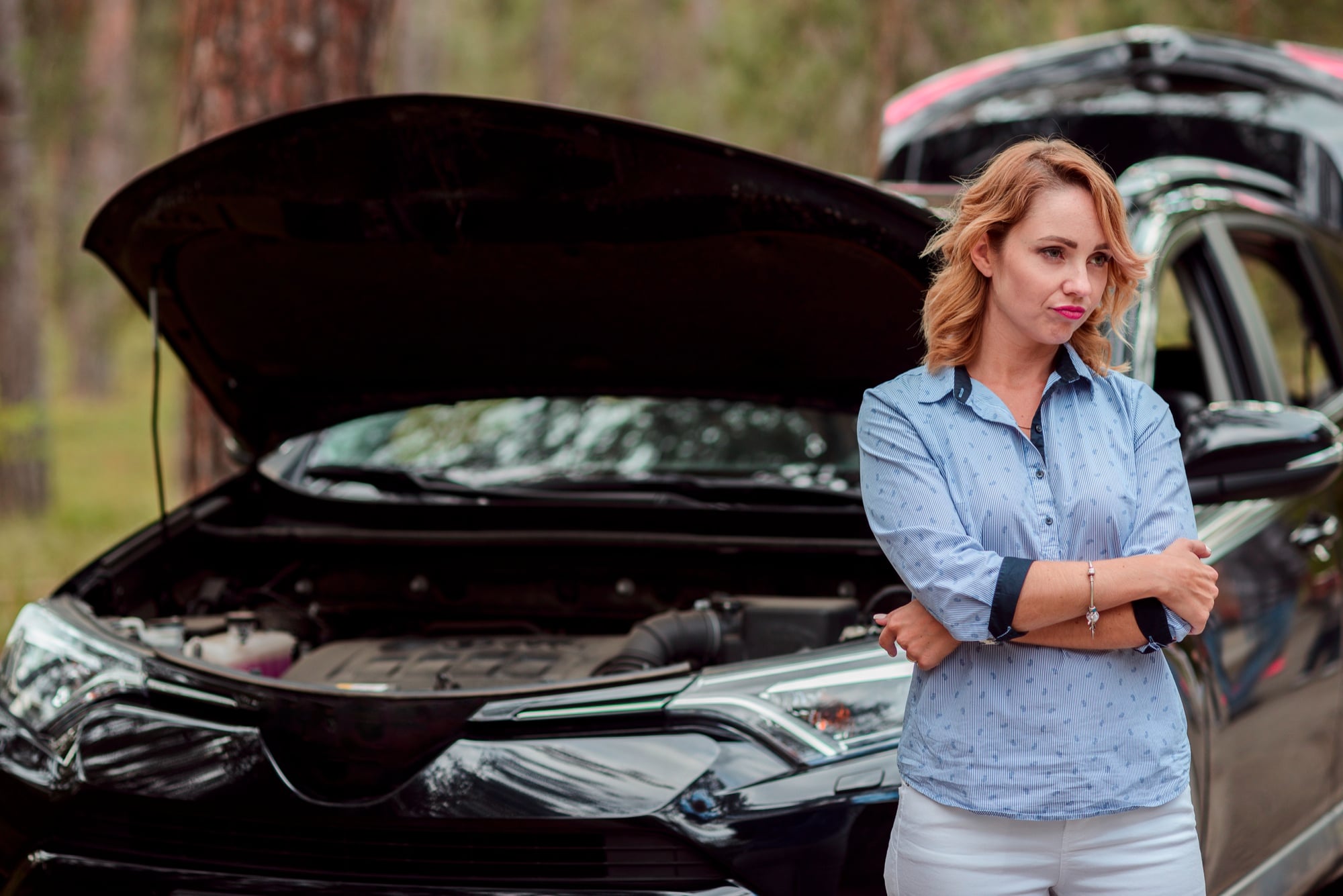
The sound of metal cracking still echoes in my head.
Sometimes I hear it when I’m falling asleep. Sometimes when a car door slams too hard in a parking lot. It’s a specific sound. Not a crash, exactly. More like a scream made out of glass and steel. Once you’ve heard it come from your own car, with your own brother’s hands on the tire iron, you don’t forget it.
My brother destroyed my seventy-eight-thousand-dollar SUV in broad daylight because I refused to hand it over to his wife. Then my mother looked me in the eye and screamed, “It’s just a car! Just lie to insurance!”
I’m going to tell you everything. Including the part where the police showed up and asked my family one question that none of them could answer.
But first, you need to understand who we were. Because none of this happened out of nowhere.
My name is Ethan Ward. I’m thirty-four years old. I live in Indianapolis. My father, Raymond Ward, died fourteen months before that Sunday. Pancreatic cancer. Seven weeks from diagnosis to funeral.
My mother, Carol, still lives in the house where I grew up, a brick two-story on a quiet street in Carmel with a basketball hoop over the garage that nobody’s used in fifteen years.
And my brother, Mason, is two years older than me.
When we were kids, Mason was the sun and everybody else orbited around him. He was tall and loud and good-looking and could throw a football fifty yards when he was twelve. He was the quarterback. He was homecoming king. He was the one people asked about at Thanksgiving.
I was the one who got good grades and didn’t cause trouble. The quiet one. The backup.
That word came from my mother, by the way. Not me. When I was fourteen, I overheard her on the phone with my aunt. “Mason’s my star,” she said. “Ethan’s my backup. Every family needs one.”
She laughed when she said it. I don’t think she meant it to be cruel. I think she meant it as a compliment, in some strange way. Ethan’s reliable. Ethan’s the safety net.
But I was fourteen. I went upstairs and lay on my bed and stared at the ceiling for a long time.
For thirty years after that, my family treated me exactly like a backup.
Mason’s mistakes were “stress.” When he got a DUI at nineteen, Mom said the cop had it out for him. When he dropped out of Purdue after three semesters, she said college “just wasn’t his thing.” When he wrecked his first car, and his second, and his third, it was “bad luck.” When he got fired from a car dealership for punching a customer, it was “passion.” He just felt things deeply. He was a passionate person.
Mason’s debts were bad luck too. Credit cards. A failed fitness supplement business. A boat he bought and couldn’t make payments on. Mom covered what she could. Dad covered what he could, until he got tired of it. And when they couldn’t, they called me.
“Can you help your brother out, honey? Just this once?”
It was never just once.
I went to IU. I got a degree in criminal justice. I took a job right out of college with Midwest Mutual, one of the biggest auto and home insurance companies in the state. I started in claims. Then I moved over to the Special Investigations Unit.
If you don’t know what that is, it’s the department that investigates insurance fraud. Staged accidents. Fake thefts. Arson. Inflated claims. People who burn their own houses down. People who push their own cars into lakes and report them stolen. People who hire somebody to rear-end them so they can sue.
I’m good at it. I’ve been doing it for eleven years. I run a team of six investigators now. I work closely with the Indiana State Police auto theft task force and the Marion County prosecutor’s office. I’ve testified in court more than forty times.
My family had no idea what I actually did.
I’m serious. I’d told them a hundred times. But to my mother, I “worked in an office for an insurance company.” To Mason, I was “the insurance guy.” When I got promoted to supervisor, Mom said, “That’s nice, honey,” and asked if I could help Mason with his car payment.
Nobody ever asked a single question about my job.
That turned out to matter a lot.
When Dad got sick, he asked me to be the executor of his estate.
Not Mason. Not Mom. Me.
He told me in his hospital room at IU Health, about two weeks before he died. He was thin and yellow from the jaundice and his voice was barely a whisper. He grabbed my wrist with his bony hand and pulled me close.
“Ethan,” he said. “You’re going to have to handle things. After.”
“I know, Dad.”
“Your mother can’t. She’ll give it all to your brother.” He coughed. “And your brother will lose it in a year. Like everything else.”
“Dad…”
“I’m not stupid, son. I’ve watched it for thirty years.” He closed his eyes. “I made a mistake with him. Your mother and I both did. We never let him fall. Every time he fell, we caught him. So he never learned how to stand up.” He opened his eyes and looked at me. “And we made a mistake with you too.”
“What mistake?”
“We let you be the one who catches,” Dad said. “Every time. We made you the net. And we never once asked if you were tired of holding it.”
I didn’t know what to say.
“I put some things in my will,” Dad said. “Your mother’s not going to like them. Your brother’s going to hate them. They’ll be angry at you, because you’ll be the one carrying them out.” He squeezed my wrist. “I’m sorry for that. But I trust you. You’re the only one I trust.”
Two weeks later, he was gone.
The will was simple, mostly. The house went to Mom for the rest of her life. Then it would be split between Mason and me. Dad’s retirement savings went to Mom.
But Dad’s life insurance, two hundred thousand dollars, he split between us. And he did something unusual with Mason’s half.
He put it in a spendthrift trust.
That’s a kind of trust that pays out a little bit at a time. Mason couldn’t get the money all at once. He couldn’t borrow against it. He couldn’t sign it over to anybody. He’d get two thousand dollars a quarter until it ran out. And I was the trustee.
Mason found out at the reading of the will in the lawyer’s office in Carmel. He stood up so fast his chair fell over.
“This is your doing,” he said, pointing at me. “You poisoned him against me.”
“Mason,” the lawyer said. “Your father drafted this himself. Two years ago. Before he was sick.”
Mason didn’t hear him. He was staring at me.
“You’ll be sorry,” he said. And he walked out.
Mom didn’t speak to me for a month after that.
That was the background. That was the fourteen months leading up to that Sunday.
Mason’s money troubles had gotten worse since Dad died. Way worse. He’d married Vanessa about two years before. She was twenty-nine, pretty and sharp, with long dark hair and expensive taste and a lot of followers on social media for a woman who sold hair-care products from home. They lived in a rented townhouse in Fishers. Mason was selling used cars at a lot on 96th Street. Vanessa wanted a house. Vanessa wanted a baby. Vanessa wanted a lot of things.
Mason couldn’t afford any of them.
His quarterly two thousand dollars from the trust went out the door the day it came in. He’d already asked me three times to “release the whole thing early, just this once, for an emergency.” I’d said no three times. Dad had been very clear.
His pickup truck was two months behind on payments. Vanessa’s leased BMW had been repossessed in August. She’d been driving Mom’s old Camry.
I knew all of this because Mom told me. Every phone call. “Your brother’s having a hard time, Ethan. Vanessa’s so stressed. They’re trying for a baby, you know. And they’re stuck with my old car. Can you imagine? A young couple trying to start a family, with no reliable car.”
“I can imagine, Mom.”
“You could help, you know.”
“I’ve helped, Mom. For thirty years.”
“Well,” she’d sigh. “I just think family should take care of family.”
I’d bought the SUV in June.
I’d wanted it for a long time. A black Rivian R1S. All-electric. Seven seats, even though I lived alone. Big and quiet and fast, with a glass roof and leather that smelled like a new baseball glove. Seventy-eight thousand dollars.
I’d saved for four years. I put down thirty thousand in cash. I financed the rest at a decent rate. It was the first truly expensive thing I’d ever bought for myself. The first thing I’d ever bought just because I wanted it.
Mom saw it in July. She came out to the driveway when I pulled up for Sunday dinner. She looked at it for a long time.
“That’s a lot of car,” she said, “for one person.”
“I like it, Mom.”
“Seven seats,” she said. “And you’re not even dating anybody.”
I didn’t answer. I went inside.
Mason saw it the next week. He walked around it twice, slowly, running his hand along the hood. He opened the driver’s door and sat inside and looked at the big touchscreen and the glass roof.
“Must be nice,” he said. “Must be real nice.”
That Sunday in September, I drove over to Mom’s to drop off paperwork.
It was the final distribution documents for Dad’s estate. Fourteen months of work. Selling his truck. Closing his accounts. Filing his last taxes. Dealing with the IRS about a pension form he’d filed wrong in 2017. Now it was almost done. I just needed Mom’s signature on a few things. Then the estate would close.
It was a beautiful afternoon. Late September in Indiana. Seventy-two degrees. Blue sky. The kind of Sunday where the whole neighborhood is quiet enough to hear sprinklers ticking across lawns.
I parked at the curb in front of Mom’s house. I’d just washed the SUV that morning. It was gleaming. I remember looking at it in the sun and feeling proud.
I went inside. Mom was at the kitchen table doing a crossword. I gave her the folder. She started reading the papers, slowly, the way she does, with her reading glasses on the end of her nose.
I heard Mason’s truck pull into the driveway.
He came in through the garage door. Vanessa was behind him. She was wearing oversized sunglasses even though she was indoors, and she was holding her phone in front of her like she was already recording something.
Mason didn’t say hello. He looked at me. Then at Mom.
“Did you ask him?” he said.
Mom took off her reading glasses. She looked uncomfortable.
“Mason, I said we should talk about it first…”
“Ask me what?” I said.
Mason turned to me. He had that smug walk. That smile. The one he’d used his whole life, whenever he thought the world owed him something.
“We’ll talk outside,” he said.
We went out to the front yard. Mom came out onto the porch behind us. Vanessa stood on the front walk with her sunglasses and her phone.
Mason walked over to my SUV. He leaned on the hood like he owned it.
“Give Vanessa the SUV,” he said.
I actually laughed. I thought it was a joke.
He didn’t laugh back.
“She needs something safer,” Mason said. “For the baby.”
“What baby?”
“The baby we’re having.”
“You’re pregnant?” I said to Vanessa.
“Not yet,” Vanessa said. “But we’re trying. And when we have one, we’re going to need something safe. Not Mom’s crappy old Camry.”
“You’re single,” Mason said. “You don’t need a family car. You don’t need seven seats. It’s just you.”
“It’s my car,” I said.
Mom stepped onto the top porch step with her arms folded.
“Don’t be selfish, Ethan,” she said. “Mason has responsibilities.”
“So do I, Mom,” I said. “Like paying for the car.”
Vanessa scoffed. “Oh, please. You financed it. Everybody finances everything. Stop acting rich.”
“I put thirty thousand dollars down,” I said. “In cash. That I saved for four years.”
“Then you can afford to save up for another one,” Vanessa said. “We can’t.”
I looked at Mason.
“No,” I said.
Just that. One word.
That one word changed his face.
For thirty years, I had said yes. Yes, I’ll cover your rent. Yes, I’ll co-sign your loan. Yes, I’ll pay your speeding ticket. Yes, I’ll drive you to the airport at four in the morning. Yes, I’ll lie to Mom about where you were. Yes, I’ll forgive you for punching me in the face at my own college graduation party when you were drunk.
I’d never once said no to Mason. Not really. Not to his face.
He stared at me like I’d slapped him.
“What did you say?”
“I said no, Mason. It’s my car. I’m not giving it to anybody.”
“Ethan,” Mom said from the porch, warning.
“No, Mom.”
Mason pushed off the hood of the SUV. He stood there for a second, looking at me. His face was getting red. The vein on his forehead stood out, the one that always used to come out right before he hit somebody.
Then he turned around and walked to his pickup truck in the driveway.
He reached into the bed. He pulled out a tire iron. A long black steel one.
He walked back across the lawn toward my SUV. He was smiling.
“Then nobody drives it,” he said.
I thought he was bluffing. I really did. Mason was all noise. He’d threatened to hit people his whole life. Most of the time he didn’t.
I thought he was bluffing until the first hit shattered my driver’s side window.
It exploded. That’s the only word for it. The window turned white with cracks and then collapsed inward in a shower of glass. Pieces of it hit the leather seat I’d been sitting on twenty minutes earlier.
Vanessa gasped.
Then she smiled.
She held up her phone. She was filming.
“Mason!” Mom shouted from the porch.
But not like she wanted him to stop. Not like you’d shout at somebody doing something terrible. More like you’d shout at a kid running near a pool. Careful. Be careful.
Mason swung again. The windshield. The tire iron hit dead center, and the whole thing turned into a spiderweb. A huge white star of cracks spreading out from the middle to every corner.
He hit the headlights. Both of them. Left, then right. Plastic and glass flew across the street.
He hit the hood. Twice. Big dents, right where he’d been leaning a minute before.
He hit the side mirror. It snapped off and skittered across the asphalt into the gutter.
I stood on the sidewalk and didn’t move.
I don’t know why. I’ve thought about it a lot. I’ve investigated hundreds of cases where people describe exactly what I was feeling. Frozen. Watching. Like it was happening to someone else. Like I was watching a movie.
Then Mason threw the tire iron into the grass. He walked to his pickup. He got in. He started it.
And he drove it straight forward off the driveway, over the curb, and rammed the front bumper of my SUV.
The crunch was enormous. Metal on metal. My SUV jerked sideways and skidded six feet down the street and slammed into the far curb. The front bumper crumpled. One of the front tires blew.
Mason’s pickup came to a stop on Mom’s front lawn, with tire tracks dug into the grass.
Neighbors came outside.
The Hendersons from next door. Old Mr. Tanaka from across the street, in his gardening gloves. The family with the twins from two houses down. A teenage boy on a bike who’d stopped in the middle of the road with his mouth open. Mrs. Abernathy from the corner, who’d taught me fifth grade, standing on her porch with her hand over her heart.
Everybody was staring.
Mason got out of his pickup. He was breathing hard. He was grinning.
“There,” he said. “Now nobody gets it.”
I stood still.
Mom ran down the porch steps. Her face was red. She ran past the SUV, past Mason, past the tire iron in the grass. She ran straight at me.
“Ethan,” she said. “Ethan, don’t make this worse.”
I pulled out my phone.
She grabbed my wrist. Hard. Her nails dug into my skin.
“Listen to me,” she said. Low and fast. “Listen to me. Say someone stole it. Say someone took it and wrecked it and dumped it here. Insurance will pay. That’s what insurance is for. Nobody has to know.”
I stared at her.
“Mom,” I said. “Everybody on the street just watched him do it.”
“They’ll mind their business. They always do.” She squeezed my wrist harder. “Please, Ethan. He’s your brother. He’ll go to jail. Do you want your brother to go to jail? Over a car?”
“He just destroyed a seventy-eight-thousand-dollar vehicle with a tire iron.”
“It’s just a car!” she screamed. Right in my face. So loud the Hendersons flinched on their porch. “It’s just a car! Just lie to insurance! Family comes first!”
I looked past her at the SUV. At the spiderwebbed windshield. At the crushed front bumper. At the side mirror lying in the gutter.
I looked at Vanessa on the front walk, still filming, still smiling behind her sunglasses.
I looked at Mason standing on Mom’s lawn next to his pickup, breathing hard, with that grin on his face. The same grin he’d had at nineteen when he got away with the DUI. At twenty-five when he got away with the failed business. At thirty when he got away with punching me at my graduation party. The grin of a man who has never once in his life faced a single consequence.
“You’re right,” I said quietly. “Family does come first.”
Mom let go of my wrist. Her whole face relaxed. She thought I’d given in. She actually smiled.
“Thank you, honey,” she said. “I knew you’d…”
I lifted my phone and dialed 911.
Mom’s smile froze.
“911, what’s your emergency?”
“My name is Ethan Ward,” I said. “I’m at 1214 Linden Court in Carmel. My vehicle was just destroyed by my brother with a tire iron and his pickup truck. There are about a dozen witnesses. Nobody’s injured. But he’s still here, and he’s very angry, and there’s a weapon on the lawn.”
Mom made a sound like she’d been punched.
Mason’s grin disappeared.
“Are you kidding me?” he said. “Are you seriously calling the cops on me? Your own brother?”
“Yes,” I said.
He took a step toward me.
“Sir,” said the dispatcher in my ear, “is he approaching you?”
“He’s thinking about it,” I said.
Mason stopped. He looked at the neighbors. All of them, standing on their porches and lawns, watching. Mr. Tanaka had his phone out now too. So did the teenage boy on the bike.
“Officers are on the way, sir,” the dispatcher said. “Stay on the line. Don’t engage.”
“I won’t,” I said.
I didn’t. I stood on the sidewalk with the phone against my ear for nine minutes. The longest nine minutes of my life.
Mom stood in front of me the whole time, crying. Begging.
“Ethan, please, hang up. Please. Tell them it was a mistake. Tell them you’re fine. Please, honey. Please don’t do this. Think about Vanessa. Think about the baby they’re trying to have. Think about your father. What would your father say?”
I didn’t answer her.
I knew exactly what my father would say. He’d said it in his hospital bed. We made you the net. And we never once asked if you were tired of holding it.
I was tired.
Mason paced on the lawn. He picked up the tire iron. Put it down. Picked it up. Threw it in the bed of his pickup. Took out his phone. Put it back.
Vanessa had stopped filming. She was standing very still on the front walk. She’d taken off her sunglasses.
She looked scared.
The first police cruiser pulled up at the end of nine minutes. Carmel Police. Lights but no siren. Then a second one, right behind it.
Two officers got out of the first car. A young woman with a dark ponytail, maybe twenty-six. And an older man, broad-shouldered, gray at the temples, with a mustache. His name tag said HOLLAND.
I recognized him immediately.
Sergeant Dale Holland. He’d been a patrol sergeant in Carmel for twenty years. Before that, he’d spent three years on the Indiana State Police auto theft task force. I’d worked with him. Twice. A staged accident ring in 2019 and a stolen-vehicle chop shop in Noblesville in 2021. We’d spent a lot of hours together in a lot of parking lots, drinking bad coffee.
He looked at the SUV. He looked at the pickup on the lawn. He looked at the tire tracks. He looked at me.
His eyebrows went up.
“Ethan?” he said.
“Hi, Dale.”
“This your car?”
“It was.”
Holland walked over to the SUV. He looked at the windshield. The headlights. The crushed bumper. The side mirror in the gutter. He let out a long low whistle.
“Lord have mercy,” he said.
Mom rushed over to him. She was wiping her eyes, putting on her best church face.
“Officer,” she said. “Officer, thank goodness. This is all a big misunderstanding. A family disagreement. Nobody’s hurt. My sons just had a little argument, that’s all. We’ll handle it. We’ll handle the insurance. You don’t need to…”
“Ma’am,” said Holland politely. “I’m going to need everybody to stay right where they are for a minute.” He looked at Mason. “Sir. Are you Mason Ward?”
“Yeah,” said Mason sullenly.
“Is that your pickup on the lawn?”
“Yeah.”
“Is that your tire iron in the bed?”
Mason didn’t answer.
The younger officer, whose name tag said PRICE, had walked over to talk to the Hendersons and Mr. Tanaka. I could see them pointing. At Mason. At the tire iron. At the pickup. Mr. Tanaka held up his phone and showed her something on the screen.
Then Mason did something stupid.
Mason always does something stupid. It’s the one thing you can count on.
“He did it himself,” Mason said loudly. He pointed at me. “Ask him. He did it. He’s been trying to get a new car for months. He wanted the insurance money. He smashed it himself and now he’s trying to blame me.”
The whole street went quiet.
Even Mom stared at him.
Vanessa looked at the ground.
Sergeant Holland looked at Mason for a long time. Then he looked at Mom.
“Ma’am,” he said. “Is that what happened? Did your son Ethan damage his own vehicle?”
Mom looked at Mason. She looked at me. She looked at the street full of neighbors. I could see her face working. Deciding.
“I…” she said. “I didn’t really see. I was inside. I just heard the noise. I think… I think maybe somebody else did it. Maybe somebody came by and…”
“Ma’am,” said Holland. “Before you say anything else, I’d like to ask you one question.”
Mom stopped.
Holland took off his sunglasses. He folded them very carefully and put them in his shirt pocket. He looked at my mother, and then at my brother, and then at Vanessa.
“Do any of you,” he said, “know what Ethan does for a living?”
Nobody said anything.
Mom opened her mouth. She closed it.
Mason looked confused. “He works for an insurance company,” he said finally. “In an office.”
“He does,” Holland agreed. “Midwest Mutual. Do you know which department?”
Nobody answered.
The silence went on for a long time. Long enough that I could hear the Hendersons’ sprinkler ticking next door. Long enough that the teenage boy on the bike took a step closer to hear better.
My mother had known me for thirty-four years. My brother had known me for thirty-four years. And neither of them had any idea.
“He runs the Special Investigations Unit,” Holland said. “The fraud division. For the biggest auto insurer in this state.” He looked at Mom. “He investigates people who lie to insurance companies, ma’am. That’s his job. That’s all he does. Every day. For eleven years.”
Mom’s face went completely white.
“I’ve worked with him twice,” Holland said. “On the state task force. He helped us take down a staged accident ring that was running out of a body shop in Lawrence. Fourteen people convicted. He testified at every trial.” He glanced at Mason. “He’s sat in a witness box and explained to a jury, very calmly, exactly how people smash their own cars to collect insurance money. He’s very good at it. Best I’ve ever seen.”
Mason’s mouth was hanging open.
“So when you tell me he smashed his own car for the insurance money,” Holland said to my brother, “you’re telling me the man who catches people who smash their own cars for insurance money decided to smash his own car for insurance money. In front of twelve witnesses. On his mother’s street. And then called 911 on himself.”
Mason didn’t say anything.
“And ma’am,” Holland said, turning to my mother. His voice was quieter now. Almost gentle. “Officer Price and I both heard you, from the car, as we pulled up. Through the open window. You told him to say someone stole it. You told him to lie to insurance.” He paused. “You were asking a fraud investigator to commit fraud. Against his own company.”
Mom put her hand over her mouth.
Vanessa took a step backward.
“I want to give you a chance,” Holland said to Mom, “to think very carefully about the next thing you say to me. Because if you tell me a story about somebody else coming by and smashing this vehicle, and that story’s not true, and I write it down in my report, that’s a false statement to a police officer. And when a claim gets filed with Ethan’s own company, and somebody in his department reads my report…” He let the sentence hang there.
Mom sat down on the curb. Right there on the curb. She sat down very slowly, like her knees had stopped working, and she put her face in her hands.
Officer Price came back from the Hendersons’ porch.
“Sarge,” she said. “I’ve got four witnesses who saw the whole thing. Mr. Tanaka has video. Starts right before the first swing. You can hear everything. The guy saying ‘Then nobody drives it.’ The mom saying lie to insurance. All of it.” She paused. “And the teenager on the bike has a second angle. Of the truck ramming the vehicle.”
“Anybody else filming?” Holland asked.
Officer Price looked at Vanessa.
“She was,” said Price. “The whole time. From the front walk.”
Every head turned toward Vanessa.
She was clutching her phone against her chest. Her face was pale under her makeup.
“Ma’am,” said Holland. “May I see that video?”
“No,” said Vanessa. Then, quieter: “I deleted it.”
“Ma’am, if you’ve deleted evidence of a crime that just occurred in front of you…”
“I didn’t!” Vanessa said quickly. “I didn’t delete it. It’s still. It’s still there.” She looked at Mason. Her eyes were wet. “I didn’t think he was really going to do it. I thought he was bluffing. He’s always bluffing.”
Mason stared at her. “Vanessa…”
“You said we were just going to scare him,” Vanessa said. Her voice was rising. “You said he’d give in. He always gives in. You said your mom would make him.” She turned to Holland. “I didn’t know he was going to smash it. I swear to God. I thought we were going to get the car.”
“Vanessa,” Mason said. “Shut up.”
“No,” said Vanessa. And she held out her phone to Sergeant Holland.
Holland took it. He watched the video. All of it. Standing on the sidewalk in front of my mother’s house, with the whole street watching him. I saw his jaw tighten when the first hit came. I saw him close his eyes for a second when Mom screamed.
Then he handed the phone to Officer Price.
He turned to my brother.
“Mason Ward,” he said. “Turn around and put your hands behind your back. You’re under arrest for criminal mischief resulting in damage over fifty thousand dollars.”
“You’re kidding,” said Mason. “You’re kidding me. Over a car?”
“Over a seventy-eight-thousand-dollar car,” said Holland. “That you destroyed with a weapon. In front of a dozen witnesses. And then tried to blame on the victim.” He pulled out his handcuffs. “That’s a Level 5 felony in Indiana, son. Turn around.”
Mason looked at Mom.
“Mom,” he said. “Mom. Do something.”
Mom didn’t look up. She was sitting on the curb with her face in her hands.
Mason looked at me.
“Ethan,” he said. And for the first time in my life, my big brother looked scared. Really scared. Like a little kid. “Ethan, come on. Tell them. Tell them it’s okay. Tell them you don’t want to press charges. I’ll pay for it. I swear. I’ll pay you back. All of it. Every penny.”
“With what, Mason?” I said quietly.
He opened his mouth. Nothing came out.
“With the trust Dad left you?” I said. “That’s two thousand dollars a quarter. It’d take you nine and a half years to pay for the car. If you didn’t spend a single dollar of it on anything else.”
“I’ll get a second job.”
“You’ve never kept a first job longer than eighteen months.”
He flinched.
“You’ve been telling me your whole life that I should help you,” I said. “Because you’re my brother. Because you have responsibilities. Because family comes first.” I looked at him. “You’re right, Mason. Family does come first. And sometimes the thing family needs most is for somebody to finally stop catching you.”
Holland put the cuffs on him. Mason didn’t resist. He just stood there, with his hands behind his back, staring at me like I’d become a stranger.
Officer Price walked him to the back of the cruiser. She put her hand on his head as he ducked into the back seat.
The door closed.
The whole street watched.
Holland stayed for another forty-five minutes. He took statements from everybody. From the Hendersons. From Mr. Tanaka. From the teenage boy, whose name was Dylan, and who was very excited to be a witness. From Vanessa, who sat on the porch steps and cried and told him everything. That Mason’s truck was about to be repossessed. That they were three months behind on rent. That Mason had told her, two weeks earlier, that he was going to “get Ethan’s car one way or another.” That he’d said I owed him for “stealing Dad’s money.”
And from Mom.
Mom didn’t lie. I’ll give her that. When Holland sat down next to her on the curb with his notebook, she told him the truth. All of it. Including the part about telling me to lie to insurance. She cried the whole time.
“I just didn’t want him to go to jail,” she said. “He’s my son. He’s my baby.”
“I understand, ma’am,” said Holland gently. “But Ethan’s your son too.”
Mom looked up at him. Then she looked across the street at me.
She didn’t say anything.
Holland closed his notebook. He came over and stood next to me on the sidewalk, looking at the wreck of my SUV.
“You okay?” he said.
“I don’t know yet.”
“That’s fair.” He was quiet for a moment. “Hell of a thing, Ethan. Your own brother.”
“Yeah.”
“You know you’ll have to recuse yourself. From the claim. Somebody else on your team will have to handle it.”
“I know.”
“And you know that if you’d gone along with your mom,” he said quietly, “and said it was stolen, and filed a claim. And somebody on your team figured it out. Which they would have, in about five minutes, with twelve witnesses and three videos…”
“I’d have lost my job,” I said. “And probably my license. And maybe gone to jail myself.”
“Yep.” He looked at me. “She wasn’t asking you to lie for your brother, Ethan. She was asking you to throw your whole life away for him.”
I didn’t say anything. I couldn’t.
Holland put his hand on my shoulder. Briefly. Then he walked back to his cruiser, where my brother was sitting in the back seat staring at nothing.
The cruiser pulled away.
The tow truck came for my SUV about an hour later. It took them a while to get it up on the flatbed because of the blown tire. I watched them chain it down. The windshield glittered in the late afternoon sun like a big broken spiderweb.
Mom was still sitting on the curb. The neighbors had mostly gone back inside. Vanessa had driven away in Mom’s old Camry without saying goodbye to anyone.
I walked over and stood in front of my mother.
She looked up at me. Her mascara was smeared down her cheeks. She looked older than I’d ever seen her. Older than at Dad’s funeral.
“How could you,” she whispered. “How could you do that to your brother?”
I’d been waiting for that question for thirty years.
“I didn’t do anything to him, Mom,” I said. “He did it to himself. I just stopped standing in the way.”
“He’s going to have a record. A felony. He’ll never get a good job.”
“He’s never had a good job.”
“Ethan!”
“No, Mom.” I sat down on the curb next to her. Not close. Just next to her. “Mom, he smashed my car with a tire iron. In front of the whole street. Because I said no. And you told me to lie. You told me to commit insurance fraud. To my own company. To protect him.” I looked at her. “Did you think for one second about what would happen to me? If I did what you asked?”
She didn’t answer.
“I’d have lost everything,” I said. “My job. My career. Eleven years. Maybe I’d have gone to jail. For Mason. For a car he smashed because he was mad I wouldn’t give it to his wife.” I swallowed hard. “You didn’t even think about it, did you? You didn’t even think about me.”
Mom put her face in her hands again.
“You always do this,” she said into her palms. “You always make everything so serious.”
“It is serious, Mom.”
“You’re supposed to be the strong one,” she said. “The one who can handle things. Mason can’t handle things. He’s not like you. He never was. You were always so…” She stopped.
“So what?”
“So fine,” she said. “You were always fine. You never needed anything. I never had to worry about you.” She lifted her head. “And Mason was always falling apart. Always in trouble. Always needing me. What was I supposed to do? Let him fall?”
“Yes,” I said. “Sometimes. Yes.”
She stared at me.
“Dad told me something,” I said. “In the hospital. Two weeks before he died. He said you and he made a mistake with Mason. He said you never let him fall. Every time he fell, you caught him. So he never learned to stand up.”
Mom’s face crumpled.
“And he said you made a mistake with me too,” I said. “He said you made me the net. And you never once asked me if I was tired of holding it.”
She didn’t say anything for a long time.
“He said that?” she whispered finally.
“He said that.”
“He never said that to me.”
“I know, Mom.” I stood up. “I think he wanted to. I think he ran out of time.”
I didn’t hear from my mother for three weeks after that.
Mason spent the night in the Hamilton County jail. Mom bailed him out in the morning with money from Dad’s retirement account. He was charged with criminal mischief, a Level 5 felony. The prosecutor also added a misdemeanor charge for false informing, because of what he’d told Holland about me smashing my own car.
He called me eleven times that first week. I didn’t answer. He left voicemails. The first few were angry. I’m going to sue you. You’ll never see a dime from me. You’re dead to me. Mom says you’re dead to her too.
Then they changed. Around the end of the second week.
Ethan. It’s me. I need to talk to you. Please.
Ethan, Vanessa left. She went back to her mom’s in Muncie. She says she’s not coming back.
Ethan, they repoed the truck.
Ethan, I don’t know what to do.
I listened to all of them. Every single one. I sat in the rental car the insurance company gave me, a little gray Hyundai, in the parking lot of my office, and listened to my brother fall apart, one voicemail at a time.
I didn’t call back.
Not yet.
The claim went to one of my investigators, a sharp young woman named Priya Desai who’d been on my team for three years. I recused myself completely. Priya handled it by the book. She interviewed every witness. She pulled every video. She got the SUV’s own camera data, because it turned out the Rivian had a built-in security system with cameras on all four sides that had recorded the entire thing in high definition. Mason’s face was crystal clear in every frame.
When she was done, she came into my office and closed the door.
“Ethan,” she said. “It’s clean. It’s a total loss. We’re paying out. Full replacement value.” She hesitated. “And we’re going after your brother for subrogation. You know that, right? We’ll sue him to recover what we paid you.”
“I know,” I said. “That’s the policy.”
“You’re okay with it?”
I thought about it.
“No,” I said. “But it’s the right thing. And I’m not going to ask you to do anything different just because he’s my brother.” I looked at her. “That’s what my mom wanted me to do. And I’m not going to be that guy.”
Priya nodded slowly.
“For what it’s worth,” she said, “I’ve been doing this four years. I’ve never once seen somebody in your position do what you did. Call the cops on their own family. Refuse to lie when it would’ve been so easy.” She paused. “Most people would’ve caved, Ethan.”
“I know,” I said. “I almost did. For about two seconds.”
“What stopped you?”
I thought about my father in his hospital bed. His bony hand on my wrist.
“I got tired of holding the net,” I said.
Mom called on a Sunday in October. Three weeks after.
“Can you come over?” she said. Her voice was small. “Just you. Please. I need to talk to you.”
I drove over in the little gray Hyundai. I parked at the curb. In the same spot. There were still a few tiny pieces of glass in the gutter that the street sweeper had missed. They glittered in the sun.
The tire tracks were still in her front lawn. Two long brown ruts in the grass where Mason’s pickup had gone over the curb.
Mom was sitting at the kitchen table. Not doing the crossword. Just sitting there with a cup of coffee in front of her, going cold.
There was a manila envelope on the table.
“Sit down, honey,” she said.
I sat.
“I’ve been going through your father’s things,” she said. “In the attic. I hadn’t touched them. Since the funeral. I couldn’t.” She took a breath. “I found this. In a box. With his old tax returns.”
She pushed the envelope across the table.
On the front, in my father’s careful block handwriting, it said:
CAROL. OPEN AFTER.
“I don’t know how I missed it,” she said. “It was right there. On top. Like he wanted me to find it.” Her voice broke. “I guess I didn’t want to.”
“Did you read it?”
“Yes,” she whispered. “I’ve read it about twenty times.”
She took the letter out of the envelope. It was two pages, handwritten. My father’s handwriting got shakier toward the end, like he’d written it when he was already sick.
She held it out to me.
“I want you to read it,” she said. “Out loud. Please. I can’t.”
I unfolded the pages.
Carol,
If you’re reading this, I’m gone, and I’m sorry. I know you’re angry about the will. About the trust for Mason. About making Ethan the executor. I want to explain.
I love both our boys. I want you to know that. But I’ve watched us make the same mistake for thirty years, and I didn’t have the courage to stop it while I was alive. So I’m trying to stop it now.
We never let Mason fail. Every single time, we caught him. The DUI. The college thing. The businesses. The debts. The fights. Every time he fell, we were right there with a net, and he never hit the ground. Not once. And so he never learned that the ground was there. He thinks he can fall forever and somebody will always catch him.
And we always made Ethan hold the net.
Every time Mason needed money, we asked Ethan. Every time Mason needed a ride, a loan, a favor, an excuse, we asked Ethan. And Ethan always said yes. Because he’s good. Because he loves his brother. Because he loves us. And we let him. We never once asked him what it cost.
Carol, I heard you on the phone with your sister once, a long time ago. You called Ethan your backup. I don’t think you meant it to hurt. But I saw his face when he came downstairs that night. He was fourteen. He looked like somebody had knocked the wind out of him. I’ve thought about that look for twenty years. I should have said something. I didn’t.
Ethan isn’t our backup. He never was. He’s our son. Just as much as Mason. Maybe the best of us.
The day is going to come, after I’m gone, when Mason asks Ethan for something big. Something he shouldn’t. And Ethan is going to say no. Maybe for the first time.
And when that happens, Carol, I’m begging you. Don’t make Ethan catch him. Let him fall. Let him hit the ground. It’s the only way he’ll ever learn to stand up.
And then, for once in our lives, take care of the son who’s been taking care of all of us.
All my love, always,
Ray
I stopped reading.
I couldn’t see the page anymore.
Mom was crying across the table. Quietly. With her hands wrapped around her cold coffee cup.
“He knew,” she said. “He knew it would happen. He knew exactly what I’d do.”
I didn’t say anything.
“And I did it anyway,” she said. “I did exactly what he begged me not to do. I stood on that lawn and told you to lie. I told you to throw everything away. For Mason.” She looked up at me. “I told the son who’s been taking care of all of us to go to jail for the son who’s never taken care of anybody.”
“Mom…”
“I called you my backup,” she whispered. “I don’t even remember saying it. Your father remembered for twenty years. And I don’t even remember.”
“I remember,” I said.
She made a sound like her heart was breaking.
“I’m sorry, Ethan,” she said. “I’m so sorry. I’ve been so wrong. For so long. I don’t know how to fix it.”
I looked at my mother across the kitchen table where I’d eaten ten thousand dinners. Where I’d done my homework. Where I’d sat with my father’s estate papers fourteen months after he died.
“You don’t fix it all at once, Mom,” I said. “You just start. You stop catching him. And you stop asking me to hold the net.”
She nodded slowly.
“Can I ask you something?” she said.
“Sure.”
She was quiet for a moment.
“What do you actually do?” she said. “At your job. I’d like to know. I should have asked a long time ago.”
I looked at her for a long moment.
Then I told her. All of it. The staged accident rings. The arson cases. The man in Kokomo who pushed his own boat into a lake. The body shop in Lawrence. Testifying in court. Running a team of six. Teaching new investigators how to spot a fake claim.
She listened to every word. She asked questions. Real questions. It was the longest conversation my mother and I had ever had.
When I was done, she was quiet for a long time.
“Your father would have been so proud of you,” she said finally. “He was so proud of you. He used to tell everybody at church. My son Ethan catches the bad guys. I thought he was exaggerating.”
“He wasn’t, Mom.”
“I know,” she said. “I know that now.”
Mason’s case went to court in February.
He took a plea deal. Criminal mischief, reduced to a Level 6 felony because of his limited prior record. The false informing charge was dropped in exchange. Two years of probation. Four hundred hours of community service. Mandatory anger management. And restitution to Midwest Mutual for the full value of the SUV, payable at three hundred dollars a month.
It’ll take him about twenty-one years to pay it off.
I wasn’t in the courtroom. I didn’t want to be. Mom went. She told me later that Mason stood in front of the judge and didn’t say much. When the judge asked if he had anything to say, he said, “I’m sorry,” very quietly, and sat back down.
“He looked so small,” Mom said. “Like when he was a little boy.”
“Did you bail him out of anything?” I asked.
She was quiet on the phone for a moment.
“No,” she said. “He asked me for the restitution money. In the parking lot. Afterward. All of it. So he wouldn’t have to pay it every month.” She took a breath. “I said no.”
I didn’t say anything for a moment.
“How did that feel?” I asked.
“Terrible,” Mom said. “The worst I’ve ever felt. I went home and cried for two hours.” She paused. “But I did it, Ethan. I said no. For the first time in his whole life, I said no.”
“Dad would be proud of you, Mom.”
“Do you think so?”
“I know so.”
It’s been a year now.
I have a new SUV. Same model. Black again. Midwest Mutual paid out full replacement value, and I put the same thirty thousand down. The dealer gave me a deal when he heard the story. He’d seen the video. Mr. Tanaka’s video had gotten around. Not viral exactly, but around. Half of Carmel had seen it. The part where Mom screams “Just lie to insurance!” became a sort of local joke. People quote it at me sometimes, at the grocery store. I don’t mind.
Mom and I have dinner every other Sunday now. Just the two of us. She asks about my work. She remembers what I tell her. Last month, she came to the courthouse and watched me testify in a fraud case. She sat in the back row the whole time. Afterward, in the hallway, she hugged me in front of the prosecutor and two defense attorneys and said, “That’s my son,” loud enough for everybody to hear.
Vanessa divorced Mason in the spring. She sent me a message on Facebook in April. It was short.
I’m sorry about the car. I’m sorry I smiled. I’m sorry I wanted it so badly. I thought if I had nice things, I’d feel like I was worth something. I’m working on that now. With a therapist. I just wanted you to know.
I wrote back: I hope it goes well. I meant it.
Mason didn’t call me for nine months.
Then, in June, on a Tuesday night, my phone rang.
I almost didn’t answer. Then I did.
“Hey,” said Mason. “It’s me.”
“Hi, Mason.”
There was a long silence.
“I’m calling because they told me to,” he said finally. “At anger management. It’s one of the steps. You’re supposed to call somebody you hurt and tell them you’re sorry. Without making excuses.” He paused. “I’ve been putting it off for three months.”
“Okay.”
“I’m sorry I smashed your car,” Mason said. His voice was rough. “I’m sorry I tried to blame you. I’m sorry for. A lot of stuff. All of it, I guess. Going back. Since we were kids.” He swallowed. “The counselor says I have to stop there. No ‘but.’ No excuses. Just I’m sorry.”
“Thank you, Mason,” I said.
Another long silence.
“I’m working,” Mason said. “At a warehouse in Plainfield. Amazon. Night shift. It sucks. But I’ve been there five months. That’s the longest I’ve ever kept a job without getting fired.” He laughed a little. “I’m living in a studio apartment over a laundromat. I pay my own rent. Nobody helps me. Mom won’t. Not even a little.” He paused. “It’s really hard, Ethan.”
“I know it is.”
“I’ve never done anything really hard before,” he said. “Not by myself. Somebody always fixed it.” He was quiet. “I hit the ground. Like Dad said. In the letter. Mom showed me.”
I didn’t know Mom had shown him.
“It hurt like hell,” Mason said. “But I’m standing up now. I think. Mostly.”
“That’s good, Mason. That’s really good.”
“Can I ask you something?”
“Sure.”
He hesitated.
“My anger management class,” he said. “It’s on Thursday nights. In Indianapolis. On the north side. And I don’t have a car anymore. I’ve been taking two buses. It takes an hour and a half each way. And sometimes the second bus doesn’t come and I miss the whole class.” He stopped. “I’m not asking you to give me anything. I swear. I’m not asking for money or a car or anything. I just.” He took a breath. “Could you drive me? Sometimes? Just on the nights the bus doesn’t come?”
I sat there on my couch with my phone against my ear.
Thirty years of favors. Thirty years of saying yes. Thirty years of holding the net.
And here was my brother, asking for something. But for the first time in his life, it wasn’t so he could keep falling. It was so he could keep standing up.
“Yeah, Mason,” I said. “I can do that.”
He was quiet for a long time.
“Thank you,” he said finally.
The next Thursday, I picked him up outside the laundromat in Plainfield at six fifteen. He was standing on the sidewalk in a work vest with a reflective stripe, holding a plastic grocery bag with his dinner in it. He looked thinner. Older. Tired.
I pulled up to the curb in the new black SUV.
He stopped. He stared at it.
For a long moment, he didn’t move. He just stood there on the sidewalk, looking at the car. The same model. The same color. The same gleaming black paint.
Then he walked over slowly and opened the passenger door.
He got in. He sat down in the leather seat. He looked at the big touchscreen and the glass roof. He ran his hand slowly along the dashboard.
He didn’t say anything for a long time.
“It’s nice,” he said finally. Very quietly. “It’s real nice, Ethan.”
“Thanks.”
“You deserve it,” he said. “You always did.”
I didn’t say anything. I couldn’t.
I pulled away from the curb. We drove north on I-465 in the evening traffic with the sun going down orange over the cornfields. Neither of us talked much. He told me a little about the warehouse. I told him a little about work. He asked me a question about a fraud case. A real question. He listened to the answer.
When we got to the community center on 86th Street where his class met, I pulled into the parking lot. He sat there for a minute with his hand on the door handle.
“Ethan,” he said.
“Yeah?”
“When you called the cops. That day.” He looked out the windshield. “I hated you. For a long time. I wanted to kill you.”
“I know.”
“I don’t anymore.” He turned and looked at me. “I think it was the first time anybody ever really told me no. And meant it.” He swallowed. “I think you might have saved my life.”
He opened the door. He got out. He stood on the sidewalk with his plastic grocery bag.
“Same time next week?” he said.
“Same time next week.”
He nodded. He turned and walked into the community center. At the door, he stopped and looked back at the SUV. Just for a second.
Then he went inside.
I sat in the parking lot for the whole ninety minutes. I didn’t have to. I could have gone home. But I sat there with the engine off and the glass roof open, looking up at the sky going from orange to purple to dark.
I thought about my father. About his letter. About the net.
I’d spent thirty years holding it. And the day I finally let go, I thought I was losing my brother.
It turned out I was just giving him the chance to find his feet.
At eight forty-five, Mason came out of the community center. He walked across the parking lot. He got into the passenger seat of the car he’d once smashed with a tire iron.
He buckled his seat belt.
“Ready?” I said.
“Ready,” said my brother.
And I drove him home.
Specialty: Emotional Turning Points
Rachel Monroe writes character-driven stories about betrayal, second chances, and unexpected resilience. Her work highlights the emotional side of family conflict — the silences, the misunderstandings, and the moments when someone quietly decides they’ve had enough.