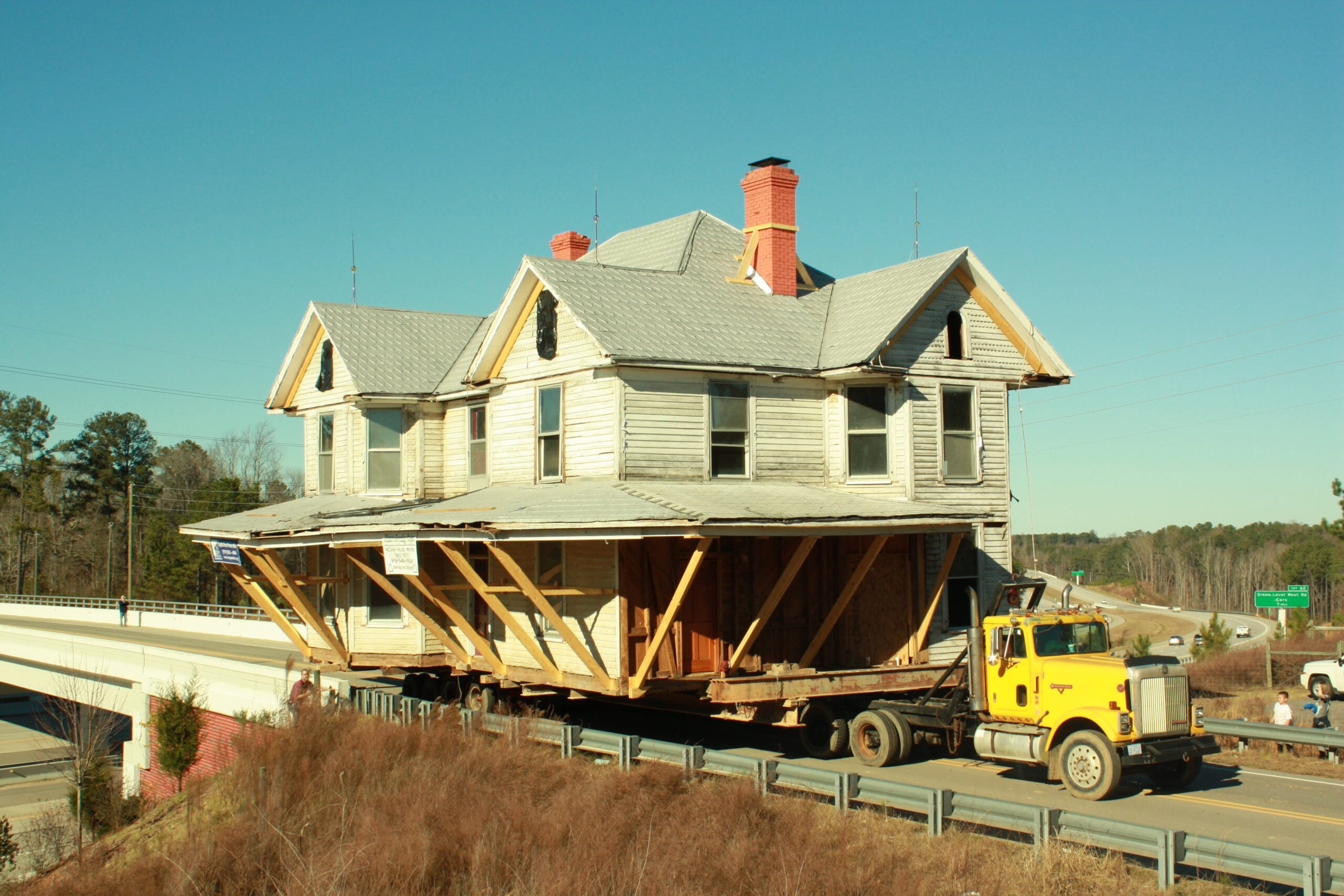
Arnie put two planks under his left wheels at the Olson culvert.
Our house crossed it without dropping a corner.
I looked back down the line of pickups. And at the very back, I saw Gordon lift two fingers off his steering wheel.
It took until almost three in the afternoon to back that trailer up beside the new foundation and slide our house onto it.
Most of the neighbors stayed the whole time. Somebody brought a cooler of sandwiches. The Lutheran kids sat on a tailgate and cheered every time the hydraulic jacks hissed.
Gordon stood by himself at the edge of Dad’s yard all afternoon.
He didn’t offer advice. He didn’t get in anybody’s way.
Once, when one of Arnie’s crew dropped a cribbing block, Gordon bent down and picked it up and handed it back.
Around noon, my dad walked over to him.
I watched them from across the yard. Two old men in good hats, standing side by side with their hands in their jacket pockets. They’ve known each other fifty years.
I couldn’t hear a single word.
When the last jack came out, and our house sat level on its new blocks, Arnie climbed down out of the truck. He slapped the siding with his open hand.
“She’s home,” he said.
Everybody clapped.
Cole ran straight for the back door to check the pantry.
Gordon was still standing at the edge of the yard when Arnie’s crew pulled out.
Jake walked over to him.
I went too. Because I was done letting Jake carry things by himself.
“Why, Dad?” Jake asked.
Just that.
Gordon looked at the house for a long time before he answered.
“My dad charged me for my ground,” he said. “Every month for nineteen years. Until the day he died. Fifty dollars. Then a hundred. Then two hundred. He said that’s how a son learns what things cost. That a man doesn’t get anything for free. Not even from his father.”
He turned his hat around slowly in his hands.
“I hated him for it,” Gordon said. “Hated him. And then I turned around and did the exact same thing to you. I thought that was just how it was done. I thought that’s what made me a man.”
“And the house?” I asked. “Telling me the house was yours?”
He was quiet for a long moment.
“Bill Hanson asked me what happens to the place when I’m gone,” he said. “And I got scared. I got it in my head that if the house was mine, you’d always stay. You’d have to.”
He looked down at his boots.
“I never once thought you’d leave,” Gordon said. “It never even crossed my mind that you could.”
Jake’s jaw worked.
“You told your own grandson his height marks were on your ground, Dad.”
“I never told him that.”
“He heard it anyway, Dad,” Jake said. “They hear everything.”
Gordon closed his eyes.
When he opened them again, they were wet.
In eleven years, I had never once seen Gordon Rasmussen with wet eyes.
Not even at Ruthann’s funeral.

Specialty: Emotional Turning Points
Rachel Monroe writes character-driven stories about betrayal, second chances, and unexpected resilience. Her work highlights the emotional side of family conflict — the silences, the misunderstandings, and the moments when someone quietly decides they’ve had enough.