The Third Anniversary
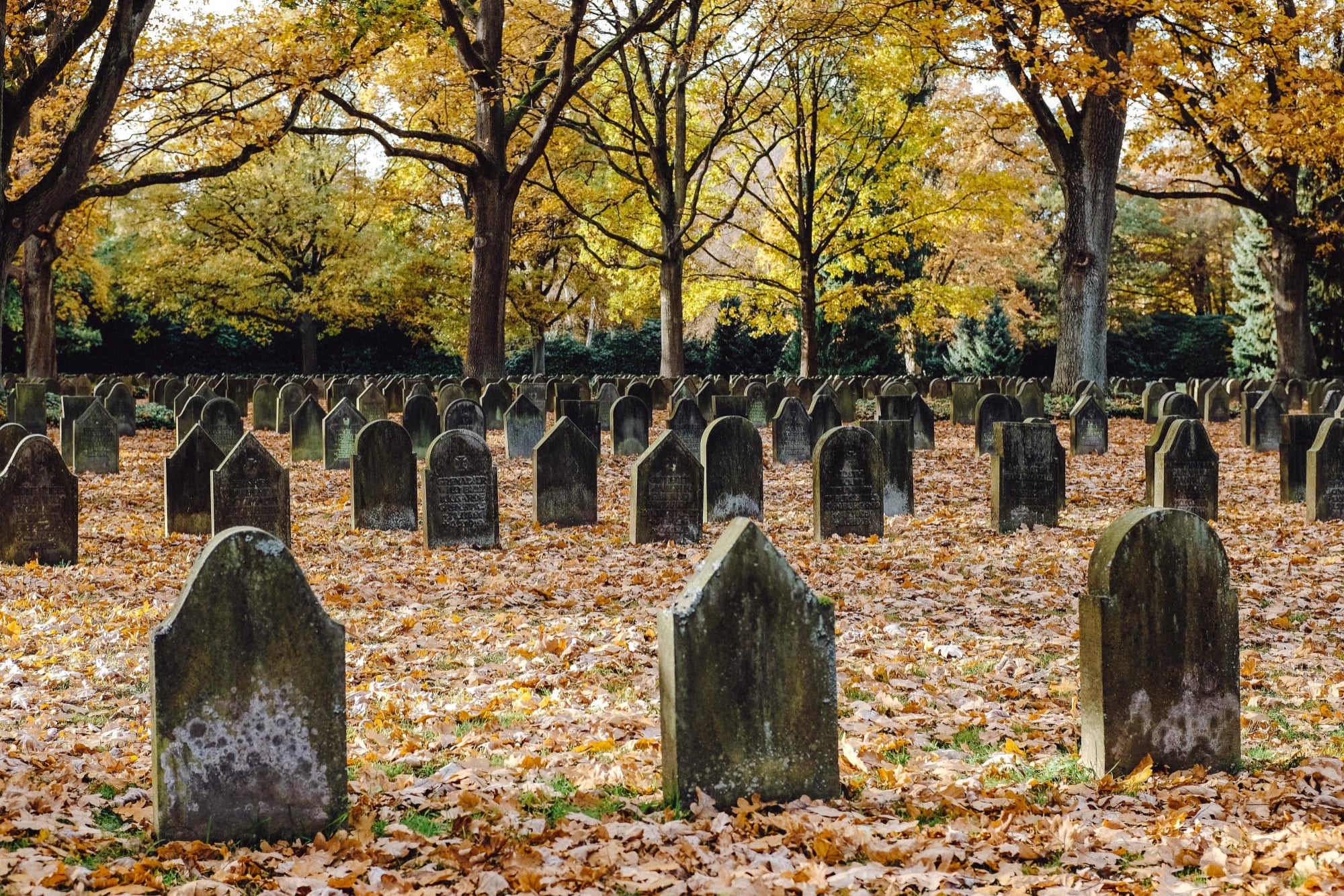
The taillights disappeared through the cemetery gates.
I stood there holding a bouquet of white roses and watched them go. A black Cadillac Escalade. Brand new. Derek bought it in September. He told everybody at Labor Day that he got a great deal.
The gravel crunched under its tires. Then the sound faded. Then there was nothing but wind moving through the bare oak trees and a crow somewhere calling across the hill.
My phone buzzed.
I looked down.
A text from my son-in-law.
You’re a burden. Walk home.
Thirty seconds later, it buzzed again.
My daughter.
Don’t wait, Dad.
I stood beneath the gray November sky and read those messages three times.
The wind was cutting through my overcoat. It was thirty-four degrees. My fingers were already going numb around the stems of the roses.
I was seventy-one years old.
I was one hundred and ninety miles from home.
I didn’t have a car. I didn’t have a coat warmer than the one I was wearing. I had my phone, my wallet, a bouquet of flowers, and a bad knee that had been bothering me since the drive started at six that morning.
And I was standing next to my wife’s grave.
ELEANOR GRACE BENNETT
1955–2024
Beloved wife. Devoted mother. Builder of everything that mattered.
I picked those words. Two years ago. Sitting at our kitchen table in Shaker Heights with the man from the monument company. He’d asked what I wanted on the stone. I’d stared at the catalog for an hour.
Builder of everything that mattered.
Because she was.
My name is Harold Bennett.
For forty-three years, I loved one woman.
Eleanor was my wife. My business partner. The only person who knew every scar beneath my skin.
Today was the second anniversary of her death.
We met in 1979 in a diner in Marietta, Ohio. Her hometown. A little river town on the Ohio where the Muskingum comes in. I was twenty-four, driving a delivery truck for a feed company out of Columbus. She was twenty-three, waitressing her way through Marietta College. Accounting.
I ordered pie. She brought me the wrong kind. Cherry instead of apple.
“I ordered apple,” I said.
“Cherry’s better,” she said. “Trust me.”
I ate the cherry. She was right.
I came back to that diner every Tuesday for four months. I always ordered apple. She always brought cherry.
On the seventeenth Tuesday, I asked her to marry me. On a napkin. With a ballpoint pen.
She wrote yes underneath. And then, but you’re still wrong about the pie.
We got married in 1981. At the Methodist church on Fourth Street in Marietta. Her father walked her down the aisle. Her mother cried through the whole thing.
We moved to Cleveland. I kept driving trucks. She got a job doing books for a hardware store.
In 1988, I borrowed two trucks.
That’s how it started. Two used Freightliners. Borrowed from a man named Sal Ferraro who owned a scrapyard in Garfield Heights and liked me because I’d once helped him change a tire on I-77 in a snowstorm.
“You pay me back when you can,” Sal said. “Don’t kill yourself doing it.”
Eleanor quit her job at the hardware store. She did the books at our kitchen table. Every night. With a green ledger and a calculator that printed little paper tapes. She answered the phone. She dispatched the trucks. She called customers who were late paying and talked to them so sweetly they paid the next day.
I drove. Sixteen hours a day. Cleveland to Pittsburgh. Pittsburgh to Detroit. Detroit to Chicago. Back to Cleveland.
We called it Bennett Freight.
Thirty-eight years later, Bennett Freight & Logistics has six hundred and forty trucks. Four warehouses. Three distribution hubs. Eleven hundred employees. Contracts with automotive suppliers, steel mills, medical device companies. Offices on the twelfth floor of a glass building on East Ninth Street in downtown Cleveland.
The last valuation I saw was three hundred and ten million dollars.
Most people don’t know that.
My own daughter doesn’t know that.
I stepped away from running the company six years ago.
Eleanor got sick. Ovarian cancer. Stage three. They caught it late. They always catch it late.
I handed the CEO job to a woman named Gloria Hamm. She’d started at Bennett as a dispatcher in 1994 when she was twenty-two. Eleanor trained her. Gloria worked her way up to operations manager, then COO. She was the best person I’d ever hired.
I resigned my seat on the board. I stopped going to the office. I stopped answering emails.
I spent every day of the next four years with my wife.
Vanessa thinks I sold the company.
I let her think that.
When I stepped down, she asked what happened. I said I’d retired. I said Gloria was running things now. She assumed that meant I’d sold out. Taken a payout. Bought the house in Shaker Heights and a pension and called it a day.
She never asked how much.
She never asked if I still owned any of it.
I didn’t tell her.
Eleanor asked me not to.
“Don’t tell her, Harold,” Eleanor said. We were sitting on our back porch. 2020. Right after she got diagnosed. She was wrapped in a blanket. Her hair was starting to fall out from the first round of chemo.
“Why not?”
Eleanor looked out at the garden. At her tomatoes. At the roses along the fence. White ones. She planted them in 1992. They were her favorites.
“Because she married Derek,” Eleanor said quietly.
Vanessa married Derek Lawson in 2015.
She was thirty-one. He was thirty-four. He was a sales director at a regional trucking company in Akron. Handsome. Charming. Expensive suits. A laugh that filled a room.
He asked me for her hand at a steakhouse downtown. He ordered a sixty-dollar bottle of wine and didn’t drink any of it.
“I’ll take care of her, Harold,” he said. “I promise you that.”
Eleanor didn’t like him.
She never said it to Vanessa. But she said it to me. On the drive home from the engagement party.
“He looks at the house,” she said. “Every time he comes over. He looks at the house like he’s pricing it.”
“You’re being unfair, El.”
“Maybe,” she said. “I hope so.”
In 2019, Derek came to me and asked for a job.
At Bennett Freight. He said his company in Akron was downsizing. He said he wanted to be closer to family. He said he wanted to learn from the best.
I gave him an interview. Gloria interviewed him too. He was good. Polished. Knew the industry. Knew how to talk to customers.
We hired him as a regional sales manager. Then he was promoted to director. Then, last year, Vice President of Sales.
He was good at his job.
He never knew I still owned the company.
He thought he worked for Gloria Hamm. And a board of directors. And some faceless holding company.
He had no idea that every one of his promotions had crossed my desk.
Eleanor died two years ago today. November 14, 2024.
At home. In our bed. In the room that looks out over the garden. I was holding her hand. Vanessa was in the room too, for a while. Then she said she needed coffee. She was in the kitchen when it happened.
She’s never forgiven herself for that. I know she hasn’t. She’s never said it.
But I know.
We buried Eleanor in Marietta.
She asked to be. In the old Oak Grove Cemetery on the hill above the Muskingum River. Next to her parents. Where she could see the water.
“I want to go home,” she said. In the last week. When she couldn’t eat anymore. “Marietta. Next to Mom and Daddy. Promise me, Harold.”
I promised.
It’s one hundred and ninety miles from our house in Shaker Heights.
I’ve driven it every month for two years.
My car was in the shop.
A 2017 Buick LaCrosse. The transmission went in late October. The shop said it’d be three weeks.
So I asked Vanessa if she and Derek would drive me.
“For the anniversary,” I said. “Two years. I need to be there.”
Vanessa hesitated on the phone.
“Dad, it’s four hours each way.”
“I know, honey.”
“Derek has a big meeting this week. He’s up for a promotion. COO. The board’s voting on Thursday.”
“I know,” I said. “I’m sorry. I wouldn’t ask if I had another way.”
She sighed. A long sigh.
“Fine,” she said. “But we need to be back before dinner. Derek’s got calls.”
They picked me up at six in the morning.
Derek drove. Vanessa sat in the front. I sat in the back of the Escalade. Alone. Behind Derek. With the roses in my lap.
He didn’t say good morning.
The whole drive down I-77, he was on the phone. Bluetooth. Through the car speakers. Calls about contracts and margins and the board meeting Thursday.
“It’s in the bag,” he told somebody named Craig. “Gloria’s recommending me. The board will rubber-stamp it. I’ll be COO by Friday.”
Vanessa scrolled through her phone. She didn’t turn around.
I looked out the window at the Ohio hills. Brown and gray. The leaves were mostly down. The fields were stubble.
I held the roses.
We got to Oak Grove at ten-fifteen.
Derek parked at the bottom of the hill. He didn’t get out.
“Go ahead,” he said. “We’ll wait here.”
Vanessa didn’t get out either.
I walked up the hill alone.
Eleanor’s stone is near the top. Under an old white oak. Next to her parents. ROBERT AND MARGARET HOLLIS. You can see the Muskingum River from there. Brown and slow. And the bridges. And the rooftops of Marietta.
I set the roses down in front of the stone.
White ones. From a florist in Cleveland. Not from her garden. Her garden was frozen.
Then I knelt down.
My knee screamed. I didn’t care.
I talked to her.
I always do. Every month. Out loud. People must think I’m crazy. I don’t care about that either.
I told her about the garden. How I’d covered the roses with burlap for the winter the way she showed me. How the tomatoes did terrible this year without her. How I’d planted the wrong kind. Better Boys instead of Brandywines. She’d have been furious.
I told her about the kitchen. How empty it was. How I still set out two coffee cups some mornings before I remember.
I told her about the silence. How it swallowed our house. How I’d started leaving the radio on all day just so there’d be another voice.
I told her I missed her.
I told her I was tired.
I told her I’d opened her letter.
I’d opened it the night before.
She left it for me. In her jewelry box. In the little drawer at the bottom. Sealed. With a note on the outside in her handwriting.
Harold — Open this on the second anniversary. Not before. I mean it.
I’d found it a week after the funeral. I’d held it in my hands a hundred times. I’d put it back a hundred times.
Last night, at eleven o’clock, sitting at the kitchen table with a cup of tea I didn’t drink, I opened it.
It was one page. Her handwriting. Shaky. From the end.
Harold,
Two years. I hope you’re eating. I hope you’re sleeping. I hope you’ve stopped setting out two coffee cups.
I’m writing this because I know our daughter. And I know her husband.
Vanessa will come to you. After I’m gone. She’ll be kind at first. Then she’ll want things. The house. The money. Derek will be behind it. He always is.
And you’ll want to give it to her. Because you’ll think it’ll make her love you. Because you missed so much when she was little. The recitals. The softball games. The night she got her heart broken. You were on the road. I know you carry that.
Harold, if Vanessa ever makes you feel like you must purchase her love, remember this:
You already gave her everything a father should.
Don’t give her your dignity too.
I love you. Cherry’s still better.
— El
I knelt in front of her stone and read it again.
I’d brought it with me. In the inside pocket of my coat. Next to my heart.
I didn’t notice how long I’d been there.
“Dad.”
I looked up.
Vanessa was standing at the bottom of the hill. By the Escalade. She’d rolled down the window. She was calling up to me.
“Dad, we’re leaving in five minutes.”
I’d been there twenty minutes.
“Ten more,” I called down. “Please, honey. Just ten more minutes.”
She rolled the window back up.
I heard Derek’s voice through the glass. Muffled. But I heard it.
“He’s doing this for attention.”
They left after three.
I heard the engine start. I turned around. I watched the Escalade back up. Turn around in the gravel. Drive down the long lane toward the cemetery gates.
At first, I thought they were going to turn around. Go get coffee. Come back.
The taillights went through the gates.
They turned left. Toward the highway.
They didn’t come back.
I was seventy-one years old, standing in a nearly deserted cemetery without transportation, carrying only my phone and Eleanor’s favorite white roses.
But I wasn’t frightened.
I was disappointed.
Three months earlier, Derek had suggested transferring my house into Vanessa’s name.
It was a Sunday. August. They’d come over for dinner. The first time in two months. Vanessa brought a store-bought pie. Apple.
Eleanor would’ve hated it.
After dinner, Derek sat back in his chair and folded his hands on the table.
“Harold,” he said. “Vanessa and I have been talking. About your future.”
“My future?”
“Estate planning,” Derek said. “At your age, anything could happen. A fall. A stroke. Dementia.” He said dementia like he was trying it on. “If something happens to you, and the house is in your name, it goes to probate. That’s months. Maybe years. Lawyers’ fees. Taxes. Nursing homes can come after it to pay for your care.”
“I have a lawyer, Derek.”
“Of course,” Derek said. “But we were thinking. It would be much simpler if you transferred the house to Vanessa now. While you’re still sharp. Just a quitclaim deed. Takes ten minutes. You’d still live here, obviously. Nothing would change.”
Vanessa reached across the table. She took my hand.
She smiled sweetly.
“We’re only protecting you, Daddy,” she said.
I looked at her hand on mine.
She hadn’t called me Daddy since she was twelve.
“No,” I said.
Derek’s smile flickered.
“No?”
“No,” I said. “Thank you. But I’m not transferring the house.”
“Harold, you’re not thinking clearly—”
“I’m thinking very clearly,” I said. “Your mother-in-law and I bought this house in 1996. We paid it off in 2009. Eleanor planted every rose in that garden. I’m not signing it over to anybody while I’m still breathing.”
Vanessa let go of my hand.
When I refused, their affection evaporated.
Overnight.
Vanessa stopped calling on Sundays. Derek stopped coming to dinner.
And suddenly, I was forgetful.
“Dad, you told me that story already,” Vanessa said on the phone in September. “Three times.”
I hadn’t.
Suddenly, I was stubborn.
“You never listen to anybody,” Derek said at a family birthday party in October. In front of Vanessa’s in-laws. Loud enough for everyone to hear.
Suddenly, I was supposedly incapable of managing my finances.
“Dad, I’m worried about you,” Vanessa said in a voicemail. “Derek thinks we should look into a conservatorship. Just to be safe. You’re getting older. You live alone. You don’t know what you’re doing with money anymore.”
I listened to that voicemail four times.
You don’t know what you’re doing with money anymore.
I built a three-hundred-million-dollar company out of two borrowed trucks.
But they didn’t know that.
They didn’t know I’d spent thirty-eight years building an industrial logistics company from two borrowed trucks into a business worth hundreds of millions.
And they certainly didn’t know Eleanor had left me a letter.
Standing beside her grave, with my phone in my hand and their texts on the screen, I finally understood.
Eleanor had seen it coming. Four years ago. On our back porch. Wrapped in a blanket.
Don’t tell her, Harold. Because she married Derek.
She knew.
She always knew.
I didn’t reply to either message.
I put my phone in my pocket.
I turned back to Eleanor’s stone.
“You were right, El,” I said. “About both of them. You were always right.”
The wind picked up. It rattled the dead oak leaves on the ground around the stones.
“Cherry’s better,” I said. “I’ll admit it now. You were right about that too.”
Then I took my phone back out.
I opened my contacts.
I scrolled down to a number I hadn’t used in six years.
I pressed call.
It rang twice.
A familiar voice answered.
“Harold Bennett?” A man’s voice. Older. Careful. Surprised. “Is everything all right?”
“Not quite, Richard,” I said.
Richard Mercer had been my corporate attorney for twenty-seven years.
He handled Bennett Freight’s incorporation in 1999 when we went from a partnership to a corporation. He handled every contract. Every acquisition. Every lawsuit. He handled the restructuring six years ago when I stepped down.
He was sixty-eight. Semi-retired. He still came into his office on Euclid Avenue three days a week because he said if he stayed home his wife would make him take up golf.
“Where are you?” Richard said.
“Marietta,” I said. “Oak Grove Cemetery. At Eleanor’s grave.”
“Alone?”
“Alone now.”
There was a pause.
“Harold,” Richard said slowly. “How did you get to Marietta?”
“Vanessa and Derek drove me,” I said. “My car’s in the shop.”
“And where are they now?”
I looked at the cemetery gates.
“On I-77,” I said. “Heading north. Without me.”
Richard didn’t say anything for a long time.
“They left you,” he said finally. “At Eleanor’s grave. A hundred and ninety miles from home. In November.”
“Derek sent a text,” I said. “He said I’m a burden. He said walk home.” I swallowed. “Vanessa said don’t wait.”
Richard was quiet.
When he spoke again, his voice was different. Harder.
“What do you need, Harold?”
I looked toward Eleanor’s headstone.
Builder of everything that mattered.
“I need you to arrange a ride,” I said. “Then I need you to prepare every document we discussed.”
Richard fell silent.
I knew what he was thinking. We’d discussed those documents four years ago. After Eleanor got sick. We’d drawn them up. We’d never signed them. I’d kept them in a drawer.
“Are you certain?” he said.
“Completely.”
“Harold, once we do this, there’s no going back. The board will be notified. Gloria. Everybody. It’ll be public.”
“I know.”
“And Derek’s vote is Thursday.”
“I know that too,” I said. “Thursday’s perfect.”
Richard let out a long breath.
“Okay,” he said. “I’ll get a car to you. It’ll take a few hours. Is there somewhere warm you can wait?”
I looked around the cemetery. At the gray stones. The bare oaks. The empty gravel lanes.
There was a small brick building near the front gate. A caretaker’s office. There was smoke coming out of a chimney.
“I think so,” I said.
“Go inside,” Richard said. “Get warm. I’ll call you back in twenty minutes.”
“Richard.”
“Yes?”
“Thank you.”
He was quiet for a moment.
“Eleanor would kill me,” he said, “if I didn’t.”
I walked down the hill.
Slowly. My knee was stiff from the cold. From kneeling.
At the bottom, I stopped. I turned around. I looked back up at the oak tree. At Eleanor’s stone.
“I’ll be back next month,” I said. “Like always.”
Then I walked to the brick building.
There was a man inside.
Seventy, maybe. White beard. Carhartt jacket. A wool cap pulled down over his ears. He was sitting at a metal desk next to a wood stove, eating a sandwich and reading the Marietta Times.
He looked up when I came in.
“Can I help you?”
“I’m sorry to bother you,” I said. “I’m waiting for a ride. Could I sit here for a while? It’s cold out there.”
He looked at me. At my overcoat. At my hands, red from the cold. At my face.
He set down his sandwich.
“You’re Eleanor Hollis’s husband,” he said.
I stared at him.
“Bennett,” he said. “Harold Bennett. You come every month. Second Thursday, usually. You bring white roses.”
“How do you know that?”
“I’m the caretaker,” he said. “Thirty-one years. I know everybody who comes.” He pointed at a chair next to the stove. “Sit down. You look froze through.”
I sat down.
He got up. He poured coffee from a thermos into a styrofoam cup. He handed it to me.
“Clarence Dobbs,” he said.
“Thank you, Clarence.”
“I knew her,” Clarence said. “Eleanor. We were in the same class at Marietta High. Class of ‘73.”
I looked up from my coffee.
“She was the smartest girl in school,” Clarence said. “Valedictorian. She could do math in her head faster than the teacher could on the chalkboard. And she was kind. That’s the thing I remember. She was kind to everybody. Even the ones nobody else was kind to.”
He sat back down at his desk.
“I was one of those,” he said. “Nobody else was kind to me. My daddy drank. We were poor. I wore the same pair of pants every day for two years. Kids laughed.” He shook his head. “Eleanor sat with me at lunch. Every day. Senior year. Never said a word about the pants.”
I didn’t say anything.
“When I heard she married some trucker from Cleveland,” Clarence said, “I thought, well, he better be good to her.”
He looked at me.
“Were you?” he asked.
I thought about it.
“I tried,” I said. “I wasn’t there enough. When our daughter was little. I was on the road. Building the business. Eleanor raised her mostly by herself.”
“But you came back,” Clarence said.
“Every time.”
“And at the end?”
“Every single day,” I said. “Four years. I didn’t leave her side.”
Clarence nodded slowly.
“Then you were good to her,” he said.
He didn’t ask why I was waiting for a ride.
He didn’t ask where my daughter was.
He’d seen the Escalade come in. He’d seen it leave. He’d seen me standing alone at the top of the hill for three hours.
He didn’t say anything about it.
He just refilled my coffee. And gave me half of his sandwich. Ham and Swiss on rye. And told me stories about Eleanor in high school that I’d never heard.
The time she corrected the principal’s math in front of the whole assembly.
The time she organized a walkout to protest the cafeteria serving the same sloppy joes for three weeks straight.
The time she slapped a football player for snapping a girl’s bra strap in the hallway.
“Broke his nose,” Clarence said. “He was two hundred pounds. She was a hundred and ten. Broke his nose clean.”
I laughed so hard I spilled my coffee.
It was the first time I’d laughed in two years.
Three hours and twenty minutes later, a car pulled up outside.
Not a taxi. Not an Uber.
A black sedan. A Lincoln. Clean and polished.
A man got out of the driver’s seat.
He was about sixty. Stocky. Gray mustache. A Cleveland Browns jacket over a flannel shirt. Work boots.
He walked up to the caretaker’s office and opened the door.
He looked at me.
“Mr. B,” he said.
I stood up.
“Tony,” I said.
Tony Reyes.
He was my first hire. 1989. A year after we borrowed the two trucks from Sal Ferraro. He was twenty-three. Just out of the Army. He walked into our kitchen in Garfield Heights, which was our office then, and asked Eleanor if we needed a driver.
Eleanor hired him on the spot. She said he had honest eyes.
He drove for us for eleven years. Then he became a dispatcher. Then fleet manager. Now he’s Senior Vice President of Operations. He runs all six hundred and forty trucks.
He makes three hundred and twenty thousand dollars a year.
He drove one hundred and ninety miles on a Tuesday afternoon to pick me up from a cemetery.
“Richard called me,” Tony said. “Said you needed a ride. Said what happened.” His jaw tightened. “I didn’t let him call a car service, Mr. B. I came myself.”
“Tony, you didn’t have to—”
“Yes, I did,” Tony said.
He looked at Clarence.
“Thank you for keeping him warm,” he said.
Clarence nodded.
“She’d have wanted somebody to,” Clarence said.
Tony opened the back door of the Lincoln for me.
I didn’t get in the back.
I got in the front. Next to him.
He looked at me. Then he smiled.
“Like the old days,” he said.
“Like the old days,” I said.
We drove north.
I-77. Through Caldwell. Through Cambridge. Through New Philadelphia. The same road Derek and Vanessa had taken six hours earlier.
Tony didn’t turn on the radio. He didn’t make calls.
After about an hour, he said, “You want to tell me what happened?”
So I told him.
The house. The quitclaim deed. We’re only protecting you, Daddy. The voicemail about conservatorship. You don’t know what you’re doing with money anymore.
The cemetery. Three minutes. He’s doing this for attention.
The texts.
When I got to the texts, Tony pulled over.
On the shoulder of I-77. Somewhere south of Akron. With the hazard lights blinking.
He put the car in park. He gripped the steering wheel.
“You’re a burden,” he said slowly. “Walk home.”
“Yes.”
“He said that to you. Derek Lawson. My VP of Sales. The guy who’s up for COO on Thursday.”
“Yes.”
Tony didn’t say anything for a long time.
“Mr. B,” he said finally. “I need to tell you something. About Derek.”
“There’s been talk,” Tony said. “In the company. For about six months. I didn’t bring it to you because you’re retired. I brought it to Gloria. She said she’d look into it.”
“What kind of talk?”
Tony looked at me.
“Kickbacks,” he said.
I went still.
“There’s a fuel vendor,” Tony said. “In Toledo. Lakeshore Fuel Supply. Derek brought them in last year. Said they had better rates. Gloria approved it. We switched about two hundred trucks over to their fuel cards.”
“And?”
“And their rates aren’t better,” Tony said. “They’re worse. About eleven cents a gallon worse. I noticed in March. I ran the numbers. We’re paying about four hundred thousand a year more than we would with our old vendor.”
“Then why are we still with them?”
“Because Derek keeps renewing the contract,” Tony said. “And because one of my dispatchers, a kid named Marcus, went to a wedding in Toledo in June. And guess who was at the wedding?”
I didn’t answer.
“Derek,” Tony said. “It was the owner’s daughter’s wedding. The owner of Lakeshore Fuel. Derek was at the head table. Marcus said Derek gave a toast.” Tony shook his head. “Marcus said the owner called Derek my partner.”
I sat in the passenger seat of the Lincoln on the shoulder of I-77 with the hazard lights blinking.
“Does Gloria know about the wedding?”
“I told her in July,” Tony said. “She said she’d have the CFO run an audit. Quietly.”
“And?”
“And the audit came back last week,” Tony said. “Friday. I haven’t seen it. But Gloria’s been walking around like somebody punched her.”
He looked at me.
“And Thursday,” he said, “she’s supposed to recommend Derek for COO. In front of the whole board.”
I took out my phone.
I called Gloria Hamm.
She answered on the first ring.
“Harold?” She sounded shocked. “Harold Bennett? Oh my God. Are you okay? Richard just called me. He said—”
“I’m okay, Gloria,” I said. “Tony’s driving me home.”
She let out a breath.
“I’m so sorry,” she said. “I’m so sorry, Harold. Richard told me what they did. At Eleanor’s grave. I can’t believe it. I can’t—”
“Gloria,” I said. “The audit. The fuel vendor. Lakeshore. What did it find?”
There was a long silence on the line.
“Harold, you’re retired,” she said. “You’re not on the board. I’m not supposed to—”
“Richard’s drafting the documents,” I said. “As of tomorrow morning, I’m reinstating myself as chairman.”
Silence.
“I didn’t know you could do that,” Gloria said slowly.
“Eleanor made sure I could,” I said.
Here’s what Vanessa and Derek didn’t know.
When I stepped down six years ago, I didn’t sell Bennett Freight.
I couldn’t. Eleanor wouldn’t let me.
“Don’t sell it, Harold,” she said. In the hospital. After the first surgery. “That company is our whole life. It’s eleven hundred families. If you sell it to some private equity firm, they’ll gut it in five years. They’ll sell off the trucks and lay off the drivers and Tony Reyes will be out on the street.”
“Then what do I do?”
Eleanor thought about it for a long time.
“Step back,” she said. “Let Gloria run it. But keep the keys.”
So Richard and I restructured the company.
We created two classes of stock. Class A and Class B.
Class A stock has the economic value. The dividends. The profits. Most of it is held in trusts. Some went to employees. Some to the Bennett Family Trust.
Class B stock has the votes. Ten votes per share. It controls the board.
I own one hundred percent of the Class B stock.
I resigned from the board six years ago. Voluntarily. I let Gloria and the directors run the company.
But I never gave up the Class B shares.
Which means at any time, with one signature, I can call a special meeting of the shareholders, reconstitute the board, and reinstate myself as chairman.
Eleanor called it the emergency brake.
“You’ll probably never need it,” she said. “But if you ever do, you’ll be glad it’s there.”
“Gloria,” I said again. “What did the audit find?”
She took a long breath.
“Three hundred and ten thousand dollars,” she said quietly.
“In what?”
“Payments,” Gloria said. “From Lakeshore Fuel Supply. To an LLC in Delaware called DL Consulting Group. Over fourteen months. Monthly. Twenty-two thousand a month. Like clockwork.”
“DL,” I said.
“Derek Lawson,” Gloria said. “The LLC is registered to his home address in Hudson.”
I closed my eyes.
“And you were going to recommend him for COO on Thursday,” I said.
“No,” Gloria said. “I was going to withdraw the recommendation. And present the audit to the board in executive session. Then fire him. Then refer it to the county prosecutor.” She paused. “I’ve been sick about it all week, Harold. He’s your son-in-law. I didn’t know how to tell you.”
“You didn’t have to tell me,” I said. “You were doing your job. Exactly right.”
“What do you want me to do?”
I looked out the windshield. At the gray highway. At the trucks going by. Some of them were ours. Bennett Freight. Blue cab. White trailer. A little red B on the door.
Eleanor designed that logo. In 1988. At our kitchen table. With a red crayon.
“Keep the meeting on Thursday,” I said. “Keep everything exactly as scheduled. Don’t tell Derek anything. Let him walk in expecting to be COO.”
“Harold—”
“And Gloria,” I said. “I’ll be there.”
Tony drove me home.
We got to Shaker Heights at nine-thirty at night.
The house was dark. Cold. I’d turned the heat down before I left that morning.
Tony walked me to the front door. He waited while I unlocked it.
“You want me to stay?” he asked. “I could sleep on the couch.”
“I’m okay, Tony.”
He looked at me.
“Mr. B,” he said. “Mrs. B hired me in 1989. At your kitchen table. I was twenty-three. I’d just come home from the Army. I didn’t have a job or a place to live or anything. She looked at me for about thirty seconds and said, You’ve got honest eyes. You start Monday.”
He swallowed.
“I’ve been working for you for thirty-seven years,” he said. “I put three kids through college. I bought a house. I’ve got four grandkids. All of it. Everything I’ve got. Because she looked at me for thirty seconds.”
He put his hand on my shoulder.
“Whatever you need,” he said. “Thursday. Or any day. I’m here.”
My phone was full of messages when I got inside.
None of them from Vanessa.
None of them from Derek.
Not one.
They’d left me at a cemetery one hundred and ninety miles from home in thirty-four-degree weather and never once checked whether I’d made it back.
I sat at the kitchen table.
I took Eleanor’s letter out of my coat pocket. I unfolded it. I read it one more time.
You already gave her everything a father should. Don’t give her your dignity too.
Then I took out a legal pad.
And I started writing.
Richard came to the house at seven the next morning.
He brought the documents. The ones we’d drawn up four years ago. And some new ones.
We sat at the kitchen table for four hours.
I signed them all.
The notice of special shareholder meeting. The written consent of the Class B shareholder. The resolution reinstating me as chairman of the board.
And the other ones.
The ones Eleanor and I had talked about. On the back porch. Under the blanket.
The ones about what happens when I die.
“You’re sure about this?” Richard asked. For the third time. “The trust? The ESOP? All of it?”
I looked out the kitchen window. At Eleanor’s garden. At the rosebushes wrapped in burlap.
“Eleanor wanted it this way,” I said. “Four years ago. I just didn’t have the courage.”
“And now?”
“Now my daughter left me at her mother’s grave,” I said. “I’ve got all the courage I need.”
Thursday morning, I put on a suit.
I hadn’t worn one in six years. It was a little loose in the shoulders. I’d lost weight since Eleanor died.
Navy blue. White shirt. A red tie. Eleanor bought it for me in 2003. For a meeting with General Motors. She said red was a power color.
I looked at myself in the mirror in the front hall.
Seventy-one years old. Gray hair. Lines around my eyes. A bad knee.
“Okay, El,” I said. “Here we go.”
Tony picked me up at eight.
In the Lincoln. In a suit this time. He drove me downtown. East Ninth Street. The glass building. Twelfth floor.
I hadn’t been in the building in six years.
The security guard at the front desk looked up when I came in. An older man. Black. Gray hair. Name tag that said WALTER.
He stood up.
“Mr. Bennett?” he said. “Is that you?”
“Morning, Walter.”
His face broke into a grin. He came around the desk and shook my hand with both of his.
“Six years,” he said. “Six years, Mr. Bennett. We missed you around here.”
“I missed you too, Walter.”
“Mrs. Bennett used to bring me coffee,” Walter said. “Every morning. Did you know that? Every single morning for twelve years. Cream, two sugars. She never forgot.”
I didn’t know that.
There were a lot of things I was finding out I didn’t know.
The boardroom is on the twelfth floor. Corner office. Glass walls on two sides. A long walnut table that seats sixteen. A view of Lake Erie.
I got there at eight-forty.
The meeting was at nine.
Gloria was already there. She stood up when I came in. She hugged me. She was crying.
“Harold,” she said. “I’m so sorry.”
“Don’t be sorry,” I said. “Let’s just do this right.”
The other board members came in one by one. Seven of them. Two independent directors. A retired banker. A professor from Case Western. The CFO, a quiet woman named Priya Shah. Richard. Tony.
Each of them shook my hand. Some of them hugged me.
None of them said anything about why I was there.
They all knew.
At eight-fifty, I sat down.
At the head of the table.
The chairman’s seat.
The same leather chair I sat in for thirty-two years. Before I stepped down. Gloria had never sat in it. She told me once she couldn’t. She said it felt like Eleanor was still in the room.
I sat down.
I folded my hands on the walnut table.
And I waited.
At 8:58, the door opened.
Derek walked in.
He was wearing a new suit. Charcoal gray. Expensive. A silk tie. Polished shoes. His hair was perfect.
He was smiling. That big, confident, room-filling smile.
He was carrying a leather portfolio. He’d probably prepared a speech. Thank you all for this opportunity. I’m honored to serve as your new COO.
He walked in already looking at Gloria. Already holding out his hand to shake hers.
“Gloria,” he said. “Good morning. Big day, huh?”
Then he turned to the head of the table.
And he saw me.
He stopped.
Mid-stride. Mid-smile. His hand still out.
The smile froze on his face.
Then it slid off.
He stared at me.
I stared back.
Nobody in the room said anything.
“Harold?” Derek said finally.
His voice cracked. Just a little.
“Good morning, Derek,” I said.
“What are you…” He looked at Gloria. Then back at me. “What are you doing here? How did you—”
“Get home?” I said. “Tony drove me. From Marietta. On Tuesday. Three hours after you left.”
Tony was sitting at the far end of the table. He didn’t move. He just looked at Derek.
Derek’s face went pale.
“I don’t understand,” he said. “Why are you here? This is a board meeting. You’re not on the board. You sold the company. You retired.”
“I retired,” I said. “I never sold anything.”
Richard slid a document across the table.
Derek looked at it. He didn’t pick it up.
“That’s a written consent,” Richard said, “signed by the holder of one hundred percent of the Class B voting stock of Bennett Freight & Logistics, reconstituting the board of directors and reinstating Harold Bennett as chairman. Effective Wednesday, November fifteenth, at 9:00 a.m.”
Derek stared at the paper.
“Class B?” he said. “What’s Class B?”
“Voting control,” Richard said. “Ten votes per share. Mr. Bennett has held all of it since the company’s restructuring in 2020. He voluntarily stepped back from the board. He never relinquished control.”
Derek looked up at me.
“You own the company,” he said slowly.
“Eleanor and I built it,” I said. “From two borrowed trucks. In 1988. At a kitchen table in Garfield Heights.”
“You never said.” His voice was shaking now. “Vanessa doesn’t know. Nobody told us. You let us think—”
“I let you think a lot of things,” I said. “You assumed the rest.”
“Sit down, Derek,” I said.
He didn’t move.
“Please,” I said. “Sit down.”
He sat. At the far end of the table. Next to Tony.
His hands were shaking. He put them flat on the walnut table to stop them.
“Gloria,” I said. “The first item on the agenda is the recommendation for Chief Operating Officer. Would you like to present it?”
Gloria stood up.
She looked at Derek. For a long time.
Then she looked at me.
“I’m withdrawing the recommendation,” she said.
Derek’s head snapped up.
“What?”
“I’m withdrawing my recommendation of Derek Lawson for Chief Operating Officer,” Gloria said. Steadily. Clearly. “And I’m asking the board to move into executive session. To review the results of an internal audit concerning the company’s fuel supply contract with Lakeshore Fuel Supply of Toledo, Ohio.”
Derek didn’t move.
He didn’t breathe.
His face went from pale to gray.
“Priya,” Gloria said. “Would you present the audit?”
The CFO stood up. She opened a folder. She passed copies around the table.
She didn’t look at Derek while she talked.
She explained it. The contract. The rates. Eleven cents a gallon higher than market. Four hundred thousand dollars a year in excess cost to the company. Contract renewed three times by Derek Lawson over the objections of the operations team.
And the payments.
Twenty-two thousand dollars a month. From Lakeshore Fuel Supply. To DL Consulting Group LLC. Registered in Delaware. Fourteen months. Three hundred and ten thousand dollars.
Registered agent address: 1847 Brookline Drive, Hudson, Ohio.
Derek and Vanessa’s house.
When Priya finished, the room was silent.
Everybody was looking at Derek.
He was staring at the audit report. At the bank statements. At the Delaware LLC registration with his own address on it.
“This is…” he started. He stopped. “This is a misunderstanding. DL Consulting does legitimate consulting work. For Lakeshore. It’s a side business. It’s not a conflict.”
“Did you disclose it?” Richard asked. “To the company? As required by the conflict of interest policy you signed when you were hired?”
Derek didn’t answer.
“Did you disclose to Gloria,” Richard said, “that you were receiving twenty-two thousand dollars a month from a vendor whose contract you personally renewed three times? At rates four hundred thousand dollars above market?”
Derek didn’t answer.
“Did you disclose,” Richard said quietly, “that you gave a toast at the wedding of Lakeshore’s owner’s daughter in June? Where he introduced you as his partner?”
Derek’s face crumpled.
He looked at me.
Across the long walnut table. Down the whole length of it.
“Harold,” he said. “Please. I can explain. We were in debt. Vanessa doesn’t know how bad. The house in Hudson. The Escalade. The boat. Her credit cards. I was just trying to keep up. I was going to stop. After the promotion. With the COO salary, I could’ve stopped.”
“And the house?” I said.
He flinched.
“My house,” I said. “In August. At my kitchen table. Estate planning. At your age, anything could happen. You wanted Vanessa to own it. So you could borrow against it. Didn’t you? To cover the kickbacks if anybody found out. To pay back Lakeshore. To make it go away.”
Derek didn’t answer.
He didn’t have to.
“And when I said no,” I said, “suddenly I was forgetful. Stubborn. Incapable. Suddenly you were talking about a conservatorship.”
My voice was very calm. I don’t know how.
“You were going to have me declared incompetent,” I said. “So you could take my house. To cover your theft. From my company.”
The room was dead silent.
Derek put his face in his hands.
“And on Tuesday,” I said, “you left me at my wife’s grave.”
He didn’t lift his head.
“One hundred and ninety miles from home,” I said. “In thirty-four degrees. With a bad knee and a bouquet of roses.”
I took out my phone. I opened the text. I turned the screen around and slid the phone down the long walnut table. It stopped in front of Derek.
You’re a burden. Walk home.
“I want you to read that out loud,” I said.
Derek looked at the phone.
He didn’t read it.
“Read it, Derek,” I said quietly. “Out loud. To the board. To Gloria. To Tony, who drove a hundred and ninety miles to get me. To Priya, who spent six weeks on that audit.”
Derek’s hands were shaking.
“Read it,” I said.
He picked up the phone.
“You’re a burden,” he whispered. “Walk home.”
I let the silence sit for a long time.
Then I said:
“The board has two options. Richard, would you explain them?”
Richard folded his hands.
“Option one,” he said. “Mr. Lawson resigns his position effective immediately. He signs a restitution agreement to repay the three hundred and ten thousand dollars in full within twelve months, plus the company’s excess fuel costs, plus the cost of the audit. He signs a full confession. In exchange, the company does not refer the matter to the Cuyahoga County prosecutor.”
“And option two?” Derek whispered.
“Option two,” Richard said, “is that the company terminates Mr. Lawson for cause, files a civil suit for fraud and breach of fiduciary duty, and refers the matter to the prosecutor’s office, the Ohio Attorney General, and the FBI. Since the payments crossed state lines into a Delaware entity.” He paused. “Commercial bribery. Wire fraud. Possibly mail fraud. Theft by deception. The federal sentencing guidelines for three hundred and ten thousand dollars are approximately three to four years.”
Derek closed his eyes.
“You have until five o’clock,” I said.
Derek stood up.
He was shaking.
He looked around the room. At Gloria. At Tony. At Priya. At the board members he’d been so sure would vote him in as COO.
Nobody looked back.
Then he looked at me.
“Vanessa doesn’t know,” he said. “About the money. About Lakeshore. About any of it. She doesn’t know.”
“Then you’ll tell her,” I said.
“She’ll leave me.”
I didn’t answer.
He picked up his leather portfolio.
At the door, he stopped. He turned around.
“Harold,” he said. “On Tuesday. At the cemetery. I’m sorry. I shouldn’t have—”
“No,” I said. “You shouldn’t have.”
He waited.
I didn’t say anything else.
He left.
He signed option one at 4:47.
Richard brought me the papers that night.
Full resignation. Full restitution. Full confession.
At the bottom, his signature. Shaky.
Derek M. Lawson.
Vanessa called the next morning.
Friday. Six-fifteen a.m.
The first time she’d called me since the cemetery.
I let it ring four times.
Then I answered.
“Hello, Vanessa.”
She was crying. Hysterical. I could barely understand her.
“Dad. Dad. Derek told me. Last night. Everything. The money. The fuel company. The LLC. The house.” She was gasping. “He was going to use your house. To cover it. He told me he wanted the house for us. For the kids. He told me it was estate planning. He told me—”
“I know,” I said.
“And he said you were there. At the meeting. He said you were sitting in the chairman’s seat. He said you own the company.” Her voice went high. “Dad, is that true? You own Bennett Freight? You never sold it?”
“It’s true.”
“How much is it worth?”
There it was.
I closed my eyes.
Even now. Even sobbing on the phone at six in the morning. Even with her husband’s confession in her hands.
How much is it worth?
“Does it matter, Vanessa?” I said quietly.
She stopped crying.
“What?”
“Does it matter how much it’s worth?” I said. “Would you have waited at the cemetery if it was worth more?”
Silence on the line.
“Would you have stayed the extra ten minutes,” I said, “if you’d known I owned a three-hundred-million-dollar company? Would you have let me grieve your mother for ten more minutes if I were rich?”
She didn’t answer.
“Because I think you would have,” I said. “And that’s the problem, honey. That’s the whole problem.”
“Dad,” she whispered. “I’m sorry. I’m so sorry. I didn’t mean it. Don’t wait. Derek told me to send it. He was angry. He said you were manipulating us. He said you were faking it. The grief. For attention.”
“Did you believe him?”
She didn’t answer.
“Vanessa. Look at me. Through the phone. Did you believe your father was faking grief for your mother? At her grave? On the anniversary of her death?”
A long silence.
“No,” she whispered. “I didn’t believe him.”
“Then why did you send it?”
She started crying again.
“Because it was easier,” she said. “It was easier than staying. Than standing there next to you. Next to Mom’s grave. Than feeling it.”
I sat at my kitchen table with the phone against my ear.
I looked at the empty chair across from me. Eleanor’s chair.
“Vanessa,” I said. “I need you to come over. Today. Alone. Without Derek.”
“Why?”
“Because your mother left you a letter,” I said. “And I’ve been holding onto it for two years.”
She came at two o’clock.
She looked terrible. No makeup. Her hair in a ponytail. Sweatpants. Her eyes swollen from crying.
She was forty-two years old. She looked fifty.
She stood in the doorway of the kitchen. The kitchen she grew up in. With the yellow curtains Eleanor made and the cookie jar shaped like a pig and the height marks on the pantry door frame. VANESSA, AGE 4. AGE 7. AGE 12.
She looked at me sitting at the table.
She didn’t come in.
“Dad,” she said. “I don’t know what to say.”
“Sit down, honey.”
She sat. Across from me. In Eleanor’s chair.
I slid the envelope across the table.
It was cream-colored. Sealed. Her name on the front in Eleanor’s handwriting.
Vanessa.
And underneath, smaller:
Open when you’ve done something you can’t take back.
Vanessa stared at it.
“How did she know?” she whispered.
“She knew you,” I said. “She knew Derek. She knew me.”
Vanessa picked it up. Her hands were shaking.
She opened it.
She read it silently.
I watched her face.
I watched it crumple. Line by line. Like paper in the rain.
When she was done, she put it down on the table.
She couldn’t speak.
She pushed it across to me.
I read it.
Vanessa,
If you’re reading this, you’ve done something to your father. Something you think you can’t take back.
I know you. I’m your mother. I raised you mostly by myself because your father was on the road building something for us. I know you’re still angry at him for that. For missing your recitals and your softball games and the night Bobby Kessler broke your heart in tenth grade.
I know you think he loved the trucks more than he loved you.
He didn’t, sweetheart.
Every mile he drove, he drove for you. Every night he slept in a truck stop in Indiana, he slept there for you. Every one of those trucks has a red B on the door because I drew it with your crayon. The red one. When you were four. You were sitting in my lap at the kitchen table.
That company is yours, Vanessa. It always was. It’s his love letter to you. He just never knew how to say it out loud.
But here’s what I need you to know.
Your father will forgive you. Whatever you did. He will. That’s who he is. He forgave me for a lot worse.
But you have to ask. Out loud. To his face. Not by text. Not through Derek. Not with a pie from the grocery store.
And you have to mean it.
And then you have to do something harder. You have to stay. When he’s sad. When he’s old. When he’s slow and his knee hurts and he talks to my grave too long. You have to stay.
Ten more minutes, sweetheart. That’s all he’ll ever ask for. Just ten more minutes.
Give him ten more minutes.
I love you more than every truck on every highway in the world.
— Mom
I put the letter down.
I looked at my daughter.
She was crying so hard she couldn’t breathe. Her whole body was shaking. Her face was in her hands.
“Ten minutes,” she gasped. “She knew. She knew I’d—ten minutes. That’s all you asked for. Ten more minutes. And I left after three.”
I got up.
My knee cracked. I didn’t care.
I walked around the kitchen table.
I knelt down next to my daughter’s chair.
I put my arms around her.
She fell into me. Like she was four years old. Like she was sitting in her mother’s lap at this same table drawing a red B with a crayon.
“I’m sorry, Daddy,” she sobbed. “I’m so sorry. I’m so sorry. I’m so sorry.”
I held her.
I didn’t say anything.
I just held her.
For ten minutes.
It wasn’t fixed. Not that day.
I want to be honest about that.
Some things don’t get fixed in an afternoon at a kitchen table.
Vanessa left Derek in January.
She told me on the phone. She said she couldn’t look at him anymore. She said every time she saw him, she saw her father standing alone at the top of a hill in Marietta.
Derek moved to Columbus. He got a job selling insurance. He’s paying back the restitution. Two thousand dollars a month. He’s already behind. Richard sends him letters.
He sold the Escalade. And the boat. And the house in Hudson.
Lakeshore Fuel Supply lost every contract it had with Bennett Freight. And six other trucking companies in northern Ohio. Word gets around.
Vanessa moved into an apartment in Lakewood. Small. Two bedrooms. With her son, Sam. He’s eleven. My grandson.
She went back to work. She’d been a nurse before she married Derek. She hadn’t worked in nine years. She got a job at the Cleveland Clinic. Night shift. Oncology.
“Where Mom was,” she said. “I want to be there for somebody like Mom. Somebody whose family doesn’t stay.”
And I changed the documents.
Not because Vanessa left me at the cemetery.
Because Eleanor asked me to. Four years ago. On the back porch. And I didn’t have the courage.
Forty percent of Bennett Freight now belongs to the employees.
An ESOP. An Employee Stock Ownership Plan. Every driver. Every dispatcher. Every warehouse worker. Every mechanic. Every one of the eleven hundred people who keep those six hundred and forty trucks rolling.
Tony Reyes owns a piece of the company he started working for at my kitchen table in 1989.
So does Walter, the security guard. And Marcus, the young dispatcher who saw Derek at the wedding in Toledo.
Eleanor would’ve loved that.
Another thirty percent goes to the Eleanor Bennett Foundation. When I die. It’ll fund scholarships at Marietta College. For kids from poor families. Kids who wear the same pair of pants every day for two years.
Clarence Dobbs helped me write the criteria.
The rest goes into a trust.
For Sam.
My grandson. When he turns twenty-five.
Not for Vanessa.
I told her. In February. At the kitchen table.
She didn’t argue.
“I don’t want it, Dad,” she said. “I never did. Not really. Derek wanted it. I just wanted…”
She stopped.
“What?”
She looked at the pantry door frame. At the height marks.
“I just wanted you to come home,” she said quietly. “When I was little. I wanted you to come to my recital. I wanted you to be there when Bobby Kessler broke my heart. I wanted my dad.” She wiped her eyes. “And when you finally came home, you came home to Mom. Because she was sick. You spent four years with her. Every day. And I thought, he was never home for me. But he’s home for her.”
She looked at me.
“I was jealous,” she said. “Of my dying mother. Isn’t that horrible?”
“No,” I said. “That’s not horrible. That’s a little girl who missed her dad.”
“I’m sorry I wasn’t there,” I said. “For the recitals. For the softball games. For Bobby Kessler.”
“I know, Dad.”
“I was building something,” I said. “For you. For your mother. I thought that was what a father was supposed to do.”
“I know.”
“I was wrong,” I said. “A father’s supposed to be there. That’s all. Just be there.”
Vanessa reached across the table. She took my hand.
“You’re here now,” she said.
It’s November again.
The third anniversary.
My car’s fixed. The Buick. New transmission. I could drive myself.
I didn’t.
Vanessa picked me up at six in the morning.
In her car. A used Honda Civic with a dent in the back bumper and a booster seat in the back that Sam’s too old for but she hasn’t taken out yet.
Sam was in the back. Eleven years old. Headphones on. Playing a game on his phone.
Vanessa didn’t make a single call the whole way down I-77.
She played music. Eleanor’s music. The Carpenters. Simon & Garfunkel. Fleetwood Mac.
She sang along to “Landslide.” Off-key.
Eleanor used to sing it off-key too.
We got to Oak Grove at ten-fifteen.
Clarence was waiting at the gate. He waved. He’d put a thermos of coffee and three styrofoam cups on the bench by the caretaker’s office. And a plate of cookies his wife made.
Vanessa parked at the bottom of the hill.
She got out.
She came around to my side. She opened my door. She held out her arm.
“Your knee,” she said.
I took her arm.
We walked up the hill together. Slowly. Sam walking ahead of us. Carrying the white roses.
Eleanor’s stone was the same.
Builder of everything that mattered.
Sam laid the roses down in front of it. Carefully. He arranged them so they were straight.
“Hi, Grandma,” he said.
Then he looked at me.
“Is it okay if I go look at the river?” he asked. “From over there?”
“Go ahead,” I said.
He walked to the edge of the hill. Where you can see the Muskingum. And the bridges. And the rooftops of Marietta.
I knelt down.
My knee screamed. I didn’t care.
I talked to her.
I told her about the garden. How the roses came back strong this year. How I’d finally planted Brandywines. How they were the best tomatoes I’d ever grown.
I told her about the company. The ESOP. Tony. Walter. Marcus.
I told her about the foundation. About Clarence. About the scholarships.
I told her about Sam. How tall he’s getting. How he has her eyes.
I told her about Vanessa.
I talked for twenty minutes.
Then thirty.
Then forty.
I didn’t look at my watch.
At some point, I felt someone sit down next to me.
In the cold grass. On the hill.
Vanessa.
She didn’t say anything.
She just sat there. Next to me. In front of her mother’s grave. With her knees pulled up and her arms wrapped around them.
She didn’t look at her phone.
She didn’t look at her watch.
She didn’t say we’re leaving in five minutes.
She just stayed.
After a long time, I stopped talking.
We sat there together in the quiet. The wind moving through the bare oaks. The crow calling somewhere across the hill.
“Dad,” Vanessa said softly.
“Yeah, honey?”
“Take all the time you need,” she said.
I looked at my daughter.
Forty-three years old. Gray coming in at her temples. Eleanor’s nose. Eleanor’s chin. My stubborn streak.
Sitting in the cold grass at her mother’s grave. Not going anywhere.
I took her hand.
We sat there for another hour.
When we finally stood up, my knee was so stiff I could barely walk.
Vanessa held my arm the whole way down the hill.
Clarence was waiting at the bottom. With the thermos. He poured three cups of coffee.
Sam ate four cookies.
Vanessa hugged Clarence. She’d heard about him. About the ham and Swiss on rye. About the stories of Eleanor breaking a football player’s nose.
“Thank you,” she said. “For keeping him warm. Last year. When I didn’t.”
Clarence looked at her for a long time.
“You’ve got her eyes,” he said finally.
Vanessa started crying.
On the drive home, Sam fell asleep in the back seat.
Vanessa drove. I sat in the passenger seat.
Somewhere around Cambridge, she said, “Dad. Can I ask you something?”
“Sure.”
“Mom’s letter,” she said. “To you. The one you read the night before. Last year. Before the cemetery.”
“What about it?”
“What did it say?”
I thought about it.
I reached into the inside pocket of my coat. I’d brought it. Like always.
I unfolded it. I read it to her. Out loud. All of it.
Harold, if Vanessa ever makes you feel like you must purchase her love, remember this: you already gave her everything a father should. Don’t give her your dignity too.
When I finished, Vanessa was quiet for a long time.
“She was right,” she said finally.
“About what?”
“About everything,” Vanessa said. “You didn’t have to buy anything. You never did.”
She glanced over at me.
“I just had to stay,” she said. “That’s all she ever asked. That’s all you ever asked.”
“Ten more minutes,” I said.
“Ten more minutes,” Vanessa said.
She reached over and squeezed my hand.
Then she put both hands back on the wheel.
And she drove us home.
People ask me sometimes about what happened.
The cemetery. The texts. The boardroom.
They ask if I enjoyed it. Seeing Derek’s face when he walked in and saw me sitting in the chairman’s seat. They say it must have been satisfying.
I tell them the truth.
It wasn’t satisfying. It was sad.
A man stole three hundred thousand dollars from eleven hundred families. And tried to take an old man’s house. And left him at his wife’s grave in the cold.
There’s nothing satisfying about any of that.
What I tell them is this.
Eleanor knew. She always knew.
She knew our daughter would someday make me feel like I had to buy her love. She knew Derek would try to take what we built. She knew I’d be tempted to give in. To hand over the house and the money and everything else, just so my daughter would look at me the way she did when she was four.
So Eleanor left me a letter.
And she left Vanessa one too.
Don’t give her your dignity.
Give him ten more minutes.
Two letters. Two halves of the same thing.
It turns out that love can’t be bought.
But it can be given back.
Ten minutes at a time.
On a cold hill above a brown river.
By a daughter who finally decided to stay.

Ethan Blake is a skilled Creative Content Specialist with a talent for crafting engaging and thought-provoking narratives. With a strong background in storytelling and digital content creation, Ethan brings a unique perspective to his role at TheArchivists, where he curates and produces captivating content for a global audience.
Ethan holds a degree in Communications from Zurich University, where he developed his expertise in storytelling, media strategy, and audience engagement. Known for his ability to blend creativity with analytical precision, he excels at creating content that not only entertains but also connects deeply with readers.
At TheArchivists, Ethan specializes in uncovering compelling stories that reflect a wide range of human experiences. His work is celebrated for its authenticity, creativity, and ability to spark meaningful conversations, earning him recognition among peers and readers alike.
Passionate about the art of storytelling, Ethan enjoys exploring themes of culture, history, and personal growth, aiming to inspire and inform with every piece he creates. Dedicated to making a lasting impact, Ethan continues to push boundaries in the ever-evolving world of digital content.