The first minivan came up our lane at seven-thirty Saturday morning.
By eight o’clock, there were cars parked all the way down the grass along our driveway. And twenty-two teenagers standing in my yard in old T-shirts and ratty sneakers.
It was one of those September mornings Minnesota gives you right before it takes everything back. Blue sky. No wind. The beans across the road just starting to turn yellow at the edges.
Nate stood up on the tailgate of Arlo’s pickup and gave the safety talk.
The kids listened better than I expected. A couple of the older boys rolled their eyes at the part about ladders. Nate just looked at them until they stopped.
Then he said a short prayer. For the work. And for Arlo.
Twenty-two kids bowed their heads in my yard with paint rollers in their hands.
I had to walk around to the other side of the pickup for a minute.
Merle had the lift set up on the east end by eight-fifteen. He put the outriggers down on wide boards so they wouldn’t sink into the soft ground. He and Mike Olson went up first, cutting in along the roofline with brushes.
The four dads set up their extension ladders along the south side. The older kids went up two rungs at a time with a roller and a small bucket. And Nate ran the ladders. Moving down the line. Always with one hand on the rail of whichever ladder had a kid on it.
The younger kids worked the bottom with rollers on long poles.
And I stirred paint. And poured it into trays. And moved from one end of that barn to the other like a woman serving supper to a threshing crew.
Gene had been right about back-brushing.
The kids would roll a section. And then somebody would come right behind with a wide brush and work the paint down into the rough grain of the boards.
And the gray just disappeared under it.
You could watch it go. Board by board. Like a cloud shadow sliding off a field when the sun comes out.
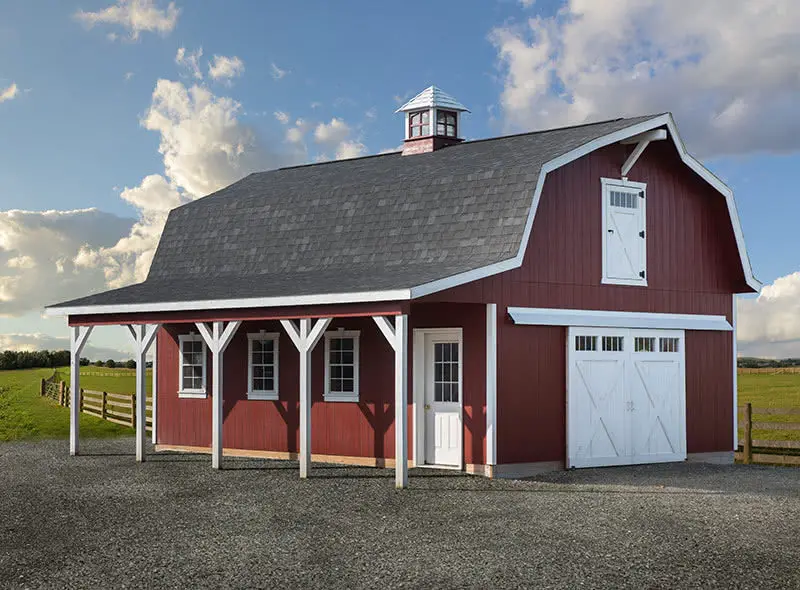
By ten o’clock, the bottom of the whole south wall was red.
And it was the right red. Not fire-engine red. Not brick red. Barn red. That deep, old color that looks almost brown in the evening light.
Some of those kids I knew. The Peterson twins. Hannah, who works at the Dairy Queen. A tall, quiet boy named Tyler whose grandfather used to haul our cattle to the sale barn in Worthington.
Most of them I didn’t know at all.
They were somebody’s grandchildren from church. They’d never set foot on our place in their lives.
And they’d given up a Saturday in September to paint a barn for a woman they’d never met.

Sophia Rivers is an experienced News Content Editor with a sharp eye for detail and a passion for delivering accurate and engaging news stories. At TheArchivists, she specializes in curating, editing, and presenting news content that informs and resonates with a global audience.
Sophia holds a degree in Journalism from the University of Toronto, where she developed her skills in news reporting, media ethics, and digital journalism. Her expertise lies in identifying key stories, crafting compelling narratives, and ensuring journalistic integrity in every piece she edits.
Known for her precision and dedication to the truth, Sophia thrives in the fast-paced world of news editing. At TheArchivists, she focuses on producing high-quality news content that keeps readers informed while maintaining a balanced and insightful perspective.
With a commitment to delivering impactful journalism, Sophia is passionate about bringing clarity to complex issues and amplifying voices that matter. Her work reflects her belief in the power of news to shape conversations and inspire change.