The Punch Line
“As for Ethan, he’s not my blood. So I forgot to put his name in the will.”
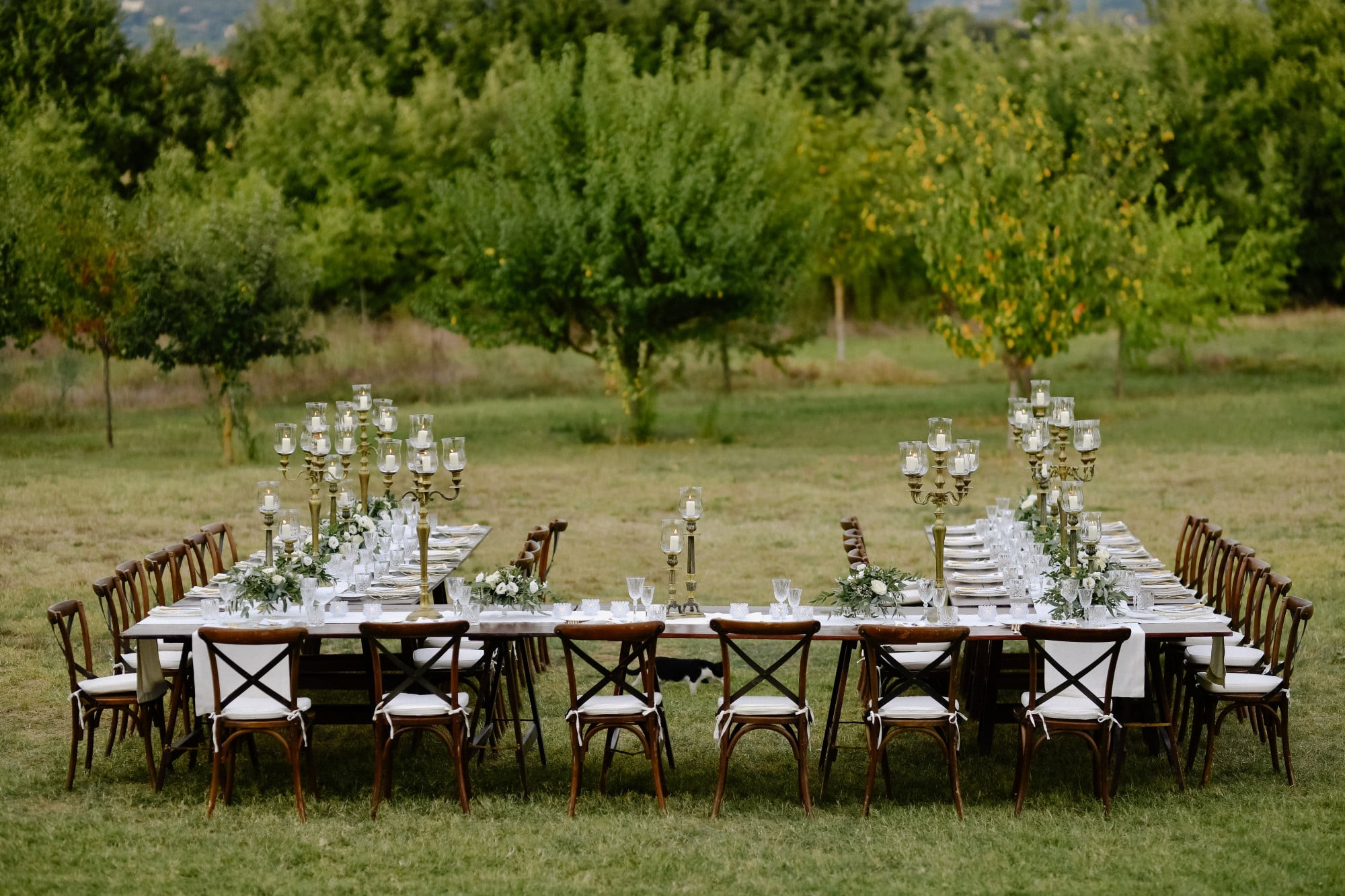
My father said it into a microphone at his seventy-second birthday party. A hundred guests stood on the lawn of his Seattle estate under strings of warm white bulbs, holding champagne, listening to him decide who mattered.
Then the laughter started.
It wasn’t everyone at first. It was a man near the front, a banker I half recognized, who threw his head back and slapped my younger brother Brandon on the shoulder. Then a woman beside him. Then a whole table. Champagne glasses clinked. Somebody whistled.
They laughed like my father had just told the best joke of the night.
I didn’t move.
Richard Cole stood at the head table with his wineglass raised. His silver hair caught the light. His back was straight, his smile easy and practiced, the smile of a man who had given a lot of toasts and enjoyed every one of them.
He looked completely comfortable humiliating me in front of a hundred people.
Beside him, Brandon lifted his own glass. He was twenty-five, tanned, wearing a linen suit that probably cost more than my first car. He had the look of someone who had never once wondered whether he belonged in a room.
“Everything goes to my son Brandon,” Richard went on. “The house. The accounts. The land.”
More applause. Brandon grinned and took a little bow.
My name got a laugh. Brandon’s name got an inheritance.
Under my arm I was holding a leather folder. I felt my fingers tighten on it.
I had driven three and a half hours from Portland with that folder on the passenger seat. I hadn’t played the radio. I hadn’t practiced a speech. I’d just watched the highway and the dark trees go by, and every so often I’d reached over and put my hand on the folder to make sure it was still there.
I had come to leave one thing behind. That was all.
But Richard couldn’t even let me do that quietly.
At the edge of the crowd stood Margaret, my mother, in a pale green dress.
When I was six years old, she used to sit on the edge of my bed and smooth my hair back and whisper, “You didn’t come from my belly, Ethan. But you came from my heart.”
Now she looked away from me.
She didn’t say anything when Richard called me an outsider. She didn’t tell anyone to stop laughing. She just held her glass in both hands and searched the lawn for somewhere else to put her eyes.
Brandon leaned toward one of his friends and said something, and they both smirked in my direction.
“Look who came back,” Brandon called out, loud enough for the nearby tables. “The charity case finally remembered where he came from.”
More heads turned toward me.
My aunt Helen, Margaret’s older sister, was standing near the path. As I started forward, she caught my sleeve.
“Ethan,” she whispered. “Don’t make a scene.”
I looked at her. Then I looked at the head table.
The scene had already been made. By my father.
I started walking.
The jazz trio by the pergola faltered and then stopped. A few voices went quiet. My shoes sounded strangely loud on the flagstone path, and I could feel a hundred pairs of eyes following me across the garden.
Richard’s smile held for one more second. Brandon set down his glass, waiting for an argument or a plea. Margaret’s knuckles went white around the stem of her wineglass.
I stopped in front of the birthday cake. Three tiers, white frosting, a gold 72 on top.
“I didn’t come back to ask for anything,” I said. “I came to put an end to it.”
I set the folder down on the table, squarely in front of my father. The gold letters on the cover faced him. They spelled out his name. RICHARD A. COLE.
“This is my gift,” I said. “It’s only one sheet of paper.”
Nobody laughed this time.
I opened the folder. Inside lay a single page. It wasn’t a birthday card. It wasn’t a request for money. It wasn’t a letter begging to be let back in.
I lifted it so the guests could see it. At the top was a raised gold seal that caught the party lights.
Richard’s eyes moved from my face to the paper. He frowned. He leaned forward slightly, trying to read it.
I didn’t give him the chance.
I tore the page in half. Then in half again. Then again, and again, until it was a handful of small white pieces. I let them fall onto the table, onto the white tablecloth, a few of them landing in the frosting of his cake.
“Happy birthday, Dad,” I said.
Then I turned around and walked back down the path toward the gate.
Behind me, I heard my father’s chair scrape back. I heard him say my name, once, sharp. Then I heard nothing at all except the sound of a seventy-two-year-old man on his knees beside a birthday cake, picking scraps of paper off a tablecloth.
To understand what was on that page, and why his face turned the color of the frosting when he finally put it back together, you have to go back. Not to the party. To the beginning.
Chapter Two: Not Blood
Richard and Margaret Cole adopted me when I was eleven months old.
They had tried for years to have a baby. Margaret told me once that she’d lost three pregnancies before they gave up and called an agency. I came home to their house in Bellevue in a borrowed car seat, with a diaper bag and a file folder of paperwork, and for a while, I was the miracle.
I know because I’ve seen the pictures. Richard holding me up in front of the Christmas tree. Richard teaching me to hold a baseball bat in the backyard. My first steps, my first birthday cake, my first day of kindergarten with a backpack bigger than I was.
My drawings hung on the kitchen cabinets. Crooked houses with smoke coming out of the chimneys. Margaret said I was going to be an architect someday. I didn’t know what that was, but I liked how she said it.
When I was seven, I won a blue ribbon at the school science fair for a model of a house that stayed cool in summer without air conditioning. I’d built it out of shoeboxes and aluminum foil. Richard looked at the ribbon and gave me a small smile and a nod.
For years, I carried that smile around like proof. Proof that I was his. Proof that I counted.
Then, when I was nine, Brandon was born.
Margaret had been told she would never carry a baby to term. Then, at forty-one, she did. Brandon came into the world screaming and healthy, eight pounds even, and Richard cried in the hospital hallway. I’d never seen him cry before.
I was happy. I want to be clear about that. I loved my baby brother. I held him on the couch with a pillow under my arm. I fed him his bottle. I sang him the songs Margaret used to sing to me.
But something changed in that house, and it changed fast.
My drawings came down off the cabinets. Brandon’s scribbles went up. My science ribbons went into a kitchen drawer with the takeout menus and the dead batteries. When I made honor roll, Richard said “good” without looking up from his phone. When Brandon took his first steps, Richard called his golf buddies.
I became the babysitter. The helper. The kid who got sent to his room so the real family could have a nice dinner with clients.
I learned not to ask for attention. I learned that if I was quiet and useful, nobody would notice me enough to be annoyed.
When I was twelve, I spilled a glass of orange juice at breakfast. It went across the table and onto Richard’s newspaper and into his lap.
I jumped up with a napkin. “I’m sorry, I’m sorry.”
Richard stood up. He looked down at his wet pants. Then he looked at Margaret, and he said it, low, like he thought I couldn’t hear.
“He’s not even blood.”
Margaret said, “Richard.”
That was all she said. Just his name. And then she handed him a dish towel.
I went to school that day and sat through math and science and lunch and gym like nothing had happened. I didn’t cry until I got home and went into the garage and sat on an overturned bucket in the dark.
I remembered every word. I still do.
That night, Margaret came into my room. She sat on the edge of my bed the way she used to when I was small.
“He didn’t mean it,” she said.
“Yes, he did.”
She was quiet for a long time. She smoothed my hair back from my forehead.
“You didn’t come from my belly, Ethan,” she whispered. “But you came from my heart.”
I wanted to believe her so badly. I turned to the wall so she wouldn’t see my face.
“Then why didn’t you say anything?” I asked.
She didn’t answer. After a while she got up and turned off the light and closed the door.
At eighteen, I left with two worn duffel bags, five hundred dollars in a bank account, and a scholarship letter from Portland State University.
It was a Tuesday in August. There was no cake. No goodbye dinner. Margaret hugged me in the driveway for a long time and pressed a fifty-dollar bill into my hand and told me to call her when I got there.
Richard was at the kitchen table reading the paper. When I came in to say goodbye, he looked up over the top of it.
“Well,” he said. “Good luck.”
Then he went back to the sports page.
Brandon was nine. He was still asleep.
I carried my duffel bags out to the bus stop on the corner. I didn’t look back at the house. I was afraid that if I did, I’d see that nobody was standing in the window.
Chapter Three: The Note Above the Desk
Portland was cold and rainy and nobody there knew who Richard Cole was. I loved it immediately.
I worked nights at a twenty-four-hour gym, wiping down machines from ten p.m. until six in the morning. On weekends, I tutored high school kids in algebra for twenty dollars an hour. In between, I went to class and studied until my eyes burned.
I chose sustainable architecture. Houses that stayed warm in winter and cool in summer without huge energy bills. Homes that could keep working when the power went out. Buildings that didn’t shut people out just because they couldn’t afford the fancy version.
I wanted to build places where anybody could belong. I didn’t think too hard about why.
There’s one memory from my childhood I didn’t tell you yet.
When I was fourteen, I was helping Richard water the lawn on a Saturday. He had a big property even then, before the Seattle estate, and he was proud of every blade of grass. He stood there with the hose in his hand looking out at it.
“You know what earns respect in this world, Ethan?” he said. He wasn’t really talking to me. He was talking to the lawn. “Owning land. That’s what earns respect. Everything else, people can take away. Land, they have to come to you for.”
Then he handed me the hose and went inside to watch the golf.
He probably forgot that sentence before dinner. But I didn’t.
My first year in Portland, I wrote it on an index card in black marker. OWNING LAND, THAT’S WHAT EARNS RESPECT. I taped it to the wall above my desk in the basement apartment I rented for $640 a month.
I don’t know if I put it there because I believed it, or because I wanted to prove him wrong. Some days it was one. Some days it was the other.
I graduated with honors. Nobody from my family came. Margaret sent a card with a check for two hundred dollars and a note that said, I’m so proud of you. Your father sends his best.
I knew he didn’t. But I kept the card.
I worked for a firm downtown for four years. Then, at twenty-seven, I quit and started my own company with five thousand dollars I’d saved and a website I built myself in three weekends.
I called it Horizon Design. I liked the idea of building toward something you could see but hadn’t reached yet.
The first year, the jobs were small. A garage conversion. A deck. A kitchen remodel for a dentist who paid me late.
Then, in my second year, a woman named Denise Okafor called me from Tacoma. She was a single mother with three kids. She’d saved for eleven years to buy a lot, and she had a hundred and eighty thousand dollars to build on it, and every builder she called had laughed at her.
“They said nobody can build a real house for that,” she told me on the phone. “Can you?”
I drove up to Tacoma that weekend and stood on her empty lot in the rain. I looked at the slope of the land, at where the sun would come up, at the old maple tree on the corner.
“Yes,” I said. “I can.”
It took me eight months. I designed a three-bedroom house with thick walls and a south-facing roof full of solar panels. It used so little energy that her first electric bill was nineteen dollars. Denise cried when I handed her the keys. Her youngest son ran through every room yelling, “This is mine!”
A local reporter wrote about it. Then a nonprofit called me. Then a developer. Then, two years later, the city of Portland hired Horizon to design two hundred units of affordable housing along the river.
By the time I was thirty-four, Horizon Design had forty-two employees and an office with big windows on the east side of the city. I had a partner, Priya Shah, who handled the money and told me no whenever I needed to hear it.
And above my desk, in a cheap black frame now, was the index card. OWNING LAND, THAT’S WHAT EARNS RESPECT.
Richard knew almost nothing about any of it.
I called home on Christmas and on Margaret’s birthday. Margaret usually answered. Sometimes she put Richard on the phone, and he asked me if I was “still doing the house drawing thing,” and I said yes, and he said “good, good,” and handed the phone back.
Brandon, I heard, had dropped out of two colleges and started a business. Something about premium tequila. Cole Reserve. Richard had put money into it. Margaret said it was “doing very well,” in a voice that told me it wasn’t.
I didn’t ask questions. I’d stopped asking questions in that family a long time ago.
Then, eleven months before the party, a letter came to my office.
It was handwritten. It was from Margaret.
Chapter Four: The Letter
I knew her handwriting right away. Loopy and slanted, the same writing that used to be on my lunch bags.
I didn’t open it for two days. I left it on my desk, under the frame with the index card, and I looked at it every time I sat down.
On the third day, Priya came into my office with a stack of invoices and saw it.
“You going to read that or just stare at it until it bursts into flames?” she asked.
“It’s from my mother.”
She set the invoices down. “Oh.” She looked at me for a long moment. “Want me to leave?”
“No,” I said. “Stay.”
I opened it.
Ethan,
I don’t know how to start this letter so I’m just going to start it.
We are in trouble. Your father doesn’t know I’m writing to you, and if he found out he would never forgive me. But I can’t sleep anymore and I don’t know who else to ask.
Four years ago, your father borrowed money against the house. A lot of money. Three million, four hundred thousand dollars, from Pacific Crest Bank. Most of it went into Brandon’s company. The rest went into the way we live.
The company is failing. It has been failing for two years. Brandon keeps saying the next distributor deal will fix everything. Your father keeps believing him.
We haven’t made a payment on the loan since March. Last week a man taped a letter to our front door. It says Notice of Default. The bank’s lawyer says if we don’t pay what we owe by fall, they will sell the house at an auction on the courthouse steps.
Your father tells everyone it’s handled. He’s planning a party for his seventy-second birthday in October. A hundred people. A band. He says if people see us struggling, it’s over.
I’m not asking you for money. I want you to know that. I don’t think I have the right to ask you for anything.
I think I just needed to tell somebody who would understand what it’s like to watch a house stop being a home.
I’m sorry, Ethan. For so many things.
Mom
I read it twice. Then I folded it and put it back in the envelope and set it on the desk.
Priya didn’t say anything. She just waited.
“Three point four million,” I said finally. “Against the house.”
“Is that bad?”
“The house is probably worth four and a half.” I rubbed my eyes. “If it goes to auction, they’ll lose everything. The bank will sell it for whatever it can get, and whatever’s left over after the debt and the fees, which won’t be much, is all they’ll walk away with.”
“So what are you going to do?”
“Nothing,” I said.
She raised her eyebrows.
“It’s not my house,” I said. “I’m not in the will. He made that very clear a long time ago. It’s not my problem.”
Priya picked up her invoices. At the door she stopped and looked back at me.
“You know you’re allowed to not help them, right?” she said. “Nobody would blame you.”
“I know.”
“But you know you’re also allowed to,” she said. And she left.
A week later, I drove to Olympia. It was halfway between Portland and Seattle. I had texted Margaret the address of a coffee shop and a time, and nothing else.
She was already there when I walked in. She was sitting at a corner table with a cup of tea she hadn’t touched. She looked older than I remembered. Thinner. Her hands were folded in front of her like she was in church.
When she saw me, she stood up so fast she bumped the table and the tea sloshed over.
“Ethan,” she said.
“Hi, Mom.”
We stood there for a moment. Then she put her arms around me, carefully, like she wasn’t sure she was allowed.
I let her.
She told me everything that afternoon.
Cole Reserve had lost money every year since Brandon started it. He spent it on parties, on a sponsorship deal with a minor league hockey team, on a launch event in Las Vegas that cost two hundred thousand dollars and sold forty cases. Every time the company needed money, Brandon came to Richard. Every time, Richard gave it to him.
“Your father says it’s an investment in the family name,” she said. “The Cole name. He says a Cole doesn’t quit.”
“What about Brandon? What does he say?”
She looked down at her tea. “Brandon says it’s not his fault the market doesn’t understand luxury.”
I almost laughed. I didn’t.
“Has Dad talked to the bank?”
“He yelled at them,” she said. “On the phone. He told them who he was. He told them he’s been a customer for thirty years. They didn’t care.”
“Of course they didn’t.”
She was quiet for a long time. Then she looked up at me.
“I wasn’t brave enough,” she said. “When you were little. When he said those things. I told myself if I kept the peace, it would be better for everyone. I told myself he’d come around.” She shook her head. “He never came around. And you left. And I let you leave, Ethan. I stood in the driveway and handed you fifty dollars and let you walk to the bus stop alone.”
I didn’t say anything. My throat felt tight.
“I’m not asking you to fix it,” she said again. “I just wanted you to know I see it now. What I did. What I didn’t do.”
I looked at my mother across that little coffee shop table. At her shaking hands. At the woman who used to tell me I came from her heart, and then looked away while her husband told me I didn’t belong.
“I’m going to think about it,” I said.
That was all I could promise. She nodded like it was more than she’d hoped for.
Chapter Five: Lantern Holdings
I didn’t sleep much that week.
I kept thinking about the house. Not the Bellevue house where I grew up. The Seattle estate Richard bought fifteen years ago, after I’d already left. I’d only been inside twice. Once for Margaret’s sixtieth birthday. Once for a Christmas that ended with Richard and Brandon arguing about a car.
It was a big Tudor-style house on two acres in the Highlands, with a long gravel driveway, a pergola, a rose garden, and a lawn that rolled all the way down to a view of the water. Richard had paid two point nine million for it. He liked to tell people it was “the best piece of land north of Lake Union.”
Owning land. That’s what earns respect.
On Monday, I called a lawyer.
Dana Whitfield had handled Horizon’s real estate contracts for six years. She was sixty, blunt, and charged by the six-minute increment. She once told me that kindness was the most expensive thing I could do in business, so I’d better be sure I meant it.
I told her about the letter. I gave her the name of the bank and the loan amount.
“I can make a few calls,” she said. “Banks don’t love holding defaulted loans on fancy houses. Foreclosing costs them money and time. Sometimes they’d rather sell the loan to somebody else at a discount and walk away.”
“Sell the loan? To who?”
“To anyone who wants to buy it,” she said. “Investors. Debt funds. Whoever. They buy the note, they become the lender. Then they decide whether to foreclose or work something out.”
I was quiet for a long time.
“Ethan,” Dana said. “Tell me what you’re thinking.”
“I’m thinking I want to know how much.”
It took her three weeks.
Pacific Crest Bank was willing to sell. They wanted the loan off their books before the end of their fiscal year. With the missed payments, the late fees, and the interest, Richard now owed $3,612,400. The bank was willing to sell the whole thing for $2,650,000.
“That’s a big discount,” I said.
“It’s a big headache for them,” Dana said. “They’d have to foreclose on a seventy-two-year-old man with lawyers and friends at the country club. They’d rather take the cash.”
“Two point six five million.”
“That’s the number.”
I hung up and sat at my desk and looked at that number on a yellow legal pad for a long time.
I had money. Horizon had been good to me. But I didn’t have that kind of money sitting in a checking account. To buy that loan, I would have to empty nearly everything I had saved in ten years. And I’d have to take a line of credit against my own shares in the company to cover the rest.
If something went wrong, I could lose a piece of Horizon. The thing I’d built from five thousand dollars and a website.
I told Priya that afternoon. I closed the door to my office and laid it all out on the desk.
She listened without interrupting. When I finished, she sat back in her chair.
“Let me make sure I understand,” she said. “You want to spend two point six five million dollars to buy the debt of a man who wrote you out of his will, so you can… what? Foreclose on him? Own his house?”
“I don’t know yet.”
“You don’t know.” She took off her glasses and rubbed her nose. “Ethan. You’re the most careful person I’ve ever met. You measure everything twice. You don’t buy a stapler without comparing three prices.”
“I know.”
“So why?”
I looked up at the frame above my desk.
“Because if I don’t,” I said, “a stranger will. And they’ll take that house from my mother and sell it at auction and she’ll end up in a two-bedroom apartment in Lynnwood, and Richard will tell everyone at the country club it was the bank’s fault. And Brandon will start another tequila company.”
“And if you do?”
“Then at least I get to decide how it ends.”
Priya was quiet for a long time. Then she put her glasses back on.
“Use an LLC,” she said. “Don’t put your name on it. If he finds out it’s you before you’re ready, it turns into a war, and you don’t want a war.”
“Okay.”
“And I want Dana to structure it so the line of credit is secured against your shares only, not the company’s assets. Not one dollar of Horizon is on the line. Only you.”
“Okay.”
She stood up. At the door, she turned around.
“For what it’s worth,” she said, “I think you’re crazy. But I think it’s the good kind.”
Dana formed the company that week. We called it Lantern Holdings LLC. I picked the name. A lantern is a light you carry with you into a dark place.
On June 12th, at 10:14 in the morning, Lantern Holdings wired $2,650,000 to Pacific Crest Bank. By the afternoon, the bank had signed the paperwork. The original promissory note, the one Richard signed four years earlier, was endorsed over to Lantern Holdings, with a gold embossed seal from Pacific Crest pressed into the bottom of the page.
A courier brought it to my office in a cardboard envelope.
I sat alone at my desk and slid it out.
Three pages of loan terms, and then the last page. The one with the promise to pay. At the bottom was my father’s signature, big and sweeping, with a little flourish under the C. Below that was the bank’s endorsement, Pay to the order of Lantern Holdings LLC, and the gold seal.
I held that page in my hands and looked at it.
I owned my father’s house. Not on paper, not exactly. But I owned the debt that held it. If I wanted to, I could finish what the bank started. I could take it.
Owning land. That’s what earns respect.
I put the note in a fireproof safe in my office. I didn’t tell anyone except Priya and Dana.
Then I waited.
Chapter Six: The Vulture
The first letter from Richard arrived in July.
Dana had sent a standard notice informing him that his loan had been transferred to a new lender, Lantern Holdings LLC, and that all future communication should go through her office. It was polite. It was legal. It didn’t mention me.
Richard’s response came a week later. Dana forwarded it to me with a single line: Thought you should see this.
It was two pages long, typed on his personal letterhead.
He called Lantern Holdings a vulture fund. He said we were bottom feeders who preyed on honest families during hard times. He said he had more friends in Seattle than we had dollars, and that if we tried to take his home, he would make sure everyone knew our name.
At the end, he wrote: I have built a legacy that will outlast your little shell company. My son will inherit everything I have built. You will inherit nothing but the shame of what you are.
I read it three times. Then I laughed out loud, alone in my office, because there was nothing else to do.
The second letter came in August. It was shorter. It asked for a meeting to discuss “a reasonable payment plan.”
The third letter came in September. It was one paragraph. It asked for more time.
At the bottom of that one, in Richard’s handwriting, he had written: Please. My wife does not know how bad this is.
I sat with that letter for a long time.
My wife does not know. He thought he was protecting her. He didn’t know she’d known all along. He didn’t know she had written to the one person he’d decided wasn’t family.
Margaret called me twice a month that summer. Always from her car, in parking lots, so Richard wouldn’t hear. She didn’t know about Lantern. I didn’t tell her. I wasn’t ready.
“He’s getting worse,” she said in September. “He barely sleeps. He yelled at the landscaper yesterday for twenty minutes about a hose.”
“And Brandon?”
“Brandon’s in Las Vegas. Another distributor meeting.” Her voice was flat. “He asked your father for fifty thousand dollars for a trade show booth. Your father gave him a credit card.”
“With what money, Mom?”
She didn’t answer.
“And the party?”
“Still on. October nineteenth. He’s hired a jazz trio. He’s invited the mayor’s office.” She laughed, a short, broken sound. “He’s ordered a cake with a gold seventy-two on top. Three tiers. Eleven hundred dollars.”
The legal clock was ticking. Under Washington law, Dana explained, if Lantern wanted to foreclose, she would have to record a Notice of Trustee’s Sale and give Richard at least ninety days before the house could be sold.
“We’re at a decision point,” she said in early September. “If we want the house, we start the clock now. Sale date would be mid-January.”
“And if we don’t?”
“Then you’re sitting on a three-point-six-million-dollar note that’s earning nothing, held against a man who can’t pay it. Eventually you have to do something. Foreclose, restructure, sell it to someone else, or forgive it.”
“Forgive it,” I repeated.
“It’s your note,” Dana said. “You can do whatever you want with it. Including nothing.”
“What would happen? Legally. If I forgave it.”
She was quiet. Then she told me.
“Under the Uniform Commercial Code, the person entitled to enforce a note can discharge the debt by an intentional voluntary act. Surrender. Cancellation. Destruction. Even tearing it up, if that’s what you mean to do, and you mean it.” She paused. “I’d want a signed letter of discharge in the file afterward, so there’s no confusion, and I’d record a reconveyance with the county to clear the title. But the act itself is real. People have done it.”
“Tearing it up,” I said.
“I’d advise you to think very hard before you do anything like that,” Dana said. “That’s two point six five million dollars of your money.”
“I know.”
“Do you?”
I didn’t answer her.
Two weeks before the party, an old high school classmate named Jordan Pike texted me. He worked at a wine distributor in Seattle and had somehow ended up on the vendor list.
Your dad’s having a huge party Saturday. 72nd bday. You going?
I looked at the message for a while.
Not invited, I wrote back.
Seriously? Wow. Sorry man.
Don’t be, I wrote. I might stop by anyway.
That night I sat in my office after everyone had gone home. The city lights were coming on along the river, where my two hundred units of affordable housing were going up, floor by floor.
I opened the safe. I took out the note. I laid it on my desk, under the lamp, next to the black frame with the index card.
OWNING LAND, THAT’S WHAT EARNS RESPECT.
For ten years that card had hung above my desk. I’d built a company under it. I’d built houses under it. And somewhere along the way, without noticing, I’d started to believe it.
I could take that house. I could stand on that lawn in January as the new owner. I could make Richard leave the way I left. With two duffel bags. Nobody standing in the window.
I thought about it for a long time. I want to be honest about that. I thought about it more than I’m proud of.
Then I thought about Margaret, in her car in a parking lot, whispering into the phone.
And I thought about a seven-year-old boy with a shoebox house and a blue ribbon, waiting for a man to smile at him.
I went to the stationery store the next morning and ordered a leather folder. I asked them to stamp his name on the cover in gold.
Chapter Seven: The Pieces
The attendant at the gate checked his clipboard twice.
“I’m sorry, sir,” he said. “There’s no Ethan on the guest list.”
“I’m not here for the party,” I said. “Just to drop off a gift.”
He looked at the leather folder under my arm. He looked at me. Something in my face must have convinced him, because he stepped aside.
And then everything happened the way I already told you. The microphone. The punch line. The laughter. Brandon calling me a charity case. Aunt Helen telling me not to make a scene.
The walk across the lawn. The folder on the table. The page held up to the lights.
The tearing.
I was almost to the gate when I heard Richard shout my name.
“Ethan!”
I stopped. I didn’t turn around.
“Ethan, what the hell was that?”
Then I heard something else. Someone saying, “Richard, sit down, let me get that,” and Richard snapping, “Don’t touch it.”
I turned around.
My father was on his knees beside the head table. On the grass, in his good gray suit. He was picking pieces of paper off the tablecloth, off the cake, out of the grass. Brandon was standing over him, looking embarrassed, saying, “Dad, come on, people are watching.”
Richard ignored him. He gathered every piece he could find into his cupped hands. Then he stood up, slowly, the way old men stand up, and he laid them out on the tablecloth beside the cake.
The whole party was watching now. Nobody pretended not to. The jazz trio had put down their instruments. A woman near the pergola was holding her phone up, recording.
Richard moved the pieces around with one finger. Turning them. Fitting the edges together. A torn corner here. A strip of text there.
I watched his hands. They were shaking.
He found the gold seal first. I saw him stop when he touched it. The raised circle, cut in half, the two halves still glinting in the light. Pacific Crest Bank.
He found his own signature next. I could tell by the way his whole body went still. That big sweeping R. The little flourish under the C.
Then he found the endorsement. Pay to the order of Lantern Holdings LLC.
He looked up. He looked across the whole length of that lawn, past a hundred staring faces, all the way to the gate where I was standing.
And the color went out of his face. It went from the top down, like water draining out of a glass. His tan went gray. His lips went pale. He put one hand flat on the table, next to the cake, like he needed it to stay standing.
“Lantern,” he said. Not loud. But the lawn was so quiet that I heard it from the gate.
I walked back up the path.
Chapter Eight: What the Paper Said
When I reached the table, nobody moved out of my way. They didn’t have to. They just stopped existing, as far as Richard and I were concerned.
He was staring at me. His mouth was opening and closing.
“Lantern Holdings,” he said again. “Is you.”
“Yes.”
“You.” He looked down at the torn pieces. Then back at me. “You bought my loan.”
“In June. From Pacific Crest. For two million six hundred and fifty thousand dollars.”
Somebody in the crowd made a sound. A soft whoa. Brandon turned around sharply to see who it was.
“You,” Richard said. His voice was rising now. “You bought my debt so you could come here. On my birthday. In front of everyone I know. And humiliate me.”
“No, Dad.”
“Then what is this?” He slammed his hand on the table. The cake shuddered. The gold 72 tipped sideways. “What the hell is this?”
“That was your promissory note,” I said. “The original. The one you signed four years ago. The one that says you owe three million, six hundred and twelve thousand, four hundred dollars, and if you don’t pay, the house goes to auction.”
The crowd went dead silent. I heard a woman whisper, “Three point six?”
Richard’s face went from gray to red.
“And I just tore it up,” I said. “In front of a hundred witnesses. Because I own it. And I’m choosing to cancel it.”
For a moment, nobody said anything.
Then Brandon laughed. A short, ugly laugh.
“That’s a trick,” he said. “That’s some kind of stunt. You can’t just rip up a piece of paper and make three million dollars disappear.”
“Actually,” I said, “I can. It’s called discharge by destruction. It’s in the Uniform Commercial Code. The person who holds the note can cancel the debt by destroying it on purpose.” I turned to Richard. “My attorney has a signed letter of discharge on her desk in Portland. She’ll record a reconveyance with King County on Monday morning. After that, the lien’s gone. The house is yours. Free and clear.”
“Free and clear,” Richard repeated. Like he didn’t understand the words.
“No mortgage. No debt. No auction. Nobody taping notices to your door.”
Richard sat down. He didn’t decide to sit. His legs just folded and his chair happened to be behind him.
Brandon’s face had changed. The smirk was gone.
“Wait,” he said. “Wait. What auction? Dad. What is he talking about? What notices?”
Richard didn’t answer him.
“Dad?”
“You didn’t know?” I asked my brother.
Brandon looked at me. For the first time that night, he looked like a kid. “Know what?”
“Dad borrowed three point four million against this house four years ago,” I said. “Most of it went into Cole Reserve. He stopped making payments in March. The bank filed a notice of default. In a few months, they were going to sell this place on the courthouse steps.” I nodded toward the lawn. “The house. The accounts. The land. Everything you just got applause for inheriting.”
Brandon stared at his father.
“The accounts are empty, Brandon,” I said quietly. “They have been for a long time.”
The crowd erupted into whispers. People were turning to each other. The banker who’d slapped Brandon on the shoulder took a step back, as if failure might be catching.
Brandon’s mouth was moving but nothing came out.
“Dad,” he said finally. “You told me Cole Reserve was fine. You told me the house was paid off. You said…” He stopped. “You said I’d never have to worry about money.”
Richard put his face in his hands.
That’s when Margaret walked up to the table.
She came slowly, in her pale green dress, through the crowd. People stepped aside for her. She stopped beside Richard’s chair.
“I wrote to him,” she said.
Richard lifted his head. “What?”
“In November. I wrote Ethan a letter. I told him about the loan. I told him about the notice on the door.” Her voice was shaking, but she didn’t stop. “I didn’t ask him for anything. I didn’t know he would do this. I just couldn’t carry it alone anymore.”
“You went behind my back,” Richard said.
“Yes,” Margaret said. “I did. For once in my life, I did something without asking you first.”
She turned to me. Her eyes were full of tears.
“I didn’t know,” she said. “About Lantern. I swear I didn’t know.”
“I know, Mom,” I said. “I didn’t tell you. I didn’t want you to have to keep another secret from him.”
She put her hand over her mouth.
Aunt Helen had come up behind Margaret. She was looking at me like she’d never seen me before.
“Ethan,” she said quietly. “Why?”
I thought about that. About the coffee shop in Olympia. About the index card above my desk. About the shoebox house and the blue ribbon in the drawer with the dead batteries.
“Because I could have taken it,” I said. “I owned it. All I had to do was let the clock run out. In January, I could have stood on this lawn and told all of you to leave.”
I looked at my father.
“You told me once that owning land is what earns respect,” I said. “I was fourteen. You were watering the lawn. You probably don’t remember.”
Richard looked up at me. He didn’t say anything. But I could see in his face that he did remember.
“I wrote it on a card,” I said. “I kept it above my desk for sixteen years. And when I held your note in my hands, I finally understood what you meant. If I took this house, every person here would have to respect me. They’d have to come to me. Just like you said.”
I shook my head.
“But I don’t want respect that I had to take from somebody,” I said. “I don’t want to be the kind of man who earns it that way. I already know what it’s like to live in a house with somebody like that.”
Richard flinched like I’d hit him.
I picked up the leather folder from the table. It was empty now. I closed it and held it out to him.
“You can keep this,” I said. “Your name’s on it.”
He took it. His hands were still shaking.
“I’m not in your will,” I said. “That’s fine. I don’t want your house, or your accounts, or your land. I never did. I just wanted you to know that the one you called not blood was the one who kept a roof over your head.”
I turned to Margaret.
“I’ll call you,” I said.
She nodded. She couldn’t speak.
Then I walked back down the path. Nobody laughed this time. Nobody said a word. The only sound was the gravel under my shoes, and somewhere behind me, my mother crying, and my father saying her name, and her not answering.
Chapter Nine: The Drive South
I got in my car and sat there with the engine off.
My hands were shaking on the steering wheel. My chest felt hollow, like someone had scooped out everything inside and left just the shell. I had imagined that moment for months. In my imagination, I always walked away feeling light.
I didn’t feel light. I felt like I’d just run a marathon and been told there was no finish line.
I started the car and pulled onto the road. I drove south through the dark.
Somewhere past Tacoma, my phone rang. I looked at the screen. Mom.
I almost didn’t answer. Then I did.
“Ethan.” Her voice was thick. “Are you driving?”
“Yes.”
“Pull over. Please. I don’t want you driving while we talk.”
I took the next exit and pulled into an empty rest stop parking lot. I turned off the engine. The only light came from a single humming lamp over a picnic table.
“Okay,” I said. “I’m stopped.”
“Everyone left,” she said. “Within twenty minutes. The band packed up. Half the guests didn’t even say goodbye. The cake’s still on the table.” She made a sound that was half laugh, half sob. “Nobody ate it.”
“I’m sorry, Mom.”
“Don’t you dare apologize,” she said. “Don’t you dare.”
“Where’s Dad?”
“In his study. With the door closed. He’s been in there for an hour. He took the pieces with him. He’s got them laid out on his desk. I went in to bring him some water and he was just sitting there looking at them.”
“And Brandon?”
“Brandon left. He screamed at your father on the lawn. In front of the caterers. He said your father lied to him his whole life. He said he never would have taken the money if he’d known.” She paused. “Then he took the Range Rover and drove off. I don’t know where he went.”
I closed my eyes. I leaned my head back against the seat.
“Ethan,” Margaret said. “Two point six five million dollars.”
“I know.”
“Was that everything you had?”
I thought about lying. I didn’t.
“Almost,” I said. “And a line of credit against my shares in the company. I’ll be paying it back for a while.”
She was quiet for a long time.
“Your father would never have done that for you,” she said finally. “Never. Not in a hundred years.”
“I know,” I said. “That’s sort of the point, Mom.”
I got home at two in the morning. My apartment was dark and quiet. I didn’t turn on the lights. I just sat on the couch in my suit and looked out the window at the river.
At seven, Priya texted me.
Well? Still alive?
Still alive, I wrote back.
And?
I thought about it.
And it’s done.
Proud of you, she wrote. Also you’re broke. See you Monday.
I laughed, alone in the dark. It was the first time I’d laughed since I left Seattle.
On Monday morning, Dana called me at nine-fifteen.
“I’ve got your signed discharge letter,” she said. “And I’ve filed the reconveyance with King County. It’ll be recorded by the end of the week. After that, the title’s clean. The house belongs to Richard and Margaret Cole with no lien on it.”
“Thank you, Dana.”
“I’ve been doing this thirty-four years,” she said. “I’ve seen people do a lot of things with debt. Buy it, sell it, fight over it, forgive part of it to get the rest. I’ve never seen anyone do what you did.”
“Is that good or bad?”
“I’ll tell you when I figure it out,” she said. “My bill’s in the mail. Don’t rip it up.”
Chapter Ten: Aftermath
For three weeks, I didn’t hear from Richard.
I heard about him, though. Seattle is a smaller city than it looks, and the woman by the pergola had posted her video. It got a few thousand views, mostly people who didn’t know who any of us were. But the people who did know Richard watched it. All of them.
Jordan Pike called me the next week.
“Dude,” he said. “Everybody’s talking about it. The whole wine world. Half the guys at that party had invested in Cole Reserve. They’re all calling your brother now asking where their money is.”
“Is the company done?”
“Brandon filed to dissolve it last Thursday,” Jordan said. “I heard he sold his car to pay off a distributor.”
I didn’t know how to feel about that. I hung up and stared at my computer screen for a long time.
Margaret called every few days now. She didn’t call from parking lots anymore. She called from the kitchen, from the living room, from the rose garden. She didn’t whisper.
“Your father’s selling the lake lot,” she told me in early November. “The one in Chelan. He’s had it for twenty years and never built on it.”
“Why?”
“To pay off the credit cards. The ones he gave Brandon. There was almost two hundred thousand dollars on them.” She sighed. “He’s selling his boat too. And the second car. He sat down at the kitchen table with a calculator last night. I’ve never seen him use a calculator in forty years of marriage.”
“How’s he doing?”
She was quiet for a moment.
“He’s very quiet,” she said. “He doesn’t watch golf. He goes out to the garden in the morning and waters the lawn and just stands there. For a long time.” She paused. “He kept the pieces. He taped them back together. It’s on his desk, under the paperweight.”
Brandon showed up at my office on a Tuesday in mid-November.
The receptionist called back to my desk. “There’s a Brandon Cole here to see you? He doesn’t have an appointment.”
I sat there for a moment. Then I said, “Send him back.”
He came into my office looking like he hadn’t slept in a week. He wasn’t wearing a linen suit. He was wearing jeans and a gray hoodie with a coffee stain on the front. His hair was too long.
He stood in the doorway and looked around. At the big windows. At the drawings on the walls. At the scale model of the river housing on the table by the window, with its tiny trees and tiny people.
“You did all this?” he asked.
“My team did. I just drew it first.”
He came in and stood by the model. He looked at it for a long time.
“I was nine when you left,” he said, not looking at me. “I don’t really remember it. I just remember waking up and your room was empty. I asked Mom where you went and she started crying. Dad said you went to college and not to ask about it.”
I didn’t say anything.
“I used to think you didn’t want us,” he said. “That you thought you were too good for us.”
“Is that what Dad told you?”
He was quiet. “Sort of. Yeah.”
He finally turned around and looked at me.
“Is it true?” he asked. “That the house was going to go to auction? That I was going to lose everything and not even know until it happened?”
“Yes.”
“And you knew. For months.”
“Since June.”
He rubbed his face with both hands. When he took them away, his eyes were red.
“I called you a charity case,” he said. “In front of everybody. And you were the one who…” He stopped. He couldn’t finish.
“Yeah,” I said.
“Why didn’t you just let it happen? I would have. If it was me. If Dad wrote me out of his will and laughed about it into a microphone, I would have let them take the house and sat in the front row of the auction eating popcorn.”
I leaned back in my chair.
“Mom would have lost her home,” I said. “And you would have learned the same lesson I did. That Dad’s love was something he could take away whenever he wanted. I didn’t want you to learn it that way.”
Brandon sat down in the chair across from my desk. He sat there for a long time with his elbows on his knees, staring at the floor.
“I don’t know how to do anything,” he said finally. “That’s the thing. I’m twenty-five. I’ve never had a real job. Every time something went wrong, Dad fixed it with money. Now there’s no money.”
“So learn,” I said.
He looked up.
“Horizon has a construction internship,” I said. “It pays eighteen dollars an hour. You’d be on a job site in Gresham, pulling nails and carrying lumber. You’d report to a woman named Teresa who’s been framing houses for thirty years and has absolutely no patience for anybody named Cole.”
He stared at me. “You’d hire me?”
“I’d hire you for a ninety-day trial,” I said. “If you show up late twice, you’re done. If you complain, you’re done. If you tell anybody you’re my brother to get out of work, you’re done.”
He was quiet. Then something moved across his face that I’d never seen there before. Not confidence. Something more like hope.
“When do I start?” he asked.
“Monday. Six a.m.”
“Six?”
“You want to back out?”
“No,” he said quickly. “No. Six. I’ll be there.”
Chapter Eleven: The Index Card
Richard came to Portland on the first Friday in December.
He didn’t call ahead. He just appeared in the lobby of Horizon Design at four in the afternoon, wearing a navy overcoat and carrying the leather folder with his name on it in gold.
The receptionist didn’t know who he was. She called back and said, “There’s a Richard Cole here? He says you’ll know what it’s about.”
I sat at my desk for a long moment.
“Send him back,” I said.
He came down the hallway slowly. He was looking at everything. The drawings on the walls. The people at their desks. A young architect named Malik who was explaining a roof design to a client on a video call.
When he reached my office door, he stopped.
He looked smaller than I remembered. Not just thinner. Smaller. Like something inside him had shrunk and his body had followed.
“Ethan,” he said.
“Dad.”
“May I come in?”
It was the first time in my whole life my father had asked me permission for anything.
“Yes,” I said.
He came in and sat down in the chair across from my desk. He set the leather folder on his lap. He didn’t open it.
For a long time, neither of us said anything. The heater clicked on. Outside, the light over the river was turning gold.
“Brandon’s working for you,” he said finally.
“For three weeks now.”
“He calls me every night. He tells me about the job site. About nails and lumber and a woman named Teresa who yells at him.” Richard almost smiled. “He sounds tired. He sounds… I don’t know. Better.”
“He’s good at it,” I said. “Better than I expected. He’s on time every day. Teresa says he’s the first intern who ever asked her how to frame a window instead of asking when lunch is.”
Richard nodded slowly.
“I owe you two point six five million dollars,” he said.
“No, you don’t.”
“I owe you something.”
“You don’t owe me anything, Dad. That was the whole point.”
He looked down at the folder on his lap. He ran his thumb over the gold letters of his own name.
“I went to my lawyer last week,” he said. “I told him I wanted to change my will. To put you back in. To give you the house, after your mother and I are gone. Or half of it. Whatever you want.”
“No,” I said.
He looked up, surprised.
“I don’t want the house,” I said. “I really don’t. Leave it to Mom first, and then Brandon if he grows into someone who can keep it. Or sell it and give the money to somebody who needs it. I don’t care. I don’t want to be in your will just because I paid my way into it.”
His jaw worked. He looked at me for a long time.
“Then what do you want?” he asked.
I didn’t answer right away. I didn’t know.
Instead, I stood up and took the black frame down from the wall above my desk. I set it on the desk between us, facing him.
OWNING LAND, THAT’S WHAT EARNS RESPECT.
Richard leaned forward. He read it. And I watched him read it again.
“I said that,” he said quietly.
“You did. When I was fourteen.”
“I don’t…” He stopped. “I do. I remember. We were watering the lawn.”
“I wrote it down that night,” I said. “I took it to Portland. I’ve had it above my desk for sixteen years. Through college, through my first job, through starting this company. Every time I looked at it, I thought, I’m going to prove him right. Or I’m going to prove him wrong. I could never decide which.”
Richard looked at the card. His eyes were wet.
“And when I had your house in my hands,” I said, “I finally realized you were wrong. Not about land. About respect. You can’t take it. You can’t buy it. If you have to own something to get it, then it isn’t respect. It’s just fear.”
He didn’t say anything for a long time.
Then he opened the leather folder.
Inside was the note. My father’s promissory note, all the pieces taped back together with clear tape, carefully, edge to edge, like a puzzle. You could still see the tear lines running across his signature. The gold seal was taped together down the middle.
“I worked on this for three nights,” he said. “Margaret helped me find the last piece. It was stuck to the bottom of the cake plate.”
He held it out to me.
“I wanted to bring it to you,” he said. “So you’d know I understood what it was.”
I didn’t take it.
“Keep it,” I said. “Put it somewhere you’ll see it.”
He looked at the taped-together page. He nodded slowly.
He stood up. He buttoned his overcoat with fingers that weren’t quite steady.
At the door, he stopped. He didn’t turn around. He just stood there with his hand on the frame.
“I was jealous of you,” he said.
I didn’t move.
“When you were small. You were so smart. Smarter than me. You built that house out of shoeboxes and everybody at the science fair was talking about it, and I stood there thinking, he’s not even mine, and he’s already better than me.” His voice cracked. “And then Brandon came. And he was mine. And I thought, here’s my chance. Here’s the one who’ll be like me.”
He turned around then. His face was wet.
“And he was,” Richard said. “God help him. He was exactly like me.”
He looked at me across the office.
“I’m sorry, Ethan,” he said. “For the orange juice. For the microphone. For every single day in between. I’m sorry.”
Then he walked out. I heard him going down the hallway, slowly, past the drawings and the desks and Malik’s roof design, and then the elevator doors opening and closing.
I sat at my desk and looked at the black frame with the index card for a long time.
Then I took the card out of the frame. I didn’t tear it up. I just folded it once and put it in my desk drawer.
The frame stayed empty for two weeks.
Chapter Twelve: The Drawer
Margaret invited me for Christmas.
She called in mid-December and asked me directly, in a clear voice, from the kitchen. “Will you come home for Christmas, Ethan? Your father asked me to ask you. He wanted to call himself, but he was afraid you’d say no to him.”
I thought about it for one day. Then I called her back and said yes.
I drove up on Christmas Eve. The gate attendant wasn’t there. Nobody checked a list. I just pulled up the long gravel driveway and parked by the rose garden, which was bare and pruned back for the winter.
The house looked different. It took me a minute to understand why. There were no fancy cars in the driveway. No string lights over the lawn. Just a modest wreath on the front door and the kitchen lights on.
Brandon opened the door before I could knock. He was wearing a Horizon Design sweatshirt. He’d gotten a haircut.
“Hey,” he said.
“Hey.”
He looked at me for a second. Then he hugged me. Awkwardly, with one arm, the way men hug when they haven’t practiced.
“Teresa says I can frame a wall alone now,” he said into my shoulder.
“I heard.”
“She says I’m not completely useless.”
“From Teresa,” I said, “that’s practically a medal.”
He laughed. It was a real laugh. Not the smirking one from the party.
Dinner was small. Just the four of us and Aunt Helen. Margaret made a ham and scalloped potatoes and green beans with almonds. There was no jazz trio. There was no three-tier cake. There was an apple pie from a bakery in Ballard.
Richard sat at the head of the table. He said grace, which he had never done in my whole life. It was short and clumsy.
“Thank you for this food,” he said, “and for this family, and for the chance to do better than we did.”
Then he looked at me, and looked down at his plate, and picked up his fork.
Aunt Helen leaned over to me during dessert. She spoke very quietly.
“I told you not to make a scene,” she said.
“I remember.”
“I was wrong.” She patted my hand. “It was the best scene I ever saw.”
After dinner, while Brandon and Richard washed the dishes together, which was a sight I never expected to see, Margaret took me by the arm.
“Come with me,” she said. “I want to show you something.”
She took me upstairs to a little room at the end of the hall. A sewing room, with an old machine and a rocking chair and a closet. She opened the closet and pulled down a cardboard box from the top shelf.
It was a Bekins moving box. The tape was yellow and cracked. On the side, in her handwriting, faded marker, it said: ETHAN.
“I couldn’t throw them away,” she said. “When your father took them down. Every single thing. I kept it.”
She set the box on the sewing table and opened it.
On top was the blue ribbon. FIRST PLACE, SCIENCE FAIR, 2ND GRADE. Under it were report cards. Honor roll certificates. A spelling bee medal. A clay handprint from kindergarten.
And under all of that were the drawings. Dozens of them. The ones that used to hang on the kitchen cabinets. Crooked houses with smoke coming out of chimneys. Houses with too many windows. Houses on stilts, houses in trees, a house shaped like a boat.
I picked them up one by one. My hands were shaking.
At the very bottom of the box was a drawing on yellow construction paper. A house, with a red door and a big tree beside it. Four stick figures standing in front of it, holding hands. A tall one with a mustache. A medium one with long hair. A small one. And a tiny one, a baby, held by the small one.
Above the house, in purple crayon, in the big wobbly letters of a nine-year-old, it said: MY FAMILY. ALL OF US.
“You made that the week Brandon came home from the hospital,” Margaret said softly. “You drew yourself holding him. You were so proud.”
I couldn’t speak. I just held the drawing.
“I should have hung it back up,” she said. “I should have hung all of them back up. I should have said something every single time. I’m sorry I didn’t.”
“Mom,” I said. My voice didn’t work right. “It’s okay.”
“It’s not okay. But maybe it can be, now.”
She put her hand on my cheek, the way she did when I was small.
“You didn’t come from my belly,” she whispered. “But you came from my heart. I should have said it louder.”
I left the next morning, on Christmas Day, after breakfast. Richard walked me out to the car. He stood by the driver’s door with his hands in his coat pockets.
“Come back for my birthday,” he said. “Next October. No party. No band. Just dinner.”
“I’d like that.”
He nodded. He looked at the lawn, brown and frozen, rolling down toward the water.
“I’m going to have a sign made,” he said. “For the front door. Just a small one.”
“What’s it going to say?”
He hesitated. “The Coles,” he said. “All of us.”
I looked at him for a long moment.
“That’s a good sign, Dad,” I said.
When I got back to Portland, I went straight to the office. It was empty for the holiday. The big windows looked out on the gray river, and the cranes over the housing project stood still against the sky.
I took the yellow construction paper drawing out of my bag. I smoothed it flat on my desk. The purple crayon letters were faded, and there was a crease down the middle from twenty-five years in a box.
I slid it into the empty black frame.
Then I hung it back on the wall above my desk, on the same nail, in the same spot where the index card had hung for sixteen years.
MY FAMILY. ALL OF US.
Four stick figures in front of a crooked house with a red door. A tall one, a medium one, a small one, and a baby. Holding hands.
The small one was smiling. I’d drawn him that way on purpose. Even then, at nine years old, I’d known that a house only counts as a home if everybody standing in front of it is holding on to each other.
It had taken the rest of us twenty-five years to catch up to him.

Specialty: Emotional Turning Points
Rachel Monroe writes character-driven stories about betrayal, second chances, and unexpected resilience. Her work highlights the emotional side of family conflict — the silences, the misunderstandings, and the moments when someone quietly decides they’ve had enough.