Grandma Ruth turned ninety in March.
We held the party at her little brick house: twenty people, a sheet cake, a punch bowl, and a hand-lettered banner from Kelsey that read HAPPY 90TH, RUTH. Dewey the cat sat on the windowsill, glaring at everyone.
Late in the afternoon, I found her alone in the kitchen, standing in front of the refrigerator.
She was looking at the clippings.
There were a dozen now. The column from the Blade with my photograph. The Wall Street Journal interview. A picture from the scholarship ceremony with Aaliyah holding her certificate. A glossy healthcare magazine with my face on the cover. And a small card, held up by the lighthouse magnet, in my mother’s round handwriting: Proud of you. Love, Mom.
“You kept all of these,” I said.
“Of course I did.”
“You didn’t have to.”
“Lydia.” She turned around. Her blue eyes were very bright. “I’m ninety years old. I’ve buried a husband and a son.” Her voice shook. “Did you think I’d throw away a single thing that proves he lived?”
I put my arms around her. She felt small and birdlike, bones and wool and lavender. I could feel her heart against my chest, quick and steady.
“I’m so glad you asked her,” I said.
“Asked her what?”
“That question. At Christmas.”
“Ah.” She patted my back. “I told you I’d know it when I heard it.”
“What did you hear?”
She thought about it.
“I heard a woman who’d been told to be sensible since she was nineteen,” said Ruth Kerr. “And I thought somebody ought to let her be seen.”
“You did.”
“It was nothing. It was just a question.” She pulled back and held my face in her thin, dry, steady hands. “That’s all a person ever needs, really. Somebody to ask. And then wait for the answer.”
The fifty dollars isn’t in the scholarship fund anymore. Well, technically it is. My mother’s check for $50 is in the fund’s ledger. But the original envelope, with the original bill still inside, hangs in a frame in my office on the ninth floor, between the window and the door.
Under it, on a small brass plate, I had one line engraved.
Fifty dollars for gas.
Visitors ask about it. I tell them it was a gift and a reminder.
“Of what?” they ask.
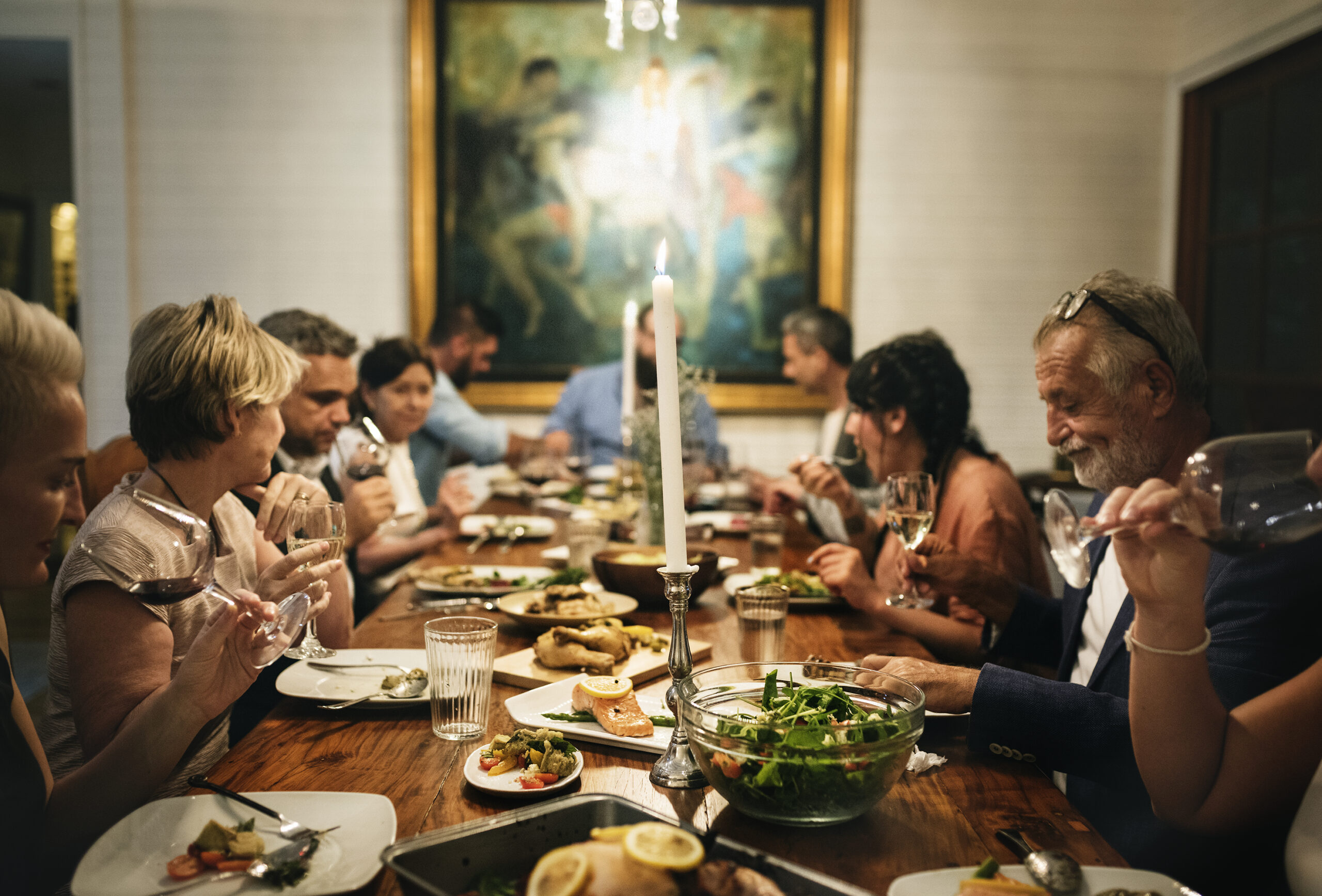
I think about a long table and a toast and a wave of laughter. A basement, and a cart with a bad wheel. A woman of eighty-nine in a gray suit, setting down a wine glass with a very small sound.
I tell them that some questions are very simple, and that the hardest thing in the world is to ask one honestly. And if you’re lucky, once or twice in your life, somebody will ask one of you, then sit with their chin in their hand and wait until you’ve finished answering.
Then I go back to work.
Last Tuesday, at four in the morning, the freight elevator at the Heart Institute stopped again. It was a small thing, a faulty relay. I happened to be in the building, as I often am, and I heard it come over the radio. I took the stairs.
I carried a box of forms up three flights.
On the cardiac floor, a young nurse looked up from the station. She was twenty-three, brand new, in scrubs a size too big. She stared at my badge.
“Ms. Kerr?” she whispered. “You’re the COO. What are you doing?”
I knelt at the station and started sorting the charts.
“Filing,” I said. “It’s a very good job.”

Laura Bennett writes about complicated family dynamics, difficult conversations, and the quiet moments that change everything. Her stories focus on real-life tensions — inheritance disputes, strained marriages, loyalty tests — and the strength people find when they finally speak up. She believes the smallest decisions often carry the biggest consequences.