The Swallow Pendant
Part One: The Courtyard
My name is Zofia Lewin Berman. Everyone has called me Zoe since I came to America, but that was not the name my mother gave me.
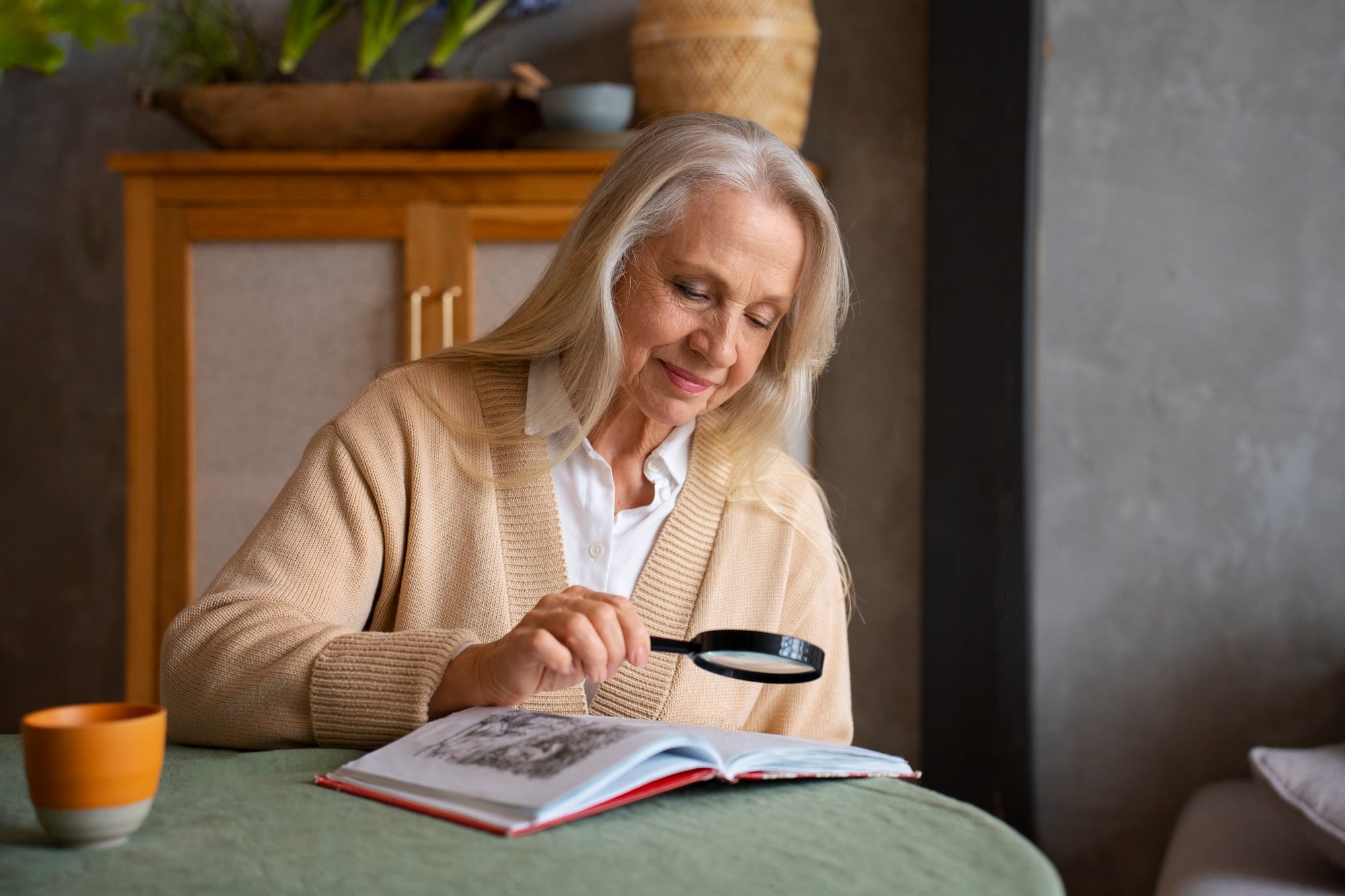
I’m ninety-six years old. I live in a brick two-flat on the Northwest Side of Chicago with my granddaughter, Maya, and a cat named Pierogi who believes he owns the building. My knees don’t work as well as they used to, and my eyes need glasses thick as the bottom of a jar. But my memory is still very good.
Sometimes too good.
I was born in Warsaw in 1929, in an apartment building on Twarda Street. It was four stories tall, yellow stone, with iron balconies and a courtyard in the middle where children played and women hung laundry on lines strung between the windows.
My family lived on the third floor. My father was a watchmaker with a small shop around the corner. My mother taught piano to the children of doctors and lawyers. My little brother, Aron, was four years younger than me and followed me everywhere like a duckling.
Our grandmother lived with us too. Babcia Ruchla. She had white hair pinned up in a bun and hands that smelled of cinnamon, and every Friday evening she lit two tall brass candlesticks on our dining table and sang a blessing in a voice so soft you had to lean in to hear it.
Across the hall from us lived the Nowak family.
Mr. Nowak drove a streetcar. Mrs. Nowak sewed dresses for half the women in the building. They had one son, Stanislaw, who was eleven months older than me and the most stubborn boy in all of Warsaw.
He had brown hair that stuck up in the back no matter how much his mother wet it down. He had a gap between his front teeth and freckles across his nose, and he could whistle louder than anyone I’d ever heard.
He was my best friend.
We walked to school together every morning. His school was Catholic and mine was not, but they were on the same street, so we walked side by side until the corner. Then he’d go left and I’d go right, and we’d meet at the same corner every afternoon.
We traded books. He liked adventure stories about pirates and explorers. I liked stories about girls who did brave things. We’d read each other’s favorites and then argue about them for days.
In the summer, we stayed outside in the courtyard until our mothers leaned out the windows and called us home. We played tag with the other children. We caught fireflies in jars. We sat on the stone steps and talked about what we’d do when we grew up.
He wanted to build bridges.
“Big ones,” he said. “Over rivers. So big they reach the clouds.”
“Bridges don’t reach the clouds,” I said.
“Mine will,” he said.
I wanted to be a teacher. Like my mother, but for reading instead of piano.
“You’d be good at that,” Stanislaw said. “You’re always telling me what to do.”
I hit him on the arm. He laughed so hard he fell off the step.
Part Two: The Promise
It was a warm evening in June of 1939. I was ten years old.
We were sitting on the stone steps in the courtyard, eating cherries from a paper bag his mother had bought at the market. We were spitting the pits into a flowerpot to see who could get them in from farther away. I was winning.
The sun was going down, and the yellow walls of our building had turned orange and pink. Somebody upstairs was playing a gramophone. The swallows were diving over the rooftops the way they did every summer evening, swooping and turning in the last of the light.
Stanislaw stopped spitting cherry pits. He got very quiet, which was unusual for him.
“Zofia,” he said. “When we grow up, I’m going to marry you.”
I laughed. I couldn’t help it. He looked so serious, with cherry juice on his chin.
“Fine,” I said. “But you’d better not forget.”
He held out his hand. His little finger was crooked from when he’d broken it falling out of a tree.
“I promise,” he said.
I hooked my finger around his.
Then he reached into his pocket and pulled out something wrapped in a handkerchief.
He unwrapped it carefully. Inside was a tiny pendant on a thin chain. A swallow, made of silver and blue enamel, about the size of my thumbnail. Its wings were spread like it was flying.
“My mother let me pick it out,” he said. “From the shop on Marszałkowska. I saved for four months.”
He held it out to me.
“Swallows always come back,” he said. “Every spring. No matter how far they fly. That’s how you’ll remember.”
I put it on. It sat right at the base of my throat, cool against my skin.
“I’ll never take it off,” I said.
“You’d better not,” he said.
And then he went back to spitting cherry pits like nothing had happened. I won that contest too.
That was the last summer evening we ever spent together.
Part Three: September
By August, everyone in our building was whispering.
The grown-ups gathered in the stairwell and talked in low voices. My father stayed late at his shop listening to the radio. My mother stopped giving piano lessons. Babcia Ruchla spent more time at the window than she used to, watching the street.
I didn’t understand most of what they said. I only understood that something was coming, and that the grown-ups were afraid.
One night at the end of August, my father sat me down at the kitchen table.
“Zofia,” he said. “We’re going on a trip. A long one. To America.”
“America?” I said. “Why?”
He didn’t answer right away. He looked at my mother. My mother looked at the floor.
“Because it’s safer,” he said finally. “For people like us. My cousin in Chicago sent us papers. We have to go now, while we still can.”
“When?” I asked.
“Tomorrow night,” he said.
“What about Stanislaw?”
My father put his hand on mine.
“You can say goodbye in the morning,” he said. “But you can’t tell him where we’re going, Zofia. You can’t tell anyone. Do you understand?”
I didn’t understand. But I nodded.
I didn’t get to say goodbye.
In the morning, the Nowaks’ door was locked. Mrs. Nowak had taken Stanislaw to visit her sister in the countryside for two days. They’d left before dawn.
I stood in front of their door for a long time. I knocked. Nobody answered.
We left that night.
We could each bring one suitcase. My mother packed clothes and photographs. My father packed his watchmaker’s tools wrapped in velvet. Aron packed his wooden horse.
I packed my school notebook, two dresses, and the book Stanislaw had lent me the week before. It was an adventure story about two children lost in Africa. I hadn’t finished it yet.
Babcia Ruchla didn’t come.
She stood in the doorway in her nightgown and refused. She said she was too old for boats and trains and strange countries. She said she’d been born in Warsaw and she’d die in Warsaw. She said somebody had to stay and keep the apartment.
My father begged her. My mother cried. Babcia only shook her head.
“I’ll be fine,” she said. “The Nowaks are right across the hall. They’ll look after me.”
She kissed each of us on the forehead. When she got to me, she held my face in her cinnamon-smelling hands.
“Be brave, my little bird,” she said. “And come back someday.”
Then she pressed something into my hand. A small iron key on a loop of string.
“The key to our door,” she said. “So you can always get back in.”
We left Warsaw on a train at midnight. Then another train. Then a boat. Then another boat, much bigger, that took eleven days to cross the ocean.
On September first, while we were on the train to the coast, the war began.
We arrived in New York in October. Then we took a train to Chicago, where my father’s cousin had found us a tiny apartment above a bakery on Milwaukee Avenue.
It was cold. The buildings were tall and dark. Everyone spoke English so fast I couldn’t understand a word.
My teacher at the new school couldn’t pronounce Zofia. She called me Sophie. Then the other children started calling me Zoe. By the end of the first year, even my parents had started using it.
Part Four: The Silence
We wrote letters.
My mother wrote to Babcia every week. I wrote to Stanislaw. I told him about Chicago, about the lake that looked like an ocean, about the snow that came up to my knees. I told him I still wore the swallow every day.
None of the letters were ever answered.
The war went on for six years.
We heard things on the radio. Terrible things. We saw pictures in the newspapers that my mother tore out and hid before Aron could see them. My father stopped talking at dinner. He’d sit at the table and stare at nothing, turning his wedding ring around and around on his finger.
When the war ended in 1945, my father wrote to the Red Cross. He wrote to every agency and organization he could find. He asked about Babcia Ruchla. He asked about the Nowak family. He asked about our building on Twarda Street.
The answers came slowly, over many years.
Our building had been destroyed. Most of the street was gone. There were no records of Ruchla Lewin after 1942. There were no records of the Nowak family at all.
My father put the letters in a drawer and never spoke about them again.
I kept the swallow pendant.
I wore it every day through high school. I wore it when I went to college at the University of Illinois and studied to become a teacher, just like I’d told Stanislaw I would.
I wore it the day I met Abe Berman at a dance at the Jewish community center. He was tall and gentle and laughed at all my jokes, even the bad ones.
I married Abe in 1951.
On my wedding day, I took the swallow off for the first time in twelve years. I put it in a small velvet box in my dresser drawer.
I told myself it was time to let go.
Part Five: A Long Life
Abe and I had a good life. A very good life. I want to make sure you understand that.
We had three children. Ruth, David, and Miriam. We bought a little brick house in Albany Park. Abe worked as an accountant for forty years. I taught third grade at a public school on Lawrence Avenue for thirty-four years.
I taught thousands of children to read. Some of them were immigrants like I’d been, who arrived not knowing a word of English. I always made sure to learn how to pronounce their names correctly.
Abe died in 2009. A stroke, very fast. He was eighty-two. We’d been married fifty-eight years.
After the funeral, I sat alone in our bedroom and opened the dresser drawer. The velvet box was still there.
I took out the swallow. I held it for a long time.
I didn’t put it on. But I didn’t put it back in the drawer either. I kept it in my pocket for a week before I finally returned it.
My children grew up and had children of their own. I became a grandmother. Then a great-grandmother.
Poland and Stanislaw became distant memories from another life. Sometimes I dreamed about the courtyard on Twarda Street. The orange light on the yellow walls. The swallows diving over the rooftops. Cherry pits in a flowerpot.
But when I woke up, I was in Chicago, and I was old, and that little girl was gone.
My granddaughter Maya moved in with me three years ago.
She’s my daughter Miriam’s youngest. She’s twenty-nine, with dark curly hair like mine used to be and a laugh like Abe’s. She’s a physical therapist. She helps old people learn to walk again after strokes and surgeries.
She said she moved in to help me with groceries and stairs. But I think she moved in because she was lonely after a breakup and needed somewhere soft to land. We take care of each other.
When Maya graduated from her physical therapy program, I gave her the swallow pendant.
I’d thought about it for a long time. My daughters had never been interested in old jewelry. My other grandchildren lived far away.
But Maya used to sit with me when she was little and ask about Warsaw. She was the only one who ever wanted to hear the stories. She would sit on the floor with her chin in her hands and say, “Tell me about the courtyard again, Grandma.”
“It’s a swallow,” I told her, as I fastened it around her neck. “They always come back. No matter how far they fly.”
She touched it with her fingertips.
“Who gave it to you?” she asked.
“A boy,” I said. “A long time ago. In Warsaw.”
She smiled. “Was he cute?”
“He had a gap in his teeth and cherry juice on his chin,” I said. “He was the most stubborn boy in Poland.”
Maya laughed.
She’s worn it every day since.
Part Six: The Package
It was a Tuesday evening in early October. The leaves on the maple tree outside our window were turning red. I was in the kitchen making chicken soup, because it was cold and Maya had looked tired that morning.
I heard her come up the stairs. She was walking slower than usual.
When she came into the kitchen, she was holding a small package. It was wrapped in brown paper and tied with old-fashioned string.
Her face looked strange. Pale.
“Grandma,” she said. “Something really strange happened at work today.”
I turned off the stove.
“What happened?” I asked.
She set the package on the kitchen table very carefully, like it might break.
“You know I’ve been working at Saint Hedwig’s Senior Residence,” she said. “On Belmont Avenue.”
“The Polish one,” I said. “Yes.”
“There’s a man there,” Maya said. “He’s in the memory care wing, but he’s not confused. He just moved there because he fell last spring and broke his hip. I’ve been doing his physical therapy for six weeks.”
She sat down at the table.
“He’s very old,” she said. “Ninety-seven, I think. He doesn’t talk much. He mostly just watches the window. But he’s always polite. He always says thank you in Polish.”
“Today,” Maya said, “I was helping him with his walker exercises. And he kept staring at me. At my neck.”
She reached up and touched the swallow pendant.
“He asked where I got it,” she said. “I told him my grandmother gave it to me. He asked where my grandmother was from. I said Warsaw.”
Her voice got very quiet.
“He stopped walking,” she said. “He just stood there holding the walker, staring at me. And then he asked if my grandmother’s name was Zofia.”
My heart skipped.
Nobody had called me Zofia in decades. In America, everyone knew me as Zoe. Even my children. Even Abe, most of the time.
“What did you say?” I asked.
“I said yes,” Maya said. “And he sat down right there in the hallway. On the floor. With his broken hip. The nurses came running.”
My hands were shaking. I put them on the table to make them stop.
“Is he all right?” I asked.
“He’s fine,” Maya said. “He wouldn’t let them help him up for a long time. He just sat there crying. Then he asked me to wait. He asked one of the nurses to bring something from his room.”
She pushed the package toward me across the table.
“He asked me to give you this,” she said.
“How did he know you were my granddaughter?” I asked. My voice sounded very far away.
“The swallow,” Maya said. “He said he’d know it anywhere. He said he picked it out himself.”
I couldn’t breathe.
“Did he tell you his name?” I asked.
Maya shook her head.
“No,” she said. “I asked. He said you’d know. He said if you didn’t know, then it didn’t matter.”
“He asked me to tell you one more thing,” Maya said.
“What?”
She looked at me with her dark eyes. Abe’s eyes.
“He said,” she said slowly, “you have to keep your promise.”
Part Seven: What Was Inside
My hands began to tremble so badly that Maya had to help me untie the string.
The paper was old. Soft. It had been folded and unfolded many times. Inside was a small wooden box, the kind that cigars used to come in, with a brass clasp.
I opened it.
The first thing I saw was a book.
A small hardcover, faded green, with a picture of an elephant and two children on the cover. The corners were worn round. The spine was cracked.
W pustyni i w puszczy. In Desert and Wilderness. The adventure story about two children lost in Africa.
The book I’d borrowed from Stanislaw in August of 1939. The book I’d taken with me on the train. The book I’d thought I’d lost somewhere in the crossing.
No.
I hadn’t taken it.
I remembered now. I’d left it on the kitchen table that last night, in the rush, while my mother was crying and Babcia was refusing to come. I’d meant to grab it. I never did.
I opened the cover with shaking fingers. On the first page, in a child’s careful handwriting, it said:
This book belongs to Stanislaw Nowak. Lent to Zofia Lewin. She has to give it back.
Under the book was a photograph.
It was small and brown and curled at the edges. Two children sitting on stone steps. A boy with hair sticking up in the back and a gap in his front teeth. A girl with dark braids and a tiny pendant at her throat.
They were both squinting into the sun. The boy was grinning. The girl was laughing.
I had never seen this photograph before. I didn’t even know it existed.
On the back, in faded pencil, someone had written: Staś i Zosia. Czerwiec 1939.
Stas and Zosia. June 1939.
Under the photograph was something wrapped in a scrap of faded blue fabric.
I unwrapped it.
It was a ring.
Not a real ring. A child’s ring, made from a twist of copper wire, with a tiny blue glass bead where a stone would go. The wire was dark with age. The bead was chipped.
And under the ring was a small iron key on a loop of string.
My grandmother’s key.
The key she had pressed into my hand at the door. The key I had held in my fist on the train. The key I thought I’d lost somewhere between Warsaw and Chicago.
I had not lost it.
I’d left it on the table too. Beside the book.
At the bottom of the box was a folded piece of paper.
I unfolded it. It was a letter, written in Polish, in shaky old-man handwriting.
I hadn’t read Polish in years. I had to go slowly.
Zofia,
I kept the book. I kept the key. I made the ring the week after you left, because I wanted to be ready when you came back.
You did not come back. But I never stopped being ready.
I am at Saint Hedwig’s, Room 214. I am very old and very slow. But I am still the most stubborn boy in Warsaw.
You said I’d better not forget.
I didn’t.
Staś
The moment I finished reading, I lost the ability to speak.
I sat at my kitchen table with a cigar box in my lap, holding a copper wire ring and a little iron key, and I cried like I had not cried since I was ten years old.
Maya came around the table and wrapped her arms around me.
She didn’t say anything. She just held on.
Part Eight: Room 214
We went the next morning.
Maya drove. I sat in the passenger seat holding the cigar box on my lap. I’d put on my good blue dress and my pearl earrings, and then I’d taken them off, and then put them back on. I felt ridiculous. I felt ten years old.
“Grandma,” Maya said gently at a red light. “Are you okay?”
“I’m ninety-six years old,” I said. “And I’m nervous about meeting a boy.”
Maya laughed. Then she reached over and squeezed my hand.
Saint Hedwig’s Senior Residence is a red brick building on Belmont Avenue with white columns and a garden out front full of marigolds. A statue of a saint stands near the entrance. The lobby smelled like coffee and floor polish.
Maya signed us in at the front desk. She pushed my wheelchair down a long hallway with framed pictures of Polish churches on the walls.
We stopped in front of Room 214.
The door was open.
Inside was a small room with a bed, a dresser, an armchair by the window, and a bookshelf crammed with books. On the windowsill was a pot of red geraniums.
In the armchair by the window sat an old man.
He was small, the way very old men get small. His shoulders were stooped. His hands were spotted and knotted with arthritis, folded on top of a wooden cane. He wore a gray cardigan buttoned wrong.
His hair was white and thin. But it stuck up in the back.
He turned his head when he heard the wheelchair.
He looked at me.
For a long moment, neither of us said anything.
Then he smiled.
And there, between his front teeth, was the gap.
“Zosia,” he said.
His voice was thin and cracked, like an old record. But I knew it. I knew it the way you know a song you haven’t heard in eighty-seven years.
“Staś,” I whispered.
He tried to stand up. Maya rushed forward to help him, but he waved her away. He pushed himself up on his cane, one inch at a time, until he was standing.
Then he walked toward me. Slowly. Three steps. Four.
He stopped in front of my wheelchair. He looked down at me with watery blue eyes.
“You got old,” he said.
“So did you,” I said.
“I’m still taller,” he said.
And then we were both laughing. And crying. And he was bending down, and I was reaching up, and we held on to each other in the middle of Room 214 at Saint Hedwig’s Senior Residence while my granddaughter stood in the doorway with her hands over her mouth.
Part Nine: What Happened
We talked for six hours that first day.
Maya brought us coffee and sandwiches from the cafeteria. Then she brought us dinner. Then she sat in the hallway with her phone and called her mother and her aunt and her uncle and told them all to come.
Stanislaw and I sat by the window with our knees almost touching, holding hands like children.
He told me everything.
When his mother brought him back from the countryside that September, he ran up the stairs to our apartment. The door was open. We were gone.
Babcia Ruchla was sitting alone at the dining table with the brass candlesticks.
“Where’s Zofia?” he asked.
Babcia shook her head. She held out the book and the key.
“She left these for you,” she said. “By accident. Keep them safe for her.”
The war came. Warsaw was bombed. Our building was damaged but still standing. The Nowaks stayed.
When things got worse, when people like my grandmother were being taken from their homes, Mrs. Nowak did something very brave and very dangerous.
She brought Babcia Ruchla across the hall to their apartment. She hid her in a small room behind a wardrobe.
“For two years,” Stanislaw said, “your grandmother lived with us. She slept in that little room. She taught me to play chess. She taught my mother to make cinnamon bread. Every Friday night, after the curtains were closed, she lit those two candles and sang. Very quietly.”
He swallowed.
“I learned the words,” he said. “I still know them.”
Babcia got sick in the winter of 1942. Pneumonia. There was no doctor they could call, no hospital where she would be safe.
Mrs. Nowak sat with her every night. So did Stanislaw.
“She died in February,” he said. “In her sleep. My mother held her hand.”
He squeezed my fingers.
“Her last words were about you,” he said. “She said, Tell my little bird she was right to go. Tell her to come back someday.”
I couldn’t speak.
For eighty-four years, I had not known what happened to my grandmother. My father had searched until the day he died. There were no records. No grave. No answers.
And all that time, she’d been safe. Loved. Held. By the family across the hall.
“We couldn’t bury her properly,” Stanislaw said quietly. “It wasn’t safe. My father and I carried her at night to the old cemetery on Okopowa Street. We put her near the wall. My mother wrote her name on a stone and buried it beside her, so someone would know someday.”
He looked at me.
“After the war,” he said, “I went back. The stone was still there. I had a proper marker made. It says Ruchla Lewin. Grandmother. Beloved.”
Part Ten: Chicago
“The Uprising came in 1944,” Stanislaw said. “I was fifteen. I carried messages through the sewers. My father was killed in the fighting. My mother and I survived. Barely.”
He looked out the window at the marigolds.
“After the war, I studied engineering,” he said. “In Kraków. I built bridges. Real ones. Over the Vistula.”
“Did they reach the clouds?” I asked.
He laughed.
“Not quite,” he said. “But almost.”
He married a woman named Halina in 1954. They had two sons. In 1958, when things in Poland were very hard, they came to America.
To Chicago.
I stared at him.
“You’ve been in Chicago,” I said slowly, “since 1958?”
“Avondale,” he said. “Then Jefferson Park. Then Norwood Park.”
“I lived in Albany Park,” I said. “Since 1952.”
“Two miles,” he said. “Maybe three.”
We looked at each other for a long time.
Sixty-eight years. Two miles. Maybe three.
“I looked for you,” Stanislaw said. “When I first came. I went to the Jewish agencies. I put notices in the newspapers. I asked for Zofia Lewin.”
He shook his head.
“Nobody had heard of her,” he said. “There was no Zofia Lewin anywhere.”
“Because I was Zoe Berman,” I whispered.
“Because you were Zoe Berman,” he said.
He’d kept looking for years. Every time he met someone from Warsaw, he asked. Every time he saw a dark-haired woman about my age on the bus or at the market, his heart jumped.
Then life got busy. Children. Work. Bridges. Halina got sick. Halina died in 2016.
“I thought you must be gone,” he said. “I thought you must have died somewhere. Or forgotten me.”
“I didn’t forget,” I said.
“I know,” he said. “You gave the swallow to your granddaughter. Nobody gives away something they’ve forgotten.”
Part Eleven: The Candlesticks
Near the end of that first day, when the light outside was turning orange, Stanislaw asked Maya to open his closet.
“Top shelf,” he said. “In the back. A box wrapped in a towel.”
Maya stood on a chair and found it. She carried it to his lap.
Stanislaw unwrapped the towel slowly with his knotted hands.
Inside were two brass candlesticks.
Tall. Tarnished. One with a small dent near the base where Aron had knocked it off the table when he was three.
My grandmother’s Sabbath candlesticks.
I put both hands over my mouth.
“My mother kept them,” Stanislaw said. “Through the war. Through the Uprising. She wrapped them in a blanket and buried them under the floor when the soldiers came. When we left Warsaw, she put them in her suitcase.”
He looked at them.
“When we came to America, she put them in mine,” he said. “She told me, These belong to the Lewins. If you ever find that girl, you give them back.”
He held them out to me.
“My mother died in 1971,” he said. “She asked about you on her last day. She asked if I’d found you yet.”
His eyes filled with tears.
“I told her not yet,” he said. “She said, Then keep looking, Staś. Swallows always come back.”
I took the candlesticks.
They were heavy. Heavier than I remembered. Or maybe I was just weaker.
I held them against my chest. They smelled like brass and old wood and something faint and sweet underneath. Cinnamon, maybe. Or maybe I just wanted it to be.
That Friday evening, my whole family came to Saint Hedwig’s.
My daughters Ruth and Miriam. My son David and his wife. Five of my grandchildren. Two great-grandchildren in strollers. Stanislaw’s son Tomasz came too, with his wife and teenage daughter.
There were too many of us for Room 214. The staff let us use the small chapel at the end of the hall.
We set the candlesticks on a table at the front. Maya bought two white candles at the drugstore on the way.
When the sun went down, I stood up from my wheelchair. Maya held one arm. Stanislaw held the other.
I struck the match. My hands were shaking so badly it took three tries.
I lit the candles.
I covered my eyes the way my grandmother did. I tried to remember the words.
I couldn’t. It had been too long. The words were gone.
Then, beside me, very softly, an old man’s voice began to sing.
Stanislaw sang the blessing. In my grandmother’s tune. Every word. Every note.
He’d learned it in a hidden room behind a wardrobe in Warsaw, from a white-haired woman who smelled like cinnamon. He’d carried it for eighty-four years.
I took my hands away from my eyes and looked at him. Tears were running down his wrinkled cheeks.
When he finished, the chapel was completely silent.
Then my great-granddaughter, who is four, said very loudly, “Is that grandpa Grandma’s boyfriend?”
Part Twelve: The Promise
Over the next month, I visited Stanislaw every day.
Maya drove me before her shifts. Some days we sat by his window and talked about Warsaw. Some days we didn’t talk at all. We just held hands and watched the leaves fall from the maple trees on Belmont Avenue.
He read the end of In Desert and Wilderness out loud to me. In Polish. Slowly. I’d never found out how it ended.
The children made it home safely. Of course they did.
One afternoon in early November, he took the copper wire ring out of the cigar box.
He held it in his crooked fingers.
“I made this out of wire from my father’s toolbox,” he said. “The bead was from my mother’s sewing basket. I was going to give it to you when you came back.”
He looked at me.
“I’m ninety-seven, Zosia,” he said. “I don’t have many more springs. But I made you a promise on those stone steps. And you said I’d better not forget.”
My heart was pounding.
“Staś,” I said. “We’re very old.”
“I know,” he said.
“I was married for fifty-eight years. To a wonderful man.”
“I know,” he said. “So was I. To a wonderful woman.”
He smiled his gap-toothed smile.
“They’d understand,” he said. “Halina knew all about you. She used to tease me. She’d say, If your little Warsaw girl ever shows up, I’m going to fight her.”
I laughed so hard I had to wipe my eyes.
“Will you keep your promise?” he asked.
I looked at the ring. At the chipped blue bead. At the old man holding it in his shaking hands.
At the boy with cherry juice on his chin.
“Fine,” I said. “But you’d better not forget.”
Part Thirteen: The Wedding
We were married on the second Sunday of December, in the little chapel at Saint Hedwig’s.
It was not a big wedding. Both of our families came. A few of the residents and nurses. Maya was my maid of honor. Stanislaw’s granddaughter, Ola, was his best person.
A rabbi and a priest stood together at the front of the chapel. They’d never done a ceremony together before. They said it was the most beautiful wedding either of them had ever performed.
I wore my good blue dress and my pearl earrings. Maya put the swallow pendant around my neck. It sat at the base of my throat, exactly where it had been when I was ten years old.
Stanislaw wore a gray suit that his son had to help him button. His hair still stuck up in the back.
He stood the whole ceremony, leaning on his cane. He wouldn’t sit down.
When it was time for the ring, he took out the copper wire ring with the chipped blue bead.
It didn’t fit. It was made for a ten-year-old’s finger. It stopped at my second knuckle.
We both laughed. The whole chapel laughed.
“I should have measured,” Stanislaw said.
“You were ten,” I said.
Maya stepped forward. She’d brought a thin gold chain from her jewelry box. She threaded the copper ring onto it and fastened it around my neck, beside the swallow.
The ring and the swallow sat together, touching, right over my heart.
At the end, the rabbi and the priest asked if we’d like to say anything to each other.
Stanislaw held my hands in his.
“I promised I’d marry you,” he said. “I’m sorry it took so long.”
I squeezed his fingers.
“You kept it,” I said. “That’s what matters.”
My granddaughter cried. My daughters cried. Stanislaw’s son cried. Even the priest took off his glasses and wiped his eyes.
Then the four-year-old said loudly, “Do they get to have cake now?”
We had cake.
Part Fourteen: Spring
We had one winter together.
I moved into Room 215, across the hall from him. Just like Twarda Street. Every morning, I’d knock on his door, and every morning he’d say, “Who’s there?” like he didn’t know.
We read books together. We argued about them. He still liked adventure stories. I still liked stories about brave girls.
We played chess. He’d learned from my grandmother in a hidden room in Warsaw. He beat me every single time.
On Friday nights, we lit the candlesticks together in my room. The nurses learned the words. So did a few of the other residents, a retired Catholic schoolteacher named Wanda and a former train conductor named Jerzy, who both started coming every week.
“It’s nice,” Wanda told me once. “To have something that comes back. Every week.”
In March, Stanislaw got pneumonia.
He went to the hospital for a few days. Then he came back to Saint Hedwig’s. The doctors said there was nothing more they could do. They said he should be comfortable.
He was ninety-seven. He’d had a long life. He’d built bridges. He’d kept a promise for eighty-seven years.
He was tired.
On the last afternoon, I sat beside his bed and held his hand. Maya sat on the other side. His son Tomasz stood by the window.
The window was open a crack. It was the first warm day of the year. You could smell the dirt in the garden where the marigolds would be planted soon.
Stanislaw opened his eyes. He looked at the window.
“Zosia,” he whispered. “Listen.”
I listened.
Outside, high above Belmont Avenue, I heard them. Thin, chattering calls. Little dark shapes diving and swooping over the rooftops.
The swallows had come back.
Stanislaw smiled. The gap in his teeth. The same smile from the stone steps.
“See?” he whispered. “They always come back.”
He squeezed my hand.
“So did you,” he said.
He closed his eyes.
He died a little after sunset. I was holding his hand. Just like his mother had held my grandmother’s.
Part Fifteen: Twarda Street
In June, Maya took me to Warsaw.
My children thought I was crazy. I’m ninety-seven now. My knees are terrible. I hadn’t been on an airplane in fifteen years.
“Grandma,” Maya said, when she first suggested it, “you don’t have to go.”
“I do,” I said. “I have a key.”
Our building on Twarda Street is gone. A tall glass office building stands in its place. But the street is still there. A small part of the old courtyard wall survived, on the side of the building next door. The yellow stone has turned gray.
Maya pushed my wheelchair to the wall. I put my hand on the old stones.
I closed my eyes. For a moment, I could hear children playing. A gramophone upstairs. Somebody’s mother calling them home.
Then we went to the old cemetery on Okopowa Street.
It took a long time to find. The cemetery is huge and overgrown, full of trees and tilted stones. Maya pushed my wheelchair along the narrow paths for almost an hour.
Near the old wall, under a big linden tree, we found it.
A small gray stone, clean and well cared for. Someone had been tending it. Someone had planted geraniums around it.
RUCHLA LEWIN
Grandmother. Beloved.
Hidden by the Nowak family, 1940–1942.
“Come back someday.”
I sat in my wheelchair in front of my grandmother’s grave and cried for a long time.
Maya knelt beside me and held my hand.
When I could speak again, I reached into my purse. I took out the little iron key on its loop of string.
The key to our door on Twarda Street. The key my grandmother pressed into my hand. The key Stanislaw kept for eighty-six years.
I set it on top of the stone.
“I came back, Babcia,” I said. “Like you asked. I’m sorry it took so long.”
Then I took out a small brass candlestick from my bag. Maya helped me light the candle inside. I covered my eyes.
This time, I remembered every word.
When I opened my eyes, there was a swallow sitting on the branch of the linden tree above us.
Just sitting there. Watching.
Maya saw it too. She squeezed my hand so hard it hurt.
“Grandma,” she whispered.
“I know,” I said.
The swallow tilted its head. Then it opened its wings and flew up, high over the cemetery wall, out over the rooftops of Warsaw, until it disappeared into the sky.
I’m home in Chicago now, in our brick two-flat with Maya and Pierogi the cat. The candlesticks sit on our dining table. We light them every Friday.
The copper ring and the swallow hang on a gold chain around my neck. I don’t take them off. Not ever.
In Desert and Wilderness sits on my nightstand. Some nights, I read a few pages before bed. In Polish. Slowly.
On the first page, a child’s handwriting still says: Lent to Zofia Lewin. She has to give it back.
I’m going to give it to Maya someday. With the swallow and the ring and the candlesticks and all the stories.
I’ve already told her what to say when she does.
I told her to tell the next person what Stanislaw told me on the stone steps. What his mother told him on her last day. What my grandmother told me at the door.
That the people we love are like swallows.
They fly very far away. Sometimes for a very long time. Sometimes so long you think they’ll never return.
But if you keep your promises, and you keep the door open, and you never forget—
They always come back.
Sophia Rivers is an experienced News Content Editor with a sharp eye for detail and a passion for delivering accurate and engaging news stories. At TheArchivists, she specializes in curating, editing, and presenting news content that informs and resonates with a global audience.
Sophia holds a degree in Journalism from the University of Toronto, where she developed her skills in news reporting, media ethics, and digital journalism. Her expertise lies in identifying key stories, crafting compelling narratives, and ensuring journalistic integrity in every piece she edits.
Known for her precision and dedication to the truth, Sophia thrives in the fast-paced world of news editing. At TheArchivists, she focuses on producing high-quality news content that keeps readers informed while maintaining a balanced and insightful perspective.
With a commitment to delivering impactful journalism, Sophia is passionate about bringing clarity to complex issues and amplifying voices that matter. Her work reflects her belief in the power of news to shape conversations and inspire change.