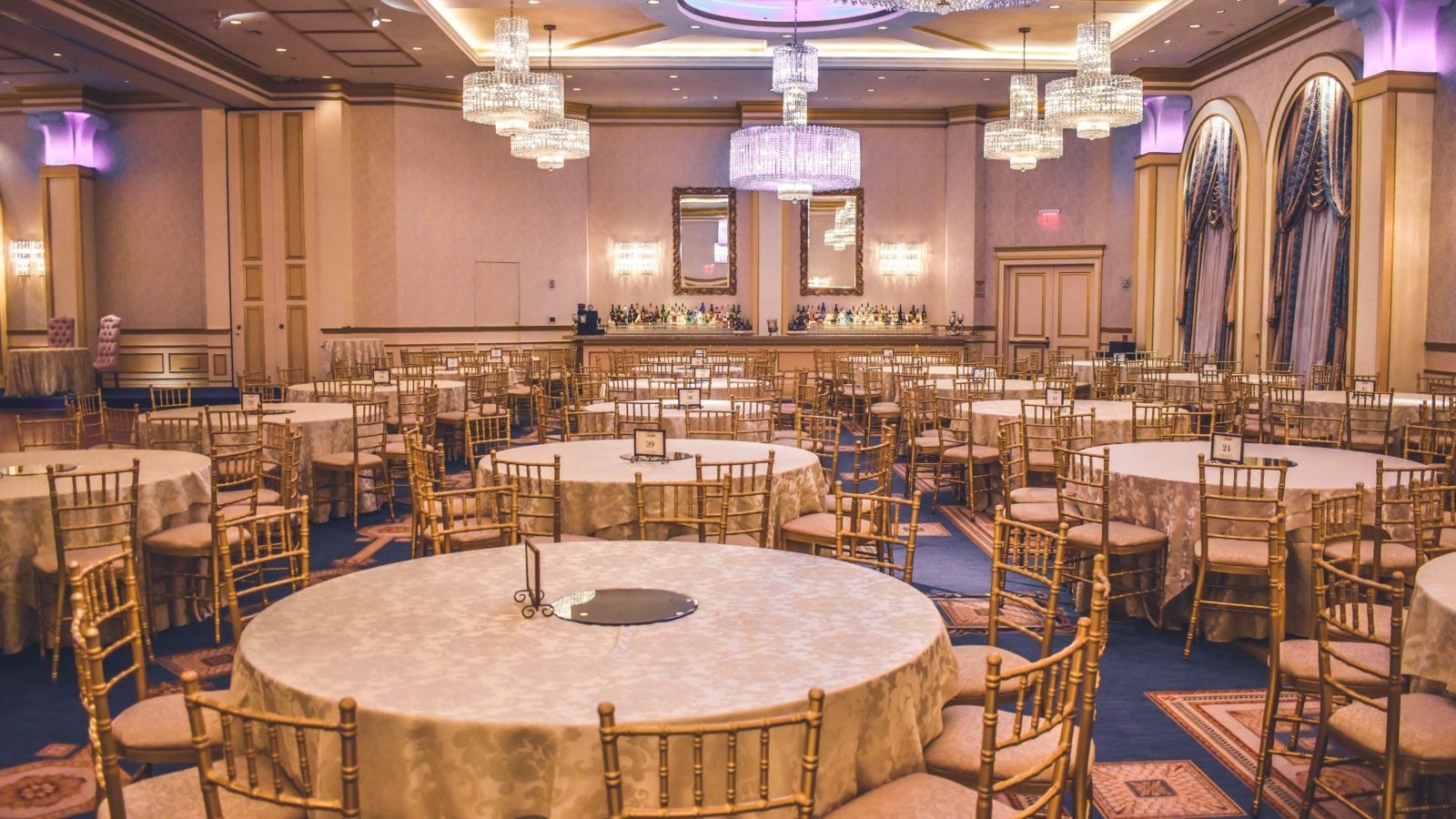
The crack of Derek’s palm against my face echoed through the ballroom like a gunshot.
My head snapped sideways with the impact. I tasted blood where my lip caught against my teeth. For a second, the crystal chandeliers overhead blurred into streaks of gold light.
Then I slowly turned and faced my brother again.
Derek was breathing hard, his hand still half-raised, as if hitting me had finally put me back where he believed I belonged. He straightened his tuxedo jacket like the matter was settled.
Beside him, my mother smiled.
“Maybe now you’ll remember where you came from,” Patricia said.
I did remember. I remembered a black trash bag cutting into my fingers when I was nineteen. I remembered sixty-three dollars in my wallet and a cheap motel near the Greyhound station in Norfolk. I remembered eating saltine crackers for dinner because I was afraid to spend six dollars on a sandwich, and crying into a motel towel so the strangers in the next room wouldn’t hear me.
But I remembered everything that came afterward too.
My name is Claire Bennett. I’m forty-four years old. I have served in the United States Navy for twenty-five years.
And I had just been slapped across the face by my brother in front of nearly four hundred Navy officers, veterans, chiefs, and SEALs, at the annual Navy Heritage Gala at a waterfront hotel in Norfolk, Virginia.
Derek had never served a single day in his life. Yet five minutes earlier, my mother had wrapped both hands around his arm and proudly told a guest, “My son is the real soldier.”
What neither of them had noticed was that the instant his hand struck my cheek, every conversation in that ballroom stopped.
I looked past Derek toward the nearest table. A retired Master Chief named Thomas Keating had been halfway out of his chair when it happened. Keating was seventy-one, with a white crew cut and forty years of service behind him, including two tours in Vietnam on river patrol boats. He’d been one of my first chiefs, back when I was a terrified ensign who didn’t know the difference between a bulkhead and a hatch.
Now he was standing completely upright, his face absolutely still.
Then I heard another chair scrape backward. And another.
Derek’s expression changed.
Across the ballroom, men and women began standing. Senior officers in dress whites. Gray-haired veterans wearing their old ribbons on blazers. SEALs with close-cropped hair and the thick necks of men who’d spent their lives carrying heavy things. Chiefs. Junior sailors. People who had spent decades learning exactly what the insignia on my shoulders meant.
Nearly four hundred chairs moved at once.
My mother’s smile disappeared.
Derek looked around like a man who’d just realized he’d walked into the wrong room.
Master Chief Keating stepped into the aisle, looked directly at the hotel security officers by the doors, and said one word.
“Security.”
Then Derek turned back toward me, and for the first time that night, he stopped looking at my face and actually looked at my uniform. His eyes traveled slowly upward.
They stopped on my shoulders, on the shoulder boards with the broad gold stripe and the single silver star.
I watched the color drain from my brother’s face.

Specialty: Quiet Comebacks & Personal Justice
David Reynolds focuses on stories where underestimated individuals regain control of their lives. His writing centers on measured decisions rather than dramatic outbursts — emphasizing preparation, patience, and the long game. His characters don’t shout; they act.