“Debbie, is that Gary in your driveway?”
My neighbor Linda was calling from across the street. I could see her through my front window, standing at her own living room window in her bathrobe with the phone pressed against her ear and the curtain pulled back.
I looked outside.
There he was.
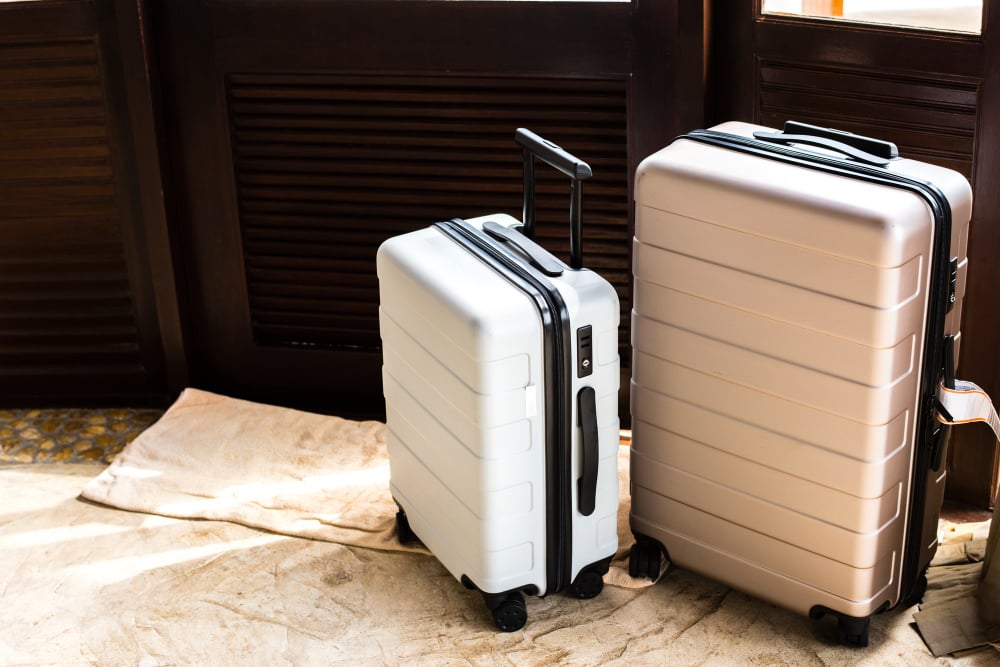
My husband was standing at the bottom of my front porch steps holding two suitcases, with a bag of golf clubs slung over his shoulder. He was wearing the gray windbreaker I’d bought him for his fiftieth birthday. His silver Buick was parked crooked in the driveway, half on the grass.
Four months earlier, he’d walked out of this house after twenty-two years of marriage. He’d said he needed “a fresh start.”
Apparently, the fresh start was over.
“Debbie?” Linda said. “You still there?”
“I’m here,” I said. “Let me call you back.”
I opened the front door.
Gary looked up at me and smiled. A big, easy smile, like he was coming home from a long business trip.
“My girlfriend kicked me out,” he announced, “so I’m back!”
I stared at him.
“Was that supposed to be good news?” I said.
My name is Debbie Holloway. I’m fifty-one years old. For twenty-two years, I was married to Gary Holloway, who sold insurance, played golf every Saturday, and never once in two decades remembered to buy toilet paper.
We met when I was twenty-eight. He was thirty. He was charming and funny and loud, the kind of man who walked into a room and started talking to strangers like he’d known them for years. I was quiet. I liked that he did the talking. I liked that he made every party fun.
We got married at twenty-nine and thirty-one. We bought this house, a little yellow two-story on Maple Court with a big front porch and a backyard full of my tomato plants. We had one son, Kevin, who’s twenty-four now and lives in Denver with his girlfriend.
For twenty-two years, I thought we were fine.
Not perfect. Nobody’s perfect. Gary forgot birthdays. He left his socks on the bathroom floor. He took long golf weekends with his buddies and never asked if I wanted to come. He talked over me at dinner parties. He called me “the boss” to his friends in a way that wasn’t really a compliment.
But he also warmed up my car on freezing mornings without being asked. He made ridiculous commentary during crime shows, guessing the killer in the first five minutes and always being wrong. He threw his keys on the kitchen counter every night at six-fifteen, and the sound of them hitting the granite meant home.
I thought that was what marriage looked like after twenty-two years. Comfortable. Ordinary.
I was wrong.
He left on a Tuesday in June.
I came home from the dentist’s office where I work as a receptionist and found him in our bedroom, packing a suitcase. Not a weekend bag. The big one. The one we took to Florida.
“Gary? What’s going on?”
He didn’t stop packing. He folded a polo shirt very carefully and laid it in the suitcase.
“I’m leaving, Deb,” he said.
I stood in the doorway holding my purse.
“Leaving where?”
“Leaving,” he said. “You. This. I need a fresh start.”
I laughed. I actually laughed. I thought it was some kind of strange joke.
He didn’t laugh.
“I’ve met someone,” he said. He still wasn’t looking at me. “Her name doesn’t matter. I’m not happy, Debbie. I haven’t been happy in a long time. I need to figure out who I am.”
“You’re fifty-three,” I said.
“Exactly,” he said. “I don’t have time to waste.”
I asked him why. Over and over. I followed him around the house while he packed.
“You never said anything,” I said. “Not once. You never said you weren’t happy. I asked you, Gary. At Christmas. I asked you if everything was okay, and you said it was fine. You said everything was fine.”
“I didn’t want to hurt you,” he said.
“So you’re hurting me now instead?”
He zipped up the suitcase.
“I’ll send someone for the rest of my stuff,” he said.
Then he walked out to his Buick and drove away.
He left his keys on the kitchen counter. I heard them hit the granite.
I sat down on the kitchen floor and didn’t get up for a long time.
The first few weeks were terrible.
I didn’t sleep. I didn’t eat much. I called in sick to work three days in a row, which I’d never done in eleven years. Kevin flew home from Denver for a long weekend and slept on the couch and made me grilled cheese sandwiches and watched old movies with me.
“Dad called me,” Kevin said on the second night. He was sitting on the floor with his back against the couch. “He said you guys had been unhappy for a long time.”
“That’s not true,” I said. “I wasn’t unhappy. I didn’t know he was.”
Kevin was quiet for a while.
“I believe you, Mom,” he said.
Linda was the one who got me through it.
Linda lives across the street. She’s sixty-two, a retired nurse, divorced herself twelve years ago. She has short silver hair and a laugh you can hear from two houses away. She grows the best roses on Maple Court and has an opinion about everything.
She came over the second day after Gary left. She didn’t knock. She just walked in with a casserole dish of baked ziti and a bottle of wine and put them both on my counter.
“Eat this,” she said. “Then cry. Then eat more.”
She came over every day for two weeks. She made me get dressed. She made me take walks around the block. She sat with me on the porch at night and let me talk about Gary until I was sick of my own voice.
One night, about three weeks in, we were sitting on my porch swing, and I said, “What if he comes back?”
Linda looked at me.
“Do you want him to?”
“I don’t know,” I said. “Part of me does. Part of me thinks I’d take him back in a second if he showed up on that porch and said he was sorry.”
Linda was quiet for a long time.
“Well,” she said finally, “if he ever comes back, and you decide you don’t want him, you call me. I’ll come stand right next to you while he gets his things. I’ll stand by my rosebush with my arms crossed and glare at him. I’m very good at glaring.”
I laughed for the first time in three weeks.
“Deal,” I said.
Then, slowly, things got better.
Not all at once. A little at a time.
In August, I signed up for a night class at the community college. Introduction to Accounting. I’d always been good with numbers. Gary used to tease me about it, about how I balanced the checkbook to the penny. He called it “Debbie’s little hobby.” I’d always wanted to go back to school. Gary always said we didn’t have the money.
Turns out we did. Gary just had other plans for it.
I loved that class. I loved sitting in a classroom with a notebook and a pencil, learning something new. Something that had nothing to do with Gary. Something that was just mine.
In September, I met with a divorce attorney. Her name was Patricia Moore. She was in her fifties, calm and sharp and very kind. We started the paperwork.
Gary wanted out fast. He wanted a “clean break,” he said. He didn’t want to fight. He didn’t want the house. He said he wanted to start over in an apartment downtown with his girlfriend. So Patricia worked out a buyout. I’d pay Gary for his half of the house, from my retirement savings and a small loan. He’d sign it over to me.
He signed the papers in October without reading most of them. He just wanted the check.
The house transfer was finalized at the end of that month. The divorce itself would take longer. In our state, there’s a waiting period. So we were still technically married. But the house was mine. Only mine. My name on the deed.
In November, I painted the kitchen.
Gary had always hated color. For twenty-two years, our kitchen was beige. Beige walls, beige cabinets, beige countertops. He said colors were “tacky.”
I went to the hardware store on a Saturday morning and stood in the paint aisle for an hour. Then I picked a deep, beautiful blue called Harbor Night.
I painted the cabinets myself. It took me all weekend. Linda came over Sunday afternoon to help with the trim, and we drank wine and played old Motown records and sang “My Girl” at the top of our lungs.
When I was done, I stood in the doorway and looked at it.
My kitchen. Blue.
I loved it.
That same week, I had the locks changed.
All of them. The front door, the back door, the side door to the garage. A nice young man named Tony came out and did it in an hour.
When he handed me the new keys, I held them in my hand for a long time.
Nobody else in the world had a copy.
So by the time Gary showed up in my driveway four months later with his suitcases and his golf clubs, I wasn’t the woman he’d left in June.
I just didn’t think he knew that yet.
“Come on, Debbie,” Gary said. He was still smiling. “We’ve been married forever.”
“Funny,” I said. “You remembered that right after she kicked you out.”
He made a face. He set down one of the suitcases on the walk.
“She said I was selfish,” he said. “Can you believe that?”
Then he looked past me, into the house.
“What’s for dinner?”
I stared at him.
Four months. Four months of not one phone call to ask how I was doing. Four months of letting our son tell me “Dad says hi.” Four months of signing papers without reading them and cashing a check for half my house.
And he wanted to know what was for dinner.
“Whatever you cook,” I said, “at your next address.”
He laughed. He actually laughed, like I’d made a joke.
“Very funny, Deb,” he said. “Help me with these bags.”
“Did your girlfriend pack them?” I asked.
“Yeah,” he said.
“That was nice of her,” I said. “I would’ve charged you.”
He sighed. He rolled one suitcase a little closer to the porch steps. He did it very casually, like he wasn’t doing anything at all.
“She said I was selfish,” he said again. “Can you believe that?”
“Did she explain why?”
“She wouldn’t stop explaining,” Gary said.
“Sounds difficult,” I said.
He rolled the suitcase up onto the bottom step.
“So where should I put my things?” he said. “The guest room’s fine for a few nights, I guess. Until we sort things out.”
“Gary,” I said. “You left me for another woman.”
“And I’ve learned my lesson.”
“In four months?”
“Three and a half, technically,” he said.
Four months ago, that would’ve made me cry.
Now I had to try very hard to keep from smiling.
Of course he’d brought his golf clubs.
Of course.
“Debbie,” Gary said. He put on his serious face. The one he used to use when he wanted me to agree to something. A new car. A golf weekend. A boat he never ended up buying. “I just want things to get back to normal.”
“You want a proper welcome home?” I said.
He brightened right up.
“Now you’re talking!”
“Then give me five minutes,” I said.
I stepped back inside and closed the door.
I went into the kitchen, under my blue cabinets. I picked up my phone and called Linda.
She answered on the first ring.
“Remember,” I said, “what you offered to help me with if he ever came back?”
There was a pause.
Then Linda started laughing.
“He’s actually there? He’s actually moving back in?”
Linda had watched him pull into my driveway. She’d seen the suitcases. But until I called, she hadn’t realized he genuinely expected to just move back in.
“He brought his golf clubs,” I said.
“Oh, this I have to see,” Linda said. “Give me two minutes to put on real pants.”
When I opened the front door again, Gary was standing on the top step of the porch now, with both suitcases beside him. The golf bag was leaning against my porch railing.
He smiled at me.
“I knew you’d come around,” he said.
“Of course,” I said. “But before you come in, I did something for you.”
His smile got even wider.
“What’s that?”
“I packed the last of your things,” I said. “Everything you left behind in June. They’re in two boxes in the garage.”
He blinked.
“You packed my stuff?”
“The things you left behind,” I said. “Your winter coat. Your fishing tackle. Your old high school yearbooks. Those awful ceramic frogs your mother gave you. Linda offered to stand beside me when you came to collect them. I just called her.”
He stared at me.
“I thought you were going to help me move in,” he said.
“I never said that.”
His smile disappeared. All at once. Like somebody had wiped it off with a rag.
He stood there on my porch, blinking, trying to find something to say.
“You’re seriously going to make me take two boxes and leave?”
“You wanted a fresh start, Gary,” I said. “I’m just helping you finish it.”
For twenty-two years, I’d been the one who made things easier for him.
I’d picked up his socks. I’d remembered his mother’s birthday. I’d made excuses to his boss when he was hungover. I’d smoothed things over with his brother after Thanksgiving fights. I’d balanced the checkbook and paid the bills and scheduled the dentist appointments and bought the toilet paper.
Apparently, he expected that arrangement to survive us separating.
“Debbie,” he said. He lowered his voice. “Can we not do this out here? In front of the whole neighborhood?”
Across the street, I saw a curtain move in the Petersons’ front window. Next door, Mr. Abernathy had come out to get his mail and was taking a very long time about it.
Linda’s front door was closed. She hadn’t come out yet.
“Oh,” I said. “Is this a little embarrassing for you?”
He dragged one suitcase closer to my front door.
“Look,” he said. “I know you’re upset. I get it. But we can work through this. People work through stuff like this all the time.”
“Really?” I said. “That’s all you have to say? About all the chaos you caused?”
“Come on, Deb,” he said. “I know you love me.”
The nerve of this man was honestly impressive. I’ll admit that.
I had missed him. I want to be honest about that.
Those first few weeks after he left, I’d missed him terribly. His ridiculous commentary during crime shows. It’s the butler, Deb. It’s always the butler. It was never the butler. The way he warmed up my car on freezing mornings. The way his keys hit the kitchen counter at six-fifteen every night.
I’d missed the sound of somebody else in the house.
But I hadn’t missed feeling like everything I wanted was an inconvenience to him.
I hadn’t missed that at all.
He leaned to the side and looked past me into the house.
“You painted the kitchen?” he said.
“Last Saturday,” I said. That wasn’t quite true. It had been three Saturdays. But he didn’t need to know that.
“Blue?” he said.
“I like blue.”
He frowned. Gary always hated blue. He said it made rooms look cold.
Then his eyes landed on the front door. On the shiny new brass lock.
“That’s new too,” he said.
“I had it changed.”
“Without telling me?”
“You weren’t living here, Gary,” I said.
He looked offended. Genuinely offended. Like I’d moved something that still belonged to him.
“Can I at least have some water?” he asked. “I’ve been driving around all afternoon.”
“Sure,” I said.
I closed the door and went back into the kitchen.
My accounting workbook was sitting on the kitchen counter, next to a container of leftover pasta from the night before. I had a test on Thursday. Chapter Seven. Depreciation.
Under the workbook was a blue folder from Patricia Moore’s law office. The buyout papers. The deed transfer. A copy of the separation agreement with Gary’s signature on every page. I’d finished all that paperwork last month but hadn’t gotten around to filing it away.
I filled a glass with tap water.
My phone rang.
It was Linda.
“I was just about to come over,” Linda said. Her voice sounded different. Not amused anymore. Serious. “But first tell me something, Debbie. Why exactly is Gary back?”
“His girlfriend threw him out,” I said. “So now he wants to move in with me.”
There was a pause on the line.
“Debbie,” Linda said slowly. “That’s strange.”
“Which part? All of it’s strange.”
“Carol called me this morning,” Linda said.
Carol is Linda’s younger sister. She lives two streets over on Birch Lane. She’s in a book club with half the women in the neighborhood.
“She told me her friend Rachel, from book club, threw her boyfriend out yesterday,” Linda said. “She caught him changing his stories. About his past. About his marriage. He’d been telling her for months that he was divorced.”
I didn’t say anything.
“And then,” Linda said, “Rachel throws her boyfriend out yesterday, and Gary shows up on your porch today because his girlfriend kicked him out.”
“Lots of men lie about being divorced,” I said.
“I know,” Linda said. “But the timing made me wonder.”
I looked toward the front door. I could see Gary’s shape through the little window, standing on my porch, checking his phone.
“You think they’re the same man?” I said.
“I don’t know,” Linda said. “Maybe it’s a coincidence. But Rachel’s at Carol’s house right now. She went over there after the breakup. She’s been crying all morning. I’m going to call Carol and ask her for a picture of the boyfriend.”
“Linda,” I said. “This could just be a coincidence.”
“Exactly,” Linda said. “That’s why I want to check before we say anything to anybody. Keep Gary outside until I call you back.”
She hung up.
I stood in my blue kitchen holding a glass of water. I was trying to figure out why Linda suddenly sounded worried instead of amused.
Outside, Gary knocked on the door.
“Deb? You making that water from scratch?”
I opened the door about six inches and handed him the glass.
“Thanks.” He took a long drink. He wiped his mouth with the back of his hand. “So. Are we going to talk like adults now?”
“Depends,” I said. “Are you going to answer a question?”
“What question?”
“How long were you seeing her,” I said, “before you moved out?”
Gary twisted the glass between his hands.
“Why do you want to dig all that up?”
“Because you’re asking me to pretend it never happened,” I said. “So I’d like to know what it was.”
“I told you,” he said. “It was a mistake.”
“That doesn’t answer my question.”
He looked across the street toward Linda’s house.
“Maybe we should go inside,” he said.
“Why?”
“Because Linda’s nosy.”
“Linda isn’t even home,” I said. I’d seen Linda’s car pull out of her driveway a minute before, while I was getting the water. I didn’t know where she was going.
“Still,” Gary said. “I’d like a little more privacy.”
I watched him take another sip of water.
“Did you tell your girlfriend we were divorced?” I asked.
His hand stopped halfway to his mouth.
“What?”
“It’s a simple question, Gary.”
He lowered the glass slowly.
“I told her we were separated,” he said.
“Were we?”
“Debbie, you know things were difficult.”
“Were we separated?” I said. “When you started seeing her? Were we separated then?”
He set the glass down on my porch railing next to his golf clubs.
“Look,” he said. “You’re making a big deal out of nothing.”
My phone buzzed in my pocket.
I pulled it out.
It was a text from Linda.
Carol sent me a picture of Rachel’s boyfriend. It’s Gary. I’m picking them up now. Five minutes.
I read the message twice.
Gary was watching me.
“Who keeps texting you?”
“Linda.”
“What’s she saying?”
“She found something interesting.”
“About what?”
“Your girlfriend,” I said.
His face went tight.
“What does Linda know about her?”
“Apparently,” I said, “more than I do.”
He reached for the handle of his suitcase. Then he let go of it.
“Debbie,” he said. His voice was different now. Lower. Quicker. “Let’s just go inside and talk. Just you and me. Like we used to.”
“I think I’d rather stay right here,” I said.
He glanced over his shoulder toward the street.
For the first time since he’d pulled into my driveway, he looked genuinely nervous.
A few minutes later, Linda’s red Honda pulled into her driveway across the street.
Linda got out from behind the wheel. Then the passenger door opened, and a woman climbed out.
She was in her late forties, with long brown hair pulled back in a ponytail and a navy fleece jacket. Her eyes were red and puffy. She had the strap of her purse wound tightly around her wrist, so tight I could see it from across the street.
Carol stayed in the back seat with the window rolled down.
The woman walked across the street, slowly. She stopped at the bottom of my walkway, at the edge of the lawn.
Gary dropped the handle of his suitcase.
“No,” he said.
“Hello, Gary,” the woman said.
Gary turned around and looked at me.
“What did you do?”
“Nothing yet,” I said.
Linda came up my walkway and stood beside me on the porch.
“Debbie,” she said quietly, “this is Rachel.”
Rachel looked at me. Then she looked back at Gary.
“You told me,” she said, “you’d been divorced for two years.”
Her voice was shaking.
I looked at Rachel.
“He moved out four months ago,” I said. “We’re still married. The divorce isn’t final yet.”
“I told you the marriage was over,” Gary said to Rachel.
“You know things were difficult, Debbie,” he said to me.
“Difficult,” I said, “isn’t divorced.”
Rachel was staring at him.
“And your name isn’t James,” she said.
I turned to Gary.
“James?”
“It’s my middle name,” he muttered.
“You never told me that,” Rachel said. “In seven months, you never once told me that your name was Gary.”
Linda touched my arm.
“After we talked on the phone,” she said, “I called Carol. Rachel was sitting right there in Carol’s kitchen. So Carol asked her for a picture of the boyfriend and texted it to me.” Linda shook her head. “I recognized Gary immediately. From his golf shirt. That ugly orange one with the alligator. That’s when I went to get them.”
I looked at Gary.
He was staring at the pavement.
Rachel folded her arms across her fleece jacket.
“You told me,” she said, “that you and Debbie only still lived in the same house because selling it would upset your son.”
“Our son moved out three years ago,” I said.
“He told me your son was seventeen,” Rachel said. “A senior in high school. He said you were staying together until he graduated.”
“Kevin’s twenty-four,” I said. “He lives in Denver. He’s an engineer. He has a girlfriend named Priya. They have a cat.”
Rachel looked at Gary.
“You made her sound,” she said, “like she was keeping you trapped.”
“You don’t know what our marriage was like!” Gary snapped.
“Neither do I, apparently,” I said.
He looked at me. He looked at me with a face I knew very well. I’d seen it a thousand times in twenty-two years.
It was the look that meant help me. It meant I was supposed to step in. Smooth things over. Make excuses. Laugh it off. Say oh, Gary’s just being Gary.
For twenty-two years, I always did.
This time, I said nothing.
Rachel took a deep breath.
“You told me Debbie hated your mother,” she said.
Something tightened in my chest.
“You told me,” Rachel said, “that when your mother was sick, Debbie refused to visit her. That you had to take care of her all by yourself. That Debbie wouldn’t even go to the funeral.”
I couldn’t breathe for a second.
Gary’s mother, Marian, died three years ago. Breast cancer. She was seventy-six.
“I took her to chemotherapy,” I said slowly, “every Thursday. For six months. I drove her there and sat with her for four hours while the medicine went in and drove her home. I held her hand. I brought her ginger ale and crackers. I cleaned up when she was sick in my car.” My voice was shaking now. “Gary went twice.”
Rachel’s face hardened.
“You used her,” she said to Gary. “You used your own wife to make yourself look like a victim.”
“I was explaining how lonely I felt!” Gary snapped.
“So you made her sound cruel?” Rachel said. “You made her sound like a monster? So I’d feel sorry for you?”
Gary rubbed his forehead with both hands.
“Look,” he said. “I wasn’t happy. Okay? Neither of you understands what that was like. Being stuck. Being bored. Feeling like your whole life is already over.”
I looked at Rachel.
“How long?” I said quietly. “How long were you together? Really?”
Rachel hesitated.
“We were already seeing each other in March,” she said. “We met at a restaurant downtown in February. He told me he loved me on March eighth.”
I stared at Gary.
“That was our anniversary,” I said.
Rachel went completely still.
“March eighth?” she said.
“Our twenty-second wedding anniversary,” I said.
“He was still living with you?” Rachel said. “In March?”
“Yes,” I said. “He told me he had a work dinner that night. With a client from Chicago.”
Rachel looked at Gary.
“You told me you spent the whole evening alone,” she said slowly, “before you came over to my apartment. You said you’d been sitting in your car in a parking lot for two hours because you couldn’t stand to go home.”
Gary stared at the pavement.
I remembered that night.
I’d made his favorite dinner. Pot roast with the little potatoes and carrots. I’d set the table with the good plates, the ones from our wedding. I’d bought a card at the drugstore. To my husband, on our anniversary. I’d lit two candles.
He called at seven and said he had a work dinner. He said he was sorry. He said we’d celebrate on the weekend.
I ate by myself at our kitchen table under the beige cabinets. I blew out the candles. I wrapped up his plate in plastic and put it in the refrigerator for him.
He never ate it. I threw it out on Thursday.
Standing there on my porch, I suddenly wondered how many ordinary little kindnesses I’d given him while he was telling someone else I was a terrible wife.
How many plates in the refrigerator. How many warm cars. How many Thursdays at the chemo center.
“Debbie,” Gary began.
“Don’t,” I said.
He stepped toward me anyway.
“Look,” he said. He pointed at Rachel. “She was controlling. Always checking where I went. Always asking questions. Always wanting to know where I was.”
“Because you kept changing your stories,” Rachel said. “You’d say you were at a sales meeting in Akron, and then you’d say you were golfing, and then you’d say you were at your sister’s. That’s why I told you to leave.”
Gary turned back to me.
“And you shut me out emotionally,” he said. “For years. You never talked to me. You never wanted to do anything fun.”
I laughed. Once.
“Gary,” I said. “You told me everything was fine. Until the day you left. I asked you at Christmas. I asked you on New Year’s. I asked you on Valentine’s Day. You said everything was fine.”
He looked trapped.
But he didn’t look sorry.
That was the thing I noticed most. Standing there on my porch, with Rachel at the bottom of the walk and Linda beside me and half the neighborhood watching from behind their curtains. He looked like a man who’d been caught.
He didn’t look like a man who was sorry.
Then he reached for my hand.
“Debbie,” he said. “Please. I apologize. I just want to come home.”
I stepped back.
He still hadn’t asked whether I wanted him there. Not once. Not since he pulled into my driveway.
“What are you apologizing for, Gary?” I said.
“For all of this.”
“Be specific.”
He glanced down at his suitcases. At his golf clubs leaning against my railing.
“For putting us in this situation,” he said. “I have nowhere to stay. The apartment’s in Rachel’s name. Hotels are really expensive. I’ve had a really awful week.”
I waited.
He didn’t say anything else.
“That’s what you’re sorry about?” I said.
“I’m trying here, Debbie!”
“No,” I said. “You’re not trying. You’re looking for a bed.”
He stared at me like I’d broken a promise.
I hadn’t. I’d never promised him anything. Not since June.
“You wanted a clean break,” I said. “Remember? You said that. To Patricia. In her office. You said you wanted a clean break and you didn’t want to fight. You accepted the buyout for your half of the house. You took the check. You signed the papers without reading them. The transfer was finalized at the end of October.” I took a breath. “This house is mine now, Gary. Only mine.”
Gary’s eyes moved to the front door.
Then to the shiny new brass lock.
“You can’t just leave me outside,” he said.
“I can,” I said. “You taught me how.”
Rachel adjusted the strap of her purse on her wrist.
She looked up at me from the bottom of the walk.
“Debbie,” she said. Her voice was very quiet. “I never would have dated him if I’d known. I swear to God. I would never. I should have asked more questions.”
“You believed someone you cared about,” I said. “I did too. For twenty-two years.”
Rachel nodded. Her eyes filled with tears.
She turned around and walked back across the street toward Linda’s car.
Gary called after her.
“Rachel! Rachel, wait!”
She didn’t turn around.
Then Gary looked at Linda.
“Are you happy now?” he said.
Linda shrugged.
“Not particularly,” she said. “But Debbie might be.”
I went inside and shut the door.
I shut it while he was still standing there deciding whom to blame.
I locked it with my new key.
Then I walked into the kitchen, picked up the garage-door remote from the hook by the back door, and pressed the button.
Through the kitchen window, I watched.
The garage door rolled up. There were the two cardboard boxes, sitting in the middle of the empty concrete floor where his Buick used to park. I’d labeled them both in black marker. GARY.
Linda had walked back to her own front yard. She was standing next to her big pink rosebush with her arms crossed, exactly like she’d promised me four months ago on my porch swing. She was glaring.
She’s very good at glaring.
Gary stood on my porch for a long moment. He looked at my front door. He looked at the garage. He looked at Linda.
Then he picked up his golf clubs.
He carried the two boxes from the garage to his Buick. One at a time. The first one was heavy. That was the one with the ceramic frogs. He had to set it down on the driveway halfway to the car and catch his breath.
Then he dragged both suitcases back down the porch steps, one at a time. One of the wheels caught on the bottom step, and he almost fell.
Then he tried to fit his golf bag into the trunk of the Buick. It didn’t fit. He tried it at an angle. It still didn’t fit. He took out one of the boxes and tried again. Then he put the golf bag in the back seat instead, sticking out the window.
He’d arrived expecting me to carry his bags into the house.
Now he was carrying everything back out by himself.
He slammed the trunk.
He looked up at my kitchen window. I don’t know if he could see me. I didn’t move away.
Then he got in the Buick and backed out of my driveway, over the corner of the lawn, and drove away down Maple Court.
The golf clubs stuck out the back window like a flag.
I pressed the remote again. The garage door rolled down.
I stood in my kitchen for a long time, under my blue cabinets, looking at the empty driveway.
Linda drove Carol and Rachel home.
When she came back, about twenty minutes later, she walked straight into my house without knocking, the way she had for four months.
She was carrying a grocery bag.
“Emergency supplies,” she announced.
She set the bag on my counter and started unpacking it.
A bottle of sparkling cider. A wedge of cheddar cheese. A box of crackers. And a tiny round cake from the bakery on Elm Street, with pink frosting and white sugar flowers around the edge.
“What’s the occasion?” I asked.
Linda set the cake down in the middle of my counter.
“You got your porch back,” she said.
We ate cake for dinner under my blue cabinets.
We didn’t use plates. We just sat at the kitchen table with two forks and ate it right out of the little cardboard box. We drank the sparkling cider out of my good wine glasses.
Halfway through the cake, I started crying.
I didn’t plan to. I didn’t even know it was coming. One minute I was laughing about Gary trying to fit his golf bag into the trunk, and the next minute I had my face in my hands and I was sobbing.
I wasn’t crying because I wanted him back. I knew that. I’d known it the second he asked what was for dinner.
I was crying for the pot roast on March eighth. For the candles I blew out by myself. For six months of Thursdays at the chemo center that he’d turned into a story about how cruel I was. For twenty-two years of being the one who smoothed everything over, while he was telling somebody else I was the reason he was unhappy.
Linda didn’t say anything. She didn’t tell me to stop. She just pulled her chair over next to mine and put her arm around my shoulders.
She stayed until I stopped.
Gary called me eleven times the next week.
I didn’t answer. He left voicemails.
The first one was angry. I can’t believe you humiliated me like that in front of the whole street, Debbie. In front of Linda. Do you know what people are saying?
The third one was sad. I’ve been staying at my brother’s. Sleeping on his pullout couch. It’s terrible for my back.
The seventh one was the old Gary. Charming. Warm. Deb, come on. Twenty-two years. We had good times, didn’t we? Remember Myrtle Beach? Remember that waiter who spilled soup on me? Let’s just talk. Dinner. My treat.
The eleventh one was just one sentence.
I’m sorry, Debbie.
I listened to that one three times.
Then I deleted all of them.
Kevin called from Denver that Sunday.
“Mom,” he said. “Dad called me.”
“I’m sure he did.”
“He said you threw him out. He said you embarrassed him in front of the whole neighborhood. He said you had some woman show up to ambush him.”
I sighed.
“Kevin, honey…”
“And then,” Kevin said, “I called Aunt Linda.”
I didn’t say anything.
“She told me everything,” Kevin said. His voice was tight. “About Rachel. About James. About Grandma Marian and the chemo. About March eighth.” He was quiet for a long time. “He told her I was seventeen?”
“He did.”
“Mom,” Kevin said. “I’m so sorry. I’m so sorry he did that to you.”
“It’s not your fault, honey.”
“I know it’s not my fault,” Kevin said. “I’m still sorry.”
Two weeks later, Kevin called his father.
I wasn’t there. He told me about it afterward.
“I asked him why he said all that stuff about you,” Kevin said. “About you not visiting Grandma. About keeping him trapped.”
“What did he say?”
“He said it was complicated. He said I wouldn’t understand.” Kevin took a breath. “So I said, ‘Dad, I’m twenty-four. I’m not seventeen. I understand fine.’ And then I said, ‘Mom drove Grandma to chemo every Thursday. I was home from college that spring. I saw her do it. I saw her come home exhausted. I saw her clean throw-up out of her car.’ And he just went quiet.”
“Kevin.”
“I told him I love him,” Kevin said. “He’s still my dad. But I told him I’m not going to listen to him say things about you that aren’t true. Not ever again. And if he does, I’ll hang up.”
My eyes filled.
“You didn’t have to do that, honey.”
“Yeah, Mom,” Kevin said. “I did.”
In January, I passed my accounting class.
I got an A minus. The minus was for Chapter Seven, depreciation. I never did understand depreciation. But I didn’t care. I took my report card and stuck it on the refrigerator with a magnet shaped like a tomato.
In February, I signed up for the next class. Intermediate Accounting.
My professor, a gruff older man named Mr. Kaminski, pulled me aside after the first week.
“You’re good at this, Mrs. Holloway,” he said. “Very good. Have you ever thought about getting certified? The community college has a bookkeeping certification program. Two years, part-time. You’d be great at it.”
I stood there in the hallway holding my textbook.
Gary had called it my little hobby. For twenty-two years.
“I’ll think about it,” I said.
I signed up the next day.
In March, I got a text from a number I didn’t recognize.
Hi Debbie. This is Rachel. Carol gave me your number. I hope that’s okay. I was wondering if you’d want to get coffee sometime. Totally fine if you don’t. I just keep thinking about you.
I looked at it for a long time.
Then I wrote back. I’d like that.
We met at a little coffee shop near the library on a Saturday morning.
Rachel was already there when I arrived, sitting at a table by the window with two cups of coffee in front of her.
“I didn’t know how you take it,” she said, when I sat down. “So I got you black. And there’s cream and sugar if you want.”
“Black’s fine,” I said.
We were quiet for a while. It was awkward. Of course it was. We’d both loved the same man. We’d both been lied to by him. We’d both believed him.
“I feel so stupid,” Rachel said finally. She was turning her cup around and around on the table. “I keep going back over it. All the little things. The times he couldn’t see me on weekends. The way he never let me come to his place. The way he always paid in cash.” She shook her head. “Everybody kept telling me there were red flags. I just didn’t want to see them.”
“I was married to him for twenty-two years,” I said. “I didn’t see them either.”
Rachel looked up at me.
“He talked about you,” she said. “All the time. Not good things. I’m sorry. But I want you to know something.” She took a breath. “Every bad thing he said about you, he’d say it like he was trying to convince himself. Like he needed you to be the bad guy. Because otherwise…” She stopped.
“Otherwise,” I said, “he’d have to be the bad guy.”
“Yeah,” Rachel said quietly.
We talked for two hours.
About Gary, at first. Then not about Gary. About her job as a dental hygienist, which made me laugh, because I work at a dentist’s office. About her two daughters in college. About my accounting class. About Linda and Carol and the book club. About the terrible orange golf shirt with the alligator.
“I threw it out,” Rachel said. “He left it at my apartment. I put it in the dumpster behind the building. And then I went back and took it out of the dumpster and cut it into tiny pieces with my kitchen scissors. And then I threw it out again.”
I laughed so hard I spilled my coffee.
When we left, Rachel hugged me in the parking lot.
“Thank you,” she said. “For not hating me.”
“I never hated you,” I said. “We were both just people who believed him.”
The divorce was final in April.
It was a short hearing. Ten minutes. Gary didn’t come. His lawyer came instead. Patricia sat next to me and held my hand under the table.
The judge signed the papers. She looked at me over her glasses.
“Mrs. Holloway,” she said. “Is there anything else?”
“No, Your Honor,” I said. “That’s everything.”
Patricia walked me out to my car.
“How do you feel?” she asked.
I thought about it.
“Light,” I said. “I feel really light.”
That evening, I got a letter in the mail.
It was from Gary. Handwritten, on yellow legal paper. Two pages.
It wasn’t charming. It wasn’t angry. It wasn’t the old Gary at all.
Debbie,
Kevin won’t talk to me much anymore. My brother wants me off his couch. Rachel blocked my number. I’ve had a lot of time to think on that pullout couch.
I told a lot of lies. About you. About Mom. About Kevin. About everything. I told them because it was easier to make you the reason I was unhappy than to admit I was the reason. You were always good to me. You were good to my mother. I knew it the whole time. I just didn’t want to know it.
I’m not asking you for anything. I know I don’t get to ask. I just wanted you to know I know.
I’m sorry about March 8th. I’m sorry about the pot roast.
— Gary
I read it twice, sitting on the porch swing.
Then I folded it up and put it in the drawer of my nightstand. Not because I wanted to read it again. I just didn’t want to throw it away yet.
Maybe someday I’ll forgive him. I don’t know. Maybe I already have, a little. Forgiving him isn’t the same as wanting him back. It just means I’m not going to carry him around anymore.
He was right about one thing in that letter. He did know.
He’d known the whole time.
In May, I planted my tomatoes.
I put them in the backyard in the same spot as always, along the fence. But this year, I planted twice as many. Cherry tomatoes and big beefsteaks and a kind called Brandywine that Linda swears by. I planted basil and peppers and a whole row of sunflowers along the back, because Gary always said sunflowers were “messy.”
Linda came over and helped. We knelt in the dirt side by side with our gloves on, digging holes and patting down soil.
“You know,” Linda said, “you should come to book club.”
“Carol’s book club? Where Rachel goes?”
“That’s the one.”
“Isn’t that a little strange?”
Linda sat back on her heels and wiped her forehead with the back of her glove.
“Debbie,” she said, “the strangest thing that’s ever going to happen on Maple Court already happened on your porch. I think we can handle book club.”
I laughed.
I went to book club in June. Rachel saved me a seat next to her.
It’s been a year now since Gary showed up in my driveway with his suitcases.
I still live in the little yellow house on Maple Court. It’s still mine. Only mine. The kitchen is still blue. I’ve painted the bathroom too, a soft green called Sea Glass. Next spring, I’m doing the bedroom. I haven’t picked a color yet.
I’m halfway through my bookkeeping certification. Mr. Kaminski says I’ll have no trouble finding a job when I finish. I already have two clients. Linda, who has never once balanced her checkbook in her life, and the dentist I work for, who’s been doing his own books for fifteen years and is terrible at it.
Kevin and Priya came home for Thanksgiving. We ate turkey under the blue cabinets. Kevin carved. Priya brought a pie. Linda came over for dessert and brought another pie. We had too many pies.
Kevin talks to his father sometimes. Once a month, maybe. It’s not easy. But they’re working on it. That’s between the two of them. I stay out of it.
Some evenings, I sit on my porch swing with a cup of tea and watch the sun go down over Maple Court.
Linda waves at me from across the street. Mr. Abernathy comes out to get his mail and takes his time about it. The Petersons’ curtain moves.
Nobody pulls into my driveway with suitcases.
Nobody asks me what’s for dinner.
And when I come home from work at six-fifteen and walk into my blue kitchen, the only keys that hit the granite counter are mine.

Specialty: Emotional Turning Points
Rachel Monroe writes character-driven stories about betrayal, second chances, and unexpected resilience. Her work highlights the emotional side of family conflict — the silences, the misunderstandings, and the moments when someone quietly decides they’ve had enough.