Ten Dollars
Dad laid one ten in Jasper’s palm and closed his fingers over it.
He did it gently. That’s the thing I keep coming back to. He wasn’t being cruel about it. He folded my son’s hand shut around that ten-dollar bill the way you’d fold a kid’s hand around a quarter for the gumball machine.
Then he turned to my sister’s boys.
He counted two twenties into Reid’s hand. One. Two.
Then two more into Corbin’s. One. Two.
“Those two are going places,” Dad said.
It was the first Saturday in May. A little after one in the afternoon. The kitchen in Dad’s farmhouse smelled like cut grass and the pot of coffee he’d made at six that morning and was still drinking.
All three boys had mowed the same yard.
Same two acres. Same three hours. Same May heat, eighty-six degrees and humid, the kind that makes your shirt stick to your back by ten in the morning.
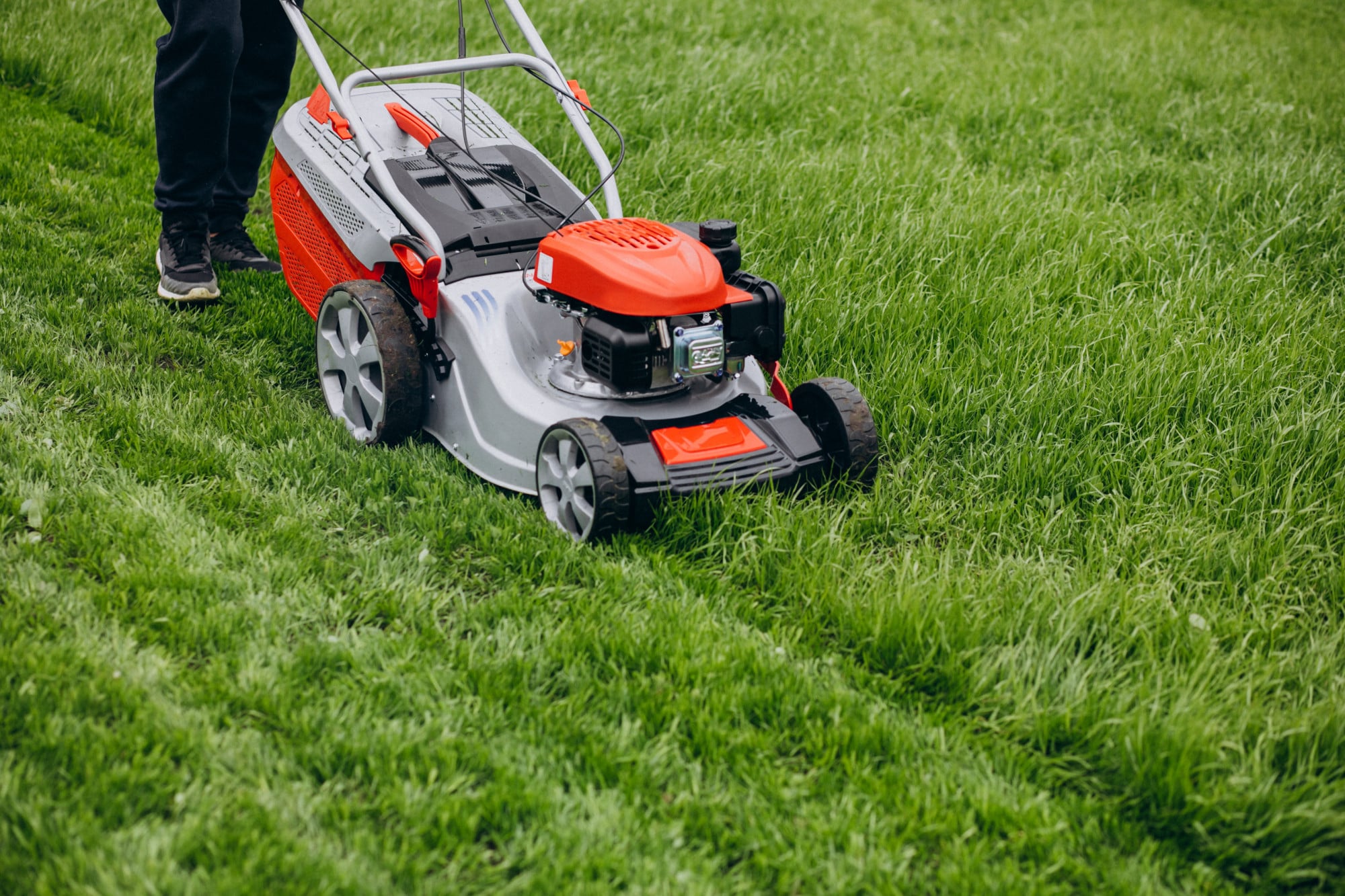
They’d split it up the way Dad told them to. One rode the old John Deere riding mower. One ran the push mower around the house and the trees and the propane tank. One ran the weed eater along the fence rows and the ditch by the road.
They traded off every week. That way nobody got stuck on the weed eater all summer. Dad’s rule.
Jasper is twelve. My sister Trina’s boys are sixteen and fifteen.
Jasper had been on the weed eater that day. The worst job. The one that throws grass and rocks and bugs up into your face and makes your arms buzz for an hour after you stop. He had green stains all down the front of his white T-shirt and a little cut on his cheek where a rock had flown up and nicked him.
Reid had been on the riding mower. Air on his face. Sitting down.
Jasper didn’t say a word.
He just looked at the ten in his hand. Then up at me.
I’ll never forget that look.
It wasn’t angry. Jasper’s not an angry kid. It wasn’t even sad, exactly. It was confused. Like he was working out a math problem in his head and couldn’t get the answer to come out right.
Like he was trying to figure out what was wrong with him.
My name is Brady Whitaker. I’m forty-one. I’ve been a lineman for Prairie Land Electric Cooperative for nineteen years. I climb poles and fix power lines across four counties of north-central Kansas, in ice storms and thunderstorms and hundred-degree heat.
I’ve had a lot of things happen to me up a pole. I’ve been bit by a fox squirrel and stung by a whole nest of wasps and shocked hard enough to see stars. I fell twenty feet once in 2011 and broke my ankle.
None of it hurt like that look on my son’s face.
It was Dad’s money. Dad’s yard. Dad’s kitchen. Dad’s decision.
And nobody fights his own father over a mowing wage.
I know that. I knew it then. Glen Whitaker is seventy-three years old. He farmed this ground for forty-five years. He’s had two stents put in his heart since Christmas. He takes nine pills every morning out of a plastic box with the days of the week on it.
You don’t stand in a seventy-three-year-old man’s kitchen and yell at him about ten dollars.
But I could make it right in front of him.
I pulled out a chair at Dad’s kitchen table.
The same oak table I ate breakfast at every morning until I was eighteen. My mother bought it at an auction in Beloit in 1979. There’s a burn mark on one corner from where I set down a hot pan when I was fourteen and got whipped for it.
I sat down across from Dad.
I took out my wallet.
“Hold out your hand, bud,” I said.
Jasper looked at me. He didn’t understand. But he held out his hand. The one with the ten in it.
I opened my wallet. I took out a ten-dollar bill.
I laid it on top of Dad’s ten.
“Twenty,” I said.
Out loud. Not loud. Just clear. The way you’d count change back at a register.
I laid down another one.
“Thirty.”
One more.
“Forty,” I said. “Same as your cousins. Thank you for your work.”
Dad didn’t say a thing.
He just sat there across the table from me in his bib overalls and watched me count. His face didn’t move. His coffee cup was halfway to his mouth, and it stayed there.
Reid and Corbin were standing by the screen door with their forty dollars. Neither of them said anything either. Corbin looked at the floor.
Jasper closed his hand around the four bills. He looked at me.
“Thanks, Dad,” he said quietly.
“Don’t thank me,” I said. “Thank your grandpa. It’s his yard.”
Then I stood up and pushed in my chair.
Chapter Two: The Next Saturday
The next Saturday, Dad laid down the same ten.
The boys came in at one o’clock, sweaty and grass-stained, the way they did every Saturday. They’d swapped jobs. Reid on the push mower. Corbin on the weed eater. Jasper on the riding mower, which he loved. He’d been grinning the whole time. I could see him from the porch, doing perfect stripes up and down the side yard, the way Dad taught him.
They lined up at the kitchen table.
Dad counted two twenties into Reid’s hand. Two into Corbin’s.
Then he laid one ten in Jasper’s palm.
I pulled out the same chair.
I sat down across from him. I took out my wallet. I didn’t look at Dad. I looked at my son.
“Hold out your hand, bud.”
Jasper held it out. Faster this time. He knew what was coming.
“Twenty,” I said. One ten. “Thirty.” Another. “Forty.”
“Same as your cousins,” I said. “Thank you for your work.”
Dad didn’t say anything. He drank his coffee.
And the Saturday after that.
And the one after that.
Every Saturday in May. The boys would come in from mowing. Dad would count out forty and forty and ten. I’d pull out the chair and sit down and count out thirty more.
Same words. Every time.
Twenty. Thirty. Forty. Same as your cousins. Thank you for your work.
I never raised my voice.
I want that on the record. Not once. Not a single Saturday. I never said a word to Dad about it, before or after. I never argued. I never asked him why.
I never once said the word fair.
I just counted. Out loud. One bill at a time. Sitting at his kitchen table, across from him, where he had to watch.
Thirty dollars a week is real money at our house.
People think linemen make a lot. We do all right. But I’ve got a mortgage on a three-bedroom ranch in Mankato and a truck payment and Andrea’s student loans from nursing school. We’ve got Jasper’s speech therapy and his tutor. We’ve got a twelve-year-old who eats like a grown man.
Thirty dollars is a tank of gas. It’s half a week of groceries. It’s what we put back every Saturday for Jasper’s braces, which he’s going to need in about a year.
I paid it anyway.
Every week, I’d stop at the ATM at the Mankato bank on Friday after work and take out three tens. Andrea saw it in the checking account. She didn’t say anything for the first two weeks.
The third week, she said something.
We were in bed. The window was open. Frogs going in the ditch across the road.
“Brady,” she said in the dark. “Thirty dollars a week.”
“I know.”
“That’s a hundred and twenty a month. Through August, that’s almost five hundred dollars.”
“I know, Andi.”
She was quiet for a while.
“Are you going to talk to him?” she asked.
“No.”
“Why not?”
“Because it’s his money. And his yard. And he’s seventy-three. And he’s got a bad heart.”
She rolled over and looked at me. I could see her eyes in the light from the yard light outside.
“Don’t you dare raise your voice to your dad,” she said. “Not with his heart. I mean it, Brady. Two stents since Christmas. Dr. Shah said his ejection fraction’s at thirty-five percent. You get him worked up, you could kill him.”
Andrea’s a nurse. She works the cardiac floor at the hospital in Concordia. She knows things about hearts that I don’t want to know.
“I won’t,” I said. “I haven’t.”
“I know you haven’t.” She put her hand on my chest. “I’m just saying. Whatever this is between you two. Don’t let it be the thing that does it.”
I lay awake a long time that night.
Thinking about Jasper’s face. The confused look. Like he was working out a math problem that wouldn’t come out right.
And thinking about Dad. Counting two twenties into Reid’s hand. Those two are going places.
Where exactly did he think my son was going?
Chapter Three: What’s Wrong With Him
You need to know about Jasper. So you understand.
My son is twelve years old. He’s tall for his age, skinny as a fence post, with my brown hair and his mother’s green eyes. He’s going into seventh grade at Rock Hills Junior High in Mankato.
He has dyslexia.
We found out in second grade. He couldn’t read. Not a little behind. Couldn’t. The letters moved around on him. B and D. P and Q. He’d look at the word “was” and see “saw.” His teacher thought he wasn’t trying. She sent home notes. Jasper needs to apply himself.
He was seven years old and he cried every night over his reading homework.
We got him tested in Salina. A specialist. She said dyslexia. She said it had nothing to do with how smart he was. She said he was actually very bright. Especially with numbers. Especially with spatial things. Taking things apart and putting them back together.
She was right about that.
At ten, Jasper took apart Andrea’s old vacuum cleaner on our kitchen floor and figured out why it wouldn’t suck. A string wrapped around the beater bar. At eleven, he fixed the chain on the riding mower at Dad’s place after Dad had been fighting it for a week. He can look at an engine and tell you what’s wrong with it by the sound.
But he still reads at about a fourth-grade level. He has an IEP at school. He goes to a reading tutor twice a week in Beloit. He gets C’s, mostly. A few D’s. An A in shop.
Trina’s boys are different.
Reid is sixteen. He’s a junior. He has a 4.0. He’s in the National Honor Society and on the scholars bowl team. He wants to be an engineer. He already got a letter from Kansas State.
Corbin is fifteen. A sophomore. He’s the starting quarterback for the Rock Hills Grizzlies. Six foot one, a hundred and eighty pounds, and he can throw a football fifty yards on a line. Everybody in Jewell County says he’s going to play in college.
Those two are going places.
That’s what Dad said.
I know what he meant. I’m not stupid.
He meant college. He meant scholarships. He meant getting out of Jewell County, Kansas, where there’s more cattle than people and the only jobs are farming or the co-op or the grain elevator.
He meant Reid and Corbin were going to be somebody.
And Jasper was going to be… what? A kid with a learning disability who fixes lawnmowers? A lineman, like his dad?
That was the part that kept me up at night. Not the money.
I’ve been climbing poles for nineteen years. I’ve kept the lights on in four counties through some of the worst storms in Kansas history. I’ve worked thirty-six hours straight in ice and wind. I’ve restored power to hospitals and nursing homes and farmhouses with old people on oxygen.
But in my father’s house, I was never going places.
Because I didn’t go to college. Because I stayed in Jewell County. Because I came home every night to Mankato, eleven miles from where I grew up, and mowed my own lawn and paid my own mortgage and drove out to my parents’ place every Saturday for twenty years to help.
And now my son wasn’t going places either.
On the drive home from Dad’s that first Saturday, Jasper was quiet. He sat in the passenger seat of my truck looking out at the wheat fields.
“Dad,” he said finally. “Why did Grandpa give me less?”
I didn’t know what to tell him.
“He thinks Reid and Corbin are going places,” Jasper said. “Because they’re smart.”
“You’re smart, bud.”
“Not like them.” He looked down at his hands. “I’m in the slow reading group. Everybody knows.”
I pulled the truck over. Right there on Highway 36, on the gravel shoulder, with a semi going past so fast it rocked us.
I turned and looked at my son.
“Listen to me,” I said. “You mowed the same yard. Same grass. Same three hours. Same heat. You ran the weed eater, which is the worst job on the place. You did it right. You did it all the way. Your grandpa doesn’t pay you for how you read. He pays you for how you mow.”
Jasper didn’t say anything.
“And you mowed it just as good as they did,” I said. “So you get the same. That’s all. That’s the whole thing.”
Chapter Four: Trina
I found out why in the middle of May. From my sister.
Trina called me on a Wednesday night. I was in my truck in a co-op equipment yard in Smith Center, waiting for a bucket truck to come back from the shop. It was almost dark.
“Brady,” she said. “We need to talk.”
“Okay.”
“Dad told me what you’ve been doing. On Saturdays. Counting out the money.”
I didn’t say anything.
“He’s upset, Brady,” she said. “He doesn’t say it. But he is. He sits there every Saturday after you leave and doesn’t touch his lunch.”
“Good,” I said.
“Brady.”
“What do you want me to do, Trina? Let my son take ten dollars while your boys take forty? For the same yard?”
She was quiet for a long time. I could hear her TV in the background. A cooking show.
“I didn’t ask him to do that,” she said finally. “I want you to know. I didn’t know he was doing it until the second Saturday. Reid told me.”
“Then why didn’t you say something?”
“Because I know why he’s doing it,” she said.
My sister is thirty-eight. Three years younger than me.
Two years ago, her husband, Kyle, walked out. On a Tuesday in April. He went to work at the feedlot in the morning and never came home. He left a note on the kitchen counter that said he couldn’t do it anymore. He moved to Colorado with a woman he met online.
He’s been behind on child support for eighteen months. Four hundred and twenty dollars a month per kid. He owes over fifteen thousand dollars. The State of Kansas is supposedly garnishing his wages. Nothing ever comes.
Trina works at the Mankato Family Dollar and cleans houses on weekends. She’s raising two teenage boys on about thirty-one thousand dollars a year.
“Reid hasn’t talked to his father since Christmas,” Trina said. “Kyle called him. Reid hung up on him.”
“I know.”
“Corbin won’t say his name. He just calls him ‘him.’” Her voice cracked. “And you know what Corbin said last fall? After a game? He threw for three touchdowns and they won and everybody was cheering, and he came home and went to his room and wouldn’t come out. And I went in and he was crying. He said, Mom, nobody’s ever going to see me play except you.”
“Dad’s trying to make up for it,” Trina said. “For Kyle. He’s trying to be their dad. He goes to every game. He goes to every scholars bowl meet. He drove Reid to Manhattan for the engineering camp.” She took a breath. “And when he pays them forty dollars, Brady, he’s not paying them for mowing. He’s paying them because their father walked out.”
I sat in my truck in the dark equipment yard and didn’t say anything for a long time.
I hadn’t thought of it that way. I’d been so busy being angry about Jasper, I hadn’t thought about Reid and Corbin at all. About two boys whose father just quit them one Tuesday.
“I didn’t know that was why,” I said finally.
“I know you didn’t.”
“But Trina,” I said. “Jasper is his grandson too.”
She was quiet.
“He doesn’t have a father who walked out,” I said. “He has one who shows up every Saturday. Who’s been showing up every Saturday for twenty years. And he gets ten dollars.”
“I know,” Trina said softly. “I know, Brady. That’s why I didn’t say anything to him. Because you’re right. And I don’t know how to tell him you’re right without telling him he’s hurting my boys too.”
Chapter Five: The Pole
The week after Trina called, a storm came through.
It was the Thursday before Memorial Day. A line of thunderstorms out of Nebraska, with straight-line winds up to eighty miles an hour. It came across Jewell County around four in the afternoon like a freight train.
It took down forty-one poles between Mankato and Burr Oak. Snapped them off like toothpicks.
I was out for thirty-one hours.
By Friday morning, around six, I was up a pole on a section line road north of Formoso. Restoring power to a dairy farm. The family had three hundred cows that needed milking, and no electricity to run the machines. The farmer’s wife was standing at the bottom of my pole in rubber boots, holding a thermos of coffee for me.
I was tired. So tired I could feel my hands shaking in my rubber gloves.
And I was thinking about Dad.
Not about the money. About something else.
I was thinking about when I was sixteen. The summer I told him I wasn’t going to college.
I’d been accepted at K-State. Same as Reid’s going to be. I had the letter. My mom had it on the refrigerator with a magnet.
And I told Dad I wanted to go to the lineman program at the technical college in Beloit instead. One year. I’d watched the co-op crews come through after the 1997 ice storm, and I’d stood in our yard and watched them climb those poles in the ice, and I knew that’s what I wanted to do.
Dad didn’t say much. He never does.
He said, “Well. I guess you’re not going places, then.”
I hadn’t thought about that in twenty-five years.
But I thought about it up that pole outside Formoso at six in the morning, with three hundred cows bawling in the barn below me and a farm wife holding a thermos.
I finished the splice. I closed the switch. The yard light on the dairy barn came on. The milking machines started up with a rumble I could feel through the pole.
The farm wife cheered. Down at the bottom of my pole. In her rubber boots. She held the thermos up over her head like a trophy.
I sat in my truck afterward and drank her coffee and thought about it.
I’d been going places. For nineteen years. Every single day. Up poles and down poles, in four counties. To dairy farms and nursing homes and the hospital in Belleville. Places that had no lights until I got there.
I just never left Jewell County to do it.
I got home Friday night at eleven. I hadn’t slept in two days.
Andrea met me at the door. She took one look at me and put her arms around me.
“You smell like a pole,” she said into my shoulder.
“I am a pole.”
She laughed. Then she pulled back and looked at me.
“Jasper’s been waiting up,” she said. “He wanted to show you something.”
He was at the kitchen table. In his pajamas. It was way past his bedtime.
He had a shopping bag in front of him. From the Orscheln Farm and Home store in Belleville.
“I wanted to show you before tomorrow,” he said. “Before we go to Grandpa’s.”
He reached in the bag and pulled out a straw hat.
A cowboy hat. Palm straw, the good kind. Natural color, with a brown leather band around the crown and a little silver concho on the side. The kind Dad’s been wearing his whole life. His old one was so worn out the brim was coming apart and there was a hole in the top you could see daylight through.
“Grandpa’s birthday is next Saturday,” Jasper said. “His old hat’s falling apart. I saw him fixing it with duct tape.”
I stared at it.
“How much was it, bud?”
“Twenty-eight dollars and fifty-three cents,” Jasper said. “With tax.”
“Where’d you get the money?”
He looked at me.
“From the first thirty,” he said. “That you gave me. The first Saturday.”
Chapter Six: The Hat
I didn’t know what to say.
I sat down at the kitchen table across from my son. I was so tired I could barely see. My hands still smelled like rubber gloves and creosote.
“Jasper,” I said. “That was your money. You worked for that.”
“I know.”
“You could’ve bought anything. That new game you wanted. The part for your bike.”
“I know.” He looked down at the hat. “But I wanted to buy this.”
“Why?”
He was quiet for a long time. He turned the hat around in his hands.
“Because Grandpa taught me how to mow,” he said. “When I was eight. He sat on the riding mower with me and showed me how to do the stripes. He said you line the wheel up with the last row and you keep your eyes on the end, not on the grass. And your hands’ll follow your eyes.”
“I remember.”
“Nobody else ever taught me anything I could do right,” Jasper said. “Not at school. Everything at school I’m bad at. But Grandpa showed me the stripes, and I could do it. First try. And he said, Jasper, you’ve got a good eye.” He looked up at me. “He’s the only one who ever said I had a good eye.”
I didn’t trust my voice. I just sat there.
“I know he gives me less,” Jasper said. “I know he thinks Reid and Corbin are smarter. And they are. Reid’s going to be an engineer.” He shrugged. “But Grandpa still taught me the stripes. And his hat has a hole in it.”
He put the hat back in the bag.
“So I bought him a new one,” he said.
The next Saturday was Dad’s seventy-fourth birthday.
Trina made a cake. Chocolate with chocolate frosting, from a box. She put it on the kitchen table with seven candles, one for every ten years plus four.
The boys mowed in the morning. They came in at one, sweaty and grass-stained. Trina lit the candles. We sang. Dad blew them out in two tries. He’s got bad lungs from the stents.
Then Reid gave him a card. Corbin gave him a card. Trina gave him a new pair of work gloves.
Jasper gave him the shopping bag from Orscheln.
Dad pulled out the hat.
He held it in both hands. He turned it around and looked at the leather band. The little silver concho. He looked at it for a long time.
“Where’d this come from?” he asked.
“From me,” Jasper said. “For your birthday. Your old one has duct tape on it.”
Dad looked at him.
“How much did this cost?”
Jasper looked at me. I didn’t say anything.
“Twenty-eight dollars and fifty-three cents,” Jasper said. “With tax.”
The kitchen went very quiet.
I watched Dad do the math. I watched it go across his face.
Twenty-eight dollars. Almost exactly thirty. The thirty I’d counted out to my son at this same table, three weeks before. The thirty he wouldn’t pay.
Jasper had taken it and bought his grandfather a hat.
Dad didn’t say anything. He put the hat on. Right there at the table.
It fit perfectly. Jasper had taken the old hat to the store to measure it.
Dad pulled the brim down low. So low you couldn’t see his eyes.
And he kept it there.
He kept it there through the rest of the cake. Through Trina cleaning up the plates. Through the boys going out to load the mowers in the shed.
He wouldn’t take it off. And he wouldn’t lift the brim.
When we left that afternoon, he was still sitting at the kitchen table with the hat pulled down. His hands were flat on the table on either side of his coffee cup.
“Thank you, Jasper,” he said, from under the brim. Very quietly.
“You’re welcome, Grandpa.”
I didn’t count out thirty that Saturday. It was his birthday. Dad didn’t pay anybody that Saturday either. I think he forgot.
But I don’t think he forgot anything else.
Chapter Seven: The Screen Door
By June, Dad couldn’t sit still while I counted.
He’d lay down Jasper’s ten. And the second I pulled out my chair, he’d get up.
He’d go to the sink. He’d turn on the water. He’d stand there with his back to us and run the water over his hands, or over a coffee cup, or over nothing at all.
And I’d count. Out loud. To his back.
Twenty. Thirty. Forty. Same as your cousins. Thank you for your work.
And when I was done, he’d turn off the water and dry his hands on the dish towel and go out on the porch.
Andrea asked me about it.
“Is he okay?” she said. “His heart?”
“I don’t know,” I said. “He seems fine. He just can’t watch.”
“Brady.” She looked at me. “Maybe it’s time to stop.”
“Stop what?”
“Counting it out. In front of him. Every week.” She bit her lip. “Maybe just give Jasper the thirty in the truck. On the way home. Where your dad doesn’t have to see it.”
I thought about it. I really did.
“No,” I said finally.
“Why not?”
“Because then he doesn’t have to see it,” I said. “And then he can tell himself it’s not happening. That Jasper’s fine with ten. That nobody minds.” I looked at her. “I’m not going to yell at him, Andi. I promised you. I’m never going to say one word. But I’m going to count it in front of him every Saturday. Until he makes me stop.”
Then one Saturday in late June, Reid and Corbin did something at the screen door.
It was hot. Ninety-one degrees. The boys came in soaked through, like they’d been swimming. Dad counted out the money. Two twenties into Reid’s hand. Two into Corbin’s. One ten into Jasper’s.
Then he got up and went to the sink.
I pulled out my chair. I took out my wallet.
“Hold out your hand, bud.”
And I counted. Twenty. Thirty. Forty. Same as your cousins.
Reid and Corbin were standing by the screen door. On their way out to the truck. Trina was out in the yard waiting for them.
Reid stopped. He turned around. He looked at the four tens in Jasper’s hand.
Then he walked back over to the kitchen table. He took one of his twenties out of his pocket. And he laid it on the table in front of Jasper.
Corbin looked at his brother. Then he walked over too. He took out one of his twenties. He laid it on top of Reid’s.
Jasper looked at the two twenties on the table. Then up at his cousins.
“What’s that for?” he asked.
“We all pushed the same grass,” Reid said.
He didn’t say it loud. He didn’t look at Dad. He just said it, the way you’d say the weather was hot.
Corbin nodded. He didn’t say anything. Corbin never says much.
Then the two of them turned around and walked out the screen door. It banged shut behind them.
At the sink, Dad had stopped running the water.
He was standing there with his back to us. His hands on the edge of the counter. Very still.
He’d seen every bit of it. In the reflection in the kitchen window over the sink. I could see his face in it. I could see him watching.
He didn’t turn around.
Jasper looked at me. He had four tens in one hand and two twenties on the table in front of him.
“Dad,” he said. “What do I do?”
I looked at my son. Twelve years old. A kid who reads at a fourth-grade level and couldn’t figure out why his grandpa paid him less.
“What do you think you should do?” I asked.
He thought about it. He picked up the two twenties.
Then he got up and ran out the screen door after his cousins.
I watched through the screen. He caught them at Trina’s truck. He held out the two twenties.
Reid shook his head. Jasper kept holding them out. Reid shook his head again.
Then Corbin, the quarterback, the one who never says much, put his big hand on top of Jasper’s head and messed up his hair and said something I couldn’t hear.
Jasper put the twenties in his pocket.
Then the three of them stood there in the driveway in the heat, talking. Laughing about something. Like boys do.
At the sink, Dad turned off the water.
Chapter Eight: The Third Saturday in July
Then came the third Saturday in July.
Ninety-four degrees that afternoon. Not a cloud. The kind of Kansas heat that makes the air above the road shimmer and the cicadas so loud you can’t hear yourself think.
The boys mowed from eight to eleven, then took a break, then finished up after lunch. Dad made them drink water every half hour. He stood on the porch in his new straw hat with a gallon jug and handed it out every time one of them came by.
They came in at one-thirty, soaked through.
Reid and Corbin stopped by the screen door in their sweaty T-shirts. Reid had grass in his hair. Corbin had a sunburn across the back of his neck.
Jasper sat at the table. Grass stains all down his white T-shirt. He’d been on the weed eater again. He had a scratch on his arm from a hedge apple tree by the fence.
Dad sat across from me in his overalls.
That new straw hat sat on the table beside him. He’d taken it off when he came in, the way he always does. He’d set it down carefully, crown down, brim up, so it wouldn’t lose its shape.
He counted out Reid’s forty. Two twenties.
He counted out Corbin’s forty. Two twenties.
Then he set Jasper’s ten on the table. Right next to the hat.
He didn’t put it in Jasper’s hand this time. He just laid it on the table.
I opened my wallet.
I’d done this eleven Saturdays in a row. Three hundred and thirty dollars. I knew exactly how much, because I’d been keeping track in a little notebook in my truck, the way I keep track of hours on a job.
“Hold out your hand, bud,” I said.
Jasper held out his hand.
I took out the first ten.
Before I could say twenty, Dad put both hands flat on the table.
He pushed back his chair and stood up.
I stopped. My hand was in the air with the ten in it.
Andrea’s voice was in my head. Don’t you dare raise your voice. Not with his heart.
I hadn’t said anything. Not one word. But Dad was standing up. His face was red. His hands were shaking. He was breathing hard.
“Dad,” I said. “Sit down. Your heart.”
He didn’t sit down.
He walked across the kitchen to the cupboard next to the refrigerator. The one where he keeps the coffee. He opened it and reached up to the top shelf and took down a coffee can.
An old Folgers can. Red, with the label half worn off. I’d seen that can my whole life. That’s where Mom kept the egg money, when we had chickens. That’s where Dad kept cash for the farm store.
He brought it back to the table. He set it down in front of him.
He pulled off the plastic lid.
Then he sat back down. Slowly. Like his knees hurt.
He reached into the coffee can. He pulled out a ten-dollar bill.
He looked at Jasper. Not at me. At my son.
“Put your wallet away, Brady,” he said.
He didn’t look at me when he said it. He kept his eyes on Jasper.
I put my wallet away.
Dad picked up the ten he’d already laid on the table. The one by the hat. He held it out to Jasper.
“Hold out your hand,” Dad said.
Jasper held it out.
Dad laid the ten in his palm.
“Ten,” Dad said.
Out loud. His voice was rough.
He reached into the coffee can and took out another ten. He laid it on top.
“Twenty.”
Another one.
“Thirty.”
One more.
“Forty,” Dad said.
He stopped. His hand was shaking on top of Jasper’s.
“Same as your cousins,” he said.
His voice broke on the last word.
“Thank you for your work.”
Chapter Nine: Going Places
Nobody in that kitchen moved.
Reid and Corbin were standing by the screen door. Corbin had his hand on the handle. He didn’t push it. Reid was staring at his grandfather.
Jasper looked down at the four tens in his hand. His grandpa’s hand was still on top of his. Dad didn’t let go.
“Grandpa,” Jasper said quietly.
Dad finally let go. He sat back in his chair. He put both hands over his face.
I thought he was going to cry. I’d never seen my father cry. Not at my mother’s funeral. Not when he sold the cattle. Not ever.
He didn’t cry. He just sat there with his hands over his face for a long time, breathing.
Then he took his hands away. He looked at me.
“Your granddad paid me a quarter,” he said.
I didn’t understand.
“Your Grandpa Ross,” Dad said. “My father. When I was a boy. We hauled hay. Every summer. Me and my brother Gene. Same field. Same bales. Same heat.” He looked at the straw hat on the table. “He paid Gene a dollar a day. He paid me a quarter.”
I stared at him.
“Because Gene was going places,” Dad said. “That’s what Dad said. Every Saturday. Gene’s going places. Gene was smart. Gene read books. Gene got a scholarship to KU and went to law school and became a lawyer in Kansas City.”
He shook his head.
“And I stayed,” he said. “I stayed and farmed this ground. I took care of Mom and Dad till they died. Gene came home twice in thirty years. Once for each funeral.”
He looked at Jasper.
“I swore,” he said. “I swore when I was ten years old, I would never do that to a kid of mine. I’d never pay one less than another. Never.”
His voice cracked.
“And then Kyle walked out on Trina,” he said. “And I looked at Reid and Corbin, and all I could think was, those boys need somebody to tell them they’re worth something. They need somebody to tell them they’re going places. Because their daddy sure didn’t.”
He looked down at the table.
“And I looked at Jasper,” Dad said, “and I thought, he’s got Brady. He’s got a dad who shows up every Saturday. He’s fine. He doesn’t need it.”
He shook his head.
“I did the exact same thing,” he said. “The exact same thing my father did to me. I told myself I had a good reason. Dad thought he had a good reason too.”
Nobody said anything.
Then Dad turned to me.
“Eleven Saturdays,” he said. “You sat there. Every one. And counted it out. And never said a word.”
“I promised Andrea,” I said. “No yelling. Your heart.”
“You didn’t have to yell.” He almost laughed. “Every Saturday, I’d lay down that ten, and you’d pull out that chair, and I’d hear you. Twenty. Thirty. Forty. And I’d be ten years old again, standing in my dad’s barn with a quarter in my hand.”
He looked at Jasper again.
“And then this boy,” he said. “This boy took the money you gave him. The money I wouldn’t. And went and bought me a hat.”
He put his hand on the straw hat.
“With my own thirty dollars,” he said. “He bought me a hat.”
His chin was shaking.
“I’ve been wearing it every day,” Dad said. “I wear it in the yard. I wear it to the co-op. I wear it to church and take it off at the door. And every time I put it on, I think, that boy paid for this with money I owed him.”
Then he reached into the coffee can again.
He pulled out a stack of bills. Tens and twenties. He counted them out on the table. Slowly. Out loud.
“Twenty. Forty. Sixty. Eighty.”
All the way to three hundred and thirty.
He pushed the stack across the table to me.
“Eleven Saturdays,” he said. “Thirty dollars. That’s yours.”
I looked at the money. I didn’t touch it.
“Dad,” I said. “You don’t have to.”
“Yes, I do,” he said. “I’ve been putting it in that can. Every Saturday. After you left.” He looked at the coffee can. “I started the second week. I didn’t know what I was going to do with it. I just knew I owed it.”
I stared at him.
“You were saving it?”
“Thirty dollars,” Dad said. “Every Saturday. After you counted. I’d come in from the porch and get thirty out of my wallet and put it in the can.” He shook his head. “Couldn’t make myself hand it over. Couldn’t make myself say I was wrong. But I couldn’t keep it either.”
Chapter Ten: The Lawyer in Belleville
The next Monday, Dad drove to Belleville to see a lawyer.
I didn’t know he was going. Trina didn’t either. We found out when the lawyer’s office called both of us on Wednesday and asked if we could come in that Friday.
Her name was Karen Lundquist. She’d done Mom’s estate when Mom died four years ago. Her office was above the bank on 18th Street, with a window that looked out at the Republic County courthouse.
Dad was already there when we came in. Sitting in a chair by her desk in his overalls and his new straw hat. He took the hat off when we walked in. He set it on his knee, crown down.
“Your father asked me to go over some changes with both of you,” Karen said. “He wanted you to hear it together.”
Trina and I sat down. We looked at each other.
Karen opened a folder.
“Two years ago,” she said, “after Mr. Shaw left your sister, your father set up two certificates of deposit at the Mankato bank. Payable on death to Reid Shaw and Corbin Shaw. Twenty thousand dollars each.”
I didn’t know that. I looked at Trina. Her face had gone pale. She didn’t know either.
“For college,” Dad said quietly. “For those boys. Because I knew Kyle wouldn’t pay a dime.”
“Last week,” Karen went on, “he came in and asked to change some things.”
She slid a paper across the desk.
“He’s added a third certificate of deposit,” she said. “Same bank. Payable on death to Jasper Whitaker. Twenty thousand dollars.”
I couldn’t breathe.
“Dad…” Trina said.
“And,” Karen said, “he’s asked me to set up three 529 college savings accounts. One for each of your sons. With the State of Kansas. He’s putting five thousand dollars in each one now. And he’s set up an automatic deposit of a hundred dollars a month into each one from his checking account. For as long as he’s alive.”
“Equal,” Dad said. “All three. Exactly equal.”
I turned and looked at him.
“Dad,” I said. “Jasper’s not going to college. Not a four-year school. He reads at a fourth-grade level. You know that.”
“I know it.”
“Then why?”
Dad looked out the window at the courthouse for a long time.
“You know what that boy did to my mower last week?” he said. “The riding mower. The Deere. It’s been running rough for two years. I took it to the dealer in Concordia twice. They couldn’t find it.”
“I know.”
“Jasper listened to it for about ten seconds,” Dad said. “Then he got down on his back in the shed and pulled the fuel line and found a crack the size of a hair. Fixed it with a piece of hose from my junk drawer.” He shook his head. “Runs like new.”
He looked at me.
“Five-twenty-nines pay for technical college,” he said. “Diesel mechanic school in Beloit. Lineman school, like his daddy. Welding. Anything.” His voice got rough. “That boy’s got a good eye. I told him that when he was eight. I just forgot I said it.”
Karen slid another paper across the desk.
“And finally,” she said, “your father has updated his will. The farm and the house were previously left in a trust for Reid and Corbin.” She paused. “As of last Monday, the farm and the house are left in equal thirds. To all three of his grandsons.”
Trina made a sound. She put her hand over her mouth.
“Is that all right with you, Trina?” Dad asked.
She looked at him. Her eyes were full.
“Dad,” she said. “I never wanted it any other way. I just didn’t know how to say it.”
“Neither did I,” Dad said.
Out in the parking lot, Dad stopped by his truck. He put his straw hat back on. He stood there looking at the courthouse.
“Gene’s been dead three years,” he said. “I never told you that. He died in Kansas City. Heart attack. In his office. Sixty-nine.” He looked at me. “I didn’t go to the funeral.”
“Dad.”
“I couldn’t,” he said. “I was still mad. About a quarter a day. Sixty years later.” He shook his head. “I’m not going to let my grandsons be mad at each other about ten dollars. Not for sixty years. Not for one.”
Chapter Eleven: August
In August, Dad had his bypass.
Dr. Shah in Concordia sent him to the heart hospital in Wichita. Triple bypass. Andrea took two days off from the cardiac floor to be there with us. She sat in the waiting room with me for six hours, holding my hand, explaining every word the nurses said.
He came through it fine. Better than fine. Dr. Shah said his ejection fraction was up to forty-five percent by October.
But he couldn’t mow. Not for three months. Not even the riding mower.
So the boys did it. Every Saturday. Without him.
Reid on the riding mower. Corbin on the push mower. Jasper on the weed eater. Then they’d trade off. Like always. They didn’t need anybody to tell them.
Dad sat on the porch in a lawn chair, wrapped in a blanket even though it was ninety degrees, wearing his straw hat. Watching them. Andrea made him wear a little heart monitor on his belt. He hated it.
At one-thirty, the boys came in.
The first Saturday after he got home from Wichita, they lined up at the kitchen table like always. Sweaty and grass-stained.
Dad was in his chair. Slow. He’d lost twenty pounds. His hands were thinner.
He reached for the Folgers can on the table.
“Grandpa, you don’t have to pay us,” Reid said. “You’re sick. We’ll do it for free.”
Dad looked at him.
“Did you mow the yard?” he asked.
“Yes, sir.”
“All of it?”
“Yes, sir.”
“Then you get paid,” Dad said. “That’s the deal.”
He reached into the coffee can.
“Hold out your hand, Reid.”
Reid held it out.
Dad counted. Out loud. “Ten. Twenty. Thirty. Forty.” Four tens. One at a time.
“Thank you for your work,” he said.
“Hold out your hand, Corbin.”
“Ten. Twenty. Thirty. Forty.” Out loud. “Thank you for your work.”
Then he turned to Jasper.
“Hold out your hand, bud.”
Jasper held it out.
“Ten,” Dad said. “Twenty. Thirty. Forty.”
He stopped. He looked at my son.
“Same as your cousins,” he said. “Thank you for your work.”
He counted out loud every Saturday after that. All three boys. One bill at a time. The same words.
I never pulled out my chair again. I didn’t need to.
But every Saturday, I sat at that kitchen table anyway. Across from Dad. And I listened to him count.
Chapter Twelve: The Straw Hat
That was two years ago.
Reid is at Kansas State now. A sophomore in mechanical engineering. He comes home on weekends sometimes and mows Grandpa’s yard. He says he misses it. He says nobody in Manhattan knows how to do stripes.
Corbin is a senior. He threw for three thousand yards last season. Two colleges have offered him scholarships. One in Nebraska, one in Missouri. He hasn’t decided yet.
Kyle came to one of his games last fall. Drove all the way from Colorado. Sat in the visitors’ bleachers. Corbin saw him. He didn’t wave.
But Dad was in the home bleachers. Front row. In his straw hat. Every single game. And Corbin waved at him every time he came off the field.
Jasper is fourteen now. A freshman at Rock Hills High School.
He still reads slow. He still has an IEP. He’s still in the reading group with the tutor in Beloit twice a week.
He’s also in the school’s FFA chapter. Future Farmers of America. In the agricultural mechanics competition this spring, he took first place in small engines at the district contest in Concordia. Then second at the state convention in Manhattan.
Reid drove over from campus to watch him. So did Corbin. So did Trina and Andrea and me.
So did Dad. In his straw hat. In a wheelchair Andrea made him use because the convention center was so big.
When they called Jasper’s name for second place in the state, Dad tried to stand up out of that wheelchair. Andrea had to grab his arm.
“Sit down, Glen,” she said. “Your heart.”
“I’m standing up,” Dad said. “My grandson just took second in the state.”
He stood up. All the way. With Andrea holding one arm and me holding the other. He stood there in the middle of that convention center in Manhattan, Kansas, in his straw hat, and he clapped for my son like he was clapping for a quarterback.
Jasper saw him from the stage. He grinned so hard I thought his face would split.
Last Saturday was the third Saturday in July again. Two years to the day.
Ninety-six degrees. Hotter than before.
The boys mowed. All three. Reid home from K-State for the summer. Corbin, two weeks from fall camp. Jasper, fourteen, taller than me now.
Dad sat on the porch in his lawn chair with the gallon jug of water. In his straw hat. It’s not new anymore. It’s two years old. The brim’s starting to get soft at the front from where he grabs it. There’s a sweat stain on the leather band.
He won’t buy another one. Andrea offered. He said no.
“This one’s paid for,” he said.
At one-thirty, the boys came in.
They lined up at the kitchen table. Grass stains. Sweat. Sunburns.
Dad sat in his chair across from me. He set his straw hat on the table beside him, crown down, brim up. He reached for the Folgers can.
Reid. Forty. Out loud. Thank you for your work.
Corbin. Forty. Out loud. Thank you for your work.
Then he turned to Jasper.
“Hold out your hand, bud.”
Jasper held it out.
“Ten,” Dad said. “Twenty. Thirty. Forty. Same as your cousins.”
He stopped. He held on to Jasper’s hand a second longer than he needed to.
“Thank you for your work,” he said.
Then he did something he’d never done before.
He looked up at all three of them. Reid by the screen door. Corbin leaning on the counter. Jasper at the table with his forty dollars.
“You three,” he said. “You know what you are?”
None of them said anything.
“You three are going places,” Dad said.
He picked up his straw hat. He put it on. He pulled the brim down low.
“All of you,” he said from under it. “Every one.”
The boys went out the screen door. It banged shut behind them. I could hear them in the driveway, laughing about something, the way boys do.
Dad sat there with his hat pulled down.
I sat across from him at my mother’s auction table, with the burn mark on the corner from when I was fourteen. I didn’t say anything. Neither did he.
After a while, he reached across the table. He put his old hand flat on top of mine. He left it there.
“You went places too, son,” he said quietly. “Every pole in four counties. I just never counted it out loud.”
I didn’t trust my voice. So I turned my hand over under his and held on.
Outside, the riding mower started up. Somebody was taking one last pass along the fence row. I could hear the engine running smooth as silk, the way it hadn’t run in years, before a twelve-year-old boy found a crack the size of a hair in the fuel line.
Dad lifted the brim of his straw hat. Just a little. Just enough to look out the window at the yard.
Stripes. Dark and light. All the way down to the road.
“Good eye,” he said.

Lila Hart is a dedicated Digital Archivist and Research Specialist with a keen eye for preserving and curating meaningful content. At TheArchivists, she specializes in organizing and managing digital archives, ensuring that valuable stories and historical moments are accessible for generations to come.
Lila earned her degree in History and Archival Studies from the University of Edinburgh, where she cultivated her passion for documenting the past and preserving cultural heritage. Her expertise lies in combining traditional archival techniques with modern digital tools, allowing her to create comprehensive and engaging collections that resonate with audiences worldwide.
At TheArchivists, Lila is known for her meticulous attention to detail and her ability to uncover hidden gems within extensive archives. Her work is praised for its depth, authenticity, and contribution to the preservation of knowledge in the digital age.
Driven by a commitment to preserving stories that matter, Lila is passionate about exploring the intersection of history and technology. Her goal is to ensure that every piece of content she handles reflects the richness of human experiences and remains a source of inspiration for years to come.